
The Best Pennsylvania Trails For Soaking Up The Last Warm Weekends Of Summer
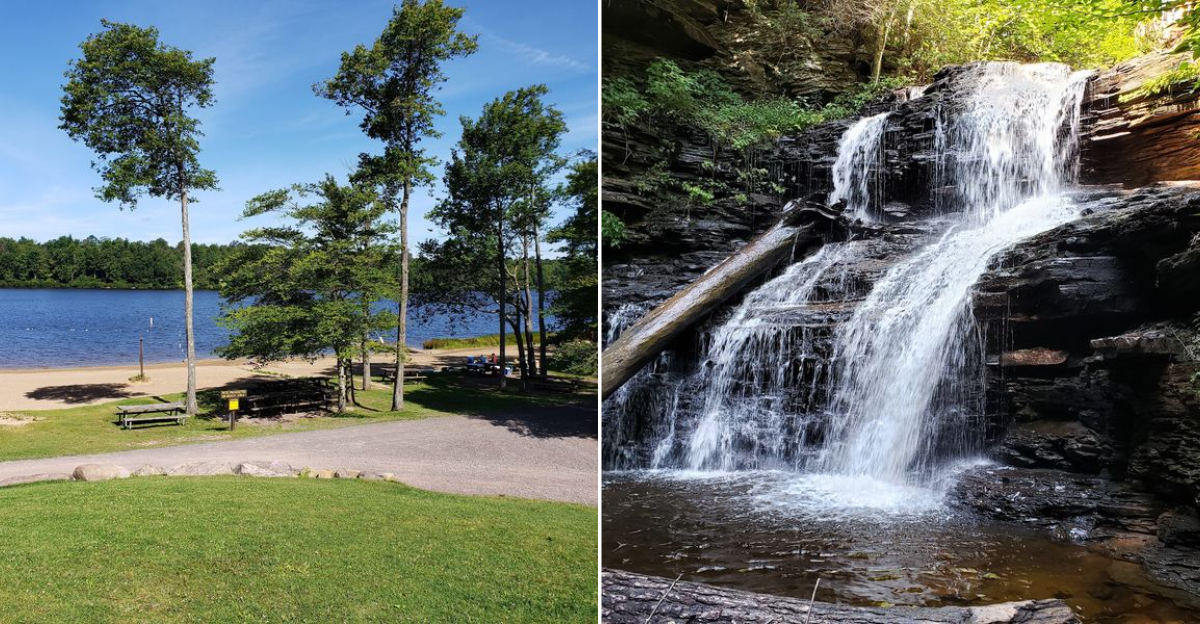
Warm weekends near the end of summer always feel borrowed, which makes wasting one indoors seem especially painful.
Pennsylvania still has trails where the season hangs on a little longer, giving hikers one more excuse to get outside before cooler mornings start changing the mood. A good late-summer walk does not need a grand plan.
It just needs enough shade, movement, and open time to make the day feel well spent. There is a sweet spot to these final warm weekends.
The heat has usually softened, the crowds can feel less intense, and the simple act of walking somewhere beautiful starts to feel like a small victory over the calendar.
My favorite kind of hike happens when I tell myself I will be back by lunch and then stop checking the time completely.
I have finished more than one Pennsylvania trail with dusty shoes, an empty water bottle, and the slightly smug feeling that I squeezed one more proper summer day out of the year.
A Waterfall Count That Sounds Made Up
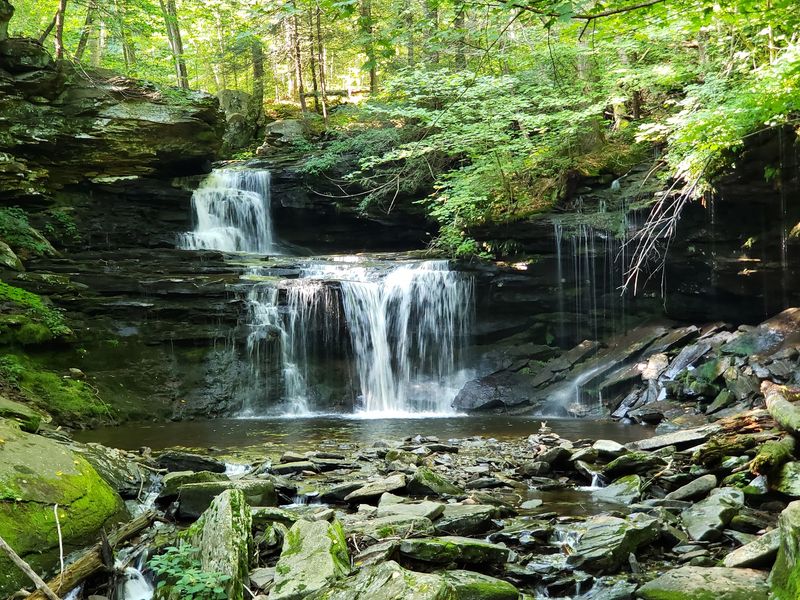
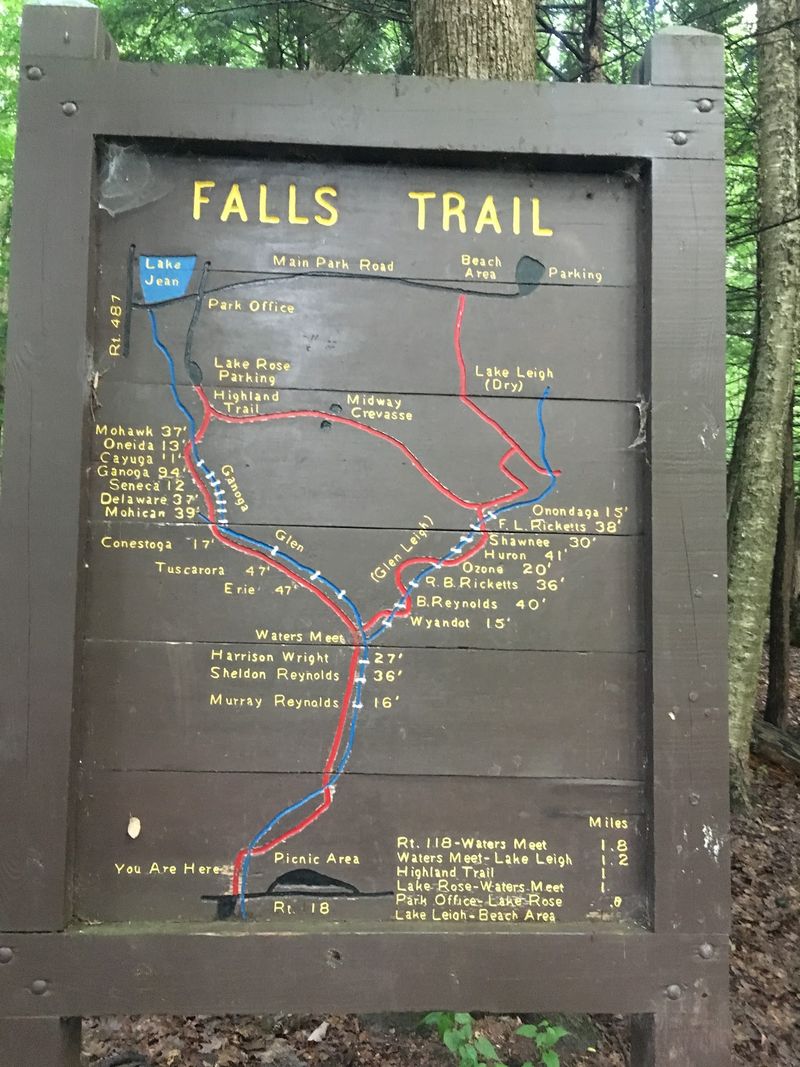
Ricketts Glen State Park has twenty-two named waterfalls, but twenty-one sit along the Falls Trail itself.
The tallest, Ganoga Falls, drops ninety-four feet through the Glens Natural Area.
Two branches of Kitchen Creek descend through Ganoga Glen and Glen Leigh before joining at a spot called Waters Meet.
From there, Kitchen Creek continues through Ricketts Glen toward the PA-118 side of the park.
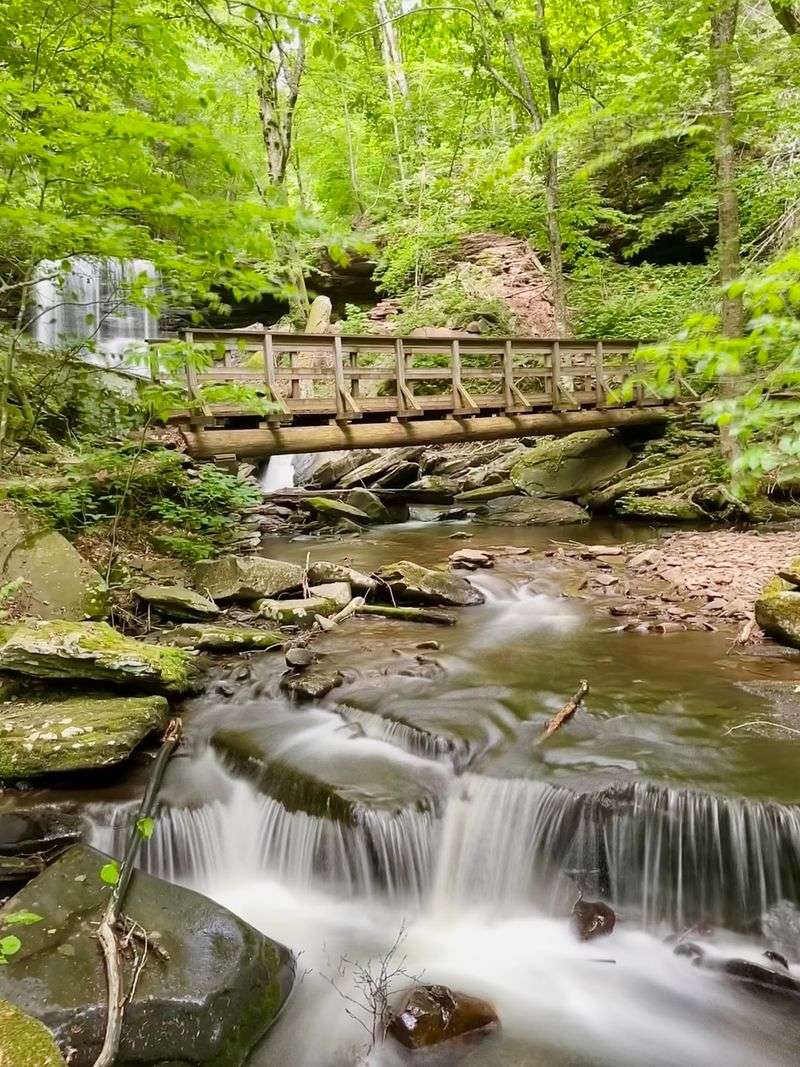
What surprised me most was how different each one looks. Some slide down in wide sheets, others punch into deep plunge pools, and a few hide behind branches until you are almost past them.
The twenty-second named waterfall, Adams Falls, is not on the main Falls Trail loop.
It sits a few hundred feet from the Evergreen Parking Lot on the separate Evergreen Trail, making it an easy addition before or after a longer hike.
Waterfall flow varies with rainfall, so late-summer conditions can range from strong cascades to noticeably lighter water after dry spells.
Where To Point Your Car On PA-118
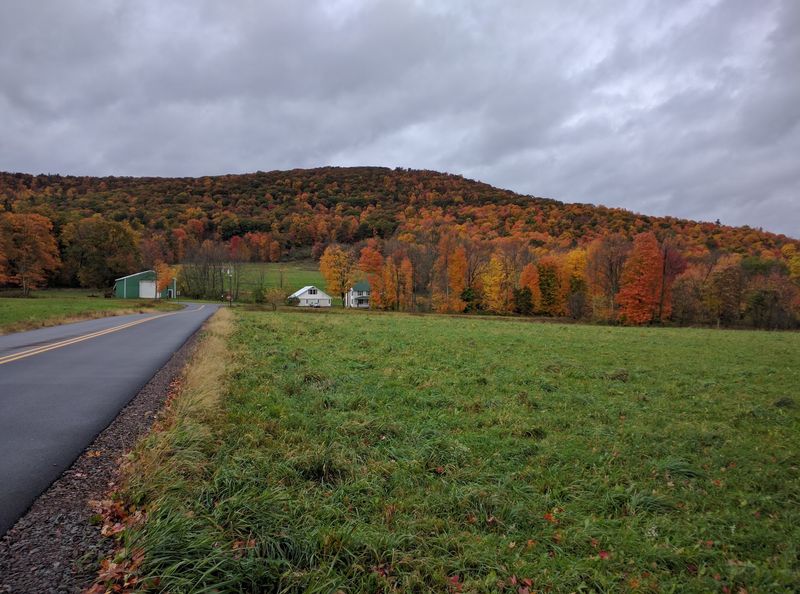
Parking sounds boring until you arrive on a busy weekend and discover the closest lots already filling.
The PA-118 parking areas provide southern access to the Falls Trail System and the nearby Evergreen Trail.
From the Evergreen Parking Lot, Adams Falls is only a few hundred feet away.
Reaching the main waterfall system from the PA-118 lots takes considerably longer, with the first Falls Trail waterfall about 1.5 miles upstream.
There are two additional official access points farther north: Lake Rose Trailhead, which provides the closest access, and Beach Parking Lot Number Two near Lake Jean.
Restrooms and other amenities vary by trailhead, so checking the park map before leaving helps. Parking and day use are free, but the park is open from sunrise to sunset and day-use areas close at dusk.
My advice: arrive early on warm weekends, especially if you want the shorter walk from Lake Rose Trailhead. Lake Rose also fills quickly during peak periods, according to DCNR.
Steep Sections That Demand Respect
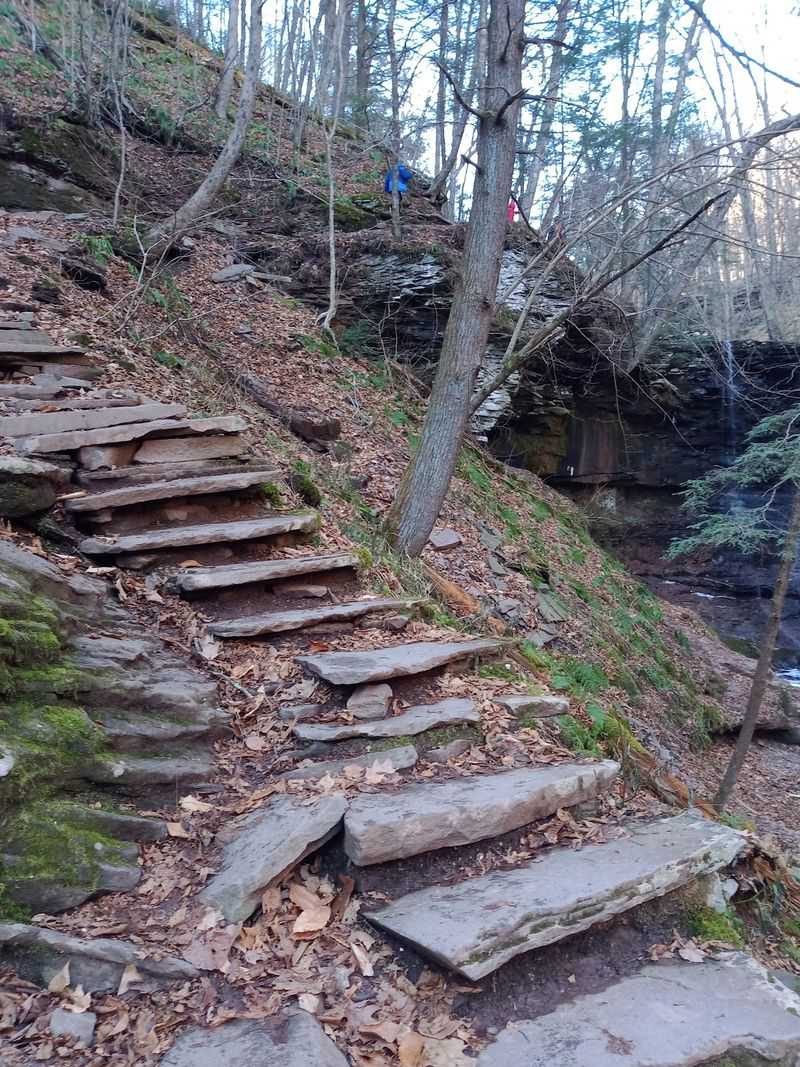
Steepness is the single most common thing hikers mention about this route, and for good reason.
Sections of the trail climb hand-built stone staircases that wind directly alongside falling water.
Those stones stay wet nearly all year because of the constant spray. Even in August, when the surrounding woods are bone dry, the steps near the falls hold a slick film of moisture.
Trail difficulty ratings are posted on park maps, and reading them beforehand saves grief. Plenty of hikers accidentally take on the two hardest segments back to back without realizing what they signed up for.
Slow footing beats fast footing every time here. There are no guardrails in most spots, and the drop-offs are real.
The reward is that these tougher stretches stay quieter and cleaner than the easy lower trail. I found the most peaceful moments of my whole day right where the climbing got serious, which felt like a fair trade.
The Loop Everyone Talks About
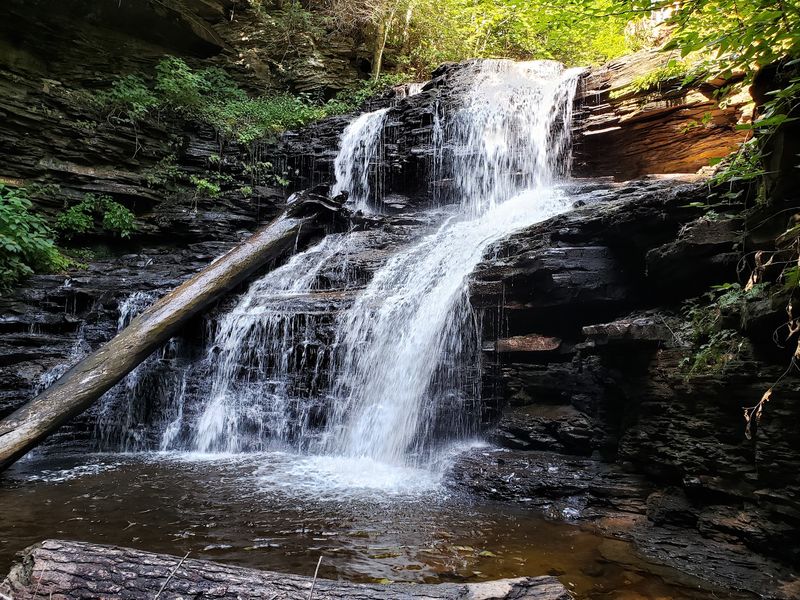
The Falls Trail System offers more than one way to see the waterfalls, and the distance changes significantly depending on the route you choose.
The full loop is 7.2 miles if you hike both the upper and lower sections. That route takes in the entire Falls Trail System and demands enough time for steep, rocky terrain.
A shorter official option covers 3.2 miles by using Highland Trail with the Glen Leigh and Ganoga Glen sides. That loop reaches most of the waterfalls without adding the lower section toward PA-118.
Both routes include steep, slippery terrain, so distance alone does not tell the whole story. DCNR rates the Falls Trail System as most difficult and recommends proper footwear and good physical condition.
I underestimated the time on my first visit and ended up power walking the last mile. Build in extra time, because stopping at waterfalls can stretch the day quickly.
The Highland connector also passes through the Midway Crevasse.
Footwear Choices You Will Not Regret
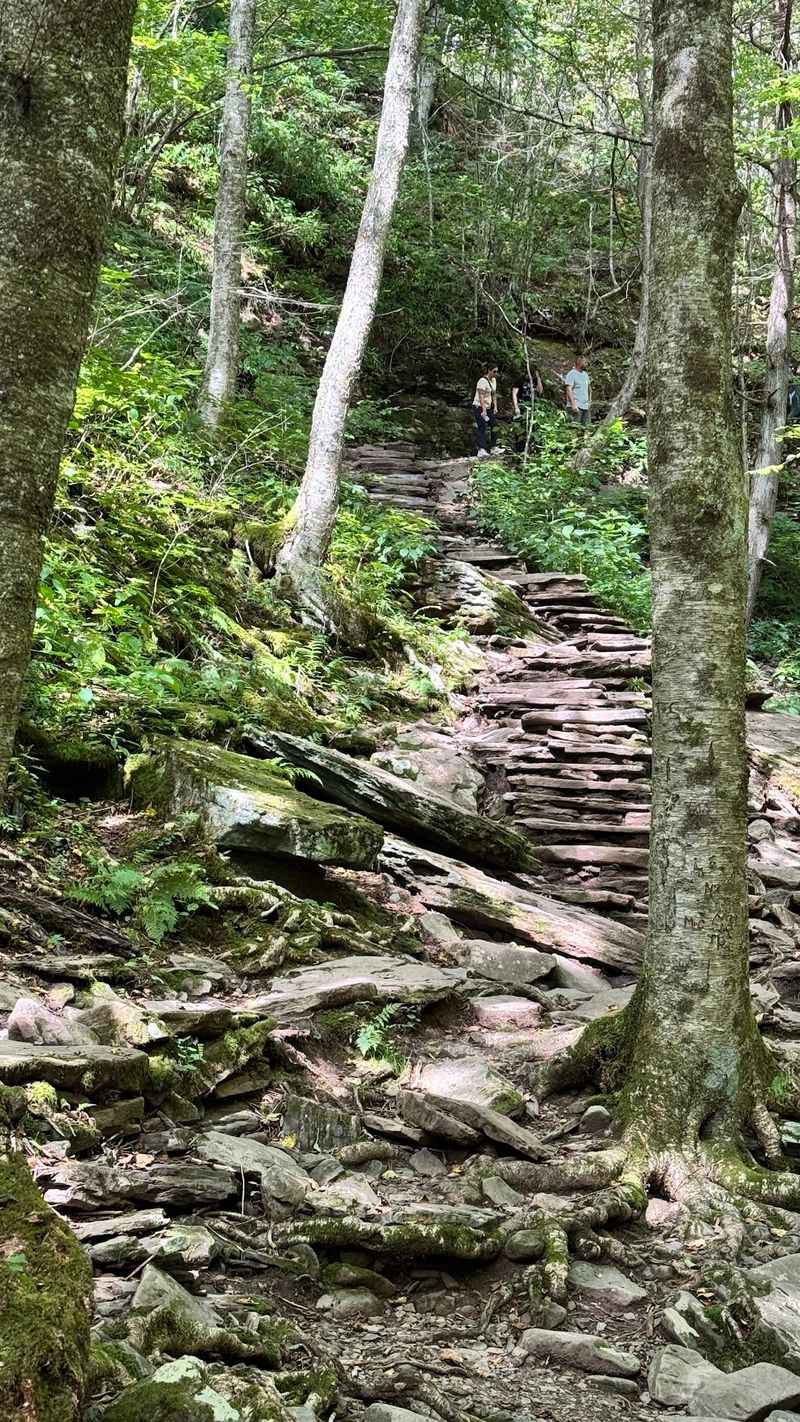
Sneakers are the number one mistake I saw on the trail, and their owners knew it.
Wet rock plus smooth soles equals a very cautious, very slow descent.
Proper hiking shoes with real tread make the difference between enjoying the gorge and white-knuckling through it. Waterproof uppers help too, since splash zones are unavoidable near several falls.
Trekking poles earn their keep on the climbs. Having two extra points of contact on damp stone steps takes a surprising amount of stress off your knees on the way down.
Quick-dry socks are worth packing as a spare. Somewhere around mile four, one boot always finds a puddle deeper than it looked.
Bug spray belongs in the pack as well, because certain shaded pockets along the creek attract persistent insects during warm months.
I hiked it once in trail runners and once in boots, and the boots won by a landslide. Your ankles will thank you around hour three.
Shade That Feels Like Air Conditioning
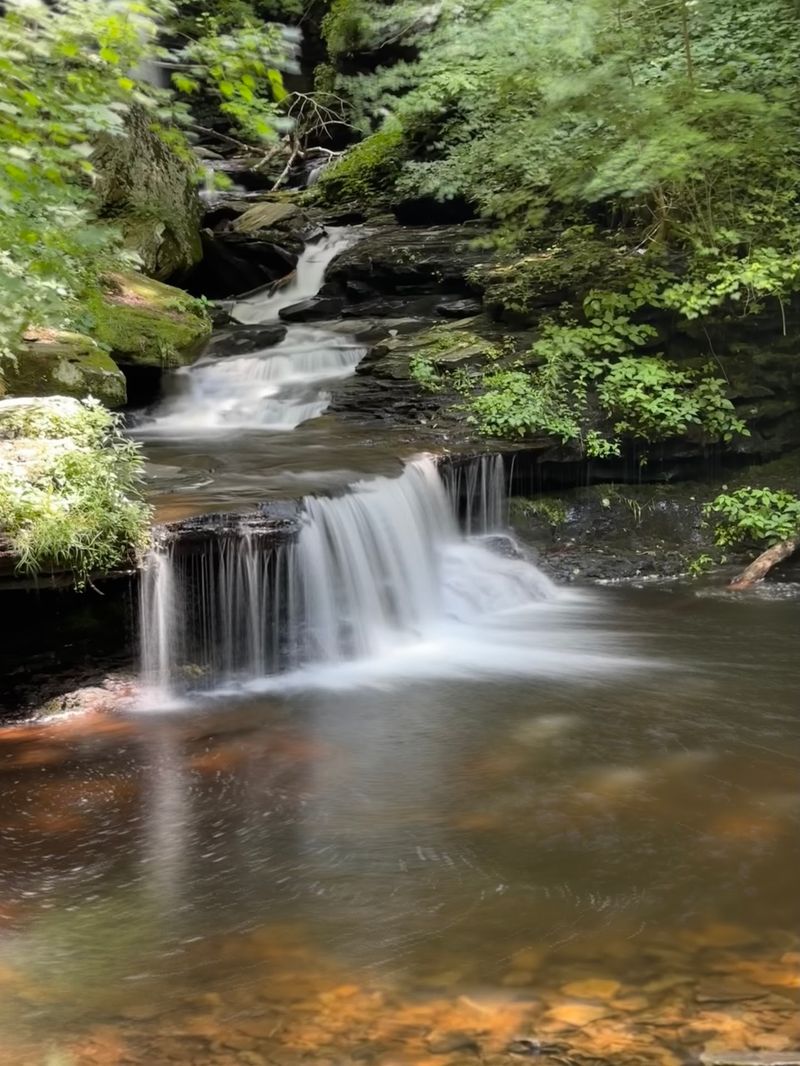
Heat is the enemy of late summer hiking, and this gorge offers plenty of tree cover.
Much of the Falls Trail runs through forest, limiting long stretches of direct sun.
Moving water, deep ravines, and shade can make the route feel more comfortable than exposed terrain, but hikers should not assume the gorge will stay significantly cooler on every warm day.
Old growth timber is one of the park’s defining features. Some trees in the Glens Natural Area are more than three hundred years old, with diameters approaching four feet and heights reaching about one hundred feet.
The area carries National Natural Landmark status, reflecting the ecological significance of the surviving old-growth forest.
I still bring plenty of water even on shaded sections. DCNR describes the Falls Trail as steep, rocky, and strenuous, so hydration matters regardless of how comfortable the canopy makes the hike feel.
Shade reduces sun exposure, but it does not remove heat risk.
Late Summer Timing Beats Peak Season
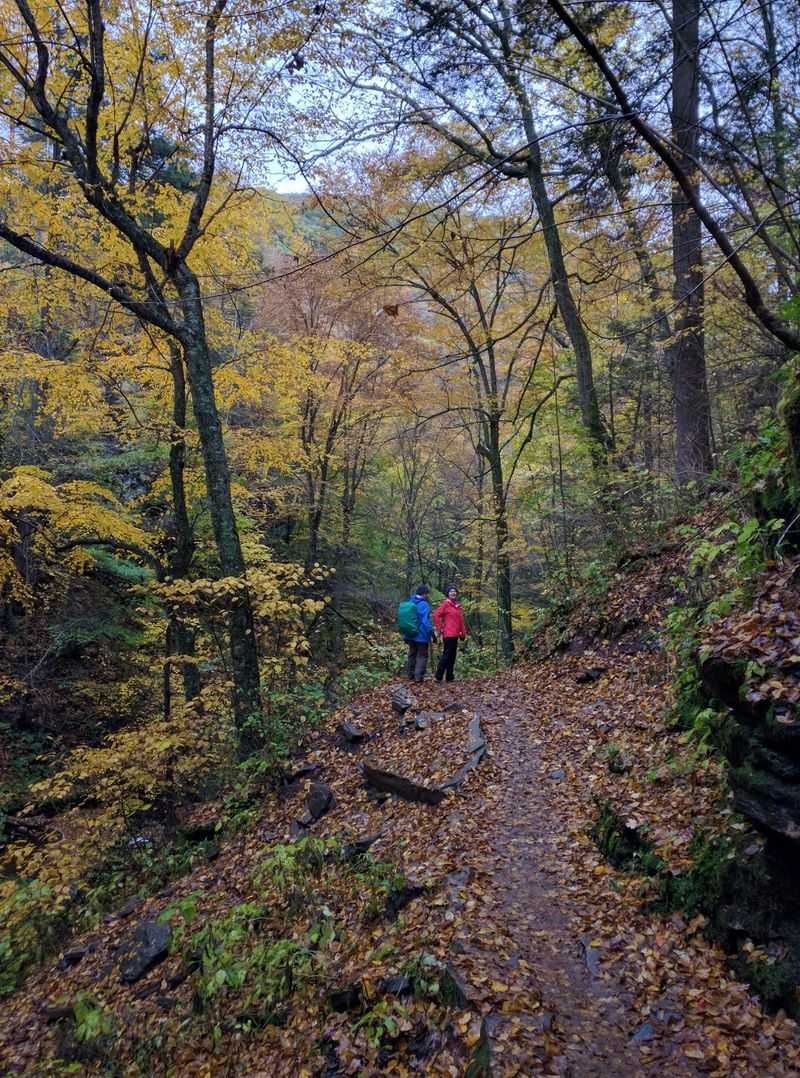
September can be an appealing time to tackle this hike, with warm-weather conditions often lingering while the calendar starts moving toward fall.
Waterfall flow varies with rainfall, so late summer does not guarantee lower water or easier footing. Wet rock, steep stone steps, and slippery sections remain part of the Falls Trail in any season.
Weekdays may feel quieter than weekends, but crowd levels vary, and Lake Rose Trailhead is specifically known to fill quickly during peak times. Starting early can improve your parking options.
Autumn brings changing leaves and another popular period for the park. That window between Labor Day and peak foliage can still attract plenty of hikers.
Winter changes everything. The Falls Trail closes to ordinary hiking and is open only to equipped ice climbers and hikers.
DCNR lists crampons, ice axes, and rope as equipment.
For a relaxed warm-weather outing, late summer still makes sense. Pack water, proper footwear, and a layer for changing conditions.
The Story Behind The Name
Colonel Robert Bruce Ricketts once owned or controlled over eighty thousand acres across these ridges.
A Civil War veteran turned landowner, he preserved the glens while much surrounding timberland was logged.
Those spared acres are exactly why old growth still stands today. Many trees in the Glens Natural Area are more than three hundred years old.
Ricketts hired workers in 1889 to build trails and stone steps through the glens.
The planned Civilian Conservation Corps camp at Ricketts Glen never opened, so crediting the trail’s steps to CCC crews is inaccurate.
Pennsylvania acquired the Falls and Glens area in 1942, and recreational facilities opened in 1944.
Waterfall names reflect Ricketts’ interests too, with many named for American Indian tribes and others for friends and family. Learning that backstory changed how I walked the trail.
Every hand-set stone under my boots represented somebody’s labor, and the whole Falls Trail System suddenly felt less like scenery and more like inheritance.
Lake Jean And The Rest Of The Park
After all that climbing, a swim sounds pretty good.
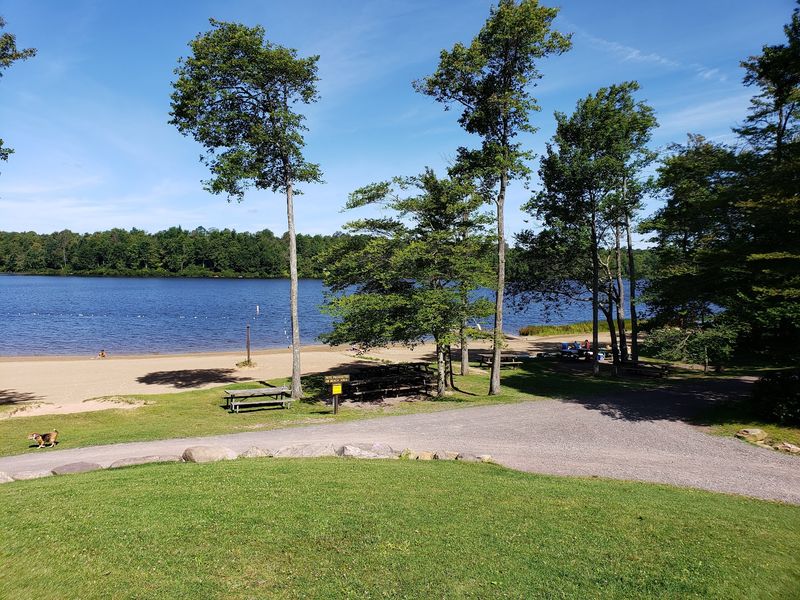
Lake Jean sits up top with a sand beach, and it makes a fine cooldown once your legs are finished complaining.
Kayaks and canoes are common out on the water during warm months. Motor restrictions keep things calm and quiet.
Camping and cabins are available within the park, which turns a long drive into a proper weekend. Booking ahead for warm season dates is essential, since availability disappears fast.
Additional trails wander away from the waterfalls, including quieter routes through second growth forest that see almost no foot traffic. Those make good options for a mellow second day.
Picnic areas near the lake work well for a post-hike meal. I packed sandwiches and ate one at a table while my boots dried in the sun, which felt like a small victory.
Fishing draws people here too, and the northeastern Pennsylvania setting keeps the whole place feeling remote without being difficult to reach.
Small Habits That Keep It Beautiful
Litter shows up most where the walking is easiest, which tells you something about human nature.
The gentler lower stretches collect wrappers and bottles while the tougher upper sections stay remarkably clean.
Carrying out a bit more than you carried in costs almost nothing. A spare bag in your pack handles it.
Staying on the marked path matters just as much. Cutting corners on switchbacks tears up fragile soil and speeds erosion along the steep slopes.
Swimming and wading beneath the falls is prohibited, and that rule exists because the rocks and currents are genuinely hazardous. Admire from the trail and keep your day boring in the best way.
Dogs are welcome on leash, though the steep stone steps challenge smaller ones. Consider whether your pup would actually enjoy it.
Cell service is patchy throughout the gorge, so download a map before you start. Getting turned around here is easy, and knowing your route makes the whole experience calmer.