
We Ranked 10 Of The Best German Restaurants In All Of Pennsylvania And Here’s Who Made The Cut
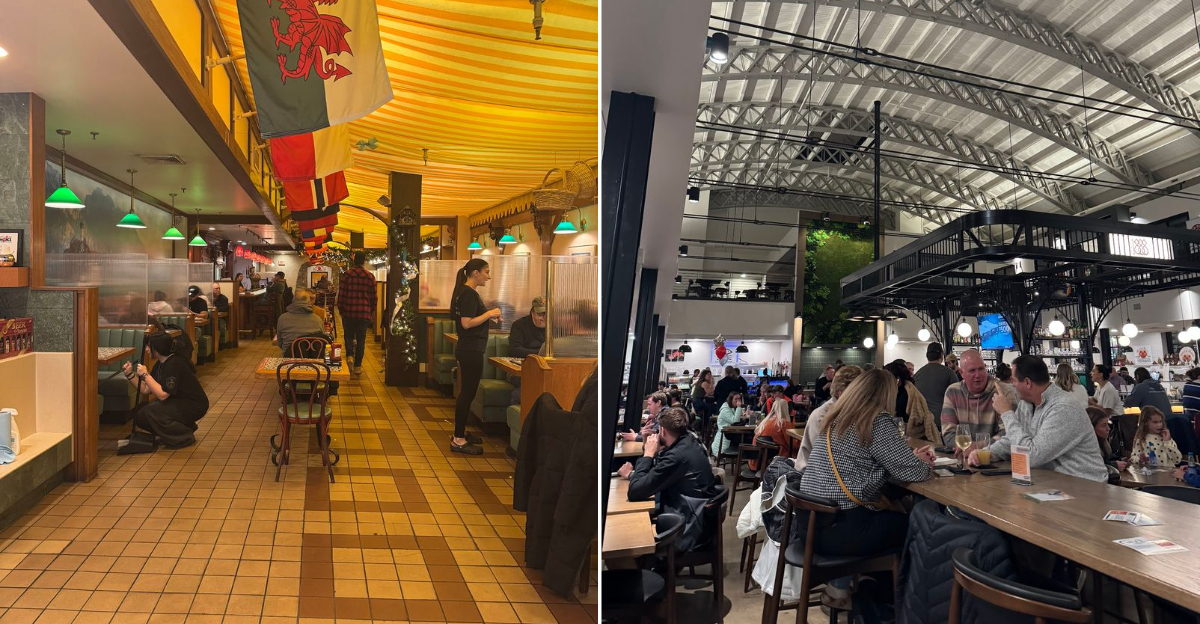
German food has a way of turning dinner into a serious test of appetite.
Pennsylvania has no shortage of places serving schnitzel, sausages, dumplings, and other hearty favorites, but ranking the best takes more than spotting a familiar menu.
The strongest restaurants have personality, consistency, and the kind of cooking that makes people start comparing notes before dessert.
That is where things get competitive. One person swears by the crispiest schnitzel, another will argue for the richest gravy, and suddenly a casual meal becomes a full debate over who deserves the top spot.
I have been at tables where everyone agreed the food was excellent and still managed to disagree completely about which dish won the night.
I usually end up defending my favorite with far more intensity than dinner probably deserves. German food brings that out in me.
Give me a good plate, a strong opinion, and enough time to argue, and I am very happy to make my case.
1. Brauhaus Schmitz
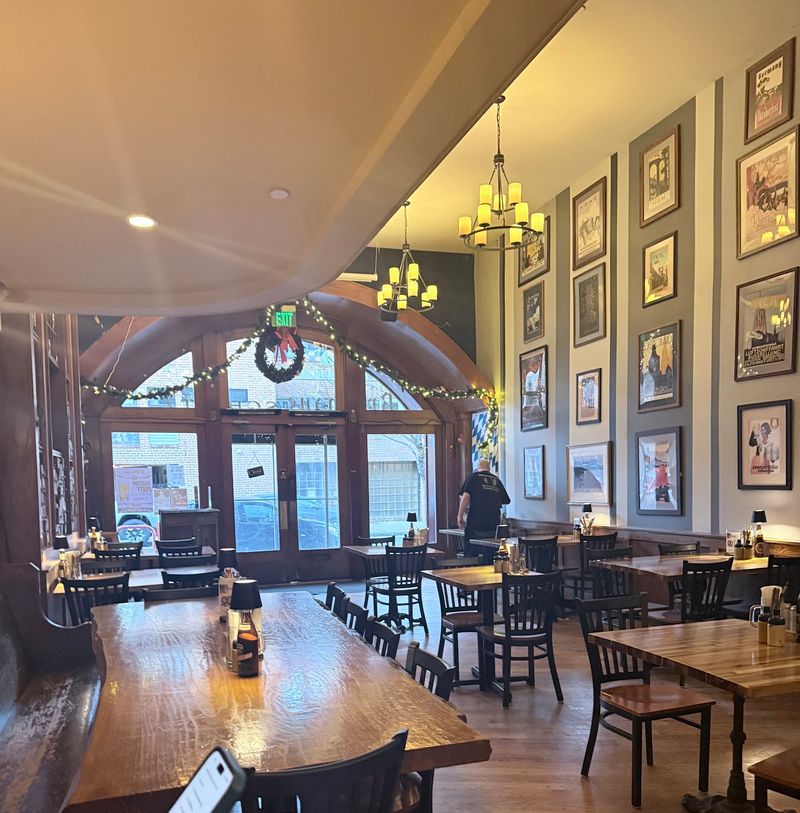
South Street in Philadelphia has plenty of loud attractions, but few smell as good as this one.
Brauhaus Schmitz sits along one of the city’s busiest stretches, and the moment the door opens you get warm bread, roasted meat, and a hum of conversation bouncing off the walls.
The dining room feels like a proper hall without trying too hard. Long tables, dark wood, and staff carrying trays stacked with sausage plates keep the energy moving.
Schnitzel is the headliner here, pounded thin and fried until the edges crackle. Sausages arrive with sauerkraut and mustard that actually has some bite to it.
The soft pretzel is enormous, warm, and worth ordering before you even glance at anything else.
Fun detail: the restaurant has hosted Philadelphia’s Oktoberfest celebrations for years, complete with street closures and brass bands. Locals plan their September weekends around it.
What makes Brauhaus Schmitz work is balance. It respects tradition while sitting comfortably in a neighborhood full of tattoo shops and record stores.
Address: 718 South Street, Philadelphia, PA 19147.
2. Max’s Allegheny Tavern
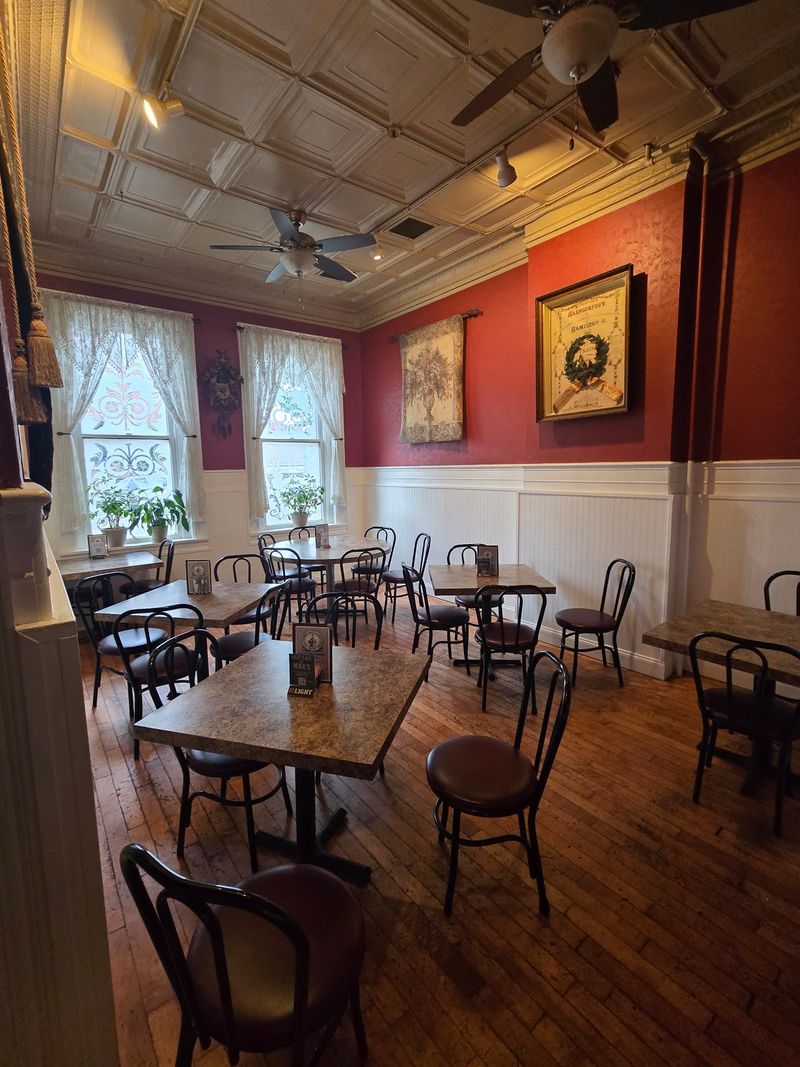
Pittsburgh’s North Side hides a Victorian time capsule where the tin ceilings still shine.
Max’s Allegheny Tavern occupies a corner building that has watched the Deutschtown neighborhood change around it for well over a century, and the interior looks the part in the best possible way.
Stained glass, antique fixtures, and worn wooden floors set the mood. Nothing feels staged, because most of it has simply always been there.
Sauerbraten gets the attention it deserves, slow cooked until the meat surrenders. Potato pancakes come out crisp at the edges and soft in the middle, and the wurst sampler lets indecisive eaters off the hook.
Here is a fun bit of history: the building dates back to the 1800s, when Deutschtown genuinely was a German immigrant stronghold. The name Max’s arrived later, but the German soul never left.
I have a soft spot for restaurants that refuse to modernize just to chase trends, and Max’s Allegheny Tavern is stubborn in the right way. It cooks like your great grandmother did and makes zero apologies.
Address: 537 Suismon Street, Pittsburgh, PA 15212.
3. Hofbräuhaus Pittsburgh
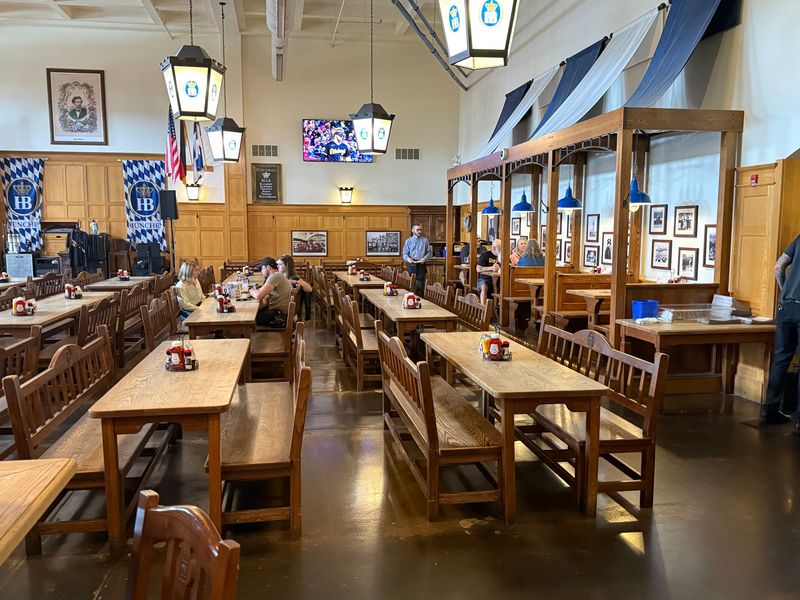
Bavaria built an outpost on the banks of the Monongahela and somehow it fits perfectly.
Hofbräuhaus Pittsburgh anchors the South Side Works district with a copper-topped hall so large that the sound of a brass band barely reaches the far corners.
Communal tables stretch across the room. Painted ceilings arch overhead.
Someone is always clapping along to something.
The kitchen leans hard into Munich classics. Roast pork with dumplings, schnitzel served with lemon, and sausages grilled until the casings snap all show up regularly.
Giant pretzels hang from wooden stands and disappear within minutes.
Quick fact worth knowing: Hofbräuhaus was founded in Munich in 1589 as a court brewery, while the tavern opened to the public in 1828. Pittsburgh carries that Hofbräu name and Bavarian tradition directly.
I usually avoid places built for crowds, yet Hofbräuhaus Pittsburgh won me over with sheer commitment.
The riverfront location adds a walkable bonus, since the surrounding district is packed with shops and a pleasant trail along the water. Address: 2705 South Water Street, Pittsburgh, PA 15203.
4. Frankford Hall
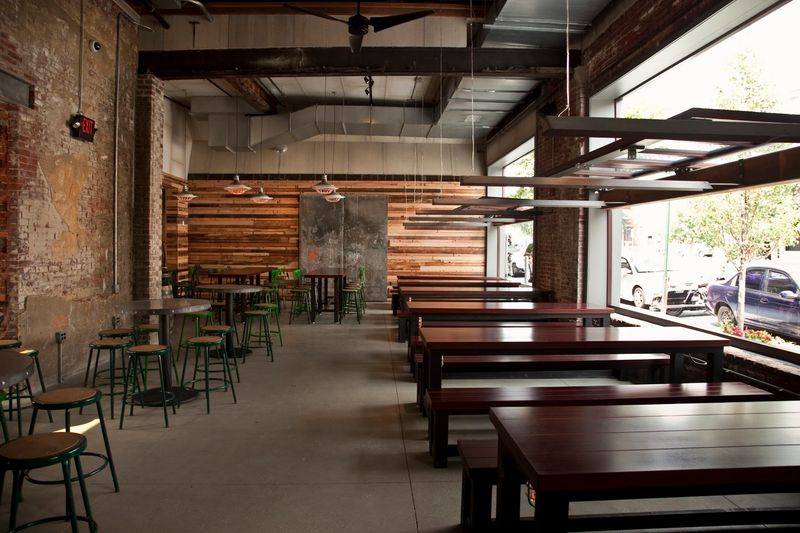
Picnic tables, string lights, and a gravel courtyard turn Fishtown into Bavaria-by-the-El.
Frankford Hall takes the drinking garden concept outdoors, and on a warm evening the courtyard fills with people passing pretzels down long communal benches.
Outside there are fire pits, while the industrial structure opens into an indoor bar area. It feels casual, loud, and welcoming rather than formal.
Bratwurst comes off the grill fast, served in a roll with mustard. Currywurst shows up for anyone wanting something with a little more attitude, and the pretzels arrive warm with cheese sauce that people fight over.
Here is the useful context: Frankford Hall is part of Stephen Starr’s restaurant group, not the team behind Brauhaus Schmitz.
Philadelphia’s German food scene has two very different personalities here. One is a proper hall, the other is a backyard party.
Fishtown itself has become one of the city’s most walkable neighborhoods, so Frankford Hall works well as a starting point.
Grab food first, then wander toward the murals and coffee shops nearby. Address: 1210 Frankford Avenue, Philadelphia, PA 19125.
5. Newportville Inn
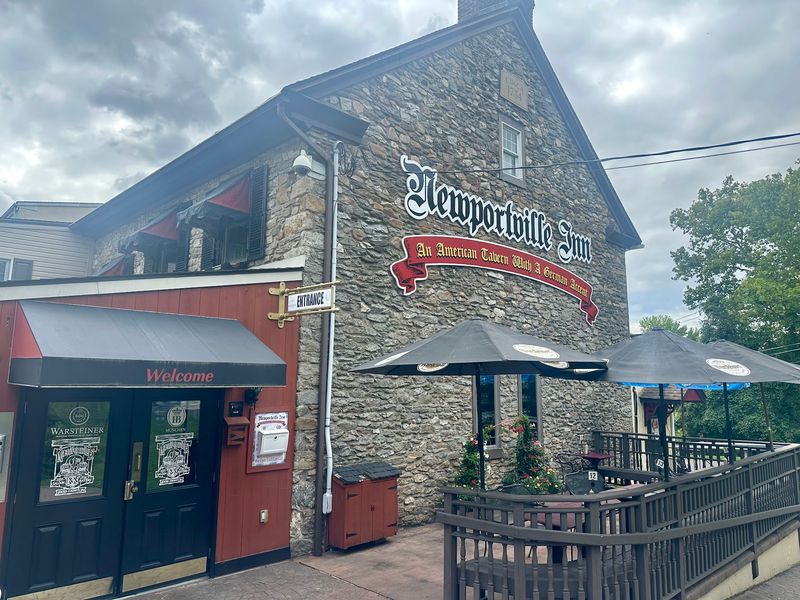
Bucks County keeps a historic surprise behind stone walls and low wooden beams.
Newportville Inn stands in the old village of Newportville, where surviving early buildings still reflect several centuries of local history, and the German menu inside comes as a genuine surprise.
Low ceilings, creaky floors, and a fireplace give the place a hushed, historic mood.
Jaeger schnitzel with mushroom gravy tends to be the crowd favorite. Sauerbraten and spaetzle round things out, and the potato pancakes hold their own against anywhere in the state.
Fun fact for history buffs: Newportville is an old Bristol Township village, and local planning records identify an eighteenth-century inn among the historic buildings that still survive in the district there today.
I love finding old buildings that still cook seriously, and Newportville Inn manages both without leaning on gimmicks.
Bristol Township is a short detour from the river towns, making it an easy stop when exploring lower Bucks County. Address: 4120 Lower Road, Levittown, PA 19056.
6. Dunderbak’s Market Cafe
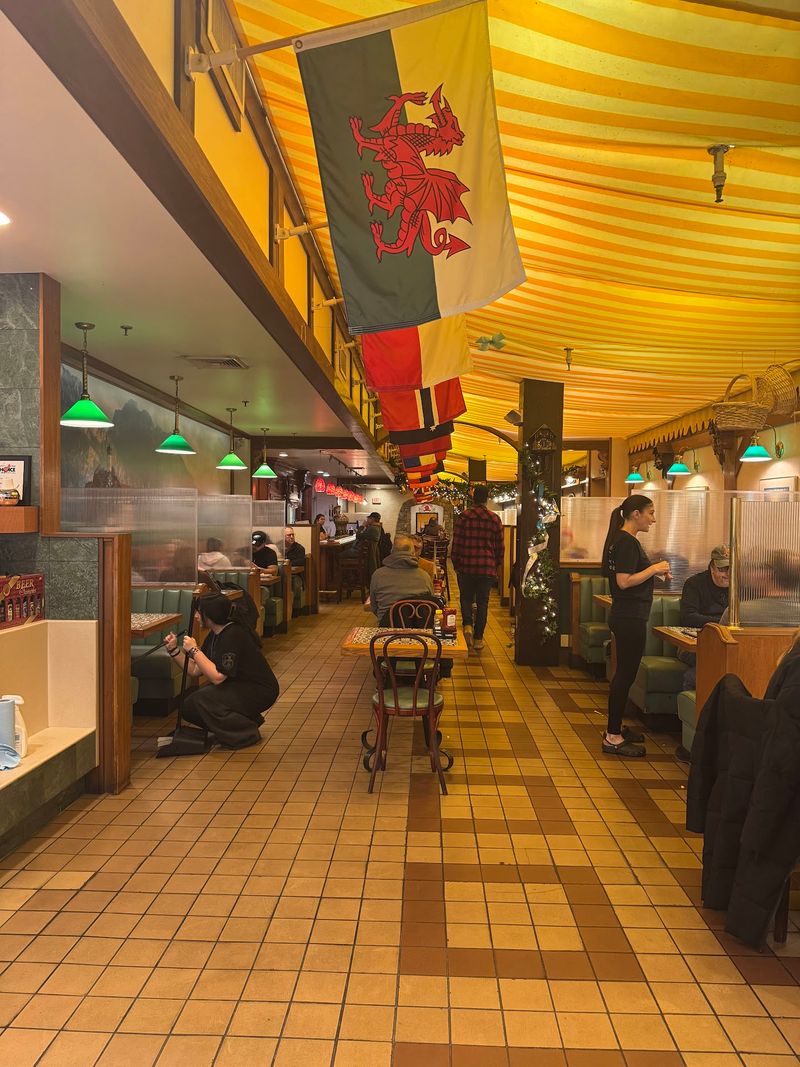
Shopping malls rarely hold onto independent restaurants for nearly five decades, but Whitehall does.
Dunderbak’s Market Cafe operates inside the Lehigh Valley Mall, serving German-American food in a full sit-down restaurant that has remained independently owned since originally opening there in 1977.
The menu covers soups, sandwiches, burgers, wurst, and German platters. Diners can choose from sauerbraten and schnitzel to pierogies and deli sandwiches.
Wurst platters dominate the menu, along with schnitzel, potato pancakes, and enormous soft pretzels. The soup rotation is quietly excellent, especially on cold Lehigh Valley afternoons.
The real longevity note is better: Dunderbak’s opened on November 11, 1977, with two soups, six sandwiches, and four wurst.
The restaurant later expanded from 65 seats to 145, becoming the mall’s longest continuously operated independent business.
Whitehall sits close to Allentown and Bethlehem, so Dunderbak’s Market Cafe makes a practical lunch stop when touring the region’s industrial history sites.
The restaurant has stayed put inside the mall for decades, which is remarkable on its own. Address: 121 Lehigh Valley Mall, Whitehall, PA 18052.
7. Nurnberger Bierhaus
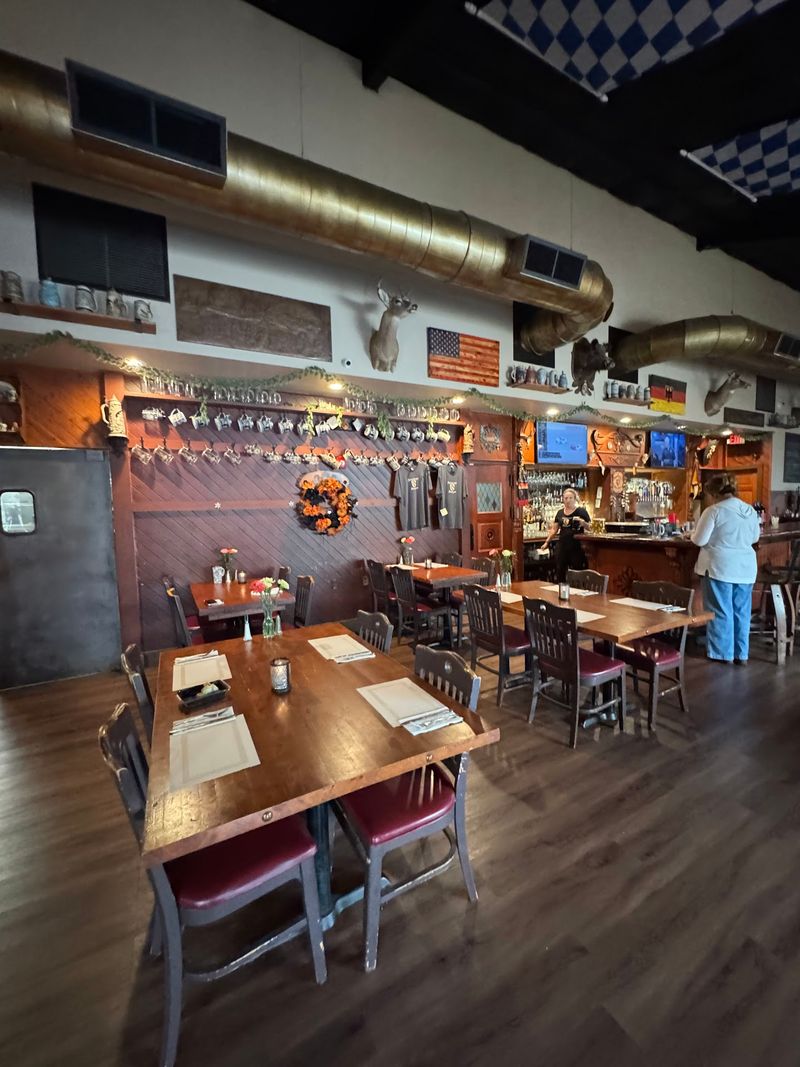
Small rooms sometimes serve the biggest flavors, and Lake Ariel proves it again here.
Nurnberger Bierhaus occupies a roadside spot in rural northeastern Pennsylvania, serving traditional German food indoors while its seasonal outdoor biergarten opens when warmer weather cooperates each year.
Space is tight indoors. Tables sit close together, and the kitchen sends out plates with impressive speed.
The specialty is Nuremberg-style sausages, which are noticeably smaller and more delicate than typical bratwurst. Served with sauerkraut and mustard, they disappear fast.
Schnitzel, goulash, and red cabbage fill out the rest of the menu.
Interesting tidbit: authentic Nuremberg sausages are protected by European law, meaning only ones made in that German city can officially carry the name. Recreating the style properly takes real effort.
Lake Ariel offers a backdrop, with lakes and wooded hills across northeastern Pennsylvania.
Nurnberger Bierhaus fits neatly into a day of exploring, especially for anyone who prefers a roadside German restaurant over a tourist hall.
The whole place feels lived in rather than designed. Address: 2136 Lake Ariel Highway, Lake Ariel, PA 18436, where this local German restaurant currently operates.
8. Der Jaeger
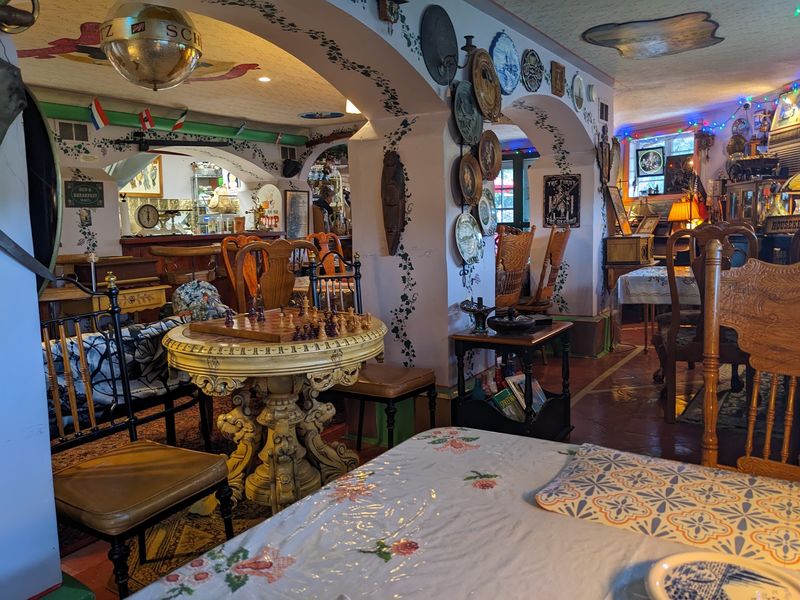
Antique-shop charm meets serious German cooking near Lake Wallenpaupack in the Poconos.
Der Jaeger leans into its name, which translates roughly to the hunter, and the intimate dining room sits inside an eclectic building where antiques fill two floors around the restaurant.
Everything feels intimate and unhurried. Only a handful of tables fill the dining area, and reservations are recommended before arriving.
Schnitzel arrives in several variations, including the mushroom-topped version the restaurant is named after.
Spaetzle soaks up gravy properly, and the red cabbage carries just enough sweetness to balance the plate.
Worth noting: Der Jaeger is part restaurant and part antique shop, which makes the meal feel personal. The small Lakeville setting separates it from larger German halls, giving dinner a slower, more intimate rhythm.
I always appreciate restaurants that feel like a destination rather than a convenience, and Der Jaeger requires some intention to reach.
Its location near Lake Wallenpaupack makes it a natural Pocono stop, particularly for travelers seeking unusual dining experiences.
Address: 55 Purdytown Turnpike, Lakeville, PA 18438.
9. The Harmony Inn
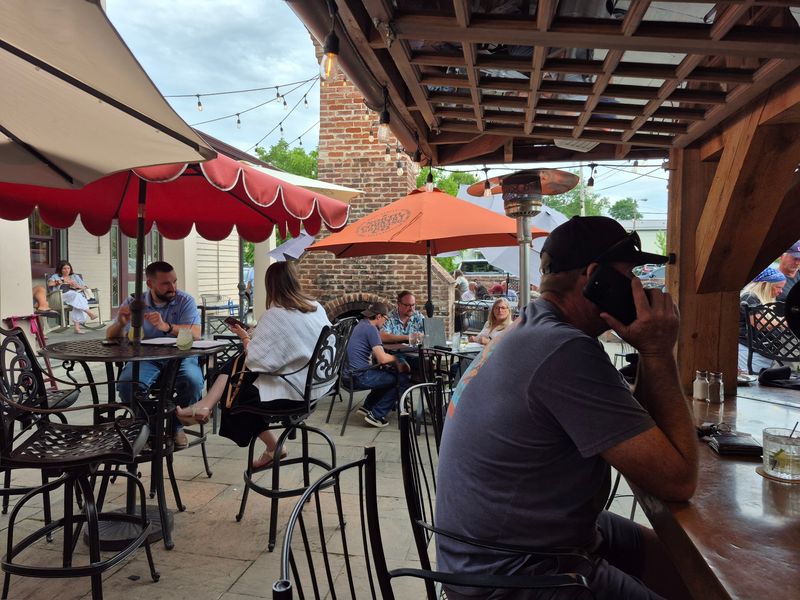
Butler County’s oldest village holds an inn with Victorian bones and German recipes.
The Harmony Inn stands in the historic borough of Harmony, a settlement founded in the early 1800s, and the building has served travelers in one form or another for generations.
Original woodwork, fireplaces, and antique details fill the rooms. It carries the slightly creaky charm that old buildings earn honestly.
Schnitzel and sausage plates appear alongside American comfort dishes, giving the menu range. Potato pancakes and sauerkraut keep the German side well represented, and soups rotate with the seasons.
Backstory worth mentioning: Harmony was founded by a German religious group called the Harmonists, who arrived seeking a communal way of life.
Their influence still shapes the town’s architecture and museum. Walking the surrounding streets afterward is genuinely worthwhile, since the entire village is a National Historic Landmark District.
The Harmony Inn works well as an anchor for that kind of afternoon, combining a meal with a history lesson that does not feel like homework. Address: 230 Mercer Street, Harmony, PA 16037.
10. Cabbage Hill Schnitzel Haus
Lancaster’s Cabbage Hill neighborhood carries deep German immigrant history.
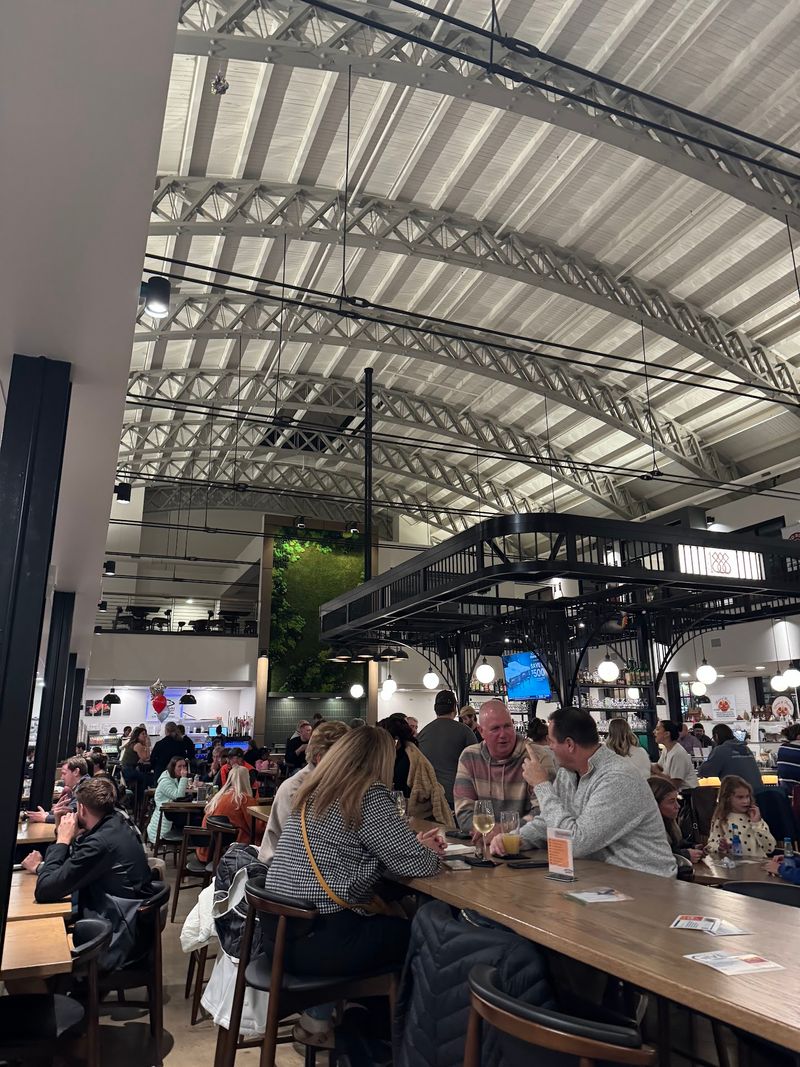
Cabbage Hill Schnitzel Haus honors that connection from its current home inside Southern Market, where chef Daniel Kilp serves German favorites at a food-hall station in downtown Lancaster.
The market stays casual and comfortable. No brass bands, no theatrics, just communal seating and food that arrives hot.
Schnitzel takes center stage, prepared in multiple styles and pounded properly thin. Spaetzle, red cabbage, and potato salad handle supporting duties.
Sausages, pierogies, and kasespaetzle give the entire menu more reach for anyone skipping the cutlet.
Neighborhood history still matters: Lancaster’s Cabbage Hill grew rapidly in the late 1800s as German immigrants settled there.
Chef Daniel Kilp’s father’s family comes from that neighborhood, giving the restaurant name a clear direct family connection.
Lancaster draws visitors for its markets and Amish country day trips, and Cabbage Hill Schnitzel Haus offers something different from the usual farm-to-table circuit.
It ties food to actual local history, which makes the meal stick in your memory longer. Address: 100 South Queen Street, Lancaster, PA 17603.