
9 California Roadside Museums Small Enough To Explore In An Hour
What do an old desert town, a forgotten highway, and a museum have in common? You might walk through all three before your coffee gets cold.
California is full of roadside museums that look almost too small to bother with, until you step inside and realize you’re standing next to a piece of history that once had its own starring role.
An old gas station sign, a dusty motel story, a bizarre local artifact, maybe even something you’d never expect to find in the middle of nowhere. And here’s the fun part.
You don’t need to sacrifice your entire afternoon to see them.
Give each one about an hour, wander around, learn something wonderfully random, and hop back in the car.
Because on a California road trip, the weird little stop you almost skipped can end up being the story you tell everyone about.
1. California Route 66 Museum
Pull over. Seriously, just pull over.
The California Route 66 Museum in Victorville is the kind of place that grabs you by the nostalgia and refuses to let go.
Located at 16825 D St, Victorville, CA 92395, this museum lives inside the old Red Rooster Cafe, a building with its own Hollywood moment as a backdrop in Neil Diamond’s 1980 film “The Jazz Singer.”
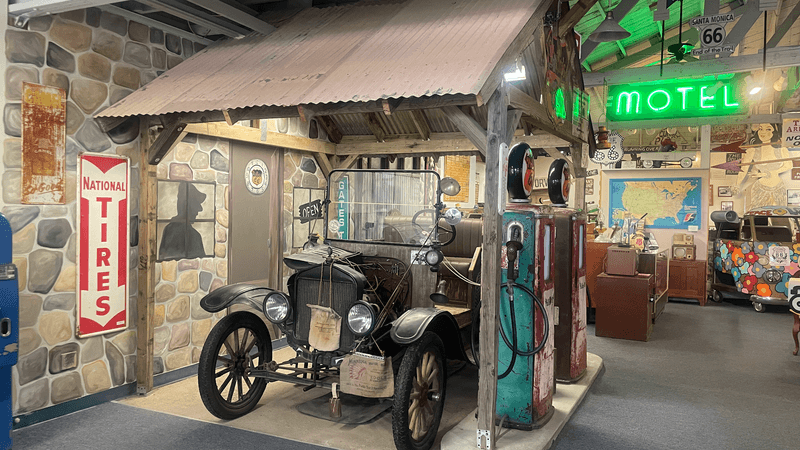
Walking through its three display rooms feels like rummaging through the most interesting attic you’ve ever found. A genuine 1917 Ford Model T sits alongside a groovy 1960s VW Love Bus, complete with wigs and sunglasses for a photo op.
Vintage gas station signs, old road maps, and collectible motel matchbooks line the walls. The recreated 1950s diner booth is basically a selfie waiting to happen.
Founded in 1995 and kept alive entirely by volunteers, this museum thrives on real artifacts donated by local families. Oral history recordings from people who actually traveled Route 66 give the whole experience a deeply human feel.
The 5,000-square-foot space also includes a gift shop stocked with Route 66 memorabilia. This museum doesn’t just preserve history, it makes you feel like you lived it.
2. Route 66 Mother Road Museum
Some buildings have so much personality they practically introduce themselves. The Casa del Desierto in Barstow, California, originally built in 1911 for the Santa Fe Railway, is one of those buildings.
Today it houses the Route 66 Mother Road Museum at 681 N 1st Ave, Barstow, CA 92311, and it’s been charming road-trippers since it opened on July 4, 2000.
The museum zeroes in on Route 66’s cultural footprint across Mojave Desert communities.
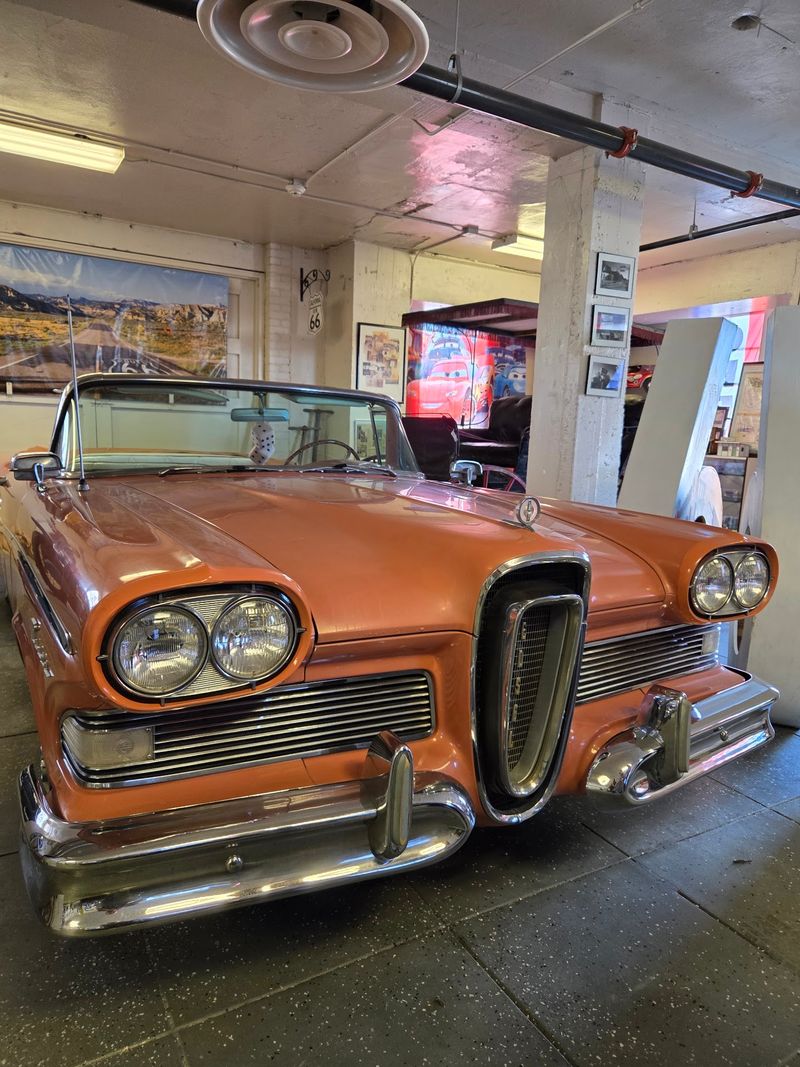
A classic car exhibit anchors the space, surrounded by vintage signs, nostalgic motel postcards, and authentic roadside diner pieces that make you want to order a milkshake immediately.
A special exhibit on the Harvey House trains and the legendary “Harvey Girls” adds a layer of history that feels genuinely surprising.
Harvey Houses were once celebrated for setting an unmatched standard of hospitality for cross-country travelers, and this museum captures that spirit beautifully.
In 2003, Hampton Inn Hotels recognized it as a standout roadside attraction, which honestly feels like high praise from a hotel chain.
The collection is small but carefully curated, making it ideal for a quick and satisfying stop. It’s the kind of place where fifteen minutes in, you’re already planning to come back.
3. Mojave River Valley Museum
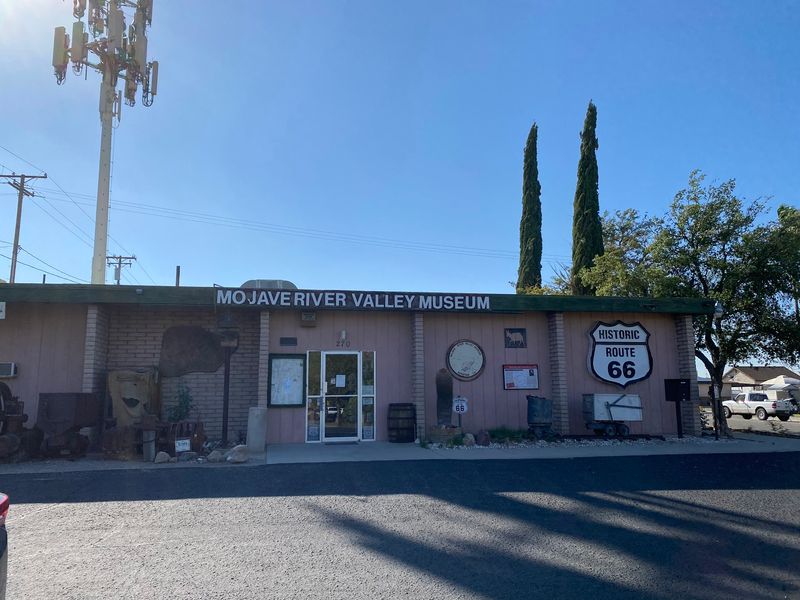
Free admission and over 4,000 square feet of Mojave Desert history? That’s what the Mojave River Valley Museum offers, and it’s honestly one of the best deals on any California road trip.
Tucked at 270 E Virginia Way, Barstow, CA 92311, this volunteer-run gem has been collecting and preserving the Mojave’s story since 1964.
The timeline here is staggering. Exhibits begin with ancient Native American artifacts and trace the region’s story through Father Garces’ 1776 arrival, pioneer emigrant trails, the Old Spanish Trail, the railroad era, and all the way to the modern space program.
An archive of local newspapers dating back to 1911 sits alongside a photo collection of over 230,000 images, which is the kind of number that makes your jaw drop a little.
A new hitch wagon and photographs of a Mojave Green are among the standout pieces that give the museum its distinctly local flavor. Established as a nonprofit in 1973, this museum operates purely on community dedication and passion.
There’s something refreshing about a museum that doesn’t charge you anything and still manages to blow your mind. The Mojave Desert has a bigger story than most people realize, and this museum tells every chapter of it with quiet pride.
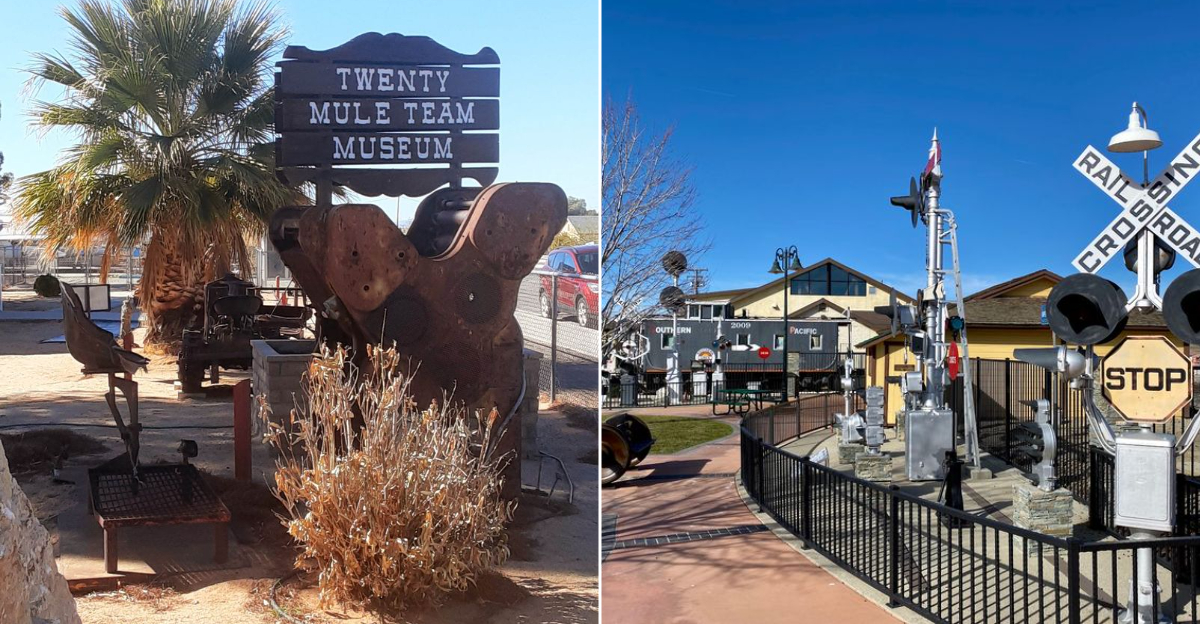
4. Twenty Mule Team Museum
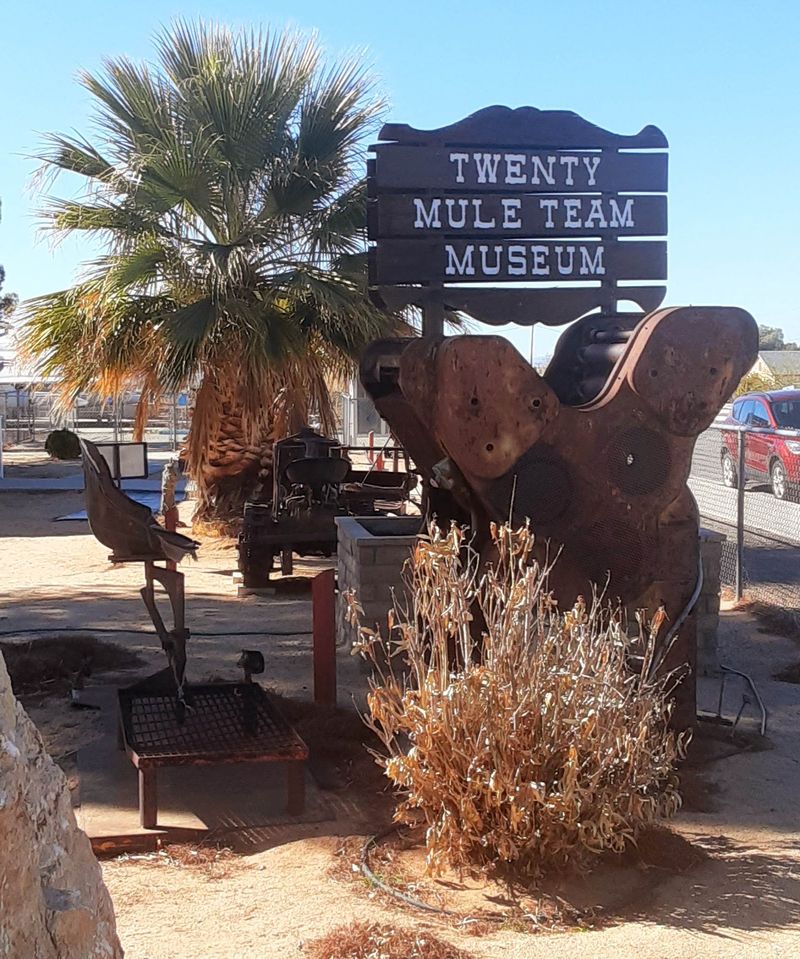
Boron, California, is not exactly on most people’s radar, but the Twenty Mule Team Museum makes a compelling case for a detour.
Built through eight years of community fundraisers and pure volunteer hustle, this museum opened in 1984 and has been quietly amazing ever since. Find it at 26962 Twenty Mule Team Rd, Boron, CA 93516, tucked inside an original staff house from the very first borax mine site.
The borax mining story is wilder than you’d expect.
Authentic mining artifacts and antique machinery fill the space, alongside a detailed 1930s kitchen display complete with period utensils, a 1930s beauty shop exhibit, and a man-drawn fire wagon that somehow makes the era feel tangible.
A granite rock and drill from old competitive drilling contests are highlights that stop visitors mid-step.
An ore bucket from the historic Western Borax Mine sits near a working mechanical model of the Twenty Mule Team and its famous borax wagons, currently being restored to its former glory.
The twenty mule team tradition is one of the American West’s most iconic images, and this little museum honors it with unmistakable heart.
Small in size, enormous in character, the Twenty Mule Team Museum is proof that the best stories often come from the most unexpected places.
5. Shoshone Museum
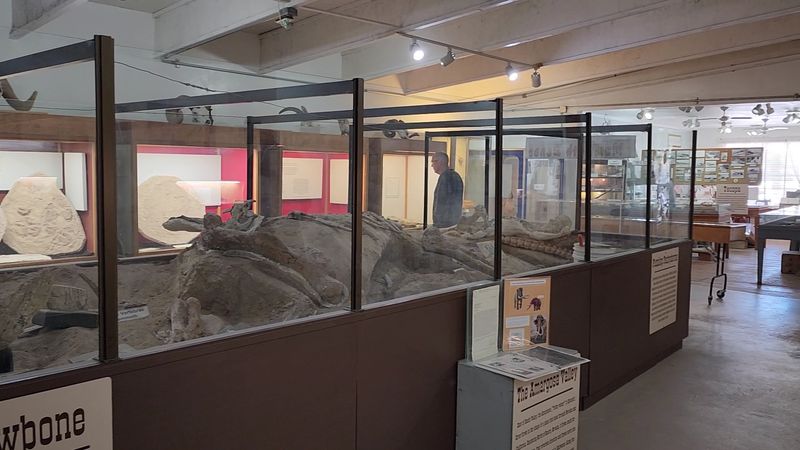
A little museum with a big mammoth. That’s literally the tagline, and the Shoshone Museum at 118 CA-127, Shoshone, CA 92384, absolutely lives up to it.
Perched on the edge of Death Valley, this free museum sits in a building that dates back to 1906 and has been moved around more times than most people change addresses.
The star attraction is a set of mammoth and mastodon bones estimated to be 650,000 years old, found right near Shoshone. Preserved clay footprints of ancient camels, horses, and wolves line the exhibits alongside them.
The region was once home to Ancient Lake Tecopa, a prehistoric lake teeming with Ice Age megafauna, and the museum brings that wild past to life with remarkable clarity.
Exhibits cover everything from the Tonopah and Tidewater Railroad to Death Valley’s notable early geologists and the geology-rich “Walk of Time” display.
Native American heritage, local mining history, and the fascinating story of the Southern Amargosa Valley round out the collection.
The museum also serves as a central visitor gateway for the Amargosa Basin, making it a practical and inspiring first stop. Geology students travel from far away to study this region, but you don’t need a degree to walk out feeling like you just learned something extraordinary.
6. Museum Of Western Film History
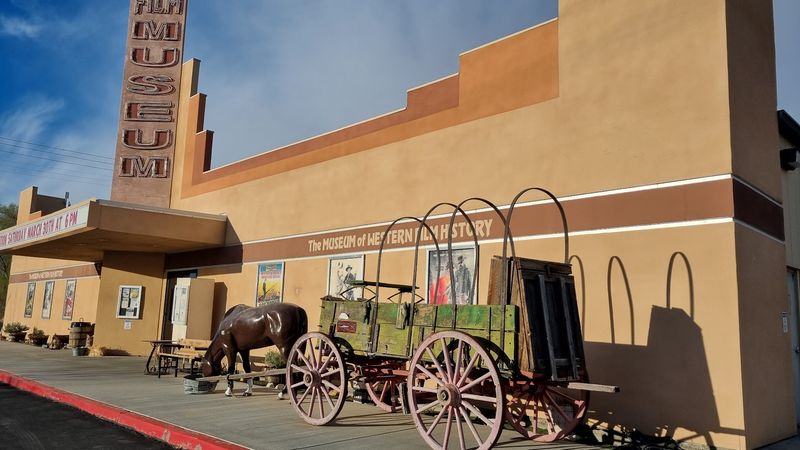
Hollywood came to the desert, and Lone Pine never forgot it. The Museum of Western Film History at 701 S Main St, Lone Pine, CA 93545, celebrates over 100 years of film productions shot in Inyo County, particularly in the jaw-dropping Alabama Hills.
Founded in 2006 and later renamed in 2015, this 10,000-square-foot museum is a love letter to the golden age of Western cinema.
Costumes worn by John Wayne and Clint Eastwood are displayed alongside hats from other legendary Western stars.
The original Dr. Schultz wagon from Quentin Tarantino’s “Django Unchained” is a showstopper that makes film fans audibly gasp.
Exhibits span from silent films to post-war classics, science fiction productions like “Tremors” and “Iron Man,” and a dedicated section on “singing cowboys” that is far more entertaining than it sounds.
Recreated old Western town scenes, complete with saloon facades, a general store, a Western stage, and a dusty jail, give the museum an immersive quality that most small museums can’t match.
The Alabama Hills have provided a backdrop for over 400 films and TV shows, and an 85-seat theater on-site regularly screens locally produced films.
The Lone Pine Film Festival uses this museum as its central hub. For anyone who grew up watching Westerns, this place feels like coming home.
7. Eastern California Museum
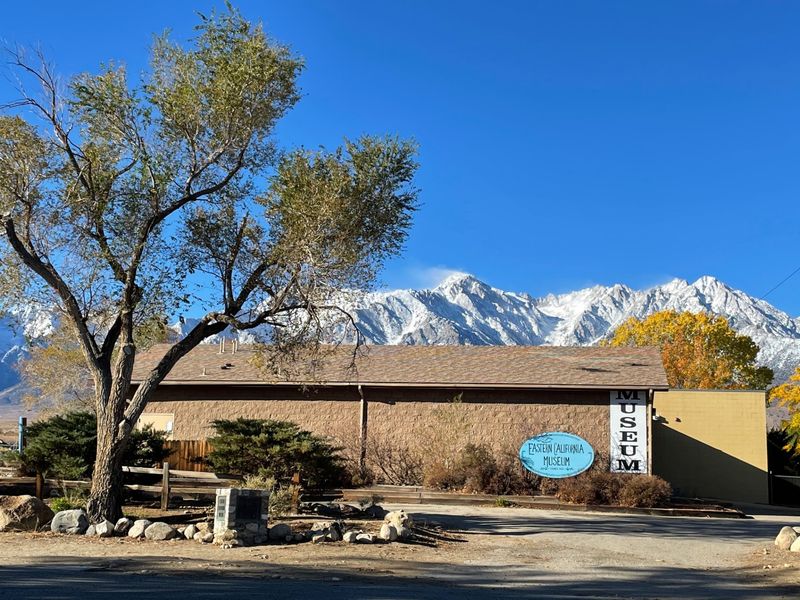
Established in 1928, the Eastern California Museum is one of the oldest and most quietly impressive museums in the state.
Located at 155 N Grant St, Independence, CA 93526, it serves as the primary keeper of Inyo County’s remarkable history, covering everything from Death Valley in the south to Bishop in the north.
The collection here is genuinely diverse in the best possible way. Dinosaur bones share space with pioneer saddles and stories of Sierra Nevada mountaineers.
One of California’s most extensive collections of Owens Valley Paiute and Timbisha baskets, totaling over 400 pieces, is on display and absolutely stunning.
Hundreds of photographs from the Manzanar War Relocation Camp, including more than 70 by photographer Toyo Miyatake, give the museum a profound emotional depth that stays with you long after you leave.
The contentious “Water War” between Los Angeles and the Owens Valley gets its own detailed exhibit, which reads like the plot of a thriller.
A Southern Pacific locomotive, a barbed wire display, and the Inyo Good Roads Club exhibit featuring vintage license plates and old road signs round out the collection beautifully. Operated by Inyo County, the museum also oversees two historic houses in Independence.
The writer Mary Austin’s former home sits just a block away, adding even more literary weight to this incredible little corner of California.
8. Tehachapi Depot Railroad Museum
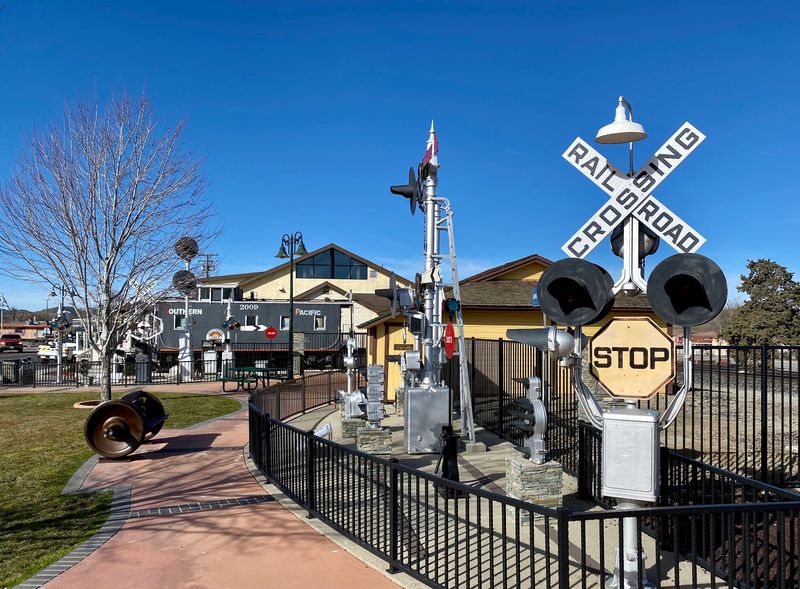
The story of the Tehachapi Depot Railroad Museum is almost as impressive as the railroad it honors. The original 1904 depot burned in a fire in 2008, and the community rebuilt it board by board in 2009.
Today, at 101 W Tehachapi Blvd, Tehachapi, CA 93561, that restored station stands as a testament to what people can accomplish when they truly care about something.
The Tehachapi Loop, one of the seven wonders of the railroad world, is the centerpiece of the story told here. Artifacts, photographs, and oral histories from railroad workers paint a vivid picture of the powerful locomotives that climbed its legendary grades.
A self-guided tour through the meticulously restored 1904 station interior makes the visit feel personal and unhurried.
The Stokoe Signal Garden is a genuine standout, proudly displaying the largest collection of Southern Pacific signals accessible to the public in the region.
Old railroad tools, signals, lanterns, and elegant dining car china fill the exhibits with a warmth that feels almost domestic. A Southern Pacific caboose is currently being restored, giving the museum an ongoing sense of life and purpose.
Remarkably, the rebuilt depot still holds its place on the National Register of Historic Places.
Few museums manage to be this historically significant and this deeply community-driven at the same time.
9. Fossil Discovery Center Of Madera County
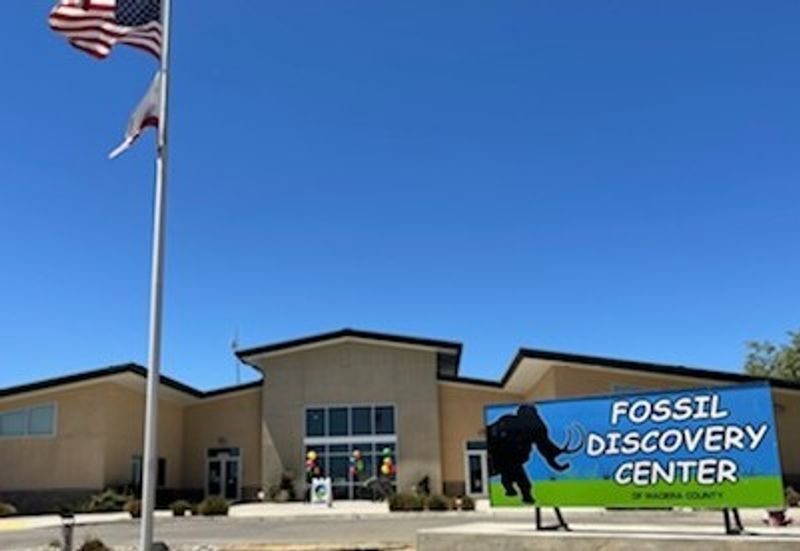
Imagine a landfill turning into one of the most significant paleontological discoveries in North America. That’s exactly what happened in Fairmead, California, when a 1993 expansion project unearthed over 15,000 fossils dating back 500,000 to 780,000 years.
The Fossil Discovery Center of Madera County, located at 19450 Ave 21 1/2, Chowchilla, CA 93610, was built to celebrate and interpret that extraordinary find.
A 13-foot tall replica of a Columbian Mammoth greets visitors with the kind of presence that makes you stop and stare.
Saber-toothed cats, dire wolves, ancient camels, pronghorns, and giant sloths are all represented in the collection, making this a Middle-Pleistocene greatest hits lineup.
A Western Camel replica adds to the prehistoric spectacle, while a mock dig site brings the excitement of discovery to life in a hands-on way.
Rocks, minerals, and Native American artifacts round out the exhibits, and the center also functions as a satellite visitor hub for the Yosemite Sierra Visitors Bureau.
The “Mammoth Orange,” a beloved historic roadside refreshment stand famous for its Alaska-Sized hamburgers and orange shakes, is currently being restored on-site.
Opened in 2010, this center proves that sometimes the most incredible chapters of Earth’s history are hiding right beneath our feet. Which California museum are you adding to your road trip list first?