
9 Iowa Hidden Gems Locals Keep Coming Back To (From A Tiny Island Town To A Legendary Food Stop)
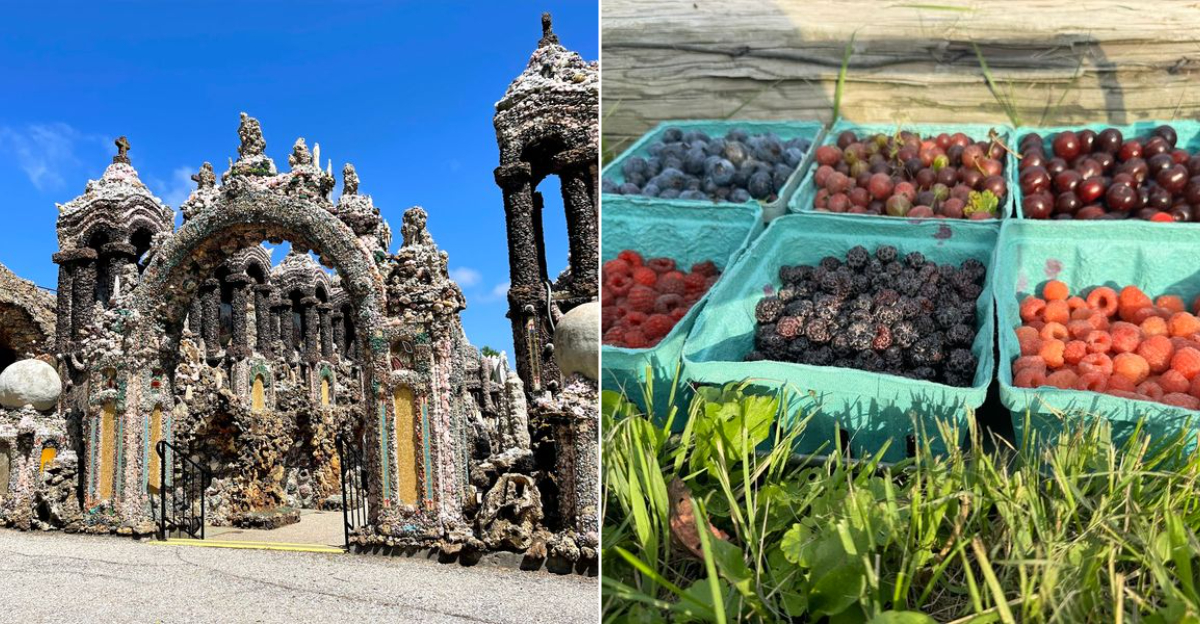
Who decided Iowa was supposed to be all cornfields and quiet highways? Because somebody clearly forgot to mention the island.
Yep, an actual little city sitting on an island in the Mississippi River, where you can wander around and wonder how this somehow feels like a mini vacation without leaving the state.
And then there’s the food stop where lunch comes with a side of local legend, plus a stretch of rock that lets you literally walk across what used to be the floor of an ancient sea.
Wait… Iowa had a sea?
Exactly.
That’s what makes these places so fun.
They’re not the obvious postcard stops you’ve already seen a hundred times. They’re the spots locals keep circling back to because there’s always another bite, story, view, or wonderfully weird detail waiting for you.
Iowa gets a lot more interesting when you know where to look.
1. Sabula, Iowa’s Only Island City
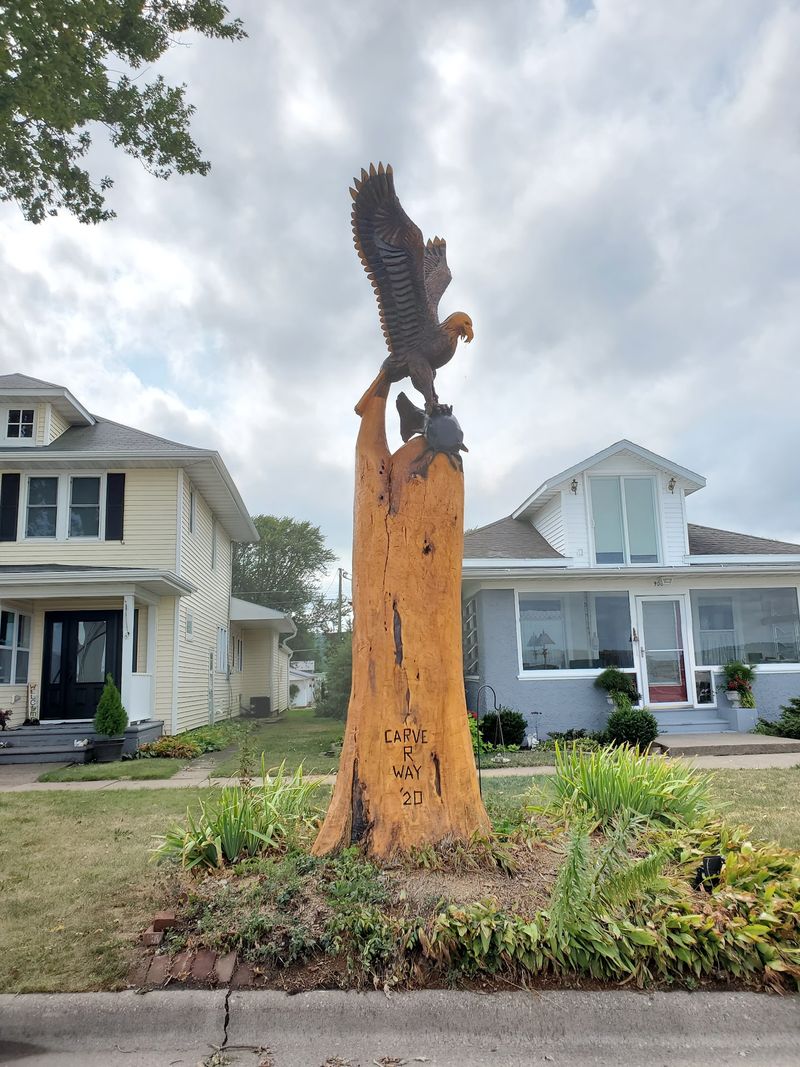
Picture a small town completely surrounded by water, sitting right in the middle of the Mississippi River. That is Sabula, and yes, it is exactly as cool as it sounds.
Located at Sabula, IA 52070, this charming little city holds the rare title of Iowa’s only island city.
The whole island situation happened back in 1939, when the U.S. Army Corps of Engineers built Lock and Dam No. 13.
The resulting floodwaters permanently submerged the lowlands to the west, turning Sabula into a true island. Before that, it was connected to the mainland by wetlands.
The name Sabula is believed to come from a French or Native American word meaning “sand,” which makes total sense given the area’s sandy soil and riverfront character.
Historically, the town thrived as a railroad hub and even had button factories that used clamshells pulled straight from the river.
Today, Sabula offers a beach, boat docks, and a campground right along the water. The Island City Days festival rolls around every late summer, drawing people in for a genuine slice of riverside Midwest life.
Visiting Sabula feels like finding a secret the rest of Iowa forgot to mention.
2. Canteen Lunch In The Alley, Ottumwa’s Legendary Food Stop
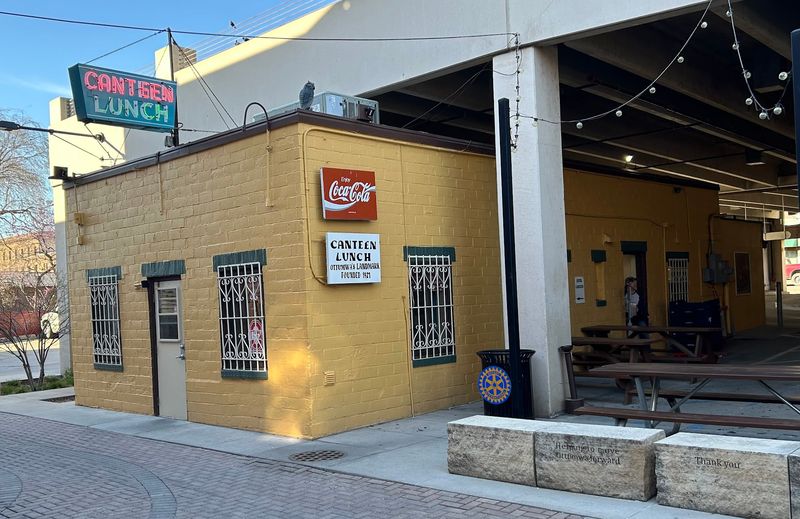
Some restaurants just have a story that makes you want to drop everything and go eat there immediately. Canteen Lunch in the Alley, tucked under a parking ramp at 112 E 2nd St, Ottumwa, IA 52501, is exactly that kind of place.
It has been serving hungry people since 1927, which means it has been doing its thing longer than most grandparents have been alive.
The star of the menu is the loose-meat sandwich, locally called a “Canteen.” It is simple, satisfying, and completely unforgettable.
The horseshoe-shaped counter with just 16 stools gives the whole place a time-capsule vibe that no amount of trendy restaurant design could ever replicate.
Here is the pop culture kicker: the Canteen actually inspired the “Lanford Lunch Box” on the beloved TV sitcom Roseanne. That is not a small deal.
The restaurant has survived demolition attempts over the years, thanks to passionate public pushback from people who understood what would be lost.
The homemade pies deserve their own paragraph, honestly. Flaky, rich, and made with the kind of care that chain restaurants simply cannot fake.
Sitting at that counter with a Canteen sandwich and a slice of pie feels like eating a piece of American history.
3. Shrine Of The Grotto Of The Redemption, West Bend’s Stone Miracle
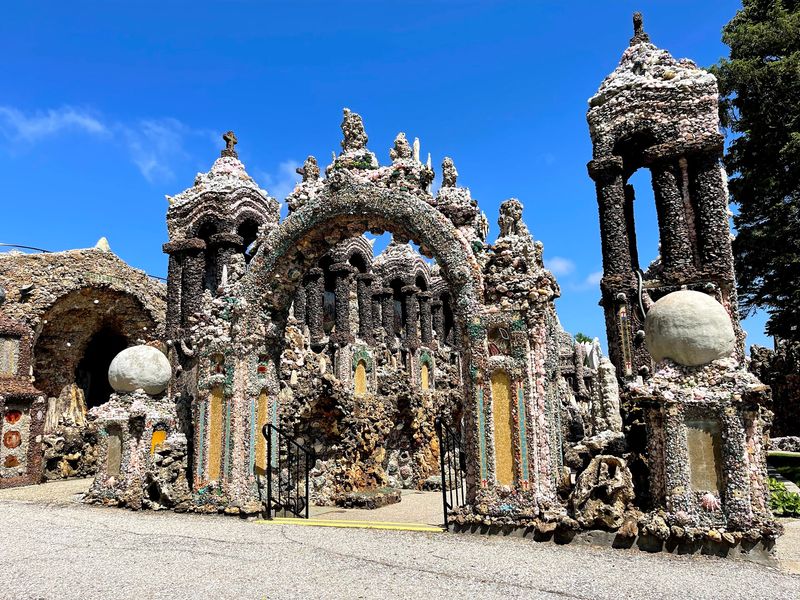
Calling the Shrine of the Grotto of the Redemption impressive would be like calling the Grand Canyon a nice hole in the ground.
Located at 208 1st Ave NW, West Bend, IA 50597, this breathtaking structure covers an entire city block and is widely recognized as the largest man-made grotto in the world.
Construction began in 1912, conceived by Father Paul Dobberstein as a personal vow to the Blessed Virgin Mary after recovering from a serious illness.
He then spent 42 years of his life setting precious stones, minerals, fossils, and petrified wood into concrete, working year-round without slowing down. The collection of gems and minerals embedded throughout the structure is valued at over 4.3 million dollars.
Nine separate grottos make up the site, each one depicting a significant scene from the life of Jesus. People have called it the “Eighth Wonder of the World,” and honestly, standing in front of it, that title starts to feel completely reasonable.
Over 100,000 visitors come through each year, drawn by the sheer scale and beauty of the place. There is something quietly powerful about a project built entirely out of one person’s faith and dedication, stone by stone, year after year.
4. Matchstick Marvels Tourist Center, Gladbrook’s Tiny Masterpieces
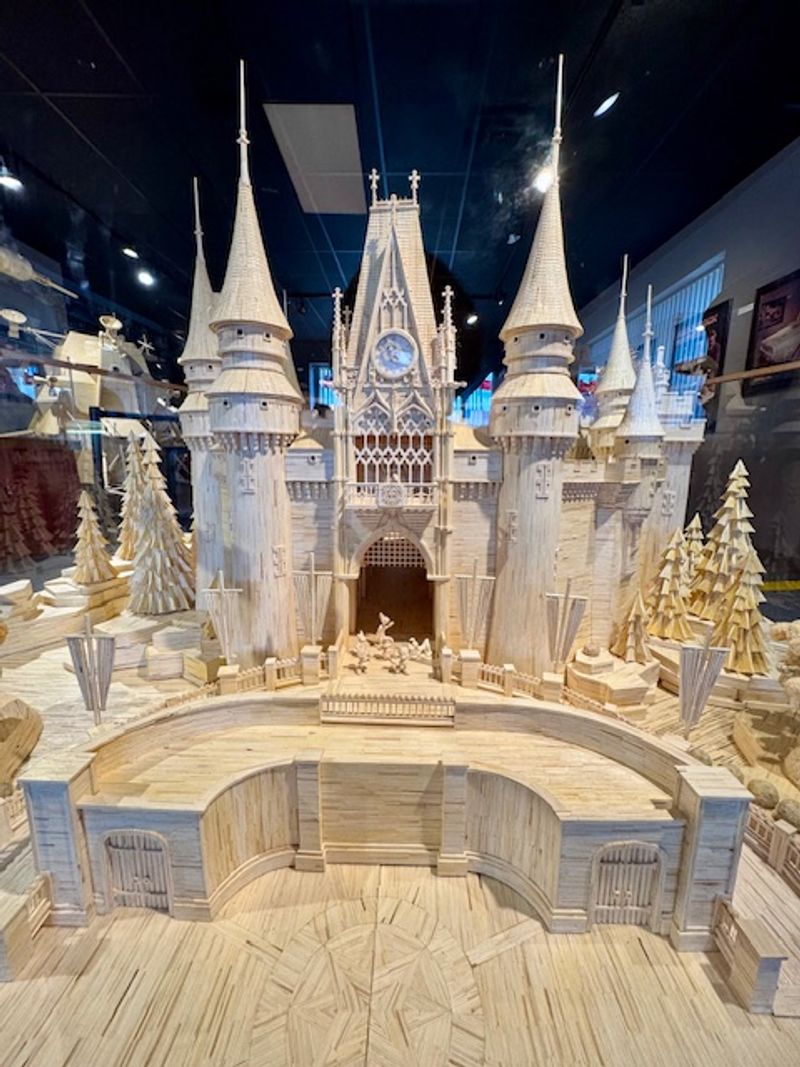
There are hobbies, and then there is what Pat Acton has been doing since 1977 in Gladbrook, Iowa. The Matchstick Marvels Tourist Center at 319 2nd St, Gladbrook, IA 50635 is home to some of the most jaw-dropping, patience-defying art you will ever encounter in your life.
Acton has used millions of matchsticks and hundreds of gallons of glue to build large-scale replicas of iconic structures.
The US Capitol stretches 12 feet long. The USS Iowa Battleship hits 13 feet.
Disney’s Cinderella Castle stands 9 feet tall and required over 607,000 matchsticks alone. Ripley’s Believe It or Not! has acquired several of his pieces for display in museums around the globe.
The museum opened in 2003 and gives visitors a front-row seat to about 20 massive models, along with Acton’s original drawings, tools, and planning documents.
Documentary videos play throughout the space, giving context to the absurd level of detail involved in each creation. Early in his career, Acton removed the sulfur tips from every single matchstick by hand before switching to tipless versions later on.
Standing in front of these sculptures, the first question that comes to mind is always the same: how on earth did someone have this much patience?
5. Berry Patch Farm, Nevada’s Pick-Your-Own Paradise
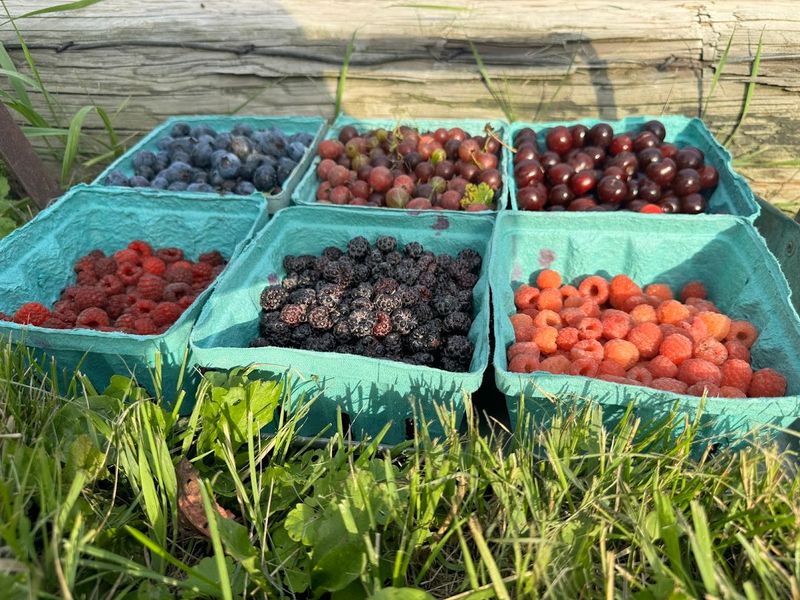
Fresh air, ripe berries, and the simple joy of picking your own food straight from the earth. Berry Patch Farm at 62785 280th St, Nevada, IA 50201 delivers all of that and then some.
This family-owned gem has been rooted in the community since the early 1970s, and it shows in every corner of the property.
The U-Pick experience is the main event here. Throughout spring, summer, and fall, the fields overflow with strawberries, raspberries, blueberries, tart cherries, apples, pumpkins, honeyberries, elderberries, gooseberries, rhubarb, and currants.
That is not a grocery list. That is a full-on seasonal adventure waiting to happen.
For anyone who would rather skip the picking and head straight to the goods, the Country Store stocks pre-picked produce alongside homemade jams, jellies, freeze-dried treats, locally sourced honey, and fresh baked goods available on Saturdays.
There is no admission fee, which makes it one of the most generous and welcoming farm experiences in the state. The farm operates with a strong focus on sustainable farming and responsible land stewardship, so everything you take home was grown with real care.
Berry Patch Farm is the kind of place that makes you slow down, breathe deeply, and remember what actually matters.
6. American Gothic House Center, Eldon’s Living Artwork
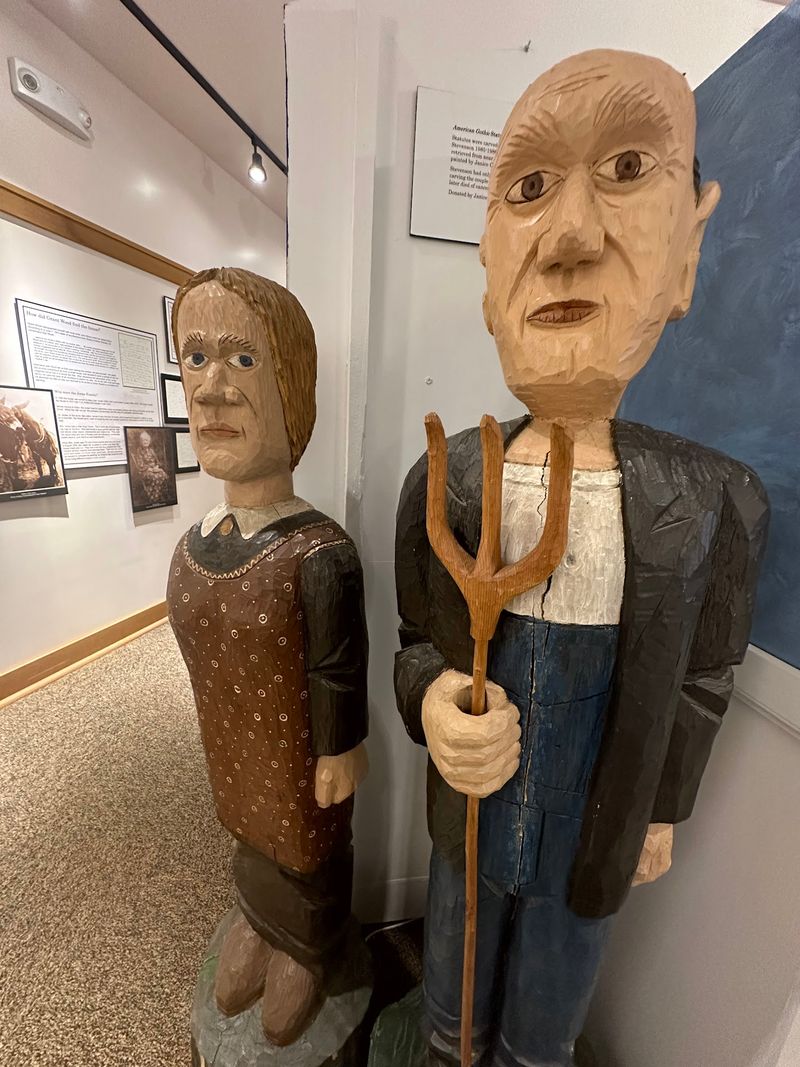
Most paintings hang quietly in a museum. This one has its own zip code.
The American Gothic House Center at 300 American Gothic St, Eldon, IA 52554 is the real-life structure that inspired Grant Wood’s legendary 1930 painting, one of the most recognized artworks in American history.
The house itself dates back to the 1880s, and its distinctive Carpenter Gothic architecture, complete with that iconic pointed upper window, is immediately recognizable.
A visitor center sits adjacent to the house and walks guests through the history of both the painting and the artist behind it. Grant Wood reportedly spotted the house on a trip through Eldon and knew instantly it was something special.
The most fun part of a visit is grabbing the provided props and recreating your own version of the famous portrait right in front of the house.
People get wonderfully creative with it. Interior tours run monthly from April through October and during special programming events throughout the year.
The blend of art history, small-town charm, and interactive photo opportunity makes this stop genuinely unlike anything else on the Iowa map. Eldon is a tiny town, but thanks to Grant Wood’s eye for a great subject, it holds a permanent place in the story of American art.
7. Clark Tower, Winterset’s Castle In The Park
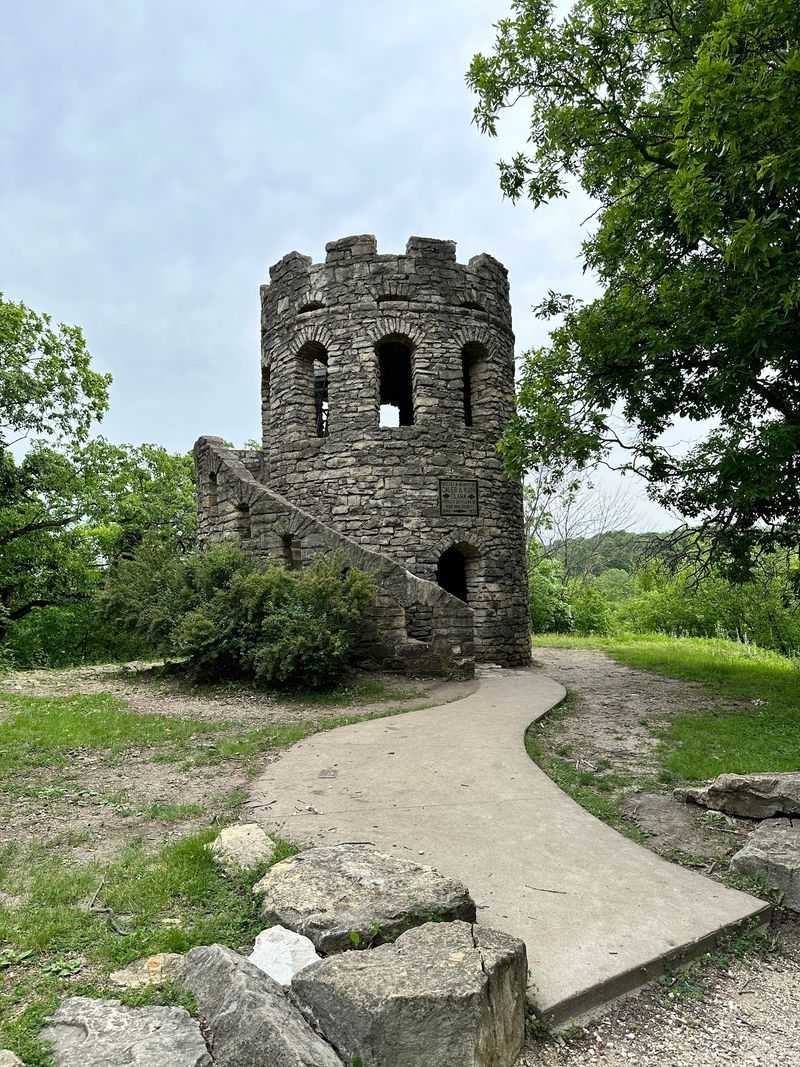
Stumbling upon a castle-like limestone tower in the middle of a Midwestern city park is not something you expect, but that is exactly the kind of surprise Winterset keeps up its sleeve.
Clark Tower, located at 300 S 9th St, Winterset, IA 50273, rises 25 feet into the sky and looks like it was pulled straight from a fairy tale.
Built in 1926 from native limestone, the tower was constructed as a memorial to Caleb and Ruth Clark, recognized as Madison County’s first pioneer family.
The craftsmanship is detailed and deliberate, with a narrow spiral staircase winding its way up to an open observation deck at the top.
From that deck, the views stretch out over the Middle River Valley in a way that genuinely earns the climb. The surrounding Winterset City Park adds to the atmosphere, with mature trees and peaceful walking paths framing the tower beautifully.
Photographers love this spot in every season, though the golden hour light in autumn turns it into something truly special.
Clark Tower is one of those places that feels both deeply local and completely timeless. It is a quiet tribute to the people who built this part of Iowa from the ground up, and it deserves far more visitors than it typically gets.
8. Devonian Fossil Gorge, Iowa City’s Ancient Sea Floor
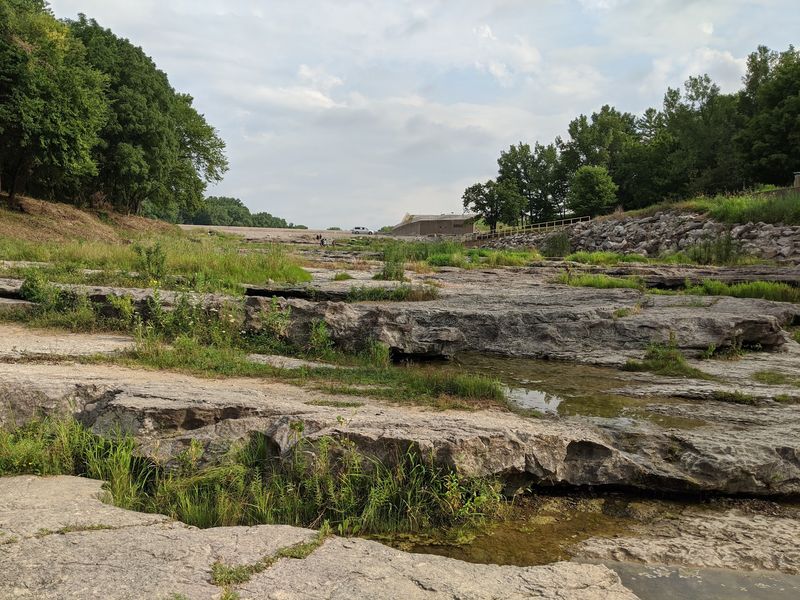
Walking on the bottom of an ancient ocean sounds like something out of a science fiction movie. At Devonian Fossil Gorge near Iowa City, it is just a Tuesday.
Located at 2850 Prairie Du Chien Rd NE, Iowa City, IA 52240, this geological wonder exposes a sea floor that existed between 350 and 375 million years ago.
The whole thing was revealed by floodwaters in 1993 and again in 2008, when powerful surges through the Coralville Spillway stripped away layers of soil and vegetation.
What they left behind is extraordinary.
Thousands of fossils are visible right on the surface, including various corals, crinoids, brachiopods, trilobites, sponges, cephalopods, primitive fish, and ancient worms.
During the Devonian period, Iowa sat beneath a warm, shallow tropical sea, which is a fact that is hard to wrap your brain around while standing in the middle of the Midwest.
Self-guided tour leaflets are available on site, making it easy to identify what you are looking at as you explore. Personal fossil collecting is not permitted, which keeps the site intact for future visitors.
Devonian Fossil Gorge is the kind of place that makes the Earth feel genuinely ancient and alive, all at the same time.
9. Maquoketa Caves State Park, Iowa’s Underground Adventure
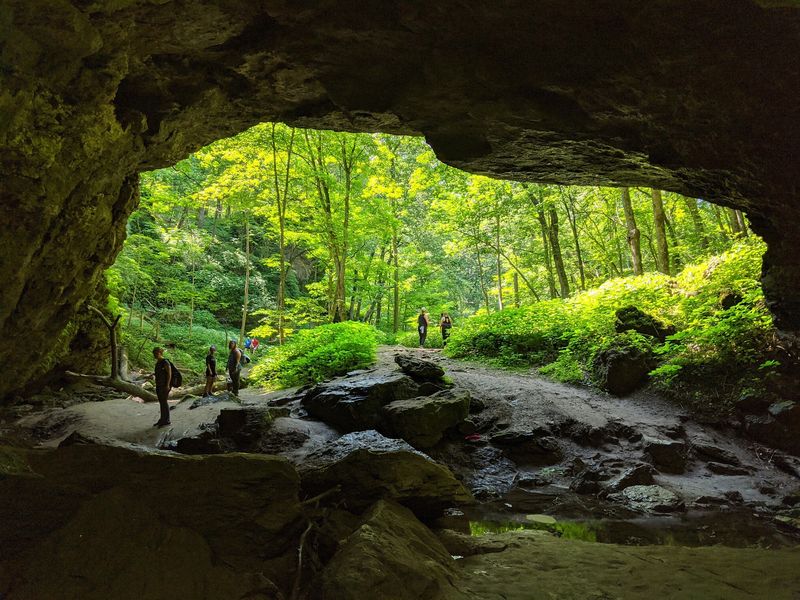
Iowa has a cave system that most people have never heard of, and that is honestly a crime. Maquoketa Caves State Park at 9688 Caves Rd, Maquoketa, IA 52060 is arguably the most unique state park in Iowa, and it is not even a close competition.
No other Iowa park comes close in terms of underground exploration.
The park spans up to 370 acres and features around 13 distinct caves tucked among towering bluffs and dense hardwood forest. A six-mile trail system connects them all, winding past geological highlights like the 50-foot Natural Bridge and the 17-ton Balanced Rock.
The caves themselves were carved over millions of years by water slowly dissolving limestone bedrock that dates back roughly 430 million years to the Silurian age.
Dancehall Cave is the crown jewel, stretching 1,100 feet long with lighting installed throughout. Visitors can walk upright through much of it, which makes it genuinely accessible.
Other caves like Hernando’s Hideaway and Shinbone Cave add variety and intrigue for more adventurous explorers. The park closes caves seasonally from November 15 through April 1 to protect overwintering bats, so timing your visit matters.
Camping is available for those who want to stretch the adventure into a full weekend. Have you ever explored somewhere that made the ground feel like a completely different world?