
This 1880s Florida Castle Is Now Filled With Bizarre And Unbelievable Treasures
Venice appears to have misplaced one of its palaces, and somehow it washed ashore in Florida wearing pink stucco and terracotta tiles.
Beside Sarasota Bay, towers rise above marble terraces while stained glass scatters color across rooms built for a circus king. Painted ceilings, carved details, and sweeping waterfront views reveal what happens when a legendary showman designs a winter home and refuses to understand the word “subtle.”
Is it a mansion, a stage set, or the most extravagant souvenir from Europe?
The answer changes from room to room.
This is Florida history performed at full volume. Every hallway carries stories of John and Mable Ringling, glittering parties, ambitious dreams, and a fortune spent with unapologetic flair.
Even the bay seems positioned for dramatic effect.
Today, visitors can step inside this remarkable home and explore a world where architecture became part of the spectacle.
Bring curiosity and prepare to stare upward. This Florida landmark proves the greatest show may have continued long after the circus tent came down.
The Name Means House Of John In A Sailor’s Dialect
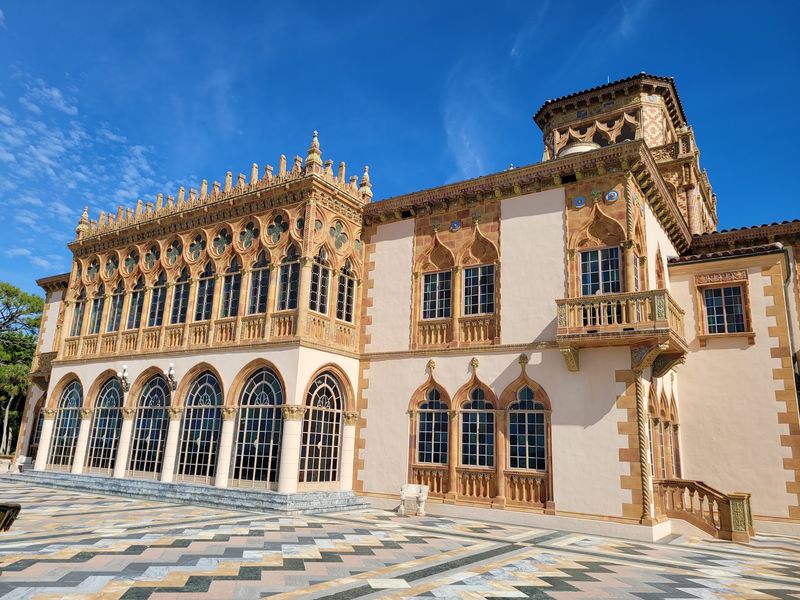
Say it out loud: Ca’ d’Zan. It rolls off the tongue like a song, and that is exactly the point.
In Venetian dialect, the phrase means House of John, and Mable Ringling chose it deliberately.
Venice was the couple’s obsession. They traveled there often, wandered the canals, and fell hard for the crumbling palazzos lining the water.
When they decided to build a winter home in Sarasota, they wanted that same feeling of a palace rising straight out of a lagoon.
Sarasota Bay stood in for the Grand Canal. The mansion was completed in 1926, and John even docked his Venetian-style gondola out front, which must have confused a few Florida fishermen.
Walking up to the house, you notice the terracotta trim, the pointed arches, and the glazed tiles catching sunlight. It does not look like anything else in Florida.
Visitors regularly say it belongs in Europe, and honestly, they are not wrong.
The name sets the mood before you even step inside. Once you know what it means, every arch and column feels a little more personal, like reading someone’s diary written in stone.
A Circus Fortune Paid For Every Single Tile
Money from elephants, acrobats, and sawdust built this place. John Ringling and his brothers ran what became the Ringling Bros. and Barnum and Bailey Circus, billed as the Greatest Show on Earth, and the profits were staggering.
He did not stop at the big top. Ringling poured his earnings into railroads, oil, and Sarasota real estate until he was considered one of the richest men in America during the 1920s.
The mansion cost a reported fifteen million in today’s dollars, though sources vary, and it shows in every corner. Imported marble, hand-glazed tiles, custom ironwork, and shipped-in ceiling paintings all arrived by boat and rail.
What makes it fun is knowing the source. This is not old-money aristocracy with dusty family crests.
It is a showman’s palace, built by a guy who understood spectacle better than almost anyone alive.
You can feel that theatrical instinct in the design. Everything is arranged for maximum impact, from the grand entry to the bay-facing windows.
Ringling never lost his circus eye. He simply pointed it at architecture instead of a three-ring stage, and Sarasota got a permanent showstopper out of the deal.
Stained Glass Windows Scatter Color Across The Rooms
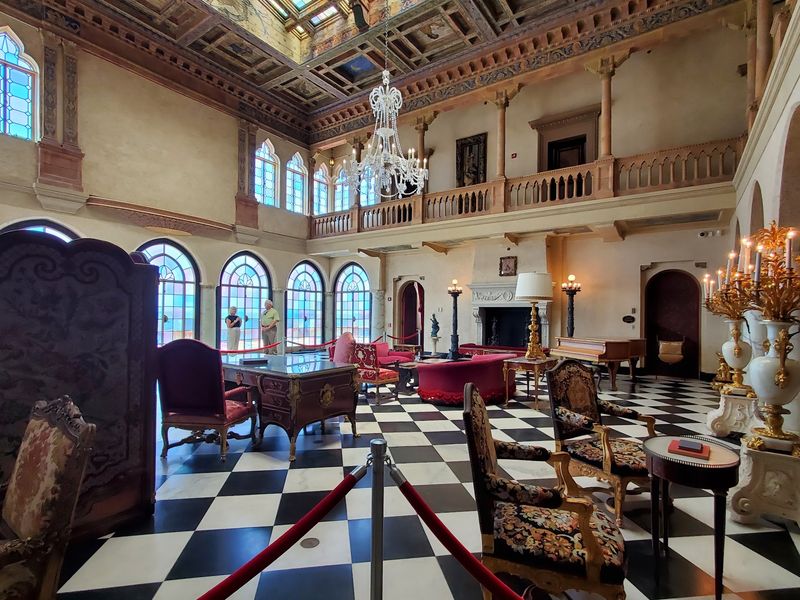
Sunlight does something strange here. Over a thousand pieces of colored glass are set into the windows of Ca’ d’Zan, and when afternoon light hits them, the rooms fill with drifting patches of ruby, amber, and deep blue.
The great court, the mansion’s soaring central room, is where the effect really lands. Look up and you see a skylight of tinted glass floating high above the balconies.
Visitors often stop mid-sentence when they walk in. There is something about standing in a pool of colored light that quiets a room full of tourists.
Glass was one of Mable’s passions, and it connects back to Venice again, where glassmaking has been an art form for centuries. Some pieces were sourced from Europe, others made specifically for the house.
Timing matters if you want the full show. Mid-morning through early afternoon usually gives the strongest light, so plan your visit accordingly rather than arriving right before closing.
Bring a camera, but also just stand still for a minute. Photos flatten the effect, and the real thing is worth experiencing with your own eyes first.
Ceilings Painted By Artists and Shipped Across An Ocean
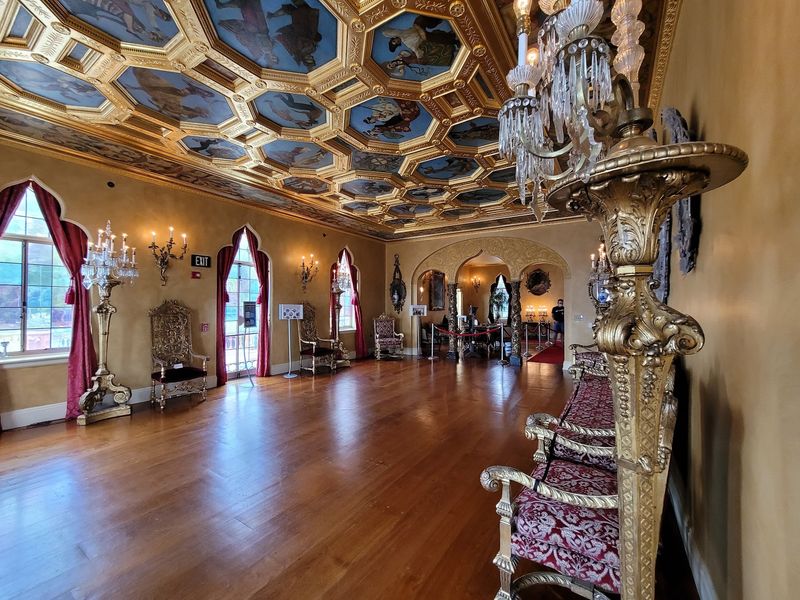
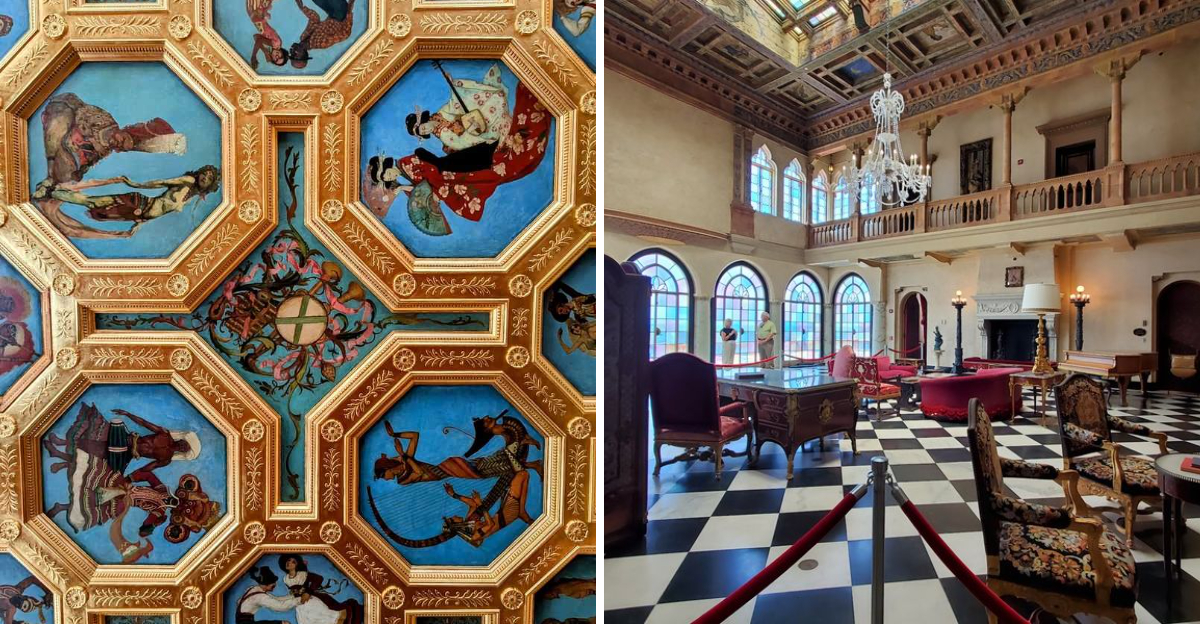
Look up. Seriously, keep looking up the entire time you are inside, because the ceilings at Ca’ d’Zan are half the attraction and most people miss them.
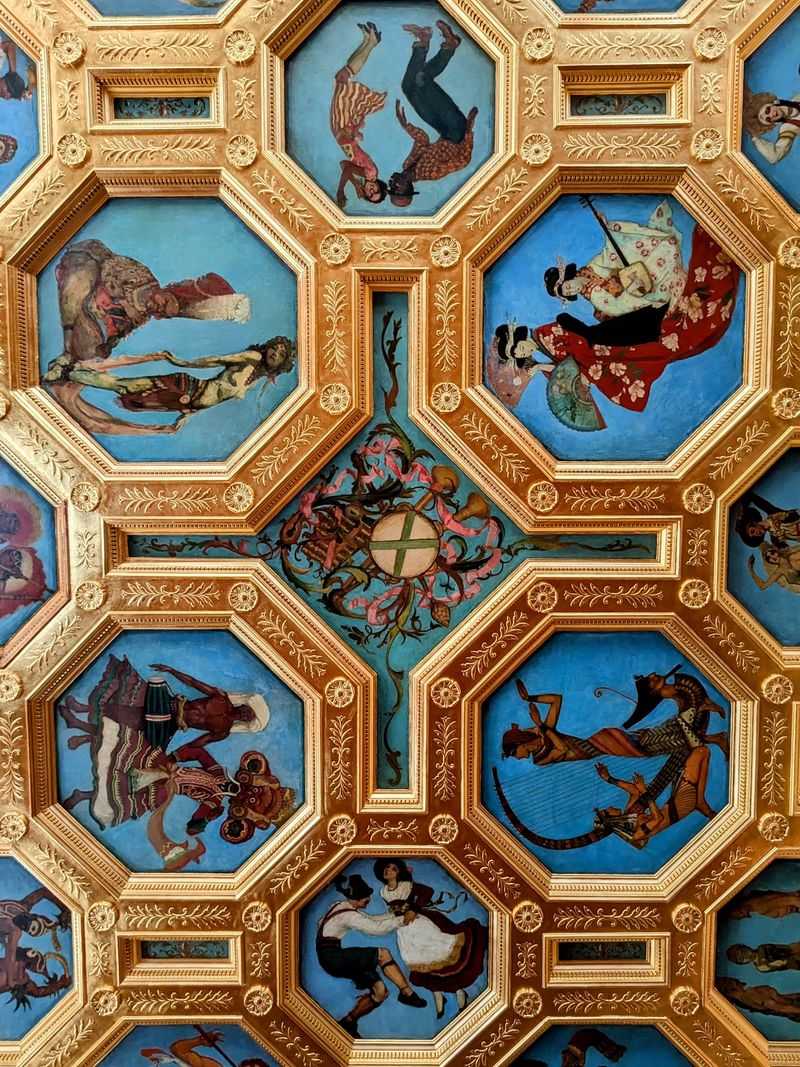
The ballroom ceiling is the showstopper. Titled Dancers of the Nations, it features dozens of painted figures in costume, created by Hungarian-born artist Willy Pogany, who also worked designing sets for Broadway and Hollywood.
Some ceiling panels were painted elsewhere and then shipped in and installed, which sounds like a logistical nightmare for the 1920s. Crates of art crossed the ocean, traveled by rail, and were fitted into place by hand.
Guests on tours often mention neck aches, and that is a compliment. Every room seems to hide something overhead, whether it is gold leaf, carved beams, or a swirl of painted clouds.
A tip worth remembering: download the museum’s audio guide app when you arrive. It points out ceiling details you would otherwise stroll right past.
The effect is theatrical, warm, and a little dizzying. Ringling wanted his guests to feel entertained the moment they looked anywhere, and the ceilings still deliver on that promise a century later.
The Marble Terrace Is Basically A Front Yard On The Water
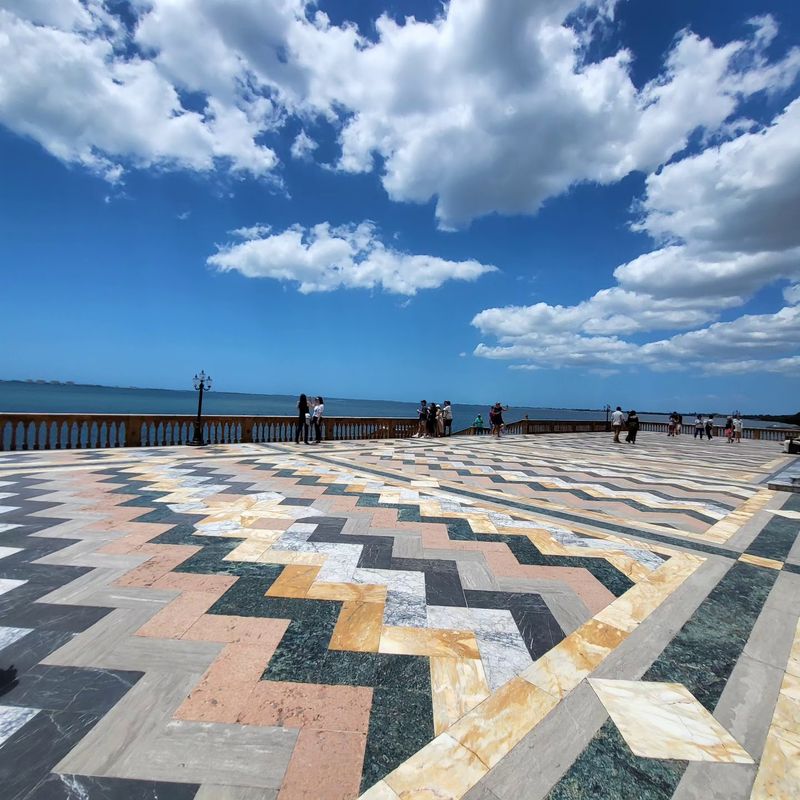
Step out the back doors and the whole mood changes. A vast terrace of patterned marble stretches toward Sarasota Bay, and the breeze coming off the water hits you immediately.
The marble is laid in a checkerboard-style design that photographs beautifully, especially near sunset when the stone glows warm. Reviewers regularly call this their favorite spot on the entire property.
This is where the Ringlings entertained. Picture jazz drifting out from the ballroom, guests holding cocktails, boats bobbing at the dock, and the sun sinking behind the barrier islands.
You can walk the terrace even on days when interior access is limited, which matters because the mansion has undergone repairs following hurricane damage in recent years. Restoration work continues in phases.
Bring sunglasses. There is very little shade out here, and Florida sun bouncing off pale marble is no joke, especially between May and September.
Sunset visits get recommended constantly by people who have been. The colors over the bay turn pink and orange, the crowds thin out, and for a few minutes the terrace feels almost private.
It is the single easiest wow moment on the property.
Zodiac Symbols Ring The Top Of The Belvedere Tower
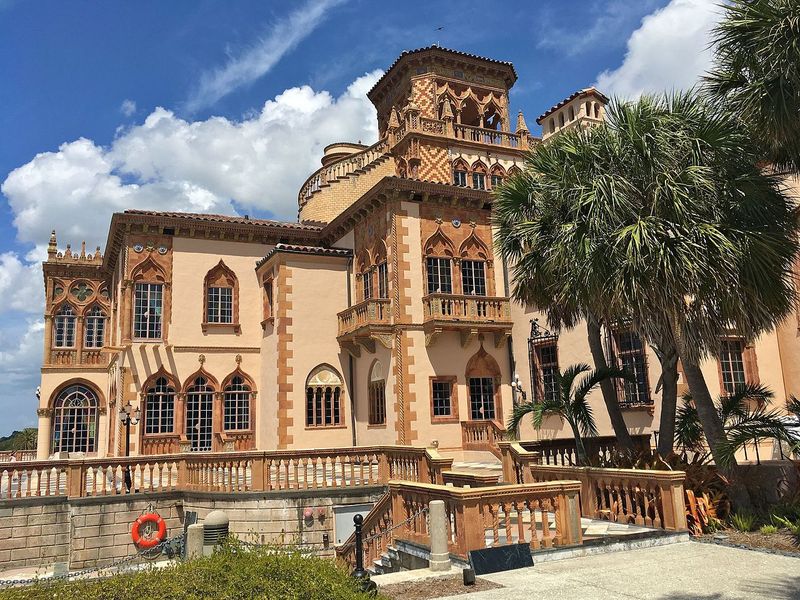
Here is a detail almost nobody notices from ground level. Circling the top of the mansion’s tower are zodiac symbols worked into the decoration, a quirky flourish that visitors describe with real delight once a guide points it out.
The tower itself is called a belvedere, which is Italian for beautiful view, and it earns the name. Climbing it means a narrow, single-file spiral staircase and a payoff of sweeping bay views from way up high.
One reviewer shared a warning worth repeating. Guides tell climbers not to stare down at the moving water, because the motion can make you feel like you are swaying too.
Wind up there can be fierce. On gusty days the open platform turns into something closer to a lighthouse experience.
Tower access has been closed at times for restoration, so check before you go if this is your main draw. Policies shift as repair work progresses.
Another charming carving to hunt for: a small figure of Pan above one of the tour entrance doors. The house is packed with these little jokes hiding in plain sight.
Mable Ringling Ran The Whole Building Project Herself
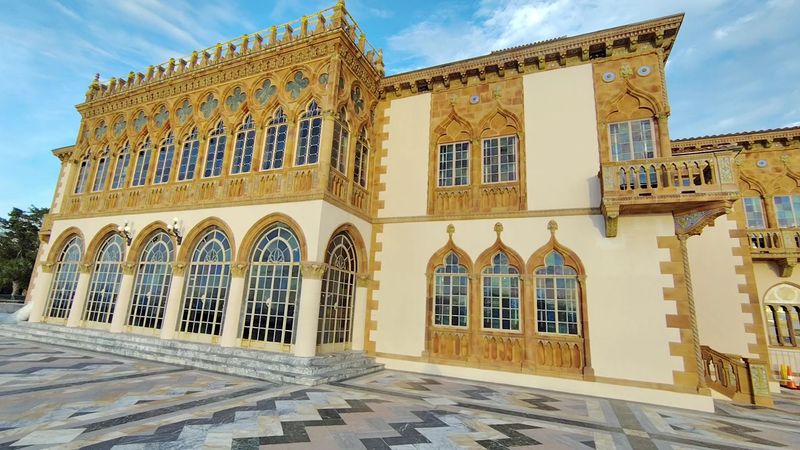
Behind the marble and gold sits a woman who deserves top billing. Mable Ringling drove the design of Ca’ d’Zan, collecting ideas, photographs, and postcards from their European travels and pushing to get every detail right.
She worked with architect Dwight James Baum, and the two of them reportedly clashed plenty. Mable knew exactly what she wanted and was not shy about saying so.
One tour visitor put it perfectly, saying the lengths Mable went to in decorating the mansion are mind boggling. Materials came from Italy, Spain, and beyond, sourced piece by piece.
Her fingerprints are everywhere. The rose garden on the grounds was hers, planted in 1913 before the house even existed, and it still blooms today in a circular design she laid out.
Sadly, she only got a few years in her dream home.
Knowing that gives the place a bittersweet edge. You are walking through a woman’s vision that she barely had time to enjoy, which somehow makes every carved detail feel more precious.
Hollywood Turned The Mansion Into Miss Havisham’s Ruin
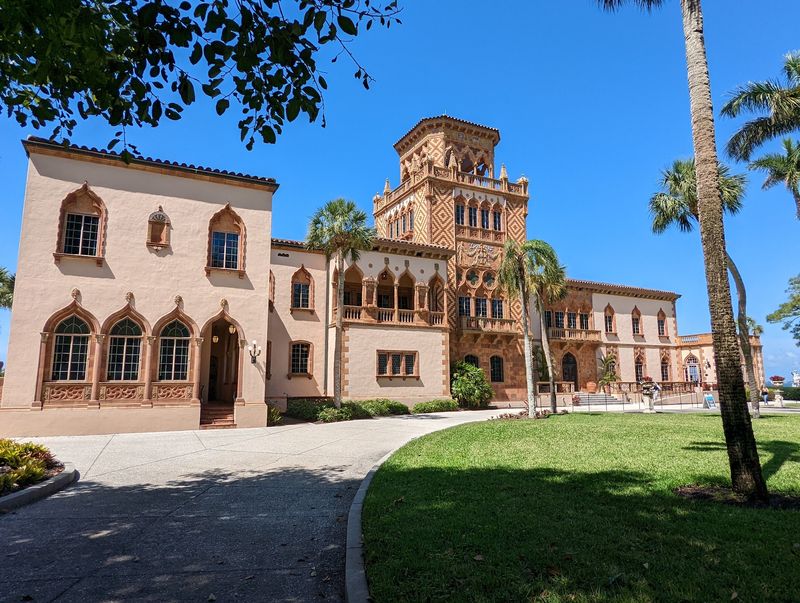
Before the careful restorations, Ca’ d’Zan spent decades falling apart. Paint peeled, plaster cracked, and the once-glittering palace looked genuinely haunted.
Film crews loved it. In the 1998 movie Great Expectations, starring Ethan Hawke and Gwyneth Paltrow, the decaying mansion played the crumbling home of the reclusive character based on Miss Havisham.
Watching that film after visiting is a strange experience. Rooms you saw gleaming under chandeliers appear on screen overgrown and shadowy, which tells you just how far the restoration came.
A major multi-year project completed in the early 2000s brought the house back, costing millions and involving specialists in glass, marble, and terracotta. The results are what visitors see today.
Hurricane damage in recent seasons meant more repair work, and the museum has been open about ongoing restoration. Some spaces occasionally close while crews work.
Rather than being a disappointment, that history adds texture. You are not looking at a frozen museum piece but at a building that has been battered, abandoned, rescued, and battered again.
It keeps surviving, which feels appropriately dramatic for a house built by a circus man.
Upstairs Tours Reveal Bedrooms, Marble Baths, And A Painted Mirror
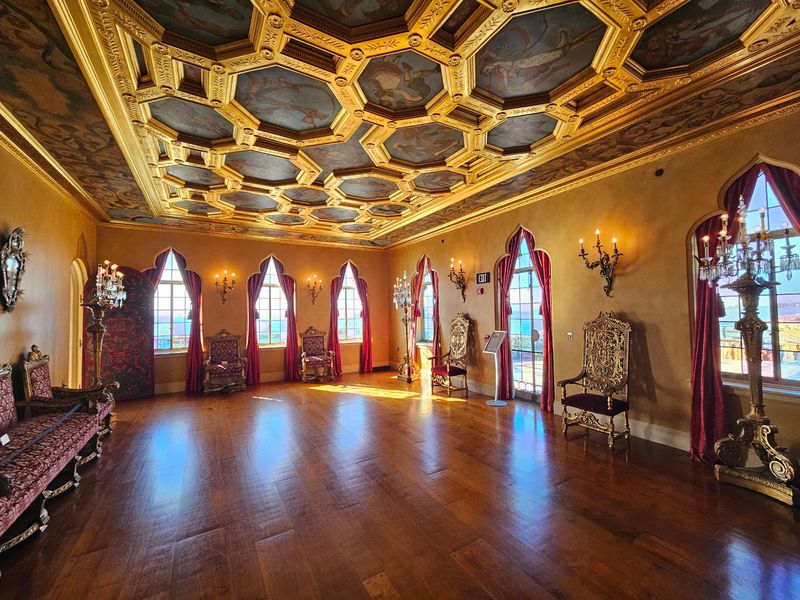
Ground floor access is nice. The upstairs tour is where things get genuinely jaw-dropping, and it requires a separate ticket with limited group sizes, often around eight people.
John and Mable each had their own bedroom suite, and the difference in style is fascinating. Mable’s rooms lean bright and delicate, while John’s feel heavier and darker.
The bathrooms steal the show for many guests. One suite features original Siena and violet-toned marble that stops people in their tracks, and there is a hand-painted mirror that tour-takers rave about.
Looking down from the upstairs balconies into the great court gives you a totally different sense of scale. The room feels enormous from above.
Guided tours run only a few times per day and sell out, so booking ahead online is smart. Expect a higher price than general admission, with full-tour tickets reported around forty dollars, though pricing changes.
Guides tend to be knowledgeable and relaxed about photography, based on visitor accounts. The small group size means you can actually ask questions.
If your budget allows one splurge on the property, most repeat visitors say make it this one.
Planning Your Visit: Hours, Parking, And Smart Timing
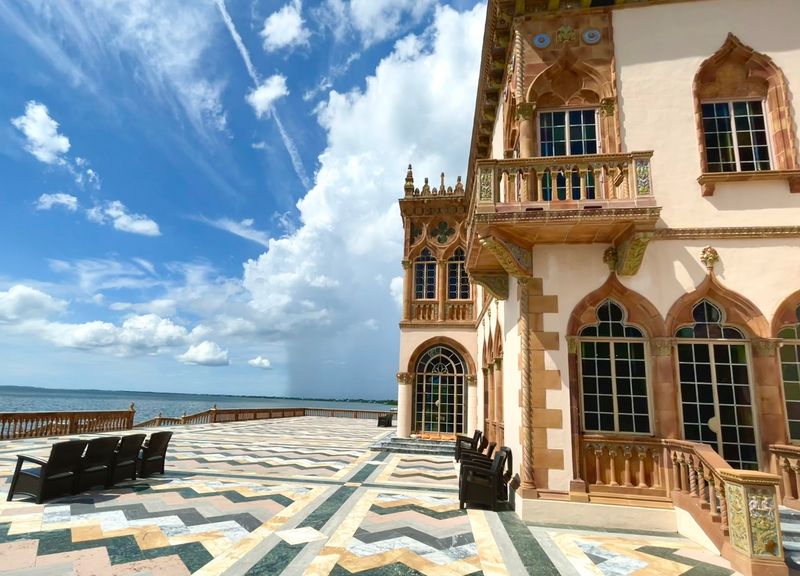
Practical stuff, quickly. Ca’ d’Zan sits at 5401 Bay Shore Road in Sarasota and generally opens daily from 10 AM to 5 PM, though seasonal changes and holiday closures happen, so a quick check of ringling.org or a call to 941-359-5700 saves headaches.
Parking on the estate is free and plentiful, but the lot fills fast in winter when snowbirds arrive. Morning arrivals beat both crowds and heat.
Summer visitors, take the advice locals repeat: come early. Florida humidity after noon makes strolling the gardens genuinely uncomfortable.
Admission to the wider Ringling estate covers the art museum, circus museum, and grounds, with mansion interior access and guided tours costing extra. Prices shift, so treat any figure you read as approximate.
The grounds are lovely on their own. Massive banyan trees, the rose garden, and the bayfront walkway are worth an hour even without stepping inside.
Accessibility varies by area, since the tower stairs and some upstairs rooms cannot accommodate wheelchairs. Ground floor and terrace access is generally better, and staff are widely praised for being helpful.
Budget three hours minimum. Most people wish they had stayed longer.