
10 Jaw-Dropping Colorado Spots That Belong On Your Photography Bucket List
Some landscapes practically pose for the camera, while others make you earn every frame. Few places keep a photographer busier than Colorado, where dramatic changes in color, elevation, and terrain can happen within a single day’s drive.
One moment you are working with sharp rock formations and deep shadows, and later you are trying to fit an enormous stretch of open sand or mountain water into one composition. That variety is what makes the challenge so much fun.
You start noticing lines, reflections, textures, and tiny shifts in light that would be easy to miss without a camera in your hand. What keeps Colorado interesting is how completely the scenery can change without losing its sense of scale.
Pack a charged battery, bring more patience than you think you need, and wear shoes built for wandering past the obvious viewpoint. The best photograph is rarely waiting beside the parking space.
1. Maroon Bells, Aspen / Snowmass
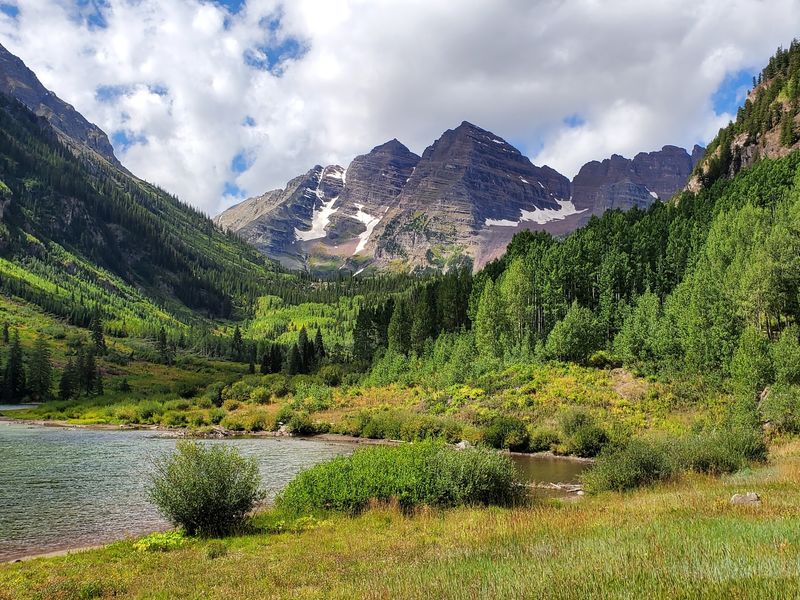
Some mountain views are famous because a postcard committee got lucky. Maroon Bells earned its reputation honestly, with two sharp Elk Mountains peaks rising above Maroon Lake near Aspen and Snowmass.
The Maroon Bells are often described as among the most photographed mountains in North America, and the reason is practical as much as pretty: water, peaks, trees, and foreground all line up in one clean frame. The area is within the Maroon Bells-Snowmass Wilderness, and access is managed carefully because so many people want that same frame.
Photographers should check current access rules before going, since shuttle service, parking reservations, and seasonal road conditions can affect plans. The lake area is the classic composition, but even small changes in position can shift the reflection and keep your photo from looking like everyone else’s refrigerator magnet.
Colorado has many grand alpine scenes, but Maroon Bells feels especially orderly, as if the mountains briefly agreed to pose. That does not happen often, so pack a lens cloth and act grateful.
2. Garden of the Gods, Colorado Springs
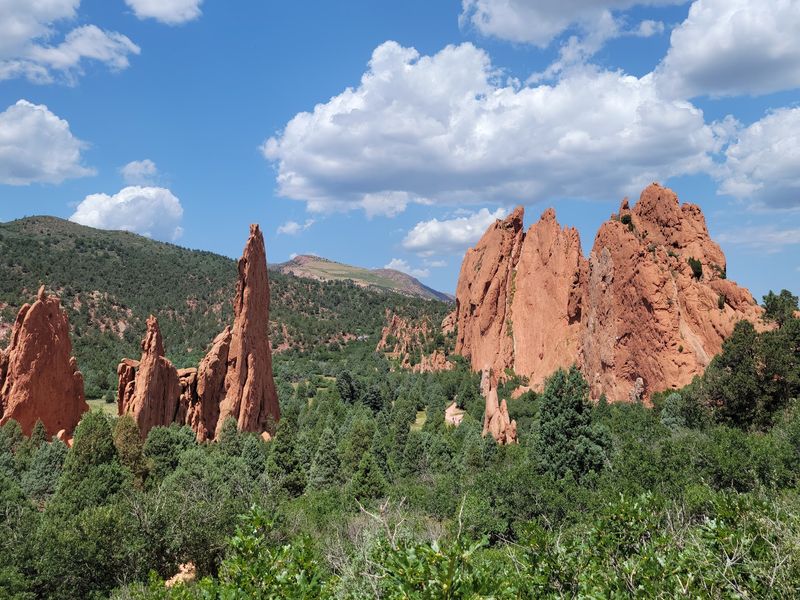
Red rock formations are not exactly shy, and Garden of the Gods proves the point before you even find a parking space. In Colorado Springs, giant sandstone fins stand upright with Pikes Peak often visible beyond them.
The park is a registered National Natural Landmark, and its rock layers tell a long geologic story without making visitors read a textbook in hiking boots. Balanced Rock, Kissing Camels, and the Central Garden area give photographers clear subjects with strong lines and bold color.
Garden of the Gods is also refreshingly usable for mixed groups. Paved paths in the central area help families, couples, and travelers with limited time reach strong viewpoints without turning the outing into a gear test.
Because the park is free and popular, photographers should plan with patience and keep an eye on posted rules that protect the fragile landscape. The best pictures here often use people or pathways for scale, since the formations are larger than they appear in a quick phone snapshot.
Colorado Springs gets the drama, and your camera gets a very cooperative geology lesson.
3. Great Sand Dunes National Park and Preserve, Mosca / Alamosa
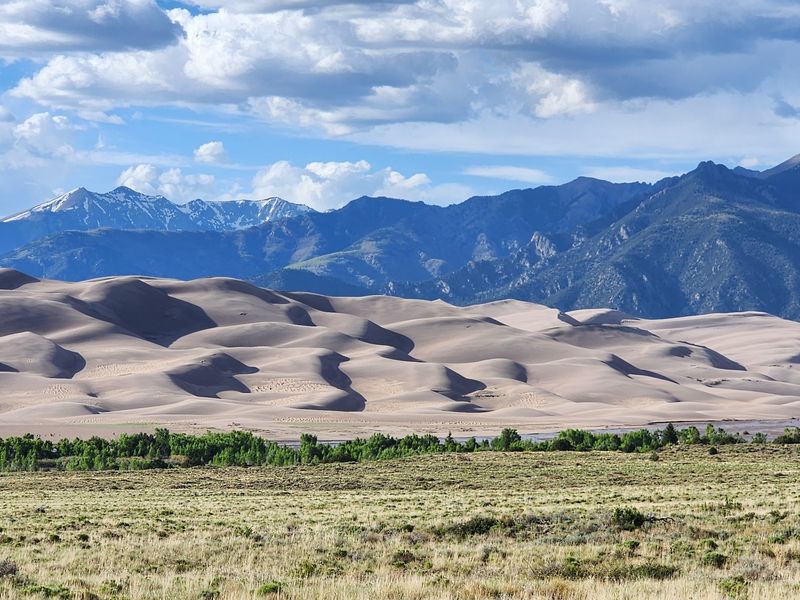
A camera may briefly wonder whether it has left Colorado at Great Sand Dunes National Park and Preserve. The tallest dunes in North America rise below the Sangre de Cristo Mountains, which is a wonderfully odd pairing.
The park protects a huge dune field, along with grasslands, wetlands, forests, alpine lakes, and tundra in the preserve. For photography, that means you can work with repeating sand patterns in one direction and snow-dusted or rocky mountain forms in another, depending on the season.
Medano Creek, when flowing in spring and early summer, adds a reflective foreground and a playful problem for anyone trying to keep sand out of expensive equipment. Visitors should check current conditions, since creek flow, weather, and access can change quickly in this high, exposed landscape.
Simple compositions work well here: one person on a dune ridge, one curve of shadow, one clean mountain backdrop. Great Sand Dunes rewards photographers who think about scale.
Without a person or landmark, the dunes can look like a sandbox. With scale, they look properly enormous.
4. Paint Mines Interpretive Park, Calhan
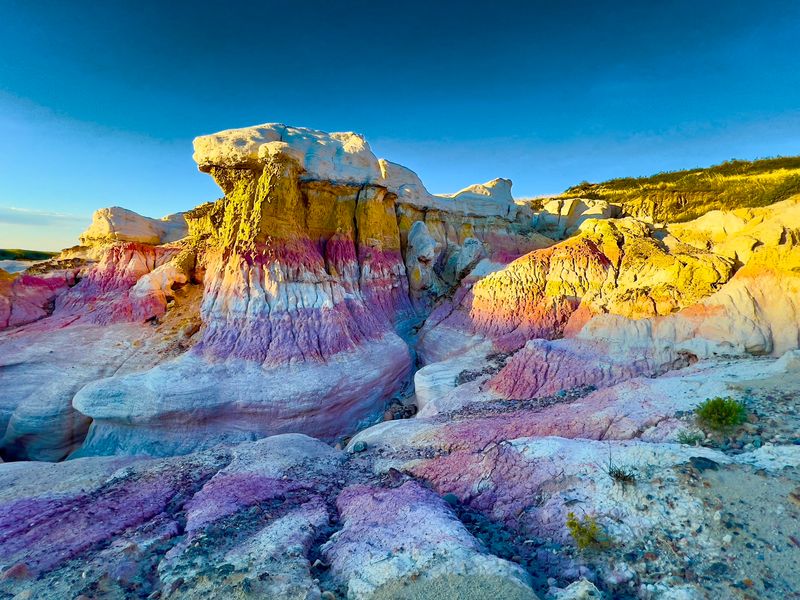
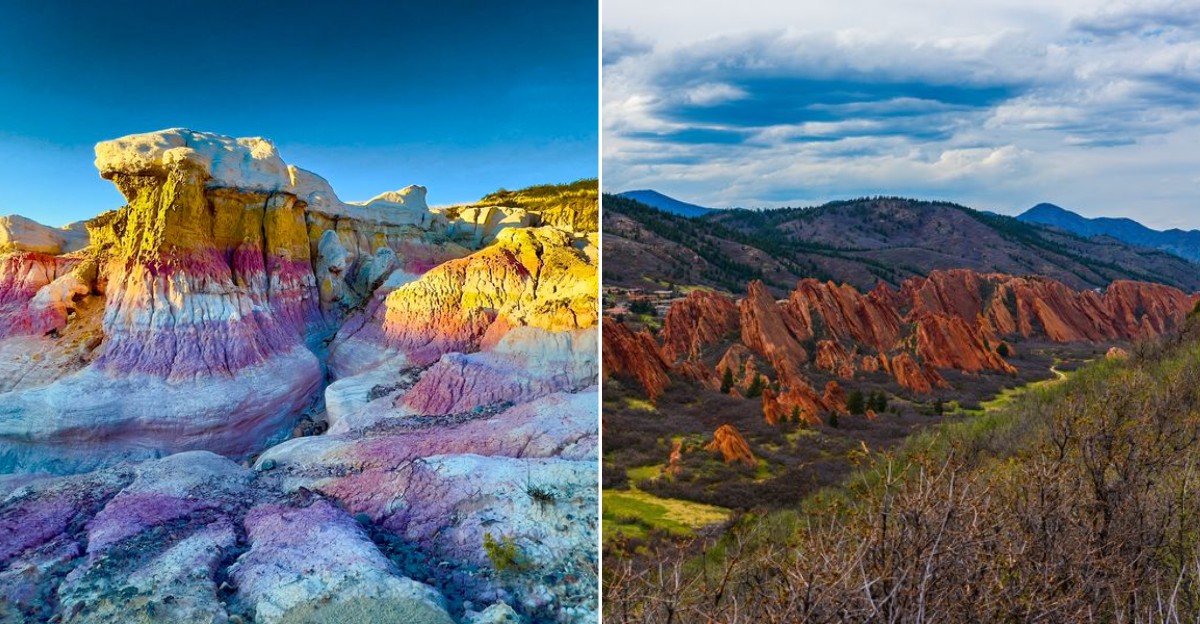
Color shows up in strange little bursts at Paint Mines Interpretive Park, as if the prairie kept a secret art drawer. Near Calhan, the park is known for clay formations streaked with pink, orange, yellow, and white.
The site covers about 750 acres and includes hoodoos, spires, gullies, and interpretive trails. Its name comes from the colorful clays, which Native American peoples used for pigments, according to El Paso County park information.
For photographers, Paint Mines is less about huge mountain scale and more about close observation. The shapes are delicate, and the colors can change with light, cloud cover, and angle, so wandering slowly with a midrange lens may be more useful than racing for a single overlook.
Visitors must stay on marked trails and out of closed restoration areas, because the formations are fragile and erosion is part of the story here. That rule is not a creativity killer.
It is a helpful frame. Paint Mines Interpretive Park asks photographers to work carefully, and the reward is a set of images that feels very different from Colorado’s more familiar peaks and pines.
5. Black Canyon of the Gunnison National Park, Montrose / Gunnison
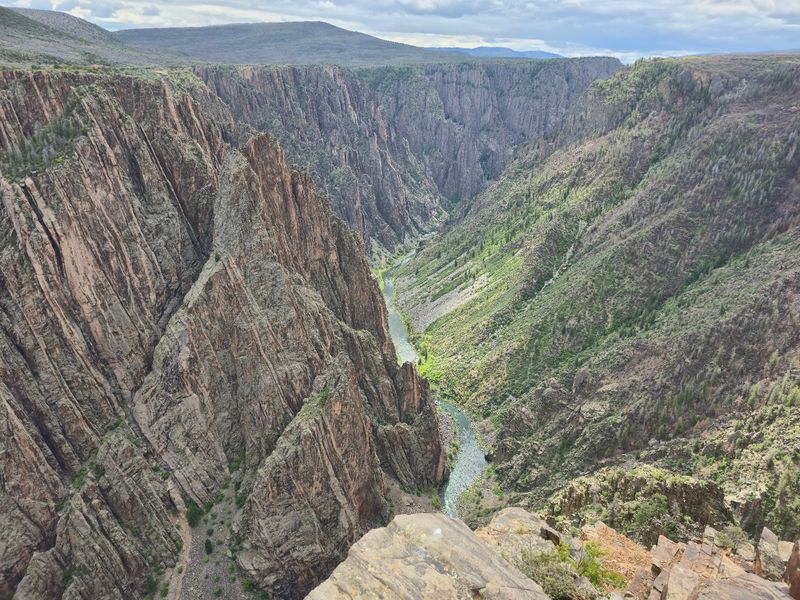
Not every canyon wants to be wide and sunny. Black Canyon of the Gunnison National Park goes for narrow, deep, and serious, with the Gunnison River far below walls of dark Precambrian rock.
The canyon is so steep in places that sunlight reaches some sections only briefly, which explains the name without any marketing committee assistance. The South Rim, reached from the Montrose side, has overlooks such as Gunnison Point, Chasm View, and Painted Wall View, where the scale can make a wide-angle lens feel underqualified.
Photographers should treat this park as a study in contrast. Bright sky, shadowed rock, pale pegmatite bands, and a thin ribbon of river create strong graphic shapes.
A tripod can help at overlooks when light levels drop, though visitors should always stay behind railings and on established paths.
Colorado often gets praised for big views, but Black Canyon adds a sharper mood to the collection. It is not cute, and it does not try to be.
The photographs work because the canyon’s geometry is severe, ancient, and wonderfully uncompromising.
6. Colorado National Monument, Grand Junction / Fruita
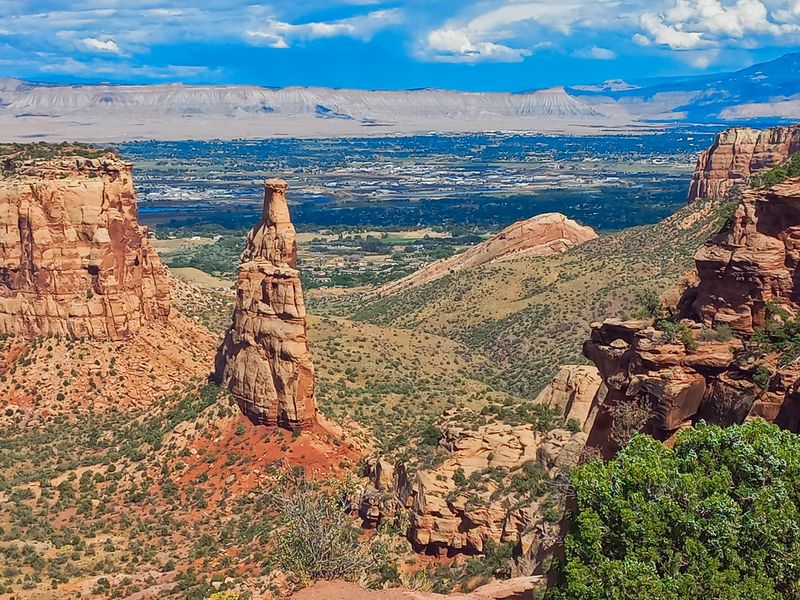
Colorado National Monument has the confidence of a place that knows red rock can do most of the talking. Between Grand Junction and Fruita, it protects canyons, cliffs, and tall sandstone monoliths on the northeast edge of the Colorado Plateau.
Rim Rock Drive is the main photography gift here, running for 23 miles through the monument with signed overlooks. Independence Monument, Monument Canyon, and the Book Cliffs in the distance give photographers layers, lines, and helpful depth without demanding a backcountry expedition.
The road includes curves, tunnels, and steep drop-offs, so drivers should enjoy the scenery only when safely parked. That sounds obvious, but red rock has a way of making otherwise sensible adults behave like distracted squirrels.
For image making, Colorado National Monument is especially good for compositions that include both desert foreground and big geologic structure. Juniper, pinyon pine, cactus, and rock ledges can keep the frame from becoming only a wall of orange stone.
The monument shows a different face of Colorado, drier and more sculpted, where the landscape feels built from patience and very old weather.
7. Mesa Verde National Park, Cortez
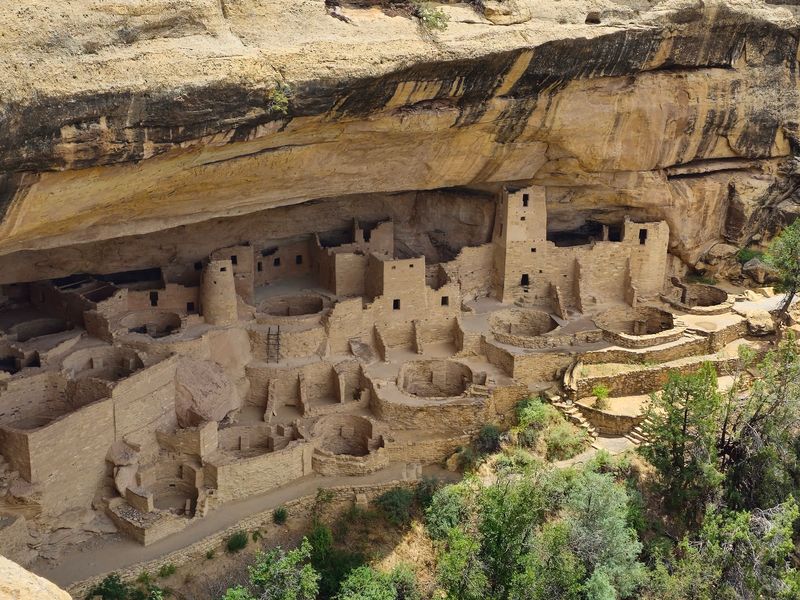
A photograph at Mesa Verde National Park has to carry more than scenery. Near Cortez, the park protects Ancestral Puebloan archaeological sites, including cliff dwellings built into sandstone alcoves.
Mesa Verde became a national park in 1906 and is also a UNESCO World Heritage Site. Cliff Palace is the park’s largest cliff dwelling, and many of the best-known sites can be seen from overlooks or visited only on ranger-led tours when those tours are available.
That matters for photographers, because access is not the same everywhere. Some areas require tickets, some routes involve ladders or uneven steps, and seasonal closures can affect what is open.
Checking the official park schedule before leaving town is not glamorous, but neither is discovering your planned subject is off-limits.
Photographically, Mesa Verde rewards respect and patience. Wider shots show the architecture in its cliff setting, while tighter frames can focus on masonry, alcove shadows, and the relationship between built space and stone.
Among Colorado destinations, this one adds deep human history to the visual drama. The camera is useful here, but the context matters just as much as the composition.
8. Roxborough State Park, Littleton
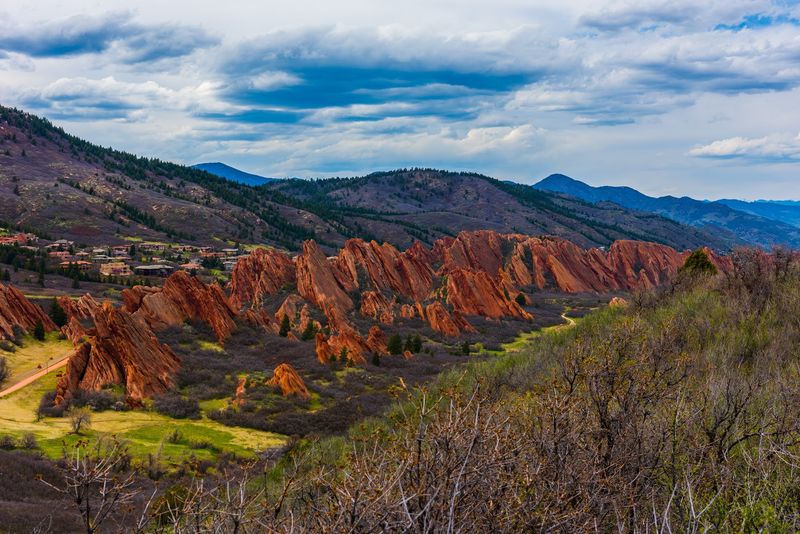
Roxborough State Park feels like geology decided to lean dramatically for the family photo. Near Littleton, the park is known for steeply tilted red sandstone formations that belong to the same Fountain Formation seen at Garden of the Gods and Red Rocks.
The park is designated as a National Natural Landmark, and it protects foothills habitat along with striking rock ridges. Trails such as the Fountain Valley Trail and South Rim Trail give photographers different angles on the slanted slabs, grasslands, and distant higher country.
Roxborough is a day-use state park, and pets, bikes, drones, camping, and horses are not allowed, rules that help protect wildlife and the landscape. Photographers should check Colorado Parks and Wildlife information for current hours, passes, and trail conditions before heading out.
The appeal here is not just red rock color. It is the geometry.
The rocks cut across the land in strong diagonals, which can make even a simple composition feel organized. Roxborough State Park suits photographers who like clean lines, natural texture, and a place where the rules are clear enough that nobody has to improvise with a tripod and wishful thinking.
9. Red Rocks Park and Amphitheatre, Morrison
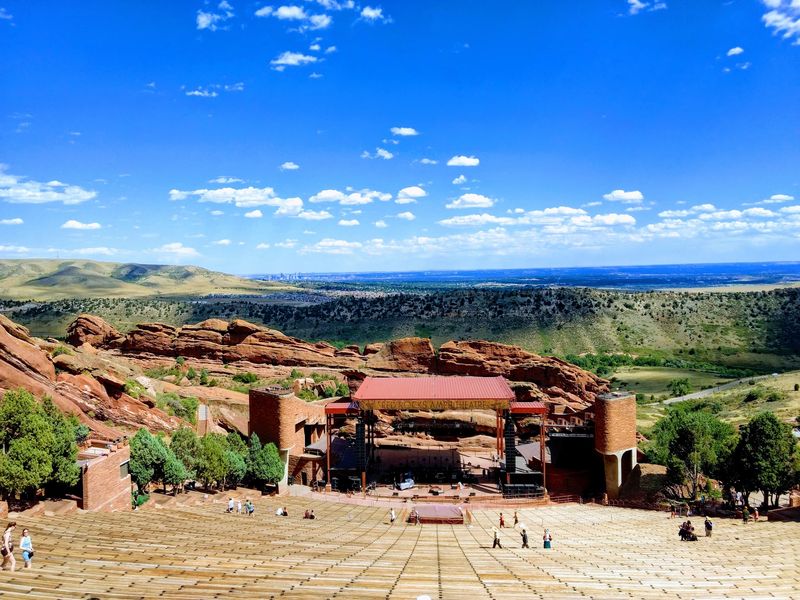
Few concert venues come with geology doing the stage design. Red Rocks Park and Amphitheatre in Morrison sits between massive sandstone formations, with seating built into the slope and the Denver area visible beyond in clear weather.
The amphitheatre opened in 1941 and is owned by the City and County of Denver. Its two famous rock formations, Ship Rock and Creation Rock, frame a venue that hosts concerts, fitness events, film nights, and daytime visitors when events or maintenance do not limit access.
For photographers, Red Rocks offers several stories in one place: architecture, music culture, foothills landscape, and Colorado’s red sandstone drama. The rows of seats create strong repeating lines, while the rocks give the frame a scale that no ordinary stage backdrop can fake.
Visitors should check the official schedule before planning a photo stop, since access changes around ticketed events. During public hours, the park also includes trails, though weather and posted closures should guide any plan.
Red Rocks Park and Amphitheatre is a rare spot where a wide shot can feel both natural and designed, like the Earth briefly joined a production crew.
10. Bear Lake, Rocky Mountain National Park, Estes Park
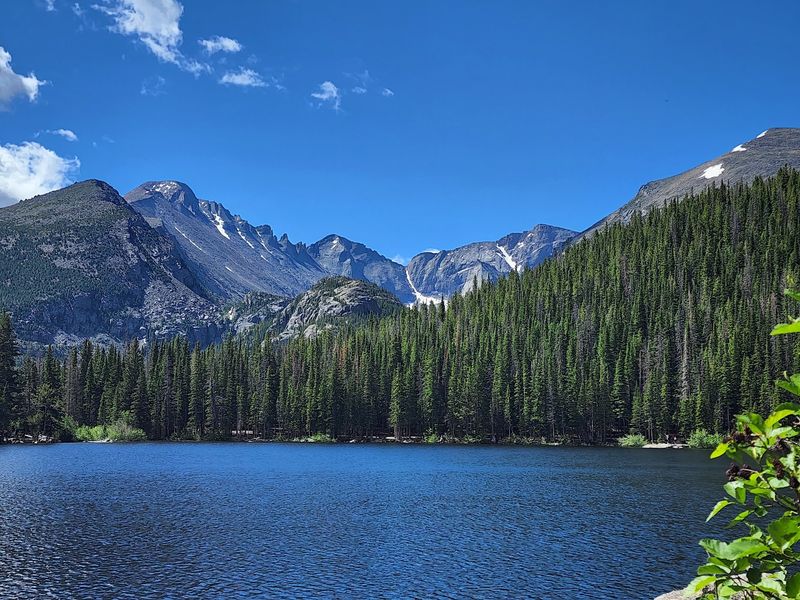
Bear Lake is the kind of alpine scene that makes people suddenly develop strong opinions about reflection shots. In Rocky Mountain National Park near Estes Park, the lake sits at about 9,475 feet and is reached from the Bear Lake Road corridor.
The short Bear Lake Trail loops around the water, giving photographers several angles without requiring a long hike. Hallett Peak and other high ridges can appear above the lake, while forested edges help frame tighter compositions.
Planning matters here more than the calm postcard look suggests. Rocky Mountain National Park uses timed entry reservation systems during busy seasons, and the Bear Lake Road corridor can have specific requirements.
Shuttle service may operate during certain periods, so checking current National Park Service guidance is the adult thing to do, even if it feels less fun than choosing snacks.
Bear Lake also works as a practical starting point for nearby official trails, but the lake itself deserves attention before anyone rushes onward. For photographers finishing a Colorado list, it offers a classic mountain-water composition with enough access structure to keep the day from becoming a navigation puzzle.