
10 Pennsylvania Waterfalls Locals Avoid After Heavy Fall Rains
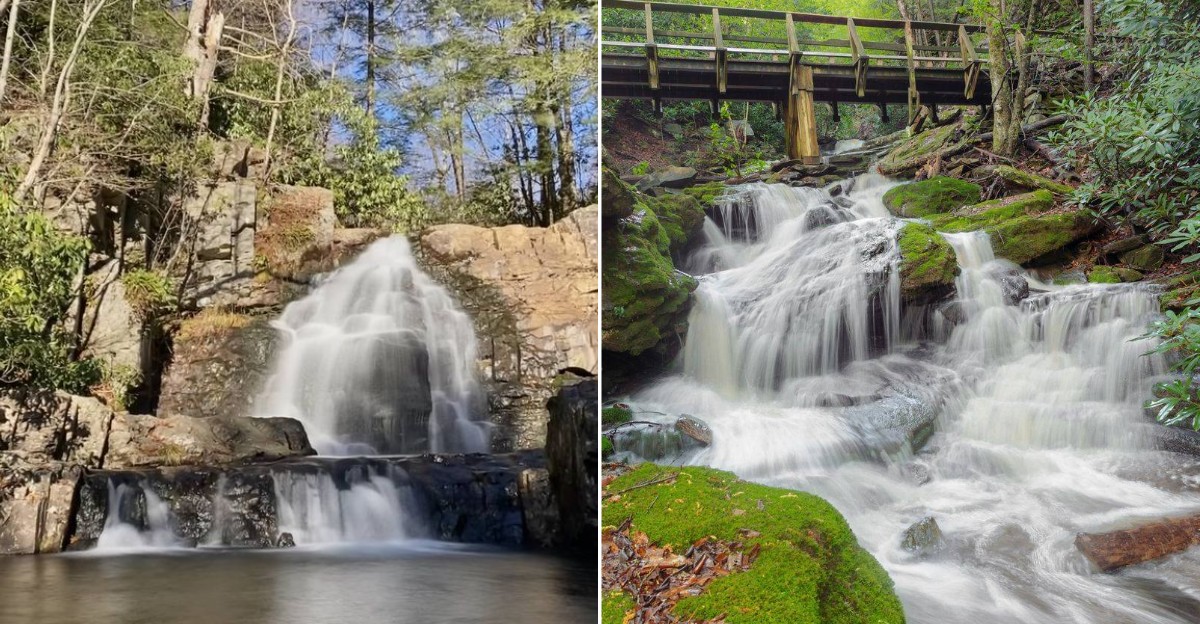
The trail is still dripping, the creek sounds louder than usual, and suddenly the waterfall no longer feels like the easy stop you remembered.
After heavy fall rain, some Pennsylvania cascades become a very different outing.
Water levels can rise fast, rocks get slick, and familiar crossings may turn awkward enough that locals decide the view can wait.
The scenery is still impressive, but timing matters more when the ground is soaked and the current is moving harder than normal.
I have made the mistake of showing up after a storm thinking a little extra water would only make the falls look better.
It did, but the trail was muddy, every step took more attention, and I spent half the visit watching my footing instead of the waterfall.
That was enough for me. If the rain has been coming down hard, I would rather save the dramatic view for another day than spend the whole hike negotiating with wet rocks.
1. Ganoga Waterfall, Sweet Valley, PA
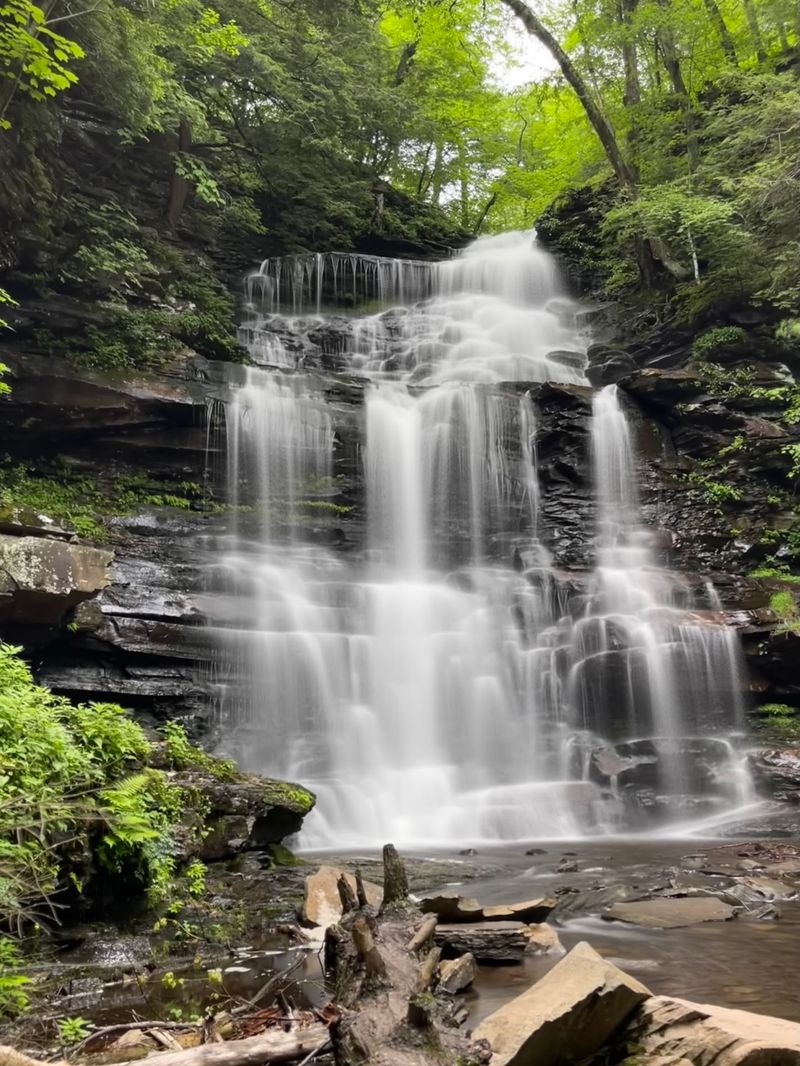
Ninety-four feet of falling water makes a sound you feel in your chest before you see it.
Ganoga Falls is the tallest drop in Ricketts Glen State Park, and after a heavy fall rain it becomes the loudest thing in the entire gorge.
The Falls Trail loop is what makes this one tricky. Stone steps, exposed roots, and wet shale ledges line the route, and none of that improves when leaves pile up on top of the rocks.
A common shorter loop uses Highland Trail with the Glen Leigh and Ganoga Glen sections, creating a roughly 3.2-mile route that passes most of the park’s named waterfalls.
The terrain stays steep and rocky, so the route still demands proper footwear and careful pacing.
Ganoga sits on the Ganoga Glen branch of the trail, where the water drops ninety-four feet through the park’s dramatic rock-strewn gorge.
I always tell friends this is not a casual stroll, and the park does not pretend otherwise. Parking is free, and the falls are reached within Ricketts Glen State Park near Benton, PA 17814, in northeastern Pennsylvania.
2. Cucumber Falls, Dunbar, PA
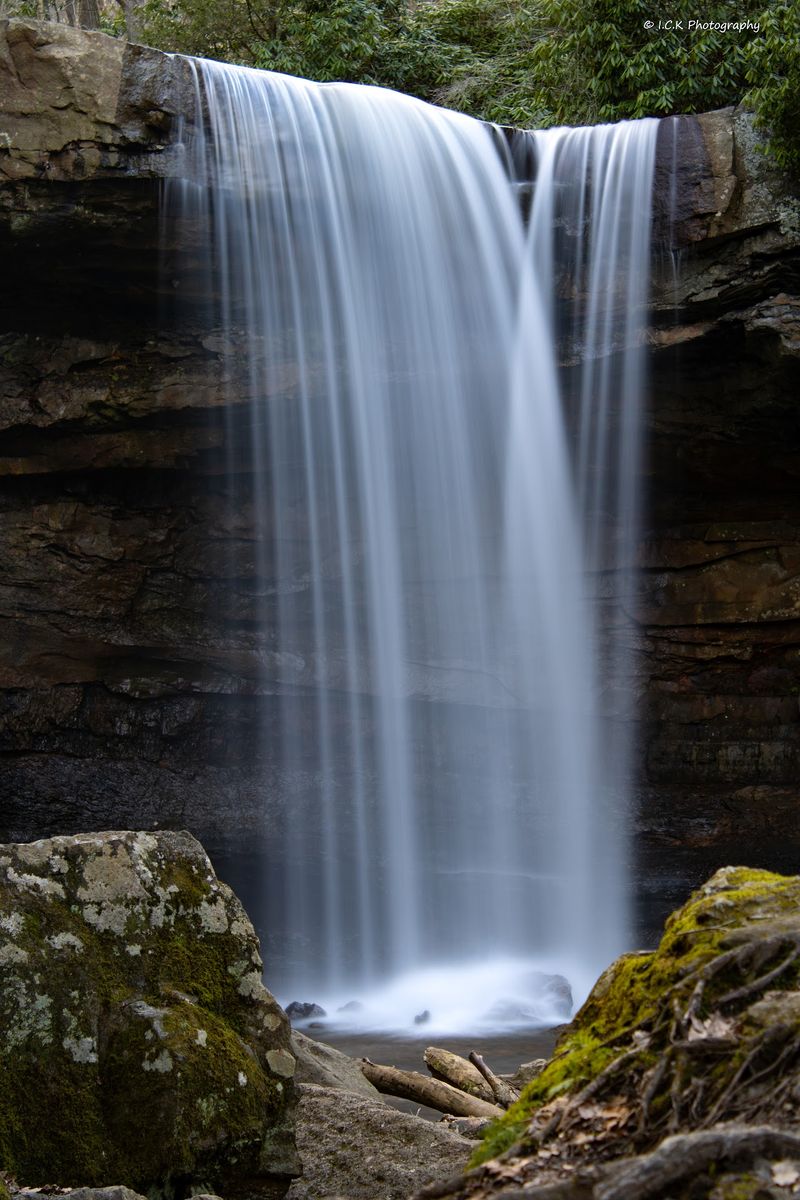
Nobody agrees on where the name came from, and the local snake theory has never held up.
What is certain is that Cucumber Falls drops about thirty feet over a curved rock alcove inside Ohiopyle State Park near Ohiopyle.
Access is genuinely quick. A viewing area sits near the top, and rustic stairs plus trail access bring you down toward the falls in a few minutes.
That easy reach is exactly why it gets crowded after a storm. The rock around the falls turns slick, and heavy water can make nearby footing and trails less forgiving than they first appear.
You can also reach it on the official Cucumber Falls Trail, a 0.4-mile route from Ohiopyle that follows rocky terrain beside the river.
Dogs are permitted under park rules, and parking is officially available at the Cucumber Falls area.
My honest advice is to check current trail and water conditions rather than rely on a fixed waiting period after rain. The falls have parking along SR 2019 near Ohiopyle, PA 15470, in Fayette County today.
3. Raymondskill Falls, Dingman Township, PA
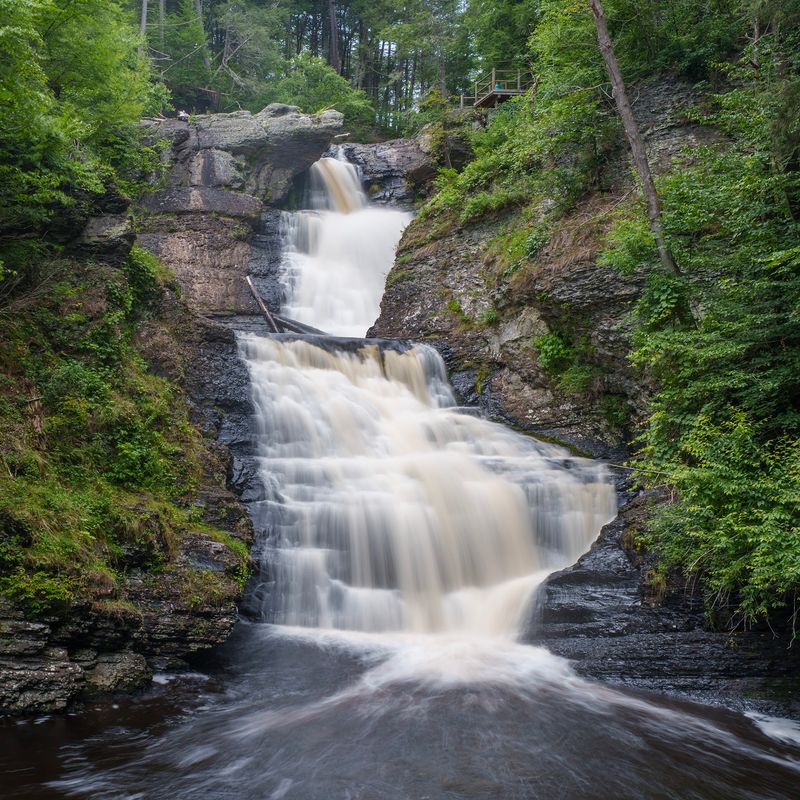
Pennsylvania’s tallest waterfall hides behind one of its shortest hikes, which feels almost unfair.
Raymondskill Falls tumbles through three roaring cascades inside the Delaware Water Gap area of Dingman Township.
Two observation platforms handle the sightseeing. The official trail is about a third of a mile, with steep, uneven earthen terrain, roots, rocks, and wooden viewing platforms along the route.
Rock outcroppings frame the whole drop, and the multiple cascades become especially forceful after soaking rain.
That is when wet surfaces, spray, and uneven footing deserve more attention than the trail’s short distance might suggest.
Parking is the other wrinkle. The upper and lower trailhead lots can fill during busy periods, so arriving early can make access easier.
Combined, the three tiers stack up to only a few feet shorter than Niagara Falls, according to the National Park Service.
I have a soft spot for waterfalls reached on short trails, though this one deserves more respect than its mileage suggests.
Pets are prohibited, and swimming is not allowed at Raymondskill Falls in Dingman Township, PA 18337.
4. Hawk Falls, Kidder Township, PA
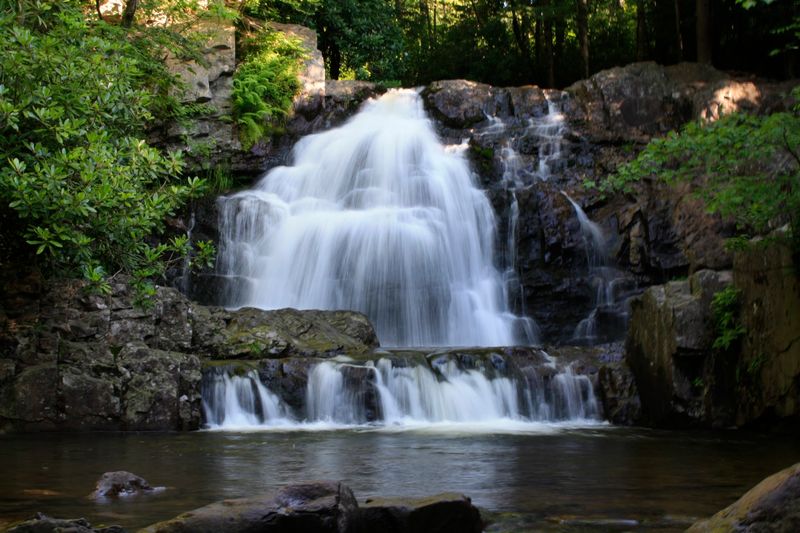
Rhododendron thickets crowd the path here, and they stay green long after the maples give up.
Hawk Falls drops around twenty-five feet inside Hickory Run State Park, and the official loop trail measures about six tenths of a mile.
The yellow-blazed trail winds through rhododendron and ends with a view of the falls, making the route short but still rated more difficult by the park.
The descent and rocky footing are where fall rain causes trouble. Wet stone, roots, and fallen leaves can make a short hike feel slower and more demanding than the mileage suggests.
Swimming is prohibited at Hawk Falls, so the pools below the cascade are for viewing rather than cooling off. After a storm, the water can look especially powerful.
Parking can get busy on weekends because the trail is short enough to attract plenty of visitors. Dogs are currently permitted in the park when handled under current pet rules.
Bring a camera with a strap, since wet footing deserves both hands when needed. Hawk Falls lies within Hickory Run State Park in Carbon County, Pennsylvania, today.
5. Rainbow Falls, Trough Creek State Park, PA
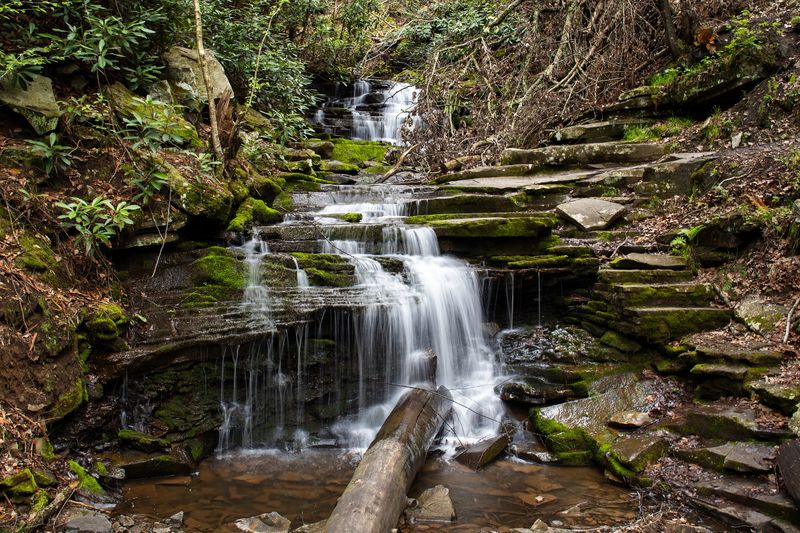
Rainbow Falls changes dramatically with the weather, which is exactly why this Trough Creek State Park stop can look completely different from one visit to the next.
Dry spells can leave Abbot Run with modest flow, while the park specifically notes that the waterfall is best viewed during early spring and after a heavy rain.
That extra water also changes trail conditions. Sections around the gorge can be steep, narrow, rocky, and slippery when wet, so stronger flow deserves more careful footing rather than casual scrambling.
The Abbot Run Trail crosses Great Trough Creek on a suspension bridge, passes Rainbow Falls, then climbs CCC-built stone steps toward Balanced Rock.
The park is open every day from sunrise to sunset, not from seven in the morning until nine at night.
Crowd levels vary, and there is no reliable official pattern showing certain weekdays as consistently busiest or quietest.
Personally, I would rather arrive early with coffee in hand than fight for a spot at noon.
Rainbow Falls is located in Trough Creek State Park near James Creek, Pennsylvania, in Huntingdon County, with parking and trail access nearby.
6. Hells Hollow Falls, Slippery Rock Township, PA
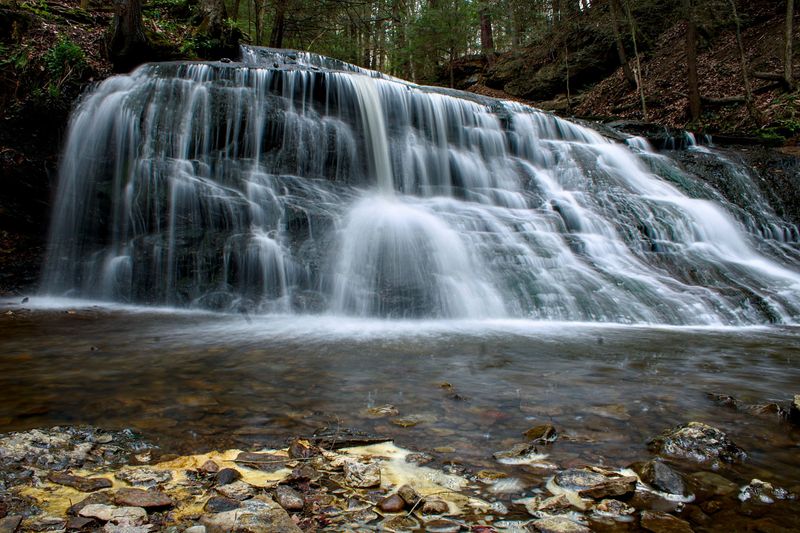
An old lime kiln stands beside the trail, a leftover from the days when this valley burned limestone.
Hells Hollow Falls waits at the end of an easy route in the Hells Hollow section of McConnells Mill State Park.
DCNR lists Hells Hollow Trail at 0.5 mile and rates it easiest. The main path is generally smooth and level, crossing Hell Run on the way to the lime kiln and waterfall.
The section beside the waterfall is the part that deserves extra care. DCNR specifically warns that it can be slippery, and wet autumn conditions only make that caution more relevant.
Fall rain can add volume to Hell Run and make the rocks around the cascade slick in a hurry.
Longer trails branch off nearby for anyone wanting to keep going, including the much harder Slippery Rock Gorge Trail through the park.
The name sounds far more menacing than the main walk, which is part of its charm.
Access begins at the Hells Hollow parking lot in McConnells Mill State Park near Portersville, PA 16051, with non-flush restrooms and picnic tables available at the trailhead.
7. Kildoo Falls, Portersville, PA
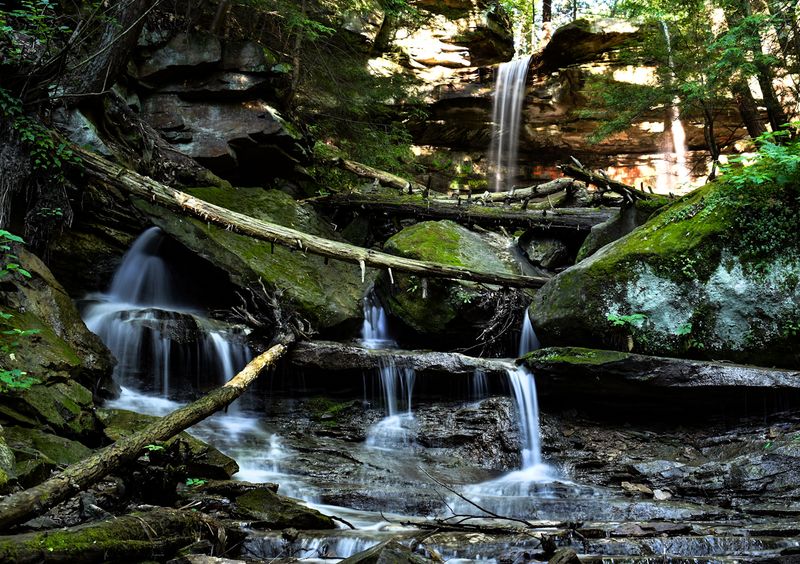
A covered bridge crosses Slippery Rock Creek here, and it doubles as the best navigation clue around the historic mill area.
Kildoo Falls sits inside McConnells Mill State Park near Portersville in western Pennsylvania.
The official Kildoo Trail is a three-mile loop beginning at either end of the covered bridge. The eastern-bank section is the easier route to Kildoo Falls, while the full loop becomes rockier farther on.
Visitors should not treat the creek pools as swimming spots. DCNR explicitly prohibits swimming in Slippery Rock Creek because swift current, deep pools, rapids, and slippery rocks have caused serious accidents.
In dry months the falls may run lighter, while heavy rain can make the creek and nearby rock surfaces noticeably more forceful and slippery.
The Kildoo Picnic Area nearby has tables, grills, restrooms, and access toward the historic mill.
The park is open from sunrise to sunset rather than around the clock. Look for the Kildoo Parking Area at McConnells Mill State Park, Portersville, PA 16051, and plan your visit within daylight park hours only.
8. Fallbrook Falls, Ward Township, PA
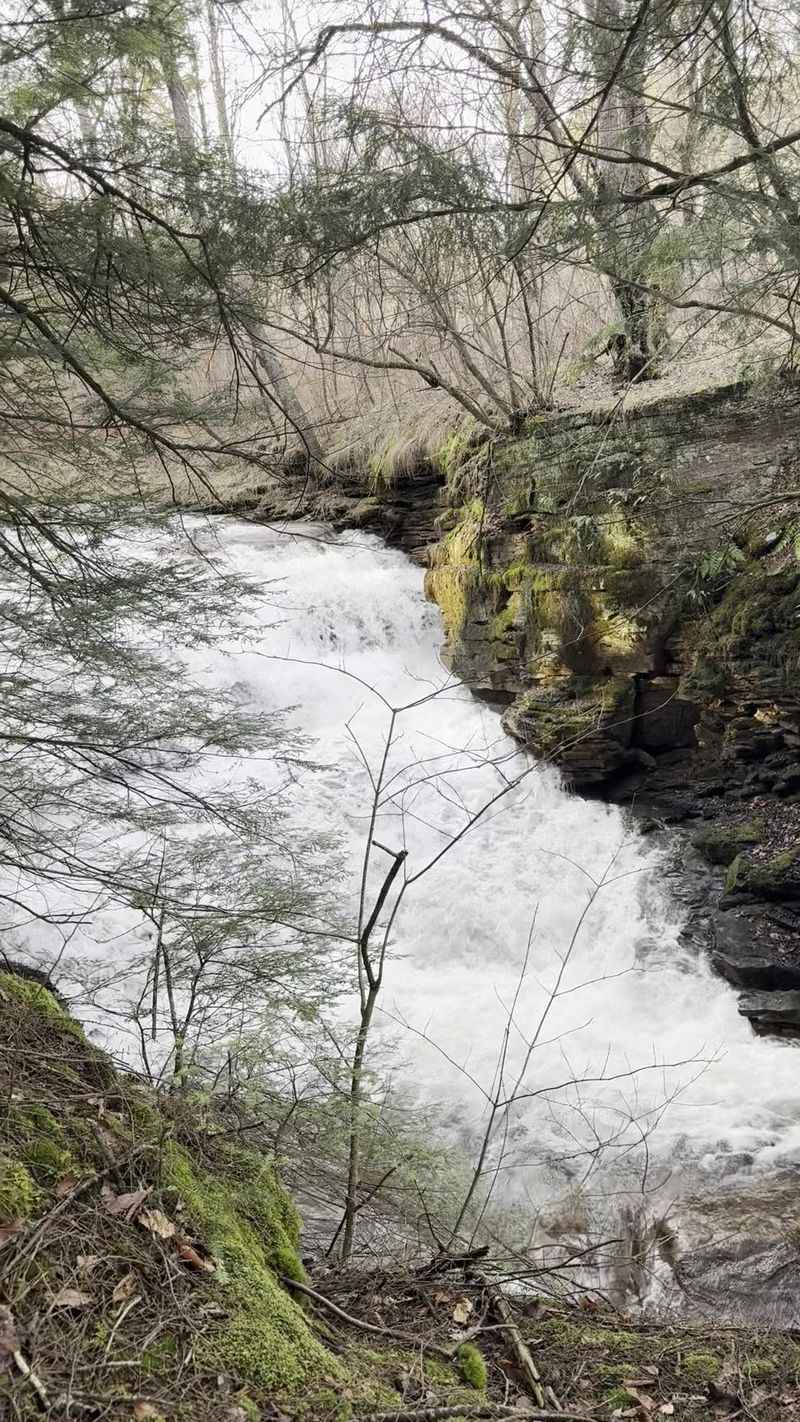
Finding this one is genuinely half the adventure, and plenty of drivers give up first.
Fallbrook Falls hides in Ward Township, up in the northern tier of Pennsylvania, without much in the way of signage.
Gravel roads crisscross the area, and more than a few visitors have circled them without ever spotting the trailhead. Screenshots of your map are worth more than cell service out here.
Once you locate the access point, the walk itself is short. A brief stroll past a locked gate leads through quiet woodland, and the upper falls take only a few minutes to reach.
The payoff is a waterfall that responds dramatically to weather. Snowmelt and recent rains have been known to leave it absolutely raging, filling the narrow rock corridor with noise.
That drama is also the warning. The rock walls are tight and wet, and there is little margin for careless footing when the flow is high.
I love a waterfall that makes you work for the directions, but I also love not getting lost. Fallbrook Falls is located in Ward Township, PA 16912.
9. Buttermilk Falls, New Florence, PA
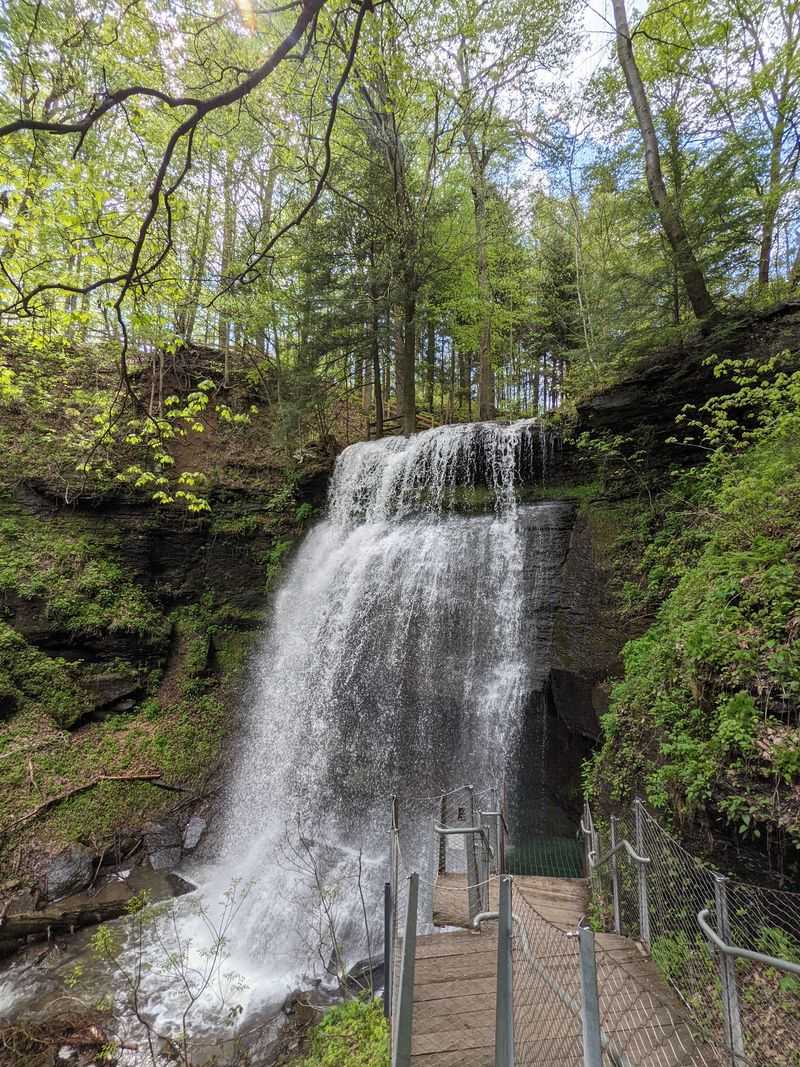
Land once owned by the grandfather of Fred Rogers now holds one of western Pennsylvania’s easiest waterfall visits.
Buttermilk Falls near New Florence is maintained by Indiana County Parks and features a forty-five-foot cascade.
An accessible path leads toward the falls viewing area, while steps and platforms continue to the lower section and behind the waterfall itself.
The trail work here is excellent. Visitors are asked to stay within the designated steps and platform areas because the surrounding habitat is fragile and protected.
Flow makes or breaks the visit. During dry stretches the waterfall can thin out, while after heavy rainfall the cascade turns into a broad curtain and the walk-behind platform gets thoroughly misted.
A parking area, restroom, small picnic pavilion, overlook, and hiking trail are available on site. Swimming and wading are prohibited.
Pennsylvania has several waterfalls carrying this name, and this is among the simplest to reach.
Buttermilk Falls is open year-round from eight in the morning until sunset at 570 Valley Brook Rd, New Florence, PA 15944, with the lower platforms reached by stairs above.
10. Shohola Falls, Shohola Township, PA
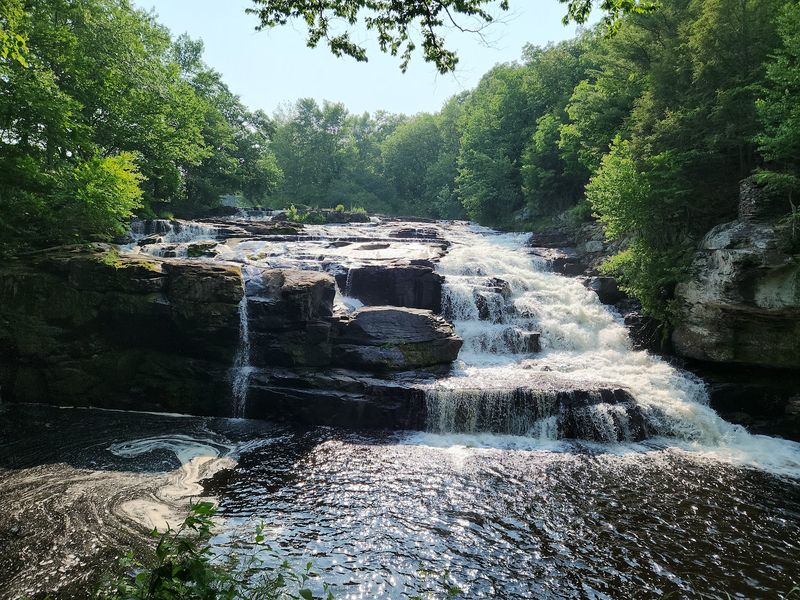
Water spreads wide across the rock ledges here instead of squeezing into a single chute.
Shohola Falls sits along Shohola Creek in Shohola Township, deep in the Pocono region of northeastern Pennsylvania.
The falls are part of the state game lands, so the setting feels far less manicured than a typical state park. Expect rough ground, scattered viewpoints, and fewer railings between you and the gorge.
Below the impoundment upstream, the creek gathers into a broad, stepped drop that becomes seriously loud when autumn storms roll through the Poconos.
That combination of open rock and heavy flow is exactly why experienced locals stay back from the edges after rain. The ledges look walkable right up until they are not.
Because it is game lands, hunting seasons matter. Checking the calendar and wearing bright colors is simply part of visiting responsibly in fall.
My habit at spots like this is to find one solid overlook and stay put rather than hopping rocks for a better angle.
Shohola Falls is reached from the game lands access along Route 6 in Shohola Township, PA 18458.