
This Tennessee Water-Powered Mill Still Runs Machinery From A 32-Foot Waterwheel
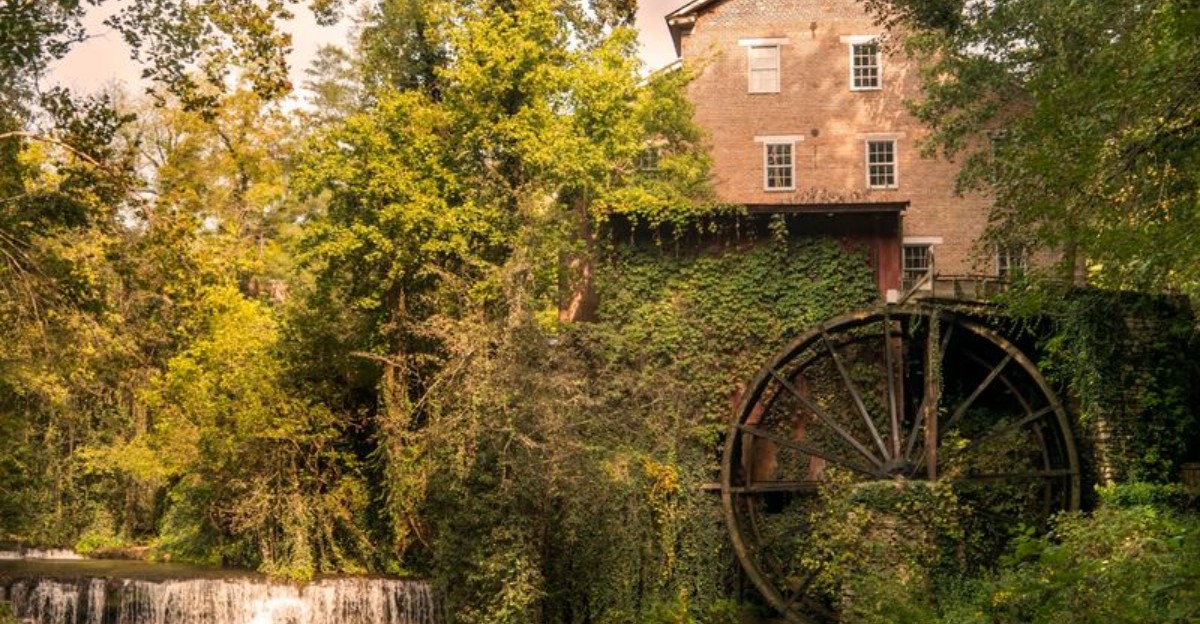
What if I told you there’s a place in Tennessee where a 32-foot waterwheel is still doing the heavy lifting, like, actually powering machinery instead of just sitting there looking pretty for Instagram? You’d probably say, “Okay… where’s the catch?” There really isn’t one.
Built in 1873, this old mill has survived fires, changing industries, and the relentless march of modern technology, yet somehow the water still shows up for work every day. No fancy power button.
No Wi-Fi. Just a creek, a giant steel wheel, and some seriously stubborn 19th-century engineering.
And honestly? Watching that wheel turn feels a little like stumbling into a time machine that forgot to install an off switch.
So how does a machine this old still get the job done? Well, that’s where things get really cool.
The Legendary 32-Foot Waterwheel
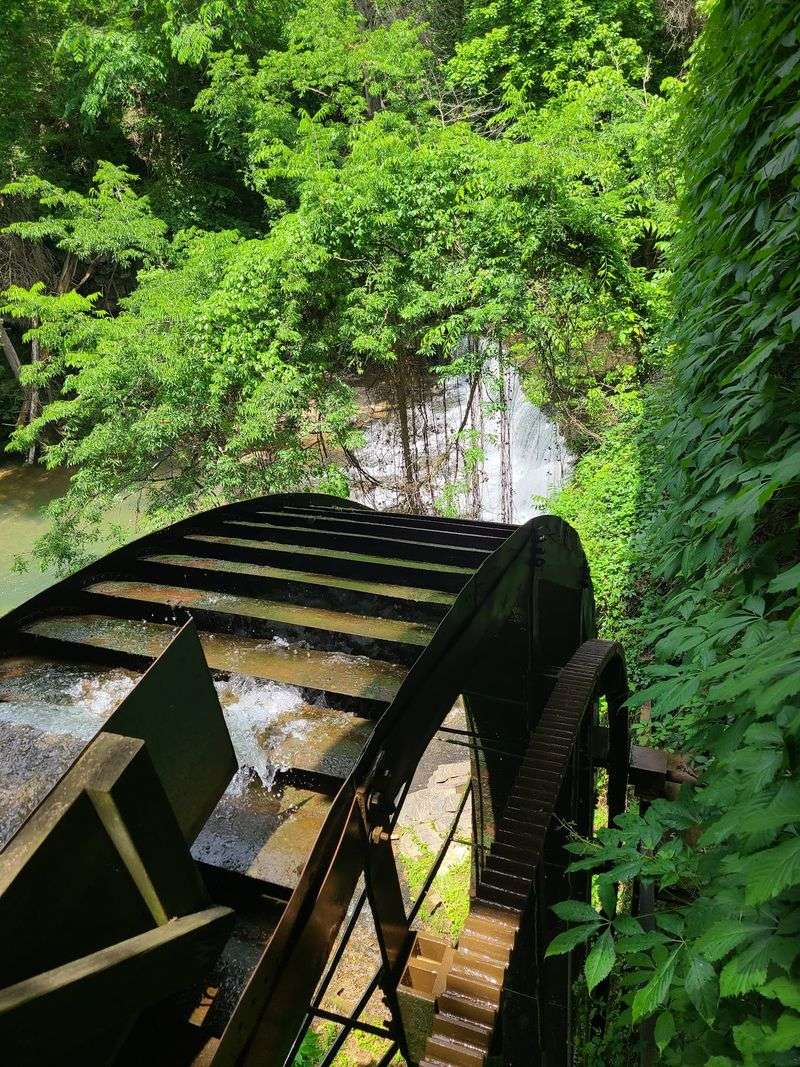
Nothing prepares you for the sheer scale of it. Standing beside the 32-foot waterwheel at Falls Mill feels a little like standing next to a moving skyscraper.
Crafted by the Fitz Waterwheel Company out of Hanover, Pennsylvania, this overshot giant measures four feet wide and turns at a calm, confident three revolutions per minute.
It arrived by train in sections, and it took a full three months to assemble on site. That kind of patience and precision is almost unimaginable in today’s world of instant everything.
The wheel harnesses the power of two waterfalls on Factory Creek, channeling water through an 1871 stone dam and into a dedicated mill race before it hits those iconic buckets.
What makes this wheel extraordinary is not just its size, though that alone is enough to stop you mid-sentence. It is the fact that this mechanical titan still powers machinery across multiple floors of the mill building, doing exactly what it was designed to do more than a century ago.
Seeing it turn in real time is one of those experiences that genuinely rewires your sense of what engineering can achieve.
A Historic Address Worth The Drive
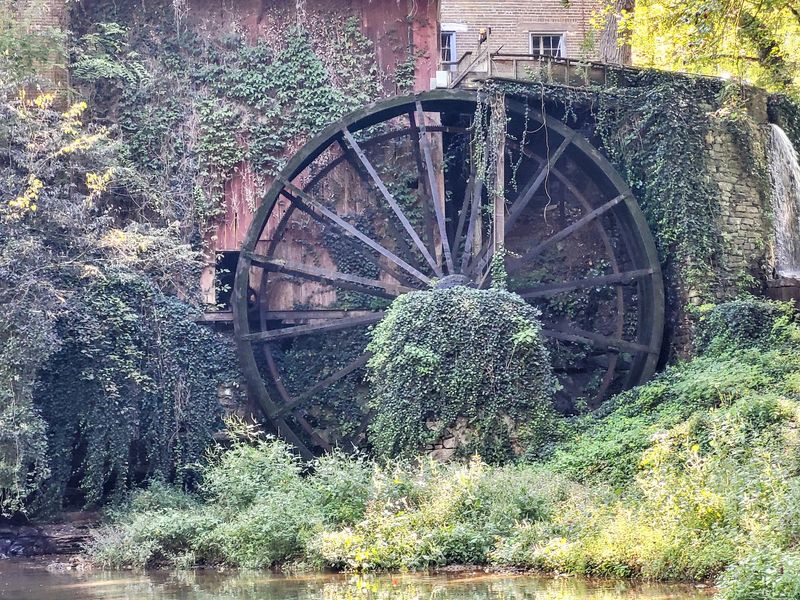
Some places earn their reputation through marketing. Falls Mill earns its reputation through 150 years of honest, hardworking history.
Located at 134 Falls Mill Rd, Belvidere, TN 37306, this remarkable structure was built in 1873 and has since been recognized on the National Register of Historic Places since 1972. That is not a small distinction.
Getting there feels like a reward in itself. The winding road through Franklin County delivers you into a quiet cove where the sounds of Factory Creek replace the noise of everyday life almost immediately.
The setting is genuinely picturesque, with the mill building rising beside the water like something out of a painting you would hang in a dream home.
The mill has worn many identities over the decades, from textile factory to cotton gin, woodworking shop to grain mill, and now a Museum of Power and Industry that welcomes visitors Thursday through Saturday from 9 AM to 4 PM. Planning ahead is smart, as hours are limited and the experience is absolutely worth protecting a spot for.
The Museum Of Power And Industry
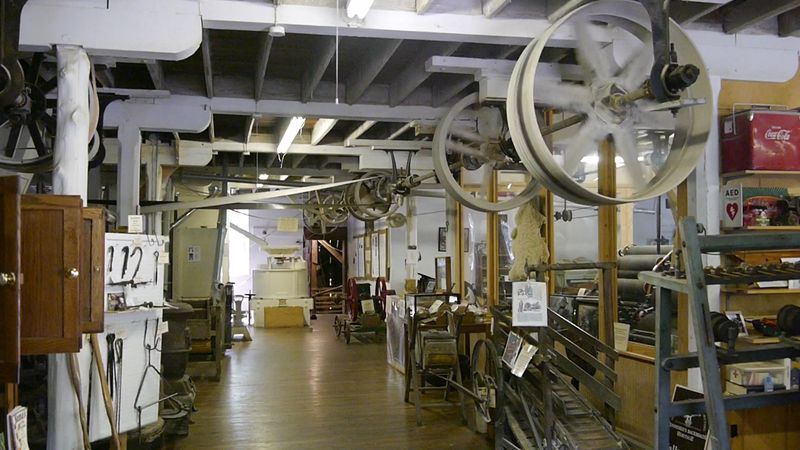
Walking into the Museum of Power and Industry at Falls Mill feels like someone handed you a backstage pass to the Industrial Revolution. The self-guided tour begins with an informative introductory video that sets the scene perfectly before you wander through three floors packed with antique machinery, historical exhibits, and artifacts that once defined daily life in rural Tennessee.
The first floor greets you with hefty millstones, vintage broom-making equipment, and a classic printing press that looks ready to roll at any moment. There is also a dog-powered butter churn on display, which is exactly as delightful as it sounds.
Each piece tells a story about the ingenuity people brought to everyday challenges when electricity was not yet a given.
Moving upward through the building, the exhibits shift and evolve, reflecting the mill’s many incarnations over the decades. Every floor introduces something new, something you did not expect to find, which keeps the energy of the tour genuinely alive from start to finish.
This is not a place where you glance at a sign and move on. You linger, you wonder, and you leave with a much richer appreciation for what American industry once looked like at its most resourceful.
The 1929 Aeolian Player Piano Turned Nickelodeon
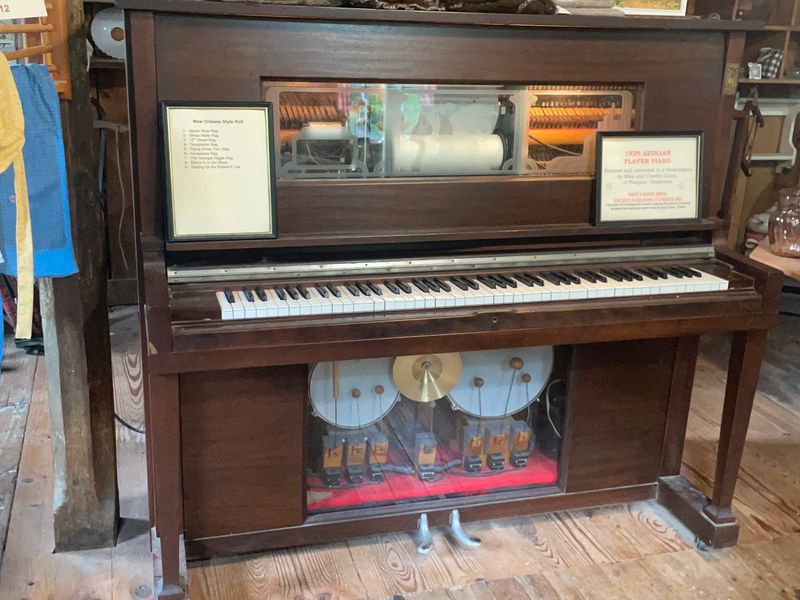
Here is a fun twist you absolutely will not see coming. Tucked onto the second floor of Falls Mill sits a 1929 Aeolian player piano that has been lovingly converted into a working nickelodeon.
Drop a quarter into the slot, and this century-old instrument springs to life, filling the room with a tune that feels like a musical time capsule.
What makes this moment even better is knowing that every quarter contributed goes directly toward the ongoing restoration and preservation of the mill. So your little musical interlude is actually an act of generosity wrapped in pure nostalgia.
It is the kind of detail that makes Falls Mill feel thoughtfully curated rather than just assembled.
Visitors consistently mention the piano as one of their favorite surprises of the entire tour, which says a lot given the competition from a 32-foot waterwheel and multiple floors of historic machinery.
There is something about hearing that old melody bounce off wooden beams and stone walls that makes the whole experience click into place.
It transforms a history lesson into a genuine sensory memory, the kind you find yourself telling people about long after you have driven home.
The Textile History Woven Into Every Wall
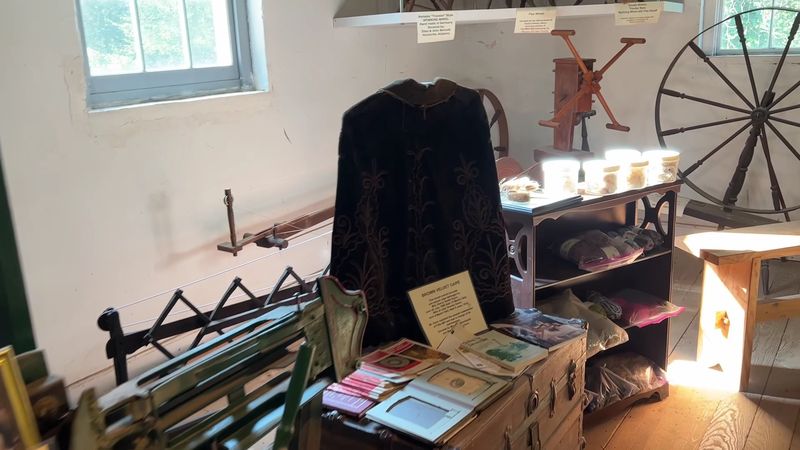
Falls Mill was born as a cotton and woolen factory in 1873, and that textile heritage is woven into the very fabric of the place, quite literally.
The weaving exhibit room on the second floor is a dedicated space celebrating the art and machinery of fabric production, and it is richer than you might expect from a building tucked into a Tennessee cove.
The collection includes hand looms that speak to the painstaking craft of traditional weaving, alongside spinning wheels that once transformed raw fiber into usable yarn.
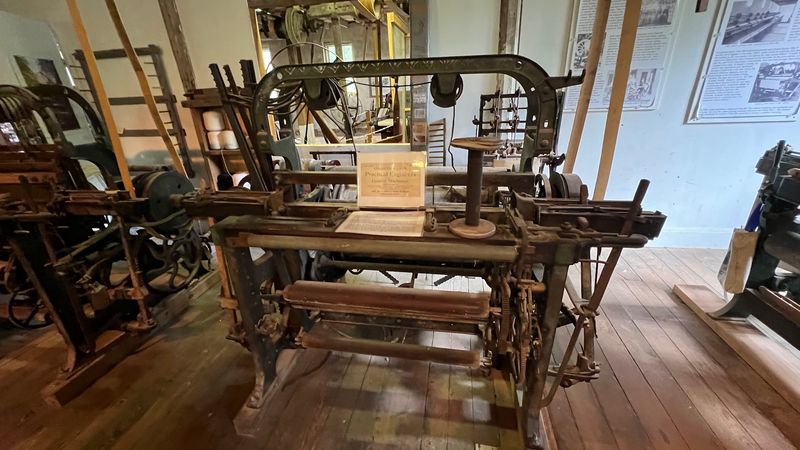
The rare assembly of 19th-century power looms and wool carding machines demonstrates the shift from handcraft to industrial-scale production, a transition that reshaped entire economies.
Upper floors also hold remnants of a 60-foot long spinning mule, a machine so large it practically defines the word industrial.
Seeing these pieces together creates a compelling narrative about how clothing was made before fast fashion existed. It gives you a genuine respect for the time, skill, and mechanical innovation that went into producing everyday textiles.
This exhibit does not just show you old machines. It makes you understand why they mattered and how profoundly they shaped the world people lived in during the 1800s.
Stone-Ground Grits And Mill Products To Take Home
One of the best souvenirs you can take home from Falls Mill weighs about two pounds and makes an extraordinary breakfast. For years, the mill produced beloved stone-ground grits, cornmeal, and flour right on site, milled by the same water-powered millstones that defined the building’s identity as a grist mill.
By 2015, commercial grain milling on site ceased due to modern regulatory requirements, but the products themselves never disappeared.
Today, Falls Mill continues to offer stone-ground grits, cornmeal, whole wheat flour, and a multi-grain pancake mix, now custom-ground by trusted partners at Logan Turnpike Mill in Blairsville, Georgia. The same traditional methods, the same wholesome quality, just produced at a different location.
You can pick up these products during your visit, and the mill even provides downloadable recipes online to inspire your kitchen adventures at home.
There is something genuinely satisfying about cooking with ingredients that carry a story. These are not supermarket staples with anonymous origins.
They are products tied to a real place, a real history, and a real craft that has been practiced for generations. Grab a bag of grits, find a good recipe, and bring a little piece of Falls Mill into your kitchen where it absolutely belongs.
The Grounds, The Waterfalls, And The Hidden Gems Outside
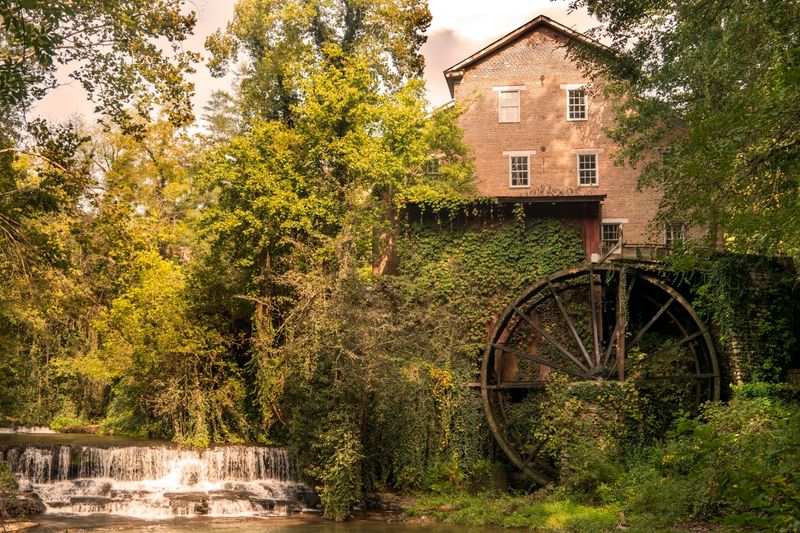
The waterwheel gets all the headlines, but the grounds surrounding Falls Mill are quietly spectacular in their own right. The property sits in a lush green cove shaped by two waterfalls on Factory Creek, and the sound of rushing water follows you everywhere you wander.
Picnic tables are thoughtfully positioned near the creek, making a packed lunch feel like an event rather than an afterthought.
Beyond the water, the grounds hold some genuinely charming historical structures. A blacksmith shop evokes the rhythmic energy of a working forge, and a one-room log schoolhouse offers a peek into rural education from generations past.
These buildings are not just decorative backdrops. They add real depth to the story the entire property tells about life in 19th-century Tennessee.
Walking the trails around the mill gives you multiple perspectives on the waterwheel, including a stunning view from above where you can watch the water cascade down before hitting the wheel’s buckets. The grounds are also pet-friendly for leashed animals, which makes the visit even more relaxed and inclusive.
Plan to spend more time outside than you think you will, because this place has a way of slowing your pace in the absolute best way possible.
The Log Cabin Bed And Breakfast Experience
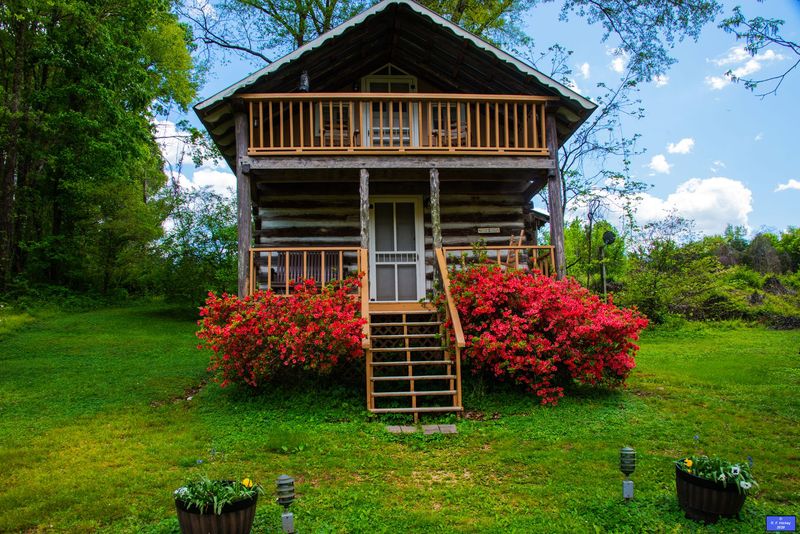
Imagine falling asleep to the sound of a waterfall and waking up to fresh homemade pastries waiting in your kitchen. That is not a fantasy scenario.
That is what the log cabin Bed and Breakfast at Falls Mill actually offers, and it is every bit as wonderful as it sounds. Available for booking year-round, the cabin provides a genuinely peaceful overnight escape that extends the Falls Mill experience well beyond a single afternoon visit.
The cabin carries the same rustic charm as the mill itself, with comfortable amenities that make it feel like a retreat rather than just a place to sleep. Guests staying overnight get to experience the property during the quiet hours when the tour groups have gone home and the only sounds are the creek and the birds.
That kind of stillness is increasingly rare and genuinely restorative.
Reservations are strongly recommended, as this cozy getaway books up quickly among those who discover it. Pets on leashes are welcome on the grounds, which adds a wonderful layer of accessibility for traveling animal lovers.
If you have ever wanted to sleep inside a piece of living history, this is your most charming opportunity. Falls Mill is the kind of place that stays with you long after you leave, so why not stay a little longer?