
10 California Collections That Started As One Person’s Obsession And Became Places You Can Visit
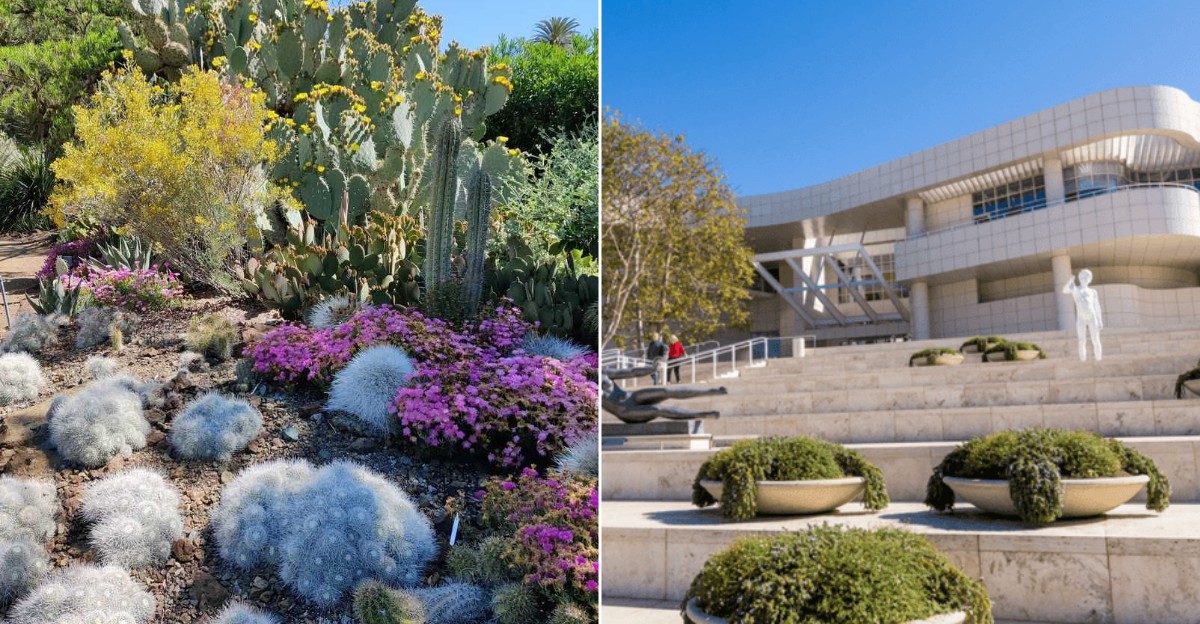
At some point, collecting stuff stops being a hobby and starts becoming a very specific life choice. California has a few people who crossed that line spectacularly.
One filled a waterfront building with coin-operated machines, mechanical games, and wonderfully strange contraptions. Another spent decades preserving the history of American technology.
Elsewhere, enormous collections of art, cars, inventions, and curiosities grew from one person’s private fascination. The wild part isn’t how big these collections became.
It’s remembering how they started. One object, one purchase, one “I’ve got to save this” moment.
Nobody sets out thinking, Today I shall accidentally create a museum. Yet here we are.
These California collections began as personal passions and eventually became places where anyone can walk in, look around, and wonder how on earth one person managed to accumulate all of this. Turns out, obsession can have excellent opening hours.
1. The Nethercutt Collection
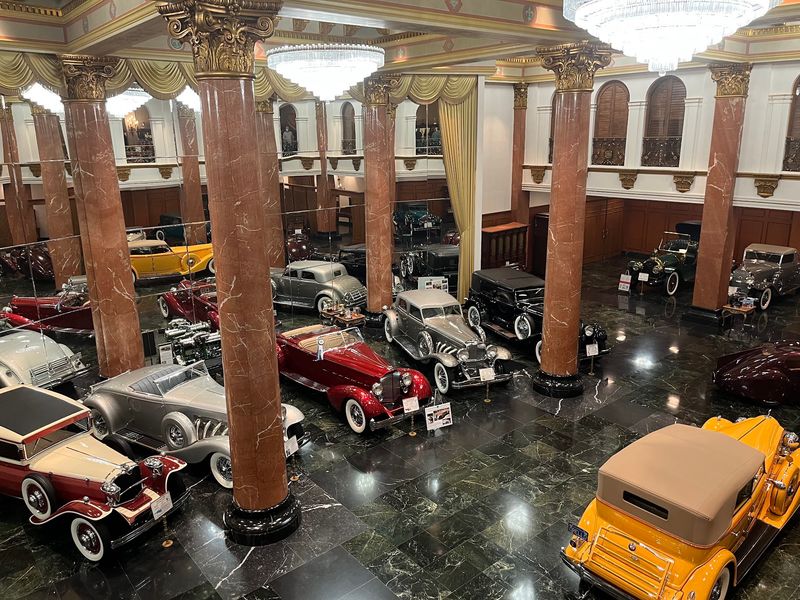
Picture a man so devoted to classic cars that he spent decades restoring each one to absolute showroom perfection.
That man was J.B. Nethercutt, co-founder of Merle Norman Cosmetics, who caught the collecting bug in the 1950s after acquiring a 1936 Duesenberg.
What started as a personal passion grew into one of the most extraordinary automotive collections in the world.
Tucked away at 15151 Bledsoe St, Sylmar, CA 91342, the Nethercutt Collection spans two separate buildings. The first offers a self-guided tour showcasing around 130 automobiles plus a stunning 1937 Canadian Pacific Royal Hudson steam locomotive.
The second building requires advance reservations for a guided tour, and the experience is absolutely worth planning ahead for.
Beyond the automobiles, the collection holds a world-class assembly of mechanical musical instruments. Reproducing pianos, nickelodeons, orchestrions, and a Mighty Wurlitzer Theatre Pipe Organ fill the space with history you can actually hear.
Over 250 vehicles total are spread across both buildings, ranging from 1898 through the early 1970s. Antique furniture and crystal figurines add an unexpected elegance to the whole experience.
2. Musee Mecanique
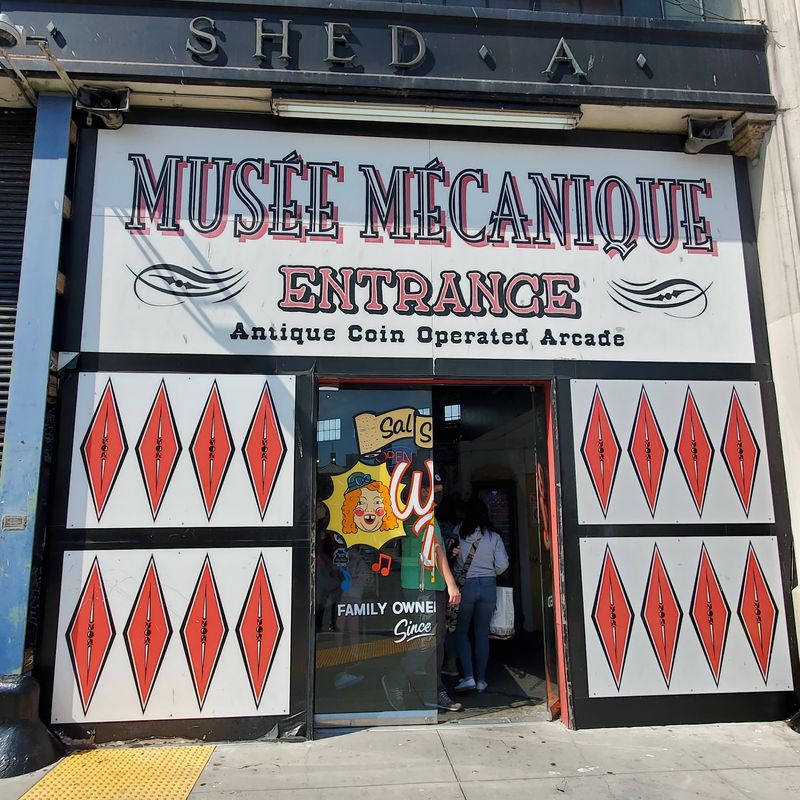
Imagine being 11 years old, completely captivated by a coin-operated machine, and then spending the next several decades building one of the most enchanting collections on the planet. That is exactly the origin story of the Musee Mecanique, born from the lifelong obsession of Edward Galland Zelinsky, who began collecting in the 1930s.
His son now carries the torch, keeping every single machine in working order.
Sitting right on the waterfront at Pier 45, Shed A, Fisherman’s Wharf, San Francisco, CA 94133, this museum feels like stepping into a living, breathing time capsule. Admission is completely free, which makes it one of the best surprises in the city.
You bring quarters, and the machines do the rest.
The collection features over 300 mechanical artifacts, with around 200 on display at any given time. Highlights include an 1884 Praxinoscope, a massive traveling carnival diorama, and the legendary “Laffing Sal” automaton who has been making visitors slightly uncomfortable since the 1940s.
Fortune tellers, Mutoscopes, player pianos, and love testers round out the lineup.
Open every single day of the year, this place rewards spontaneous visits and planned pilgrimages equally. Few museums make history this interactive and this genuinely fun.
3. Pacific Pinball Museum
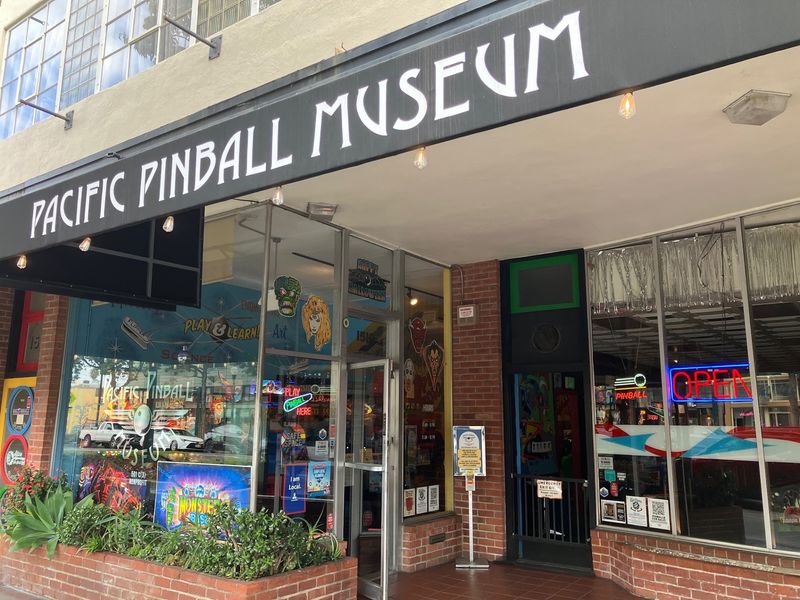
Back in 1997, someone bought a pinball machine with the intention of taking it apart for kinetic art. That plan never happened, and honestly, the world is better for it.
Michael Schiess got hooked on playing instead, and by 2001 he was deep into collecting. By 2004, he had opened a nonprofit museum in Alameda that now houses over 1,100 unique machines in its total collection.
Located at 1510 Webster St, Alameda, California 94501, the Pacific Pinball Museum is one of those rare places where the admission fee covers an entire day of play. Every machine on the floor is fair game, with unlimited in-and-out privileges.
The lineup spans from rare 1879 bagatelles all the way to modern machines, giving visitors a genuine timeline of how the game evolved.
Gottlieb’s Humpty Dumpty from 1947, recognized as the first pinball machine to feature flippers, is one of the most significant pieces on display. Hand-painted murals and vintage jukeboxes give the space a personality that goes well beyond a typical arcade.
Educational programs and the Pacific Pinball League keep the community engaged year-round. Walking through here feels less like visiting a museum and more like getting a backstage pass to the history of play itself.
4. Museum Of American Heritage
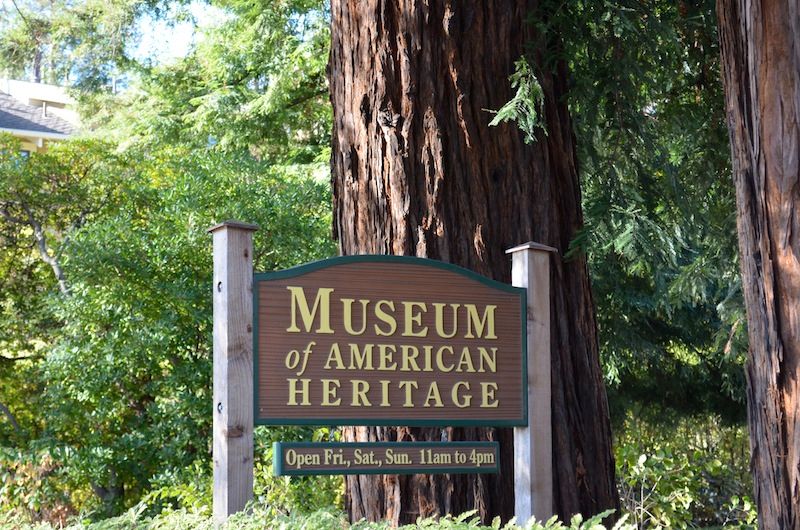
It all started with a vacuum cleaner. In the early 1960s, a Menlo Park accountant named Frank Livermore purchased an antique vacuum on a whim, and that single purchase quietly launched a decades-long obsession.
By the time he formally incorporated his museum in 1985, his home had become a treasure chest of mechanical, electrical, and technological artifacts that told the story of American ingenuity.
Housed in the gorgeous Tudor Revival Williams House at 351 Homer Ave, Palo Alto, CA 94301, the Museum of American Heritage is completely free to visit. It opens Friday through Sunday from 11 AM to 4 PM, making weekend trips to the Bay Area feel extra worthwhile.
The building itself is considered part of the collection, showing how architecture and technology evolved together.
More than 8,000 artifacts fill the space, covering everything from early telegraphs and telephones to vintage cameras, radios, typewriters, and kitchen appliances.
The focus is squarely on the pre-digital age, honoring inventions that transformed ordinary American households. Rotating exhibits keep the experience fresh for repeat visitors.
The property also includes the Ruth Bell Lane Memorial Garden, a peaceful bonus for anyone who wants to decompress after all that fascinating history.
Every object here carries a story about the moment someone decided to make life a little easier.
5. Wende Museum
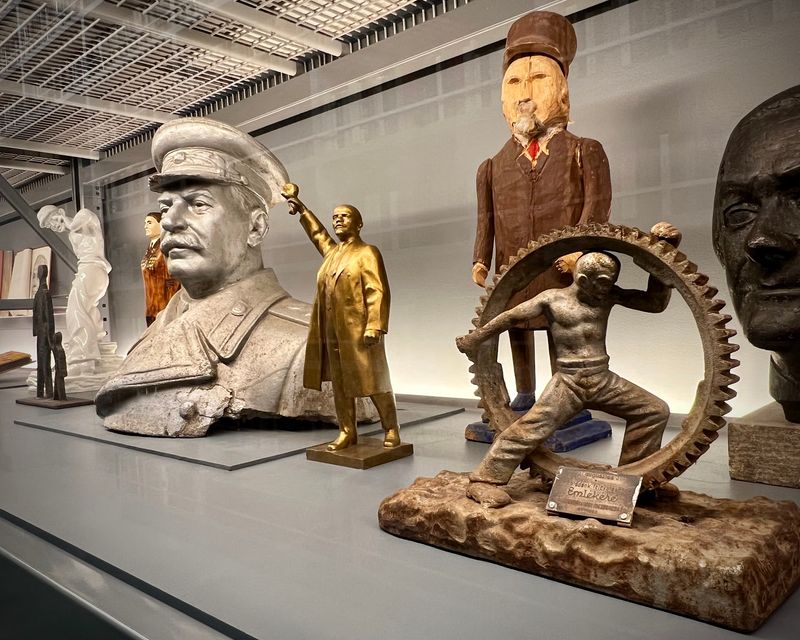
The Berlin Wall fell in 1989, and as Eastern Europe transformed overnight, an enormous amount of Cold War-era material culture was being tossed out, destroyed, or forgotten. A young Los Angeles scholar named Justinian Jampol saw what was happening and decided to do something about it.
Starting in the mid-1990s, he began acquiring objects that others considered obsolete relics of a world no one wanted to remember.
What he built eventually found its permanent home at 10808 Culver Blvd, Culver City, CA 90230, inside a beautifully renovated former National Guard Armory. The Wende Museum, whose name means “transformation” in German, is open Friday through Sunday from 10 AM to 5 PM.
Admission is completely free, and public tours are regularly available.
The collection is staggering in scope, holding over 100,000 artworks, objects, and archival materials from former Eastern Bloc and socialist states. Eleven sections of the actual Berlin Wall are on display outside.
Inside, you will find furniture, flags, commemorative plates, and items from the former KGB Espionage Museum.
This is not a dusty history lesson. It is a vivid, emotionally resonant experience that makes the Cold War feel immediate and human.
Few museums in California carry this level of historical weight so gracefully.
6. Planes Of Fame Air Museum

Right after World War II ended, historically significant aircraft were being scrapped at an alarming rate. Edward T.
Maloney watched this happen and refused to accept it.
On January 12, 1957, he founded what would become the first aviation museum in the western United States, starting with just ten aircraft in Claremont before eventually establishing a permanent base in Chino.
Today, the Planes of Fame Air Museum at 14998 Cal Aero Dr, Chino, CA 91710 is open Wednesday through Sunday from 10 AM to 4 PM. Self-guided tours let visitors wander freely through the hangars, observing aircraft in various stages of restoration.
The experience feels genuinely behind-the-scenes in the best possible way.
The collection now numbers over 160 aircraft, with more than 35 kept in flyable condition. That detail alone sets this museum apart from almost every other aviation collection in the country.
Warbirds from World War I, the Golden Age of the 1920s and 1930s, and World War II are all represented, including a rare authentic flying Japanese Zero.
Monthly flying demonstrations and airshows bring the entire collection to life in a way that no static display ever could. Watching a restored warbird take to the sky above Chino is the kind of moment that stays with you long after you leave.
7. Ruth Bancroft Garden
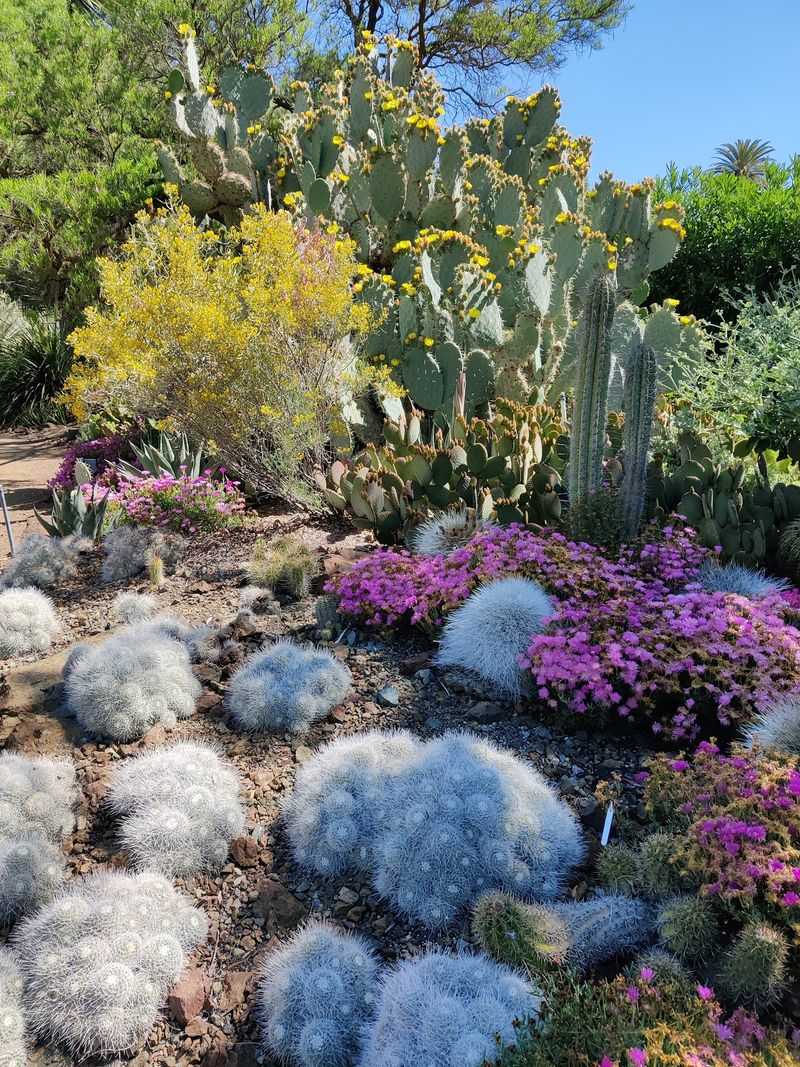
In the early 1950s, a woman in her forties started bringing home potted succulents and arranging them with the same care most people give to fine art.
Ruth Bancroft had discovered something that most gardeners overlook: plants built for dry climates are breathtakingly beautiful. Her collection of water-conserving plants grew quietly for years, mostly in pots, until her husband offered her three acres of land in 1971.
That gift became the Ruth Bancroft Garden, now located at 1552 Bancroft Rd, Walnut Creek, CA 94598. It is open Tuesday through Sunday from 9 AM to 4 PM.
A self-guided tour booklet is available to help visitors navigate the winding paths and identify the remarkable variety of plants throughout the property.
Spread across 3.5 acres, the garden showcases over 2,000 cacti, succulents, trees, and shrubs sourced from arid regions including California, Mexico, Chile, South Africa, and Australia.
The aloe collection is particularly celebrated, known for its dramatic rosette structures and vivid seasonal blooms. Bulbs, wildflowers, and ornamental grasses add layers of texture and color throughout the year.
Ruth was already in her sixties when the garden truly began to take shape, which makes the whole story an inspiring reminder that passion has no expiration date.
8. Norton Simon Museum
Norton Simon was an industrialist who collected art the way some people collect receipts: constantly, compulsively, and with extraordinary taste.
Starting in the 1950s, his holdings grew to over 4,000 objects by the 1970s. When the Pasadena Art Museum hit financial trouble in 1974, Simon stepped in, absorbed its debts, and transformed it into a museum bearing his name the following year.
The Norton Simon Museum sits at 411 W Colorado Blvd, Pasadena, CA 91105. Hours run Monday, Wednesday, and Thursday from noon to 5 PM, and Friday through Sunday from 11 AM to 8 PM.
Children 18 and under and students with valid ID get in free, making it a surprisingly accessible cultural destination.
The permanent collection spans European paintings, sculptures, and tapestries from the Renaissance through the 20th century. Impressionist and Post-Impressionist works are a major strength, with pieces by Monet, Renoir, Van Gogh, and Cezanne on display alongside over a hundred works by Edgar Degas.
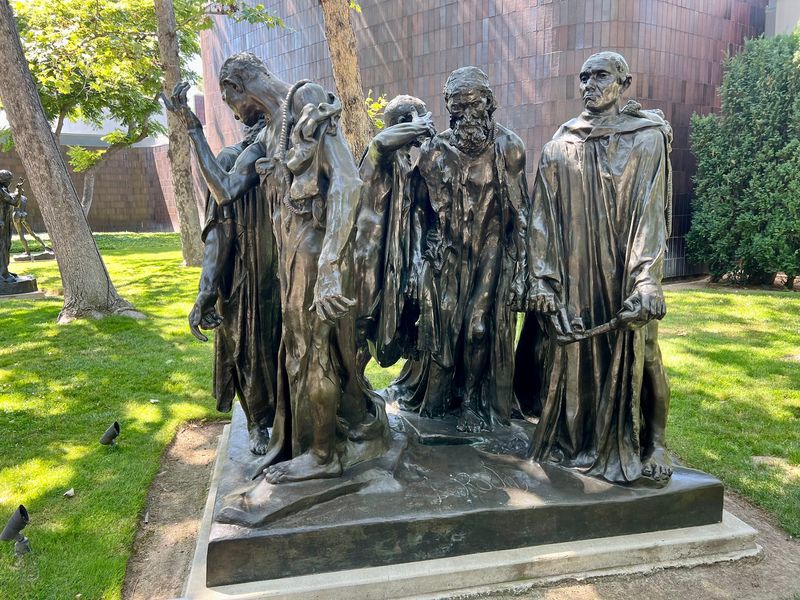
A remarkable collection of Indian and Southeast Asian art covering 2,000 years adds genuine global breadth. Outside, the sculpture garden features monumental Rodin bronzes arranged around a tranquil reflecting pond.
The whole place feels less like a museum and more like a very well-curated universe that one remarkably driven person assembled over a lifetime.
9. Hammer Museum
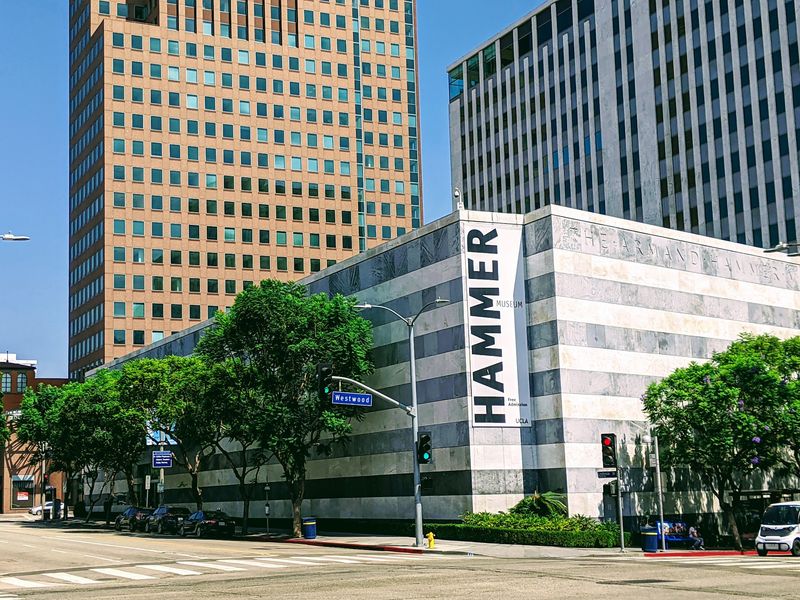
Armand Hammer was not someone who liked being told what to do with his art. When disagreements arose with the Los Angeles County Museum of Art over how his collection should be displayed, he simply built his own museum.
That level of determination, some might call it stubbornness, is exactly how the Hammer Museum came to exist in 1990, opening just weeks before his passing.
Now affiliated with UCLA, the Hammer Museum stands at 10899 Wilshire Blvd, Los Angeles, CA 90024. As of 2025, admission is completely free for all visitors.
The museum is open Tuesday through Sunday from 11 AM to 6 PM, making it an easy addition to any Westside afternoon.
The Armand Hammer Collection anchors the museum with European and American paintings, heavily weighted toward 19th and early 20th-century French Impressionist and Post-Impressionist work. The UCLA Grunwald Center for the Graphic Arts holds over 40,000 prints, drawings, photographs, and artist books spanning from the Renaissance to the present.
The Hammer Contemporary Collection focuses on artists active in Southern California since 1960, giving the museum a strong local identity. One of the most extensive collections of works by 19th-century French satirist Honore Daumier rounds out the holdings.
Few museums pack this much range into a single building this gracefully.
10. Getty Center
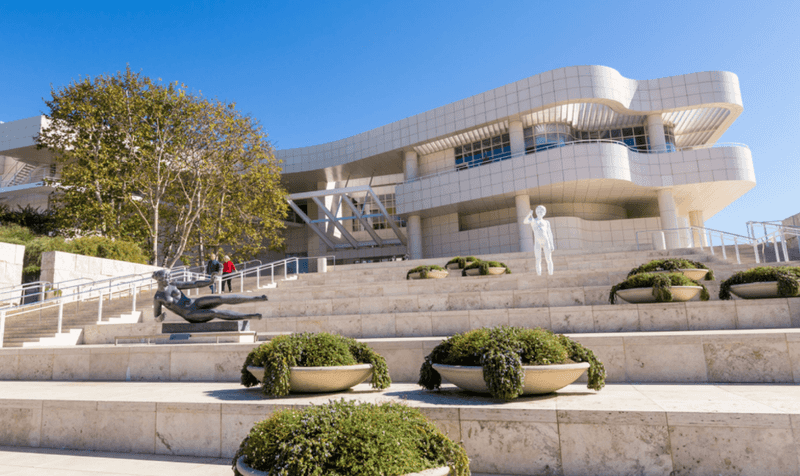
J. Paul Getty believed that great art should be accessible to everyone, which is a pretty remarkable stance for one of the wealthiest people who ever lived.
He started collecting in the 1930s and opened a small museum at his Malibu ranch in 1953. After his passing in 1976, his estate passed to a trust, and the vision expanded into something that now feels almost impossibly grand.
Perched on a hilltop at 1200 Getty Center Dr, Los Angeles, CA 90049, the Getty Center offers free admission to its art, architecture, and gardens. Visitors arrive via a tram from the street-level entrance, which adds a theatrical flair to the whole arrival experience.
Hours run Tuesday through Friday and Sunday from 10 AM to 5:30 PM, and Saturday from 10 AM to 9 PM.
The permanent collection covers pre-20th-century European paintings, drawings, illuminated manuscripts, sculpture, and decorative arts, alongside 19th and 20th-century photographs. Vincent van Gogh’s “Irises” and early Rembrandt self-portraits are among the most celebrated works on view.
Outside, the Central Garden designed by Robert Irwin is a living artwork in its own right, changing with the seasons. Whether you come for the art, the architecture, or the view of Los Angeles stretching toward the Pacific, the Getty Center delivers something genuinely unforgettable every single time.
What would your version of a personal obsession look like if you had the resources to share it with the world?