
Save These 9 Texas Stops For After Sunset Because Daylight Misses The Main Event
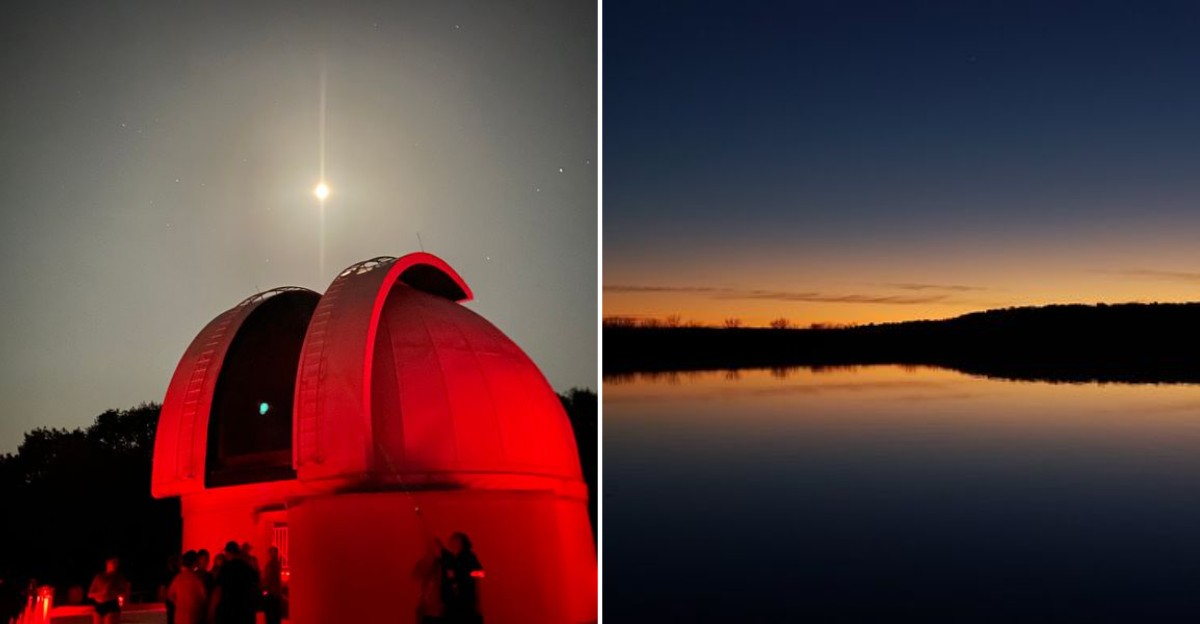
Texas has a funny habit of saving the good stuff for after dark. A bridge suddenly fills with thousands of bats.
Strange lights flicker on the horizon with no obvious explanation. Telescopes point upward, stars take over the sky, and places that look perfectly ordinary at 2 p.m. become a completely different story at midnight.
That’s what makes these stops so fun. Daylight is basically the opening act.
Take the famous lights out near Marfa. People have been staring into the darkness there for generations, trying to figure out exactly what they’re seeing.
In Houston, the night sky gets its own show at an observatory. And in Austin, sunset means looking up for a very different reason.
So save these spots for when the sun clocks out. Because in Texas, “nothing to see here” can become a pretty bold statement after dark.
1. Marfa Lights Viewing Area
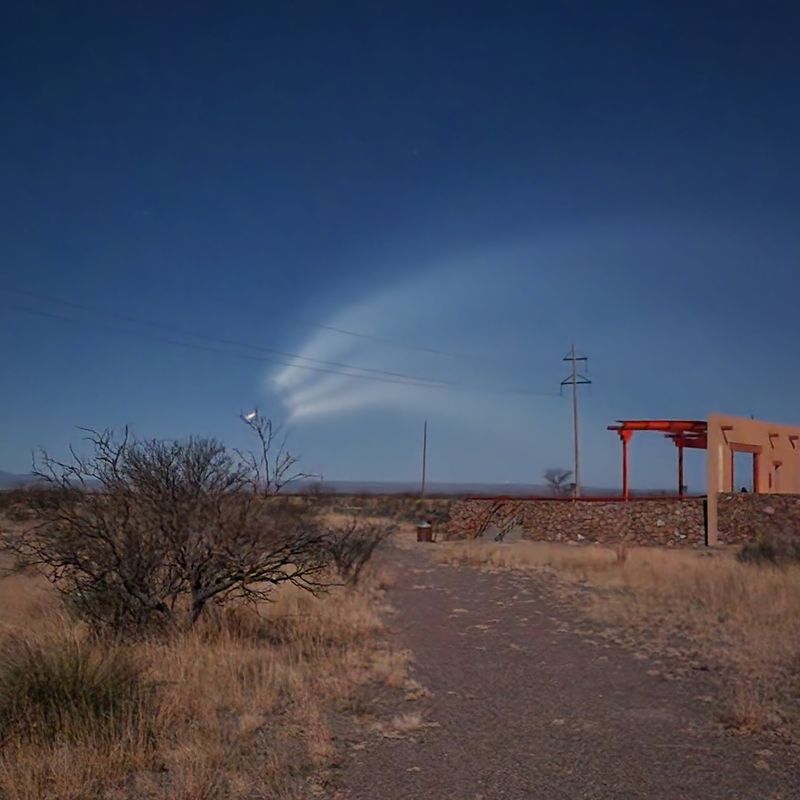
Nobody warned you that a stretch of West Texas highway could make you question everything you think you know.
The Marfa Lights are one of America’s most genuinely unexplained natural mysteries, and they show up right here at the official viewing area located about 8 to 9 miles east of Marfa on US-90, Marfa, TX 79843. On a clear night, you might catch glowing orbs drifting across the dark horizon, sometimes yellow-orange, sometimes shifting into green or blue.
These lights move, split apart, merge back together, and occasionally just hover there like they are daring you to explain them. Scientists have proposed theories ranging from atmospheric light refraction to static electricity, but nothing has been confirmed.
That mystery is exactly what makes a visit so compelling.
No equipment is needed, just a clear sky and a little patience. The viewing platform is free, open year-round, and offers a surprisingly great spot for general stargazing even on quiet nights.
Plan to arrive around sunset and stay at least an hour.
The Marfa Lights do not follow a schedule, which is honestly part of their charm. Some nights they dazzle, other nights they tease, but either way, the desert sky alone makes the trip worthwhile.
2. University Of Texas McDonald Observatory
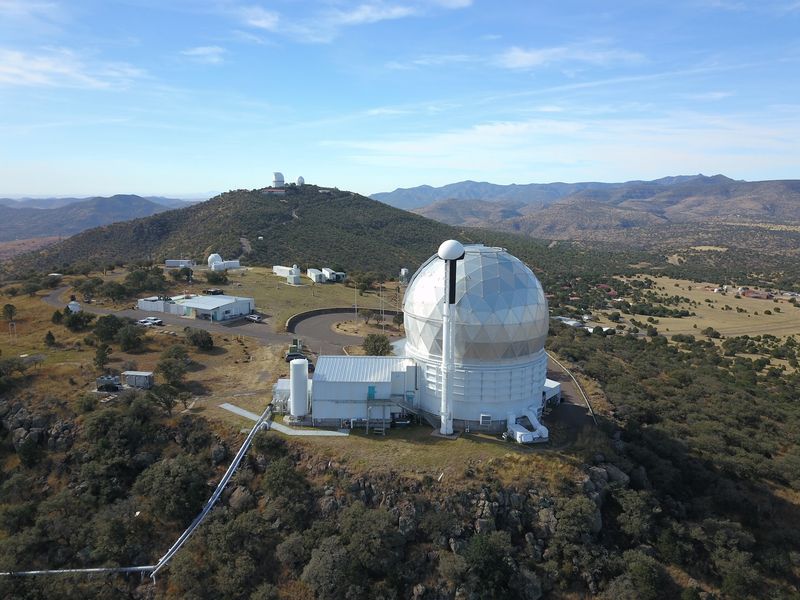
Perched high in the Davis Mountains at an elevation that puts you closer to the stars than you might expect, McDonald Observatory is the kind of place that makes your brain happily short-circuit.
Located at 3640 Dark Sky Dr, Fort Davis, TX 79734, this facility sits in one of the darkest corners of the continental United States, which means the night sky here is genuinely breathtaking. The observatory is operated by the University of Texas and welcomes the public through regular evening programs.
Star Parties are the crowd favorite, featuring open-air constellation tours and live telescope views.
On Special Viewing Nights, guests get access to powerful research-grade telescopes, including the legendary 82-inch Otto Struve Telescope. Seeing Saturn’s rings through a telescope for the first time is a moment that genuinely stops people in their tracks.
The Davis Mountains shield the site from most light pollution, making the Milky Way visible with stunning clarity on moonless nights.
Reservations are highly recommended because these events fill up fast, especially on weekends. Bring a jacket because mountain nights get surprisingly cool even in summer.
McDonald Observatory is not just for astronomy enthusiasts, it is for anyone who has ever looked up and wanted to look closer.
3. Old Tunnel State Park
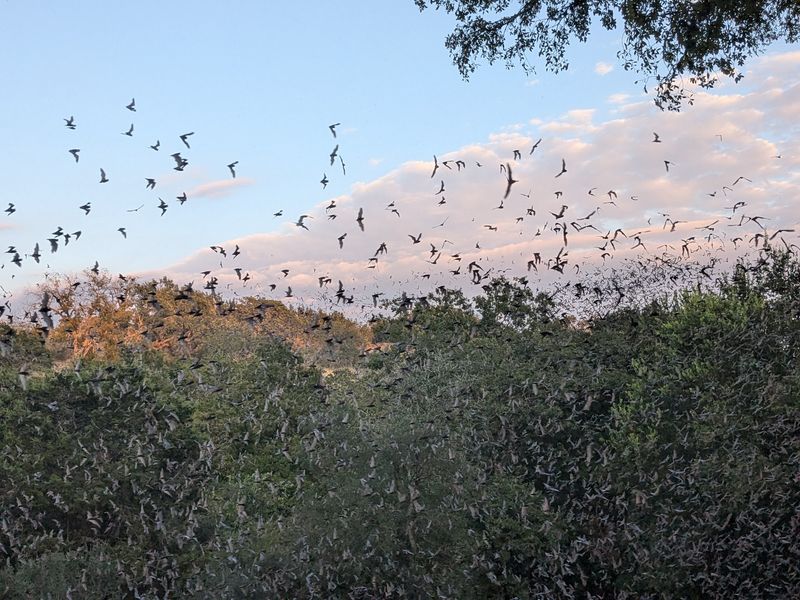
Imagine standing outside an abandoned railroad tunnel as the sun melts below the horizon, and then suddenly the sky fills with wings. Old Tunnel State Park delivers exactly that experience, and it is one of the most jaw-dropping natural spectacles in the entire state.
Found at 10619 Old San Antonio Rd, Fredericksburg, TX 78624, the park hosts a colony of up to three million Mexican free-tailed bats and three thousand cave myotis bats.
Every evening from May through October, these bats emerge in a massive spiraling column, rising into the sky before fanning out to hunt insects.
The emergence can last anywhere from 45 minutes to a full hour, and the sound alone is something you will not forget. Two viewing areas are available: an upper deck with wide panoramic views and a lower area for a more immersive, up-close encounter.
Rangers offer nightly programs during bat season, providing fascinating context about these nocturnal mammals and their role in the local ecosystem.
Tickets are required after 5 p.m. and sell out regularly, so booking ahead is a smart move. The lower viewing area has age restrictions due to the intensity of the experience.
Old Tunnel is proof that the most extraordinary wildlife shows in Texas happen after dark.
4. George Observatory
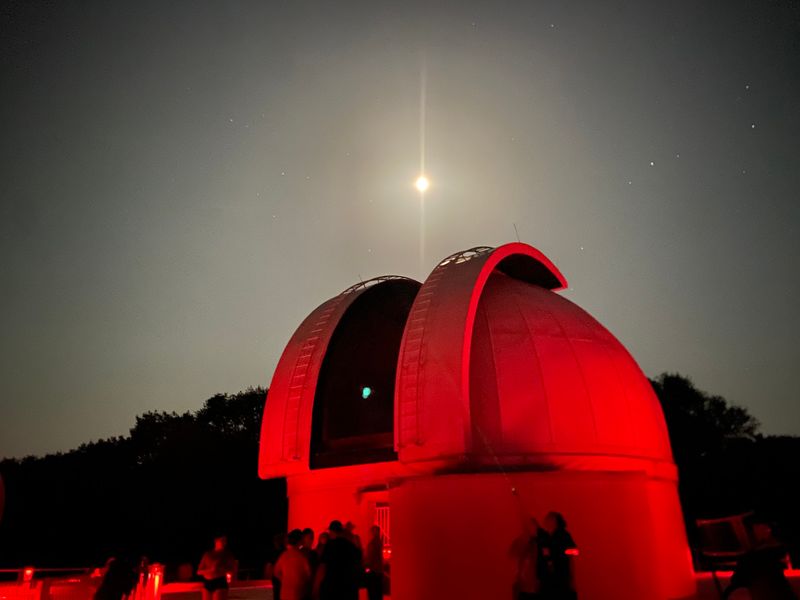
Not everyone can drive eight hours to West Texas for a stargazing trip, and thankfully, the George Observatory proves you do not have to.
Tucked inside Brazos Bend State Park at 21901 FM 762 Rd, Needville, TX 77461, this satellite facility of the Houston Museum of Natural Science brings serious astronomy to the greater Houston area. The centerpiece is the 36-inch Gueymard Research Telescope, one of the largest publicly accessible telescopes in the country.
Public stargazing nights are typically held on Saturdays, with knowledgeable astronomers leading constellation laser tours and helping visitors find planets, galaxies, and nebulae through the available telescopes.
Depending on the season, you might catch the cloud belts of Jupiter or the glowing ring of Saturn hanging in the eyepiece like a space postcard.
Entry to the observatory is free, but stargazing tickets are usually required and should be grabbed in advance. Keep in mind that a state park day pass is also needed to access the grounds.
The surrounding park adds its own charm, with cypress-lined lakes and the chance to spot wildlife on the way in. George Observatory is the kind of hidden gem that makes Houston-area residents wonder why they waited so long to visit.
5. Enchanted Rock State Natural Area
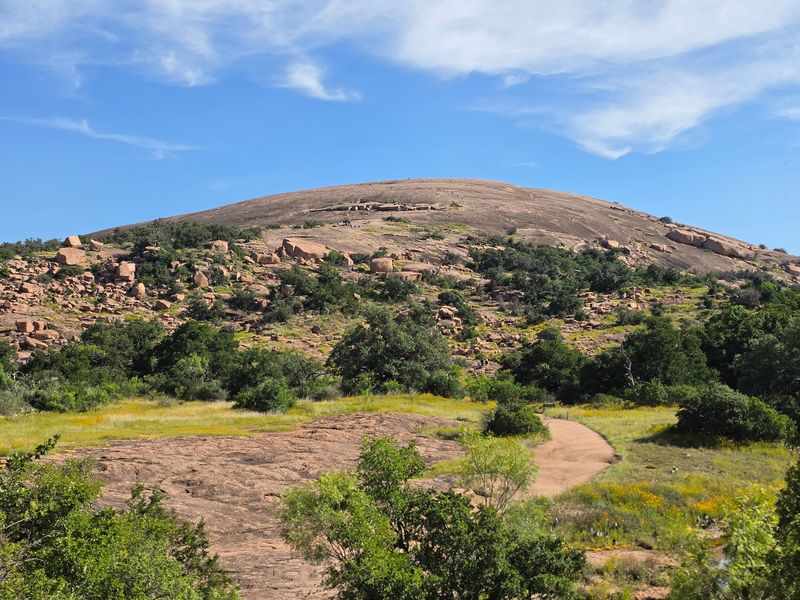
Standing on top of a giant pink granite dome while the Milky Way unfolds above you is the kind of moment that recalibrates your entire sense of scale.
Enchanted Rock State Natural Area, located at 16710 Ranch Rd 965, Fredericksburg, TX 78624, is an International Dark Sky Park, which means the darkness here is protected and the stargazing is genuinely exceptional. The dome rises 425 feet above the surrounding Hill Country terrain, giving summit visitors an unobstructed view in every direction.
By day, Enchanted Rock is a beloved hiking destination. After sunset, it becomes something closer to a natural planetarium.
The summit trail is climbable in about an hour, and many visitors time their ascent to catch the last of the sunset before settling in for the celestial show overhead.
Star parties are held periodically throughout the year, and rangers often share the science and folklore behind the rock and its surrounding skies. Planning your visit around a new moon phase will give you the darkest possible conditions and the most brilliant views.
Day passes and camping reservations are both required and fill up quickly, especially on weekends. Enchanted Rock after dark is one of those Texas experiences that belongs on every bucket list, full stop.
6. South Llano River State Park
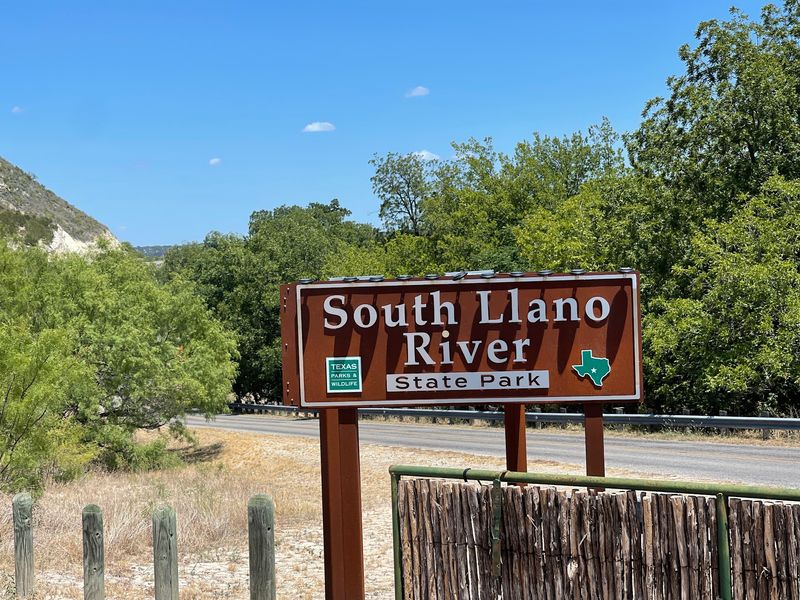
Some places feel designed for quiet wonder, and South Llano River State Park is absolutely one of them. Sitting at 1927 Park Rd 73, Junction, TX 76849, this Texas gem carries the prestigious title of International Dark Sky Park, a designation that means the surrounding community actively works to protect the darkness overhead.
The result is a night sky that feels almost impossibly clear, especially compared to anything near a major city.
The park holds a Bortle Dark-Sky Scale rating of 3, which puts it in the category where the Milky Way is not just visible but genuinely stunning. For a small night activity fee, visitors can extend their time under the stars well past 10 p.m.
Star parties and astronomy programs pop up throughout the year, offering a guided way to explore the cosmos.
A red-light flashlight is a smart addition to your packing list, since it preserves your night vision while navigating the grounds. Checking a clear sky chart and the lunar calendar before your visit will help you choose the ideal night for maximum sky drama.
The river itself adds a magical backdrop, with stars reflecting in the calm water. South Llano proves that some of the best views in Texas require absolutely no admission fee to the universe.
7. Copper Breaks State Park
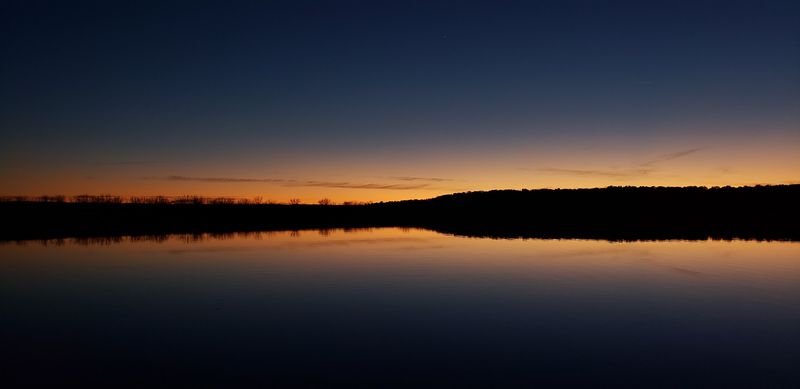
Way out on the rolling plains of North Texas, far from the glow of any city, Copper Breaks State Park sits under one of the most spectacular night skies in the entire state. Located at 777 Park Rd 62, Quanah, TX 79252, this International Dark Sky Park holds a Class 2 rating on the Bortle Scale, which places it among the darkest and most pristine stargazing environments available to the public anywhere in the country.
That is not a small thing.
On a moonless night, the Milky Way arches overhead with a clarity that feels almost surreal. Monthly star parties run from April through November, and volunteers often set up powerful telescopes so visitors can zoom in on galaxies, nebulae, and star clusters that would otherwise be invisible to the naked eye.
The wide, flat terrain means the horizon stretches in every direction without obstruction.
Giving your eyes 20 to 30 minutes to fully adjust to the darkness is worth every second of waiting. A red-lensed flashlight helps you move around without disrupting your night vision or anyone else’s.
Copper Breaks is the kind of place that feels genuinely remote, in the best way possible.
The silence, the darkness, and the sky above combine into an experience that quietly rewires how you think about the night.
8. Ann W. Richards Congress Avenue Bridge

Austin keeps its weird card firmly in hand with one of the most spectacular urban wildlife events in North America. The Ann W.
Richards Congress Avenue Bridge, stretching over Lady Bird Lake at S Congress Ave, Austin, TX 78704, is home to the largest urban colony of Mexican free-tailed bats on the continent. Numbers range from 750,000 to 1.5 million, depending on the time of year, and when they fly, it is genuinely unforgettable.
Bat season runs from March through November, with late July and early August considered peak time, when the season’s young bats join the nightly flight. The emergence typically begins around 20 minutes before sundown and the full flight can stretch for 45 to 60 minutes.
Watching from the bridge itself gives you a bird’s-eye view, while the grassy slopes along the lakeshore offer a more relaxed, picnic-style vantage point.
Boat tours on Lady Bird Lake also offer a unique perspective from the water, looking up as the bats pour out from beneath the bridge deck. No tickets are required, no reservations needed, just show up before sunset and find a good spot.
The Congress Avenue Bridge bat flight is one of those rare free experiences that genuinely earns the word spectacular. Austin does not just keep things weird, it keeps them wonderfully wild.
9. Reunion Tower
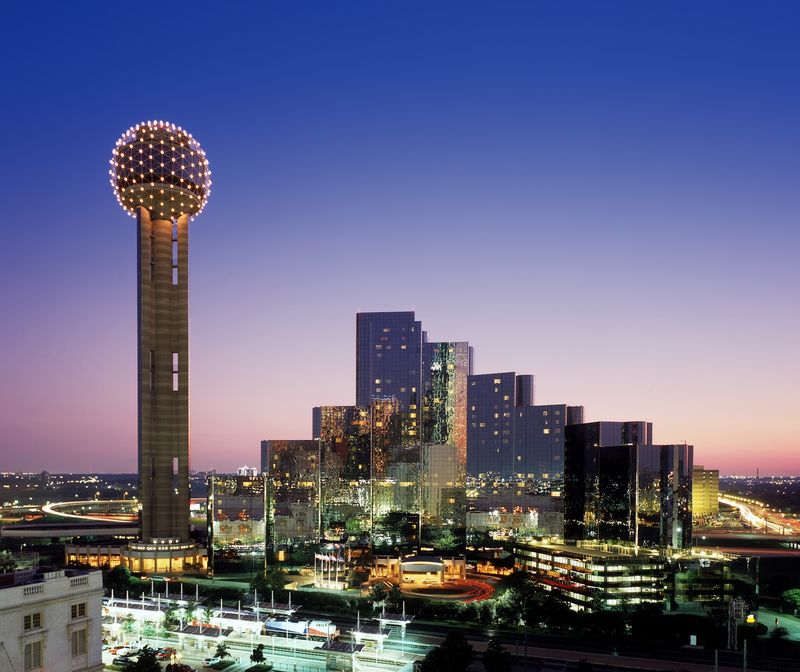
If West Texas has the stars and the Hill Country has the bats, then Dallas has Reunion Tower, and it brings a completely different kind of nighttime magic. Rising 561 feet above downtown at 300 Reunion Blvd E, Dallas, TX 75207, this iconic geodesic ball has anchored the city skyline since 1978.
Nicknamed “The Ball” by generations of Dallasites, it is one of those landmarks that looks great by day and absolutely electric after dark.
The GeO-Deck sits 470 feet up and wraps visitors in a full 360-degree panoramic view of the city below. Both indoor and outdoor viewing areas are available, so you can lean into the night breeze or stay comfortable inside with floor-to-ceiling windows.
The sprawling grid of Dallas lights, the winding highways, and the distant horizon make for a genuinely cinematic scene.
The tower’s exterior is covered in hundreds of programmable LED lights that shift into custom displays for holidays, sports championships, and special events, adding a live performance element to the view.
Photography opportunities here are exceptional, especially in the golden hour just after sunset when the sky transitions from deep orange to midnight blue.
Reunion Tower is not just a lookout point, it is the kind of place that makes you fall a little bit in love with a city you thought you already knew.