
9 Texas Spots Where The Most Interesting Thing Might Be Under Your Feet
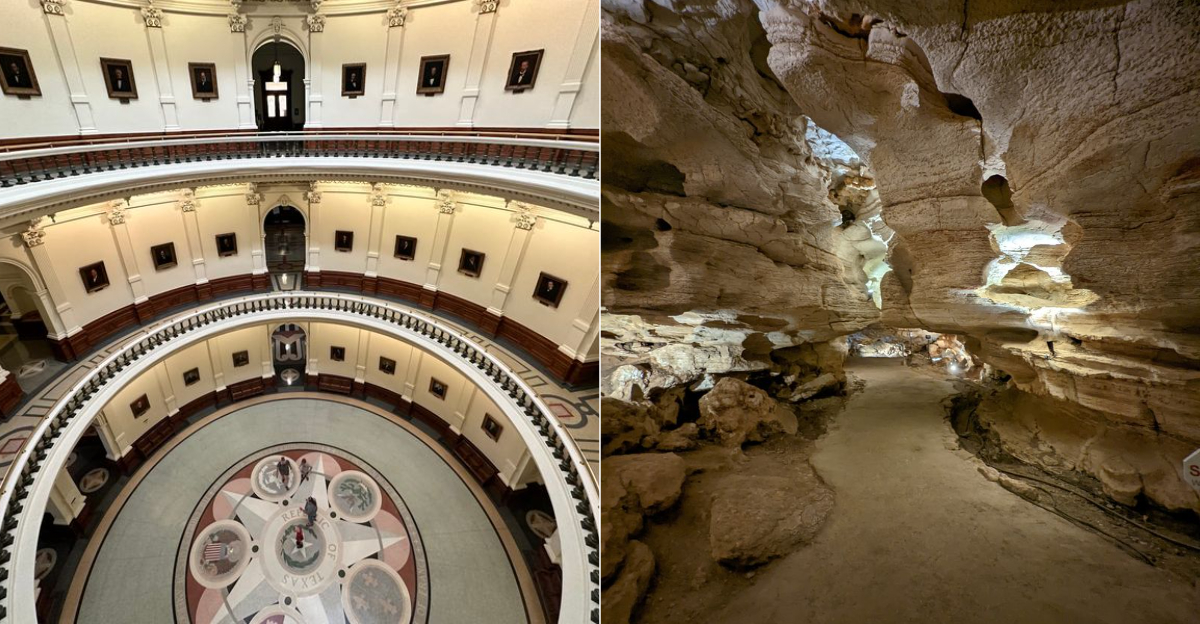
Texas has a little secret. The best part of the state might be hiding under your boots.
Ancient dinosaur footprints sit in a riverbed. Massive caverns stretch beneath the Hill Country. And in the heart of Austin, part of the state’s own government complex extends underground.
Suddenly, “What’s under there?” becomes a pretty good question to ask on a road trip.
These places reveal a side of the Lone Star State that doesn’t show up from the highway. Millions of years of history, hidden chambers, prehistoric footprints, and man-made spaces are all waiting below the surface.
Some are easy to explore. Others require a little more digging. Literally.
Either way, bring your curiosity. Texas has plenty going on above ground, but the real plot twist may be underneath.
1. Dinosaur Valley State Park
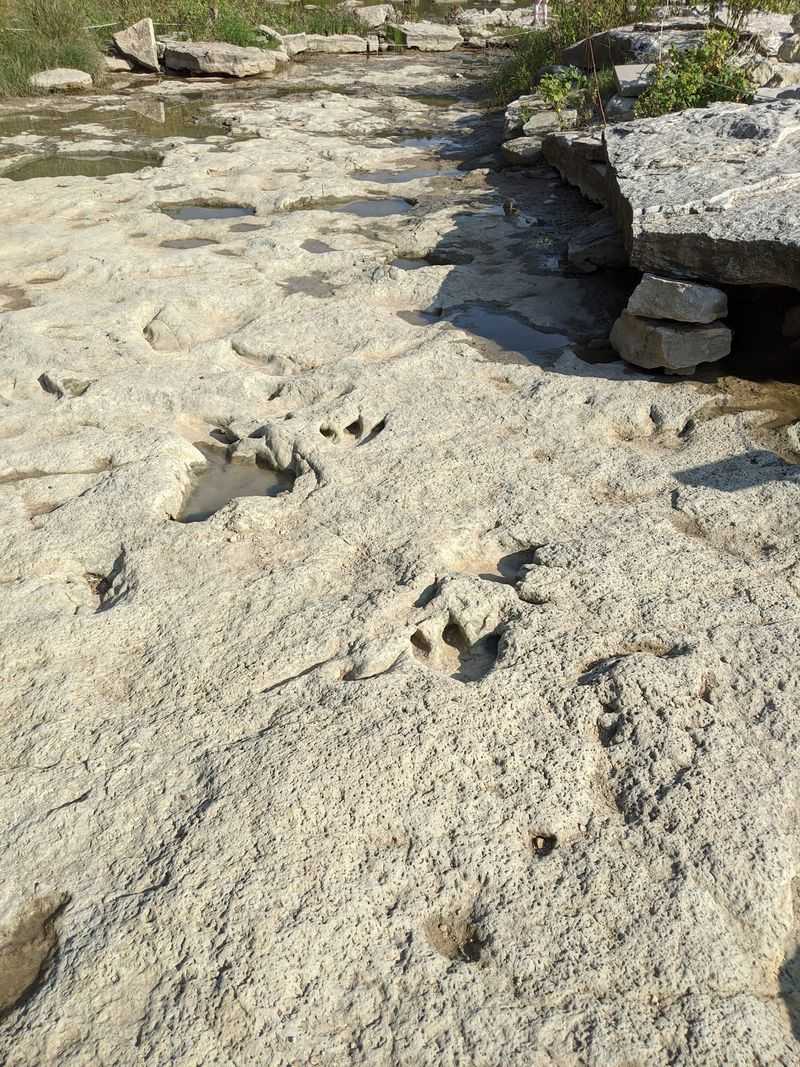
Walking along a riverbed and suddenly realizing you are stepping next to a footprint left by a massive dinosaur millions of years ago is the kind of moment that rewires your brain. Dinosaur Valley State Park in Glen Rose, Texas, offers exactly that kind of earth-shaking experience.
Located at 1629 Park Rd 59, this park preserves some of the most well-documented dinosaur tracks on the planet, right there in the Paluxy River.
The tracks were left during the Cretaceous Period, when two very different types of dinosaurs roamed this area. Sauropods, the enormous long-necked plant eaters, left wide, rounded impressions.
Theropods, the two-legged hunters, left narrower three-toed prints that still look remarkably sharp and detailed today.
What makes this spot genuinely special is that the tracks are not behind glass or roped off in a museum. Depending on water levels, you can literally stand next to them in the riverbed.
The limestone layers that preserved these prints have been protecting them for roughly 113 million years. Rangers offer guided programs that help visitors understand the science behind the tracks.
This park proves that sometimes the most extraordinary museum on Earth has no roof and no admission desk, just a river and a whole lot of ancient history waiting to be explored.
2. Waco Mammoth National Monument
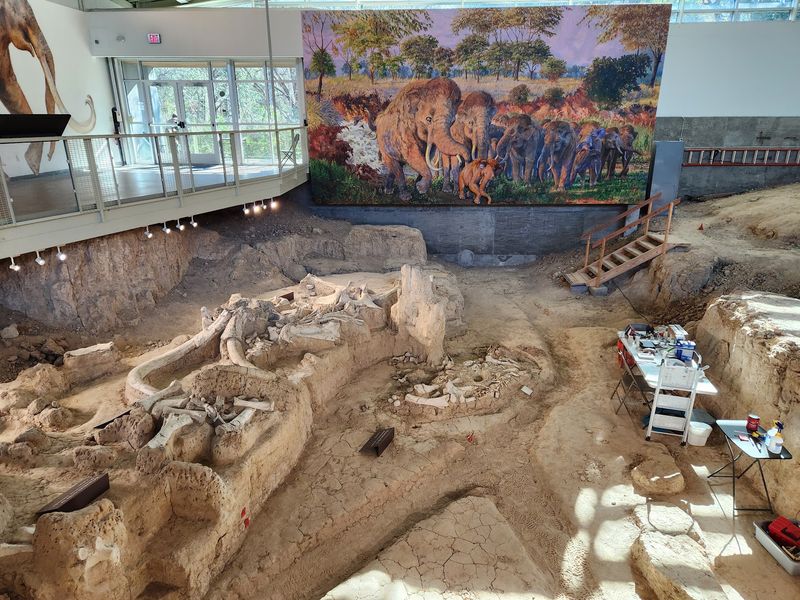
Picture an ancient Ice Age nursery, frozen in time beneath the Texas soil, and you have a pretty good idea of what Waco Mammoth National Monument is all about.
This remarkable site in Waco holds the fossils of a nursery herd of Columbian mammoths, making it the only confirmed discovery of its kind anywhere in the United States. You can find it at 6220 Steinbeck Bend Dr, Waco, TX 76708.
The story of how these 24 mammoths ended up here together is both fascinating and a little heartbreaking. Evidence suggests a series of flash floods swept through the area during the Pleistocene Epoch, burying the herd under layers of mud and sediment.
That natural burial actually preserved the bones in extraordinary detail, allowing scientists to study them in situ, meaning exactly where they fell.
Alongside the mammoths, researchers found evidence of other Ice Age creatures including ancient camels and saber-toothed cats, painting a vivid picture of a prehistoric Central Texas ecosystem. A protective dig shelter was built over the site so visitors can view the fossils up close on guided tours.
Standing inside that shelter and looking down at bones that are tens of thousands of years old puts time in a perspective that no textbook ever could. Waco Mammoth National Monument is genuinely one of the most underrated paleontological sites in the entire country.
3. Mineral Wells Fossil Park
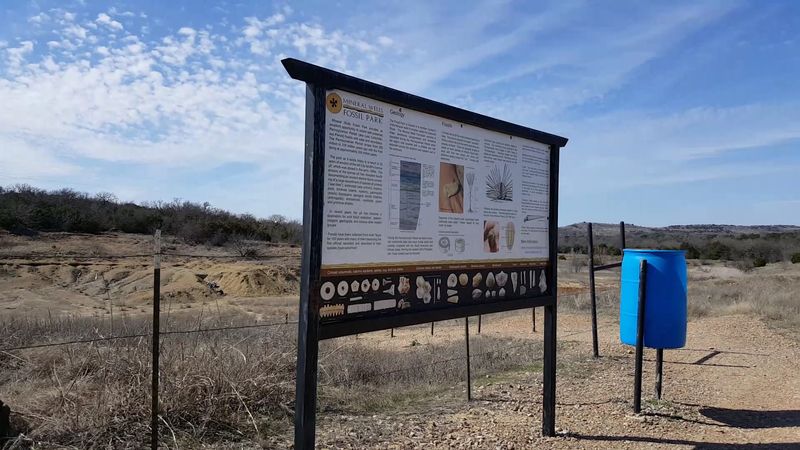
Not many places let you show up with a bucket and walk away with your own piece of prehistoric ocean floor, but Mineral Wells Fossil Park is not like most places. This public fossil hunting site sits at 2375 Indian Creek Rd, Mineral Wells, TX 76067, and it operates on a gloriously simple principle: come dig, find fossils, take them home for free.
The land here was once covered by a shallow inland sea more than 300 million years ago during the Pennsylvanian Period. Erosion over countless centuries slowly exposed a rich fossil bed packed with marine life from that ancient ocean.
Crinoids, which look like tiny stone flowers but are actually ancient sea animals, are among the most common finds. Brachiopods, sea urchins, clams, and even ancient shark teeth have all turned up here.
The park is completely free and open to the public, which makes it one of the most accessible paleontology experiences in Texas.
No special equipment is required beyond a little patience and a sharp eye. Families, solo explorers, and serious fossil hunters all show up regularly with high hopes and usually leave holding something genuinely ancient.
There is something deeply satisfying about reaching into a pile of rock and pulling out a creature that swam through a prehistoric sea. Mineral Wells Fossil Park turns that feeling into an afternoon anyone can enjoy.
4. Texas Capitol Underground Extension
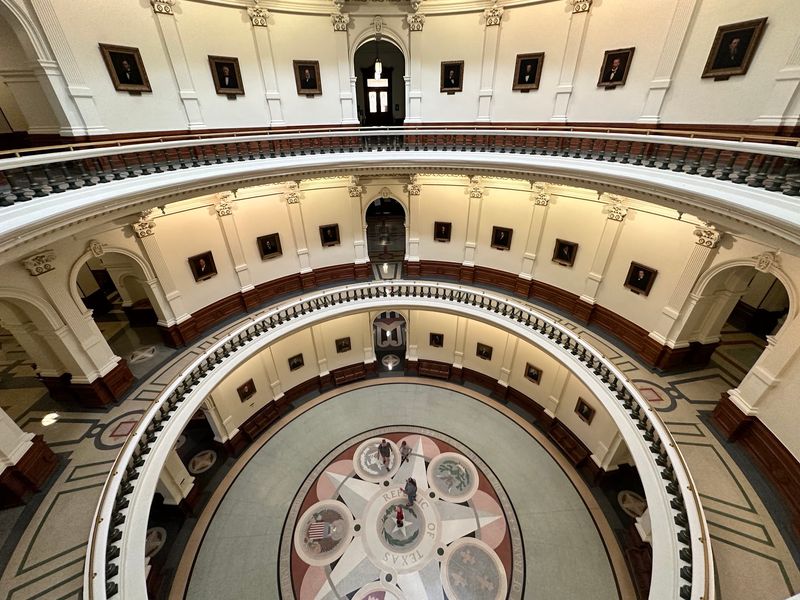
Most people visit the Texas Capitol to admire the grand dome, the sweeping staircases, and the portraits of governors lining the halls.
Very few think to look down and wonder what is happening beneath all that marble and history. Tucked under the iconic building at 1100 Congress Ave, Austin, TX 78701, is an entire underground extension that is just as impressive as what stands above it.
Completed in the 1990s, the underground addition was a massive architectural undertaking designed to expand the Capitol complex without altering its historic exterior.
The result is a sprawling subterranean network of offices, committee rooms, and corridors that connects several buildings on the Capitol grounds. Architects were clever about it too, incorporating skylights and open atriums that draw natural sunlight deep into the underground spaces.
Walking through the underground extension feels surprisingly airy and open for a space that technically sits beneath a parking area and a historic lawn.
Artwork from Texas artists is displayed throughout the corridors, giving the tunnels a gallery-like quality. The design manages to feel both functional and genuinely beautiful, which is not easy to pull off underground.
It is a fascinating example of how Texas solved a very practical problem with a solution that also happens to be architecturally stunning. Next time you visit the Capitol, take the stairs going down instead of up.
5. Downtown Houston Tunnel System
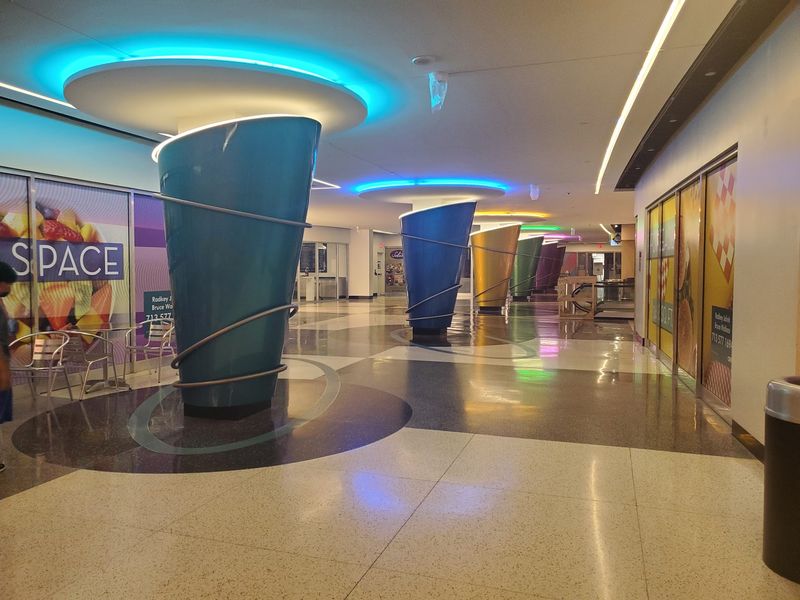
Houston has a secret that roughly 150,000 people use every single weekday, and it runs entirely underground.
The Downtown Houston Tunnel System is a climate-controlled pedestrian network that stretches across more than six miles beneath the city streets. You can access it through Wells Fargo Plaza at 1000 Louisiana St, Houston, TX 77002, and from there the underground world opens right up.
The tunnel network connects 95 city blocks and links office towers, hotels, retail shops, and food courts into one continuous subterranean web.
It started taking shape in the 1960s as a practical solution to Houston’s notoriously intense heat and humidity. What began as a few simple walkways between buildings gradually grew into one of the largest underground pedestrian systems in the world.
Navigating the tunnels for the first time feels a little like discovering a parallel city running just below the surface of the one you thought you knew.
There are restaurants, barbershops, banks, and pharmacies all operating underground, serving the thousands of downtown workers who pass through daily. The system is generally open on weekdays during business hours, so timing matters if you want to explore it properly.
Picking up a map before heading in is genuinely useful, because the tunnels branch and loop in ways that can surprise even a confident navigator. Houston built an entire city under its city, and that is exactly as impressive as it sounds.
6. Natural Bridge Caverns
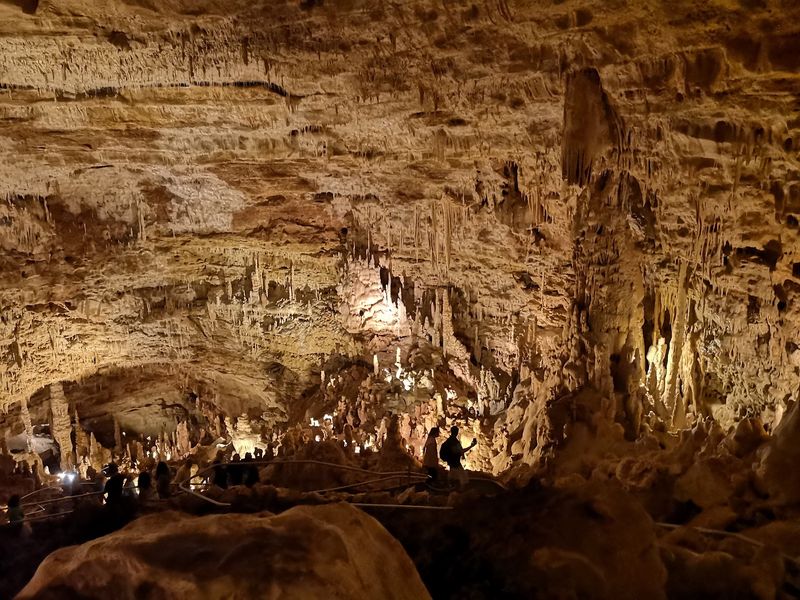
Some places earn their reputation honestly, and Natural Bridge Caverns has been earning its for over six decades. Discovered in 1960 by a group of students from St. Mary’s University, this cave system near San Antonio quickly revealed itself to be something extraordinary.
Located at 26495 Natural Bridge Caverns Rd, San Antonio, TX 78266, it holds the title of the largest known commercial cavern in Texas.
The name comes from a 60-foot natural limestone bridge that spans the main entrance to the cave, which is a pretty dramatic welcome before you even step inside. Once underground, the formations take over completely.
Stalactites hang from the ceiling like stone icicles, stalagmites rise from the floor, and flowing sheets of flowstone and delicate cave draperies cover the walls in textures that look almost too intricate to be natural.
The cave maintains a constant temperature of around 70 degrees Fahrenheit year-round, making it a refreshing escape during Texas summers.
What makes it especially exciting is that it is still actively growing, meaning new formations are slowly developing right now. Arrowheads and ancient animal bones discovered inside add a layer of human and natural history to the geological spectacle.
Natural Bridge Caverns offers multiple tour options ranging from family-friendly walking tours to more adventurous crawl-through experiences, so there is genuinely something for every comfort level down there.
7. Inner Space Cavern
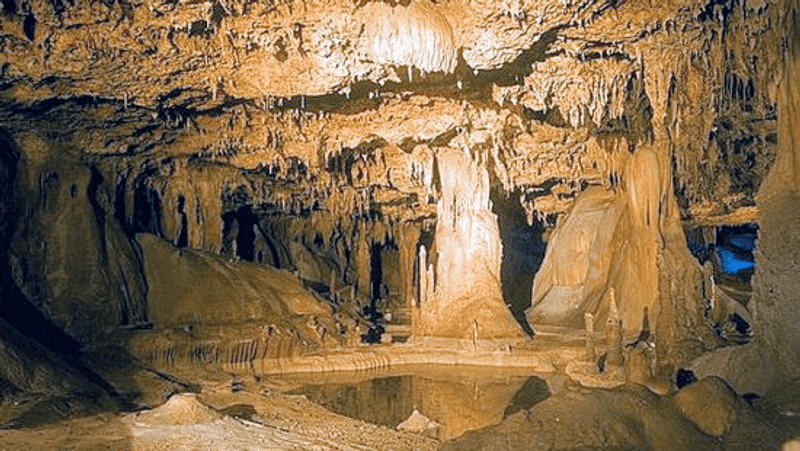
Here is a fun fact that sounds made up but is completely true: Inner Space Cavern in Georgetown was discovered by accident when highway construction workers drilling for Interstate 35 suddenly felt their drill bit drop into empty space.
That moment of surprise in 1963 turned out to be one of the best accidents in Texas history. The cavern is now open to visitors at 4200 S I-35 Frontage Rd, Georgetown, TX 78626, and you can literally see the highway above you from inside the cave.
The cave system is estimated to be millions of years old and features an impressive collection of stalactites, stalagmites, and other formations that have been building up over geological time.
Prehistoric animal bones discovered inside the cavern have helped researchers piece together what the region looked like long before humans arrived. Mastodon bones and other Ice Age fauna have been found preserved in the cave’s interior, which adds a paleontological layer to the already compelling geological story.
The cave maintains a steady temperature of around 72 degrees Fahrenheit, which feels like a gift on a blazing Texas afternoon.
Several tour options are available, from standard walking tours to more immersive lantern tours that give the formations an especially atmospheric glow. Inner Space Cavern is one of those places that rewards curiosity in a big way.
The fact that it exists because someone accidentally poked a hole in the ground makes it even better.
8. Longhorn Cavern State Park
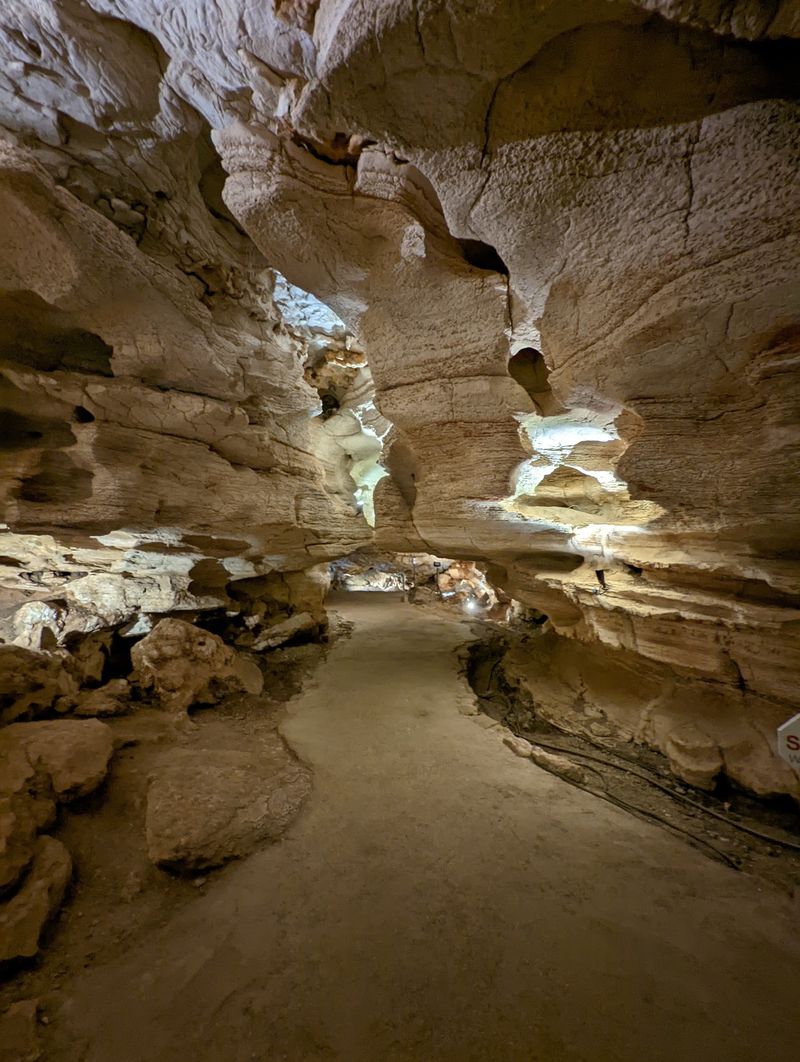
Longhorn Cavern is the kind of place that has been many things to many people over the centuries, and somehow it keeps getting more interesting with every layer of history you uncover.
The cavern at 6211 Park Road 4 S, Burnet, TX 78611, was carved out by an underground river that slowly dissolved the limestone over millions of years, leaving behind a series of smooth, flowing chambers that feel almost sculpted.
Native Americans used the cave as shelter long before European settlers arrived in Texas. Later, the cavern reportedly served as a hideout for outlaws, and legends about hidden treasures buried somewhere in its depths have circulated for generations.
In the 1920s, someone had the creative idea of hosting dances inside the cave, taking advantage of its natural acoustics and cool temperature. The Civilian Conservation Corps later developed the site into a proper state park during the 1930s.
The geological formations inside include stalactites, stalagmites, and flowstones, but the cave’s overall character is shaped more by its remarkably smooth walls, polished by ancient water over an almost incomprehensible stretch of time.
Guided tours walk visitors through the main chambers and share the layered stories of the cave’s natural and human history. Longhorn Cavern manages to be a geology lesson, a history class, and a genuine adventure all at once.
That combination is hard to find anywhere else in Texas.
9. Caverns Of Sonora
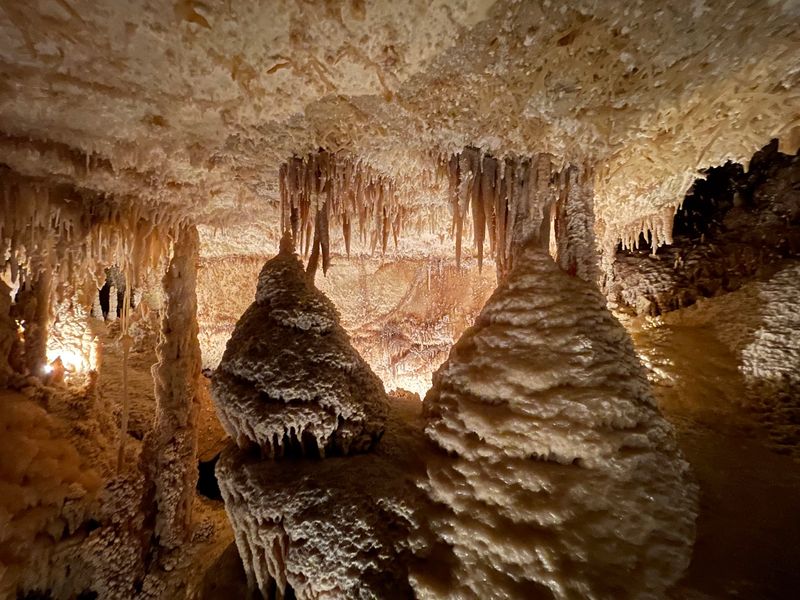
The Caverns of Sonora have been called the most beautiful cave in the world, and after spending even a few minutes inside, that title starts to feel completely reasonable. Located at 1711 Private Rd 4468, Sonora, TX 76950, this cave sits in a quiet corner of West Texas that most travelers drive right past without realizing what is hiding beneath the surface.
What sets Sonora apart from other Texas caverns is the sheer density and delicacy of its crystal formations. The cave is famous for its helictites, which are twisting, curling formations that seem to defy gravity as they grow outward in every direction.
Unlike stalactites that grow straight down due to gravity, helictites follow their own mysterious logic, branching and spiraling in ways that look more like coral than rock. One formation famously resembles a butterfly in mid-flight, and once you see it, that is all you can think about.
The cave is approximately 95 percent active, meaning the formations are still slowly growing today, fed by mineral-rich water seeping through the rock above.
The constant interior temperature of 71 degrees Fahrenheit keeps the environment stable and comfortable year-round. Guided tours move carefully through the passages to protect the fragile crystals, some of which are incredibly thin and translucent.
Caverns of Sonora is the kind of place that genuinely changes how you think about what the word beautiful can mean underground.
Have you ever seen anything that made you forget to breathe for a moment?