
This Pennsylvania Art Supply Store Is A Massive Playground For Creative Minds
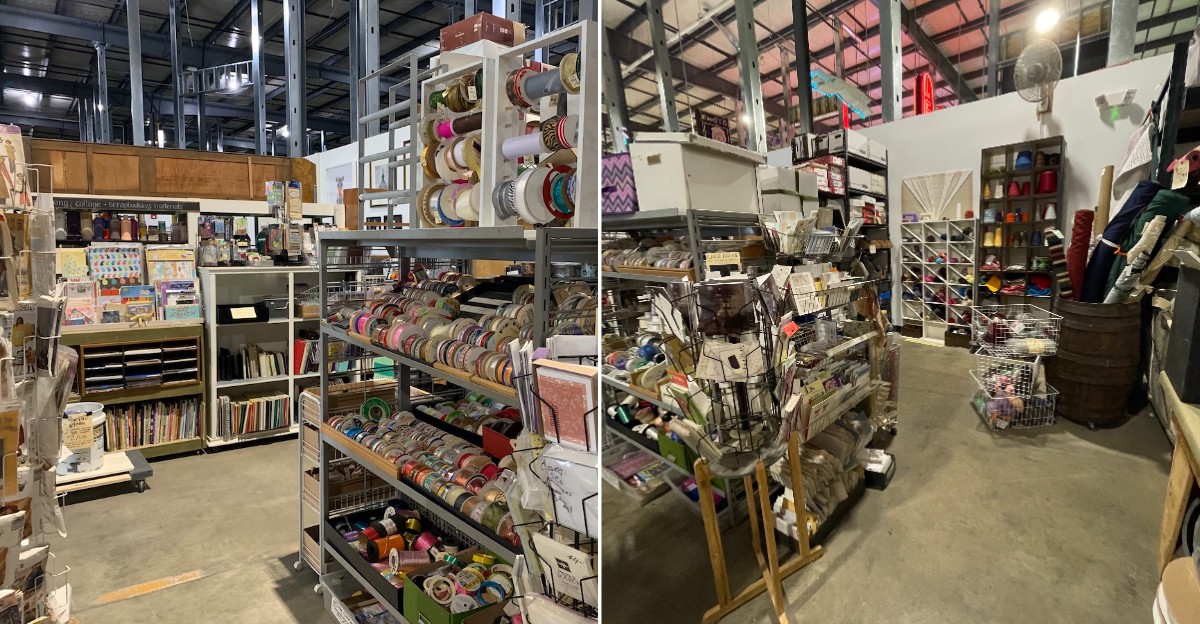
A bin of odd materials can be more exciting than a perfectly organized shelf when your brain is already looking for the next idea.
This Pennsylvania art supply store leans into that feeling, giving creative people room to browse, experiment, and rethink what everyday objects can become.
The fun comes from discovery rather than predictability.
One strange texture, salvaged piece, or unexpected color can send a project in a completely different direction before you even know what you are making.
I tend to get ideas backwards in places like this. Instead of starting with a project and buying supplies, I find one object I cannot stop looking at and build the project around it later.
That approach has produced some of my favorite experiments and a few wonderfully questionable ones.
I once carried home a piece of material with no plan whatsoever, then spent the evening moving it around my desk until an idea finally clicked.
For me, that is exactly what a creative playground should do.
A Nonprofit With A Mission Built On Rescue
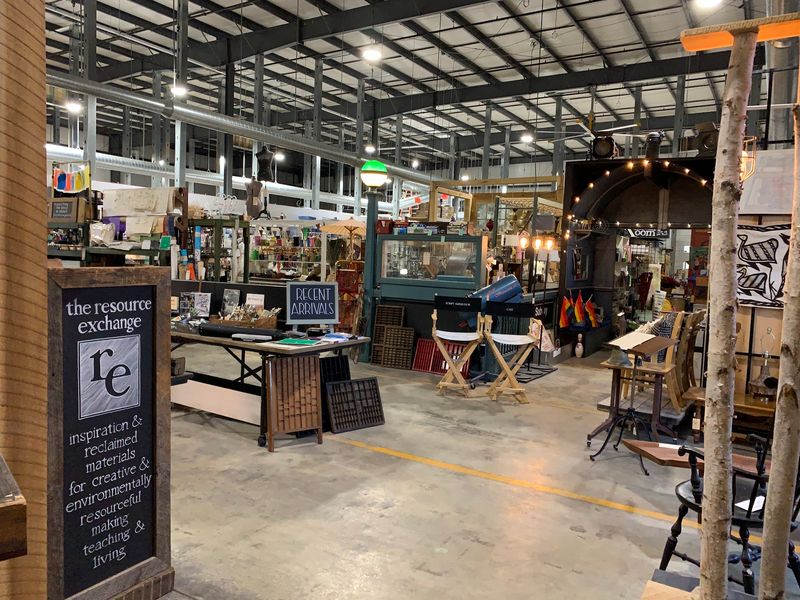
Most shops chase profit. Here, the goal is keeping usable materials out of the trash, and you can feel that purpose the moment you step inside.
The Resource Exchange operates as an environmental arts nonprofit, which explains why the inventory looks nothing like a typical retail floor.
Donated goods arrive, get sorted, researched, and priced, then land on shelves waiting for someone with an idea.
Staff members talk about diversion rather than sales, and that mindset shapes everything from the bulk bins to the organized textile section.
Buying a jar of buttons here quietly supports a small Pennsylvania organization paying wages and keeping the lights on.
I liked knowing my spending had a second job. The tote bag of supplies I carried out represented materials that almost became landfill filler.
Shopping with purpose does not usually feel this satisfying, and it rarely comes with a tray of salvaged brass drawer pulls as a bonus.
Film Sets And Theater Productions Feed The Shelves
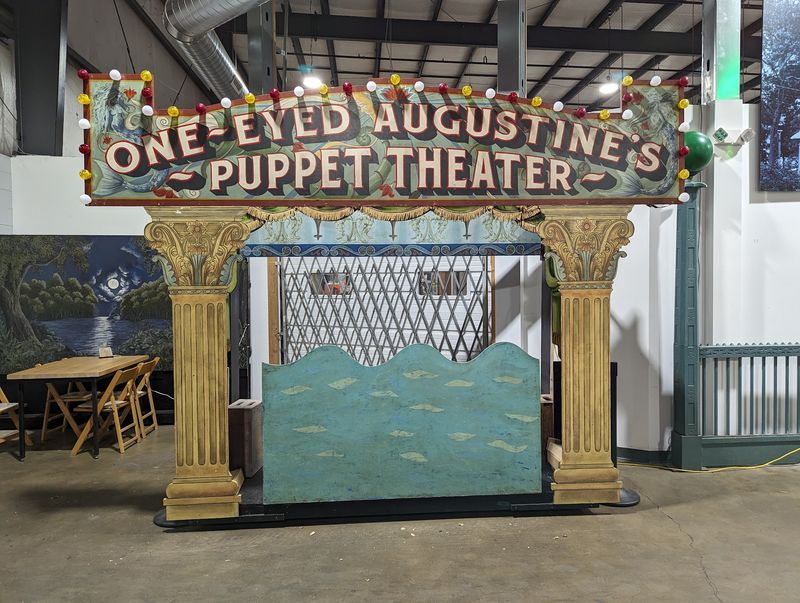
Ever wonder where a movie set goes once the cameras stop rolling? A surprising amount of it ends up in this Philadelphia warehouse.
Props, scenery, and set pieces saved from film shoots and theatrical productions make up a real chunk of the inventory.
That is why you might spot a painted flat leaning against a rack of stage-worthy furniture.
The arrangement makes sense for everybody. Production companies avoid hauling perfectly good material to the dump, and makers get access to items they would never find at a craft chain.
I found myself inspecting a piece of trim and wondering which scene it once framed. That guessing game is half the entertainment.
Photographers, set designers, and party planners tend to circle this area hardest, since a single odd prop can anchor an entire display.
Bring a tape measure, because those theatrical pieces run bigger than your car trunk expects.
Fabric Sold By The Yard, The Remnant, And The Pound
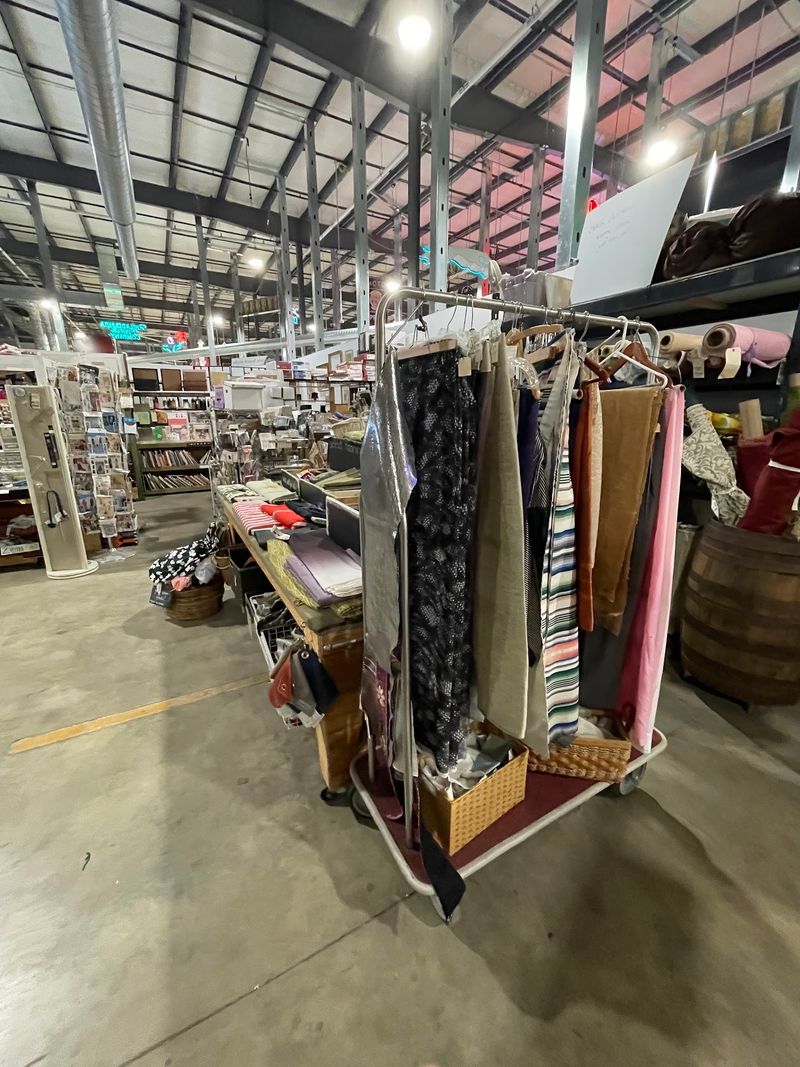
Sewists tend to lose track of time in the textile section, and honestly, I understand the appeal completely.
Fabric ranks among the most donated and most requested material at The Resource Exchange, so the selection shifts constantly.
Rolls get cut by the yard for people who need a manageable amount instead of an entire bolt.
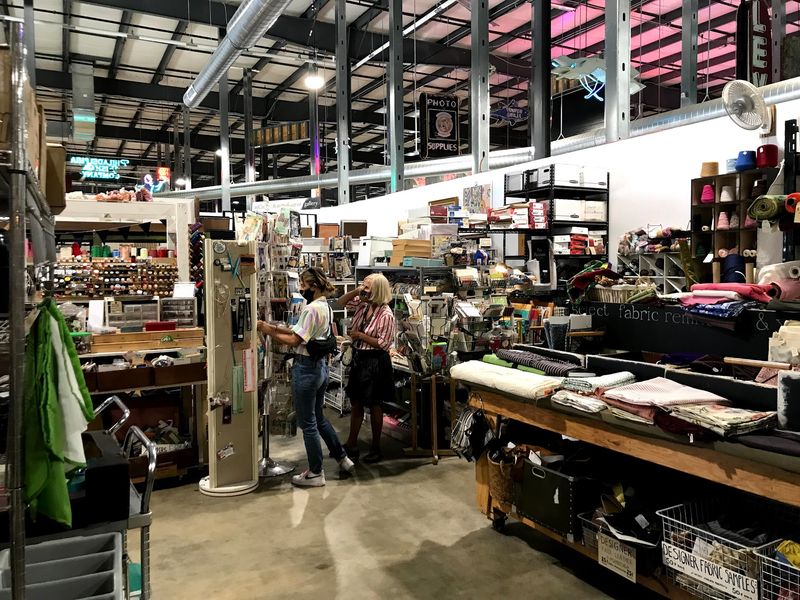
There are also fabric rolls sold by the yard plus remnants sized for smaller projects. Quilters and costume makers can fill a bag without much damage to a budget.
Notions live nearby too. Thread, needles, zippers, and packs of buttons turn up in quantities that make finishing a project realistic.
I watched someone measure out upholstery fabric for a chair seat while comparing two shades of green. That kind of decision takes a while, and nobody rushes you.
Natural fiber textiles are worth hunting for, since good quality cotton and linen rarely sit long.
Art Supplies That Cover Almost Every Medium
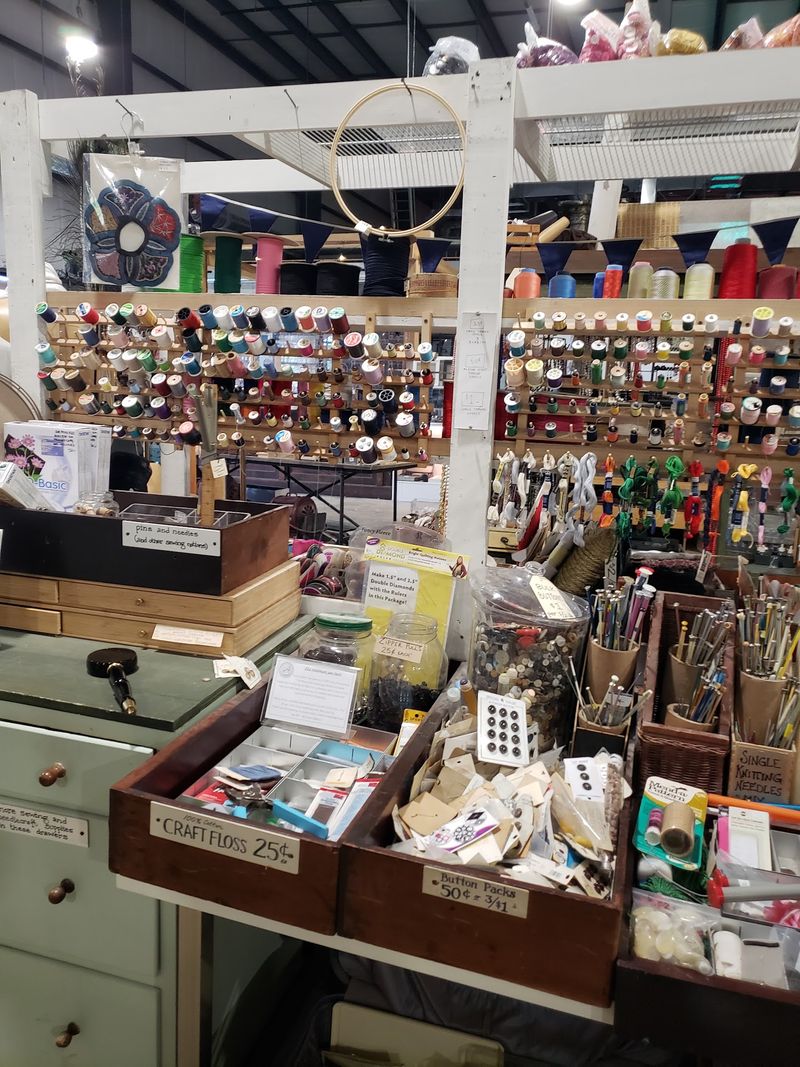
Markers, paint, pens, paper, stamps, beads, brushes. The list keeps unrolling long after you think it should stop.
Painters, illustrators, jewelry makers, and scrapbookers all find something workable here, often at a fraction of what new supplies cost.
Prices generally land at least a third to half off retail, with deeper cuts in the bulk sections.
What struck me was the range rather than just the volume. One shelf held drawing tools while the next offered bead trays and findings for jewelry.
Teachers and camp counselors do well in this part of the store, since classroom projects need quantity more than perfection.
Office supplies show up too, which helps anyone running a studio on a shoestring.
My advice is to arrive with a rough project in mind but stay flexible. The inventory decides what is possible on any given day.
Half the fun comes from discovering a medium you had never considered trying.
Lumber, Tile, And Tools For Hands-On Builders
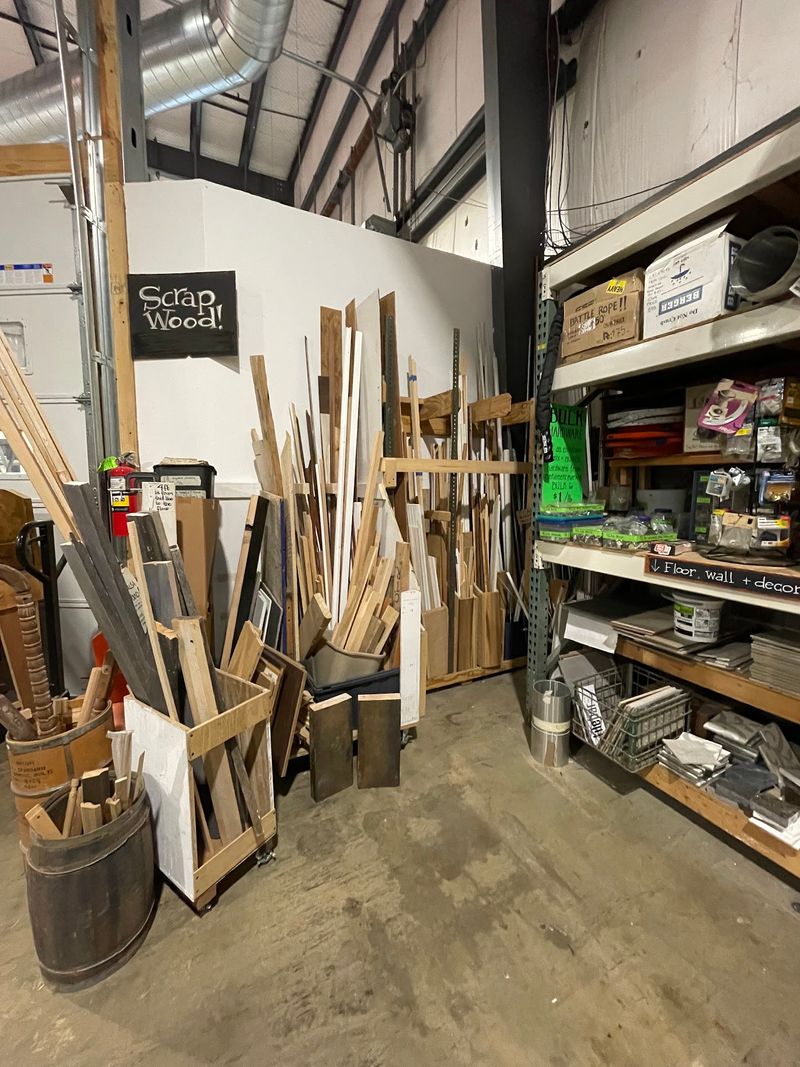
Woodworkers, this part deserves your attention more than the bead bins ever will.
Salvaged lumber leans in organized stacks, and boxes of tile sit waiting for a backsplash project.
Hand tools and hardware round out the building materials, which makes the place useful for renovations as well as crafts.
Furniture makers can find boards with character that big-box stores simply do not stock. Reclaimed wood already carries a history, and that texture costs money elsewhere.
Textiles, paint, and assorted housewares occupy store space, so a small home project can sometimes be sourced in one trip.
I saw someone measuring tile against a photo on their phone, doing the math right there in the aisle.
Stock in this department turns over unpredictably, which means checking back matters. What looks thin one week can be overflowing the next.
Gloves in your bag and a vehicle with decent cargo room will serve you well here.
Organization That Makes The Hunt Manageable
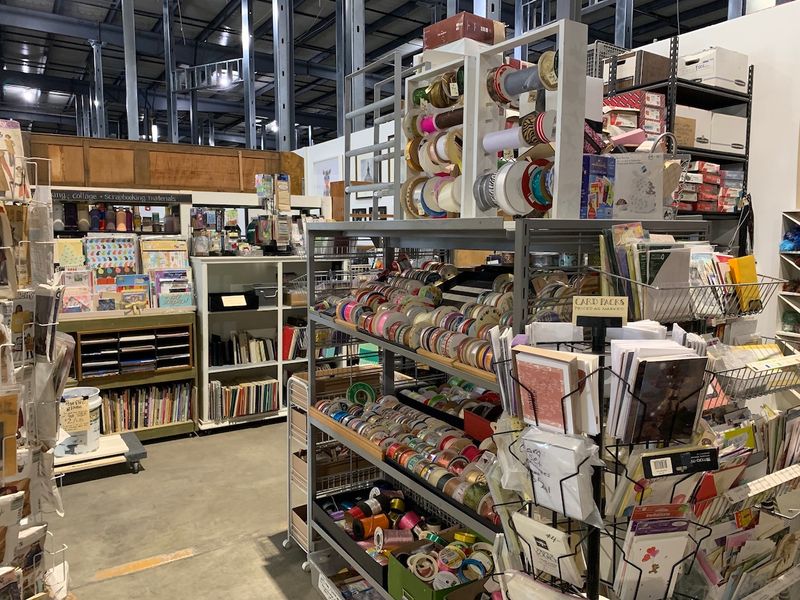
Secondhand shopping often means digging through chaos. Not the case here, and that changes the whole experience.
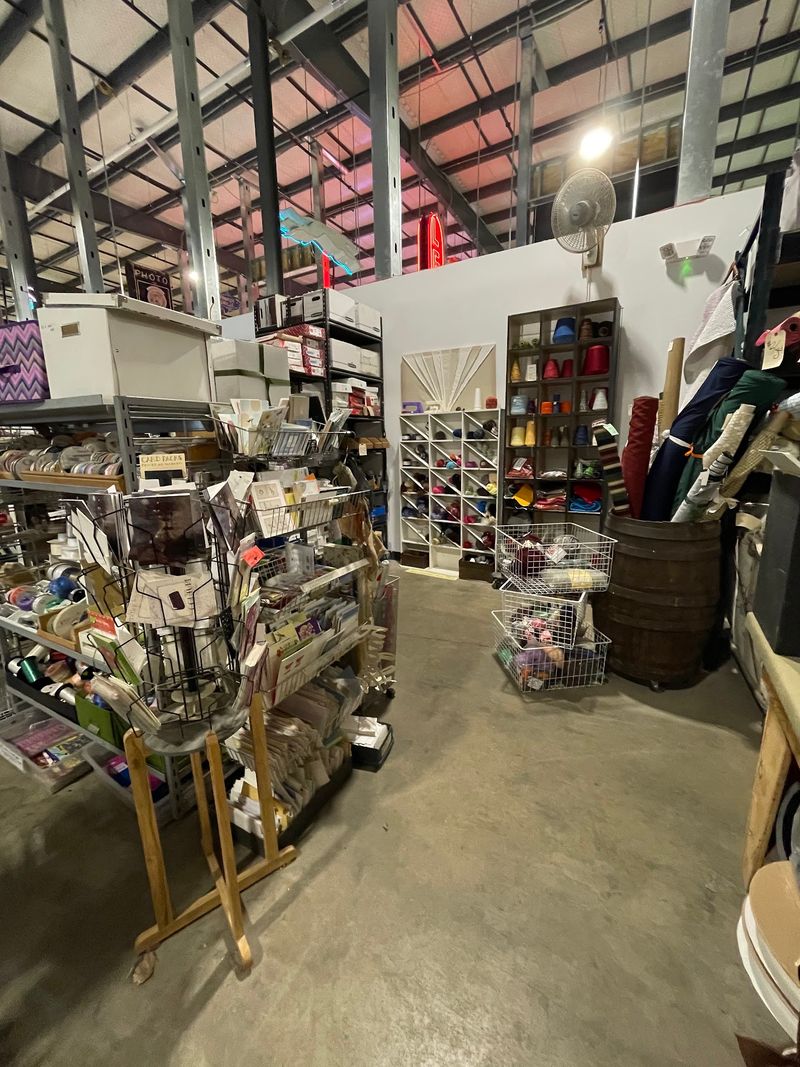
Supplies sit grouped by category, so paint stays with paint and textiles stay with textiles. You can walk in looking for beads and actually find the beads without excavating three tables.
Staff handle the sorting and price research behind the scenes, which is no small task given the variety of donations arriving. That effort shows in how calmly the floor reads.
Wide aisles help too. I browsed at a slow pace without bumping elbows, which turned the visit into something relaxing instead of a wrestling match.
Newcomers should do one full loop before committing to anything. Knowing the layout lets you double back to whatever kept nagging at you.
Plenty of visitors treat the trip as a leisurely browse rather than a quick errand, and the store rewards that approach with unexpected finds.
An On-Site Gallery Spotlighting Local Artists
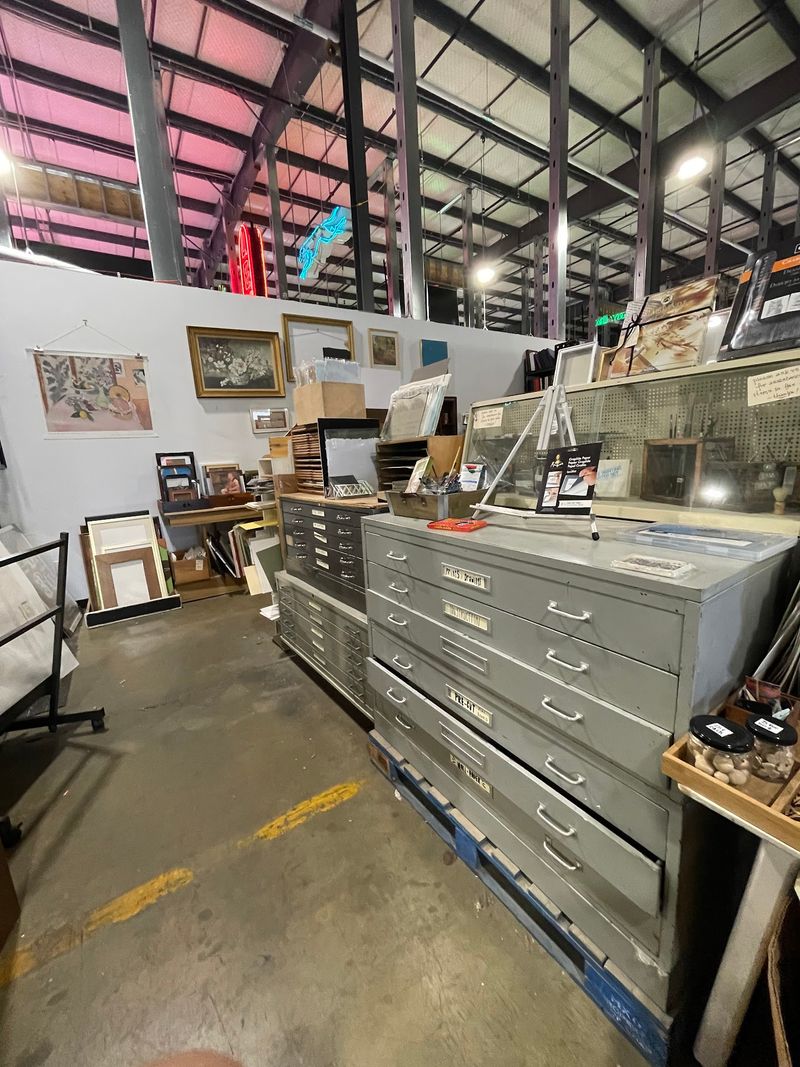
A store selling supplies that also shows finished artwork feels like a full circle worth applauding.
Part of the square footage goes to a gallery featuring work by local artists, and makers can apply to exhibit there.
Walking from a bin of salvaged materials into a hung exhibition shifts your brain in a good way.
Exhibits rotate, so the walls give returning shoppers something fresh to examine. I lingered longer than planned, studying a piece and mentally cataloging the techniques.
The gallery also reinforces what The Resource Exchange is really about. Materials matter, but so do the people turning those materials into something finished.
For anyone creating in the Philadelphia area, that application opportunity is genuinely useful. Wall space is hard to come by, especially early in a career.
Give yourself a few extra minutes for this room. Supply shopping can wait while you take in what somebody else already built.
Housewares, Jewelry, And Vintage Oddities In The Mix
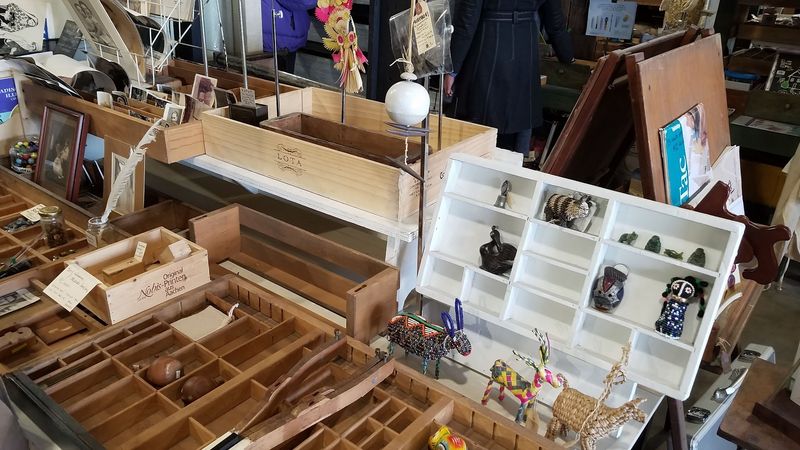
Not every shopper here owns a sewing machine, and that is exactly the point.
Beyond the maker materials, you will find housewares, costume jewelry, glassware, and vintage curiosities scattered through the floor.
Someone furnishing an apartment can leave just as happy as a quilter.
Jewelry gets mentioned often by regulars, along with ceramics and small decorative pieces that carry a retro streak.
Prices on vintage items line up reasonably with comparable shops in the region.
I picked up a small brass object with no obvious purpose and decided it belonged on my bookshelf anyway. Some purchases defy justification.
Stylists and thrifters treat this section as a legitimate stop, not just an afterthought to the craft aisles. The rotation keeps it interesting.
My honest warning is that budgets wobble here. You arrive for thread and depart with a serving dish, three bracelets, and a strange little figurine you cannot explain to anyone.
Donating And Volunteering Keep The Whole Thing Running
Inventory does not appear by magic. It arrives in boxes from people clearing out closets, studios, and garages.
Approved donations fuel the operation, which means usable yarn, sellable artist paint, and packaged hardware have a real destination.
Rather than tossing supplies, you hand them to someone who will finish the job.
Volunteering is another way in. Helping sort and process materials gives you a behind-the-scenes look at how much work goes into pricing thousands of mismatched items.
Artists can also apply to show work in the gallery, so participation stretches beyond hauling boxes. The community side of this Pennsylvania nonprofit is not decorative.
I left thinking about my own overflowing craft drawer differently. Those abandoned project remnants are somebody else’s missing piece.
Checking donation guidelines before loading your car saves a wasted trip, since not every category is accepted at every moment. A quick look ahead makes the handoff smooth.
Planning Your Visit To North American Street
Timing matters more than usual with a place whose stock changes almost daily.
The Resource Exchange sits at 1800 N American St in Philadelphia, Pennsylvania, in a warehouse space that gives the inventory room to breathe.
Doors open Wednesday through Saturday from 10 in the morning until 6 in the evening, with shorter Sunday hours from noon to 4.
Mondays and Tuesdays are closed, which is worth remembering before a long drive across Pennsylvania. Weekend mornings tend to feel calmer for unhurried browsing.
Give yourself an hour minimum. Regulars visit weekly because new material arrives constantly, and I understand why after a single trip.
Bring reusable bags, comfortable shoes, and a rough project list you are willing to abandon. Rigid shopping plans do not survive contact with these shelves.
Of all the creative stops I have made in Pennsylvania, few left me itching to start building something the moment I got home.