
10 Arkansas Fall Day Trips So Good They’re Worth The Drive This October
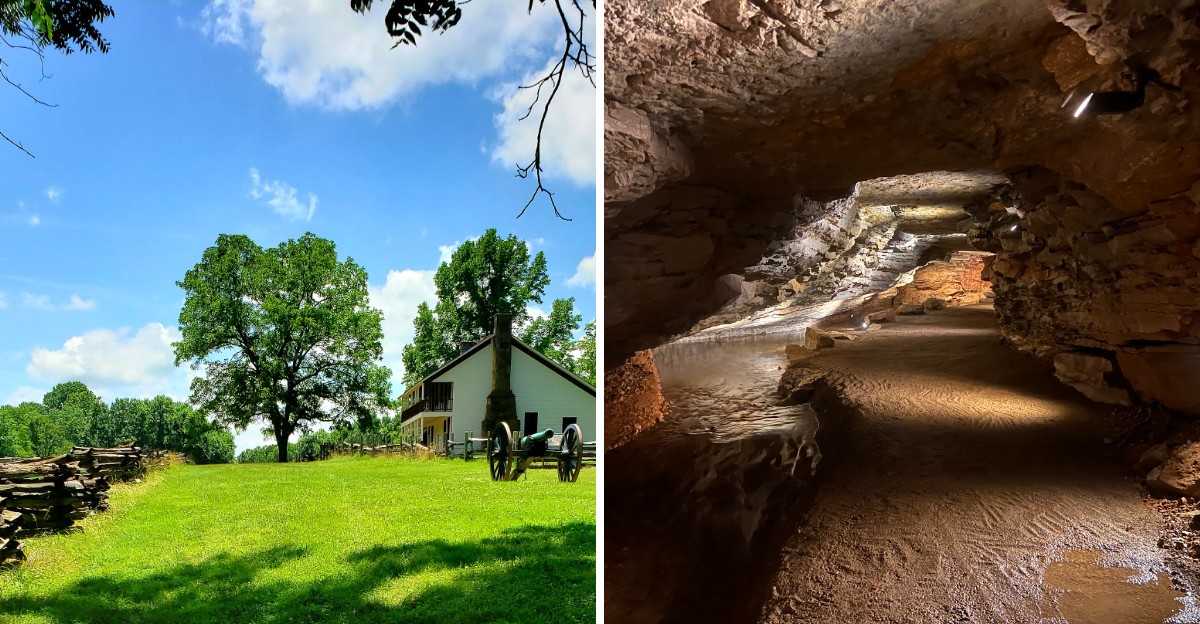
October road trips hit differently when the air turns crisp and the trees finally start changing. Arkansas makes the most of that shift, with day trips that move easily between mountain scenery and places shaped by history.
A train ride can take up most of the day, while a cavern tour leaves time for another stop before dinner. Gardens become more photogenic as fall settles in, and state parks feel easier to explore once summer heat backs off.
This list is built for people who want a destination at the end of the drive, not just a pretty road. Some outings are low-key.
Others come with tours or museums that can stretch the visit for hours. Trails add another reason to stay longer.
October gives them extra appeal. Pick the kind of day you want and check the hours before one of these ten trips shapes the route this fall.
1. Arkansas & Missouri Railroad, Springdale
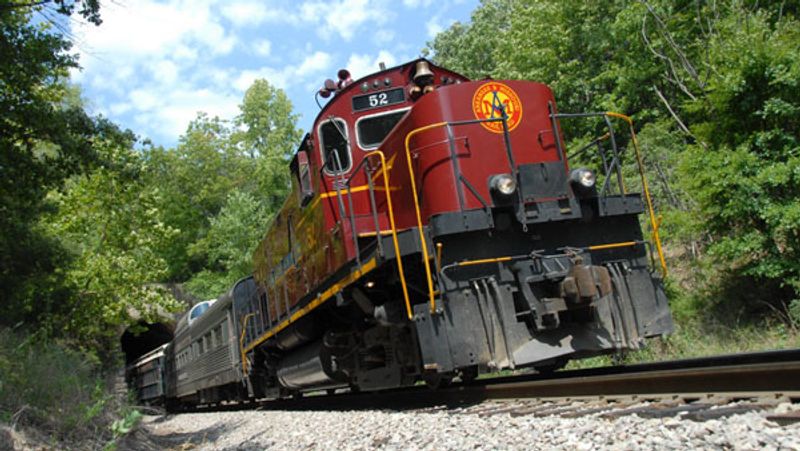
Trains and fall color make a fine pairing, and the Arkansas & Missouri Railroad in Springdale leans all the way into it. Departing from 305 E Emma Ave, Springdale, AR 72764, the excursion carries passengers in refurbished antique coaches while the Boston Mountains put on their yearly show.
What sets this line apart is that it still hauls freight alongside its passenger runs, which is rare among American railroads. The route slips through the quarter-mile Winslow Tunnel and rolls across valley trestles standing well over a hundred feet above the ground below.
The Springdale to Van Buren excursion is the big one, an eight-hour round trip covering roughly 134 miles with a three-hour layover downtown. That break leaves plenty of room to wander historic Main Street, admire the old architecture, and sit down for a proper meal.
Refreshments are sold onboard, so nobody goes hungry between stops. Seasonal operation typically runs April through mid-November on Wednesdays, Fridays, and Saturdays, which puts October squarely in the sweet spot for foliage.
Watching the Ozarks scroll past a window beats fighting traffic on a curvy highway, at least in my book. Book ahead, since autumn seats on this line disappear quickly once the maples start turning.
2. War Eagle Cavern, Rogers
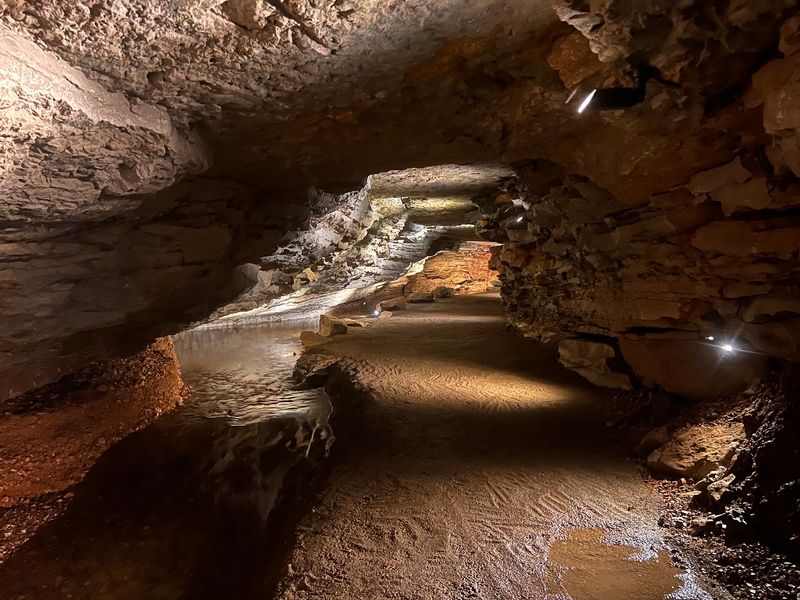
Sometimes the best fall scenery is underground. War Eagle Cavern, tucked along the shores of Beaver Lake at 21494 Cavern Dr, Rogers, AR 72756, claims the largest natural cavern entrance in the state, meaning you walk straight into the mountainside rather than descending a stairwell.
Inside, the temperature holds steady at a comfortable 58 degrees no matter what the weather is doing outside. Guided walking tours run about an hour through large, level rooms, passing waterfalls and an underground lake while guides explain the formations and the cave’s backstory.
Above ground, the fun keeps going with the Lost in the Woods Maze and gemstone panning for anyone who likes sifting through gravel for treasure. The site is stroller friendly, and leashed dogs are welcome on the cavern tour, which is a rarer perk than you might expect.
Wild Cavern Tours offer a hands-on crawl through undeveloped passages, available seasonally for ages 13 and up with reservations required. That version involves more dirt and fewer handrails.
Operating days run from March through Thanksgiving weekend, with the last tour departing an hour before closing. Arrive early and the whole afternoon opens up for lake views.
3. Garvan Woodland Gardens, Hot Springs
Eight thousand chrysanthemums in bloom at once is not a modest floral display. Garvan Woodland Gardens, the botanical garden of the University of Arkansas at 550 Arkridge Rd, Hot Springs, AR 71913, spreads across 210 wooded acres beside Lake Hamilton.
The Fall in the Woodlands exhibit runs September through mid-November, layering Japanese maples with mums and seasonal annuals until the paths practically glow. October brings Fall Flower Days, when the chrysanthemum collection peaks.
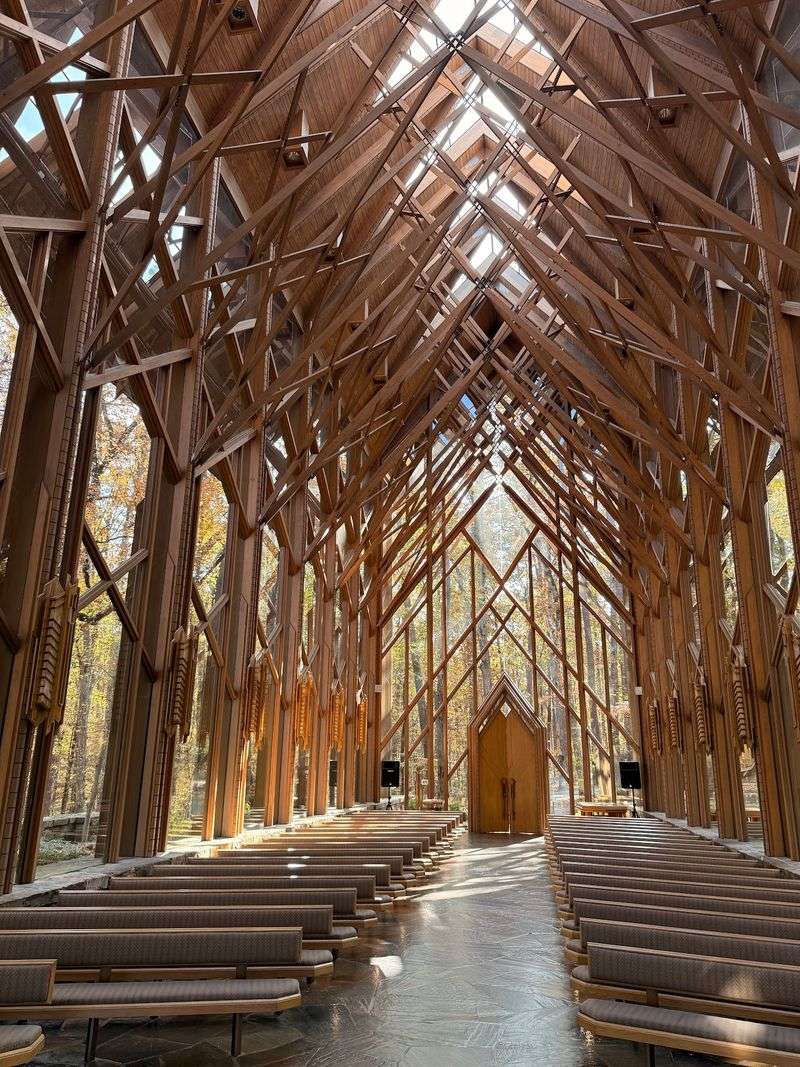
Architecture holds its own here too. Anthony Chapel rises among the pines with floor-to-ceiling glass that frames the changing leaves like a living painting, and the Evans Children’s Adventure Garden hides a treehouse, a cave, and a small waterfall for younger explorers.
The Sugg Model Train Garden adds a dose of charm that appeals to adults as much as kids. I could stand at those miniature tracks far longer than is strictly reasonable.
Leashed dogs are welcome, which makes this an easy family outing. Fall Celebration Saturdays throughout October include free take-home craft projects and pumpkins for the first hundred children through the gate.
Gates open daily at 9 am and close at 6 pm, with final admission at 5:30 pm. Late afternoon light through the maples is worth timing your visit around.
4. Mammoth Spring State Park, Mammoth Spring
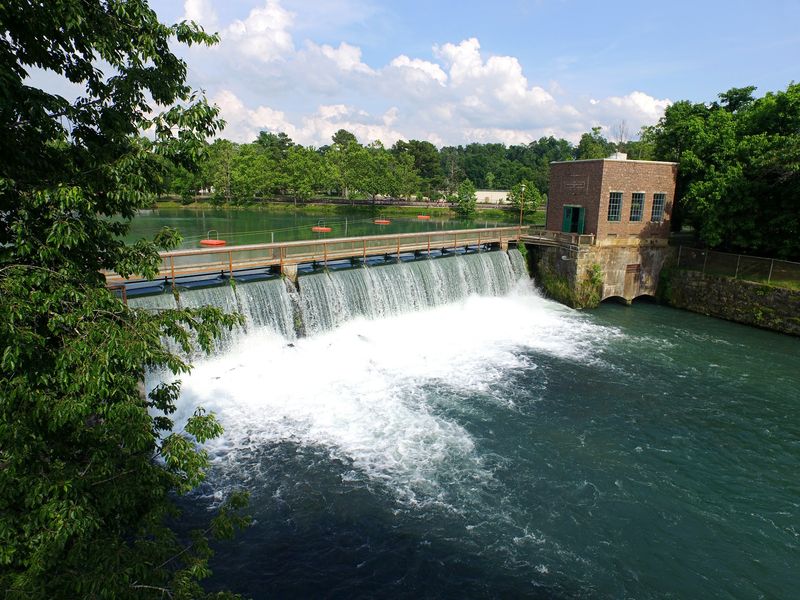
Nearly nine million gallons of water surge out of the ground here every single hour. Mammoth Spring State Park, at 17 US-63, Mammoth Spring, AR 72554, protects one of the world’s largest springs and the 10-acre lake it creates before flowing south as the Spring River.
That river becomes a popular Ozark float and trout stream downstream, but at the source the water simply spreads out, cold and startlingly clear. Trails loop around the spring and lake, an easy walk that October weather makes downright pleasant.
History sits right alongside the scenery. Remnants of an old mill and a hydroelectric plant show how folks once put all that water pressure to work, and the 1886 Frisco train depot now holds a museum.
The park also has an Arkansas Welcome Center.
The depot museum is open Wednesday through Saturday from 8 am to 5 pm and Sunday from 1 pm to 5 pm. It is closed Mondays and Tuesdays except on specified holidays.
Park admission itself is free.
Pedal boats and kayaks are available to rent seasonally for a quiet paddle across the lake. Picnic areas and a playground round out the offerings for families who want to stretch the visit into a full afternoon.
The spring’s constant temperature keeps the surrounding greenery lively even as everything else turns gold.
5. Pea Ridge National Military Park, Garfield
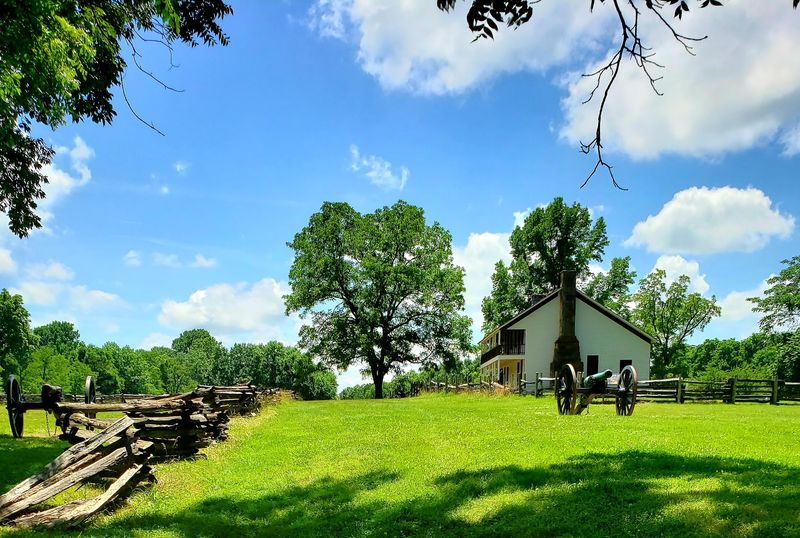
Very few Civil War battlefields still look like the war just ended, but Pea Ridge does. Covering roughly 4,400 acres at 15930 National Park Dr, Garfield, AR 72732, the park preserves the ground where Union forces won a decisive 1862 victory that helped secure control of Missouri.
The visitor center makes a logical starting point, with an orientation film, exhibits, and a bookstore. From there, a seven-mile self-guided auto tour road connects ten interpretive stops across the battlefield.
Hiking, biking, and horse trails let visitors slow the whole thing down and take in the fields on foot or in the saddle. Autumn turns the tree lines along those open fields into bands of orange and rust, and wildlife sightings come easy in the quiet morning hours.
The reconstructed historic building at Stop 8 stands as one of the most recognizable landmarks on the route. The original survived the 1862 battle intact, was burned by Confederate guerrillas around January 1863, and was rebuilt on its original foundations after the war.
The structure was later restored to approximate its wartime appearance.
The park also forms part of the Trail of Tears National Historic Trail, layering another chapter of American history onto the same ground. Bring water and comfortable shoes for the trail sections.
6. Terra Studios, Fayetteville

Terra Studios began in 1975, but the original glass Bluebird of Happiness was introduced in 1982. Terra Studios, at 12103 Hazel Valley Rd, Fayetteville, AR 72701, sits in the Ozark hills east of town and later became closely associated with the handcrafted glass bird.
Production of the bluebirds was paused in 2020 while more sustainable methods were explored, though pieces from earlier years remain available. A Bluebird Museum opened in September 2022 to tell the whole story.
The studio operates as a non-profit focused on promoting art and encouraging creativity, and it hosts a working community of artists. Its six-acre art park is scattered with sculptures and installations that turn a simple walk into a gallery stroll.
Fall color framing all that quirky artwork makes for photos you will actually want to print. The variety of styles crammed onto one property genuinely surprised me.
Paths wander past mosaics, whimsical figures, and pieces that reward a second look. Kids tend to sprint between sculptures while adults linger.
Doors stay closed on Mondays and Tuesdays, so plan around that when mapping your October route. Fayetteville sits close enough for lunch in town before or after.
7. Plum Bayou Mounds Archeological State Park, Scott
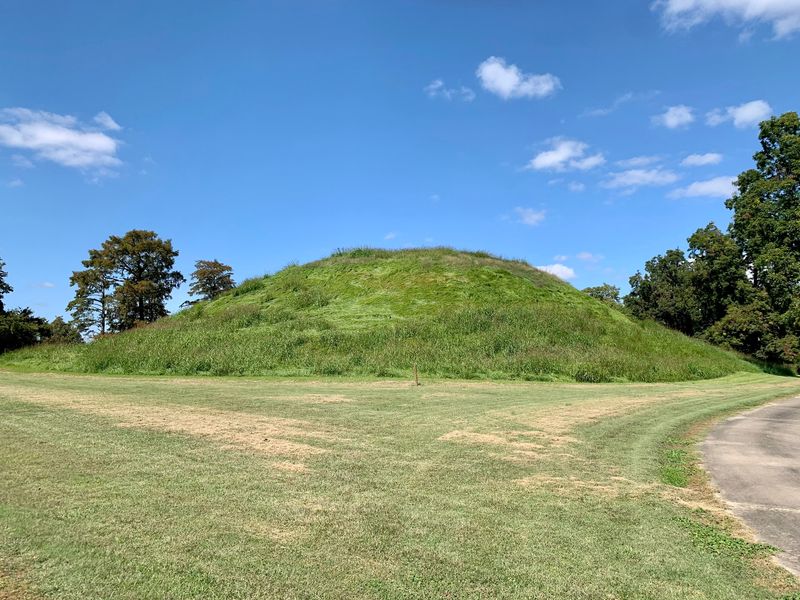
Ancient builders here aligned their earthworks with the sun. Plum Bayou Mounds Archeological State Park, at 490 Toltec Mounds Rd, Scott, AR 72142, preserves an 18-mound complex where three prominent mounds still rise above the delta flatland.
The Plum Bayou culture occupied this ground from roughly the 7th through the 11th century, arranging mounds around open plazas that served religious, political, and ceremonial purposes. Some of those alignments marked solar positions used to track seasons and schedule ceremonies.
Mound Lake, an oxbow of the Arkansas River, curves along the edge of the site and gives the whole place a calm, reflective feel. Two self-guided trails cover the grounds, and the visitor center holds interpretive exhibits explaining who lived here and how.
Flat terrain means easy walking, and October temperatures beat the humid summer heat by a wide margin. Shade is limited out on the plaza, so a hat helps.
The park carried the name Toltec Mounds for years before being renamed to more accurately reflect its actual builders and the nearby waterway. That correction matters, since the original name pointed to a culture with no connection to this site.
Standing at the base of the tallest mound puts a thousand years into perspective fast.
8. Village Creek State Park, Wynne
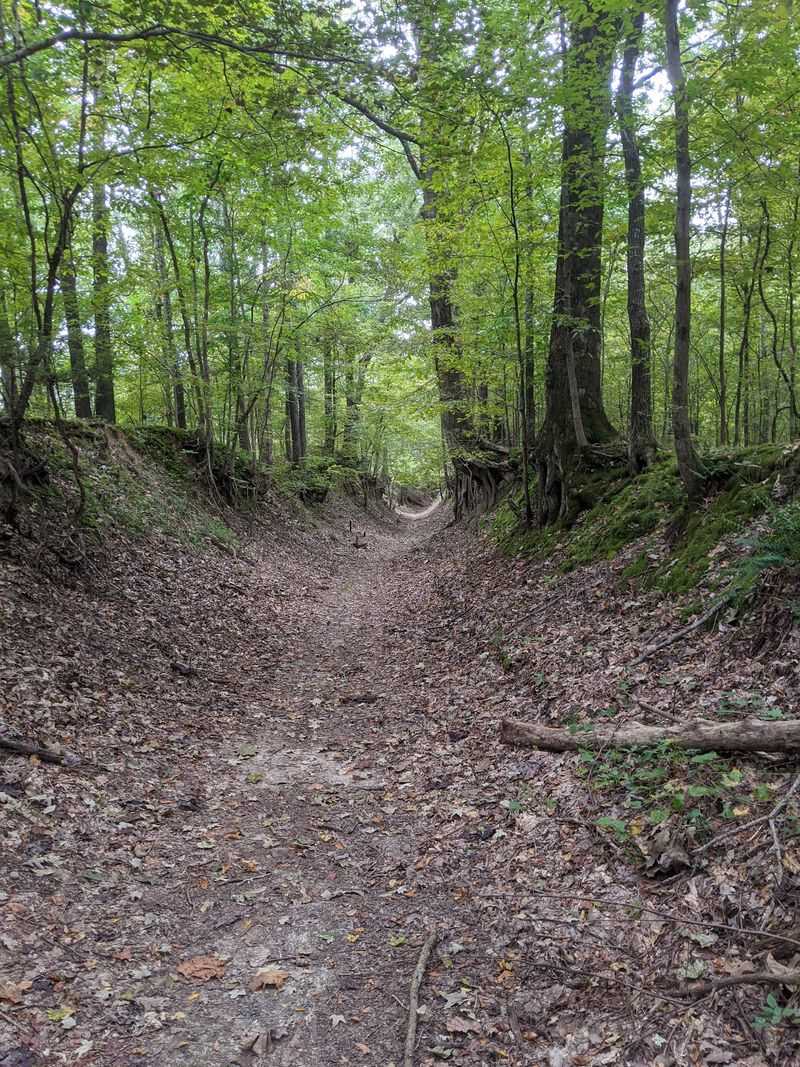
Crowley’s Ridge rises out of the flat delta like a geological plot twist, and Village Creek State Park sits right on top of it. Located at 201 County Road 754, Wynne, AR 72396, the park spans nearly 7,000 acres of forested hills and clear-running streams.
Thirty-three miles of multi-use trails handle hiking, mountain biking, and horseback riding. The routes cross the distinctive landscape of Crowley’s Ridge, where fragile soils can temporarily close trails after wet weather.
Two lakes give the park its quiet corners, good for fishing or just sitting still while the leaves drift down. Autumn hardwoods on the ridge produce color that feels more Ozark than delta.
One trail follows a preserved segment of the Old Military Road, part of the Trail of Tears National Historic Trail, which turns an ordinary walk into something more reflective. The way these parks fold history into recreation never stops impressing me.
Campsites, cabins, and picnic areas accommodate anyone who wants to stretch a day trip longer. Golfers have The Ridges at Village Creek, a 27-hole championship course inside the park boundaries.
Bring a trail map, because 33 miles offers plenty of chances to wander off course.
9. Turpentine Creek Wildlife Refuge, Eureka Springs

Lions and tigers in the Ozarks sound improbable until you visit Turpentine Creek Wildlife Refuge. Found at 239 Turpentine Creek Ln, Eureka Springs, AR 72632, it ranks among the nation’s largest non-profit sanctuaries for rescued exotic and native animals.
Big cats, black bears, and other residents live out their lives in large natural habitats rather than cramped cages. Accreditation keeps the focus squarely on animal welfare, and educational tours share each animal’s story along with the refuge’s mission.
General admission includes an hour-long guided ride on an open-air tram along with time to explore the self-guided Discovery Area. The tram departs on the hour, and tour sizes are limited.
Seeing the size of those enclosures gives you real respect for the effort behind them. Special experiences like Coffee with the Curator and private behind-the-scenes tours require advance booking.
The refuge no longer offers a public feeding-time tour. Animals are fed on schedules designed around their care rather than through one simultaneous public feeding event.
During daylight saving time from March through November, the refuge opens at 8:30 am and stays open until 5 pm, with the final tram tour leaving an hour before closing. The refuge is closed on Christmas Day.
Fall color across the surrounding hills makes October one of the prettiest months to walk the loop.
10. Louisiana Purchase State Park, Holly Grove
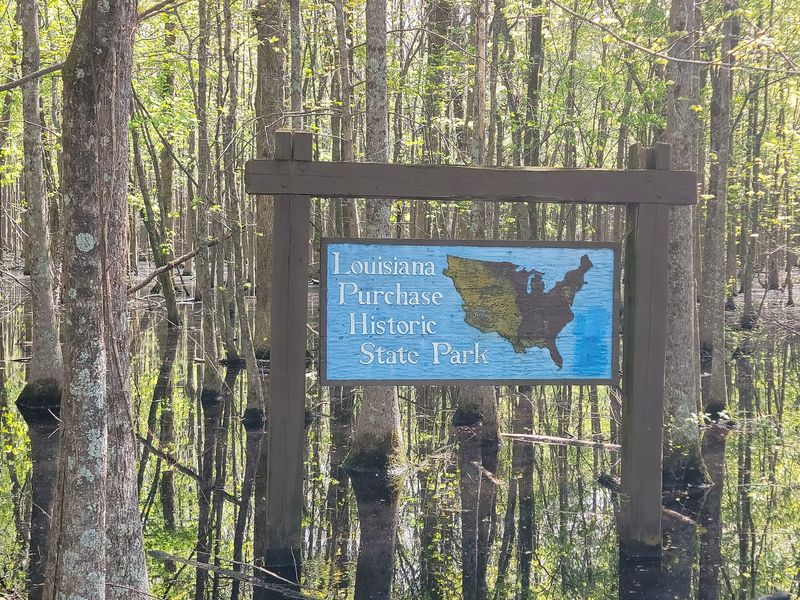
A stone obelisk standing in a swamp marks where the mapping of half a continent began. Louisiana Purchase State Park, off AR Hwy 362 near Holly Grove, AR 72069, preserves the exact starting point of the 1815 survey of the Louisiana Purchase.
Reaching it means walking a 950-foot elevated boardwalk through an untouched cypress-tupelo swamp. The monument waits at the far end, quiet and unassuming for something tied to such a sweeping chapter of national growth.
Interpretive panels along the way cover the survey process, the purchase itself, and the plants and animals that fill this headwater swamp. Frogs, birds, and rustling water provide the soundtrack.
Width and surfacing make the boardwalk accessible to wheelchairs and strollers, so nearly anyone can make the full walk. The whole loop usually takes 30 minutes to an hour.
Cooler October air and fewer insects turn this into a far more pleasant outing than a midsummer attempt. The park holds National Historic Landmark status and stays open daily from 6 am to 9 pm.
It may be the smallest stop on this Arkansas list, yet the sense of standing at a literal starting line lingers long after the drive home.