
This Enormous Ohio Lake Was Built Over A Forgotten Town
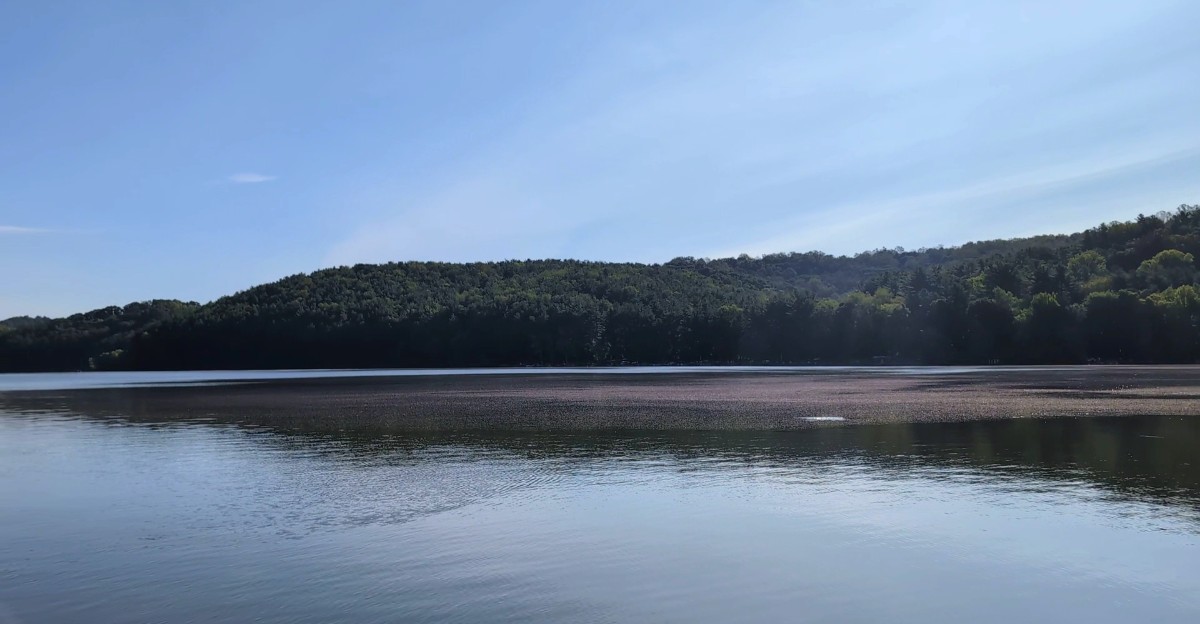
I was halfway across an eastern Ohio lake when a local angler casually mentioned that old foundations were sitting beneath me.
That was enough to make me stop paddling and look down at the water a little differently.
Then he told me what happens when the lake drops in late fall. Shoreline mud pulls back, and pieces of the old valley start showing themselves again.
Squared stone, strips of concrete, and the outlines of places that once belonged to roads and buildings appear where summer boats had been floating only months earlier.
I had come for a quiet afternoon on the water, not to picture a vanished community under my kayak. After that, the beach, trails, and fishing all felt slightly different.
Once you know what the lake is covering, every shallow cove starts looking like it might give something back.
A Valley Traded For A Reservoir
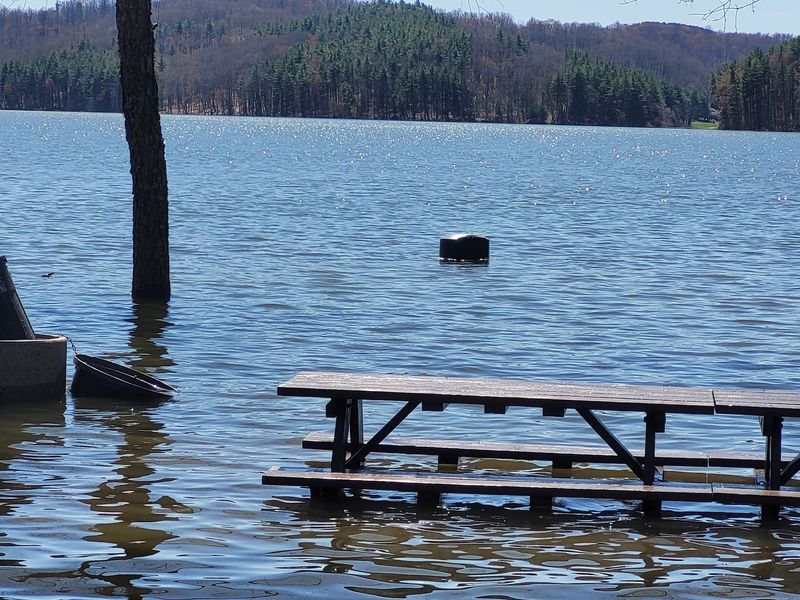
Flood control built this lake, plain and simple. After major flooding across the Muskingum River watershed in 1913, the Muskingum Watershed Conservancy District was eventually established, and construction on Tappan Dam began in the mid-1930s.
The dam was completed in 1936, creating the reservoir that now covers roughly 2,350 acres of water.
The change reshaped more than open farmland. The former communities of Tappan and Laceyville were displaced as the reservoir was created, although historical records indicate that many buildings were moved or demolished before the water rose.
Roads, former home sites, and other traces of that earlier landscape remain part of the lake’s history, even when they are no longer obvious from the surface.
I find that history hard to shake while floating over deep water. This was once a very different valley.
The park wrapped around the shoreline now covers thousands of acres of hills, coves, campgrounds, and recreational space.
Rangers and park staff manage a surprisingly developed operation, with camping, boating, swimming, trails, and a store among the current amenities.
You will find the entrance at Tappan Lake Park, 84000 Mallarnee Rd, Deersville, OH 44693, tucked in Harrison County.
Old Remnants That Can Appear At Low Water
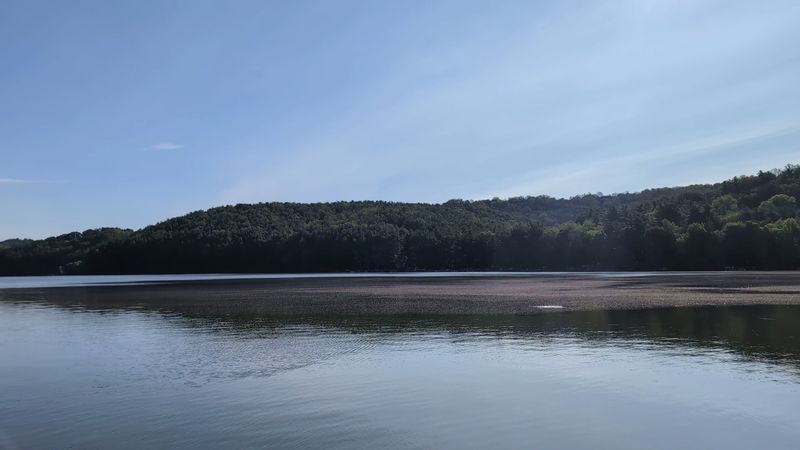
Late autumn changes the shoreline here. MWCD lowers Tappan Lake for winter flood-storage needs, exposing flats that sit underwater through much of the recreation season.
Local historical accounts describe old roadway sections, stonework, foundations, and other remnants becoming easier to spot when water levels are unusually low.
Exactly what becomes visible changes with the lake level, location, and year, so I would treat any discovery as a bonus rather than something guaranteed.
That uncertainty is part of what makes exploring the exposed shoreline so interesting. You may be looking at a trace of the former landscape, or simply an old piece of infrastructure that spent the summer underwater.
A few practical notes from experience: the exposed mud can be much deeper than it looks, so wear boots you do not love and stay off steep, slick banks.
Leave whatever you find exactly where it sits. Historical remnants make more sense in context than sitting on somebody’s shelf.
A camera with a zoom lens is useful when something interesting lies across a muddy inlet you should not attempt to cross.
Knowing that the former communities of Tappan and Laceyville once occupied this landscape gives the winter shoreline an entirely different feel.
The Sandy Beach And Swim Area
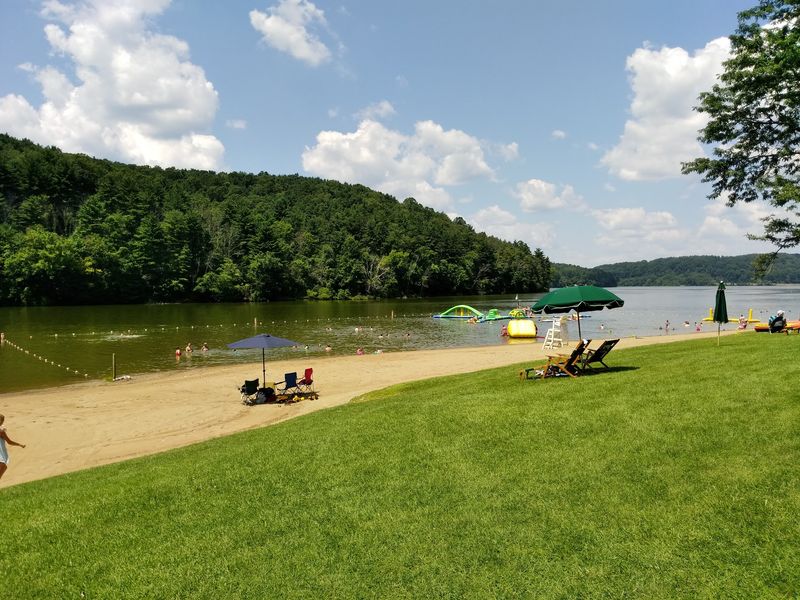
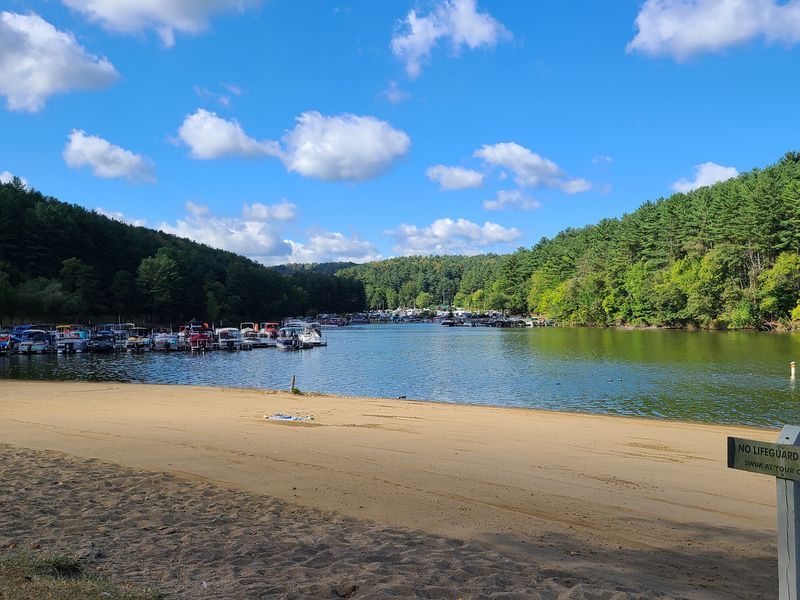
Sand surprised me here. I expected the usual gritty, weedy lake edge and instead found a combed beach with a sandy bottom under the water too.
That detail matters more than it sounds. Nobody wants to tiptoe over mystery rocks, and kids can wade out without the usual squealing about slimy toes.
Changing rooms and restrooms sit close by, and every time I have stopped in they were clean and stocked.
Mornings are my pick for a swim. The water is calm, the crowd is thin, and you get the whole roped area nearly to yourself before the afternoon rush arrives.
Weekends in July fill up fast, so I aim for a weekday if I want elbow room on the towel.
There is no lifeguard on duty, which means grown-ups need to keep eyes on the little swimmers at all times.
Shade is limited, so I haul a pop-up canopy and a jug of cold water instead of counting on trees near the sand.
Pack water shoes anyway for the walk down, then kick them off and enjoy one of the nicer freshwater beaches in this corner of the state.
Fishing From Dawn Until The Bugs Win
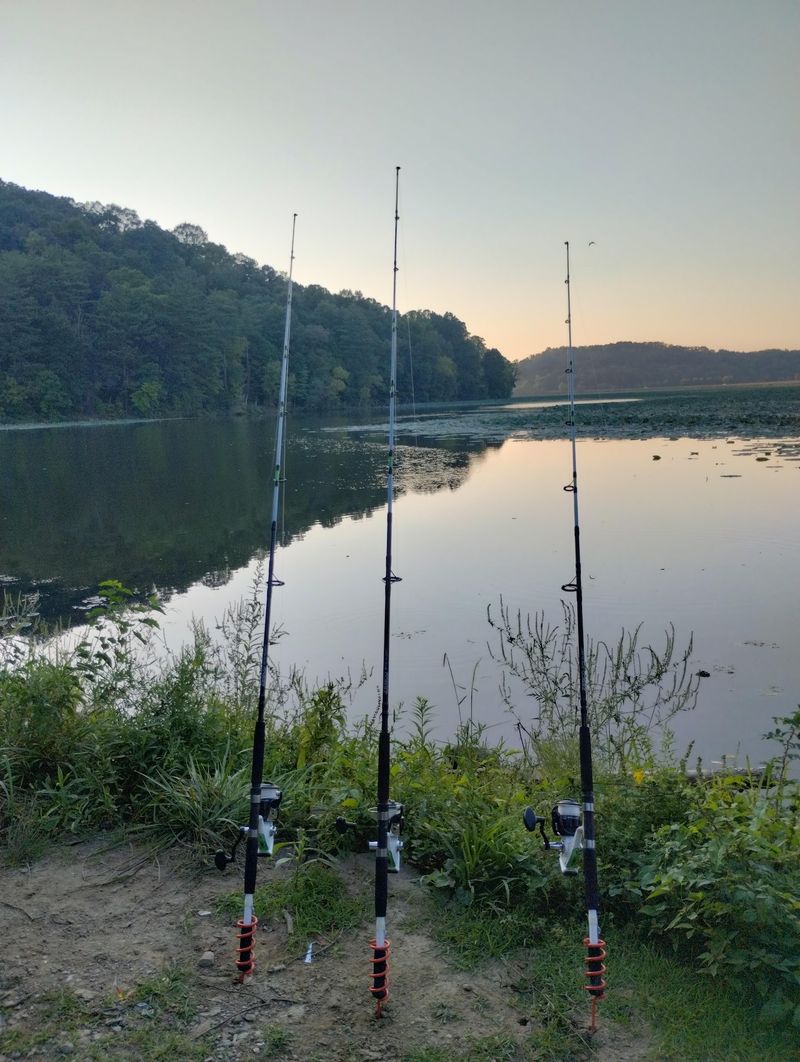
Bluegill saved my first evening here. I had planned for bass, got outsmarted, and ended up hauling in panfish until my arms were tired and the mosquitoes staged their nightly takeover.
Anglers mention fishing more than almost anything else about this park, and for good reason.
Largemouth bass, crappie, catfish, saugeye, and those cooperative bluegill all live in this water, and the countless coves give you options when the wind picks up.
Early morning is prime time. Boat traffic is light, the surface goes glassy, and fish move into the shallows near submerged brush.
By midafternoon in summer, recreational boats own the main channel, so I tuck into the upper end of the lake where things stay calmer.
Shore fishing works too. I have had good luck near the dock area and along quiet banks reachable from the campground loops.
Grab your Ohio fishing license before you arrive, and bring more small hooks than you think you need, because panfish here are generous and greedy.
The store near the launch covers basic tackle, but I still stock up ahead of time rather than gamble on what is left on the shelf.
Boating, Kayaks, And Golf Cart Rentals
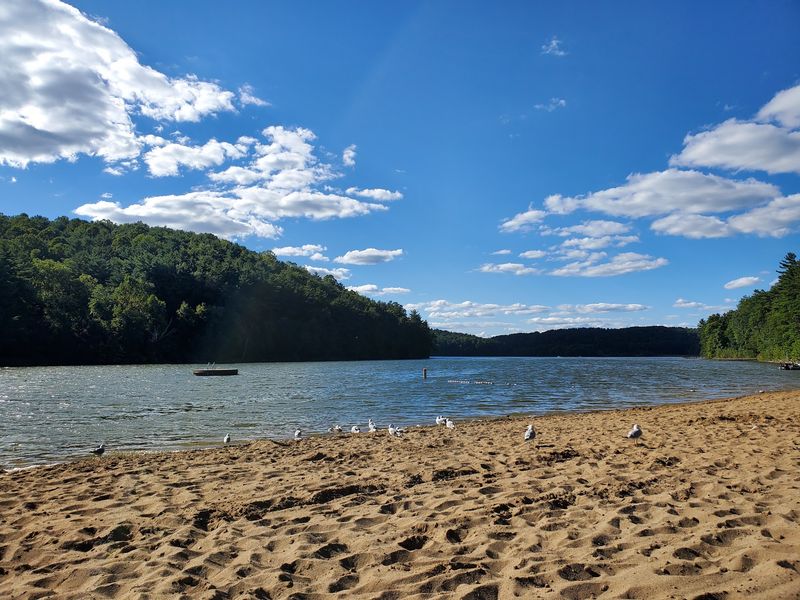
Renting a kayak here cost less than my breakfast that morning. Prices are genuinely reasonable, and the rental options mean you do not need a trailer to get on the water.
Pontoons, kayaks, and golf carts are all available in season, and the golf carts are wildly popular with families who want to zip between the beach, store, and their campsite.
The boat launch has room to prep without somebody breathing down your neck, which I appreciate on busy Saturday mornings.
Horsepower limits keep things from turning into a speedway, though summer afternoons still bring plenty of wake on the main stretch.
Paddlers, take note: the coves branching off the main body are where the good stuff hides. Herons, turtles, and quiet water with barely a ripple.
I usually launch a kayak before nine, cover a few miles of shoreline, and be back before the crowd wakes up.
Reserve rentals ahead during holiday weekends, because walk-up availability disappears quickly.
Life jackets are required, sunscreen is non-negotiable, and a dry bag for your phone will save you a very expensive lesson.
Camping Sections From Tents To Big Rigs
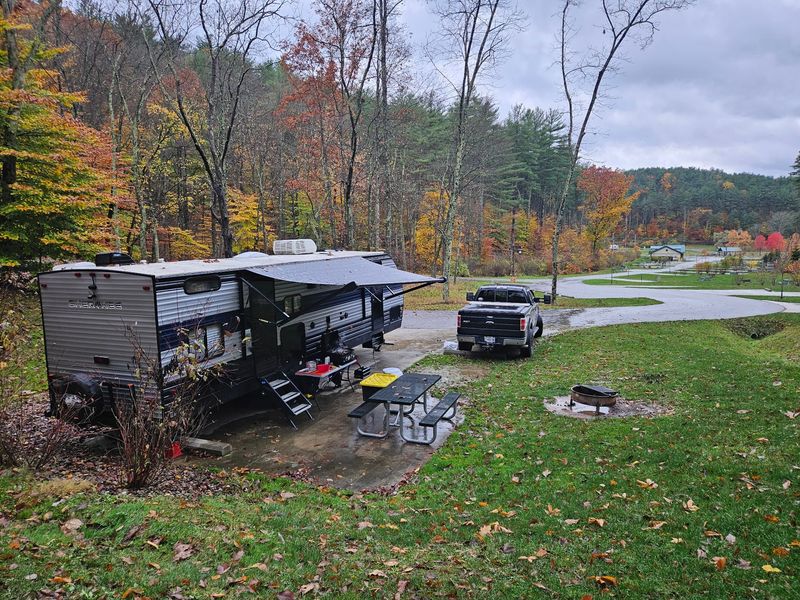
Section 5 spoiled me. Concrete pads, full hookups, solid water pressure, and enough room that my neighbor’s awning was not in my coffee.
Campers with 40-foot fifth wheels fit comfortably in sections 1 and 5, while tent campers get quieter, more wooded spots elsewhere in the park.
Hundreds of sites spread across the grounds, and the whole place is kept up better than many parks I have stayed at.
A few honest warnings. Signage for finding your exact site is not always obvious, so study the map before you pull in with a long rig.
Quiet hours run from 11 p.m. to 7 a.m., and holiday weekends can get lively well past that.
If sleep is your priority, ask for a site away from the main loops and the beach area when you reserve.
Cabins are available too, though they run pricier than camping, and the small camper cabins that longtime visitors loved are no longer part of the lineup.
Book early for June through August, then plan on September, when the crowds thin and the hills start turning colors worth photographing.
Trails Through The Harrison County Hills
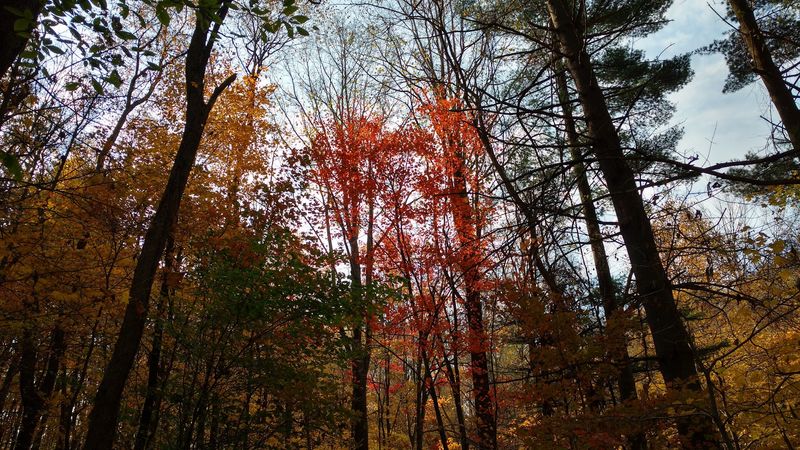
Trails here earned my respect the hard way. These hills are steeper than the word rolling suggests, and my legs felt every foot of it.
Multiple marked routes wind through hardwood forest above the shoreline, ranging from short strolls to longer loops that eat up a solid part of the morning.
Deer crossed my path twice, and I heard more woodpeckers than cars, which tells you something about how the park sits in the landscape.
Spring brings wildflowers and mud in equal measure. Fall delivers the best views, since bare branches open up sightlines across the water.
Ticks are real in tall grass, so I tuck my pants into my socks and check carefully afterward, fashion sense be damned.
Cell service gets patchy in the hollows, so I screenshot the trail map before setting out rather than trusting a signal.
Water is a must. There are no fountains once you leave the developed areas, and the humidity in July does not negotiate.
My reward after one hot loop was a cold drink from the store and a long, unbothered sit at a picnic table by the water.
Playgrounds, Pickleball, And The Pump Track
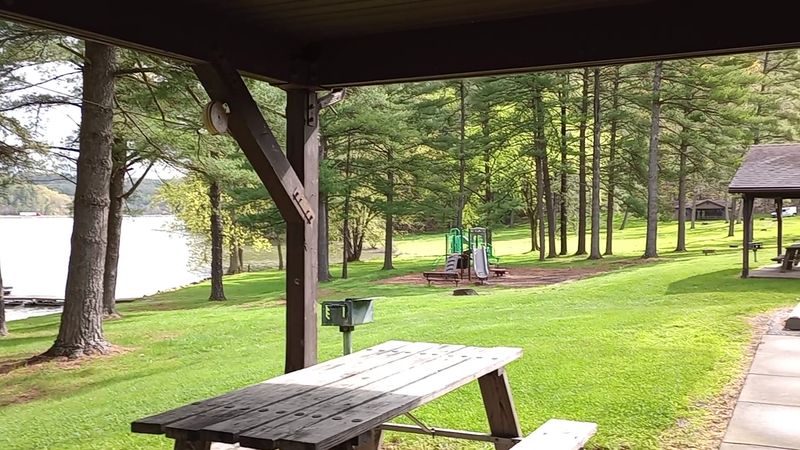
Pickleball at a lake park caught me off guard. Two courts sit alongside a basketball court, giving the activity area a lot more going on than I expected.
Families get spoiled here. The newer recreation area also includes a nature-based playground, concrete cornhole, table tennis, walking paths, and other spaces built for easy outdoor play.
Near the beach, a dedicated pump track gives bikes, skateboards, scooters, and rollerblades a looping course of banked turns and rollers. There is even a smaller track for beginners.
The beach concession stand handles snack duty when nobody feels like cooking at the campsite.
Kids on bikes and scooters are everywhere, which brings me to the one thing I will repeat until I am hoarse: drive slowly.
Golf carts add to campground traffic too, especially in the evening, so keep your head up while walking the loops.
Bring your own paddles and basketball if you plan to play, since equipment availability can change.
What impressed me most is how much has been added in recent years. This is not a park coasting on nostalgia, and the upgrades show up in the small details.
What It Costs And When To Show Up
Five dollars if you are arriving alone, or ten dollars for a vehicle carrying two or more people. That is the current daily park admission from Memorial Day weekend through Labor Day.
Day-use admission gets you access to the beach, picnic areas, trails, playgrounds, and other general park facilities.
Camping, cabins, marina services, and rentals carry separate charges.
The gate fee rises to $15 per vehicle during the park’s fireworks event, and off-season rates can change.
Timing changes everything. Holiday weekends bring the biggest crowds, so plan accordingly depending on whether you want a festive atmosphere or more breathing room.
Mid-week summer visits are my sweet spot: warm weather, more open space, and less pressure at the launch and beach.
Early September can be another good option, with cooler hiking weather and fewer peak-summer crowds.
Check the official Muskingum Watershed Conservancy District site before you drive out, since seasonal hours, beach operations, and rental availability can change through the year.
Deersville, Country Roads, And Nearby Detours
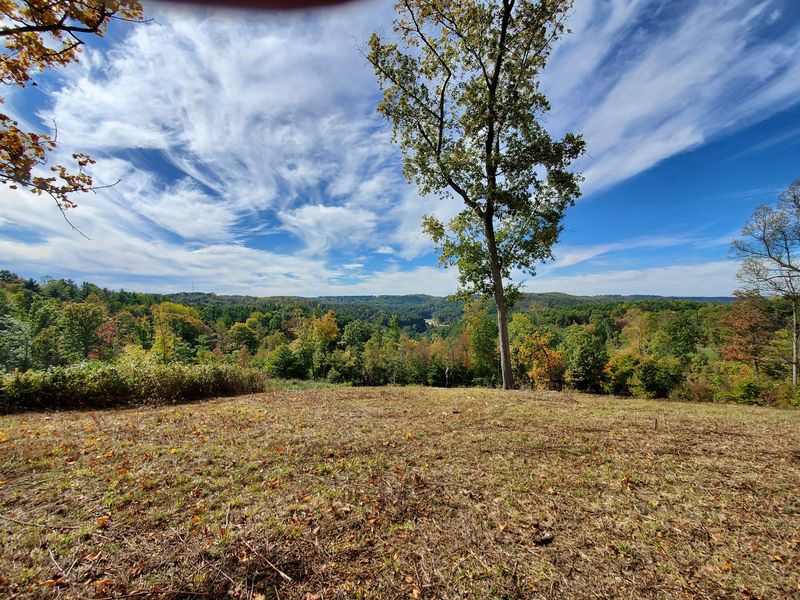
The drive in is half the experience. Narrow roads bend through Harrison County farmland, past barns, hayfields, and hills that hide the lake until the last minute.
Deersville itself is tiny, the kind of village where the general store counts as the main event and an ice cream cone tastes better than it has any right to.
I always leave extra time, not because of traffic, but because I keep pulling over to look at things.
Nearby, the region rewards curiosity. Clendening and Piedmont lakes sit within a short drive, both also part of the same watershed system built for flood control.
Cadiz and Cambridge offer groceries, gas, and restaurants if you need more than campground supplies.
This part of Ohio moves at a slower pace, and the locals I have chatted with were quick with directions and stories about the valley before the water came.
Download your maps ahead of time, since signal drops out on these back roads without warning.
A full tank, a cooler, and a loose schedule are all you really need to make the trip worthwhile.