
This Grand Old Illinois Roundhouse Has Stood Since 1856 And Still Guards Its Railroad Past
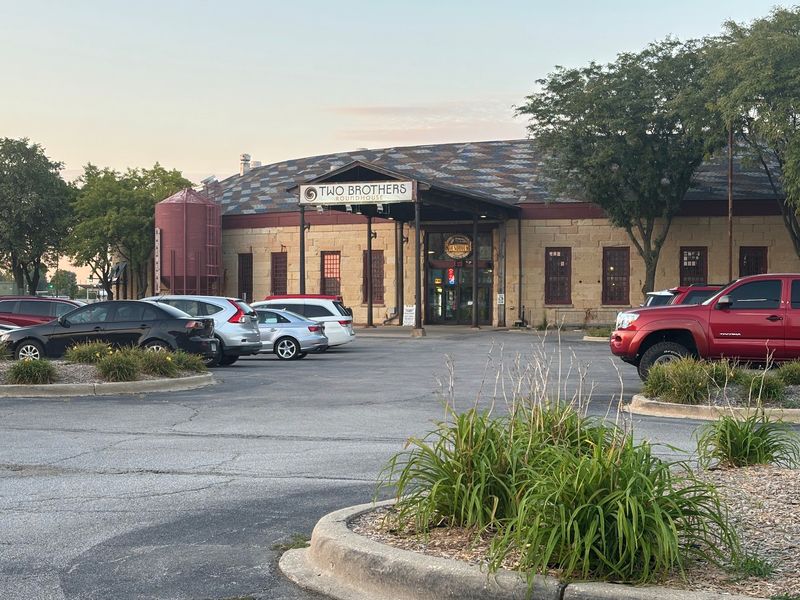
Made from limestone hauled out of a quarry in Batavia, this circular giant in Aurora has been standing since before the Civil War. Long before shopping malls or highways, workers here built and repaired the locomotives that carried people west across the country.
Today the walls still curve the way they did in 1856, and you can walk right inside for a meal or a glimpse of history. It is the kind of overlooked Illinois treasure that turns an ordinary afternoon into a story worth telling.
A Circle Of Limestone On Aurora’s Broadway
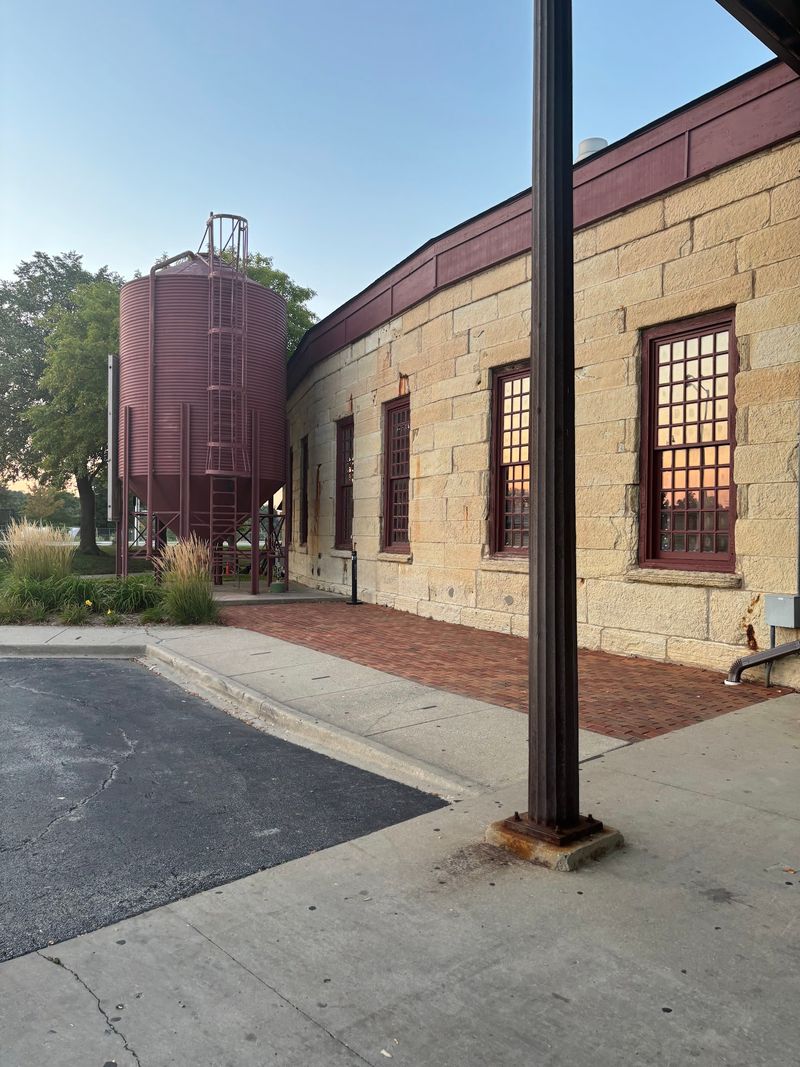
Right on North Broadway in Aurora, this stone giant curves in a way almost no other building in Illinois does. Officially the Chicago, Burlington, and Quincy Roundhouse and Locomotive Shop, it sits at 205 N Broadway, wrapped in limestone that has weathered more than a century and a half of Illinois seasons.
What makes it stand out right away is the shape. Instead of the usual straight walls and square corners, the building loops around in a full circle, a design built for the locomotives that once rolled inside its bays.
That rounded footprint is why folks simply call it the roundhouse.
Aurora sits about 40 miles west of Chicago, an easy drive for families looking for something different close to home. The building is classified as a historical landmark, and it holds the honor of being the oldest limestone roundhouse in the country.
Standing in front of it, you get the sense of just how much history one old building can quietly hold onto.
Built To Serve The Rails Heading West
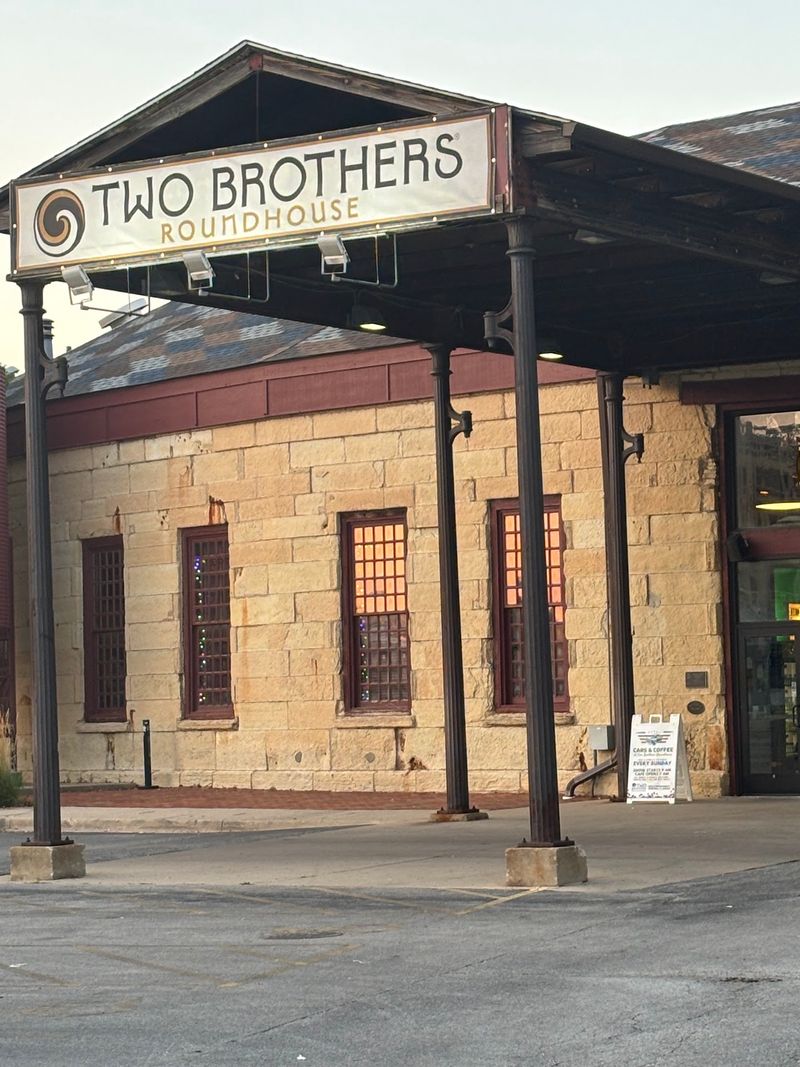
Back in 1856, the Chicago and Aurora Railroad needed a place to build and fix its trains, and this roundhouse became that place. It served a line that would later grow into the Chicago, Burlington, and Quincy Railroad, one of the big names in the westward push of rail travel.
Inside those curved walls, locomotives were stored, maintained, and even built from the ground up. The building started with 22 stalls and eventually stretched to 40 as demand kept growing.
Between 1871 and 1910, roughly 250 locomotives were constructed here.
For the city of Aurora, the shop was a huge deal. It employed a large chunk of the local workforce and helped shape the way the whole city grew up around the railroad.
Picturing the noise, the steam, and the steady rhythm of work happening under this roof gives the place a heartbeat. Every bay once had a purpose, and every locomotive that left carried a little piece of Aurora down the tracks with it.
Stone Quarried Just Down The Road
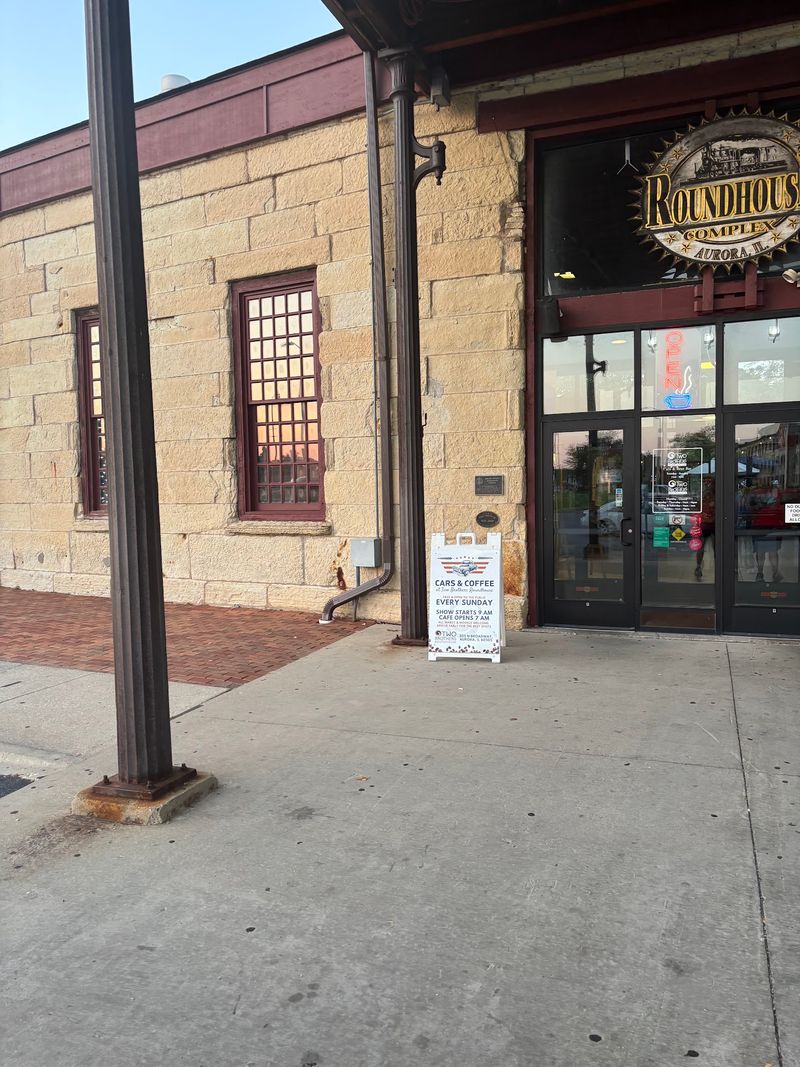
The bones of this building came from right next door. All that limestone forming the thick, sturdy walls was quarried in Batavia, a neighboring Illinois town just a short distance up the Fox River valley.
Using local stone was practical back in the 1850s, but it also gave the roundhouse a look that feels rooted in the land around it. The pale, rugged blocks have held their shape through blazing summers and hard winters, proof that the builders knew what they were doing.
Beyond being the oldest limestone roundhouse in the United States, it is considered the largest surviving full-circle limestone roundhouse anywhere in the world. That is a big claim for a building tucked into a mid-sized Illinois city.
Run your eyes along the walls and you can spot the hand-cut character of each block. There is something honest about stone that came from a few miles away, shaped by workers who lived nearby.
It ties the building to its region in a way modern brick and steel never quite manage to do.
Little Reminders Of The Railroad Past
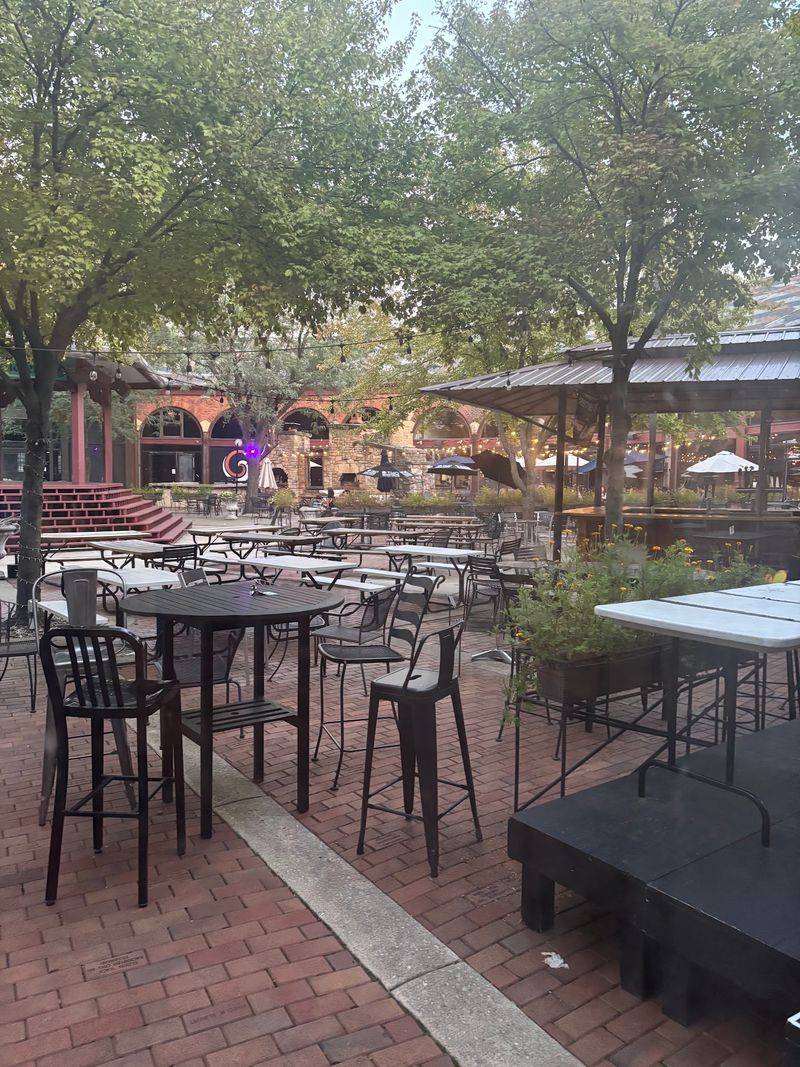
Look closely and the old railroad refuses to disappear. Regulars who visit often point out how the roundhouse still shows its history if you know where to glance.
The original train bays each have track endings that project right out, quiet clues to what once rolled through.
Peek up at the spots where there is no ceiling and you might catch sight of an old pulley or two, left in place like little time capsules. These details reward the curious, turning a simple visit into a bit of a treasure hunt.
Where the original locomotive turntable once spun heavy engines into place, there now stands a gazebo surrounded by a lovely outdoor dining area. It is a clever nod to the past without pretending the building is frozen in time.
Families with kids can make a game of spotting these hidden reminders. Half the fun is realizing that the same walls holding your dinner table once echoed with the clang of railroad tools.
History does not stay behind glass here. It hides in plain sight, waiting for sharp eyes.
A Chicago Bears Legend Saves The Day
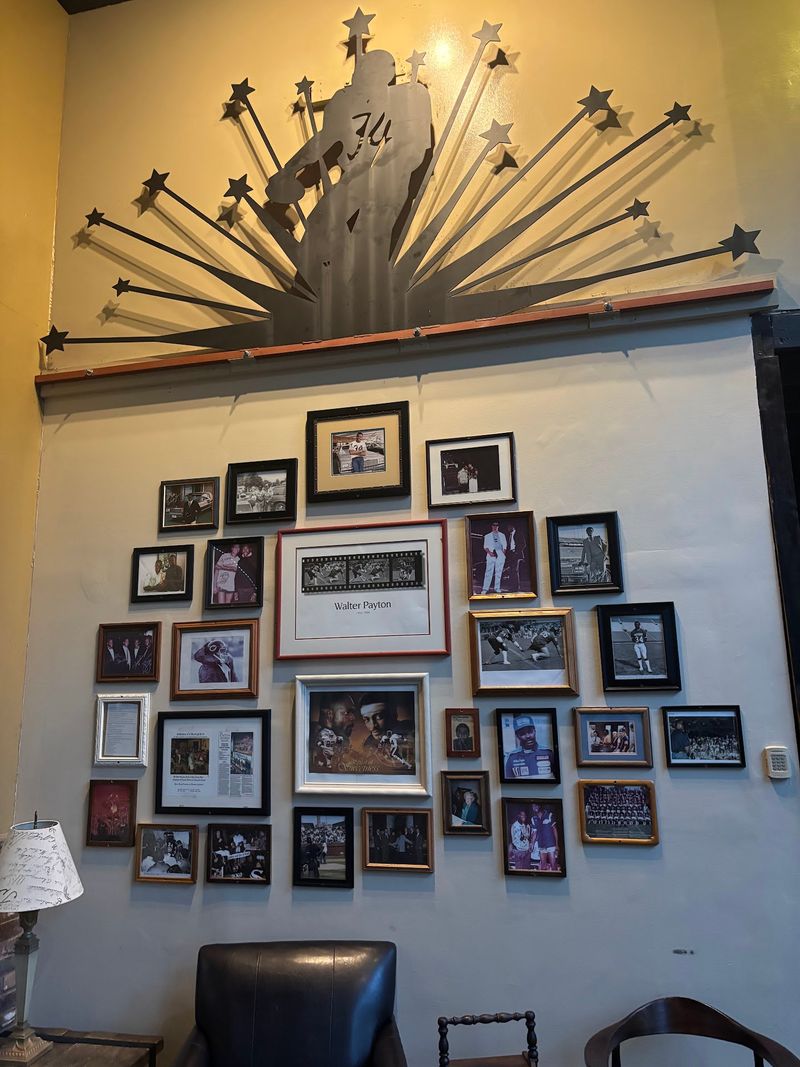
Every great old building needs a hero at some point, and this one got a famous one. After the roundhouse ended its railroad duties around 1974, it sat empty for two long decades, quietly waiting for its next chapter.
That chapter arrived in 1995 when an investment group, led by former Chicago Bears football legend Walter Payton, purchased the property. The team lovingly reworked the historic building into an entertainment complex, giving it fresh life while honoring what it had always been.
Part of the transformation included a museum celebrating Payton’s remarkable football career, a fitting touch for a spot that already meant so much to the area. The careful restoration earned real recognition too, taking home a National Preservation Award in 1999.
There is something satisfying about a beloved athlete lending his name and energy to rescue a crumbling landmark. Thanks to that effort, generations of Illinois families can still walk through the doors instead of driving past a boarded-up shell.
Payton’s involvement gave the old roundhouse a comeback story worthy of the field.
Where History Meets A Warm Plate Of Food
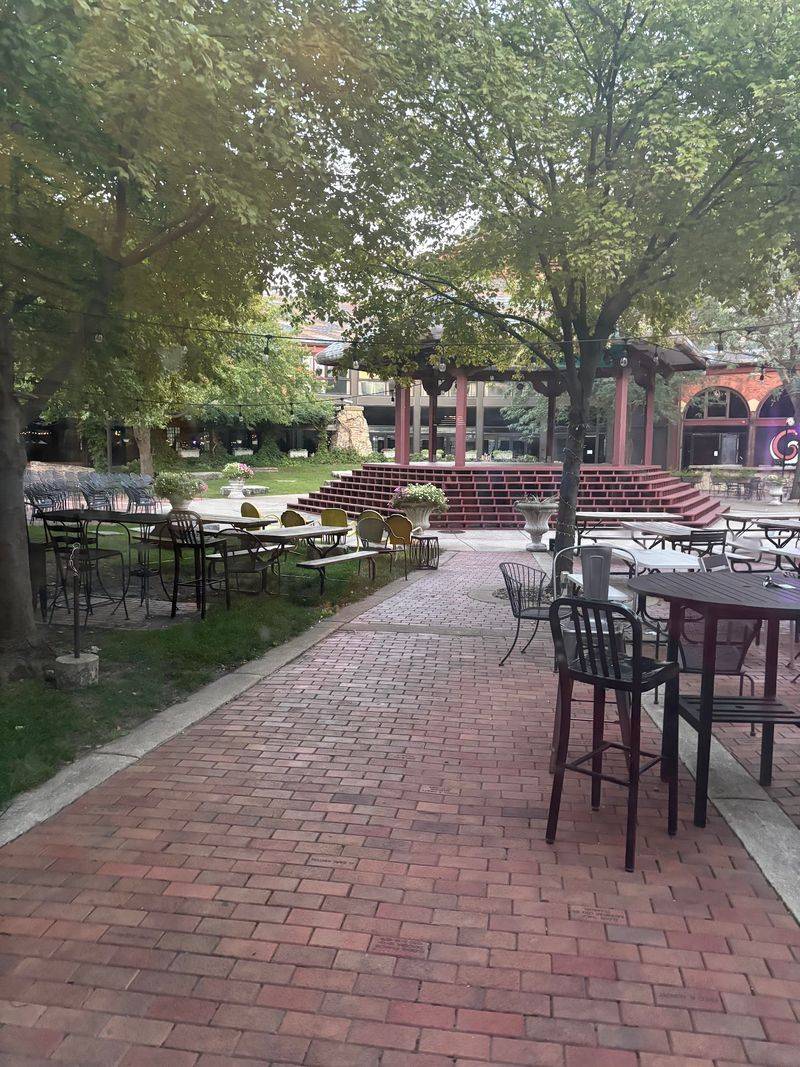
Grab a table here and you are dining inside a genuine piece of the 1800s. The roundhouse now operates as a welcoming restaurant, and visitors happily report that the food comes out hot, fresh, and quick to the table.
Friendly servers keep the experience smooth, and the atmosphere earns plenty of praise for feeling both grand and comfortable. The dining room stretches out under those historic walls, complete with a cozy fireplace and a handsome vintage bar tucked into the space.
When the weather cooperates, the outdoor seating wraps around in the round, a layout folks compare to charming European spots. Sitting out there, right where the old turntable once turned, is a small thrill in itself.
If you are wondering what to order, the roasted Brussels sprouts get called out again and again as a must-try. Pair a good meal with a setting this unusual and you end up with an outing that feels special without a lot of fuss.
It is comfort food served with a heavy side of Illinois history, and that combination is hard to beat.
A Free Railroad Exhibit Right Next Door
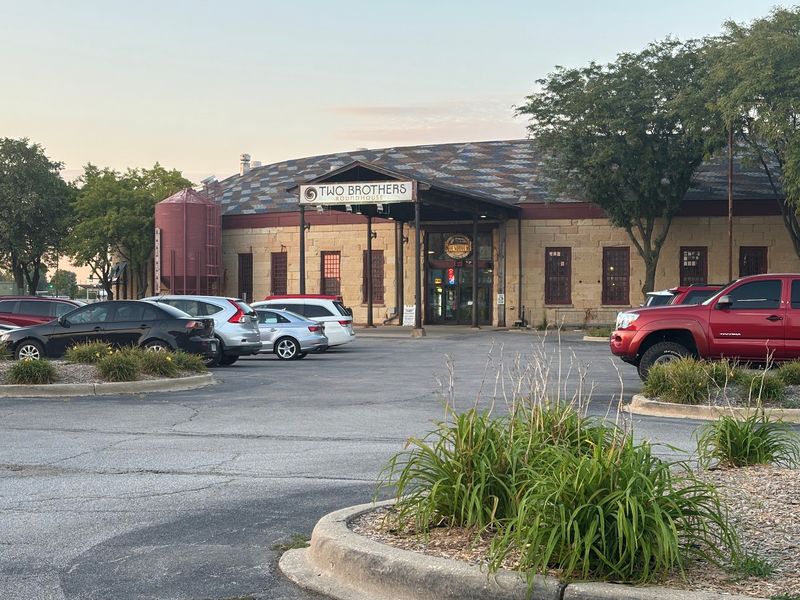
Not everything here costs a dime, which is great news for budget-minded families. Right beside the roundhouse, a multi-modal regional transportation center holds a memorial display all about the site’s railroad past and the people who once worked there.
The exhibit is free and open to the public, making it a smart stop for anyone curious about how the trains and the town grew up together. Inside you will find a photographic history of the railroad and the roundhouse, the kind of pictures that bring the old stories to life.
Because the roundhouse connects to the Aurora BNSF Metra station, the whole area still hums with the rhythm of trains coming and going. That living connection makes the history feel less like a museum and more like a story still being written.
For a low-cost day trip, this pairing is tough to top. Kids get a real look at hardworking history, grown-ups get a dose of nostalgia, and nobody has to open their wallet to soak it all in.
Learning and saving money in the same visit is a win.
Worth The Short Drive For A Slice Of Illinois History
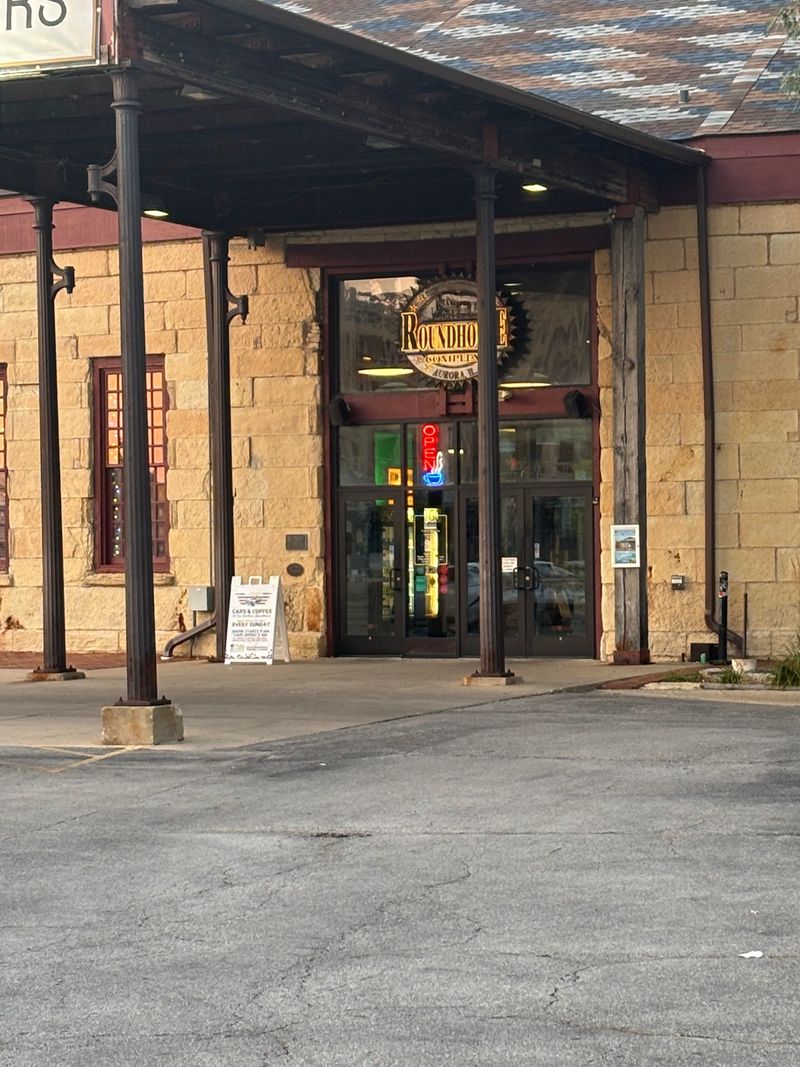
Some outings stick with you, and a visit to this stone circle in Aurora tends to land in that category. Between the free exhibit, the curious railroad details, and a hot meal under 170-year-old walls, there is enough here to fill an easy afternoon.
Getting there is simple, sitting about 40 miles west of Chicago and connected right to the Aurora BNSF Metra station. That means you can drive in with plenty of parking or hop off the train and walk straight up to it.
Those who grew up in Aurora speak of the place with real fondness, having visited many times over the years and knowing that great history was made within its walls. That kind of hometown pride says a lot.
Whether you come for the architecture, the food, or the stories hiding in the beams and old pulleys, you are treating yourself and your family to a genuine Illinois landmark. Bring the kids, bring a grandparent, and let the old roundhouse do what it has always done best, which is quietly guard its railroad past.