
10 California Spots Where Monarch Butterflies Begin Settling In For Winter
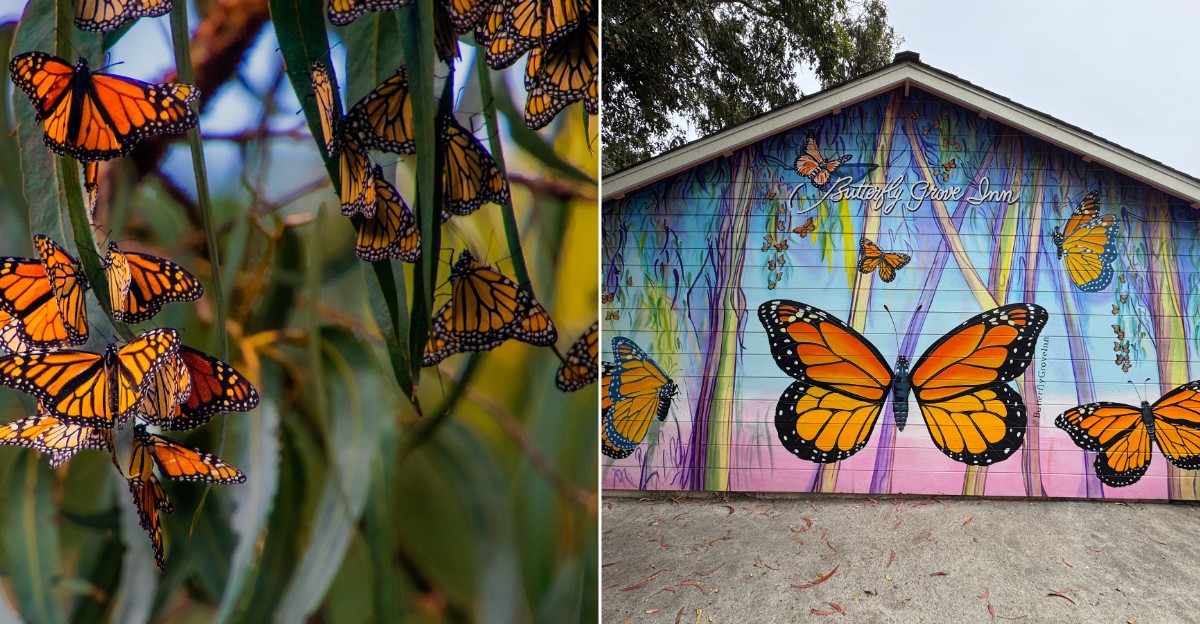
What if one of California’s prettiest fall arrivals could fit in the palm of your hand?
Every autumn, monarch butterflies begin drifting toward sheltered coastal groves, turning ordinary trees into something that looks almost animated.
At first glance, the branches can seem covered in dry leaves. Then one moves.
Then another. Suddenly the whole tree has wings.
That is the kind of fall moment that makes people stop mid-sentence.
Some monarchs travel astonishing distances to reach these wintering spots, following an ancient seasonal rhythm that still feels slightly impossible when you see it up close.
By October, the first clusters begin forming, and California’s coast starts quietly preparing for one of nature’s coolest yearly gatherings.
These spots are where that tiny orange-and-black takeover begins.
1. Natural Bridges State Beach
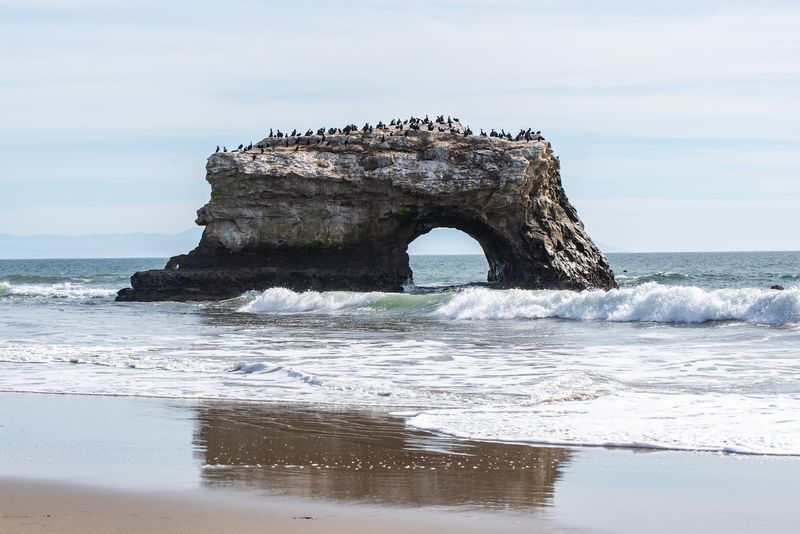
Here is a fun fact that most people miss entirely: Natural Bridges State Beach is the only State Monarch Preserve in all of California. That is not a small title to carry.
Located at 2531 West Cliff Drive, Santa Cruz, CA 95060, this park takes its butterfly responsibilities seriously, and the monarchs seem to appreciate the dedication.
Arrivals typically begin in mid-October, and the colony usually sticks around through mid-February before heading back out to spring breeding grounds. A wheelchair and stroller-accessible boardwalk leads directly to an observation deck inside the eucalyptus grove, which is a genuinely thoughtful design choice.
You are never fumbling through brush trying to find the good view.
The visitor center inside the park features interactive displays covering both monarchs and the surrounding marine life, so even on a slow butterfly day, there is plenty to explore. On warmer, sunnier afternoons, the butterflies take flight and the whole grove suddenly comes alive with movement.
A small parking fee may apply, though free street parking is often available nearby. Natural Bridges earns its preserve status every single season, and the 2026-2027 arrival window starting in mid-October cannot come soon enough for butterfly fans up and down the coast.
2. Goleta Monarch Butterfly Grove At Ellwood Mesa
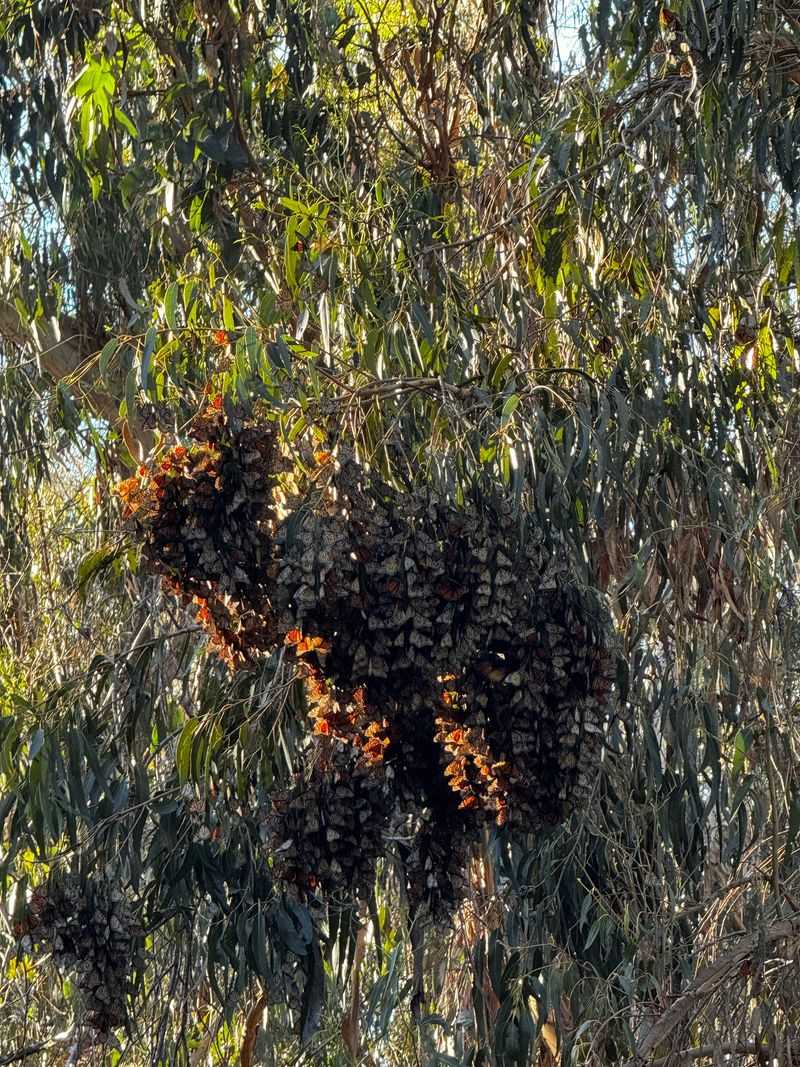
The Goleta Monarch Butterfly Grove at Ellwood Mesa, located at 7729 Hollister Avenue, Goleta, CA 93117, sits within 137 acres of open space that also includes trails and beach access. Entry is completely free, and the grove is open sunrise to sunset every day.
Parking is available at the Ellwood Mesa Open Space lot, and the main viewing area is roughly a 15-minute walk along clearly marked trails. That short hike through coastal scrub actually builds anticipation in the best possible way.
Monarchs typically arrive from October through February, with clustering activity peaking around mid-December according to historical patterns.
Weekend docents are usually on hand from mid-November through mid-February to share information and point out the best clusters. The butterflies here tend to aggregate in impressively dense formations, draping entire branches in orange and black.
Because the surrounding habitat is so intact, the whole experience feels wilder and more natural than some of the more developed viewing sites. Ellwood Mesa is proof that a great monarch experience does not require fancy infrastructure; sometimes all you need is a healthy grove of eucalyptus and the patience to walk a little ways in.
3. Pismo State Beach Monarch Butterfly Grove
If there is one place in California that feels like it was literally built for butterflies, it is this grove. Pismo State Beach Monarch Butterfly Grove, located at 445 South Dolliver Street, Pismo Beach, CA 93449, sits right along Highway 1 and welcomes visitors completely free of charge.
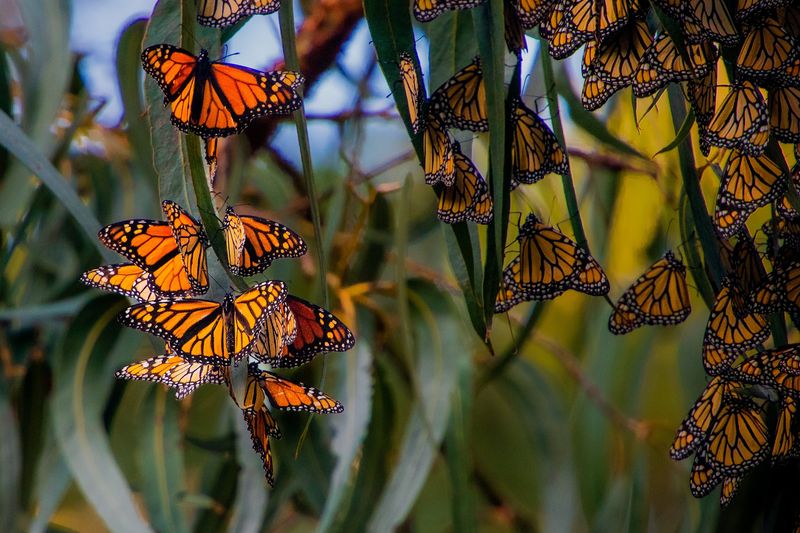
The eucalyptus trees here form a natural canopy that monarchs absolutely love, and when conditions are right, the branches look like they are draped in living orange tapestries.
Historically, this site has hosted some of the largest Western Monarch overwintering populations in California. The 2026-2027 season officially kicks off in mid-October, so check back then for fresh arrival reports.
On cool mornings or overcast days, butterflies cluster tightly together for warmth, making viewing absolutely spectacular.
Weekend docent talks are typically offered during peak season, sometimes with telescopes set up so you can see individual wing patterns up close. The Monarch Mercantile Trailer extends its hours during the busiest months.
Parking is free, the path is easy to walk, and the whole experience feels like stumbling into a nature documentary. Pismo is not just a butterfly spot; it is a full-on orange and black phenomenon that reminds you why California coastlines are worth every conservation effort.
4. Pacific Grove Monarch Sanctuary
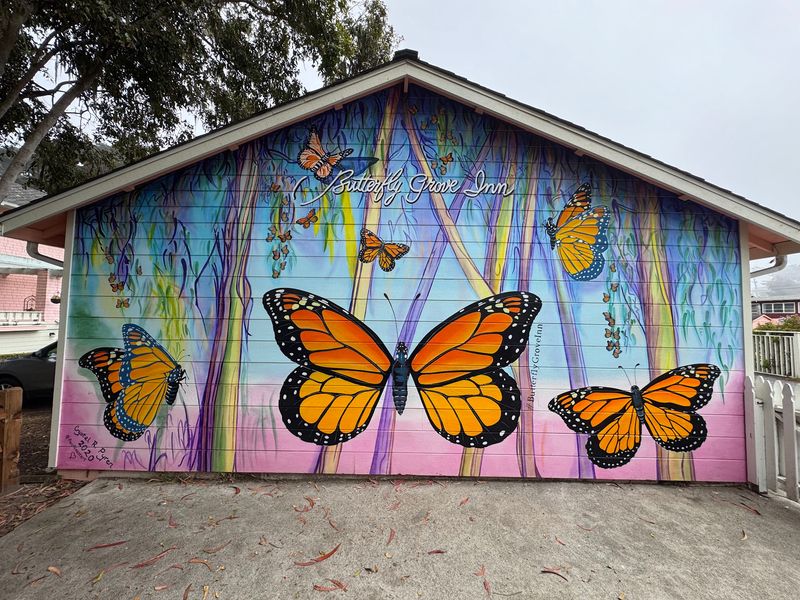
Pacific Grove did not earn the nickname Butterfly Town, USA by accident. This small Monterey Peninsula city takes its monarch identity so seriously that it has city ordinances protecting the butterflies, and the sanctuary at 250 Ridge Road, Pacific Grove, CA 93950 is the heart of it all.
Admission is free, donations are warmly welcomed, and the wide paved paths are fully ADA accessible.
Monarchs generally begin arriving in mid-October and stay through February, with November and January typically offering the most dramatic clustering views. The sweet spot for seeing them bunched together is before 11 a.m. or on overcast days when temperatures dip below 55 degrees Fahrenheit.
Once the sun warms things up, they scatter into flight and the whole grove becomes a slow-motion orange blizzard.
Docents from the Pacific Grove Museum of Natural History are frequently present during the season, ready to answer every question you have ever had about migration, milkweed, and metamorphosis. Street parking is limited but available nearby.
The sanctuary has a calm, almost reverent energy that is hard to describe until you are standing under a tree covered in thousands of quietly resting butterflies. Pacific Grove is not just a viewing spot; it is a full civic commitment to one of nature’s most breathtaking annual events.
5. Lighthouse Field State Beach
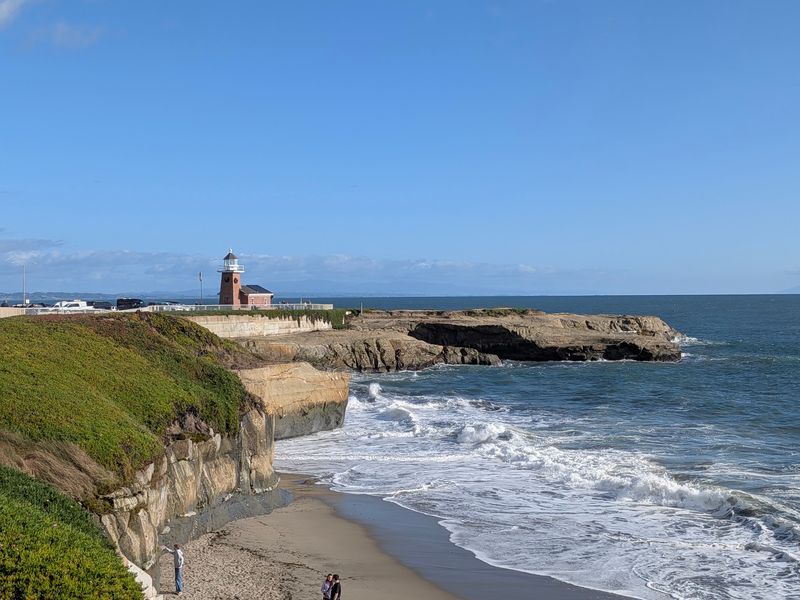
Lighthouse Field State Beach is the kind of place where you show up expecting a nice coastal walk and end up completely transfixed by a tree full of butterflies.
Positioned at 740 West Cliff Drive, Santa Cruz, CA 95060, this state beach sits along the northern edge of Monterey Bay and offers one of the more atmospheric monarch experiences on the central coast.
Monterey cypress and eucalyptus trees provide the shelter that overwintering monarchs look for.
Free parking is available in paved lots along West Cliff Drive and on nearby streets, which is genuinely refreshing in a world of expensive coastal parking.
The site draws a wonderfully eclectic crowd: surfers heading down to the break, tourists scanning the horizon for whales, birders with enormous lenses, and butterfly watchers with their necks tilted upward.
Everybody coexists beautifully.
Lighthouse Field is one of several documented Western Monarch overwintering sites along California’s central coast, recognized as part of the broader network that supports the migratory population each winter.
The 2026-2027 season is expected to follow the familiar mid-October arrival pattern, though exact timing always depends on weather and conditions further inland.
Come for the butterflies, stay for the ocean views, and leave wondering why you do not visit state beaches more often.
6. Moran Lake County Park
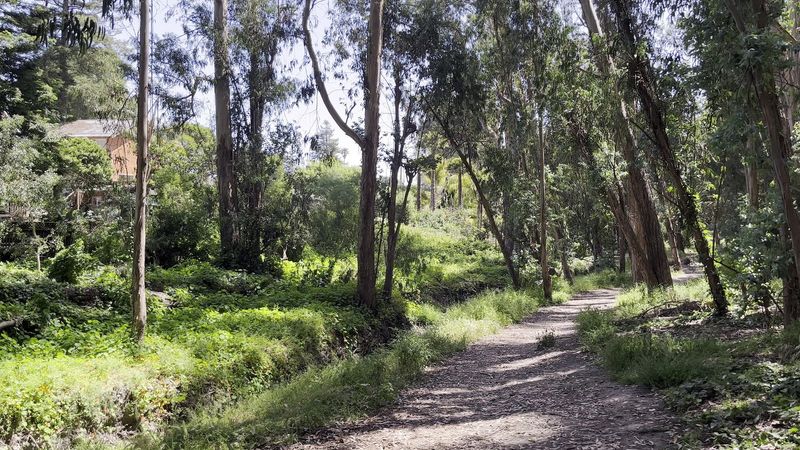
Not every great monarch site comes with a famous name or a gift shop, and Moran Lake County Park is exactly that kind of quietly excellent place. Found at 22775 East Cliff Drive, Santa Cruz, CA 95062, this county park holds the distinction of hosting the third largest overwintering monarch population in Santa Cruz County, which is no small achievement given how butterfly-rich this whole region is.
The park is open sunrise to sunset and features multi-use trails, a beach, a coastal lagoon, and educational interpretive signs that make the whole visit feel genuinely informative. The eucalyptus trees near the park provide the crucial shelter that monarchs depend on during the cooler coastal months.
Santa Cruz County Parks actively manages the habitat here in partnership with conservation organizations, which shows in the quality of the environment.
Because this site is a bit less publicized than Natural Bridges or Lighthouse Field, visiting can feel more intimate and less crowded, which is a real gift during peak butterfly season. The lagoon adds a lovely visual backdrop that most butterfly groves simply cannot offer.
If you are building a Santa Cruz monarch crawl for the 2026-2027 season, Moran Lake belongs on the itinerary alongside its more famous neighbors. Quiet places like this are often where the best nature moments actually happen.
7. Camino Real Park

Ventura does not always get the monarch spotlight that Pismo or Pacific Grove enjoy, but Camino Real Park makes a genuinely strong case for the 805 area code. Located at 4298 Dean Drive, Ventura, CA 93003, this publicly accessible park has historically hosted thousands of overwintering monarchs in its eucalyptus trees.
The butterflies typically begin appearing in October, weather depending, and can stick around through March.
The primary overwintering habitat runs along the Arundell Barranca, which forms the park’s northwest boundary. That natural drainage corridor creates a sheltered microclimate that monarchs find particularly appealing during the cooler months.
Active efforts are underway to enhance the habitat further by adding native nectar plants, which is exactly the kind of long-term thinking that butterfly conservation requires.
Camino Real is also a popular recreation spot, so you are likely to share the space with people walking dogs, playing on the fields, and generally enjoying a Southern California afternoon.
That combination of everyday community life and extraordinary natural phenomenon is part of what makes this site so charming.
The 2026-2027 season arrival window begins in mid-October, so keep an eye on local reports as the season progresses. Ventura’s monarch community is worth rooting for, and Camino Real is where to cheer them on.
8. Ocean Avenue Park
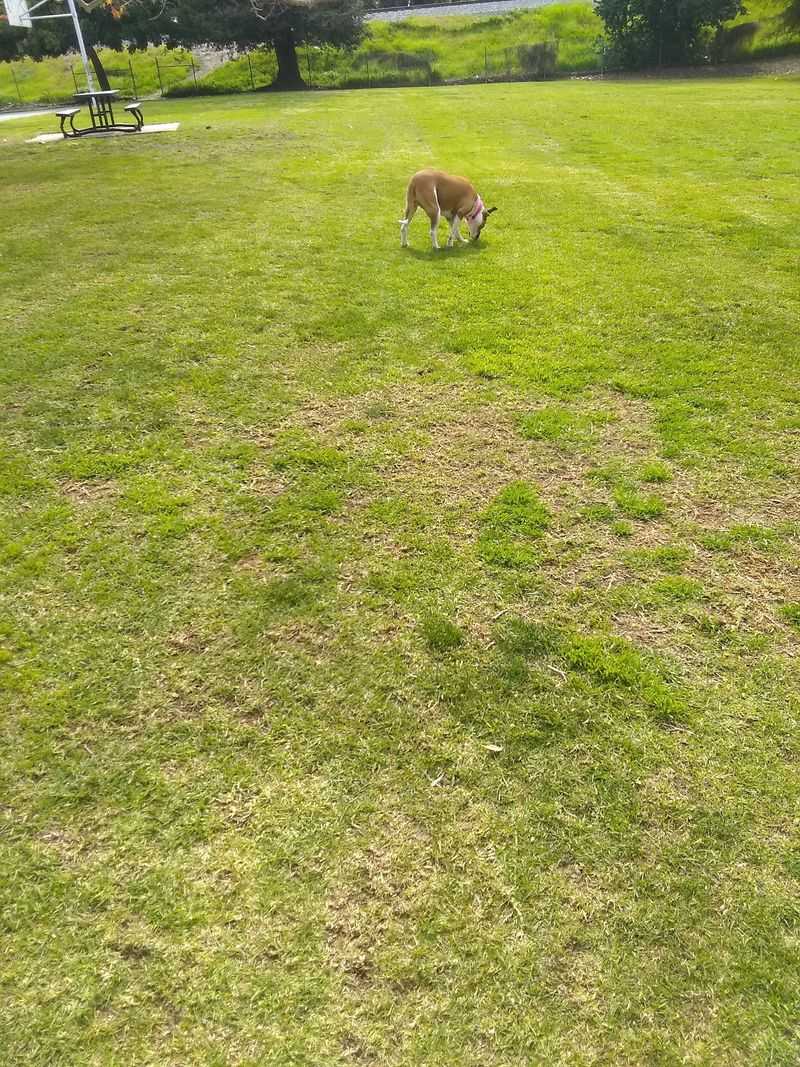
Sometimes the most surprising butterfly spots are the ones hiding in plain sight, tucked behind picnic tables in a neighborhood park. Ocean Avenue Park, situated at 1501 East Ocean Avenue, Ventura, CA 93001, is exactly that kind of unexpected gem.
Western Monarch clusters have been observed in the tall eucalyptus trees here during late fall and early winter, making it a documented overwintering site recognized by the U.S. Fish and Wildlife Service.
That federal recognition matters. It signals that this park plays a genuine role in supporting the migratory population, even if it flies under the radar compared to the bigger, better-known groves up the coast.
The setting is understated and approachable, which gives the whole experience a refreshingly casual quality. You are not navigating a crowded nature center; you are just standing in a neighborhood park looking up at something extraordinary.
Less detailed public information is available about Ocean Avenue Park compared to sites like Pismo or Pacific Grove, which is actually part of its appeal. There is something genuinely wonderful about discovering a monarch site that has not been fully packaged for tourism yet.
As the 2026-2027 season unfolds from mid-October onward, this Ventura spot deserves attention from anyone serious about tracking where Western Monarchs choose to spend their winters along the Southern California coast.
9. Ardenwood Historic Farm
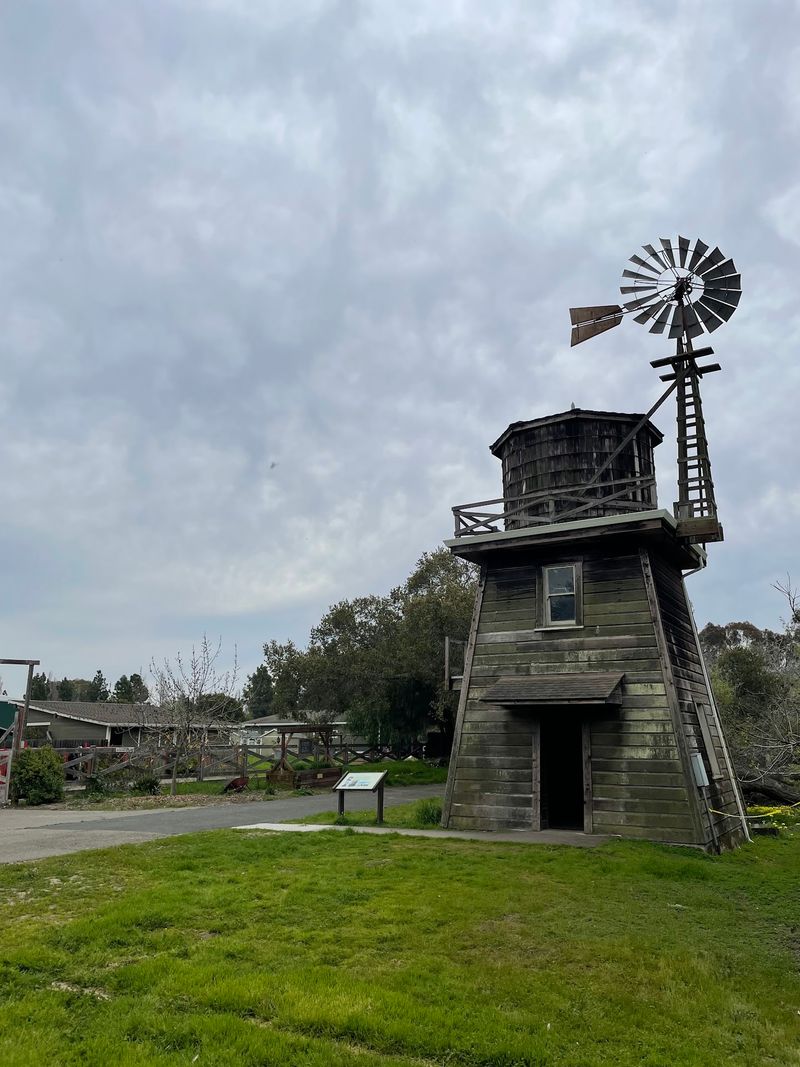
Ardenwood Historic Farm is the kind of place that makes you feel like you have slipped sideways into a different century, and then you look up and realize the trees are covered in butterflies.
Located at 34600 Ardenwood Boulevard, Fremont, CA 94555, this East Bay Regional Park combines a working historic farm with one of the Bay Area’s most documented monarch overwintering sites.
Monarchs typically gather in the eucalyptus groves here from November through January.
The farm itself features original and restored 19th-century buildings and agricultural fields that are genuinely fascinating to explore. An admission fee applies to enter the farm, which funds the preservation of both the historic structures and the natural habitat.
Guided tours and special programs focused on overwintering monarchs are often available during the season, making this an especially educational visit.
What sets Ardenwood apart is the layered experience it offers. You can learn about Victorian farming practices, wander through heritage crop fields, and then round a corner to find a grove full of hibernating butterflies.
The contrast is genuinely striking and memorable. For anyone in the East Bay looking to witness the 2026-2027 monarch season without driving to the coast, Ardenwood is the answer.
It is one of those rare places where history and natural wonder share the same address and somehow make each other better.
10. Morro Bay Golf Course

A golf course might seem like an unlikely setting for one of California’s most important monarch overwintering sites, but Morro Bay has never been a place that follows conventional logic.
At 201 State Park Road, Morro Bay, CA 93442, the eucalyptus grove within the golf course grounds serves as a genuinely significant winter habitat for Western Monarchs.
The iconic silhouette of Morro Rock looms in the background, making this one of the most scenically dramatic butterfly viewing locations on the entire list.
Butterflies typically begin arriving in October and remain in the grove through March, which is a notably long season compared to some other sites.
Docent-led tours are offered throughout the winter, providing real context about the butterflies’ migration routes, clustering behavior, and the conservation efforts that keep this grove healthy and functioning.
The course itself is managed with these winter visitors in mind.
Public access to the monarch grove is available, and the combination of guided interpretation and stunning coastal scenery makes this a particularly satisfying visit. The 2026-2027 season survey windows set by the Xerces Society will help establish how many monarchs choose Morro Bay this year.
Whether you are a golfer, a nature enthusiast, or someone who just wants to stand next to a tree full of butterflies while Morro Rock watches over you, this place absolutely delivers. Which California grove will you visit first this season?