
13 Iowa State Parks Worth Visiting When The Leaves Start Changing
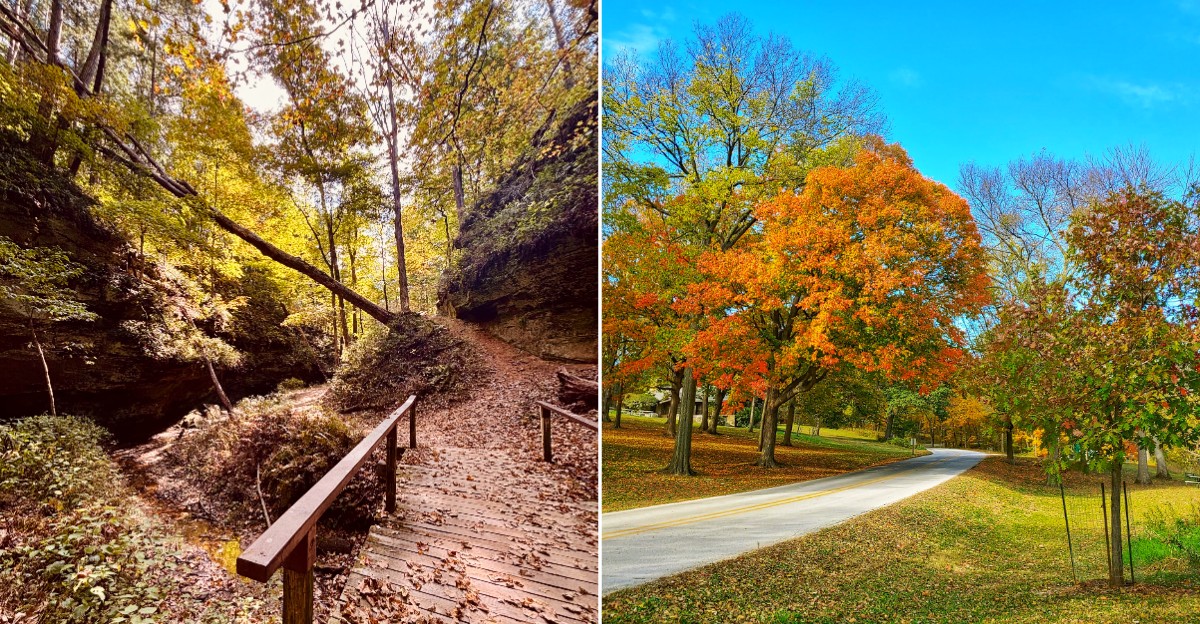
I have lost count of how many times an Iowa fall drive has made me pull over for a view I was not expecting.
Give October a few cool nights, and even familiar stretches of the state start looking completely different.
That is especially true inside the state parks. One weekend might put me high above the Mississippi with color spreading across the valley.
The next has me following a trail into a sandstone canyon where fallen leaves collect between the rocks.
After enough autumn miles, I started keeping track of the parks I would happily drive back to when the leaves turn.
These 13 are the ones that keep making the list, along with the trails and timing details that can turn a good fall stop into a very good one.
1. Pikes Peak State Park, McGregor
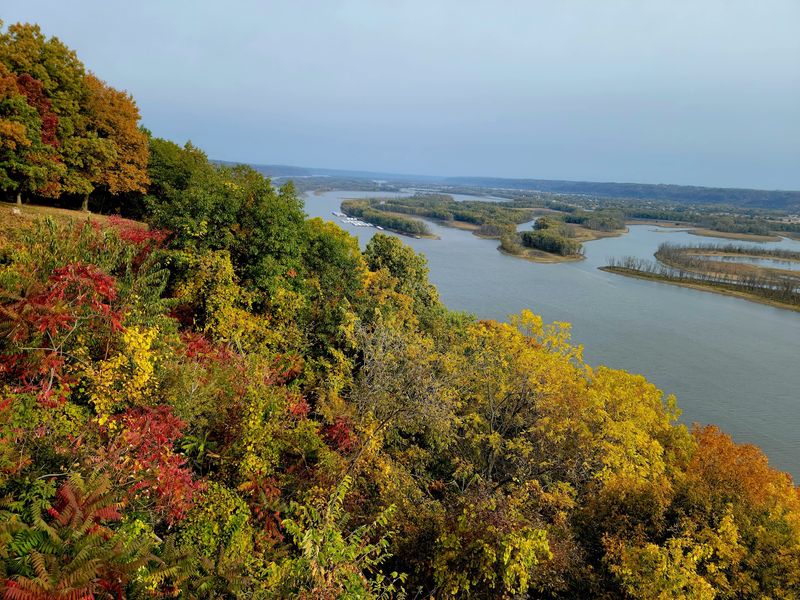
Bluffs this high make you forget you are standing in the Midwest.
Pikes Peak State Park in McGregor, Iowa, rises roughly 500 feet above the Mississippi River, with views stretching toward the spot where the Wisconsin River joins it.
Eleven miles of trails wander through bluffs, valleys, and old-growth woodland, so fall color follows you well beyond the main viewpoint.
Iowa DNR specifically names this park as a destination during peak fall color, which tells you plenty about what early to mid-October can look like around here.
The main Mississippi River overlook is one of the easiest views to reach, with a paved accessible route from the nearby parking area.
If you want to keep walking, the half-mile boardwalk toward Bridal Veil Falls trades the big river view for rock formations, stairs, and woods closing in around you.
Bring a camera with room to spare. The valley below breaks into layers of gold and rust, and one photo never feels like enough.
Mornings can add mist over the water before the view opens up later in the day.
Pack a lunch for the picnic area near the main overlook, then leave enough time to explore beyond the first viewpoint.
If you only have one day in northeast Iowa, this bluff makes a convincing case for spending it here.
2. Backbone State Park, Dundee
Iowa’s first state park was dedicated in 1920, and more than a century later it still knows how to host autumn.
Backbone State Park near Dundee, Iowa, is built around a steep, narrow ridge of bedrock known as the Devil’s Backbone, with the Maquoketa River curling through the landscape below.
Walk the Backbone Trail and the color often sits below you instead of only overhead, which changes the whole perspective.
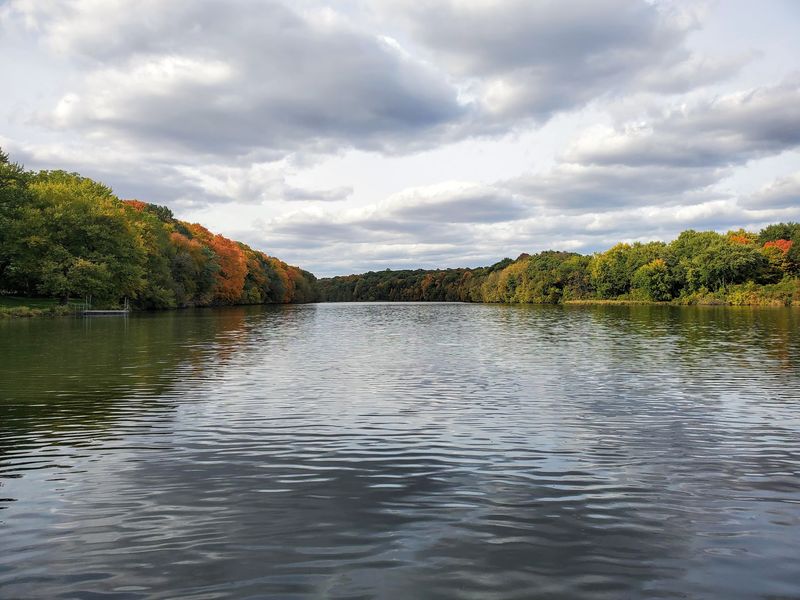
Backbone Lake adds another layer, especially when calm water catches the reds and yellows along the shoreline.
Twenty-one miles of trails spread through the park, and Iowa DNR included the Backbone Trail among its standout autumn hikes for 2026.
Rock climbers use the rugged dolomite cliffs too, though climbers need to register at the park office before heading onto the walls.
Bring a kayak or check seasonal boat-rental availability at the boathouse if the water is calm. Seeing the wooded slopes from the lake is an entirely different way to experience the park.
Cabins here make an October overnight possible, but popular fall dates are worth reserving ahead.
Sturdy shoes matter on the Backbone Trail, where rock, roots, and uneven footing keep things interesting from the first stretch onward.
3. Ledges State Park, Madrid
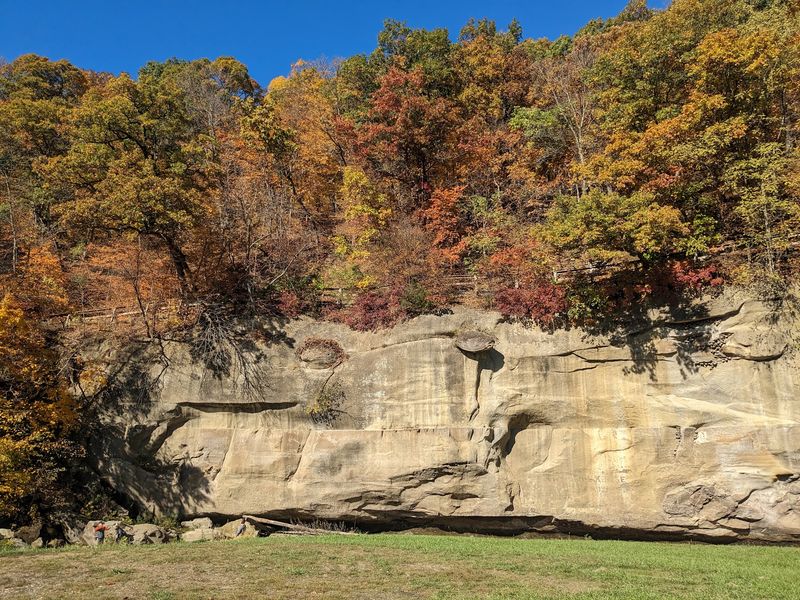
Sandstone walls streaked with lichen greet you before a single leaf does.
Ledges State Park sits just outside Madrid, Iowa, where Peas Creek carves a shady canyon between tall rock faces.
Canyon Road runs straight through the low water crossings, and that stretch may be the most photographed pavement in the state.
Good news for trip planners: Ledges fully reopened on September 1, 2026, after finishing its summer road project.
Overlooks above the Des Moines River hand you the wide view, while the canyon floor gives you the cozy one.
Stone steps built by the Civilian Conservation Corps climb the hillsides, and they are steeper than photos suggest.
Wear shoes you do not mind soaking, because splashing through the creek crossings is half the fun.
Weekend parking fills by late morning in October, so an early start saves you a long walk from the roadside.
Des Moines sits about 35 miles away, which makes this the easiest fall escape for anyone based in central Iowa.
Stay until the light slants low and the sandstone starts to glow.
4. Palisades-Kepler State Park, Mount Vernon
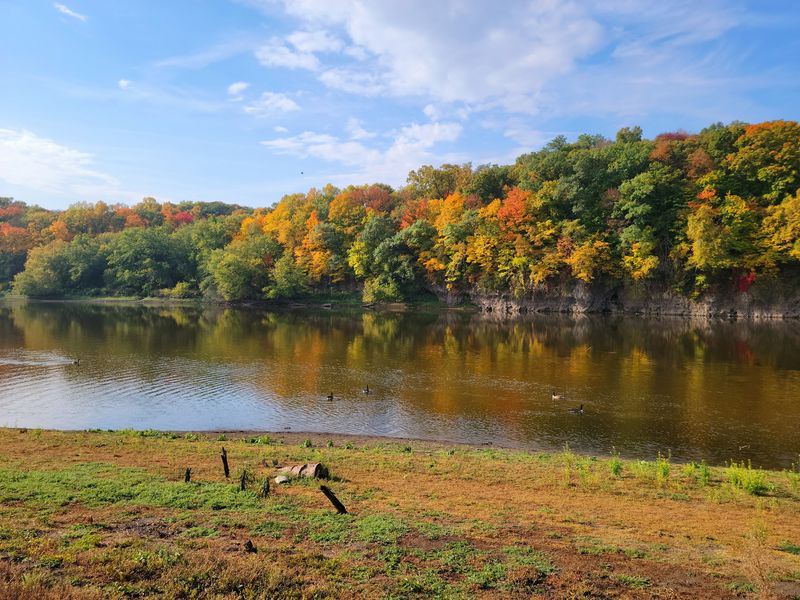
Limestone cliffs along the Cedar River do the heavy lifting at this park.
Palisades-Kepler State Park near Mount Vernon, Iowa, packs hardwood forest, deep ravines and bluff-top views into one compact package.
The two-mile Cedar Cliff Trail earned a mention in the DNR’s 2026 fall guide for its ridge-top river views.
Hike it and the river keeps flashing through gaps in the yellow canopy, which slows most people down considerably.
One planning note worth checking: an archery deer management season runs from October 1, 2026, through January 10, 2027.
Current park notices will explain which areas are affected, so read the board at the entrance before setting out.
Blaze orange is never a bad accessory in fall, even on well-used trails.
Stone shelters and cabins from the 1930s sit near the water, and they are worth a look even on a quick day trip.
Anglers cast from the banks for catfish and walleye while leaves drift past on the current.
Cedar Rapids lies a short drive north, so this counts as a half-day outing with a full-day payoff.
5. Wildcat Den State Park, Muscatine
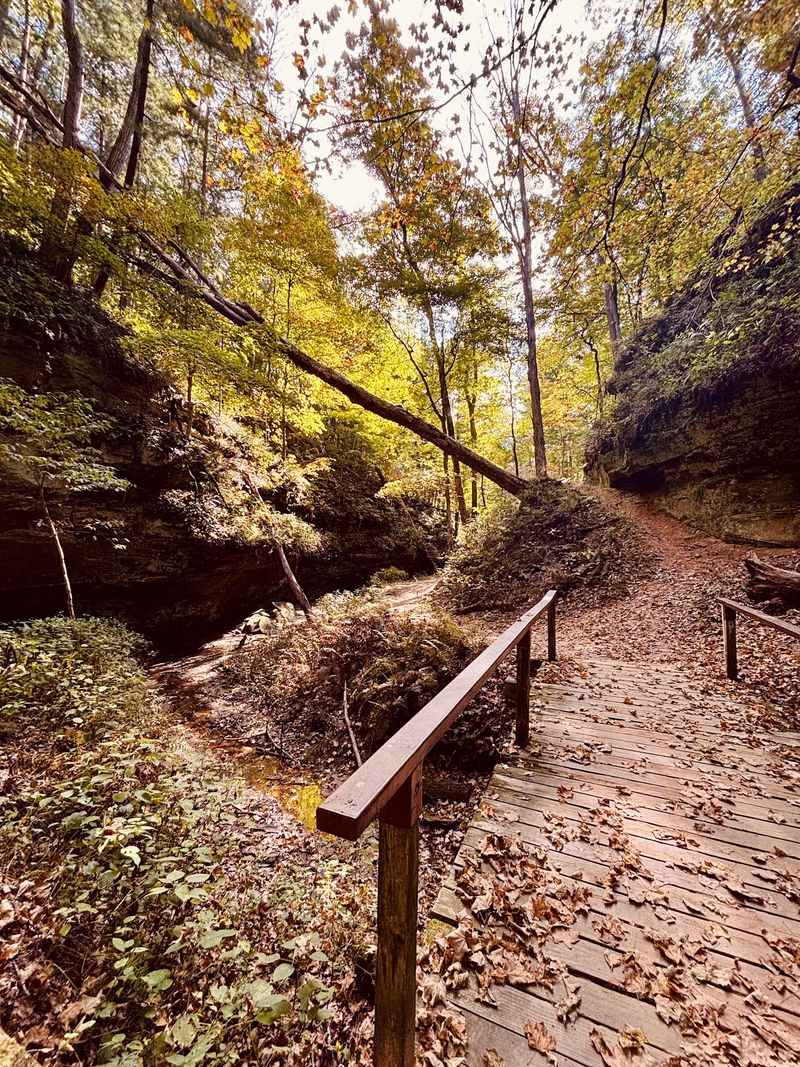
Few Iowa parks hide this much scenery in such a small space.
Wildcat Den State Park east of Muscatine, Iowa, loops its trails around sandstone bluffs, narrow rock passages, Steamboat Rock and the Devil’s Punch Bowl.
Iowa DNR says these trails look their best in summer and fall, when seasonal colors light up the surroundings.
Rock formations frame the leaves like a picture, and the tight stone chutes between them turn kids into instant explorers.
Then there is the Pine Creek Grist Mill, built in 1848 and still standing beside the water.
Volunteers open it on select weekends, and the old machinery inside is a real treat for history fans.
Trails involve stairs, mud and tree roots, so leave the smooth-soled sneakers in the car.
Restrooms and picnic tables sit near the main lot, but there is no concession stand, so carry snacks and water.
Cell service can be spotty down in the ravines, which honestly adds to the charm.
Arrive on a weekday morning and the whole sandstone maze may be yours alone.
6. Maquoketa Caves State Park, Maquoketa
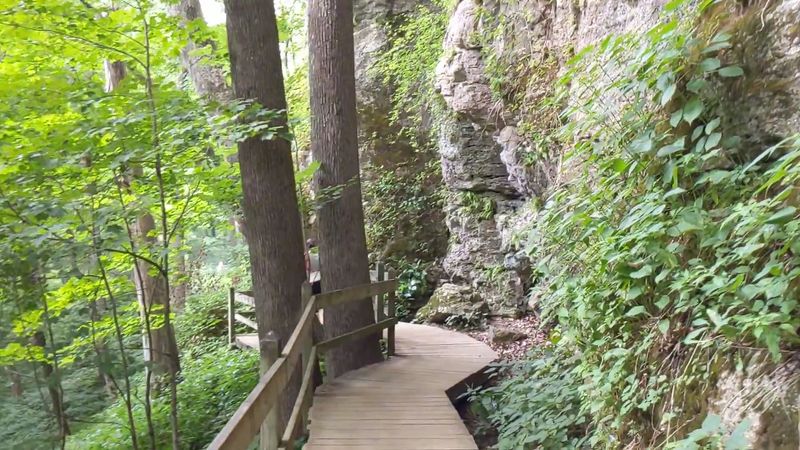
Autumn color is only half the attraction at this park.
Maquoketa Caves State Park near Maquoketa, Iowa, contains more caves than any other state park in Iowa.
Six miles of trails connect forest paths, towering bluffs, the Natural Bridge, and Balanced Rock, a 17-ton boulder balanced on a surprisingly small base.
Dancehall Cave stretches roughly 1,100 feet and can be explored on foot, while some of the park’s smaller caves require considerably more crawling and squeezing.
Timing matters. The caves close every year from November 15 through April 1 because they serve as winter habitat for bats, leaving most of Iowa’s main fall-color season open for exploring.
Before entering the caves, stop at the interpretive information explaining the park’s bats and white-nose syndrome.
Bring a flashlight or headlamp, clothes you do not mind getting dirty, and shoes with real grip because cave floors stay damp.
The stairways and rocky trails between formations add up quickly, so pace yourself if you want to explore both above and below ground.
Campsites sit close to the trail system, which makes an October overnight an easy way to stretch the visit.
Not many Iowa parks let you trade sunlit hardwoods for underground passages within the same hike.
7. Bellevue State Park, Bellevue
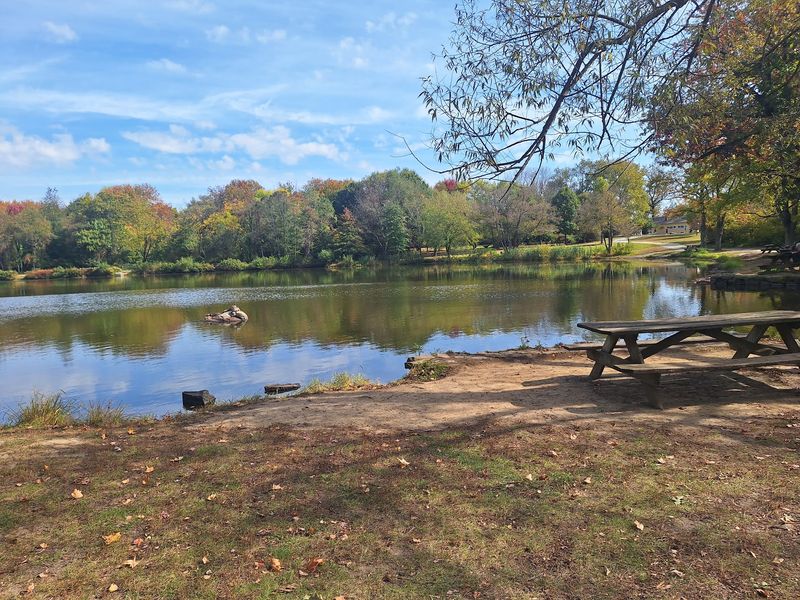
Elevation is the whole reason this park makes the list.
Bellevue State Park rises above the Mississippi River just outside Bellevue, Iowa, and the overlooks do most of the talking.
Four miles of trails in the Dyas Unit lead to viewpoints where fall color spreads across the hillsides and the river valley at once.
Barges slide along below, looking almost toy-sized from the bluff top.
A butterfly garden near the nature center keeps blooming into early fall, drawing monarchs on their way south.
Step inside the nature center for displays about the river and local wildlife before you start hiking.
Benches at the main overlook make a fine spot for a thermos of cider and a sandwich.
The Great River Road runs past the entrance, so you can string this park together with other Mississippi stops in a single drive.
Sunrise is worth the early alarm, since morning light strikes the far Illinois shoreline first.
Save a little time for downtown Bellevue afterward, where the lock and dam serves up one more look at the water.
8. Pine Lake State Park, Eldora
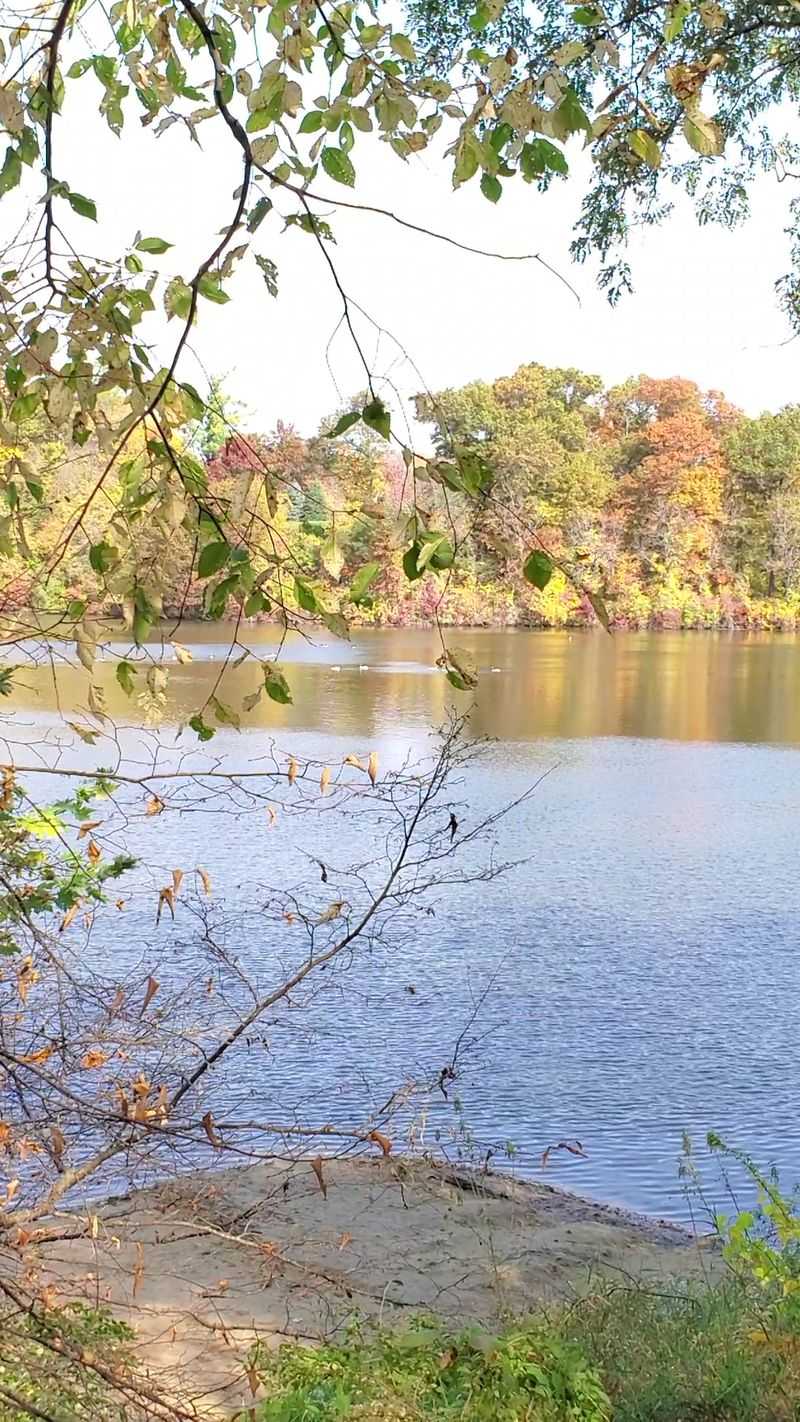
Two lakes, one river and a whole lot of ravines.
Pine Lake State Park sits near Eldora, Iowa, where wooded trails drop through deep ravines and climb toward bluffs above the Iowa River.
Lower Pine Lake reflects autumn color beautifully, while a 2.5-mile paved trail connects the park with Eldora.
Iowa DNR named Pine Lake among its recommended autumn hiking destinations for 2026, pointing to trails that move between woodland, prairie remnants, wetlands, and lake views.
That changing habitat keeps the scenery from feeling repetitive. One stretch closes in beneath hardwoods, while another opens toward water or native grassland.
The park once held Iowa’s southernmost native stand of pine trees, but a severe hailstorm destroyed that stand in 2009.
Today, hundreds of protected pine seedlings are part of an ongoing reforestation effort, slowly bringing that piece of the park’s identity back.
Cabins and a campground sit near the water, and fishing access gives you another excuse to slow the afternoon down.
The historic Pine Lodge and other CCC- and WPA-era structures add another layer if you want more than trails.
Plan a slow loop, because this is a park that rewards dawdling.
9. Dolliver Memorial State Park, Lehigh
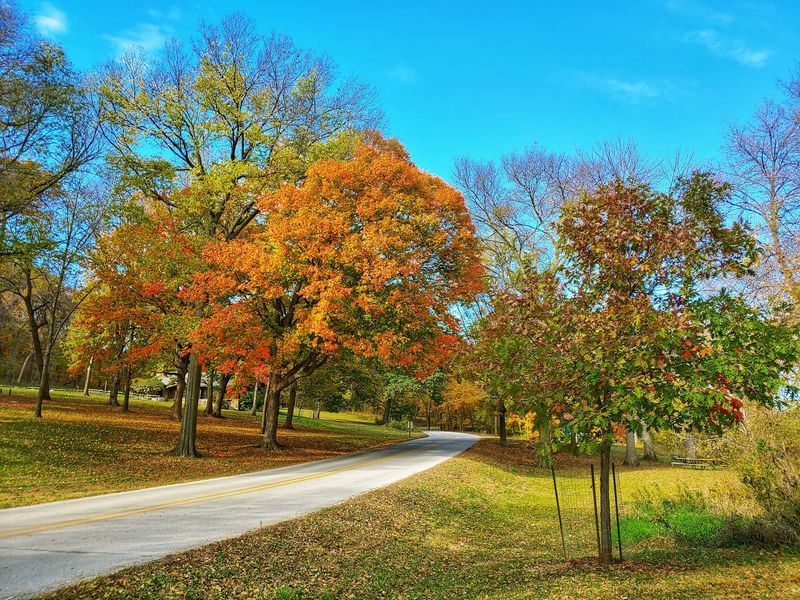
Ask around and you will learn this park stays wonderfully under the radar.
Dolliver Memorial State Park near Lehigh, Iowa, protects forested canyons, sandstone formations and oak-covered hillsides above the Des Moines River.
Roughly five miles of trails connect the overlooks, and the climbs are short but steep enough to warm you up.
Iowa DNR picked Dolliver for its 2026 autumn hiking roundup, which is strong company for such a quiet place.
The Copperas Beds show off tall sandstone walls where water has carved grooves over centuries.
Leaf chasers from Ohio and other well-known color states often skip central Iowa completely, and they miss canyons like these.
Stone shelters and lodges built in the 1930s sit among the trees, adding a layer of history to an easy hike.
Camping is available, and sites fill more slowly here than at the headline parks.
Trails can stay muddy after rain, so check the forecast and toss an extra pair of socks in the bag.
Come for the canyons, linger for the silence.
10. Pilot Knob State Park, Forest City
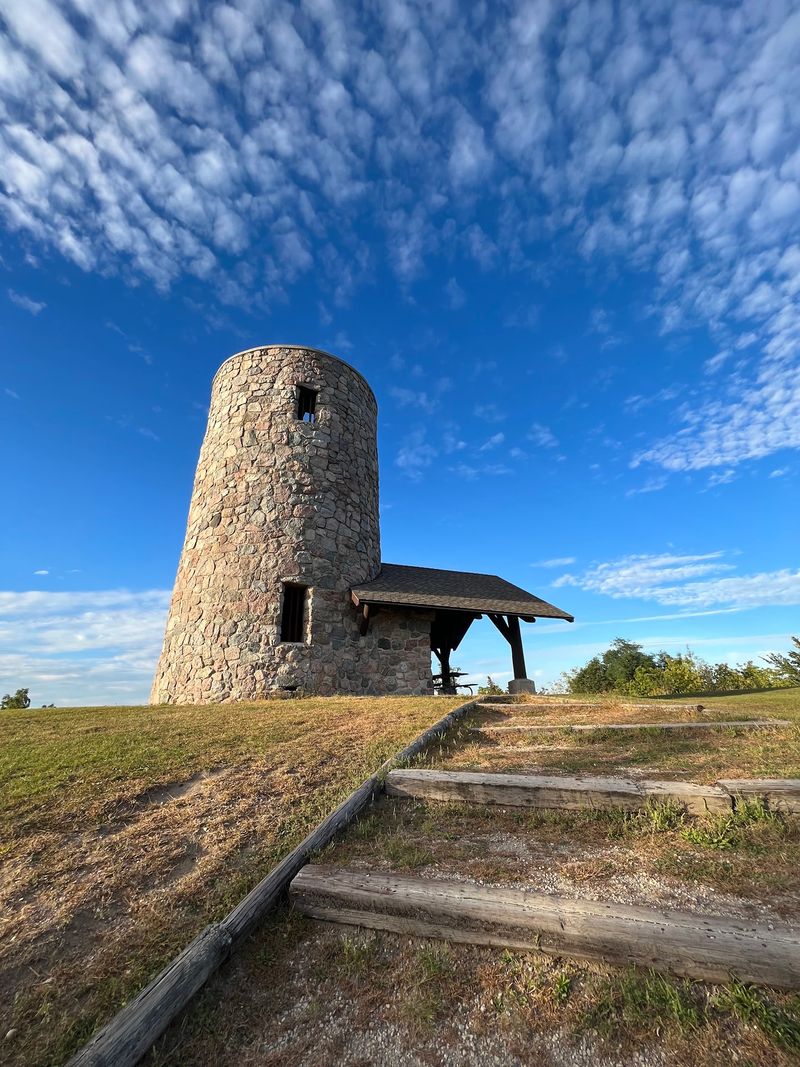
Climbing a tower beats craning your neck every single time.
Pilot Knob State Park outside Forest City, Iowa, rises from a prominent glacial hill topped by a stone observation tower built during the Civilian Conservation Corps era.
The knob reaches about 1,450 feet above sea level, high enough to open broad views across northern Iowa woodland and farmland without needing to claim a statewide elevation record.
Trails wind through the forest below and lead toward one of the park’s strangest natural features, Deadman’s Lake.
This four-acre floating sphagnum bog is the only one of its kind in Iowa, left behind by the glacial landscape that shaped this part of the state.
The observation tower remains the obvious fall destination. Instead of trying to see through a wall of branches, you rise above the canopy and watch color spread across the surrounding countryside.
Northern Iowa generally reaches peak color before southern parts of the state, so early to mid-October is usually the smarter window, depending on the weather.
Bring a windbreaker because the tower catches far more breeze than the sheltered trail below.
Picnic areas and a campground make it easy to turn a short tower climb into a longer afternoon.
Not many easy Iowa outings hand you a view this wide.
11. Stone State Park, Sioux City
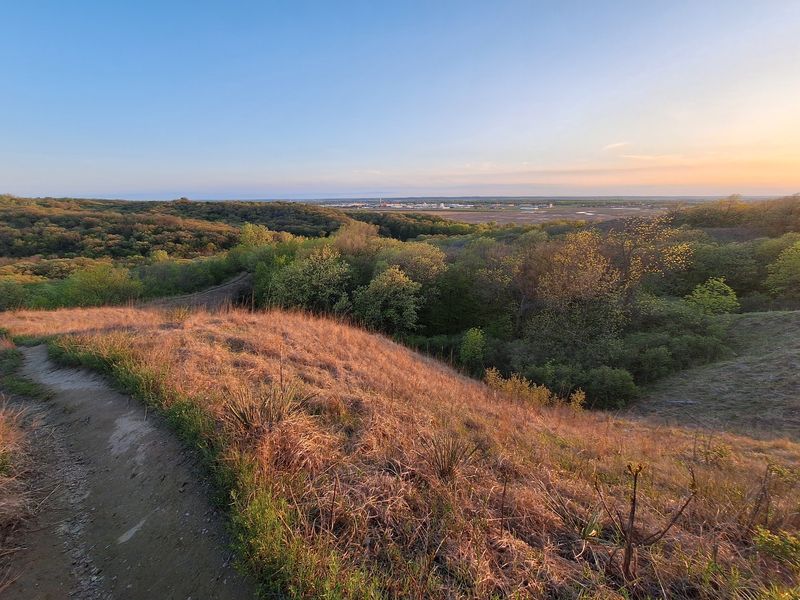
Western Iowa has hills that surprise first-time visitors.
Stone State Park sits at the edge of Sioux City inside the Loess Hills, a landscape built from enormous deposits of windblown silt.
Loess itself exists in many parts of the world, but Iowa’s formation is exceptional. Iowa DNR notes that deposits reach comparable heights only here and in parts of China.
More than 15 miles of trails climb through ridges, prairie, and woodland, with picnic areas and elevated viewpoints tucked throughout the park.
Friends visiting from flatter parts of the Midwest sometimes assume Iowa has nothing like this, and the first climb usually settles that argument quickly.
Oak woodland and prairie give the fall palette plenty of copper and bronze alongside the more familiar yellows.
Hikers and mountain bikers share portions of the trail network, so stay aware on the faster downhill stretches.
The nearby Dorothy Pecaut Nature Center makes a smart first stop for exhibits on the natural history of the Loess Hills.
These soils erode easily, so staying on marked trails matters, especially after rain.
Save an elevated trail for late in the day, when low light across the hills makes the entire landscape look sharper.
Downtown Sioux City is only minutes away when you are ready for dinner.
12. Waubonsie State Park, Hamburg
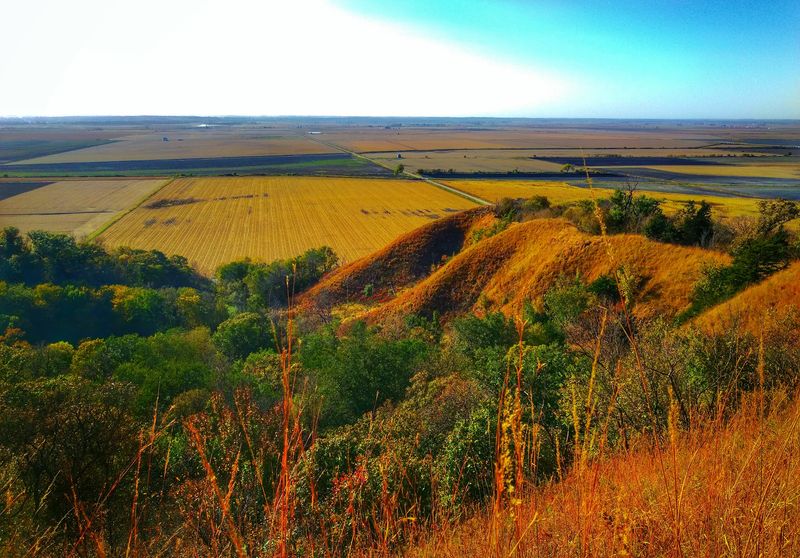
The Loess Hills keep rolling south, and so should you.
Waubonsie State Park near Hamburg, Iowa, sits in the far southwest corner of the state, where ridgetops open toward the Missouri River valley.
The Sunset Ridge Nature Trail follows the crest and hands over those broad views without demanding much climbing.
Other paths dip into mature woodland valleys, where the canopy closes overhead and the air feels several degrees cooler.
Iowa DNR included the park in its September 2026 fall-hiking recommendations.
Horseback riders have their own trail system here, which is rare in Iowa and handy to know if you travel with a trailer.
Wildflowers and uncommon plants grow on these slopes, a combination you will not find in eastern Iowa forests.
Campsites, shelters and a lodge cover your overnight plans.
Southwest Iowa color usually lands mid to late October, so this park stretches your season by a week or two.
On a clear evening the ridge lets you see across three states, and that alone justifies the drive down.
13. Lacey-Keosauqua State Park, Keosauqua
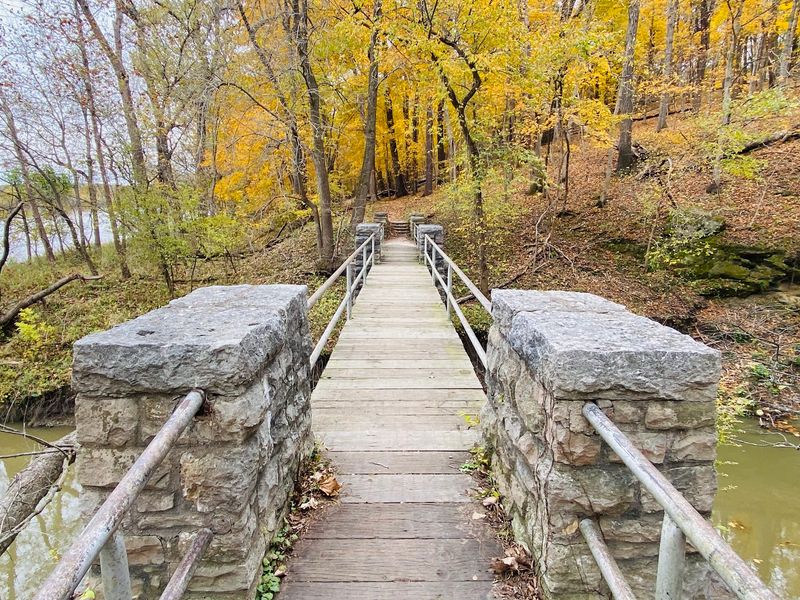
Southern Iowa saves some of the best color for last.
Lacey-Keosauqua State Park near Keosauqua, Iowa, covers 1,662 acres of oak-hickory bluffs and valleys inside a wide bend of the Des Moines River.
Thirteen miles of trails run through it, including a three-mile route along the bluffs above the water.
Since southern Iowa reaches peak color later than the north, a late October trip can still land perfectly.
The lake at the center offers a sand beach, a boat ramp and quiet fishing spots along the edges.
Stone work from the 1930s shows up in the shelters and lodge, and the cabins nearby book quickly during color season.
The Villages of Van Buren County surround the park, with antique shops and small bakeries a short drive from the entrance.
Bluff trails can be steep and buried in leaves, so trekking poles earn their keep here.
Deer and wild turkeys move through the woods at dawn, often before other hikers arrive.
Give it a full day, then drive home slowly with the windows down.