
Warm Autumn Evenings Bring The Bats Streaming Out Of This Arizona Bridge At Dusk
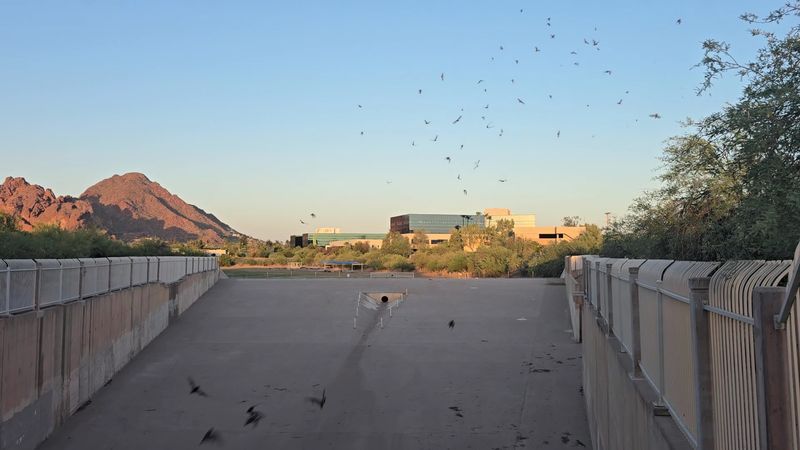
Right in the heart of one of Arizona’s busiest cities, thousands of bats live inside a concrete flood tunnel and pour out into the sky each evening like smoke rising from a chimney. Most people driving by have no idea it exists, yet a short walk along a canal drops you right in front of the show.
It costs nothing to watch, and the timing lines up perfectly with cooler autumn evenings when standing outside actually feels good. If you love quiet local wonders that surprise you, this one belongs on your list.
A Wild Spectacle Hiding Inside the City
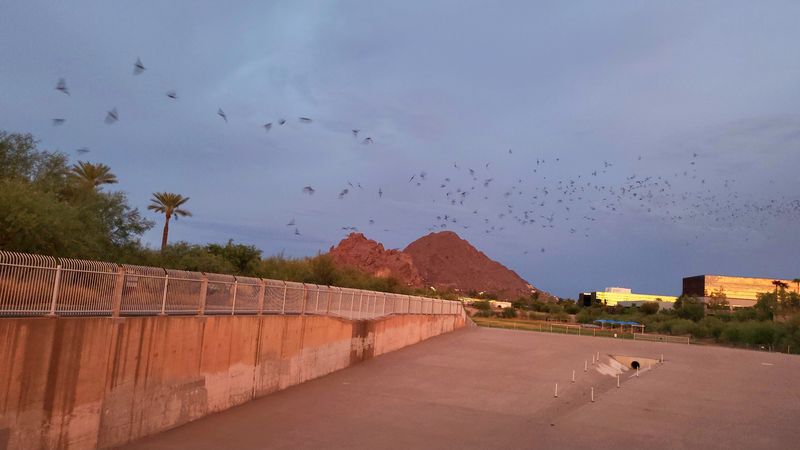
Few things sound stranger than tens of thousands of bats sharing a neighborhood with morning joggers, school kids, and canal-side walkers. Yet that is exactly what happens near 40th Street and Camelback in Phoenix, where a plain concrete flood control tunnel doubles as a bustling bat home.
Locals affectionately call it the Phoenix Bat Cave, though there is no natural cave involved at all. The bats squeeze into the crevices of the man-made tunnel, then spill out each night to hunt insects across the desert city.
Regulars love that something this wild survives in the middle of a metro area with millions of people. One visitor marveled that a spot with so many bats stays relatively unknown, often drawing only a modest crowd of curious watchers.
The setting is refreshingly unpolished. You get a working canal, a dirt path, a metal fence, and an ordinary tunnel that transforms into a stage the moment the sun sinks low.
That contrast between everyday city life and genuine nature is a big part of the charm here.
The Concrete Tunnel That Became a Bat Home
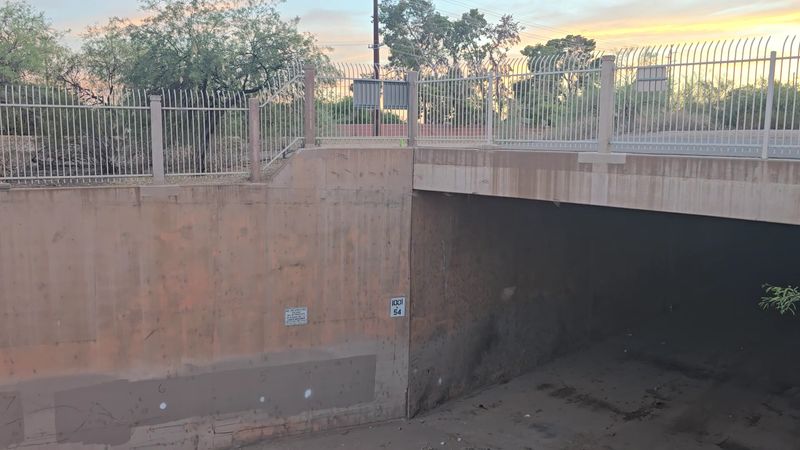
Instead of stalactites and darkness, the bats here chose engineering. The structure is a cement flood control tunnel built to move stormwater, and its tight expansion joints happen to make a cozy roost.
Those narrow crevices hold steady temperatures, which is exactly what bats want for resting through the day and raising their young. Visitors often note that the tunnel sits just to the north side of the wash, with plain concrete acting as the giveaway that you have arrived.
A few folks admit they first assumed the bats lived under a street bridge, only to discover the real spot tucked further along the canal. The tunnel is partly screened by bushes, so it stays surprisingly easy to miss even when you are close.
There is a quiet cleverness to the whole thing. A structure designed purely for water management ended up creating one of the most reliable wildlife shows in the city, night after night.
Regulars describe walking up and hearing chittering echoing from inside, a sound that tells you the residents are home and getting ready to head out for dinner.
Meet the Mexican Free-Tailed Bats
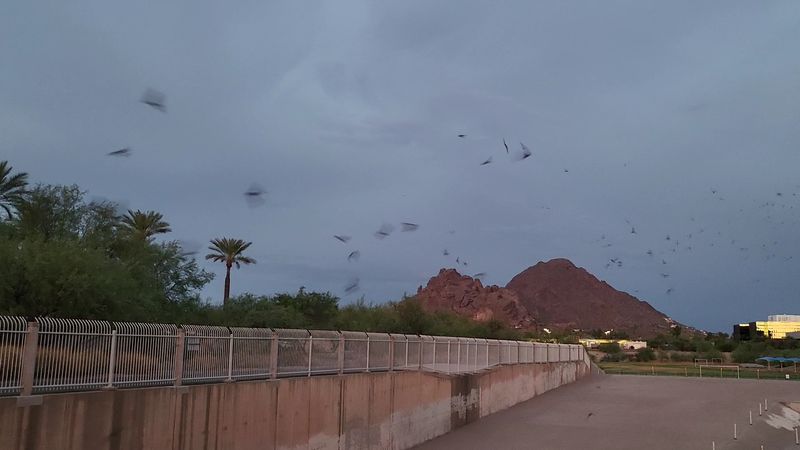
Speed demons of the desert sky, the little residents of this tunnel are mostly Mexican free-tailed bats, a species famous for covering serious distance in a single night.
These bats can travel up to 50 miles while foraging and reach speeds near 60 miles per hour with a helpful tailwind behind them. Watching them dart and swoop, it is easy to mistake them for fast-moving birds, and plenty of first-timers do exactly that.
They arrive in Arizona in spring and stay through the warmer stretch of the year, generally April into October. During that window, the tunnel fills with activity, and the nightly departures become part of the neighborhood rhythm.
Many of the bats gathered here are females raising young, which makes the roost a nursery as much as a shelter. That detail gives the spot a tender side that surprises people who show up expecting something spooky.
One visitor was thrilled simply to see bats up close for the first time, calling the small fliers unexpectedly cute as they streamed overhead in the fading light.
Nature’s Pest Control Working Overtime
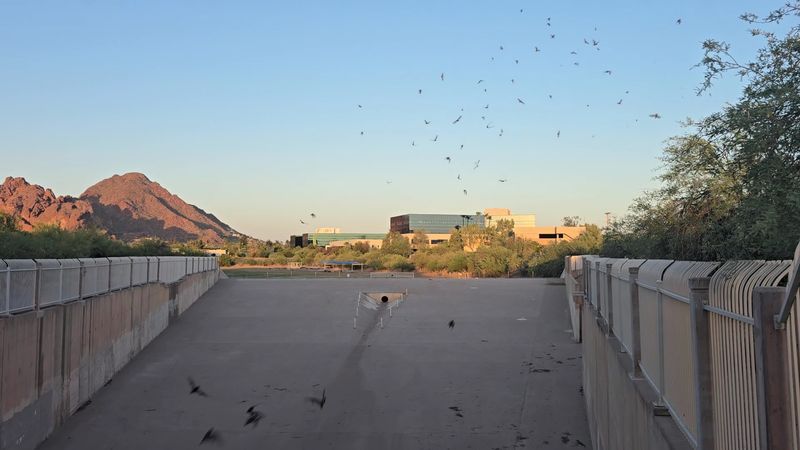
Behind the entertainment is a hardworking crew doing the desert a genuine favor. Each night, a colony like this one gobbles up an enormous quantity of insects, including moths that threaten farm crops such as cotton and corn.
Across the region, bats save farmers a staggering amount of money by keeping pest populations in check, quietly protecting fields while everyone sleeps. That makes the swirling cloud above the canal more than a pretty sight, it is a free service running on autopilot.
Watchers frequently linger after the main flight to catch the second act. Once the bats spread out, they skim low over the canal water, snatching bugs and even grabbing quick sips as they zip past.
One person described the feeding frenzy above the canal as the highlight of the entire outing, better even than the initial emergence. Seeing predators and prey play out right in the city reminds people that real nature never fully leaves, no matter how much pavement surrounds it.
It is a satisfying thought to carry home after the show ends.
The Nightly Emergence at Dusk
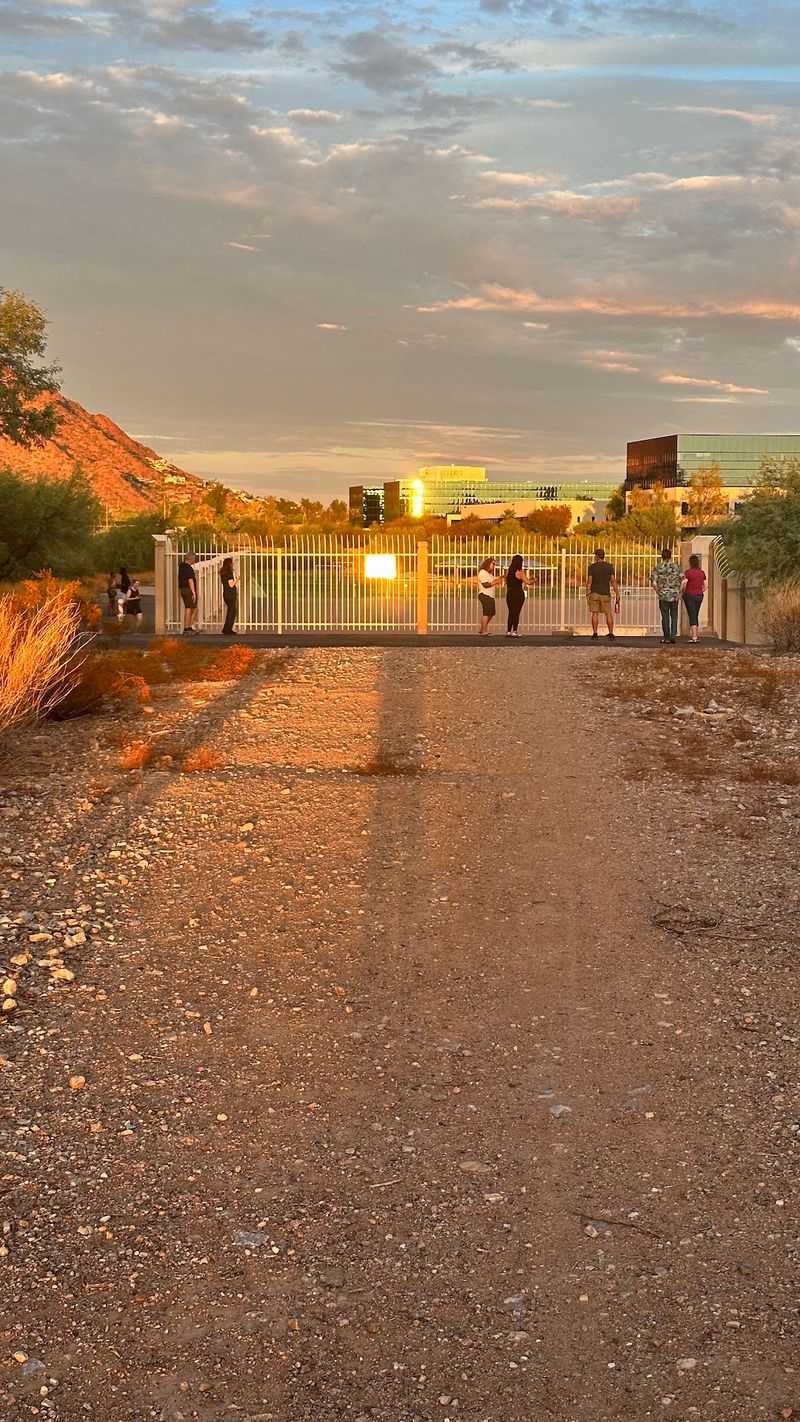
Timing turns a quiet walk into an unforgettable moment. On a good night, the bats begin filtering out roughly 20 to 30 minutes before sunset, then build toward a bigger surge right around and just after the sun disappears.
Several regulars mention two distinct flights, a warm-up group followed by the main event about ten minutes past sunset. When conditions cooperate, the departure keeps going strong for twenty minutes or longer, sending a steady dark ribbon into the sky.
One watcher recalled the exact magic of the moment the first bat appeared, followed within a minute by what felt like the whole colony pouring out at once. Another remembered a hawk swooping in to snatch a bat mid-air, a jolt of raw wildlife drama.
Listening matters as much as looking. The chittering rises when the bats are active and fades to near silence once everyone has cleared out for the evening.
No two nights unfold identically, which is part of the appeal. Weather, crowds, and season all nudge the show, keeping it unpredictable and worth returning for.
Why Autumn Evenings Are a Sweet Spot
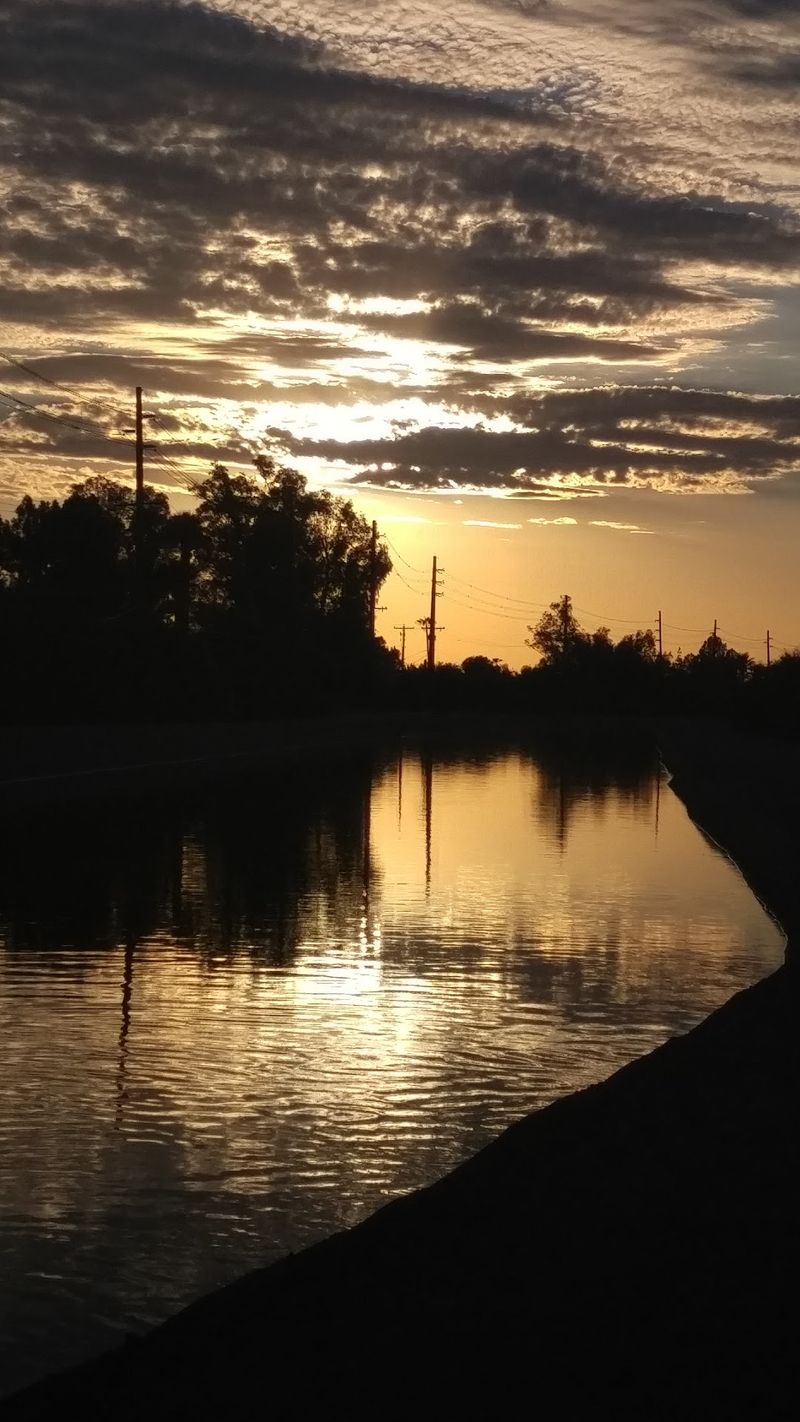
Summer may pack the tunnel with the highest bat numbers, but the heat can make the wait genuinely uncomfortable. Autumn flips that equation, trading brutal temperatures for pleasant evenings that make lingering by the canal a joy.
Experiences vary as the season shifts. Some visitors in mid-October reported only a scattering of bats, guessing many had already started their journey south for the winter.
Others caught roughly 75 bats streaming out over a ten-minute stretch and left perfectly happy with the show.
The takeaway is that early fall often hits a nice balance. The weather cooperates, the crowds thin a bit, and enough bats usually remain to make the trip worthwhile before the colony fully migrates.
One person specifically noted that late September into mid-October felt like an ideal window, with comfortable air and a solid emergence. Going too late risks a sparse night, so timing your visit toward the earlier part of autumn tends to pay off.
Cooler air also makes standing still and watching far more relaxing, which matters when the flight runs long.
Finding the Hidden Entrance
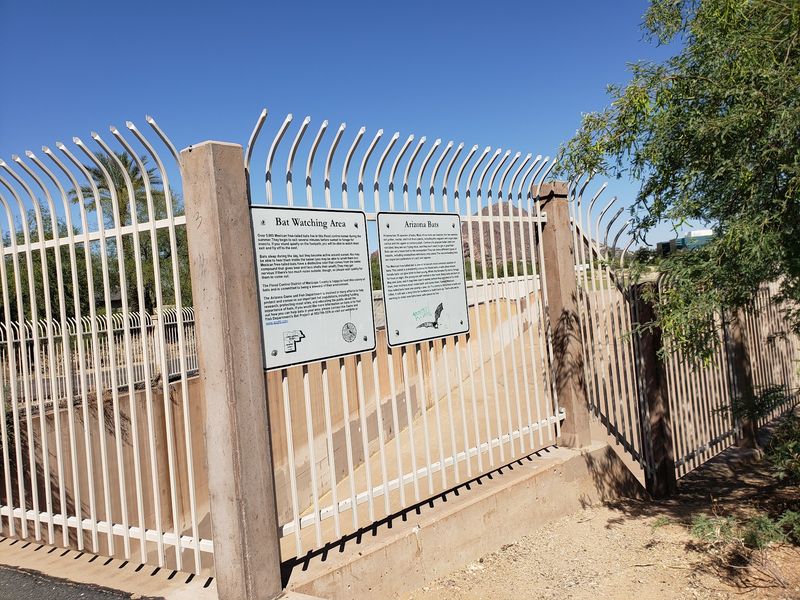
Getting here feels like a mini treasure hunt, and that is half the fun. The tunnel hides behind bushes along the Arizona Canal, invisible from a distance, so newcomers should trust the directions and keep walking until concrete appears.
From the 40th Street and Camelback area, the general route heads north along the canal, with the flood control tunnel sitting about half a mile in on the north side of the wash. Visitors describe passing a parking garage and commercial buildings, then following the canal path until the structure shows up on the right after a few minutes.
Staying on the north side of the canal is the tip repeated most often, since that keeps you on the correct approach. Pulling up the location on your phone and following it closely helps enormously on a first attempt.
One regular reassured solo visitors to simply keep going, promising the concrete markers will confirm you are in the right place. The short walk winds past a pleasant nature trail where people spot quail, ducks, and other critters, making the journey itself part of the outing rather than a chore.
Parking and Getting There
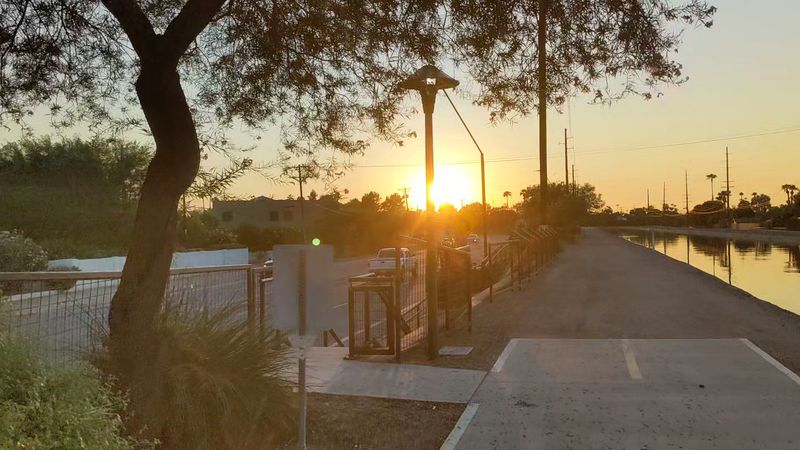
Honest heads-up before you go: there is no official lot dedicated to bat watchers, and figuring out parking takes a little strategy. Visitors mention several improvised options, each with its own catch.
Some park near restaurants along the canal, though those lots fill up fast and may not welcome non-customers. Others use a gas station around 40th Street and Camelback, parking at their own risk since it is not designated for the attraction.
Whichever spot you choose, expect a walk of roughly five to eight minutes along the canal to reach the tunnel. A few folks recommend arriving efficiently and not lingering in private lots to avoid any towing worries.
Because the emergence hinges on sunset, plan your arrival to land at the trailhead about 30 minutes before the sun goes down. That buffer gives you time to park, walk, and settle in without rushing.
Comfortable shoes make the gravel path easier, and a few regulars bring folding chairs to relax against the fence while they wait. A little planning here smooths out the whole evening.
A Free Adventure for Families and Friends
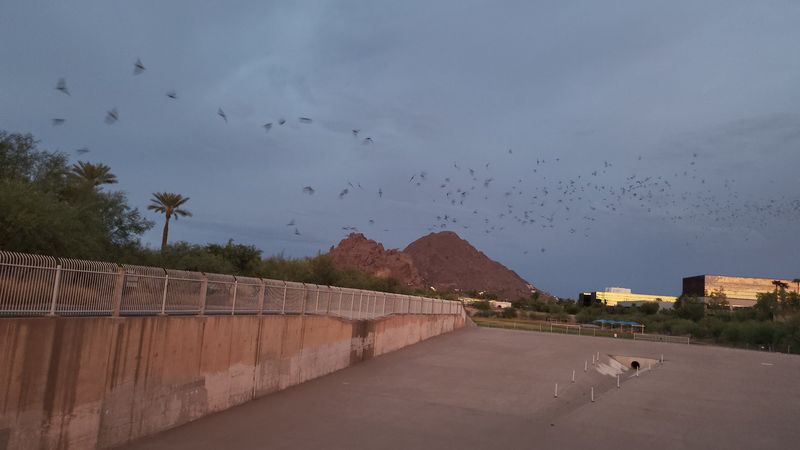
Rarely does a memorable outing cost absolutely nothing, but this one delivers exactly that. Watching the bats is completely free, which makes it a favorite for families hunting affordable fun and for anyone who loves a low-cost adventure.
Parents often bring young kids who light up at the sight of real bats swirling overhead, and out-of-town guests find it an easy, unusual thing to check off during a visit. One visitor treated it as a fun date night and could hardly believe such a spectacle existed in the middle of the city.
A gentle note from regulars: keeping quiet helps everyone. Some watchers felt that noise and commotion from large crowds occasionally spooked the bats into a smaller flight, so calmer evenings tend to reward everyone with a better show.
The open, come-as-you-are vibe means people gather on both sides of the fence, some standing, some seated in camp chairs, all sharing the same anticipation. Whether you come solo, with a partner, or with a whole group of curious kids, the tunnel offers a shared moment of wonder that sticks with you.
Tips for the Best Bat-Watching Night
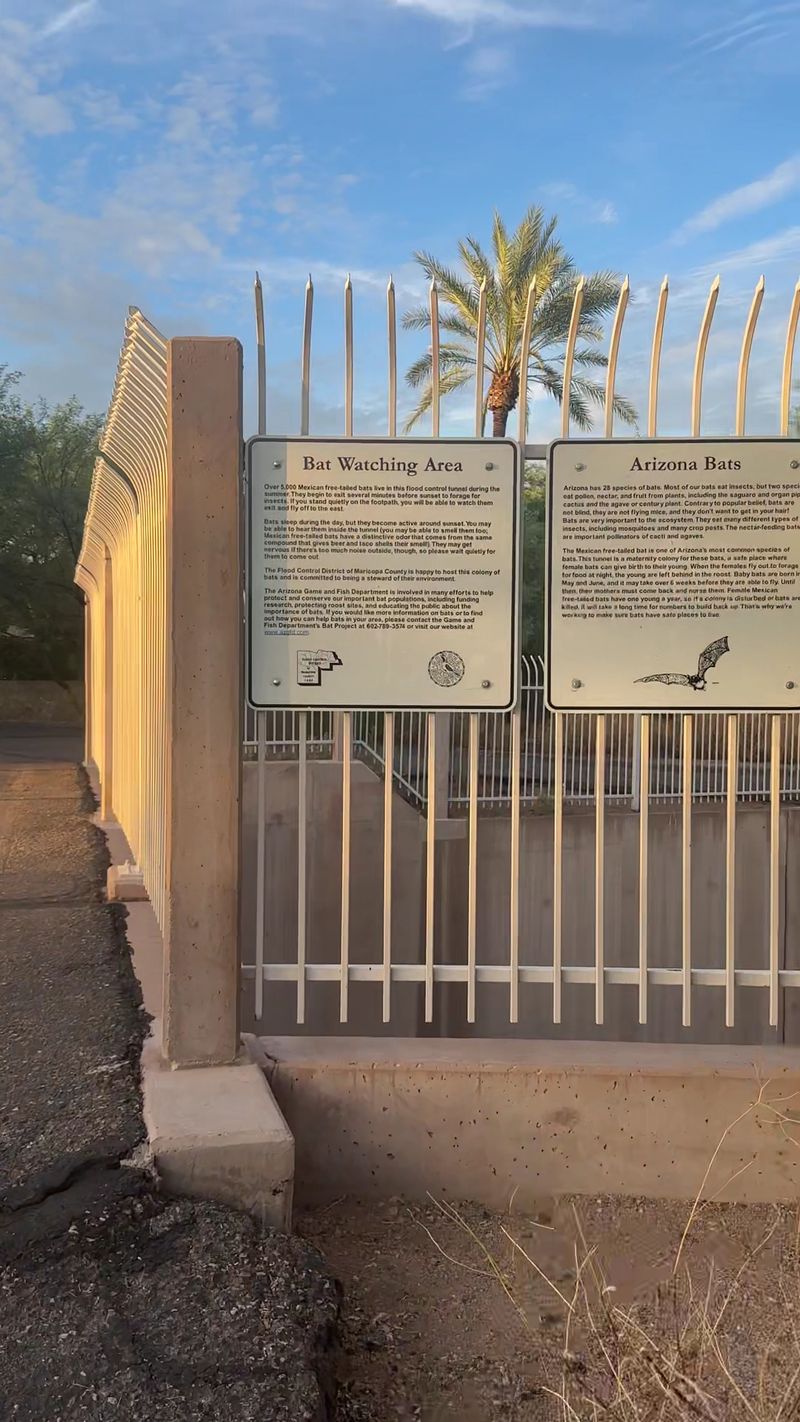
A few small choices can turn a hit-or-miss visit into a great one. First on the list from experienced watchers: bring a red LED flashlight.
Red light lets you see the bats without bothering them, keeping the experience comfortable for both you and the colony.
Arriving early is the golden rule. Getting to the fence about half an hour before sunset means you will not miss the warm-up flight, and it gives you time to pick a good viewing angle.
Tuning your ears helps too. Listen for the chittering that signals the bats are stirring, then watch closely, since the tiny fliers move fast and are easy to confuse with birds at first glance.
Respect goes a long way here. These are protected animals raising young, so keeping a calm distance and a low voice protects the roost and improves the show for everyone.
One thoughtful visitor even wished the city would add picnic tables and benches, a reminder that for now you should bring your own chair if you want to sit comfortably through the whole event.
Is the Trip Worth It?
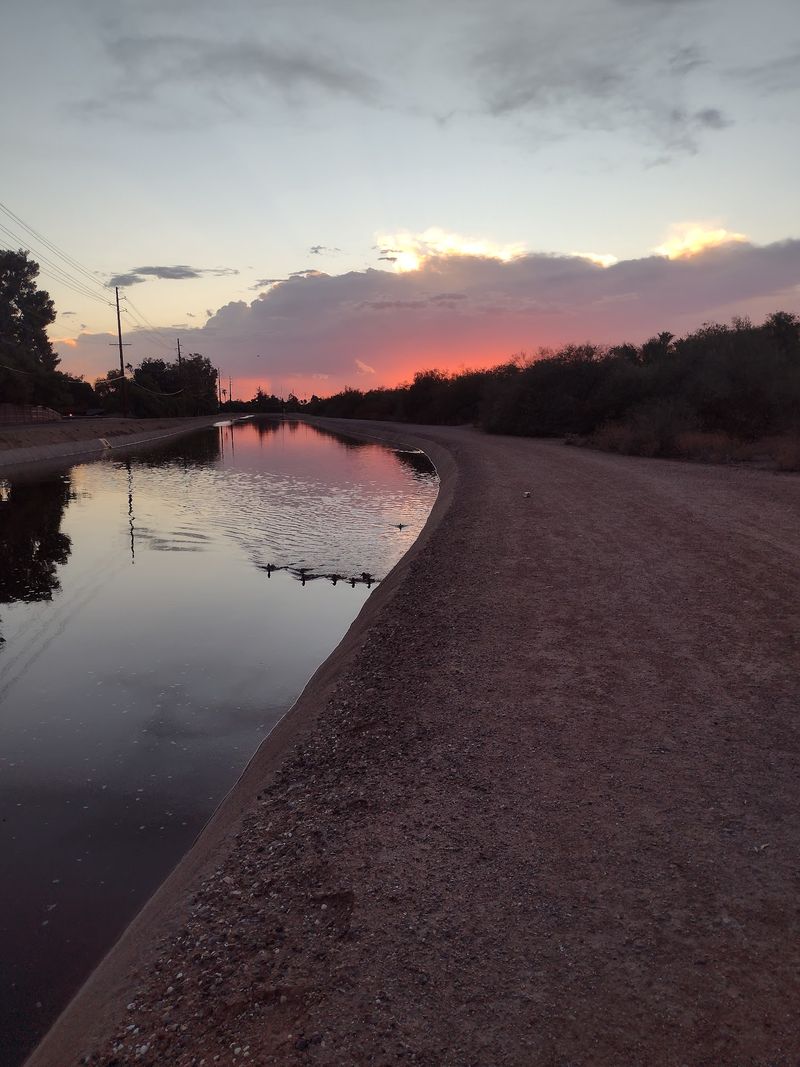
Setting expectations honestly makes all the difference. Videos online show explosive clouds of thousands of bats, and while that big spectacle does happen, some nights deliver only a modest trickle depending on season, weather, and crowd noise.
People who arrived expecting a guaranteed swarm sometimes left underwhelmed, especially late in the fall when many bats have already headed south. Yet plenty of others, even on quieter nights, still called it worth the walk and the wait.
The magic here comes from the whole package, not just numbers. You get a peaceful canal stroll, a treasure-hunt approach, a golden sunset, and the thrill of genuine wildlife thriving inside a giant city.
Open around the clock and completely free, it asks very little of you beyond a bit of timing and patience. Aim for a warm evening in early autumn, show up before sunset, stay quiet, and let the night unfold.
For curious locals and day-trippers who treasure hidden, low-cost finds, this humble tunnel earns its reputation. Go once with an open mind, and there is a good chance you will want to return.