
This Massive Georgia Lake Covers A Town Most People Have Never Heard Of
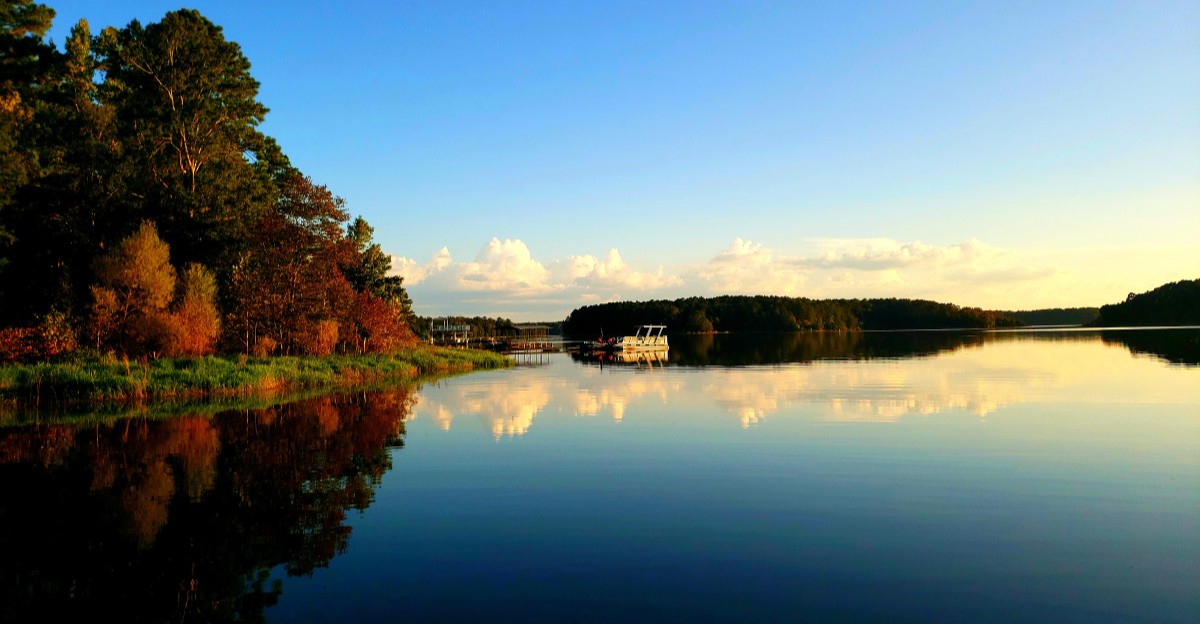
Imagine looking across a huge Georgia lake and finding out there used to be an actual town down there.
Not a legend. Not some spooky campfire story.
A real place with streets, homes, businesses, and people going about their lives long before the water took over.
That’s the part that makes this place so hard to shake.
Most days, all you see is open water and a perfectly normal lake scene. But when conditions are right and the water level drops, pieces of the old town can start showing themselves again, like history just decided to pop back up and say, “Hey, remember me?”
So what exactly is hiding under all that water?
Let’s just say Georgia has a lake with a backstory way stranger than its peaceful surface suggests.
The Secret City Sleeping Underwater
Real-life places hiding entire cities beneath their surface sound like something straight out of a blockbuster film. Yet Clarks Hill Lake does exactly that, no special effects required.
Beneath those calm, glittering waters rests Petersburg, a town that once pulsed with energy and ambition.
Founded in 1786, Petersburg grew quickly into Georgia’s third-largest city. Positioned at the forks of the Broad and Savannah Rivers, it became a powerhouse trading hub.
Tobacco flowed through its markets, and by 1800, roughly 750 people called it home.
As the tobacco industry slowed through the 1820s, residents gradually packed up and left. Petersburg became a quiet ghost of its former self long before the water ever arrived.
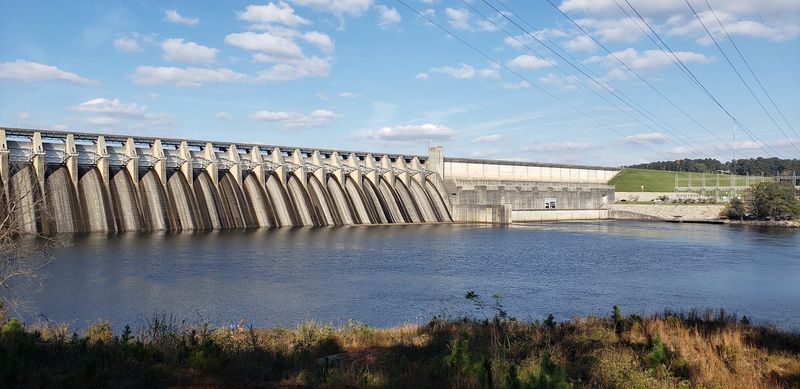
Then the Army Corps of Engineers sealed its fate in the early 1950s, flooding the area to form the reservoir we know today.
Standing at the lake’s edge, it is almost impossible to picture a bustling marketplace sitting just below your feet. The water keeps its secrets well.
Petersburg now rests in permanent silence, a reminder that history does not always end with a monument, sometimes it ends with a ripple.
How A Giant Lake Was Born
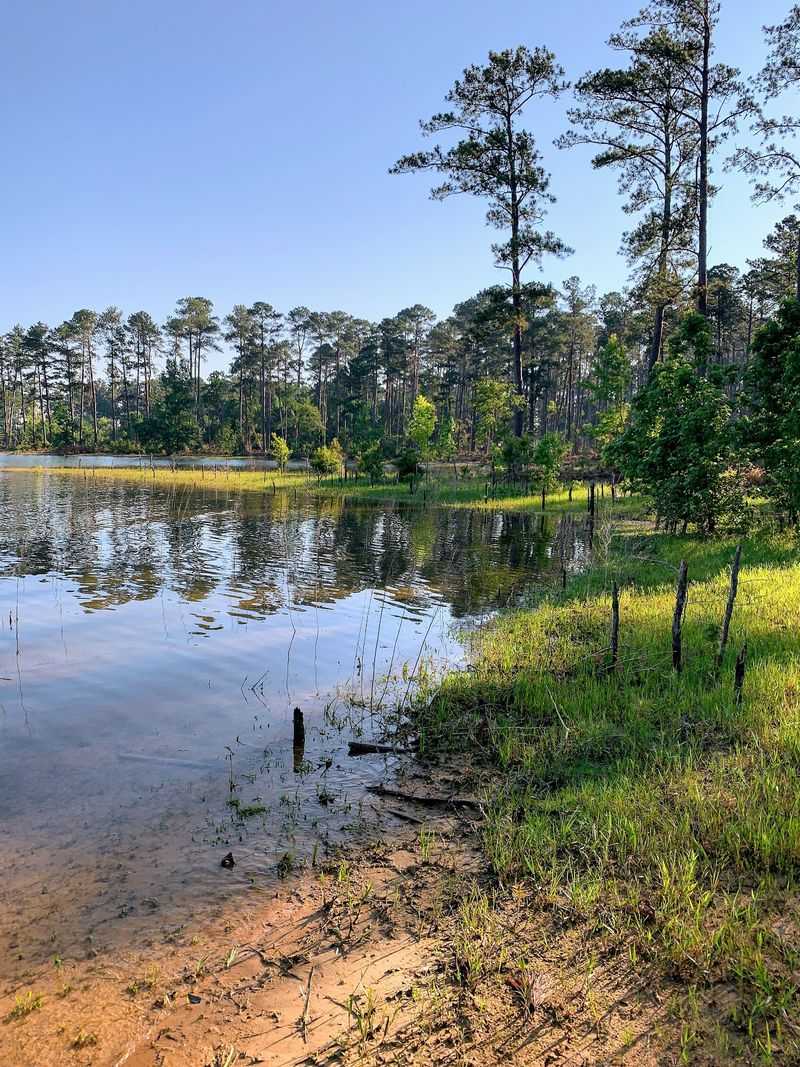
Building something so massive that it reshapes an entire region takes serious vision. Clarks Hill Lake, located near 2509 Bobby Brown State Park Road, Elberton, GA 30635, came to life through exactly that kind of bold, large-scale thinking.
Congress authorized the project in 1944, setting the stage for one of Georgia’s most transformative engineering feats.
Construction began in 1946 and wrapped up by 1954. The U.S.
Army Corps of Engineers led the charge, with flood control and hydropower generation as the primary goals. Taming the unpredictable Savannah River was no small task, but the result was nothing short of spectacular.
Over time, the lake’s purpose expanded far beyond its original mission. Recreation, water quality management, fish and wildlife conservation, and water supply all became part of its official role.
What started as an infrastructure project transformed into a multi-purpose regional treasure.
Today, Clarks Hill Lake ranks among the top ten most visited Corps of Engineers lakes in the entire country. Millions of visitors arrive every year, drawn by the water, the wildlife, and the sheer scale of it all.
Few engineering projects have ever turned out quite this beautifully.
One Lake, Two Very Different Names
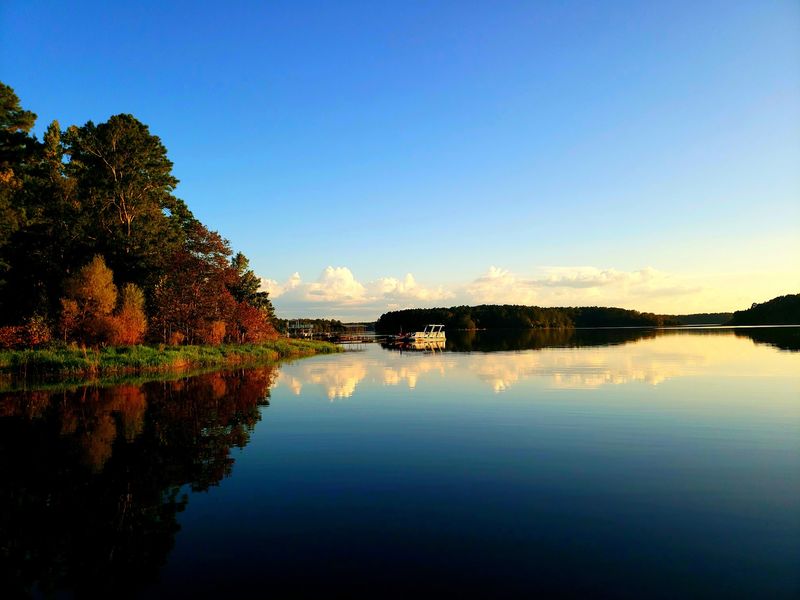
Imagine having two completely different names depending on who you ask. That is the quirky reality of Clarks Hill Lake, and honestly, it makes the place even more interesting.
The name debate has genuine historical and political roots that go back decades.
The original name, Clarks Hill, comes from a nearby South Carolina community and honors a hero of the Revolutionary War era. For years, that was simply what everyone called it.
Then in 1988, Congress officially renamed the lake J. Strom Thurmond Lake, after the long-serving South Carolina senator.
Georgia, however, was not entirely on board. The Georgia state legislature passed a resolution keeping “Clarks Hill” as its official name within state borders.
So depending on which side of the state line you are standing on, you might hear a completely different name for the exact same water.
This friendly naming rivalry has become part of the lake’s charm. Visitors from both states often debate it with good humor.
Whether you call it Clarks Hill or Thurmond, the fishing is equally great, the sunsets are equally gorgeous, and the ghost town underneath stays equally mysterious. A lake with two names has twice the personality.
The Mind-Blowing Scale Of This Water
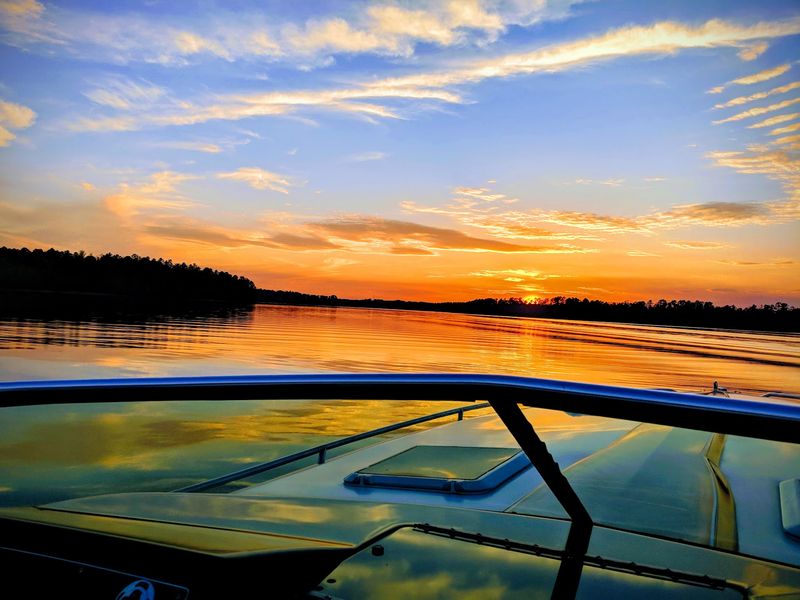
Trying to wrap your head around 71,000 acres of water is genuinely difficult. For reference, that is larger than many small countries.
Clarks Hill Lake earns its reputation as one of the Southeast’s largest reservoirs without breaking a sweat.
The shoreline stretches an incredible 1,200 miles. That figure alone is staggering, surpassing the entire coastline of some U.S. states.
Every one of those miles offers something different, from quiet wooded coves perfect for kayaking to wide-open basins built for fast boats and fishing tournaments.
The lake forms part of a 120-mile chain of reservoirs alongside Hartwell Lake and Richard B. Russell Lake.
Together, these three lakes create a connected water system that serves millions of people across Georgia and South Carolina. It is infrastructure and natural beauty rolled into one extraordinary package.
Exploring every corner of Clarks Hill Lake would take years, not days. New coves keep appearing around every bend, and the landscape shifts constantly between open water and sheltered inlets.
The sheer variety of environments packed into one lake is what keeps visitors returning season after season, always finding something they somehow missed before.
Fishing Here Is Practically Legendary
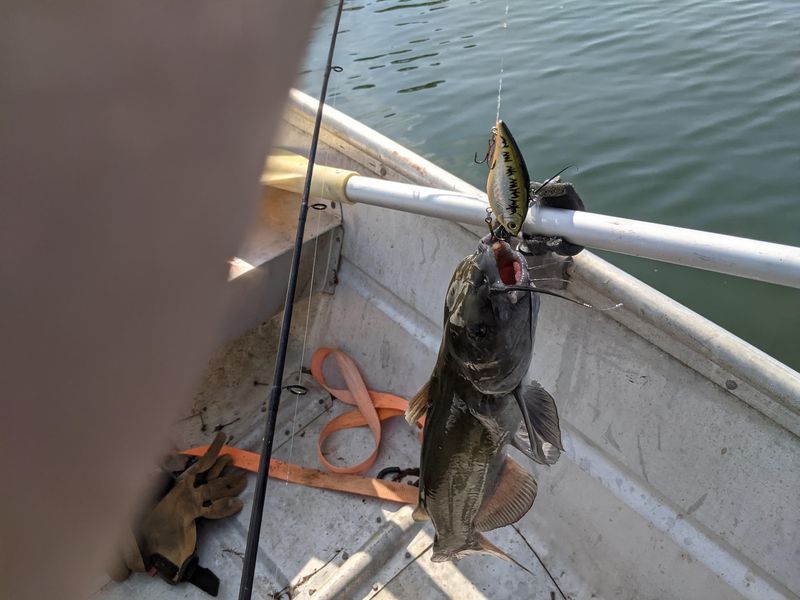
Anglers talk about Clarks Hill Lake the way food lovers talk about their favorite hidden restaurant. Word gets around, and once you experience it, you completely understand the hype.
The fishing scene here is genuinely world-class.
Largemouth bass draw serious competitors from across the Southeast. Hybrid striped bass and striped bass add variety and a serious fight for those who enjoy a challenge on the line.
Crappie, bream, and catfish round out a species list that keeps both casual fishers and tournament regulars very happy.
The lake’s diverse underwater landscape plays a huge role in its fishing success. Submerged structures, including the remnants of old Petersburg, create ideal habitat for fish to gather and thrive.
Those old foundations and road outlines below the surface are not just historical curiosities, they are fish magnets.
Fishing tournaments take place here throughout the year, drawing competitors who travel specifically for the quality of the catch. Whether you prefer early morning casts in a quiet cove or open-water trolling under the midday sun, this lake rewards patience and skill in equal measure.
Bring your best gear, because the fish here are not pushovers.
Bobby Brown State Park Is Your Perfect Base Camp
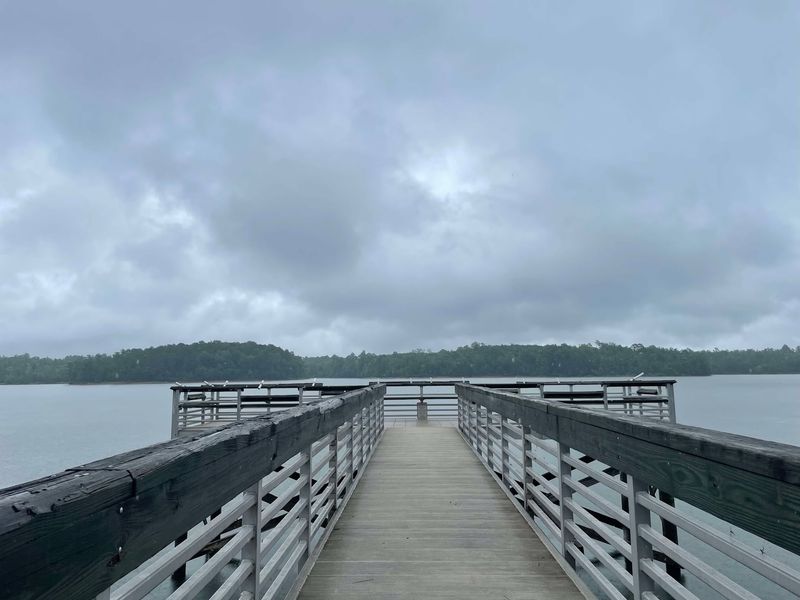
Every great adventure needs a great starting point. Bobby Brown State Park fits that role perfectly for anyone exploring Clarks Hill Lake.
Sitting on 665 acres along the lake’s shores, this park offers a comfortable, well-equipped home base for everything the lake has to offer.
Camping options range from tent sites to RV hookups, making it accessible for all kinds of outdoor enthusiasts. A boat ramp provides easy lake access, and picnic areas scattered throughout the park make it easy to spend an entire day without rushing anywhere.
The park’s wooded trails wind toward the shoreline in ways that feel genuinely peaceful.
What makes Bobby Brown State Park extra special is its direct connection to Petersburg. The old town site sits within the park’s boundaries, giving history lovers a tangible link to the submerged community below.
Interpretive information around the park helps visitors understand what once stood in these now-forested areas.
The combination of outdoor recreation and historical depth makes this park unlike most others in Georgia. You can kayak in the morning, explore old town remnants in the afternoon, and watch a stunning lakeside sunset before dinner.
Few parks pack this much variety into a single visit, and that is a fact worth celebrating loudly.
Wildlife That Will Genuinely Surprise You
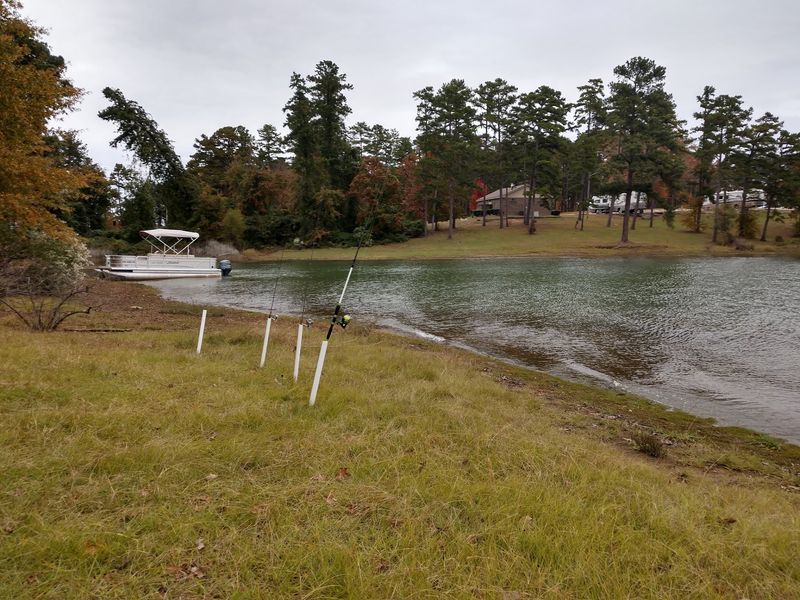
Most people arrive at Clarks Hill Lake for the water activities and leave unexpectedly enchanted by the wildlife. This lake supports a remarkably rich ecosystem that extends well beyond the fish swimming below the surface.
The variety of creatures thriving here is genuinely impressive.
Bald eagles have been spotted soaring above the lake, particularly during cooler months when they follow fish populations. Great blue herons stand motionless along the shoreline, patient and elegant in equal measure.
White-tailed deer frequently appear near the water’s edge in the early morning hours, especially in quieter sections of the park.
The lake’s diverse habitat, blending open water, wooded coves, wetland edges, and river channels, creates ideal conditions for an enormous range of bird species. Birdwatchers consider this area a genuine hotspot, particularly during seasonal migrations when species variety peaks dramatically.
Bring binoculars and prepare to be pleasantly surprised.
Turtles bask on logs near the shoreline, osprey dive with precision over open water, and wild turkey are occasionally spotted in the surrounding forest. The lake’s ecosystem feels alive in every direction.
Clarks Hill Lake reminds visitors that Georgia’s natural world is extraordinarily rich, and sometimes the best show is not on the water but right above it.
When The Lake Reveals Its Ghost Town
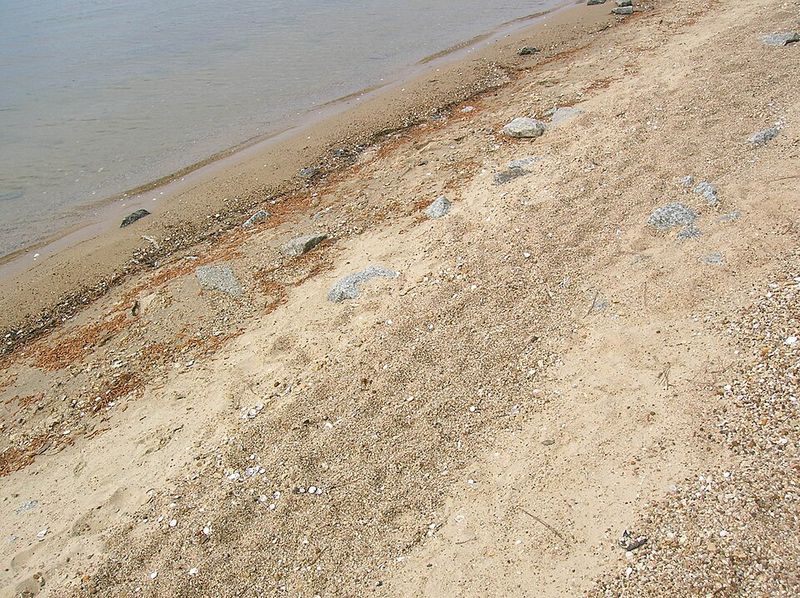
Occasionally, nature pulls back the curtain on Clarks Hill Lake’s most extraordinary secret. During periods of significant drought or planned water level reductions, the lake recedes enough to expose fragments of old Petersburg.
These moments feel like stumbling onto an archaeological dig that nobody scheduled.
Stone foundations emerge from the mud, hinting at the walls of buildings that once housed merchants and families. Old road outlines become faintly visible, tracing paths that wagons once traveled toward the river.
Scattered artifacts, including pottery shards and old metal hardware, surface along the exposed shoreline during these rare events.
Visitors who witness this phenomenon describe it as genuinely surreal. Walking along ground that is normally submerged under many feet of water creates a powerful sense of connection to a past that most people have completely forgotten.
Petersburg becomes real again, if only briefly.
These glimpses do not last long. As rainfall returns and water levels rise, the town slips quietly back beneath the surface.
The experience leaves a lasting impression on everyone who sees it. Clarks Hill Lake is beautiful on any ordinary day, but on the rare occasions when Petersburg resurfaces, it becomes something far more profound.
Have you ever stood above a ghost town and felt history breathing back to life?