
This Old-School Chicago Tavern Pizzeria Still Cuts Its Cracker-Thin Pies Into Squares The Neighborhood Way
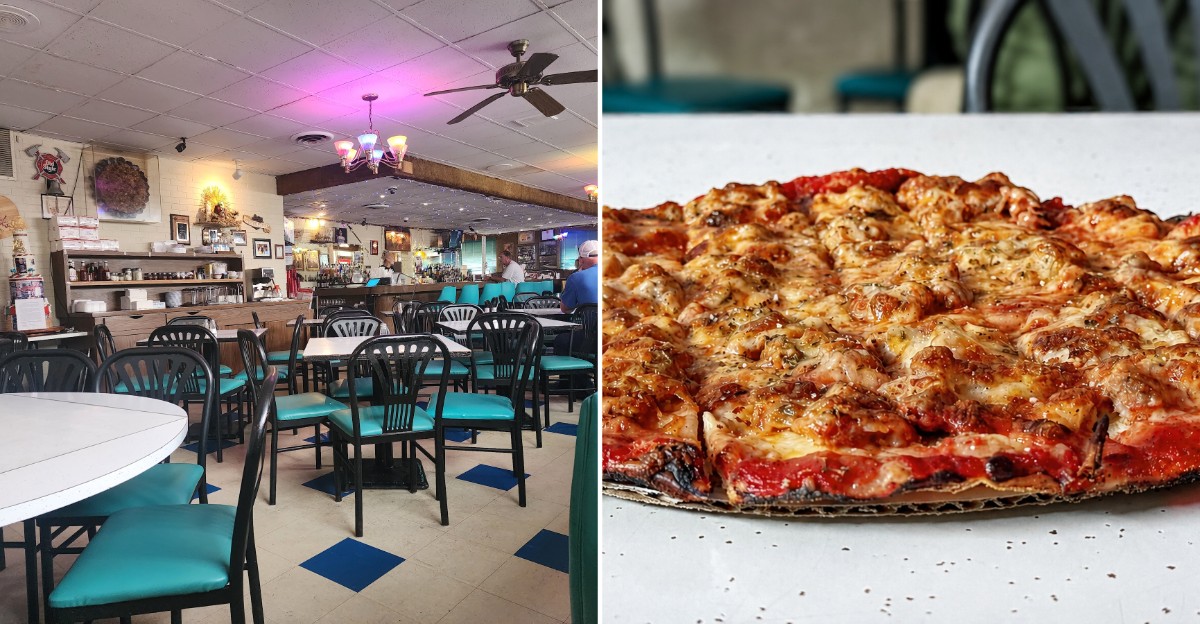
Squares barely bigger than a postage stamp are the first clue that this family pizza spot in Illinois does things the old way. The crust snaps like a cracker, the walls are covered in history, and the recipe has been feeding neighbors for more than ninety years.
It is the kind of humble, cash-only place that grandparents remember fondly and kids end up bragging about to their friends. Grab some cash and a big appetite, because this one is worth the drive.
A Southwest Side Corner Where Thin Crust Rules
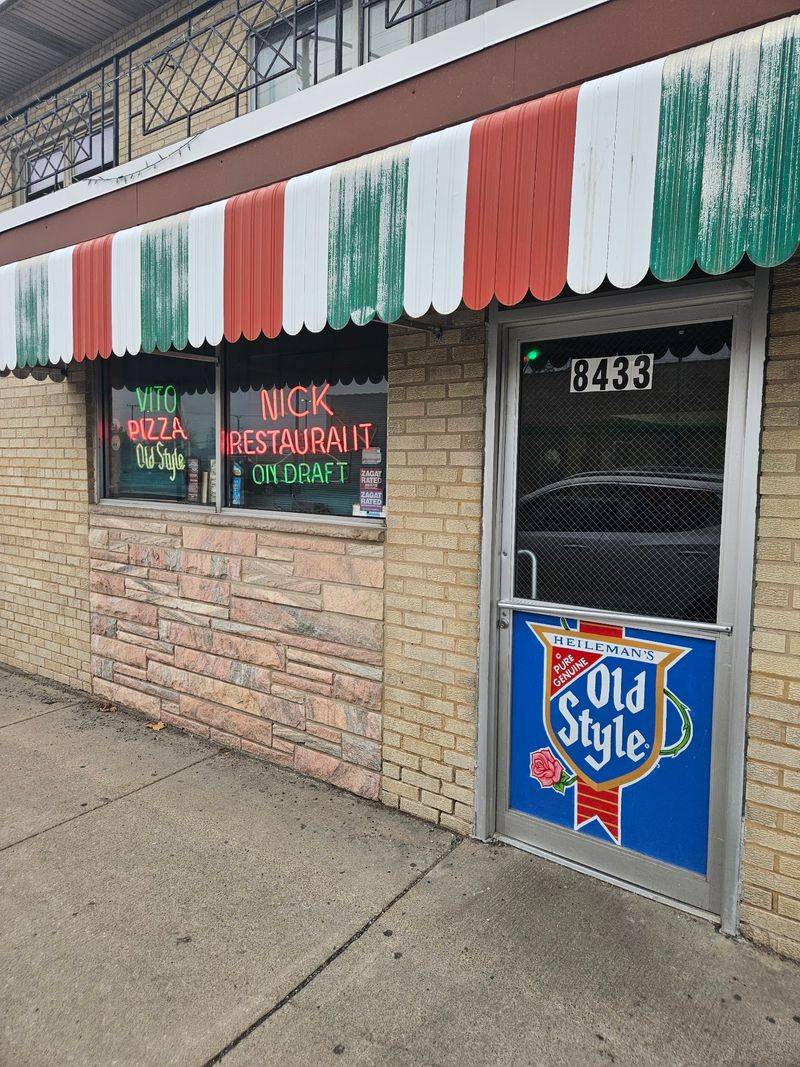
Pulaski Road on the far Southwest Side of Chicago is not where most out-of-towners go hunting for pizza, and that is part of the charm. At 8433 S Pulaski Rd sits a family-owned pizza restaurant that locals have treated as a neighborhood anchor for generations.
The storefront is modest, the parking is right outside, and the smell of baking crust drifts out the door.
Inside, you will find a classic Chicago thin-crust pizza house, the kind known around town as tavern style. Forget the thick, knife-and-fork deep dish that shows up on postcards.
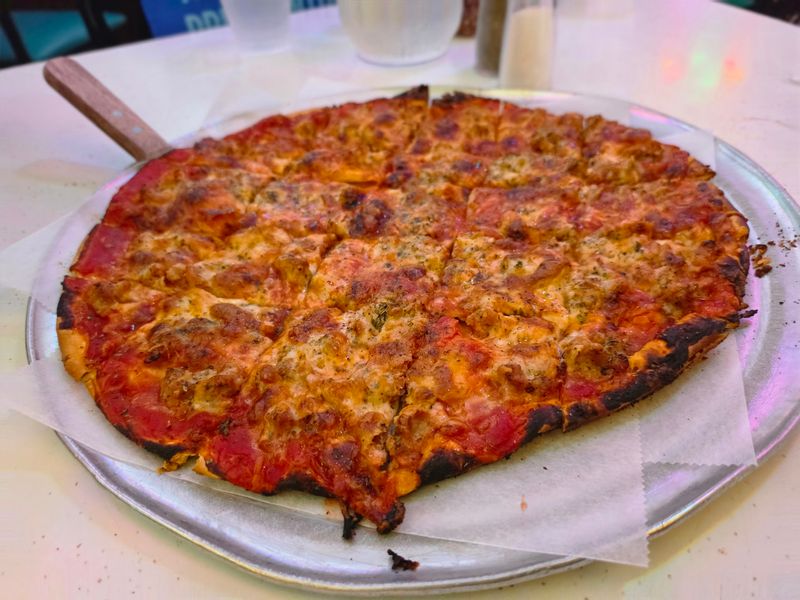
Here the star is a pie rolled so thin it crackles, topped nearly edge to edge, and sliced into small squares for sharing.
Plenty of Illinois families already know the name without ever visiting, thanks to a frozen version sold in stores. Seeing the original in person feels a bit like meeting a celebrity in their hometown kitchen.
The menu also covers Italian favorites, so nobody at the table gets left out.
For anyone in Chicagoland craving an easy, affordable outing with real local roots, this stretch of the South Side is a smart place to start.
Nine Decades Of Family Recipes On Pulaski Road
Back in 1932, when the country was deep in the Great Depression, a family started serving thin-crust pies on Chicago’s South Side, and the doors have stayed open ever since. That kind of staying power is rare for any business, let alone a small neighborhood restaurant.
Today it is still family-owned, which helps explain why so much about it feels unchanged.
Chicago’s tavern-style pizza grew up in exactly these kinds of neighborhood spots between the 1930s and 1950s. Owners wanted something cheap, filling, and easy to pass around the room, so they rolled dough thin, baked it crisp, and cut it into squares.
Food historians often point to this Pulaski Road kitchen as one of the likely originators of the style.
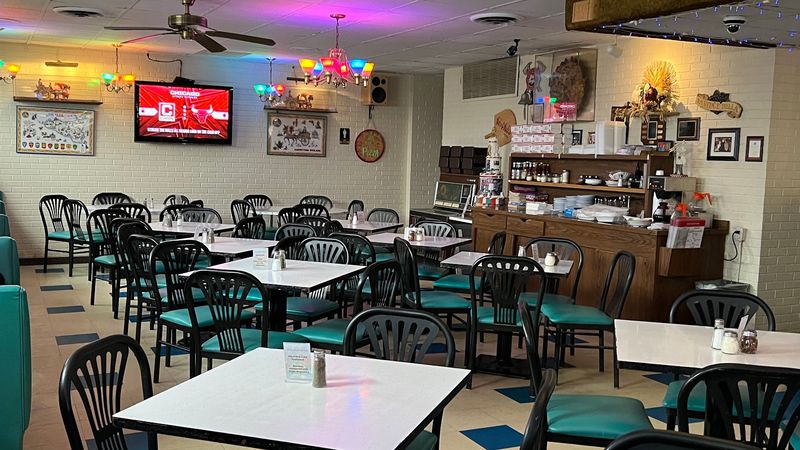
A stroll past the walls tells part of the story. Framed photos, clippings, and bits of city history line the room, turning pizza night into a mini museum visit.
National TV came calling too, with an appearance on Diners, Drive-Ins and Dives, though longtime regulars are quick to point out the crowds showed up long before the cameras did.
For kids, it is a fun lesson that some of the best things in Illinois have been quietly doing their job for over ninety years.
The Cracker Crust And Its Smoky Underside
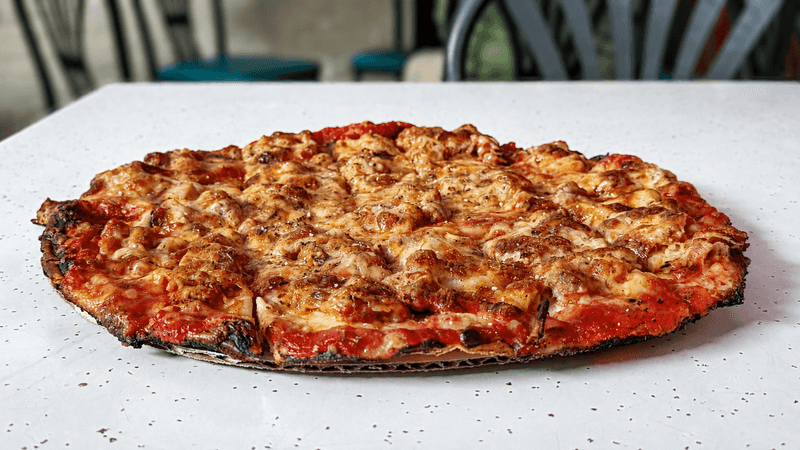
Snap. That is the sound a proper square should make, and the crust here delivers it.
The dough is rolled out very thin instead of stretched, then baked in hot ovens until the bottom turns crisp and slightly blistered.
What sets this pie apart from other Chicago thin crusts is the char on the underside. Regulars describe a smoky, toasty flavor on the bottom that is hard to find anywhere else in the city.
The crust stays crunchy right down to the final piece, even after the pizza has been sitting on the table for a while, which matters when a family is taking its time.
Some diners find the edges a touch too dark for their taste, and a burnt bake comes up now and then in conversations about the place. Others would say that char is the entire point.
If you prefer a lighter bake, it never hurts to mention it when ordering.
Above the crust sits a well-seasoned sauce, rich but not heavy, plus a cheese blend that covers nearly every inch. That cheese has the savory richness people crave without turning greasy.
Together, the layers make each small bite taste bold, which is impressive for something so thin.
Tiny Squares And The Party Cut Tradition
Pizza wedges belong to other cities. On Chicago’s South Side, the tradition is the party cut, a grid of small squares that turns one pie into a shareable snack for the whole table.
The squares at this pizzeria are famously tiny. Some first-timers say the pieces land somewhere between a quarter and a pizza roll in size, and not everyone loves it.
Regulars, on the other hand, see the small cut as part of the experience, since it lets everyone grab a few bites without committing to one big slice.
The habit dates back to the neighborhood gathering spots of the 1930s and 1940s. Owners wanted food people could eat casually, sometimes without plates, while chatting with friends.
Squares made that easy, and they also created the friendly tug-of-war over the corner pieces, those extra-crunchy triangles that kids and grown-ups race to claim.
For families, the cut is surprisingly practical. Little hands can manage a small square without toppings sliding off, picky eaters can sample without wasting a whole slice, and grandparents can nibble at their own pace.
Dinner turns into something closer to a picnic spread, where everyone reaches into the middle and the pie vanishes faster than anyone expects.
House Sausage, Italian Beef And A Cracked Egg
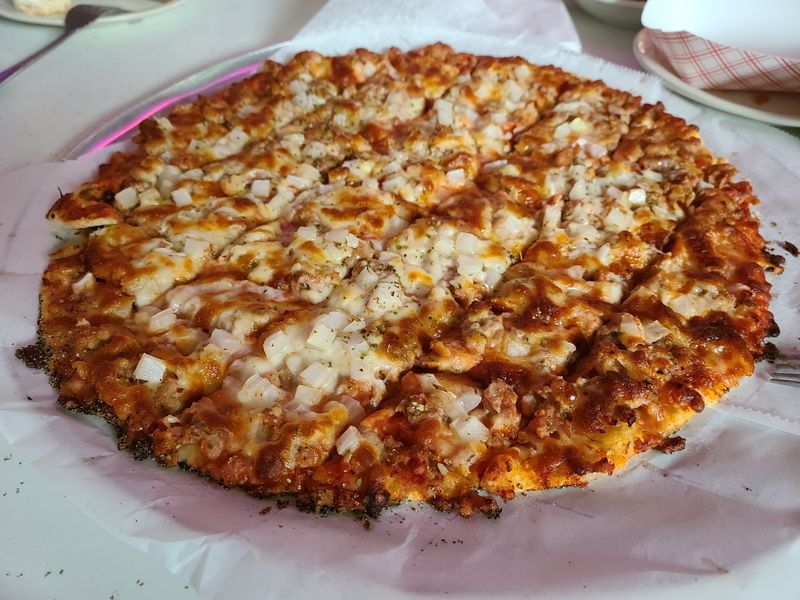
Sausage is the headliner, and it is made in house. Diners often call it perfectly seasoned, with a flavor that pairs nicely with the house cheese blend.
A classic sausage pie is the easy first order for newcomers.
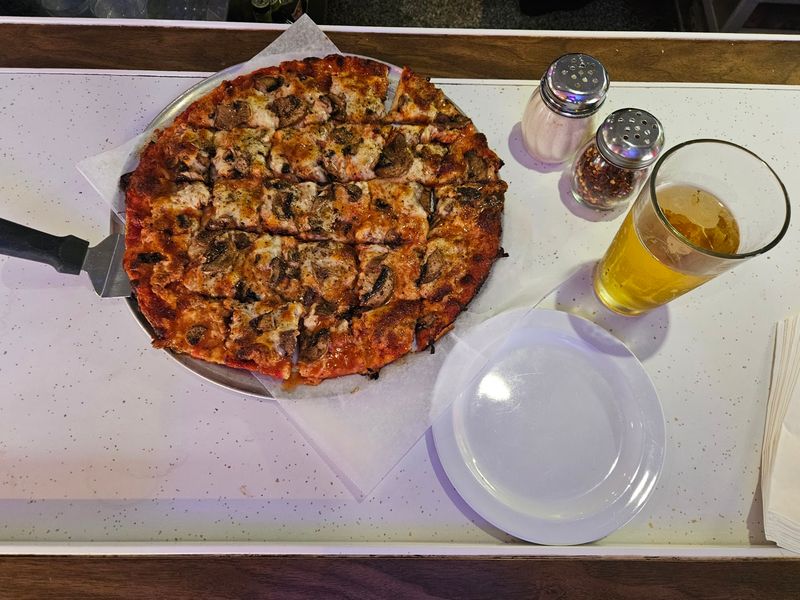
The Italian beef pizza is another local favorite, bringing a famous Chicago sandwich flavor onto a cracker crust. Mushrooms earn loyal fans too, and some regulars swear they are close to addicting.
Then comes the wild card: a pizza topped with a fresh cracked egg. It sounds odd, yet longtime visitors order it again and again.
Splitting a pie into sections is a smart move for groups. One table might go half cheese, one quarter Italian beef, and one quarter sausage, letting everyone taste a bit of everything.
A side of spicy giardiniera adds a kick for anyone who likes heat.
Beyond pizza, the Italian menu offers plenty for the whole crew. Sausage ravioli makes a hearty starter, and the battered mushrooms get lots of praise.
There are also calamari, zing wings, fries, spaghetti with garlic bread, and a combo platter loaded with zucchini sticks, breaded mushrooms, onion rings, and poppers. Kids unsure about toppings will usually find something they like.
Old-School Walls, Neighborhood Crowds
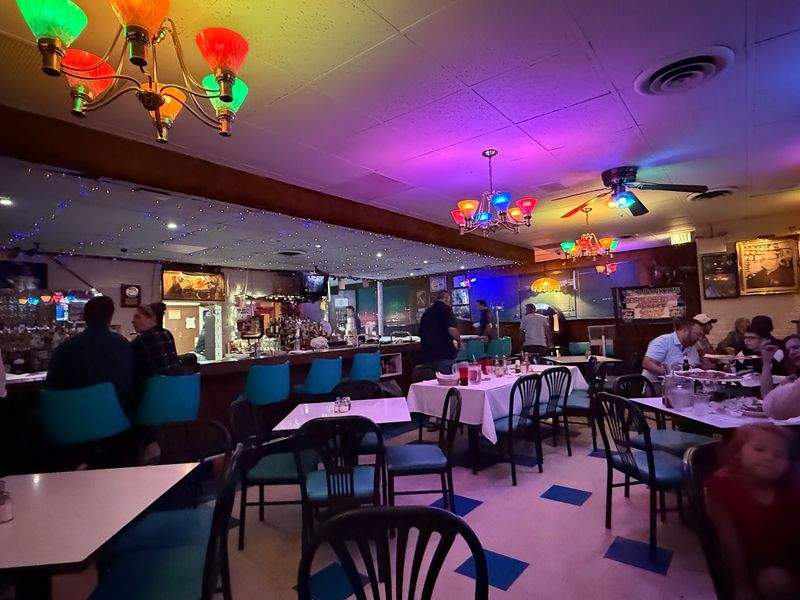
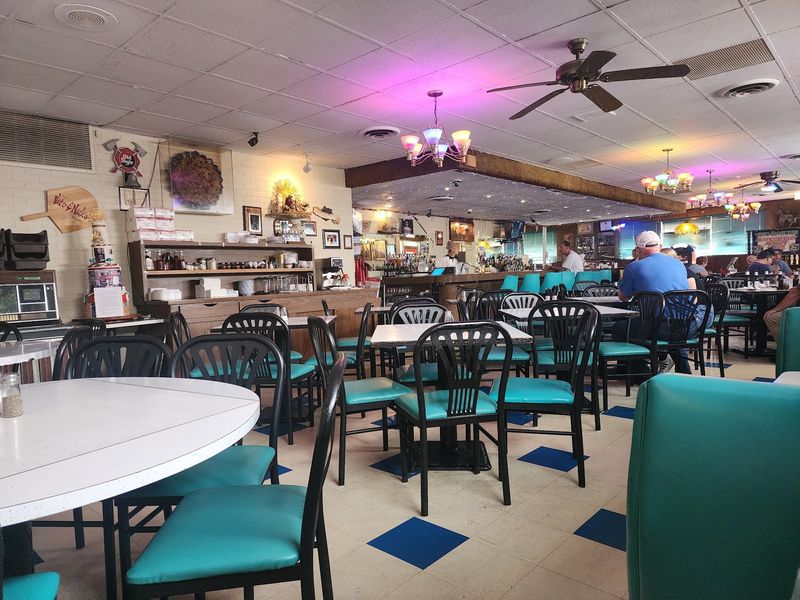
Walking in feels a little like stepping into a family photo album from decades ago. The room carries a 1950s neighborhood hangout feel, and some visitors compare it to a set from a 1990s sitcom.
Nothing here is trendy. The dining room is plain, a little dark, and the seats are not built for lounging.
That honesty is exactly what longtime fans love. Locals crowd in, games play on the screens, and the whole place hums with relaxed, no-stress conversation.
Servers tend to be friendly and chatty, happy to talk about the city’s teams or keep you posted on how your pie is coming along. On packed nights, service can feel stretched, so a little patience goes a long way.
So who will enjoy it most? Nostalgia lovers, first and foremost.
Grandparents who grew up with places like this will feel right at home, and kids get to see what an old Chicago pizza night looked like before chain restaurants took over. Out-of-state guests often say it feels like coming home.
Anyone hoping for fancy decor or cushioned booths may want to adjust expectations. For everyone else, the genuine, no-fuss vibe is half the fun and the reason people keep returning.
Cash, Hours And Parking Before You Go
Cash is king here, and that is not a figure of speech. The pizzeria does not take credit cards and has no ATM inside, so stop at a bank before you arrive.
Signs at the entrance remind guests, but it is easy to forget, and the nearest ATM is roughly a six-minute walk north.
Hours run 11 AM to 8:30 PM Monday through Thursday, and 11 AM to 9:30 PM on Friday and Saturday. Sunday opens later, from noon to 8 PM.
Weekend evenings fill up fast, and a Saturday dinner around 5:30 can mean a wait of about 15 minutes, while a weekday lunch or early dinner is usually calmer.
Budget-wise, plan on roughly $38 for a 14-inch pizza with an order of fries, based on recent visits. A large pie comfortably feeds two adults, so families can split a couple of pizzas and a starter without straining the wallet.
Getting there is simple by car. The restaurant sits right on S Pulaski Rd on Chicago’s Southwest Side, with convenient parking just outside.
The space appears wheelchair accessible, with comfortable table heights and a roomy restroom, making it an easier trip for grandparents or anyone with mobility needs.
A Humble Pizza Legend Worth The Trip
Honesty first: no pizza wins over every single person, and this one has its critics. A few guests find the sauce mild, the squares too small, or the bake too dark.
Those opinions are fair, and it helps to go in knowing this is a humble neighborhood spot, not a polished dining room.
Still, the reasons to go are hard to argue with. A family kitchen has been turning out cracker-thin pies on the same stretch of the South Side since 1932, and it helped shape a style that many Chicagoans eat far more often than deep dish.
The crunch, the smoky underside, the house sausage, and those tiny squares all add up to something that feels truly local.
For Illinois families hunting for an affordable outing with a side of history, it checks a lot of boxes. Bring cash, show up early on weekends, and order a half-and-half pie so everyone gets a say.
Let the kids compete for the corner pieces.
Years from now, they might not remember the exact toppings. What will stick is the crackle of the crust, the old photos on the walls, and the day the whole family drove to a real Chicago pizza legend.