
This Easy Maine Boardwalk Crosses One Of The Rarest Wetlands In The State
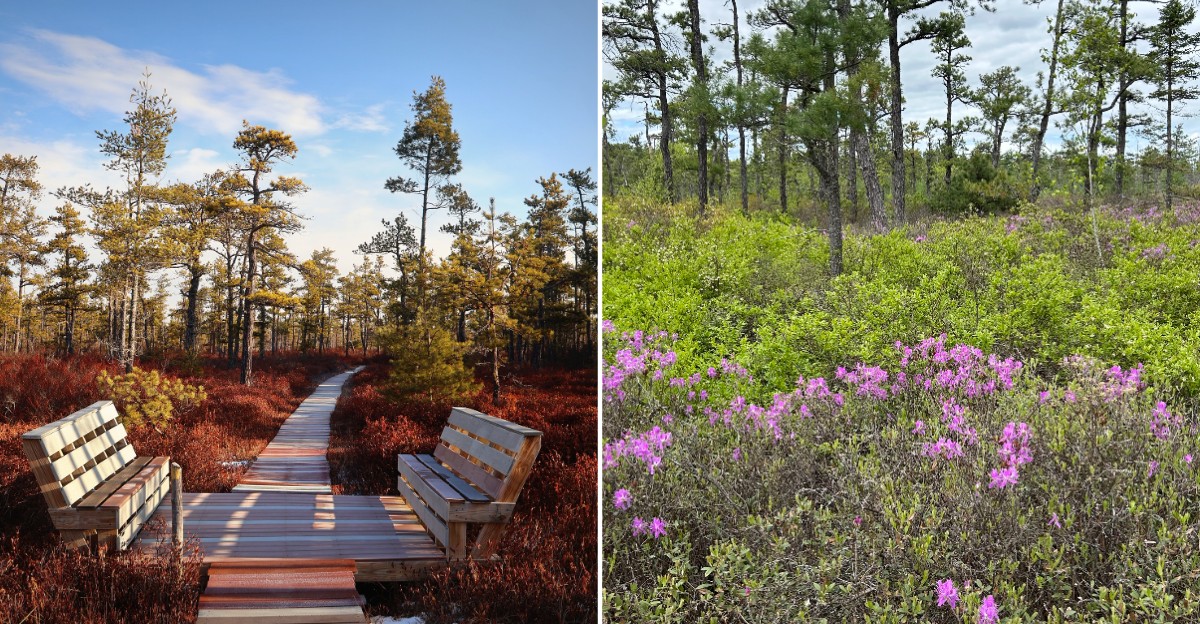
The first thing that stands out here is how strange the ground looks. A narrow boardwalk stretches over soft moss, pink blooms appear in late spring, and tiny carnivorous plants wait quietly for their next unlucky bug.
That last part alone is enough to make anyone watch where they step. Maine has plenty of unusual landscapes, but this one feels especially different.
The wetland formed over thousands of years after the Ice Age, creating a rare raised bog that seems almost suspended above the surrounding land. The walk stays mostly level, so stopping every few feet for another look may be the hardest part.
I know I’d have trouble resisting. A rare butterfly also depends on this habitat, giving visitors another reason to slow down.
A Bog That Grew Into a Dome
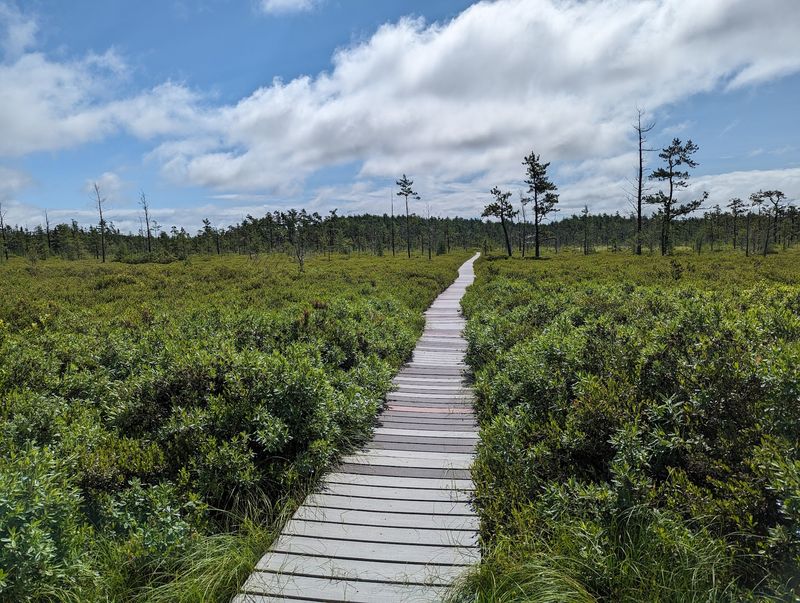
Hear the word bog, and you might imagine a muddy pond. Saco Heath breaks that picture completely.
It is a raised coalesced bog, a rare type of wetland where the surface slowly bulges upward into a gentle dome.
How does ground rise on its own? Layers of dead plants pile up faster than they can rot, so the bog builds itself higher year after year.
Here, two separate domes grew over time and eventually merged into one, which is where the word coalesced comes in.
Scientists consider Saco Heath the southernmost example of a raised coalesced bog in the United States. Farther north, in eastern Maine and Canada, bogs of this type are more common.
Down here in the warmer southern part of the state, finding one is a real treat for nature fans.
Because the dome rises above the surrounding land, its water comes mostly from rain and snow instead of streams. That rainwater is low in nutrients, which makes life tough for many plants.
Only hardy, specially adapted species can move in, and that is exactly why the heath looks so different from an ordinary forest.
Call it a bog with a very high opinion of itself, and for good reason.
Thousands Of Years In Every Step
Every soft, springy patch along the trail holds a very long story. After the glaciers retreated from southern Maine, water collected in low spots here, and plants began to grow and pile up.
Over thousands of years, those layers turned into peat, a thick, spongy material made of partly broken-down plants.
The main builder of this peat is sphagnum moss. It can hold many times its own weight in water, which keeps the bog soggy all year.
Sphagnum also makes the water more acidic, and that acid slows down rotting, so old plant material sticks around instead of disappearing.
What does that mean for you? The ground beside the boardwalk is not solid soil at all.
Step off, and your shoe could sink into cold, wet peat while crushing delicate moss that took ages to grow, so the raised boards protect both your socks and the bog.
Here is a fun fact: peat bogs are excellent at storing carbon, which helps keep it out of the air. Scientists also study peat layers to learn what plants grew long ago, since pollen gets trapped and saved inside.
Looking across the heath means gazing at a giant natural history book, written one mossy page at a time.
A Boardwalk Built For Easy Strolling
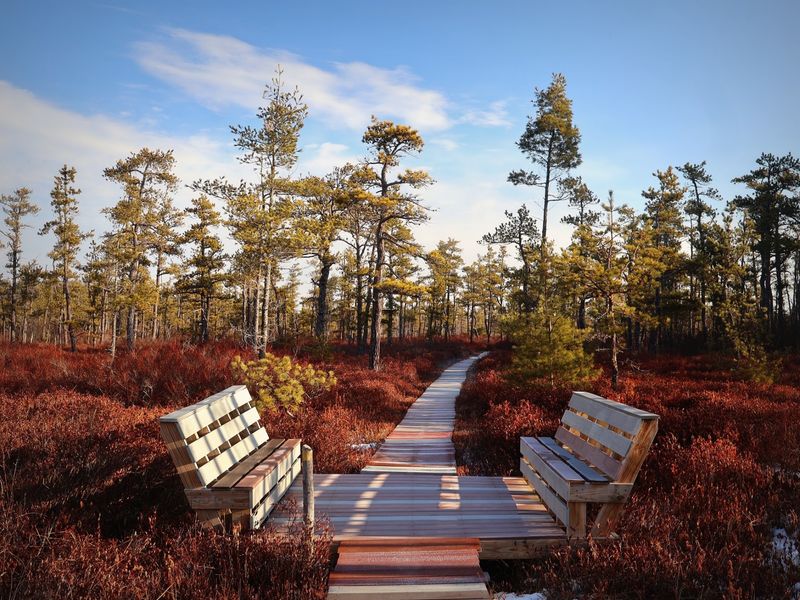
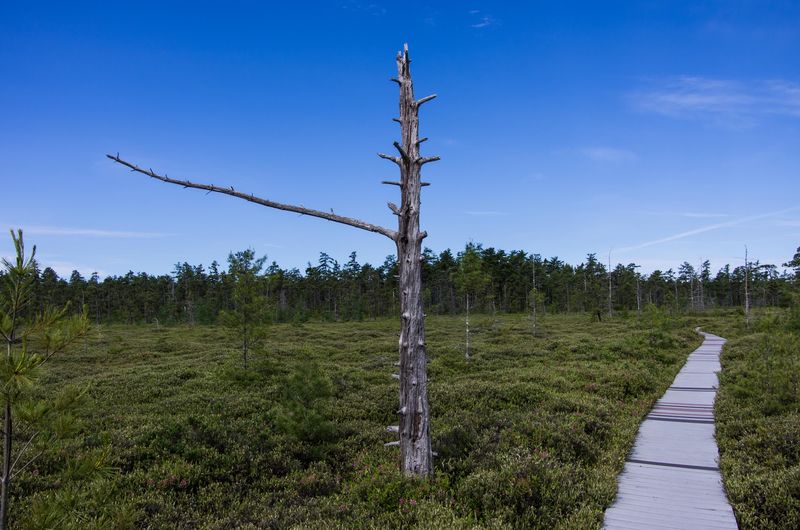
Good news for anyone who avoids steep climbs: the trail here is almost perfectly flat. The walk starts in a shady forest of pines and other trees on a dirt path, then switches to a raised wooden boardwalk once you reach the open heath.
The whole trip is short enough for a relaxed outing, and about an hour covers the walk out and back with time for pauses. The boardwalk crosses the bog and leads to a wooded island.
There, a short loop trail lets you stretch your legs a little more before heading back.
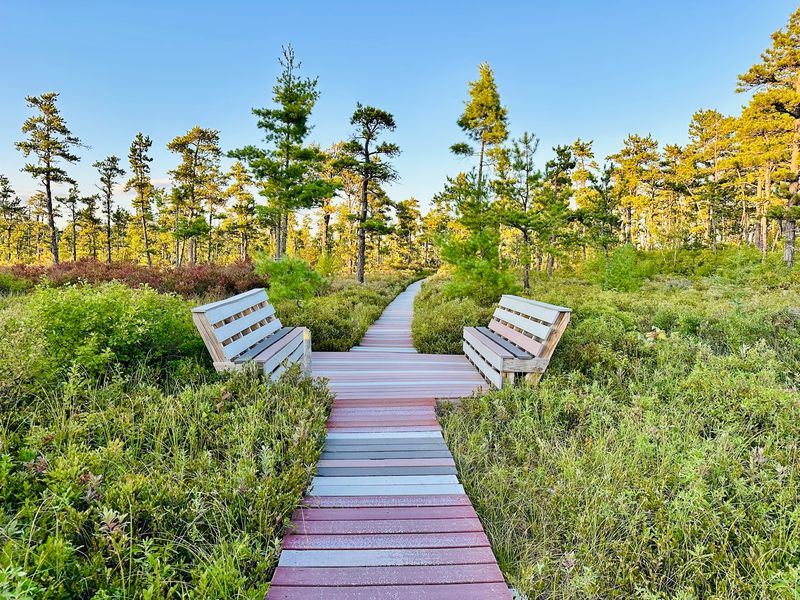
Benches pop up along the way, so you can sit, rest, and soak in the wide view. Signs share facts about the plants and animals around you, turning the stroll into an outdoor classroom.
The planks sit close together, which helps stroller wheels roll along smoothly.
Keep in mind that the boardwalk is narrow. Passing other walkers takes a little teamwork, and wider wheelchairs may struggle, so plan for a slower pace on busy days.
Local groups, including the Rotary Club of Saco, have supported the boardwalk over the years. Thanks to their hard work, you can board this trail without getting bored for a single second.
Home To A Rare Green Butterfly
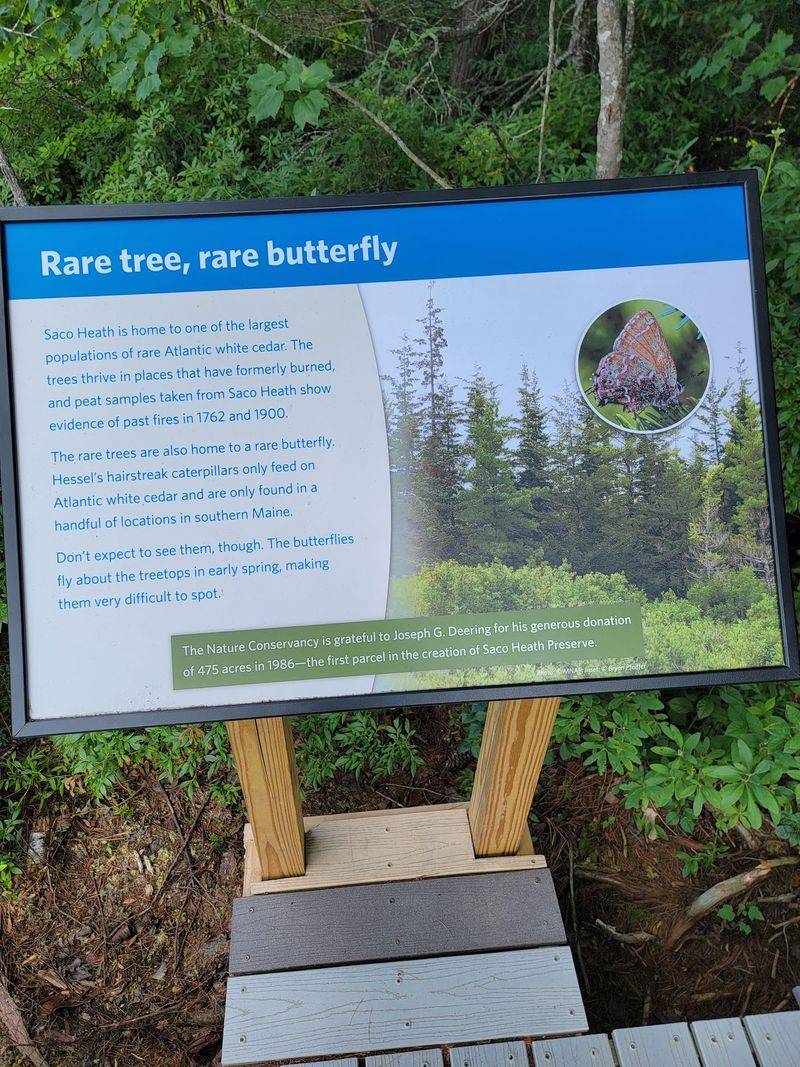
Tiny, green, and easy to miss, one of the heath’s most famous residents is a butterfly only about an inch across. Meet Hessel’s hairstreak, a rare butterfly found in just a handful of places in Maine.
Saco Heath is one of them.
Why here? The butterfly depends on Atlantic white cedar, a tree that grows in swampy ground.
Caterpillars feed on its scaly leaves, and the adults rest high in the branches, so without these cedars the hairstreak would have nowhere to raise its young.
Atlantic white cedar is uncommon in Maine, and the preserve holds a notable stand of it near the bog. The trees have soft, flat sprays of leaves and shaggy bark that peels in long, stringy strips.
Look for them in the damp, shady areas as you walk.
Spotting the butterfly itself takes luck and patience. It flies for a short window in late spring, and its green wings blend right into the cedar leaves.
Bring binoculars, move slowly, and scan the sunny branches.
Protecting this rare pairing of tree and insect is a big reason The Nature Conservancy looks after the land. Staying on the trail helps keep this small wonder fluttering for years.
Plants With A Taste For Bugs
Nutrients are scarce in bog water, so some plants here have found a sneaky solution: they eat insects. Look closely near the boardwalk, and you may spot pitcher plants, with leaves shaped into tall, vase-like cups that hold rainwater.
Bugs crawl in, slip down, and cannot climb back out.
Once trapped, the insects break down in the water, and the plant absorbs the nutrients it needs. The pitchers often show deep red veins, and in early summer the plants send up odd, nodding flowers on tall stems.
Tiny sundews, with sticky, glittering hairs on round leaves, may also be hiding in the moss.
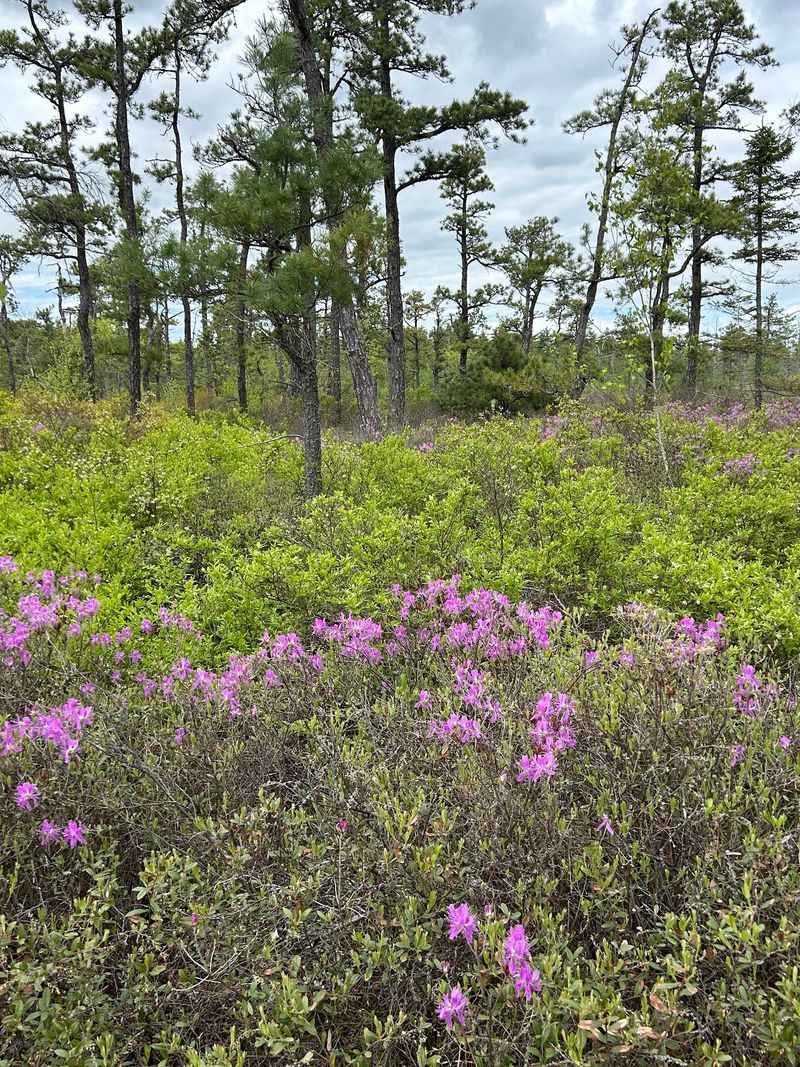
Not every plant here plays rough. In late spring, rhodora puts on a stunning show, covering the heath in bright pinkish-purple blossoms before its leaves even appear.
Sheep laurel adds its own pink flowers, and cotton grass waves fluffy white tufts in the breeze.
Visiting with kids? Turn the walk into a scavenger hunt, and see who can find the first pitcher plant, the pinkest flower, or the fluffiest tuft of cotton grass.
Just remember to look with your eyes, not your hands, since these tiny hunters and bloomers are busy enough without extra poking.
Every Season Paints A New Picture
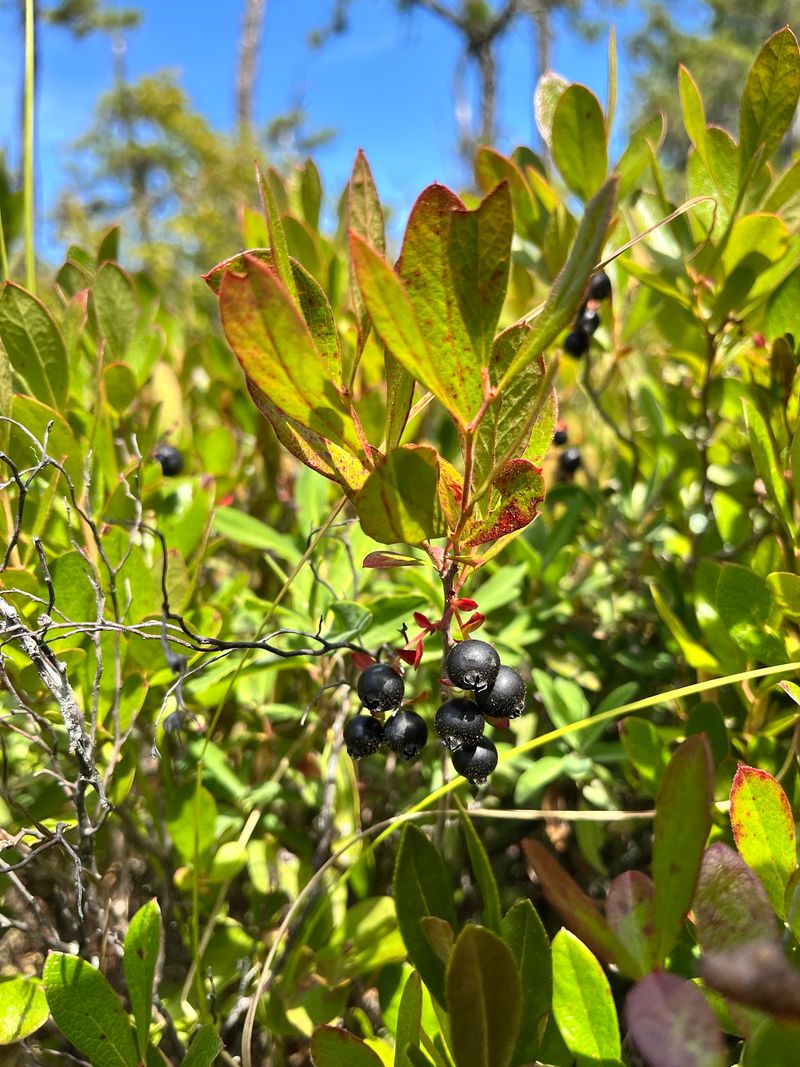
Late summer brings a sweet surprise to the heath: wild blueberry bushes loaded with small, dusky fruit. Low shrubs spread across the open bog, and cranberries also creep among the moss.
Since this is a protected preserve, enjoy the view and leave the berries for birds and other wildlife.
Each season changes the mood. Spring brings melting snow, fresh green growth, and plenty of mud on the dirt path, so waterproof boots are a smart choice.
Late spring and early summer are prime time for blooms, with rhodora and other flowers splashing color across the heath.
By fall, the blueberry leaves turn brilliant red and orange, and the whole bog glows under the low autumn sun. It is one of the most colorful times to visit, and cooler air makes the unshaded walk more comfortable.
Bugs also tend to calm down as temperatures drop.
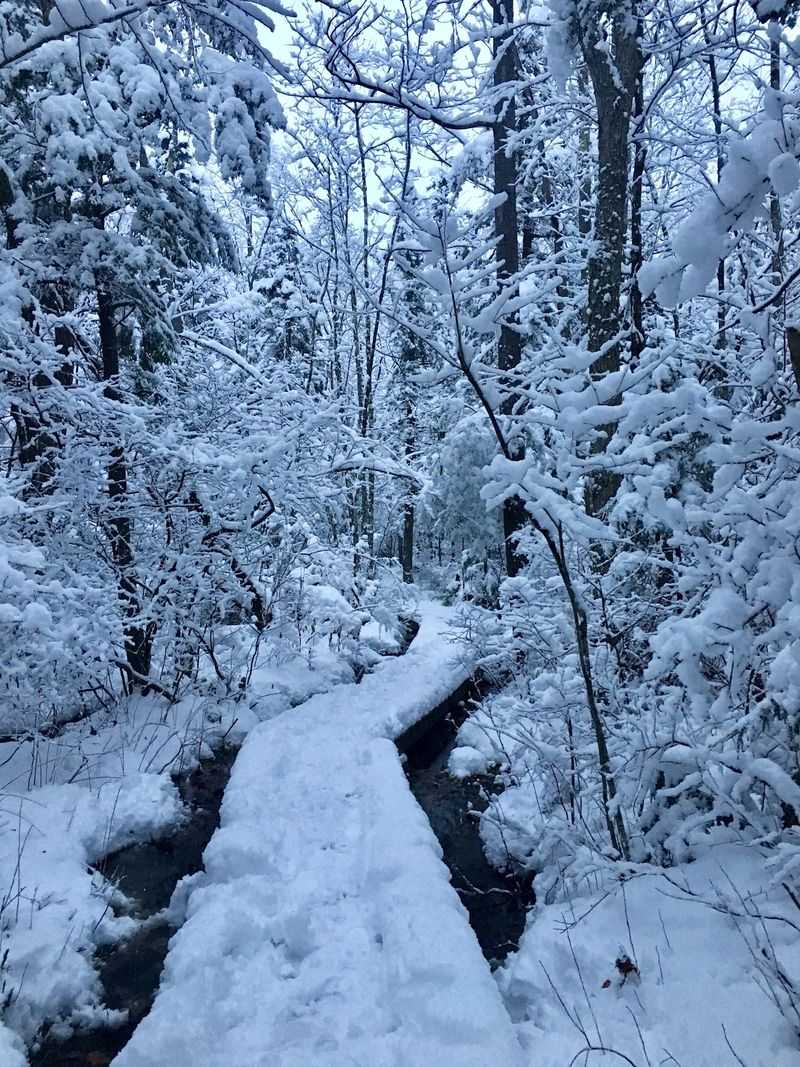
Winter is the quietest season of all. When snow blankets the heath, the boardwalk can be slippery, so traction cleats and careful steps help.
The reward is a hushed, white landscape with hardly anyone else around.
The heath never looks quite the same twice. Come back often, and you will berry likely spot something new.
A Soundtrack Of Birds And Buzzing Wings
Close your eyes for a moment on the boardwalk and listen. At first, you may hear the hum of traffic on Buxton Road.
Walk a bit farther, and bird songs slowly take over, along with the soft rustle of wind through the shrubs.
The mix of forest and open bog attracts many kinds of birds. Watch for crows, sparrows, and warblers flitting through the bushes, and scan the sky for hawks and falcons riding the breeze.
A bird identification app on your phone can help you match songs to singers.
Dragonflies are some of the heath’s flashiest residents. On warm summer days they zip and hover over the boardwalk, their wings flashing in the sun.
They also snack on mosquitoes, which makes them excellent trail buddies.
Smaller creatures deserve attention too. Spiders sometimes stroll across the boards, and they are harmless, so give them room to pass.
In the shady forest section, tiny mushrooms and other fungi pop up on logs after rainy spells.
For the best wildlife viewing, arrive early, right when the preserve opens at 7 AM and birds are most active. Pack binoculars, move quietly, and let the heath do the talking.
Smart Tips For A Smooth Visit
Planning ahead makes this easy walk even easier. Saco Heath Preserve sits at 163 Buxton Rd, Saco, ME 04072, in southern Maine, United States, and it is open daily from 7 AM to 7 PM.
A small parking lot waits at the trailhead, and it can fill quickly on sunny weekend afternoons.
Shade is scarce once you leave the forest and step onto the open heath. Bring sunscreen, a hat, and plenty of water, especially in summer.
There are no restroom facilities, so plan a stop before you arrive.
Spring mud season is real in Maine, so wear shoes that can handle a squishy start. Insect repellent comes in handy during warmer months.
Allow roughly an hour for the round trip, or longer if you like to linger on the benches.
Stay on the trail at all times to protect the fragile bog, and carry out everything you bring in. Check The Nature Conservancy’s website for current rules and trail updates before you go.
In the end, this little boardwalk delivers a big reward. Few places let you wander so easily across such a rare, ancient landscape, so come for the flat walk and leave with fresh respect for the quiet wonders growing under your feet.