
You Can Stand On The Edge Of A Meteor Crater Nearly A Mile Wide In Arizona
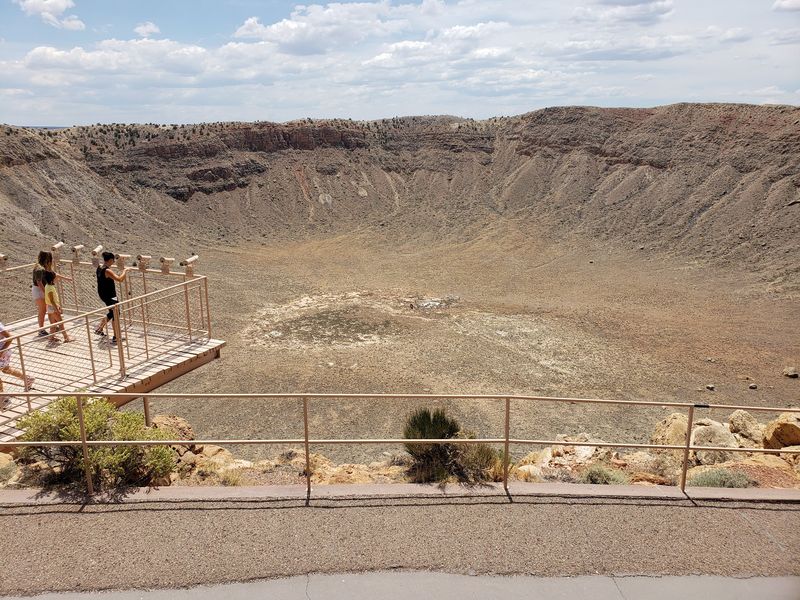
Fifty thousand years ago, a chunk of iron about 150 feet wide slammed into the plains of northern Arizona in just a few seconds. The giant bowl it carved is still sitting there today, almost perfectly preserved by the dry desert air.
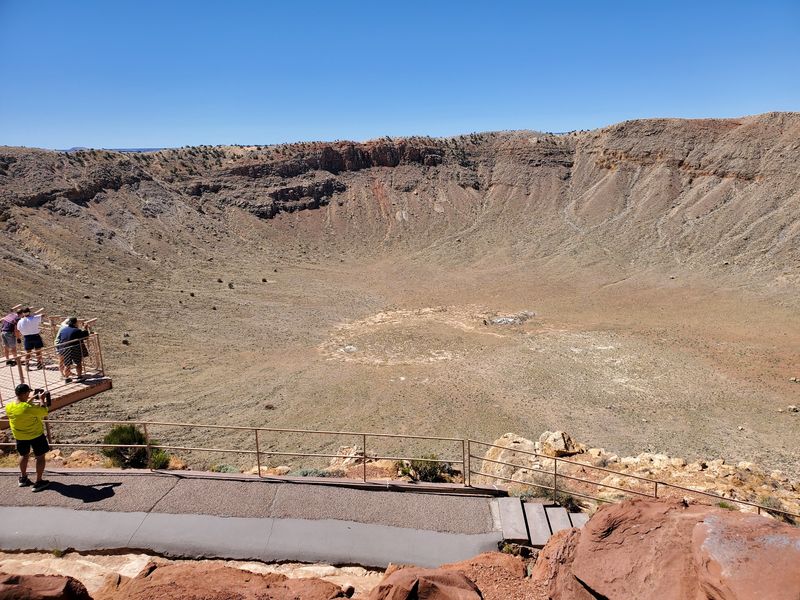
You can walk right up to the rim, lean on a railing, and stare down more than 550 feet into it. It is one of the few places on Earth where a visit to space history takes nothing more than a short drive off the interstate.
A Cosmic Scar Off Interstate 40
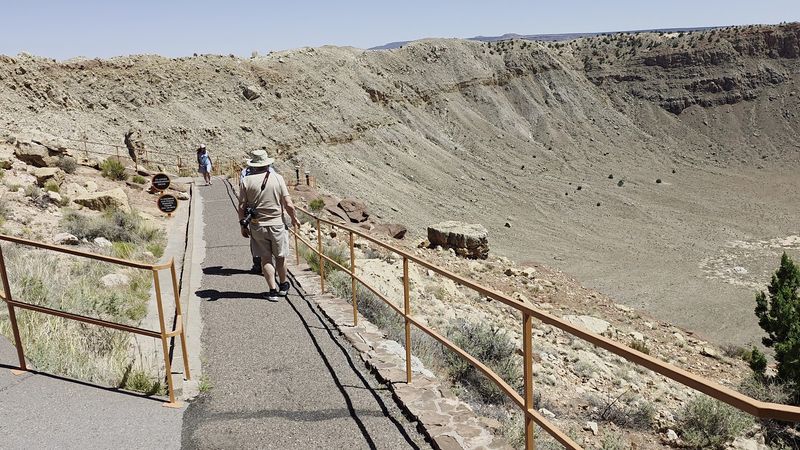
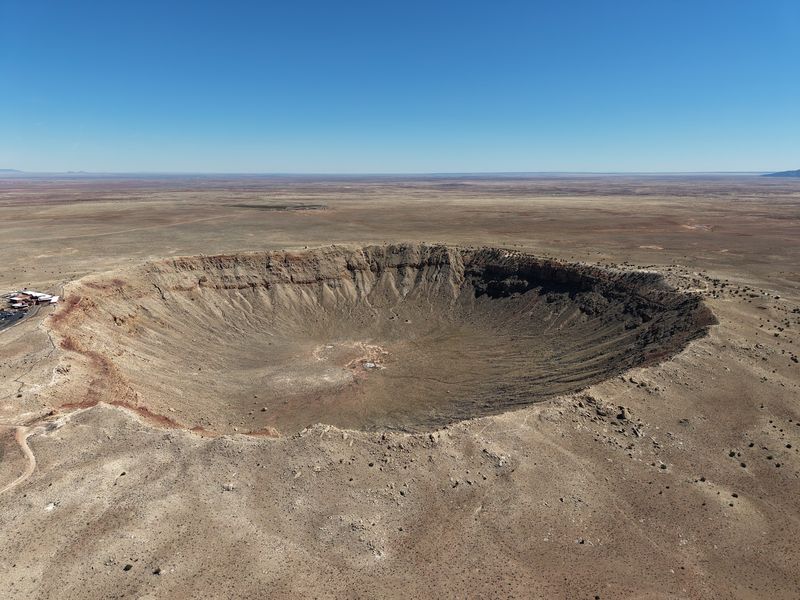
Plenty of road trippers have zipped past Exit 233 on Interstate 40 without realizing what sits a few miles south. Out on the high desert between Flagstaff and Winslow lies a hole so big it barely looks real, a crater roughly 3,900 feet across.
Meteor Crater Natural Landmark sits about 37 miles east of Flagstaff and 18 miles west of Winslow, close to both the interstate and historic Route 66. From Flagstaff, the drive takes around 40 minutes, which makes it an easy half-day outing for anyone in northern Arizona.
Scientists often call it the best-preserved meteorite crater on Earth. The rim rises roughly 148 to nearly 200 feet above the surrounding flatlands, so you notice it on the horizon long before you arrive.
Up close, the bowl plunges 550 to 600 feet deep.
Many families remember driving by the turnoff for years before finally stopping. Once they do, the reaction is usually the same: amazement that something this dramatic has been sitting right beside a familiar highway all along.
The site is privately owned rather than part of the national park system, which shapes how visits work and what they cost.
Fifty Thousand Years in a Few Seconds
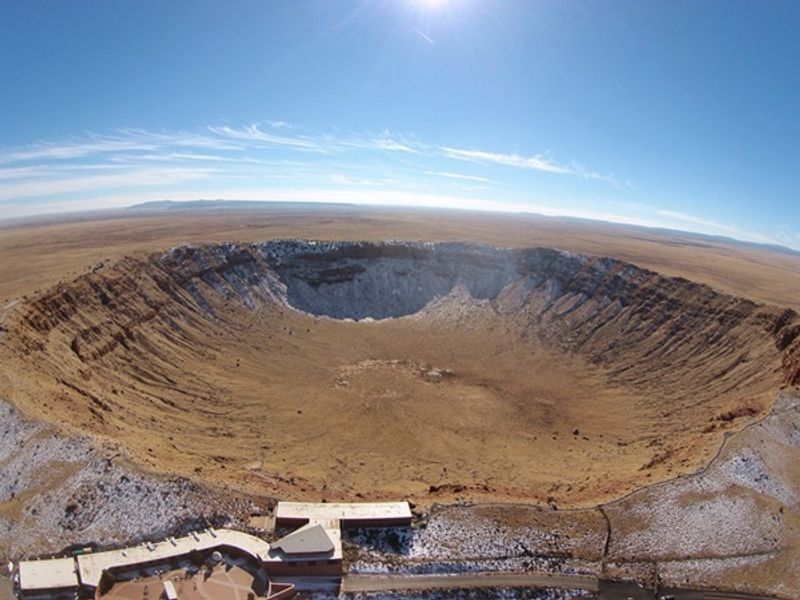
Imagine a nickel-iron rock about 150 feet wide and weighing hundreds of thousands of tons, racing toward the ground. That is what hit northern Arizona roughly 50,000 years ago.
The impact released energy estimated at 10 to 20 million tons of TNT. In just a few seconds, about 175 million tons of rock were blasted out of the ground, leaving the enormous bowl visitors see today.
Rock layers were flipped and pushed upward, forming the raised rim that circles the crater.
So why does it still look so crisp after all that time? Two reasons.
The desert climate is dry, so erosion works slowly here, and in geologic terms the crater is quite young. Even so, weather is gradually wearing it down, which makes seeing it now feel a little more special.
The site is also known as Barringer Crater, after the family linked to its early study and ownership. Informational plaques around the visitor center share the story of the people involved, the scientific debates, and how researchers eventually confirmed a space rock was responsible.
For curious minds, that backstory adds real depth to the view.
Railings, Rim Views and Observation Decks
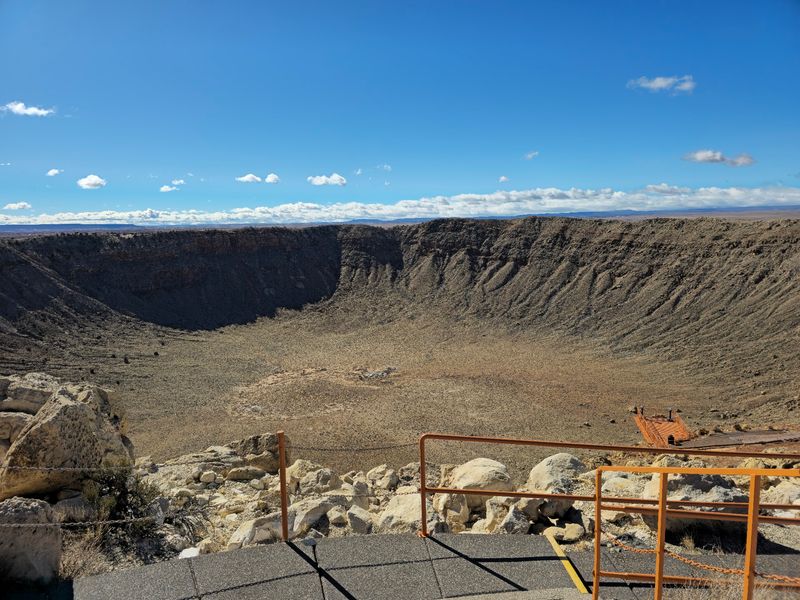
Step outside the visitor center and the ground simply drops away. That first look into the crater tends to stop people mid-sentence.
Several walking paths and observation decks let you take in the bowl from different angles. Some trails follow the rim, while others let you step out and hang over the edge for photos.
Bright orange railings line the paths, giving the whole area a secure, well-kept feel.
Stairs lead down to lower viewing points. Anyone uneasy with heights may want to take those slowly or enjoy the upper decks instead, since the views up top are just as striking.
The main experience is also wheelchair accessible, so nearly everyone can reach a great vantage point.
The stark Arizona landscape stretching beyond the rim makes the scene even better. Everywhere you turn offers another photo, whether it is the pale crater walls, the wide sky, or the flat plains rolling toward distant hills.
Scale is the thing that sticks with visitors most. Pictures online never quite capture how large the bowl feels when you are standing on its edge, trying to spot tiny details on the far side.
Guided Rim Tours With Personality
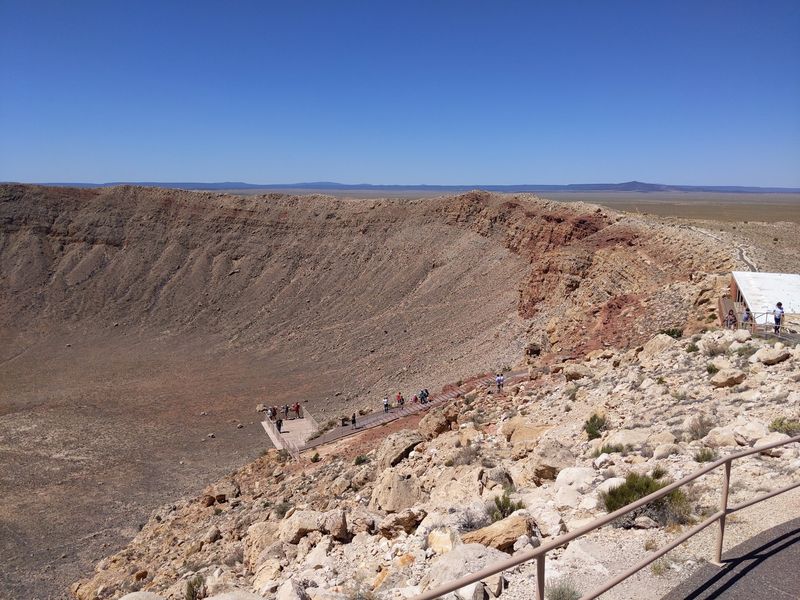
Ask returning visitors about their favorite part and many will name a guide before they name the view. The guided rim tour is included with admission and runs about 45 minutes.
Guides walk groups along the trail at the crater’s edge, sharing facts about the impact, the history of the site, and the scientists who studied it. Staff clearly know their material, and many sprinkle in humor to keep things lively.
Guests frequently mention guides who happily answer every question and even snap group photos.
Tours run at set times throughout the day, so check the schedule when you arrive. Summer storms can occasionally cut a tour short, since the rim is exposed to the weather.
Even a shortened walk still delivers plenty of fun details.
Short on time? A self-guided visit works too.
You can wander the decks, read the plaques, and head back to the car whenever you like. Still, families who chose the guided option often say it turned a big hole in the ground into a story worth remembering.
The humor is not for everyone, though most people find it keeps kids engaged and adults curious.
Moon Training Grounds for Apollo Crews
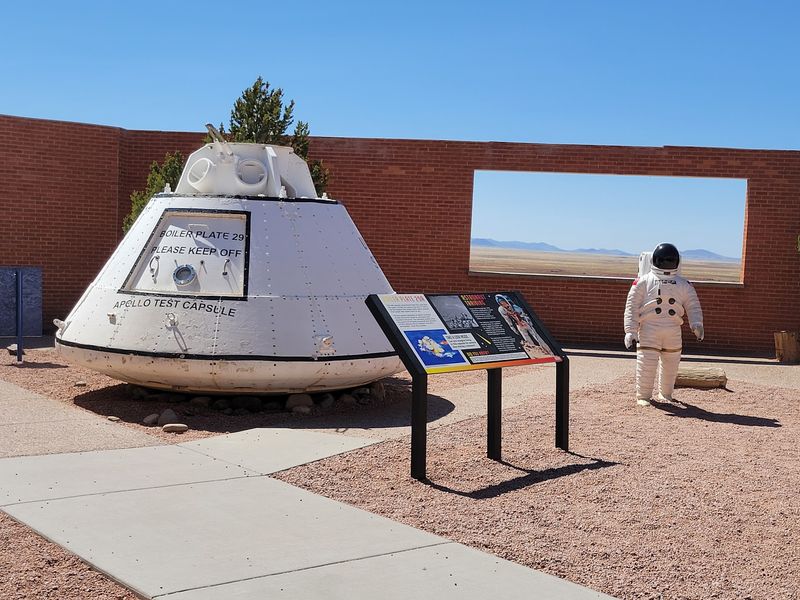
Long before anyone set foot on the moon, astronauts were practicing right here in the Arizona desert. Apollo crews used Meteor Crater as a training site to prepare for exploring the lunar surface.
The reasoning made sense. The moon is covered in impact craters, and this one offered a rare, well-preserved example on Earth.
Studying its rocks and shape helped crews understand what they might encounter far from home.
That space connection runs throughout the visit. Exhibits include space memorabilia that feels interesting without being overwhelming, and guides often share stories from the astronaut training days on their rim walks.
One favorite activity for kids is hunting for the astronaut through the viewfinders. A small astronaut figure stands down in the crater, and spotting it helps show just how enormous the bowl really is.
The figure looks tiny from the rim, which surprises almost everyone.
For space fans, the site feels like a pilgrimage. You are standing where people trained for one of humanity’s greatest adventures, and the same rugged ground that prepared them is still spread out below you, looking much as it did then.
Museum Halls, a 4D Ride and the Holsinger Meteorite
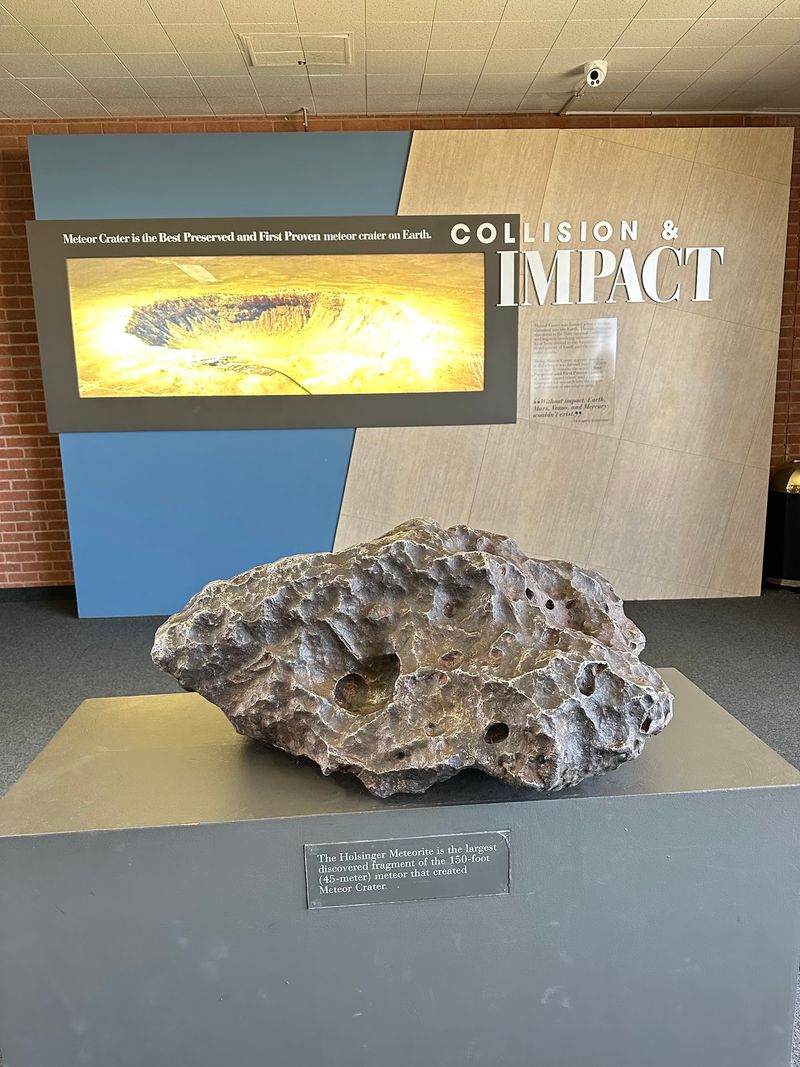
Here is a fun fact to share on the drive: the biggest fragment ever recovered from the site weighs 1,406 pounds. Known as the Holsinger Meteorite, it sits inside the visitor center, and yes, it is a hefty sight.
The visit usually begins with a short movie of around nine or ten minutes that recreates what happened 50,000 years ago. Afterward, the museum area prepares your eyes for the real thing outside.
Some people breeze through in 20 minutes, while others spend closer to an hour.
Exhibits cover science, astronomy, meteorites, and space, with plenty of plaques and old photographs. Interactive displays keep hands busy, and a dedicated kids’ area gives younger visitors room to explore.
Then there is the 4D experience, a ride-style room that adds motion and effects to the story. Children especially love it, and it is included with admission.
The museum is modest in size but packed with good information. Paired with the rim views, it helps turn a quick look into a genuine understanding of what happened here.
One small note: dramatic background music plays on repeat, which some guests find memorable in more ways than one.
A Stop Built for Families and Road Trippers
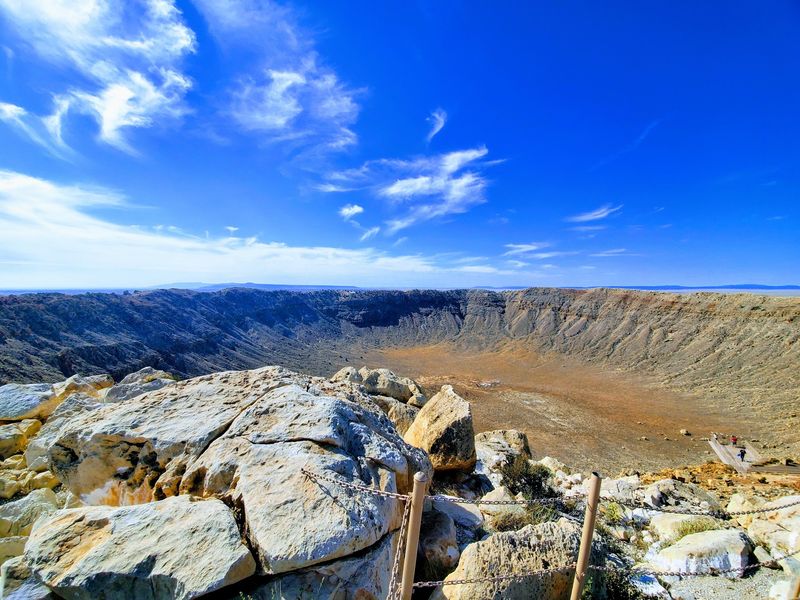
Kids tend to press their faces right up against the binoculars. Scenic viewers placed around the rim let them zoom in on the crater floor and grasp how deep the hole goes.
The whole place leans family-friendly. Paths are clean and well maintained, staff are friendly, and the mix of movie, 4D ride, exhibits, and outdoor views keeps different ages happy.
Grandparents, parents, and little ones can all find something that clicks.
Road trippers on Route 66 or Interstate 40 love it as a leg-stretcher. It breaks up a long day of driving and gives everyone something memorable to talk about at the next stop.
Heading from Flagstaff toward New Mexico, it fits neatly into the route.
A café offers a variety of reasonably priced options, and a coffee bar helps with afternoon energy. The gift shop earns lots of praise and is considered one of the better museum shops around, full of space-themed souvenirs.
On the drive in, keep an eye out for signs about free-range cattle, including calves. The approach road has lovely desert scenery, but animals may wander nearby, so slow down and enjoy the view.
Hours, Tickets and Money-Saving Tips
Plan around the clock first. Meteor Crater Natural Landmark is open every day from 8 a.m. to 5 p.m.
Entry closes at 5, and guests need to head out shortly after, around 5:20.
Tickets have run a little over $30 per adult in recent months. Because the site is privately owned, national park passes like America the Beautiful are not accepted.
A family of four may spend a bit over $100, so budget ahead.
There are ways to stretch that money. Discounts are offered for seniors 65 and older, military veterans, and AAA members.
Buying tickets in advance is also possible, and one ticket covers everything: the movie, museum, 4D experience, and guided tour. Visitors also mention that admission can be used again within a 14-day window, which is handy if you are staying nearby.
Give yourself around two to three hours to see it all comfortably. Parking is ample and easy.
To get there, take Interstate 40 to Exit 233 and follow the signs south. Prices and policies can change, so checking the official site before you go is a smart move.
Worth the Detour, At Least Once
Honestly, few roadside stops in Arizona pack this much wonder into one afternoon. A giant bowl carved by a space rock, astronaut history, and sweeping desert views make a pretty compelling case.
Is it cheap? Not exactly.
The ticket price gives some travelers pause, especially compared with public parks. Yet most visitors walk away feeling the experience earned its cost, particularly when they take the included tour and spend time with the exhibits.
Space and science lovers could easily linger for hours and may want to return. Casual travelers usually find a single visit satisfies their curiosity, and that is perfectly fine.
It is a classic American roadside attraction that deserves a spot on your list at least once.
For Arizona locals, the math gets easier. Flagstaff residents can be there in about 40 minutes, and a visit pairs nicely with exploring Winslow or cruising a stretch of Route 66.
Cooler months bring comfortable rim walks, while summer mornings help beat the heat.
Bring the grandkids, a curious friend, or just yourself. Standing on the edge of that crater, looking across nearly a mile of ancient history, leaves a feeling that lasts long after the drive home.