
Walking Among Giant Saguaros At Dawn Is The Best Free Morning In Arizona
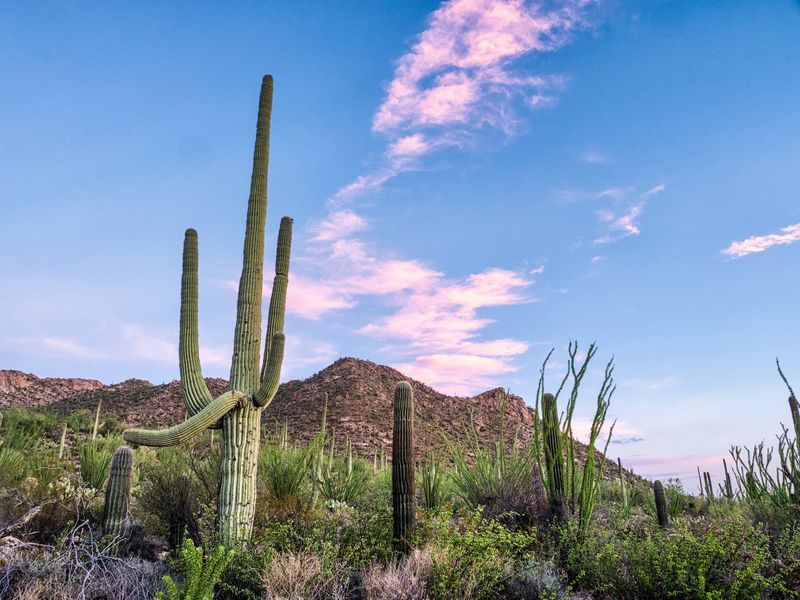
Cactus arms turn pink before the sky does, and almost nobody is around to see it. Just outside Tucson, Arizona lets anyone on foot or bike walk into a forest of giant saguaros any hour of the day, for free.
Dawn is the sweet spot, with cool air, soft gold light, and desert critters out and about. Set one early alarm and you may find your new favorite morning ritual.
A Cactus Forest Split Around Tucson
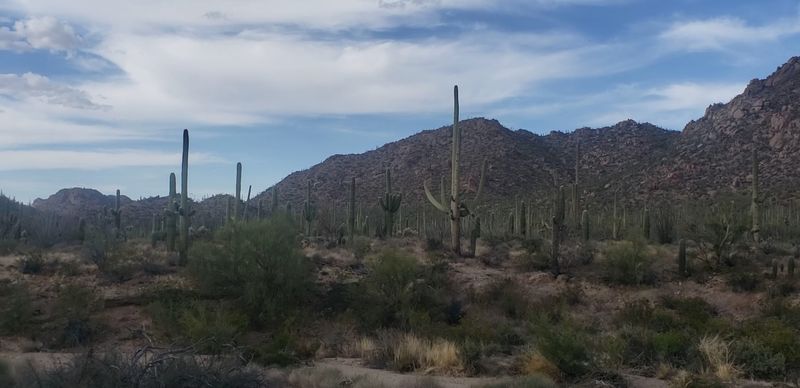
Two parks for the price of one, and at dawn the price can be zero. Saguaro National Park protects the giant cacti of the Sonoran Desert in two separate districts that sit on opposite sides of Tucson, Arizona.
The Rincon Mountain District lies to the east, while the Tucson Mountain District stretches out to the west. Visitors often say the two sides feel different enough that it almost seems like touring two parks in a single trip.
The western side packs its saguaros into a smaller, denser area, and the eastern side spreads across a larger footprint with the cacti spaced farther apart.
Either way, you are standing in the home of the largest cacti in the country. The park offers hiking trails, scenic drives, picnic areas, and visitor centers with an educational theater on both sides.
Getting there from central Tucson takes roughly half an hour, mostly on surface streets. The drive between the east and west districts is significant, though, so plan your morning around one side instead of trying to cram both into a single sunrise.
Pick a district, set an alarm, and let the desert handle the rest.
Slow-Growing Giants With Centuries of Patience
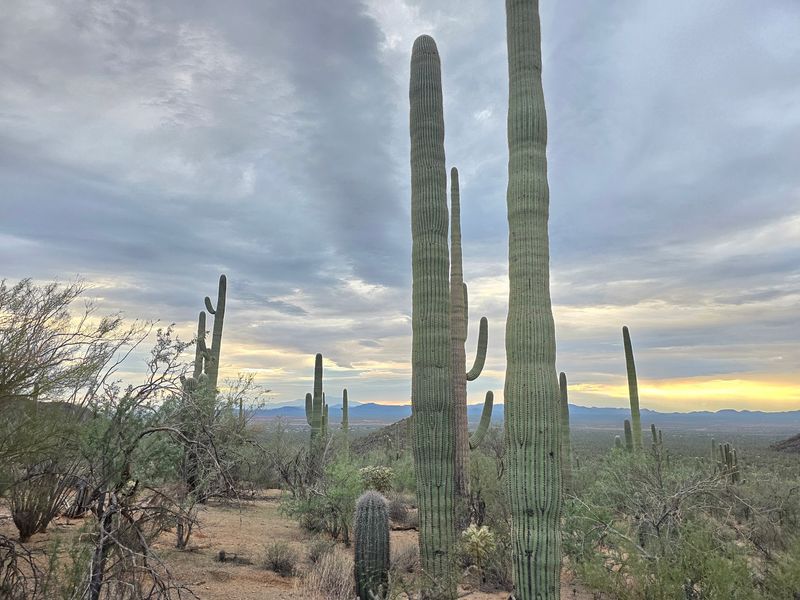
Here is a number that stops people in their tracks: a 10-year-old saguaro might stand just 1.5 inches tall. These plants grow at an almost unbelievably slow pace, and that patience is part of their magic.
Given enough time, a saguaro can reach 40 to 60 feet tall and live somewhere between 150 and 200 years. Many take 50 to 75 years just to sprout their first arm.
So when you walk past a giant with five or six arms reaching skyward, you are looking at a plant that has been quietly standing there for generations.
Families who visit often marvel that most of the cacti around them are older than they are. It is a humbling thought on a quiet morning trail.
Saguaros grow naturally only in the Sonoran Desert, which makes this corner of Arizona one of the few places on Earth to see them in the wild. Their creamy blossom even holds the title of Arizona state wildflower, a fitting symbol of toughness in a dry land.
No two look alike, either. Some stand alone like skyscrapers, while others seem to be dancing, waving, or stretching after a long sleep.
Free Entry for Walkers and Cyclists at Any Hour
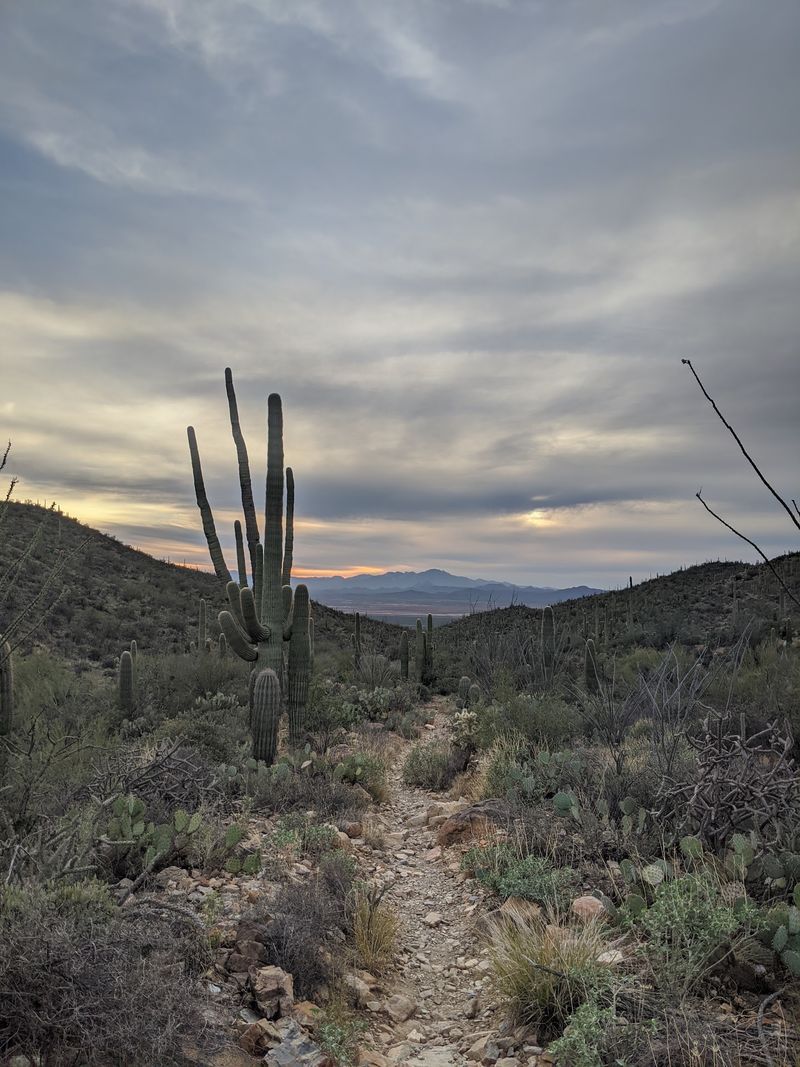
Budget travelers, this part is for you. Pedestrians and cyclists can enter Saguaro National Park 24 hours a day, which opens the door to a predawn adventure long before the visitor centers unlock.
Arrive on foot or by bike and your morning costs nothing. Vehicles are a different story, since driving in typically requires a fee.
Visitors report paying $25 for a pass that stays valid for about a week, and national park passes work here too. Fees can change, so check current prices before you go.
That week-long window can still stretch your dollar nicely if you plan several visits. Still, nothing beats the feeling of pedaling up in the blue half-light while the desert is still waking.
Cyclists are a common sight on the park roads, especially on the looping routes. Bring lights, a helmet, and more water than seems reasonable.
A little planning goes a long way. Take a photo of the trail maps when you can, because some visitors mention that trails are not always clearly marked and it is easy to get turned around in all that look-alike desert.
Free, quiet, and open all night. Hard to beat that deal anywhere in Arizona.
Golden Hour on Ribbed Green Trunks
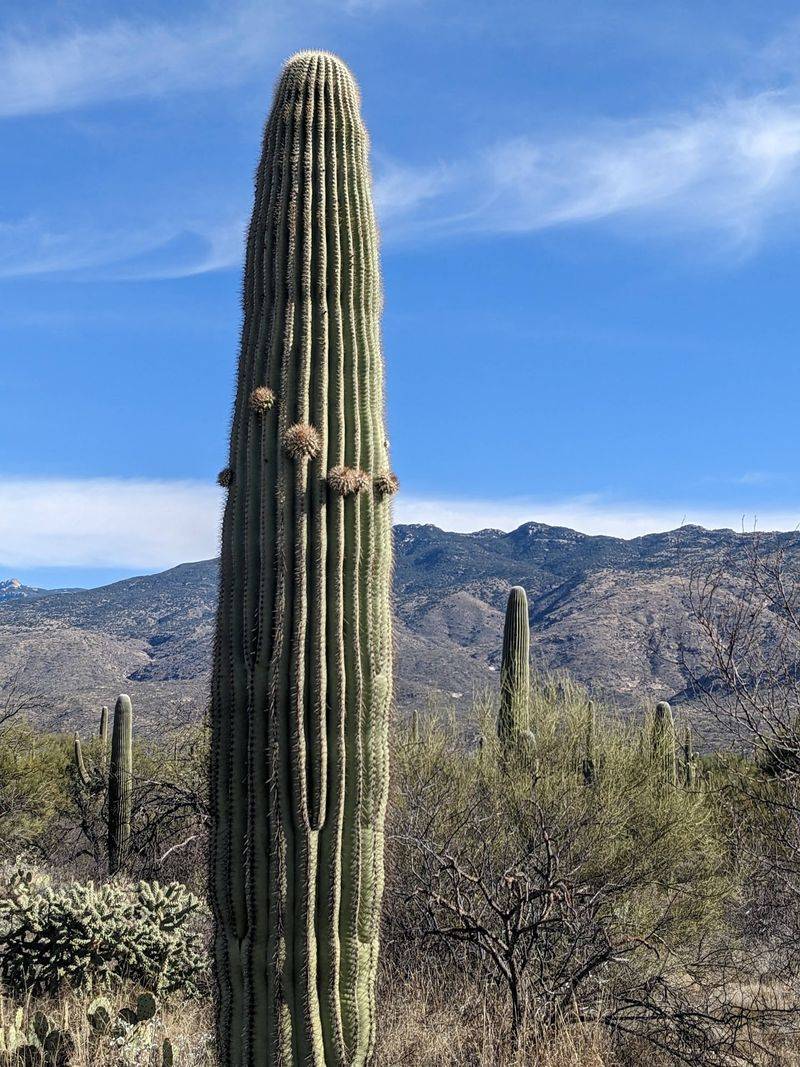
Watch closely as the sun clears the ridgeline. The saguaros shift from dark silhouettes to glowing columns, and their pleated ribs catch light and shadow like corduroy.
Sky colors run through orange, pink, and gold in a slow, gentle show. Long shadows stretch across the desert floor, giving every cactus a twin lying on the ground beside it.
Photographers love this window for good reason, since the depth and texture are hard to capture any other time of day.
Many visitors describe sunrise and sunset here as unreal, with the whole landscape seeming to glow. The west side tends to earn praise for evening views, while mornings shine wherever you can find an open eastern horizon.
Here is a helpful tip for camera fans. Arrive at least half an hour before sunrise so you can scout a composition, maybe a crooked-armed saguaro framed by distant peaks.
Phones work fine, too. Tap to expose for the bright sky and let the cacti fall into bold outline, then turn around and shoot the lit side.
The best part might be the silence. No crowds, no engines, just color spreading over a sea of spines.
Woodpecker Apartments and Early Wildlife
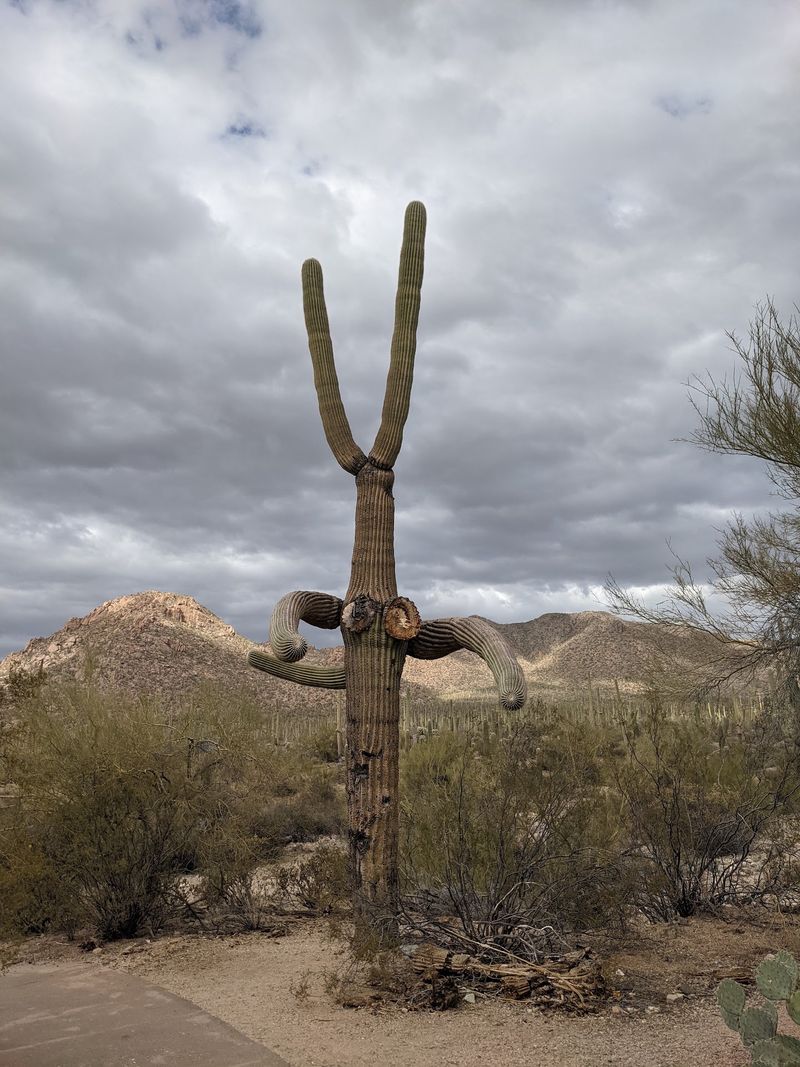
Knock knock, who lives inside a cactus? Quite a few neighbors, actually.
Woodpeckers carve nest holes into saguaro trunks, and once they move on, those cozy cavities become homes for other birds and small invertebrates.
Think of each big saguaro as a desert apartment complex with rotating tenants. Cool dawn air makes this the liveliest time to spot the residents coming and going.
Birders have a field day here. Species like the Pyrrhuloxia and Gilded Flicker show up on wish lists, and during bloom season birds perch right on flowering cacti to sip nectar.
Park rangers have been known to share tips with early birders, too.
Wildlife goes beyond feathers. Visitors mention spotting deer, little lizards darting across trails, and plenty of other critters on morning walks.
Evening brings its own surprise, as some guests have stayed past dark to watch bats emerge from the saguaros.
Keep your eyes on the ground as well as the treetops, so to speak. Rattlesnakes live here, and bees have caused trail closures at times, so watch your footing, give animals space, and follow any posted notices.
Cactus Forest Loop Drive and the Eastern Trails
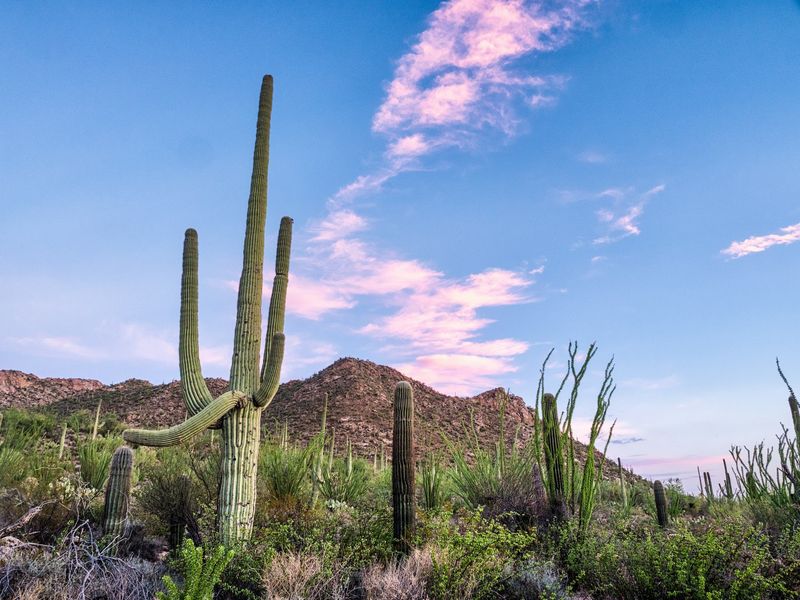
Early birds on four wheels get a head start in the east. The Cactus Forest Loop Drive in the Rincon Mountain District opens to vehicles as early as 5:00 AM, giving drivers a shot at sunrise, too.
The loop is mostly one-way, with the speed limit dropping as low as 5 MPH in many spots and rarely topping 20. Pullouts, viewpoints, and trailheads pop up constantly, so there is no reason to rush.
Parking at popular stops can be tight, and larger RVs may find their options limited.
For walkers, the Tanque Verde Ridge Trail is a favorite for sunrise, climbing toward sweeping panoramic views. Easier options abound as well, since many trails on this side are approachable for all skill levels.
Crested saguaro hunters should head to the start of the Mica View area. These rare fan-shaped cacti form when the growing tip mutates, and only a small fraction ever develop that look.
Some hikers say they prefer this eastern side for its well-kept trails and wide-open feel. On a quieter weekday, a relaxed visit here can fit into about two hours.
Bajada Loop and Petroglyphs of the West
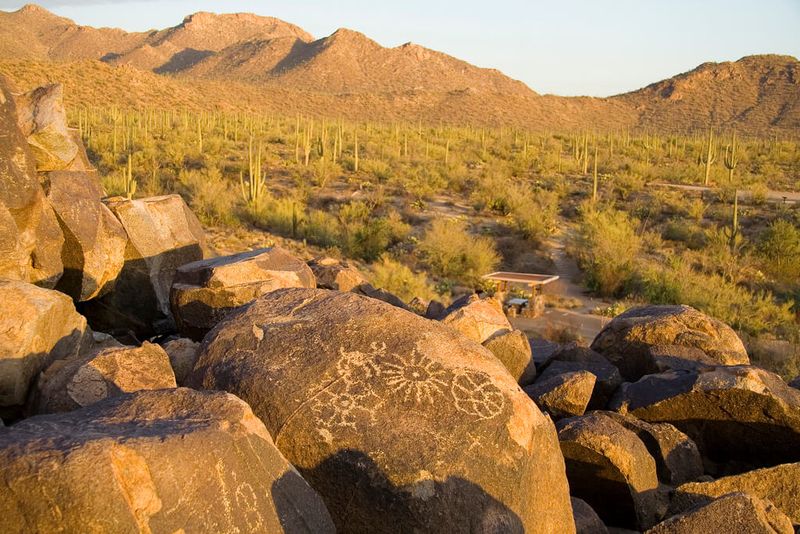
Wilder and thicker with cacti, the Tucson Mountain District feels like the desert of old postcards. Plenty of visitors call the west side the more scenic of the two, with open desert, dense saguaro stands, and a rugged, less polished character.
The Bajada Loop Scenic Drive opens to vehicles from sunrise to sunset. Walkers and cyclists, remember, can arrive earlier and have the place almost to themselves.
History buffs, take note. The west side holds Hohokam petroglyphs roughly 1,000 years old, carved into rock by people who knew this desert long before any park existed.
Signal Hill is the well-known stop, though it has occasionally closed for safety reasons such as active bees.
The Red Hills Visitor Center serves as a friendly home base. It offers water fountains, clean restrooms, a thoughtfully stocked gift shop, and knowledgeable rangers.
Teens tend to love scrambling on the big boulders scattered around the picnic areas. Grown-ups tend to love the quiet.
Sunsets over this side earn frequent praise, too. So if a dawn walk here hooks you, consider coming back one evening for the matching bookend.
A Calm Mood for Slow Walkers and Curious Kids
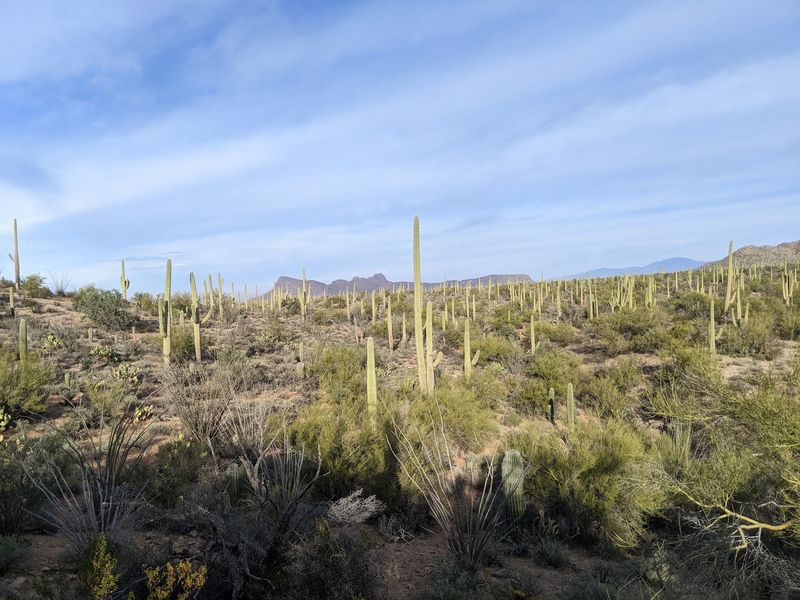
Mountains shout and canyons boast, but this desert speaks softly. Visitors often describe a still, quiet energy here that nudges everyone to slow down and notice the small details.
That gentle pace suits a wide range of people. Retirees looking for a peaceful, affordable morning outing will find flat, approachable paths.
Families can grab Junior Ranger books at the visitor centers, and kids get a kick out of spotting lizards and odd-shaped cacti.
Photographers and plant lovers could wander for hours. Cactus fans especially tend to rank this among their favorite national parks.
Is it for everyone? A few hikers mention the trails can start to feel similar after a while.
For most, though, each saguaro has enough personality to keep things fresh, and many say one visit leaves them wanting another.
Picnic spots dot both districts, with restrooms at each picnic area. A thermos of coffee and a breakfast burrito at a shaded table after sunrise makes a lovely finish.
Mostly, this is a place for people who enjoy quiet wonder. Bring a friend who appreciates small moments, or come alone and let the stillness do its work.
Seasons, Heat, and What to Pack
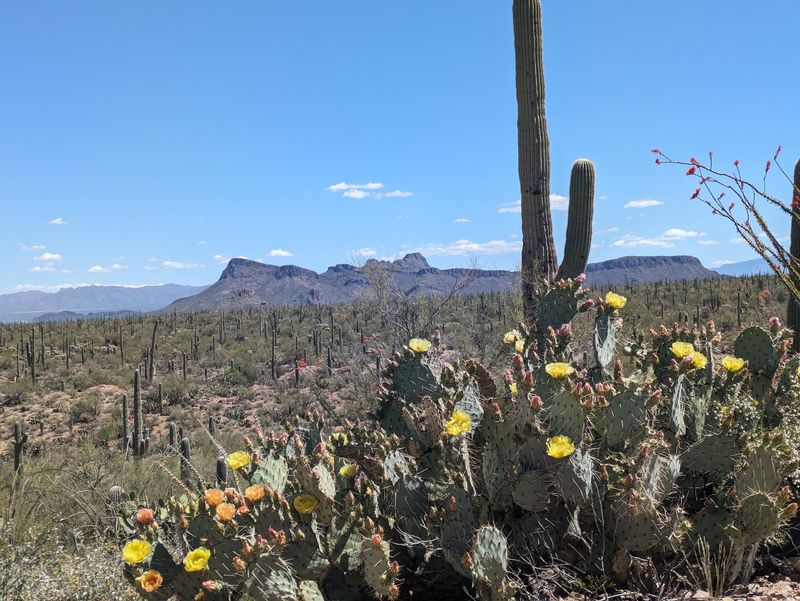
October through April is prime time. Temperatures stay friendlier for hiking, though trails and parking lots get busier during these months.
Spring adds a bonus round. Bloom season fills the park with flowering cacti, ocotillo blossoms, and wildflowers, and late April often catches saguaros opening their famous white blooms.
Early morning is the best time to see flowers fully open.
Summer is another matter. Heat builds fast, which makes dawn the only comfortable window for walking, and even then you should plan short outings.
Packing list time:
Carry lots of water, since there are no food options inside the park and restrooms are scarce along the loops. Wear a hat, sunglasses, and sunscreen, because the UV index can hit extreme levels even in the 80s.
Closed-toe shoes and long sleeves help protect against spines, and bug spray never hurts.
Use the visitor center restrooms before heading out. Snap photos of trail maps, keep an eye out for snakes, and turn back sooner rather than later if the heat starts creeping up.
Worth Every Minute of Lost Sleep
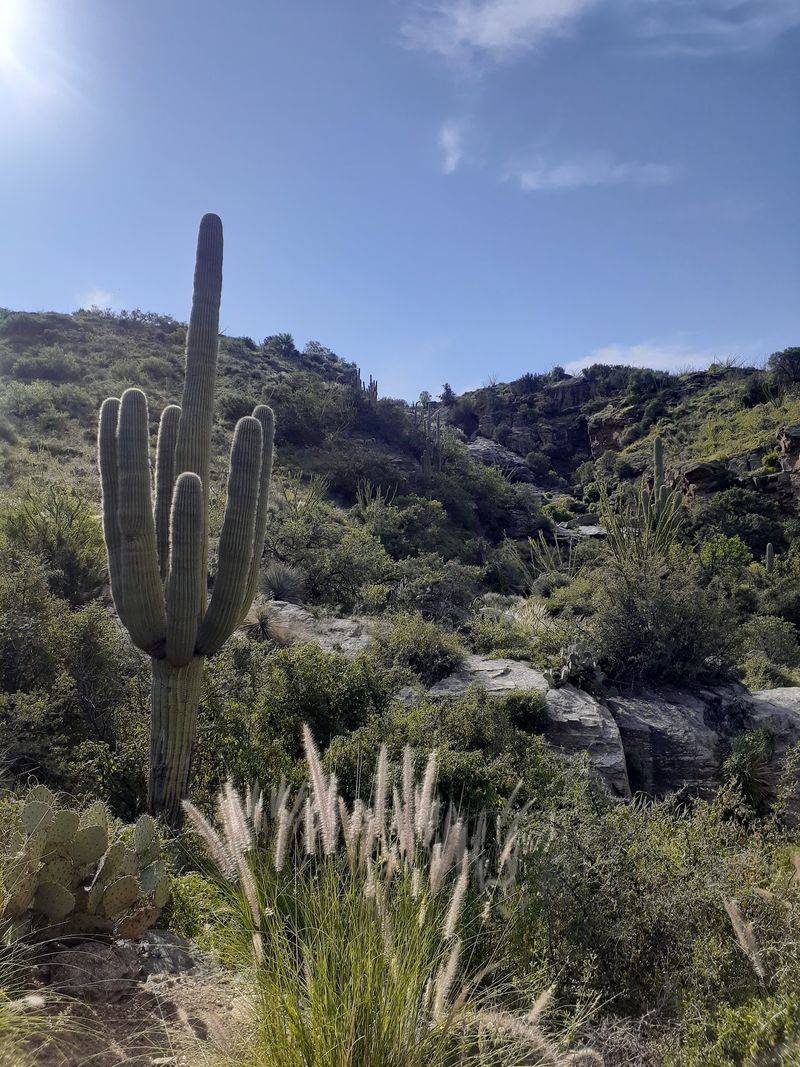
Sleeping in is overrated, at least once in a while. Trading an hour of shut-eye for a sunrise among Arizona’s tallest cacti ranks among the best swaps a local can make.
Consider the math. Entry on foot or bike costs nothing, the park is open to walkers around the clock, and the scenery rivals places people fly across the country to see.
Even drivers get a week of access for a modest fee.
Beyond the value, there is something quietly moving about it. Standing beside plants that may have been growing for 150 years or more, watching the light slide down their arms, tends to put a busy week in perspective.
Plenty of travelers arrive expecting a simple park and leave calling it one of their favorites. Locals have the advantage of coming back again and again, catching new blooms, new birds, and new colors each season.
So pick a cool morning, choose east or west, and pack water and a snack. Tag the friend who is always up early anyway.
The saguaros will be waiting, just as they have been for decades.