
This Historic Arizona Mission Hides Candlelit Adobe Walls And Centuries-Old Art Few Visitors Ever See
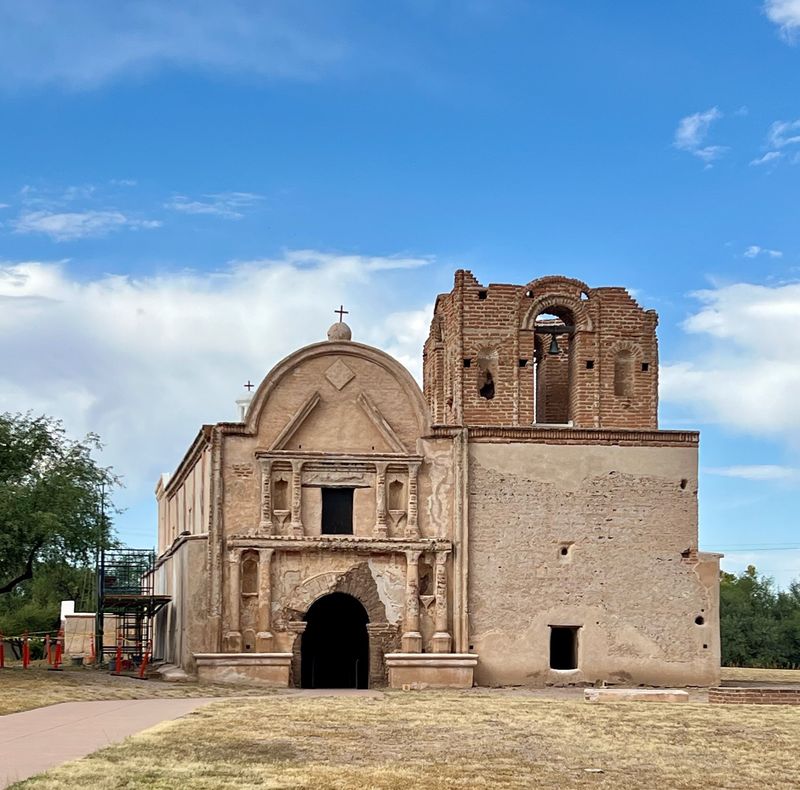
Mud bricks, sun and patience built a church in southern Arizona that has outlasted empires, borders and centuries of desert storms. Most drivers heading south toward the border zip right past it without a second glance.
Stop, though, and you find weathered adobe walls, a fruit orchard, a garden full of birdsong and rangers who love sharing stories. It is a quiet, affordable slice of the past that feels like a secret the whole state forgot to tell you.
A Mission Ruin Beside Interstate 19
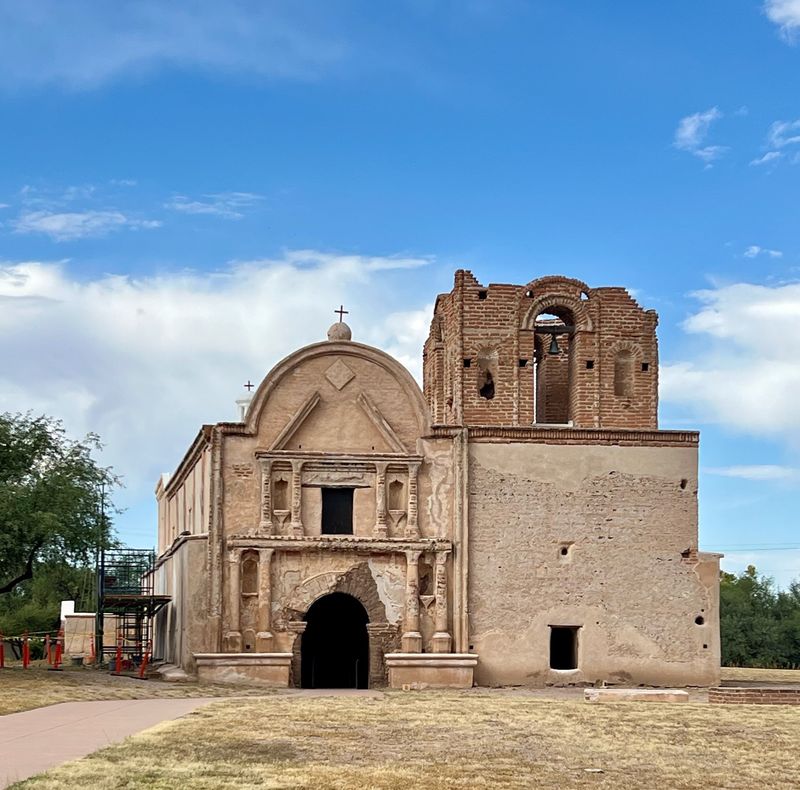
Road signs along Interstate 19, south of Tucson, give little warning of what waits just off the frontage road. Tumacácori National Historical Park sits at 1891 I-19 Frontage Rd in the small community of Tumacacori, Arizona, only a short hop from the artsy town of Tubac.
Run by the National Park Service, the park protects the remains of three Spanish mission communities. The star of the show is a restored adobe church, joined by a museum, walking grounds, an orchard and a garden that locals treat like an old friend.
It is one of the less-traveled national park sites in the state, so crowds tend to stay thin.
At first glance, some visitors admit, it might not look like much. Then you step through the gate, watch the short film and start wandering, and the place quietly takes hold.
The scale feels just right, big enough to fill a couple of relaxed hours and small enough that nobody feels rushed.
For Tucson families, retirees on a budget and anyone who loves a worthwhile detour, it makes an easy, rewarding stop. Think of it as southern Arizona history you can actually walk through, touch and linger inside.
Centuries of Stories Layered in One Desert Patch
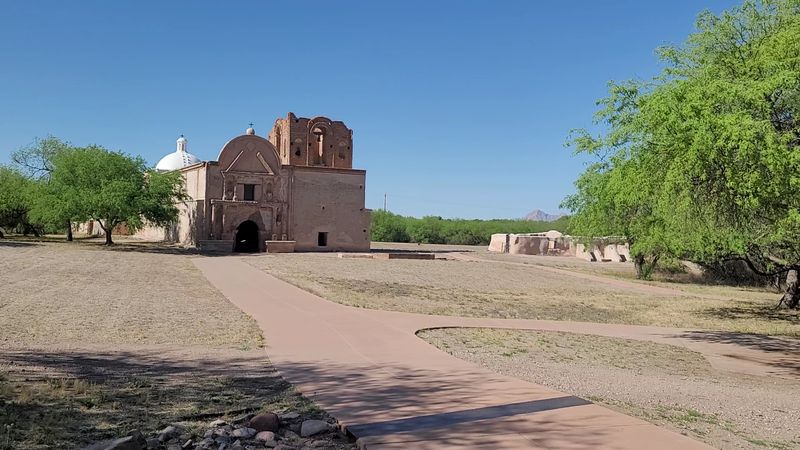
Long before any bell tower rose here, the O’odham people called this stretch of the Santa Cruz River valley home. Spanish missionaries arrived later, with Father Kino remembered as the priest who brought Catholicism to the O’odham communities of the region.
What follows is a story told in chapters. Late imperial Spain ran things one way, early Mexico ran them another, and each government set its own policies toward religious orders and toward the O’odham peoples.
The museum walks you through those shifts in a clear, approachable way, and American history eventually adds one more layer on top.
Here is a detail that surprises plenty of first-timers: the church was never actually finished. Builders poured years into it, yet it stands as an incomplete dream frozen in adobe.
The site also played a role in the Anza expedition, which set out to find an overland route from Mexico all the way to San Francisco. That trail still runs past the grounds today.
Visitors often describe the feeling as walking through overlapping lives rather than simply reading dates on a sign. It is quiet, beautiful and complicated, which is exactly what real history tends to be.
Adobe Walls Left Beautifully Imperfect
Shiny restorations can sometimes erase the soul of an old building. Happily, that never happened here, and returning fans say that restraint is exactly what makes the church so moving.
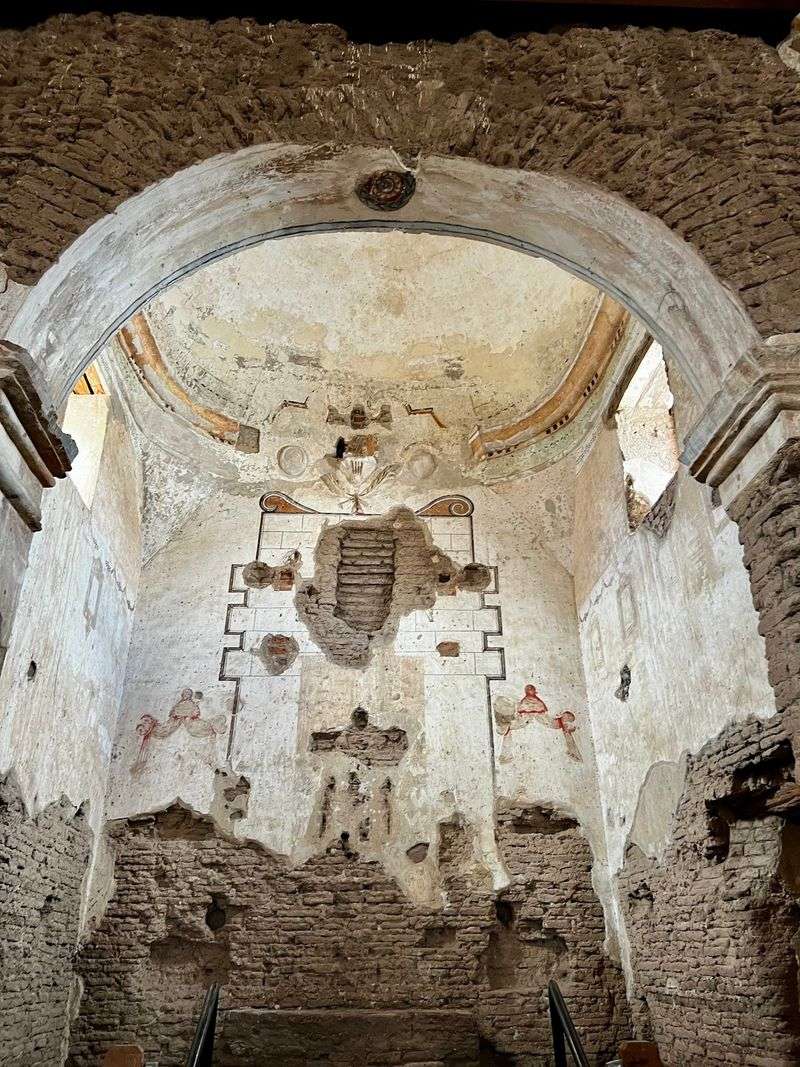
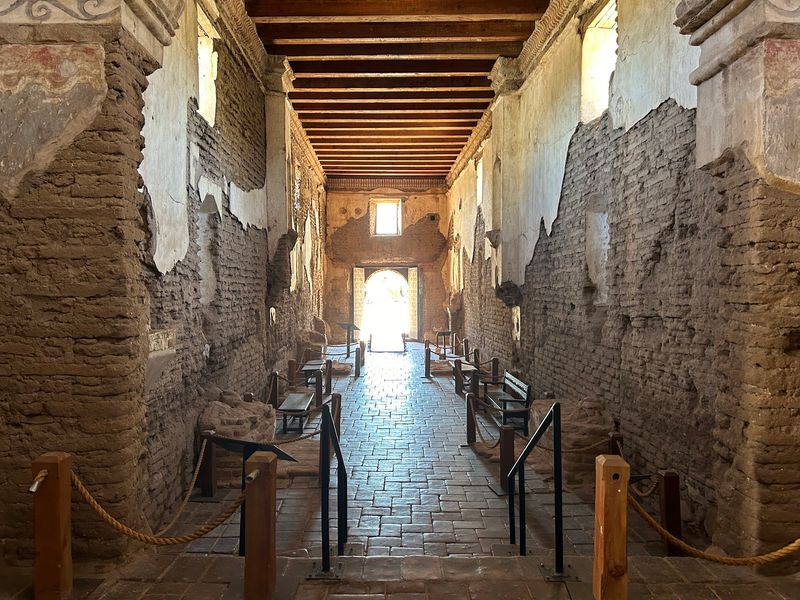
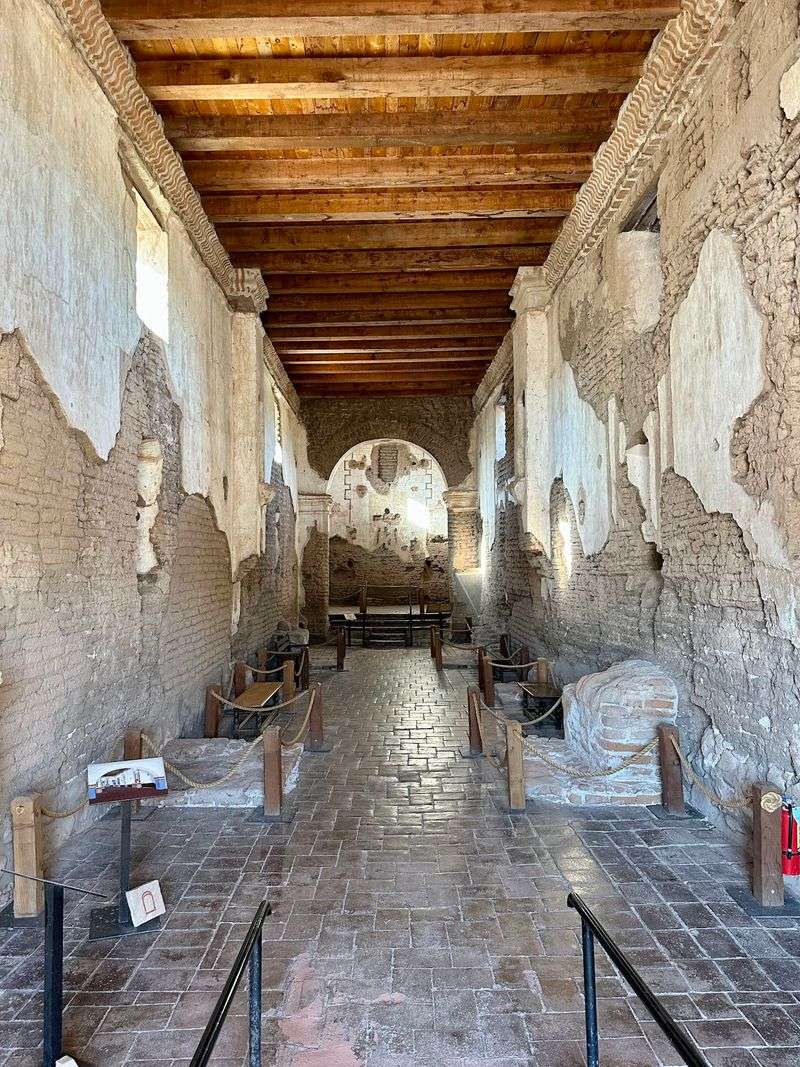
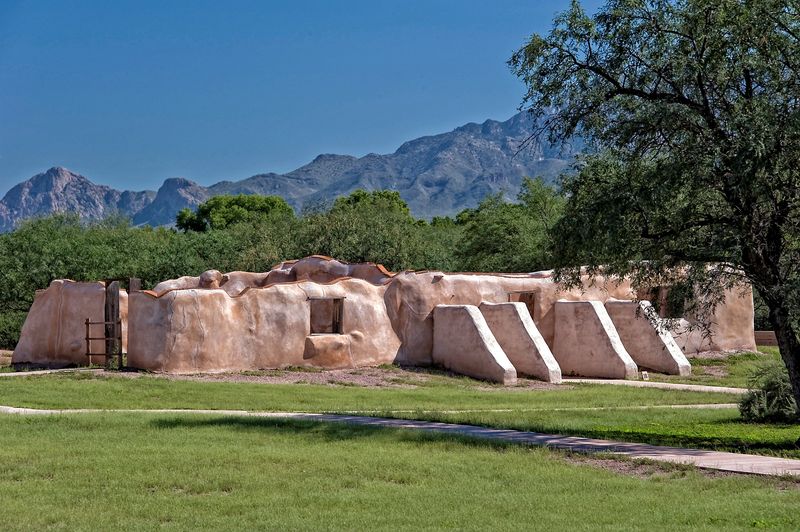
The adobe walls still stand in their weathered, imperfect state, with textures and cracks that tell of countless desert summers and monsoon seasons. It looks old because it is old.
Nobody has painted over the passage of time or dressed it up for the camera.
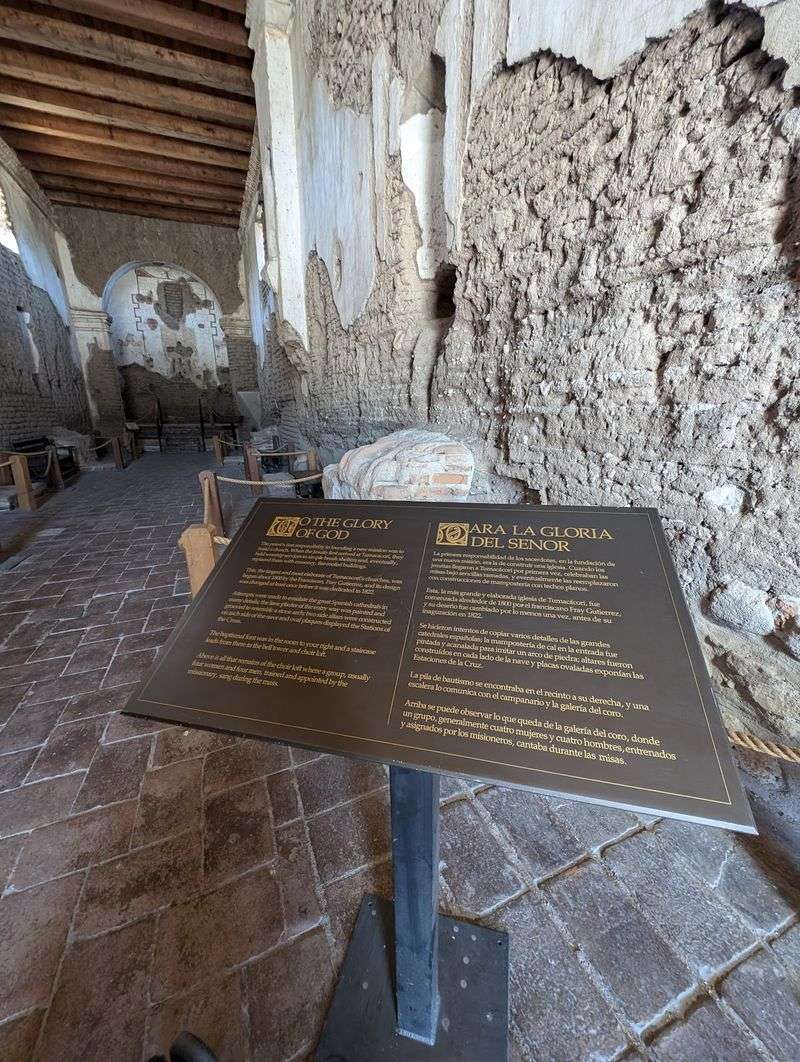
Best of all, you can go inside. Stepping out of the bright Arizona sun into the cool, dim interior feels a bit like entering another century, and the thick earthen walls hush the world outside almost instantly.
Take your time here. Notice how light slips through openings and settles on the worn surfaces, and how the unfinished sections hint at the grand plans builders once had.
Small details reward slow eyes, from doorways to the shape of the ceiling overhead.
Photographers adore the textures, but even without a camera, the church invites quiet reflection. Many travelers find themselves lowering their voices without quite knowing why.
Sacred spaces tend to have that effect, even when they are partly open to the sky.
Arched Porches, a Short Film and a Bilingual Museum
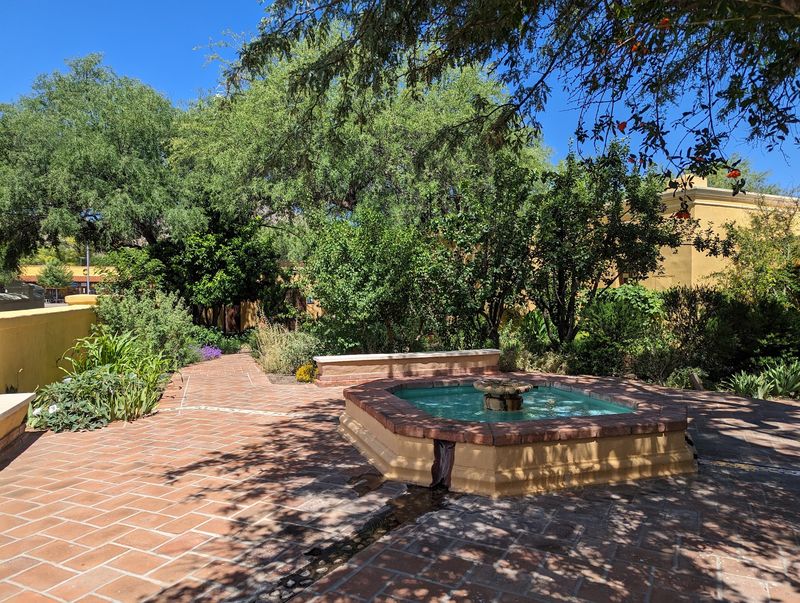
Early twentieth-century designers had a smart idea when they built the welcome center. Rather than clash with the mission, they shaped it to echo the Spanish Colonial architecture it protects, complete with long arched porches that practically beg for a slow stroll.
Start inside with the orientation film. Guests repeatedly call it a wonderful introduction, and it sets the stage so the ruins make sense once you head outdoors.
Skipping it would be like reading the last chapter of a book first.
Beyond the theater, a walk-through museum lays out artifacts and history in both English and Spanish. You will also find Native American displays that help round out the story beyond the missionaries alone.
Visitors describe the exhibits as informative without being overwhelming, which is a rare and welcome balance.
Next door, a small National Park gift shop earns steady praise for its selection. It is a fun spot to grab a souvenir, a book on regional history or a small keepsake for someone back home.
Clean restrooms round things out, a small comfort that matters on any road trip. Before stepping outside, grab the self-guided booklet, because you will want it for the next part.
A Treasure Hunt Written in Tiny Symbols
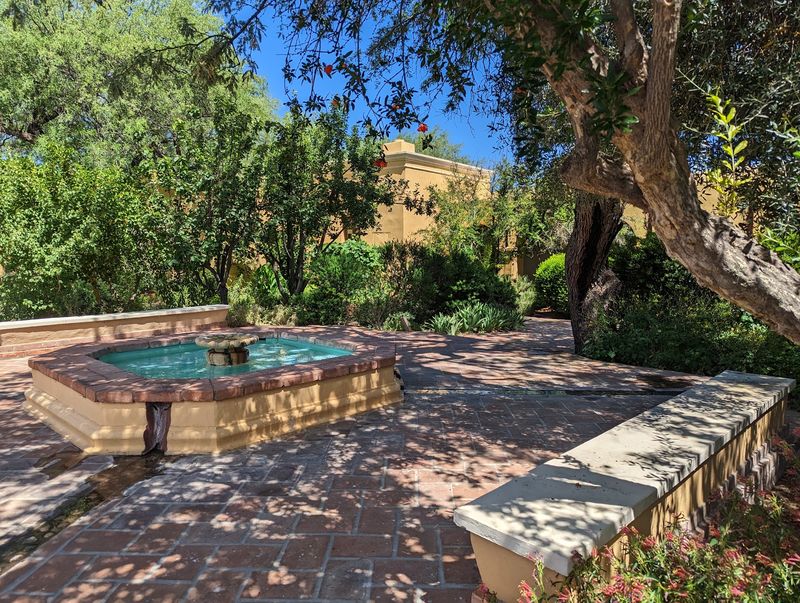
Kids and grown-ups alike tend to love this clever little system. Each stop on the self-guided walking tour has a small symbol engraved beside the building, and a matching icon appears in the visitor map booklet.
Find the carving, flip to the symbol, and read the story of what stood in that spot. It turns a simple walk into a gentle scavenger hunt, and nobody needs a guide to feel fully informed.
Guests praise the booklet as well put together, and the directional maps and signage throughout the grounds are easy to follow. Even visitors who usually dislike wandering without direction feel confident here.
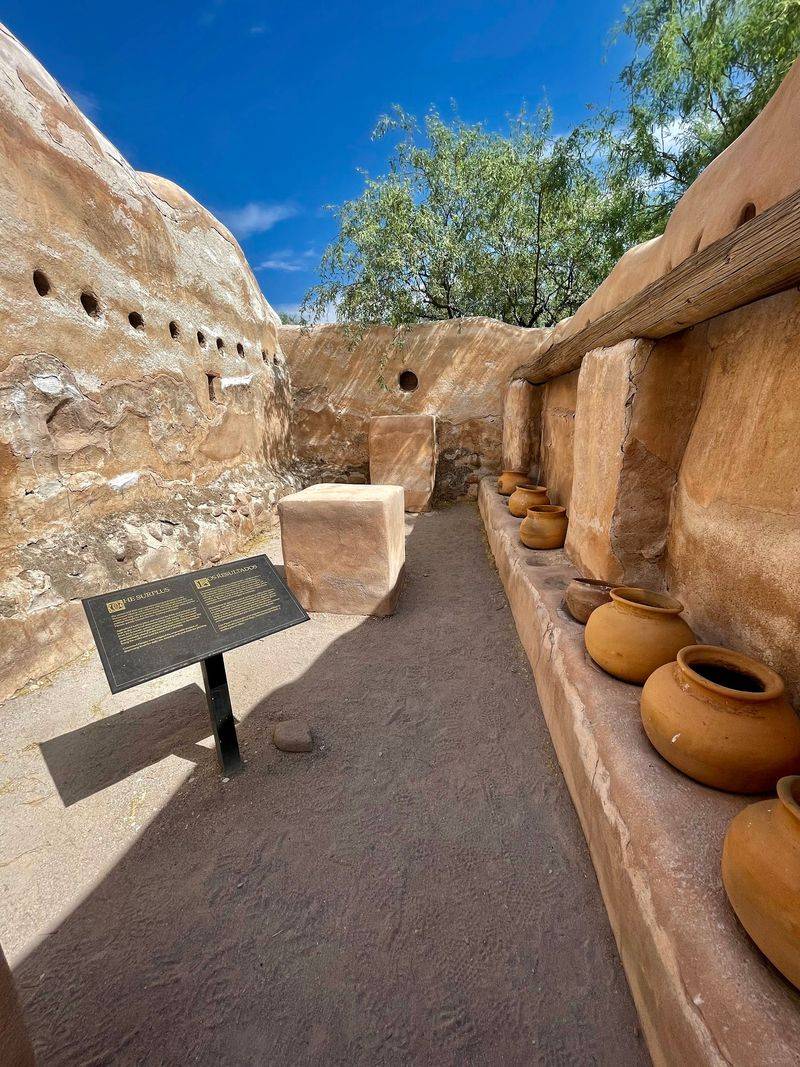
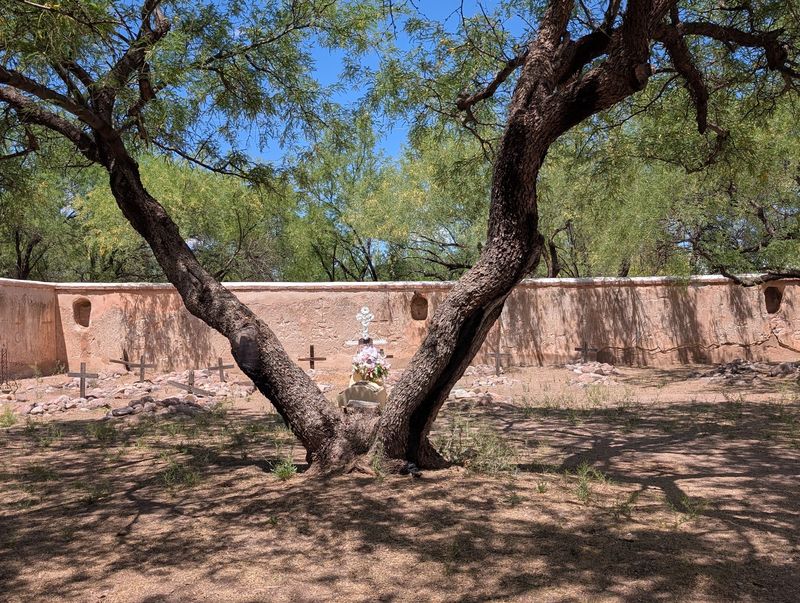
Along the loop, you get to walk through the ruins themselves rather than peering at them from behind a rope. Crumbling foundations, the church, the cemetery and other structures each come with their own chapter of the larger tale.
A quick tip from people who have done it: go slowly. The grounds are compact, but the stories stack up fast, and rushing means missing small carvings and quiet corners.
Bring water, a hat and patience, and let the symbols lead you from one discovery to the next at whatever pace feels right.
Rangers Who Turn Ruins Into Conversations
Ask almost anyone who has visited what surprised them most, and the answer often has nothing to do with bricks. It is the people.
Friendly, knowledgeable rangers show up again and again in visitor stories, and their enthusiasm seems genuinely contagious.
Guided tours are a big draw, and the park offers plenty of different ranger programs throughout the year. Volunteer guides add even more depth, with some described as impressively versed in both the history and the archaeology of the area.
One longtime volunteer in particular has earned a reputation for turning a simple question into a fascinating journey through the past.
Quieter days can be especially rewarding. Travelers who drop by on a slow Monday in the off-season describe staff who are eager to chat, answer questions and share details you would never find on a sign.
Staff members are also known as welcoming and professional, helping first-timers get their bearings. If you arrive curious, you will leave with a head full of stories.
So do yourself a favor and ask whether a tour is running during your visit. A ruin looks like old walls until someone explains who lived there, and then everything changes.
An Orchard and a Courtyard That Hum With Birdsong
Fruit trees in the desert? Absolutely.
The orchard ranks among the most talked-about corners of the park, a leafy reminder that mission communities once grew food right here along the river.
Closer to the buildings, a courtyard garden overflows with edible plants. Visitors describe it as so lovely they could sit for hours, simply listening to birds chirp from the branches.
It is the kind of spot where an afternoon quietly slips away.
Guests who skip the garden area often regret it later, since it holds a surprising variety of interesting plants. Some return specifically to see what is blooming, and certain seasons bring flowers bursting out in every direction.
Shade makes a real difference in southern Arizona, and the grounds offer decent pockets of it for a quiet walk. Benches and picnic tables give you somewhere to rest, snack and soak in the calm.
For gardeners, retirees and anyone craving a slower pace, this green pocket may end up being the highlight. It pairs beautifully with the history, too, because the plants help you imagine daily life for the families who once tended these same patches of earth.
Where the Anza Trail Meets a Flowing River
Water in the Santa Cruz River is not something Tucson residents see often. Near Tumacácori, however, the river frequently holds a real flow, and that alone makes the short walk worth taking.
From a corner of the grounds, a path links to a walking portion of the Juan Bautista de Anza National Historic Trail. The same route that expedition members followed toward California now serves hikers, birders and curious wanderers looking for a peaceful stroll.
The riparian environment near the river feels worlds away from the dry desert many people expect. Tall trees, cooler air and the sound of moving water create a refreshing change of scenery, especially on warmer days.
Birders, take note. Lots of birds flutter around the park, and visitors call it a great place for spotting feathered residents and seasonal travelers alike.
Pack binoculars if you own a pair.
Combining the mission tour with a river walk turns a quick stop into a full, satisfying outing. You get history in the morning and nature by midday, all without spending a fortune or driving far.
Just remember sturdy shoes, plenty of water and a little extra time to linger by the banks.
Fireflies, Luminarias and Warm Tortillas
Glowing insects in Arizona sound like a tall tale, yet this park is one of the only places in the state where fireflies appear. Special firefly events have led guests on a nighttime walk down to the river, guided by rangers.
Participants describe ramadas made of mesquite with ocotillo roofs, red flashlights handed out for the dark trail, and even a homemade firefly model that lit up. It feels like a small piece of desert magic, perfect for families and anyone who loves an after-dark adventure.
Candlelight has its own history here too. The park has hosted luminarias lightings in the past, with flickering lanterns casting soft light across the old adobe walls.
Fans hope the tradition continues, so check ahead before planning around it.
Daytime brings a tastier treat. If luck is on your side, you might catch a tortilla-making demonstration and walk away with a warm, fresh sample.
Visitors of every age rave about those tortillas.
Events like these come and go with the seasons, so a quick call to the park before visiting can help you time things right. Catching one turns a pleasant trip into a lasting memory.
Hours, Parking and Other Handy Details
Planning could hardly be simpler. Tumacácori National Historical Park opens every day of the week from 9 AM to 5 PM, so weekend explorers and weekday retirees both have plenty of options.
Getting there means heading south from Tucson on Interstate 19 and following signs to 1891 I-19 Frontage Rd in Tumacacori. Free off-street parking sits right in front, with plenty of room even on busier days.
For questions about tours or special events, the park can be reached at 520-377-5060.
Visitors mention using their America the Beautiful pass for entry, a handy perk for frequent national park travelers. Fees can change, so confirm current costs before you go.
A few more practical notes:
Picnic tables dot the grounds, making a packed lunch an easy budget win. Restrooms are clean, and most of the site is described as largely accessible for wheelchairs and mobility aids.
Families should ask about the Junior Ranger program, which gives kids a fun mission of their own, and passport collectors will want to grab the park stamp.
Plan on roughly a couple of hours to see everything comfortably, longer if you add the river trail or nearby Tubac.
Worth Every Mile of the Drive South
Grand attractions shout for attention. Tumacácori prefers to whisper, and that quiet confidence is precisely its charm.
Across seasons, visitors return to the same handful of words: peaceful, educational, well maintained and absolutely worth the stop. The adobe church, the bilingual museum, the symbol-marked walking tour, the orchard and the river trail add up to far more than the modest entrance suggests.
Who will love it most? History buffs, naturally, but also birders, gardeners, road-tripping families and retirees looking for a calm, affordable day out.
Tucson residents especially seem to treat it as a must-visit, and pairing the trip with nearby Tubac makes for a full and rewarding day.
Timing helps. Cooler months are ideal for strolling the grounds in comfort, while special evening programs like firefly walks or luminarias, when offered, bring a glowing side of the park few people ever witness.
Whatever brings you here, come ready to slow down. Watch the film, chat with a ranger, taste a tortilla if you are lucky and sit in the garden a little longer than planned.
You will probably drive home already plotting a return visit, maybe with a friend who needs to see it too.