
12 Arkansas Cathedrals And Historic Churches Worth A Special Road Trip In 2026
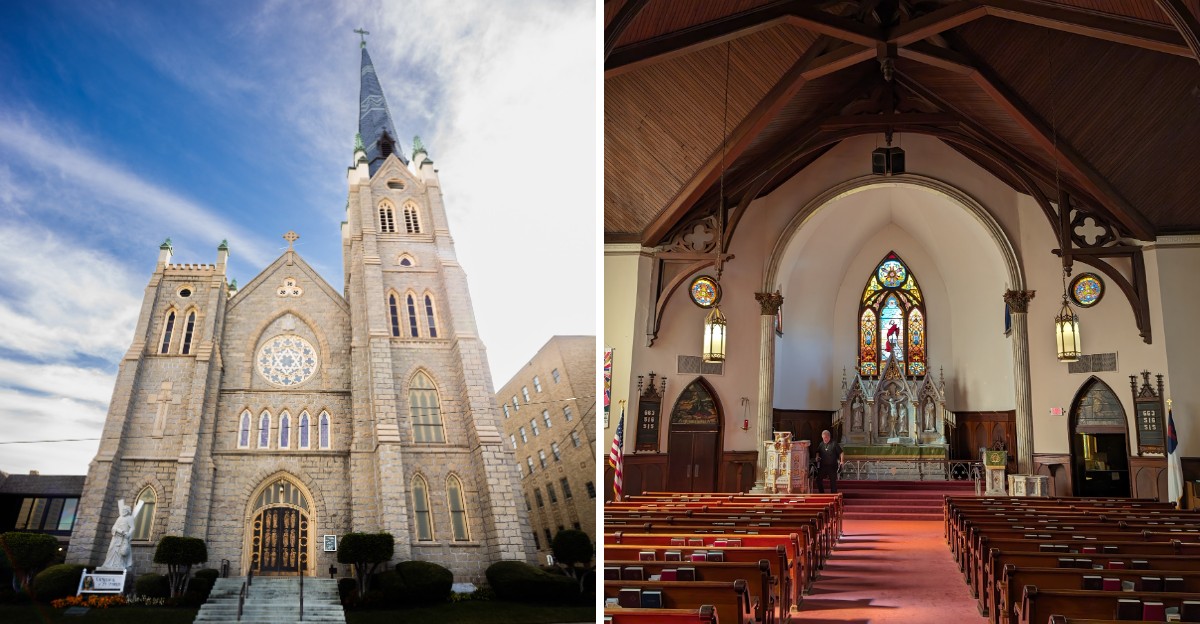
Picture gray granite walls in downtown Little Rock, a sandstone church perched on a hilltop in wine-free farm country, and a glass chapel glowing between Ozark oaks. Arkansas hides some of the most surprising sacred buildings in the South, and many of them sit just off a scenic highway.
Some are grand city cathedrals with booming bells. Others are quiet woodland chapels where sunlight does most of the decorating.
I love that one state can hold both a towering Gothic tower and a chapel made mostly of windows. In this guide, you will find twelve stops worth planning a road trip around in 2026.
Expect stories about immigrant builders, famous architects, painted ceilings, a church entered through its bell tower, and a monastery where monks still pray together every day. Grab a map, a full tank, and a curious mind, because each stop has a story that rewards the drive.
1. Cathedral of St. Andrew, Little Rock
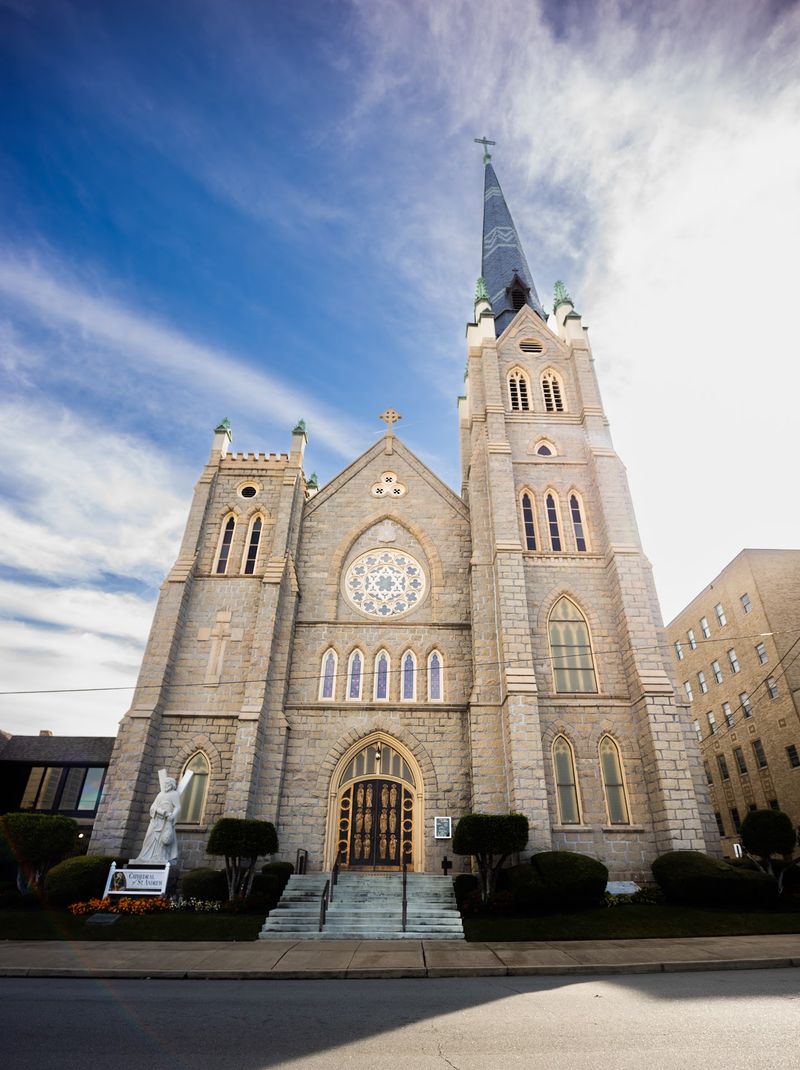
Granite from the nearby Fourche Mountains gives this downtown landmark its rugged gray face. The Cathedral of St. Andrew sits at 617 S Louisiana St in Little Rock, Arkansas 72201, and it is known as the oldest continually operating place of worship in the city.
Architect Thomas Harding designed the building in the Gothic Revival style, with pointed arches and a tall bell tower that rises high above the surrounding streets. That tower holds the heaviest bell in Pulaski County, so the neighborhood never has to wonder when it is time for Mass.
I find it fascinating that stone pulled from local hills became such a grand city symbol.
Inside, the Stations of the Cross carry a funny little story. German American sculptor Joseph Sibbel created them, and they were first meant for Holy Name Cathedral in Chicago.
Somehow they ended up in Little Rock instead, and they have stayed ever since.
Visitors are welcome at services, and free parking is offered across the street during those times. The cathedral also makes an easy first stop on a church road trip, since several other historic buildings on this list sit only minutes away.
Chicago’s loss turned into a lasting gift for Little Rock.
2. Trinity Episcopal Cathedral, Little Rock
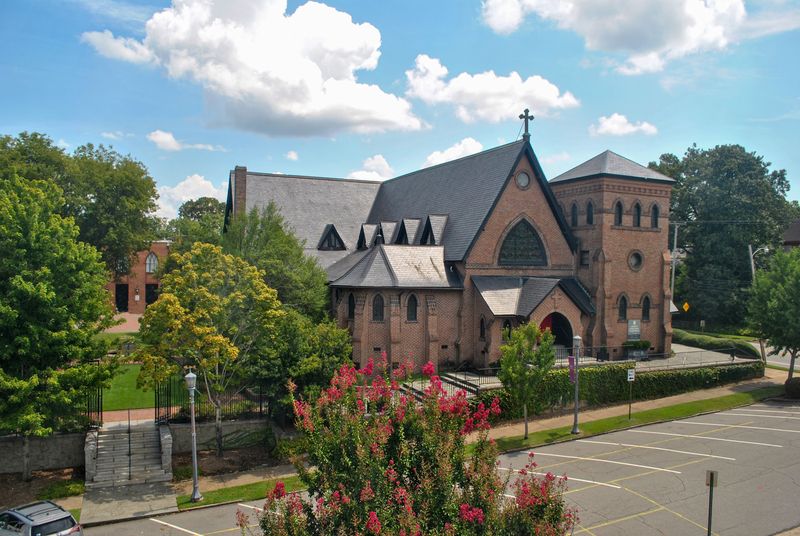
English country churches inspired the look of Trinity Episcopal Cathedral, found at 310 W 17th St in Little Rock, AR 72206. It is recognized as the oldest Episcopal church building in central Arkansas, and its cross-shaped floor plan gives it a classic old-world feel.
Bishop Henry Niles Pierce pushed the project forward, and his son, Reverend A. W.
Pierce, designed it. Walk inside and dark stained pine wraps the space, while stained-glass windows show Trinity symbols such as trefoils and fleurs-de-lis.
The effect is cozy and dignified at the same time.
Music lovers get a real treat here. The pipe organ is described as the largest of its kind in the state, and the tower holds eight bells cast at the Whitechapel Bell Foundry in London.
Ringers still use the traditional English change-ringing style, which sounds like a musical puzzle being solved in real time.
Movie fans may also recognize the cathedral, since it served as a setting for the film God’s Not Dead 2. Honestly, a building with this much character was bound to land a screen role sooner or later.
Plan to listen as much as you look here.
3. Immaculate Conception Church, Fort Smith
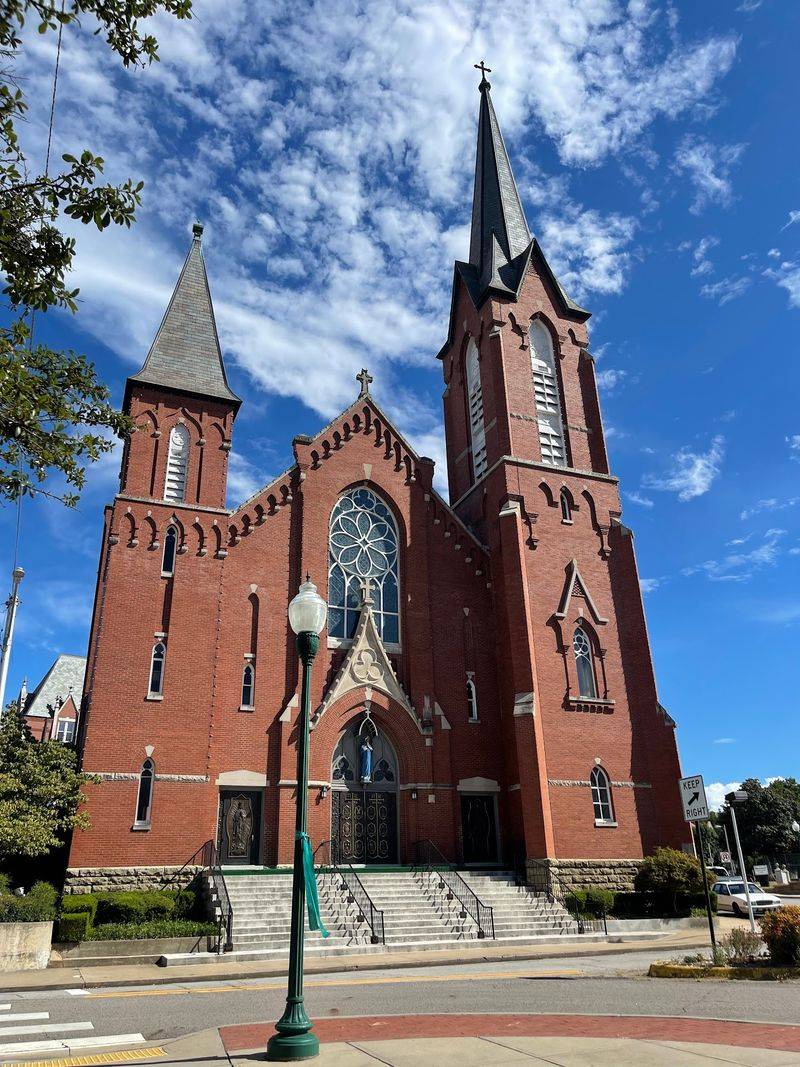
A small log church once stood where Fort Smith Catholics first gathered, long before any spires touched the sky. Today, Immaculate Conception Church at 22 N 13th St, Fort Smith, AR 72901, is a proud downtown landmark with deep roots in the city.
The parish traces its story back to land donated by Irish immigrant Michael Manning, who hosted the first known Mass in Fort Smith. After a cyclone destroyed an earlier building, the congregation rebuilt with a Gothic Revival design by Chicago architect Adolphus Druiding.
That comeback story gives the church a quiet strength you can almost feel.
The stained glass is the showstopper. It was created by the F.X.
Zettler Royal Bavarian Art Institute of Munich, Germany, and the colors glow best when sunlight hits the windows from outside. Later refurbishments and a capital campaign called Restoring to Glory helped protect that beauty for new generations.
Visitors will find a welcoming atmosphere and plenty of parking, which makes a stop here simple even on a packed travel day. Fort Smith also has its own frontier history, so the church fits nicely into a broader downtown stroll.
Munich craftsmanship shines surprisingly bright on the western edge of the state.
4. St. Boniface Catholic Church, Fort Smith
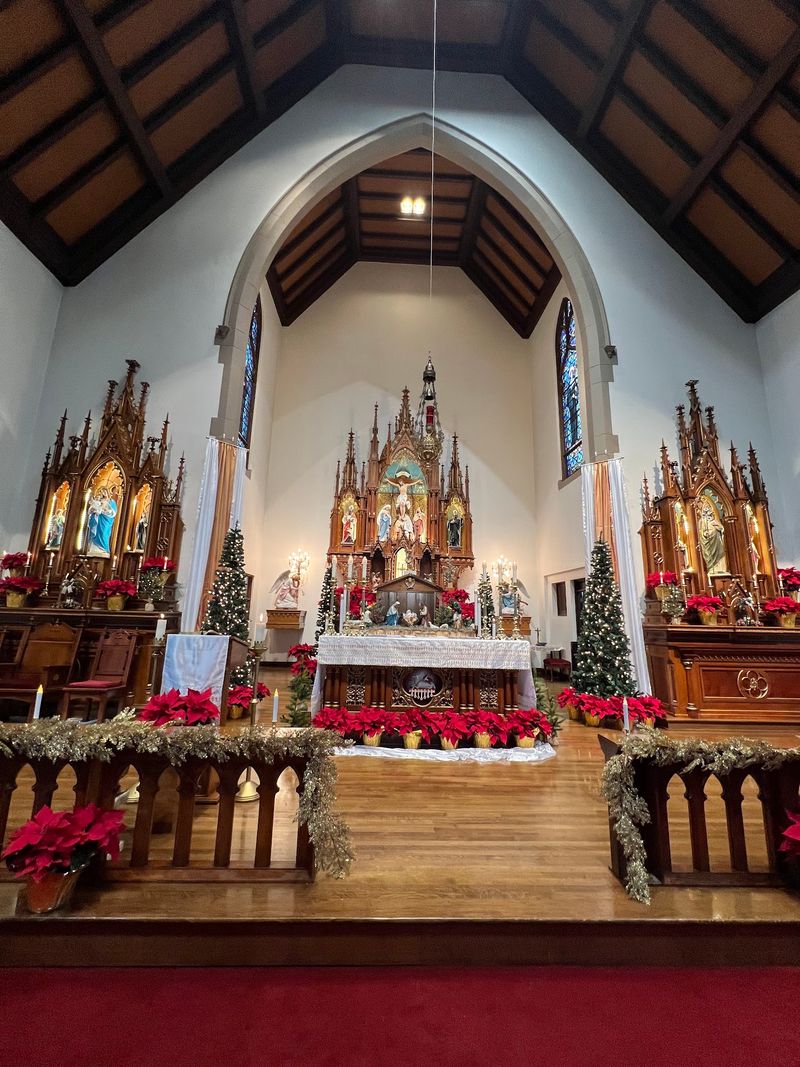
German immigrants wanted a church that felt like home, and St. Boniface Catholic Church delivered. You will find it at 204 N 18th St in Fort Smith, AR 72901, just a short hop from Immaculate Conception.
Architect Charles L. Thompson gave the building a Gothic design full of pointed arches, slender columns, and upward lines that pull your eyes toward the ceiling.
It echoes the feel of European churches without trying too hard. The building is listed on the National Register of Historic Places, which is a nice badge of honor for any structure.
The main altar deserves a slow look. Hand-carved and painted statues of Saint Edward, Saint Catherine, and Saint Henry stand there, all made with German artistry.
The Stations of the Cross also show that same careful Old World craftsmanship, and I appreciate how much patience went into every small face and fold of cloth.
History is only half the story here. The church still serves a diverse community today, including a strong Spanish language program.
That mix of old German carvings and a lively modern parish makes St. Boniface feel less like a museum and more like a living neighborhood heartbeat.
5. St. Mary’s Catholic Church, Altus
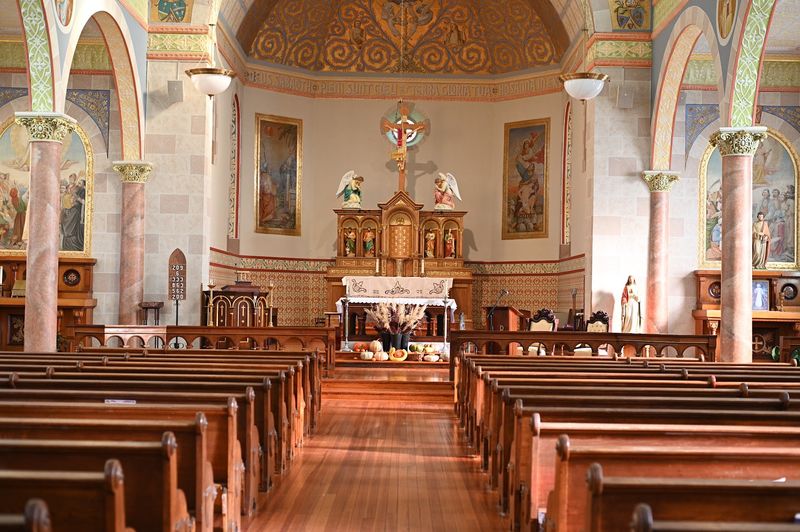
Up on St. Mary’s Mountain, a white sandstone church looks out over the Arkansas River Valley like it has been keeping watch for generations. St. Mary’s Catholic Church sits at 5118 St Mary’s Ln, Altus, AR 72821.
Swiss-German settlers built this Romanesque church to keep their faith alive in a new land. The stone came straight from the hillside next door, so the building truly belongs to its spot.
The outside is simple and bright, which makes the inside even more of a surprise.
Step through the doors and color takes over. German artist Fridolin Fuchs painted vivid murals across the interior, working under the guidance of Father Placidus Oechsle.
Gold leaf lines the walls, and some people compare the paintings to the style of the Sistine Chapel. That comparison sounds bold until you see the ceiling in person.
A restored pipe organ adds sound to the scene during services. The church is open most days for visitors who want time for prayer or quiet reflection, and the drive up the hill offers pretty valley views along the way.
Few small towns can claim a ceiling this dazzling.
6. St. Elizabeth Catholic Church, Eureka Springs
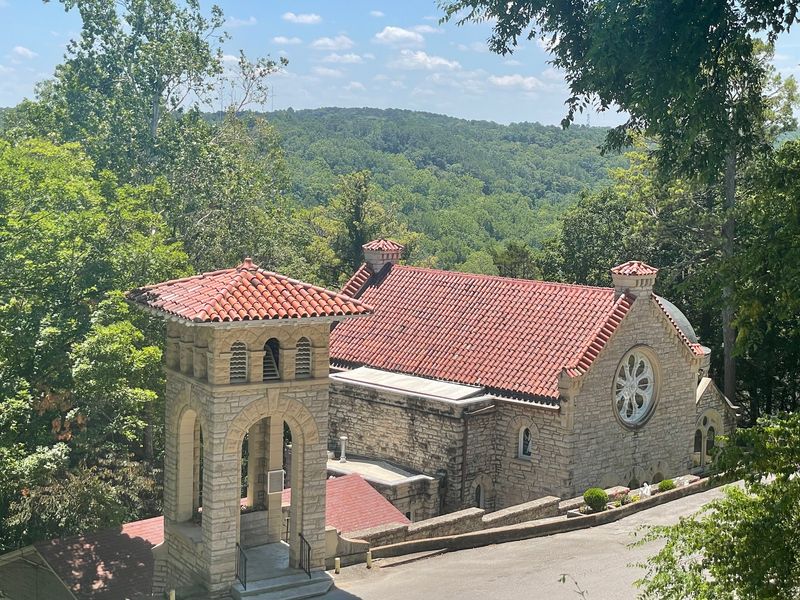
Most churches let you walk in through the front door. At St. Elizabeth Catholic Church, 30 Crescent Dr, Eureka Springs, AR 72632, you enter through the bell tower instead, a quirk that earned mentions in Ripley’s Believe It Or Not.
The church began as a memorial chapel built to honor the benefactor’s mother, Elizabeth. Native limestone forms the walls, and the domed design takes inspiration from the Hagia Sophia in Istanbul.
Rose windows, stained-glass accents, and marble imported from Italy add plenty of polish to this hillside hideaway.
The walk from the bell tower is lined with statuettes showing the Stations of the Cross. Once inside, look up.
A sparkling crystal chandelier hangs in the main dome, and a restored rotunda ceiling reveals deep blue paint dotted with gold stars. I have to say, a starry ceiling is a pretty great way to make people pause.
Views of the Ozark Mountains surround the property, so it is popular for weddings and sightseeing alike. Eureka Springs loves its spooky reputation, and some visitors claim the church gives them chills.
Whatever you feel, the tower entrance alone makes this a stop worth ringing up.
7. Mildred B. Cooper Memorial Chapel, Bella Vista
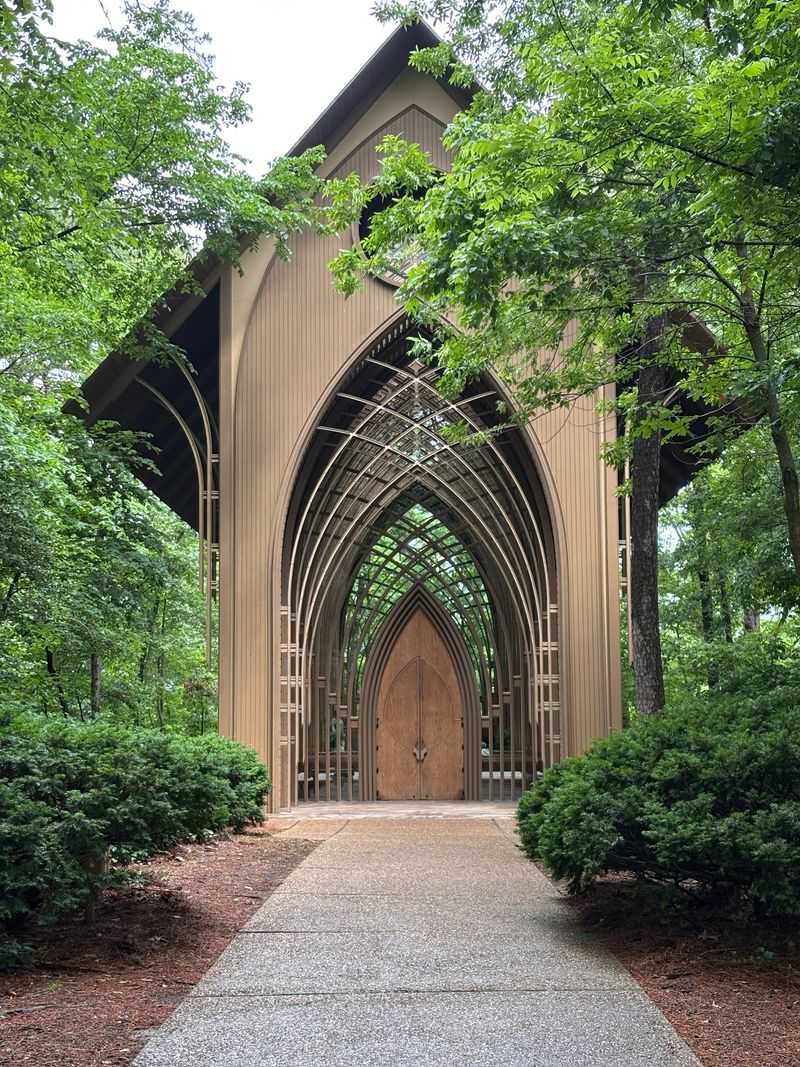
Steel arches rise through the treetops at the Mildred B. Cooper Memorial Chapel, 504 Memorial Dr, Bella Vista, AR 72714.
The chapel honors Mildred Borum Cooper, a woman remembered for her deep love of the outdoors.
Famed architect E. Fay Jones, who trained under Frank Lloyd Wright, designed it with his partner Maurice Jennings.
A row of repeating Gothic arches frames tall walls of glass, while field stone walls anchor the building to the hillside. The result feels light and airy, like the forest was invited to every service.
Sunlight is the real decorator here. It pours through the windows and casts leaf-shaped patterns across the limestone and flagstone floor, changing as the day moves along.
The chapel overlooks Lake Norwood, and the wooded setting keeps things calm and hushed. I think the way light shifts across the floor is almost worth the trip by itself.
The chapel is non-denominational and has no admission fee. It is open to the public when private events are not scheduled, and it is a favorite spot for weddings, so checking ahead can save disappointment.
Few places manage to feel this peaceful without saying a single word.
8. Thorncrown Chapel, Eureka Springs
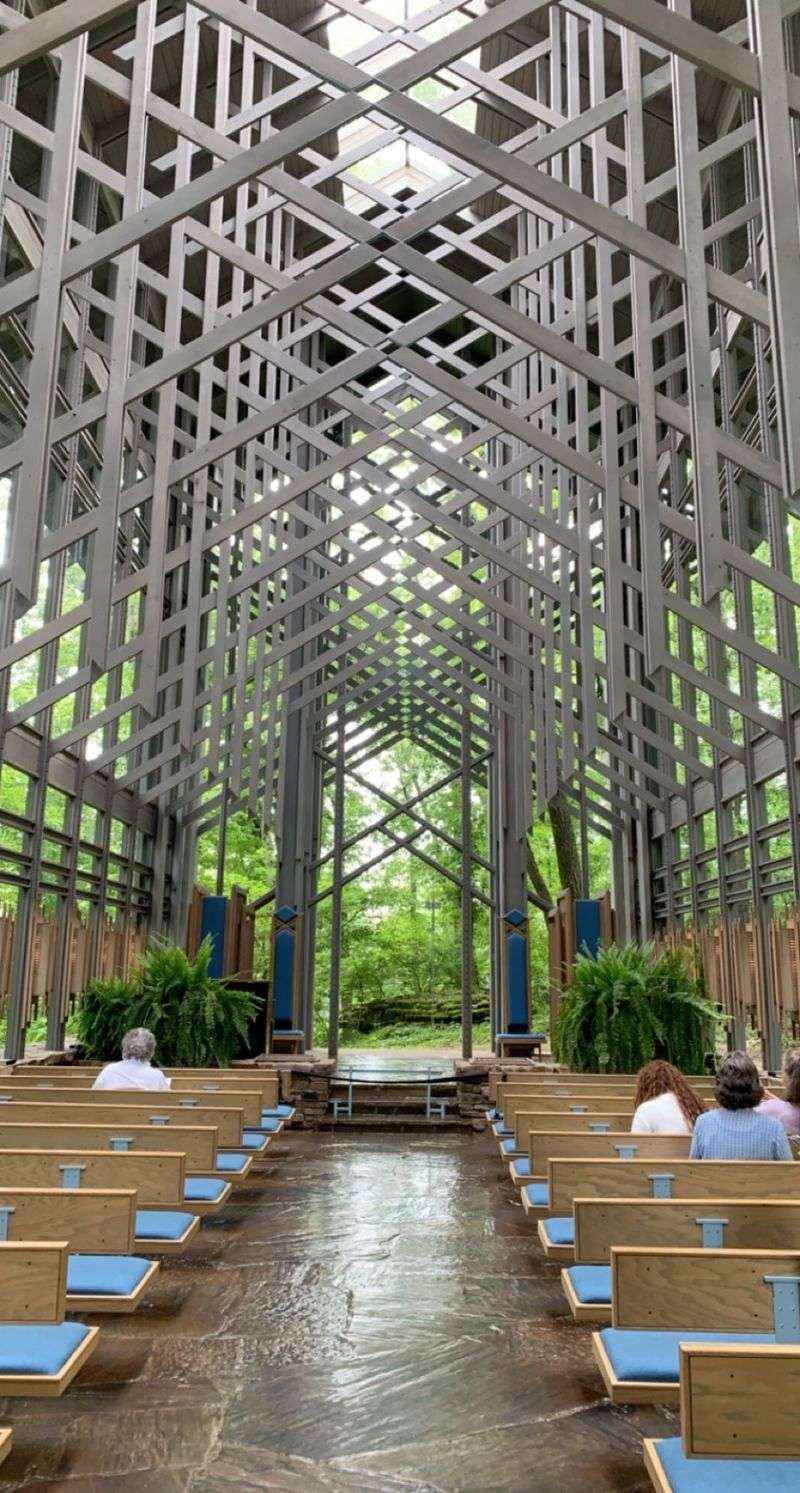
Wood, glass, and stone meet in perfect harmony at Thorncrown Chapel, 12968 Hwy 62 W, Eureka Springs, AR 72632. Located in the Ozark woods, this chapel looks less built and more grown.
E. Fay Jones designed the structure as a place for meditation.
Hundreds of windows fill the walls, and the crisscrossing wooden beams create a pattern that seems to climb forever. The building rests on native stone and colored flagstone, which helps it blend right into the forest floor.
Architecture experts have praised Thorncrown as one of the finest religious spaces of modern times, and it earned major honors from the American Institute of Architects. Millions of people have come to see it since it opened.
Given how many visitors it draws, I am impressed that it still feels so quiet.
The chapel is free to visit, and donations are accepted. Sunday services run from April through October, with a reduced schedule from November through the third week of December.
Fall is an especially lovely season, when colorful leaves press up against the glass on every side. It is proof that a church can wear the whole forest as its stained glass.
9. Anthony Chapel, Hot Springs
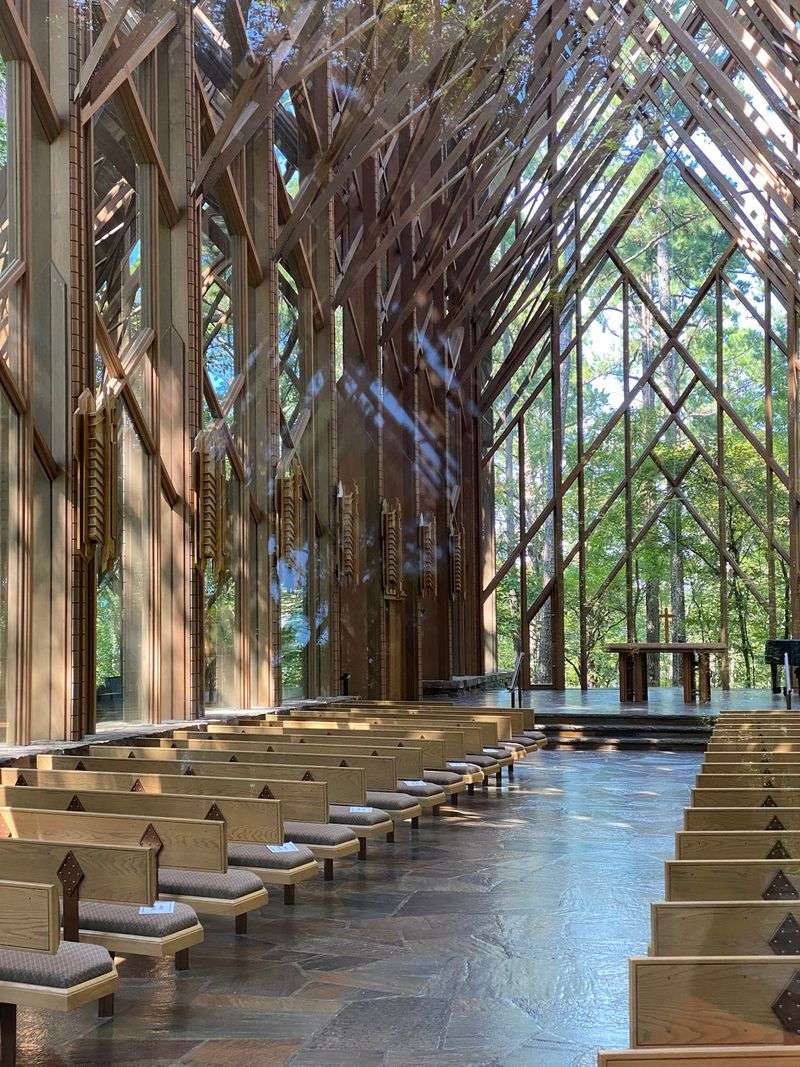
Garden lovers get a bonus at Anthony Chapel, 550 Arkridge Rd, Hot Springs, AR 71913. It sits beside Garvan Woodland Gardens, so a visit can easily turn into a full day exploring the grounds.
Architects Maurice Jennings and David McKee designed the chapel, and Jennings had long partnered with E. Fay Jones.
Towering wooden beams hold up walls of floor-to-ceiling glass, letting the surrounding forest become part of the room. Sunlight spills in and gives the inside a soft, gentle glow.
This is one of the best-known glass chapels in the state, and it is a hugely popular wedding spot. The views stay lovely throughout the year as the surrounding landscape changes with the seasons.
Visitors may view the chapel during regular hours when it is not reserved for a private event. Admission fees apply when entering Garvan Woodland Gardens itself.
Weddings can limit chapel access at times, so checking the current calendar before visiting is smart. Here, the scenery practically officiates every moment.
10. Subiaco Abbey, Subiaco
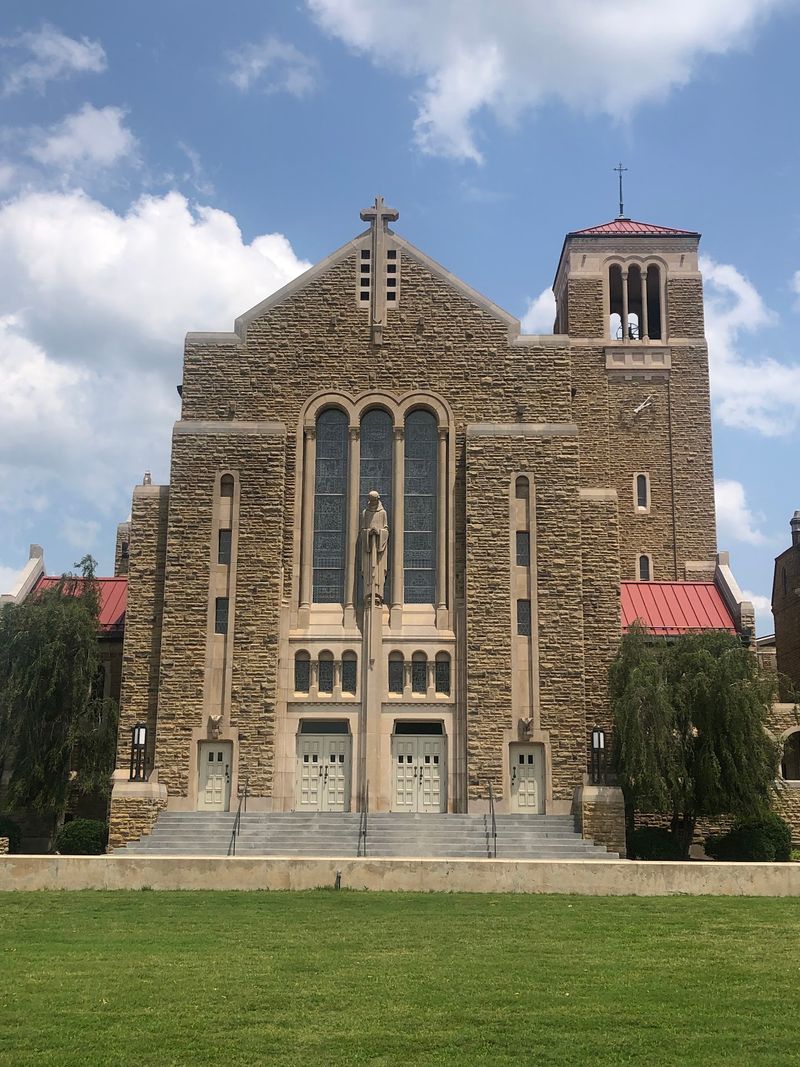
Benedictine monks from Indiana arrived in the river valley to serve German-speaking Catholic immigrants, and their work still continues. Subiaco Abbey stands at 405 N Subiaco Ave, Subiaco, AR 72865, named after St. Benedict’s first monastery in Italy.
Sandstone buildings give the campus a warm, solid look, and the Romanesque Abbey Church is the centerpiece. The current church was finished after a fire damaged an earlier one, and its many stained-glass windows tell stories of faith in bold color.
Walking the grounds feels peaceful and unhurried.
This is a working monastery, which makes it different from most stops on this list. It also runs a preparatory academy and a retreat center.
Visitors can grab a brochure for a self-guided tour, while groups can arrange tours led by monks to see places like the inner court, refectory, and museum.
Guests may also listen as the monks gather for communal prayer several times each day. Before heading out, stop by for handmade goodies such as peanut brittle or the famous monk sauce.
I love that a spiritual retreat also comes with snacks, which feels like a very practical kind of blessing.
11. First Missionary Baptist Church, Little Rock
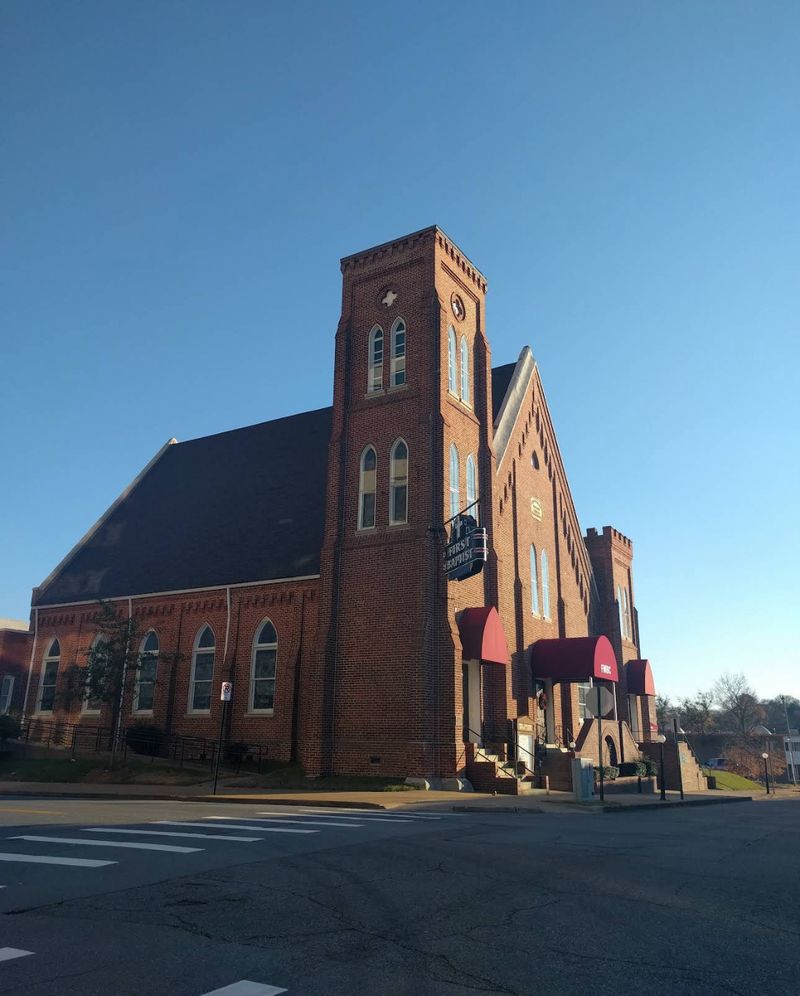
Few buildings in Little Rock carry as much civil rights history as First Missionary Baptist Church. It stands at 701 S Gaines St, Little Rock, AR 72202, and it is home to one of the oldest African American congregations in the state.
The congregation was founded in 1845 by a formerly enslaved man. The red-brick Gothic Revival building was constructed by formerly enslaved craftsmen, and it has stood as a symbol of strength and community ever since.
Its story reaches far beyond Sunday services.
The church became a center for change. Hundreds once gathered here to protest the Separate Coach Law before marching to the state capitol.
Later, Dr. Martin Luther King Jr. visited and preached from its pulpit in 1963. Standing on the same ground as those moments is powerful, and I find that kind of history hard to shake off.
The historic building continues to serve an active congregation today, preserving an important piece of Little Rock’s religious and civil rights history.
12. First Lutheran Church, Little Rock
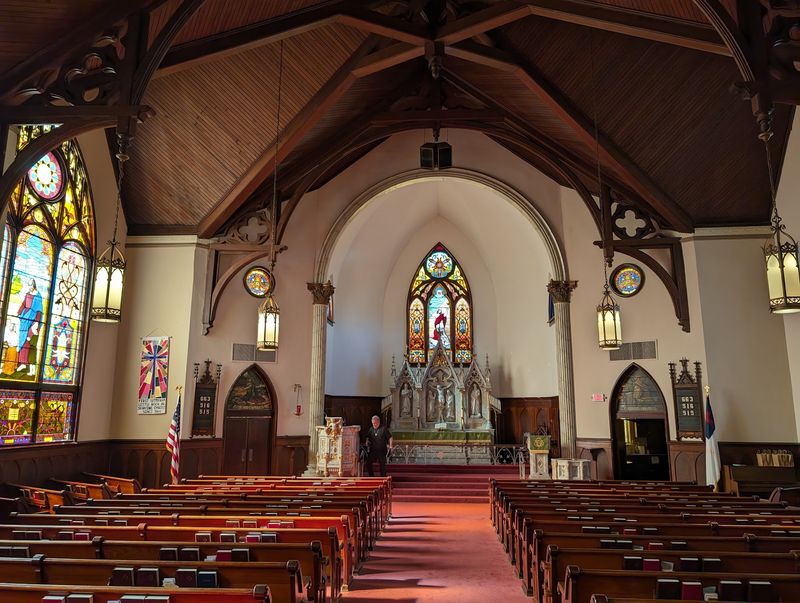
Soft buff-gray brick makes First Lutheran Church stand out in a neighborhood full of red brick. You can find it at 314 E 8th St, Little Rock, AR 72202, inside the MacArthur Park Historic District.
The building shows off classic Gothic Revival style. Its front is not perfectly balanced, with towers of different sizes and shapes, plus a steep roof and pointed arch windows and doors.
That lopsided look is on purpose, and it gives the church a playful personality among its stately neighbors.
The present church was completed in 1888 with a red-brick exterior. In 1926, a layer of buff brick was added over the original brick, making most of the exterior walls substantially thicker.
The tall steeple rises above the historic district and works as a handy landmark while you explore the park and nearby streets.
Visitors are welcome at worship services. The active congregation also continues to use the adjacent education building for classes and church activities.