
This Gorgeous Arkansas Trail Is Basically Heaven On Earth In The Fall
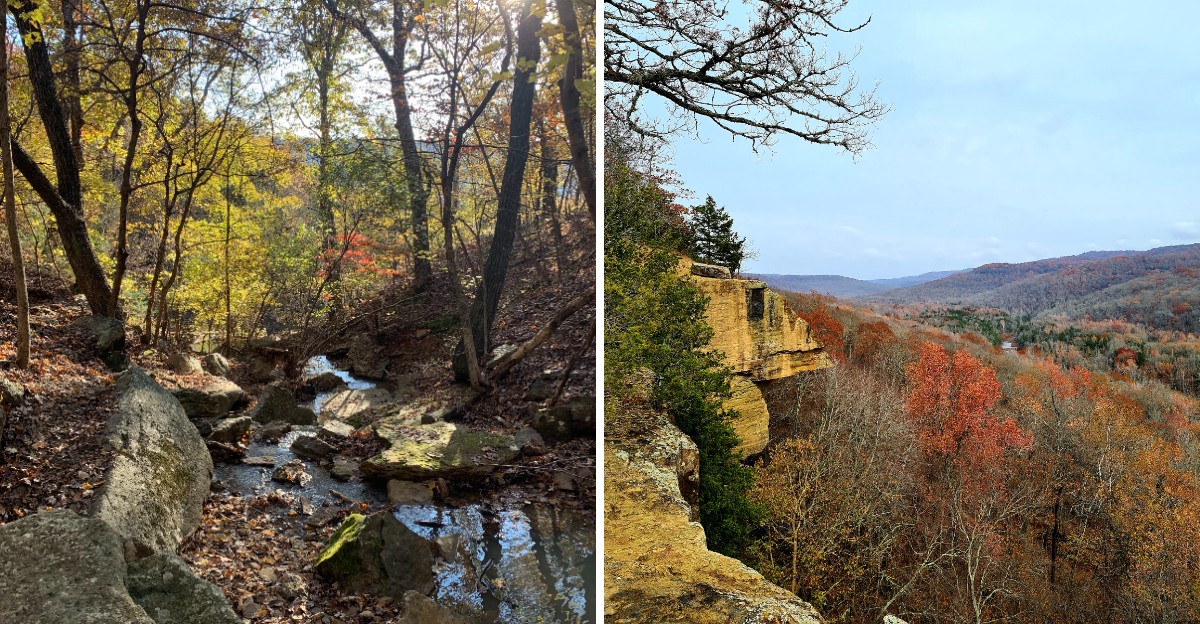
Fall hikes do not need endless miles to make an impression. This one climbs through the Ozarks toward a broad sandstone bluff where the view suddenly stretches across the Lee Creek Valley.
Before that reveal, the trail works through wooded slopes with stone steps, rocky ledges, and leaves gathering underfoot as the season changes. The climb is enough to feel like a hike, but it still fits into part of a day.
That balance makes the overlook even more appealing when October color begins spreading across the ridges. There is also a thread of local history nearby, with Civilian Conservation Corps work still tied to the park landscape.
Arkansas is packed with autumn scenery, but this route puts hikers right in the middle of it instead of keeping the color outside a car window. The final bluff view is the reason many people remember the trail long after heading home.
A Forest Trail Made For Fall Color
Picture a hillside so bright with orange and gold that the trees seem to glow on their own. Every autumn, one loop trail in the Ozark Mountains turns into exactly that kind of scene.
Oaks and hickories crowd the slopes here, and their leaves shift color as the cool weather settles in. The result is a forest that looks freshly painted, one hillside at a time.
The route runs about three miles as a loop, which makes it friendly for families and newer hikers. Most people can finish it in an afternoon without feeling wiped out.
I love that such a big payoff comes with such a manageable distance. Few trails hand out this much scenery for so little mileage.
The trail sits inside Devil’s Den State Park, one of the most famous outdoor spots in Arkansas. The park is tucked into the Boston Mountains, a rugged part of the Ozarks known for deep valleys.
Parking is right at the bottom of the hill, so the adventure starts the moment you step out of the car. The lot can fill quickly on busy fall weekends.
Cell service fades on the drive in, so a downloaded map is a smart idea. All of this leafy fun begins at Yellow Rock Trailhead at 354655 AR-74, West Fork, AR 72774.
Stone Steps Lead Deeper Into The Woods
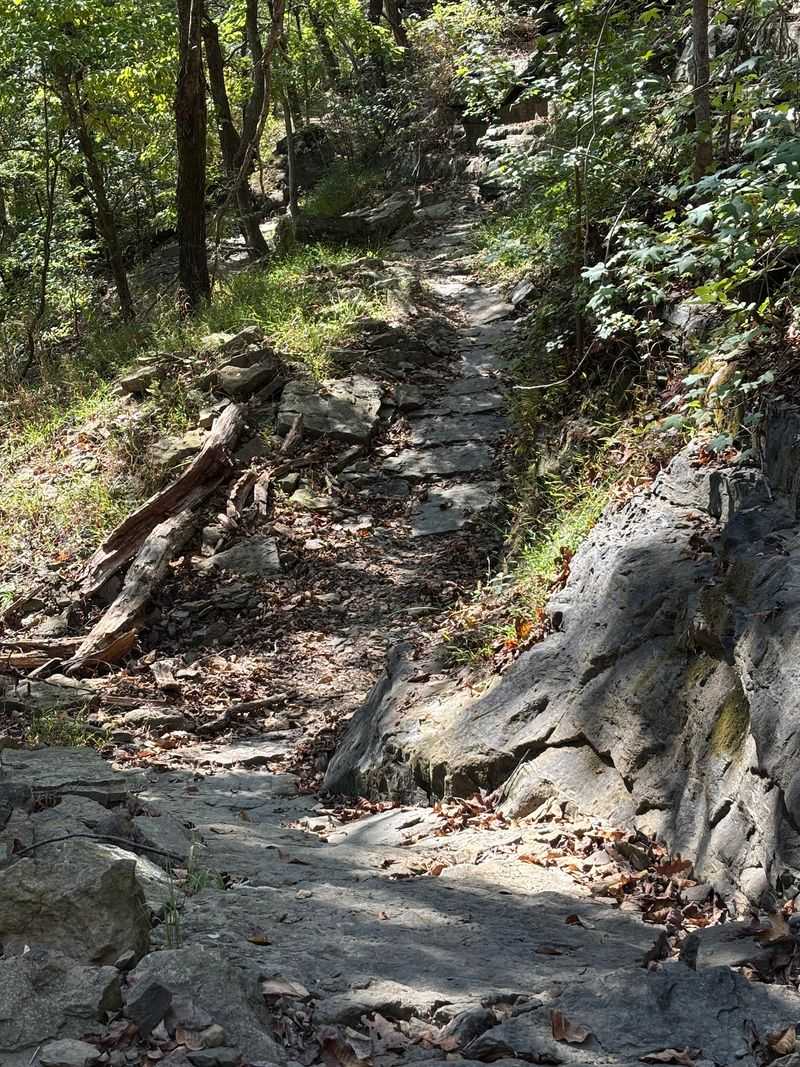
Rock by rock, the path starts climbing almost as soon as it leaves the parking area. Stone steps and flat slabs help hikers gain height without slipping around on loose dirt.
Those slabs are a real help after a rainy spell, when the ground can turn muddy. They give boots something solid to land on while the forest drips all around.
The trail is marked with white blazes, so keep an eye out for those painted markers on trees and rocks. Some turns come quickly, and one sharp bend near an overhanging rock is easy to miss.
I find it charming how naturally the steps blend into the hillside. They seem to belong to the mountain rather than to a trail crew.
Shade covers much of this stretch, which keeps things cooler on sunny autumn days. Sturdy shoes with good grip make the uneven stones far more pleasant to handle.
Kids usually love this part, since hopping up rock steps turns into its own little game. Parents may notice the climb more than the young ones do.
Take it slow and the steps become a steady rhythm rather than a chore. Before long, the parking lot vanishes behind the trees.
Autumn Leaves Cover The Climb
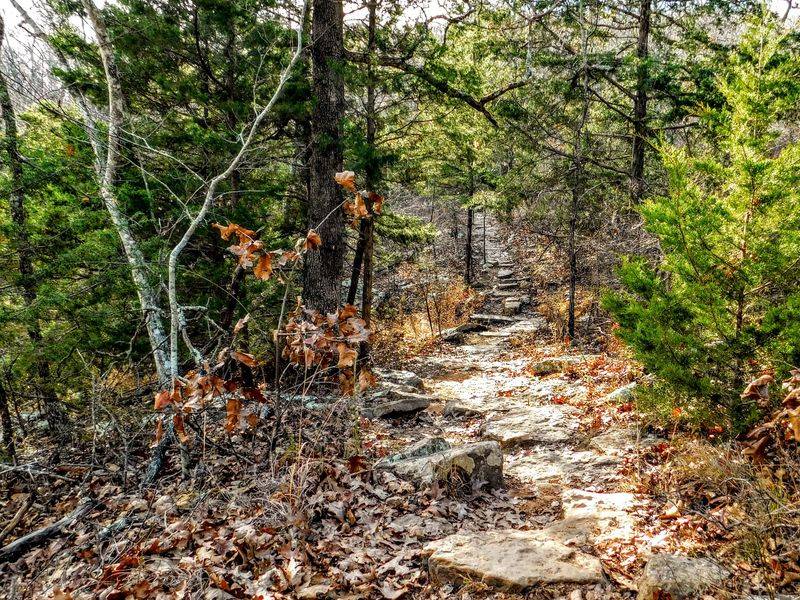
Crunch is the official soundtrack of this trail once fall arrives. Fallen leaves pile up along the path, and every step adds a crispy little note to the walk.
The climb is moderate, with some uphill work that gets the heart pumping. Hikers new to the trail might need a few extra breaks, and that is perfectly fine.
Those pauses come with a bonus, because the colors overhead are worth staring at anyway. Sunlight filters through the canopy and turns the path into a patchwork of gold.
Leaves can hide loose rocks and roots, so watch your footing on the way up. Wet leaves get slippery too, especially after a storm rolls through the valley.
A leaf-covered trail is one of fall’s best small pleasures. It is hard to stay grumpy while kicking through piles of golden leaves.
Peak color in the Ozarks usually shows up in late October into early November. The exact timing shifts each year depending on the weather.
A light jacket is handy for chilly mornings that warm up by lunch. By the halfway point, most hikers are happy to tie it around their waist.
Dogs on leashes are welcome here too, so four-legged hikers can join the leaf party. Their noses will probably find the forest even more exciting than the view.
Sandstone Bluffs Rise Beside The Path
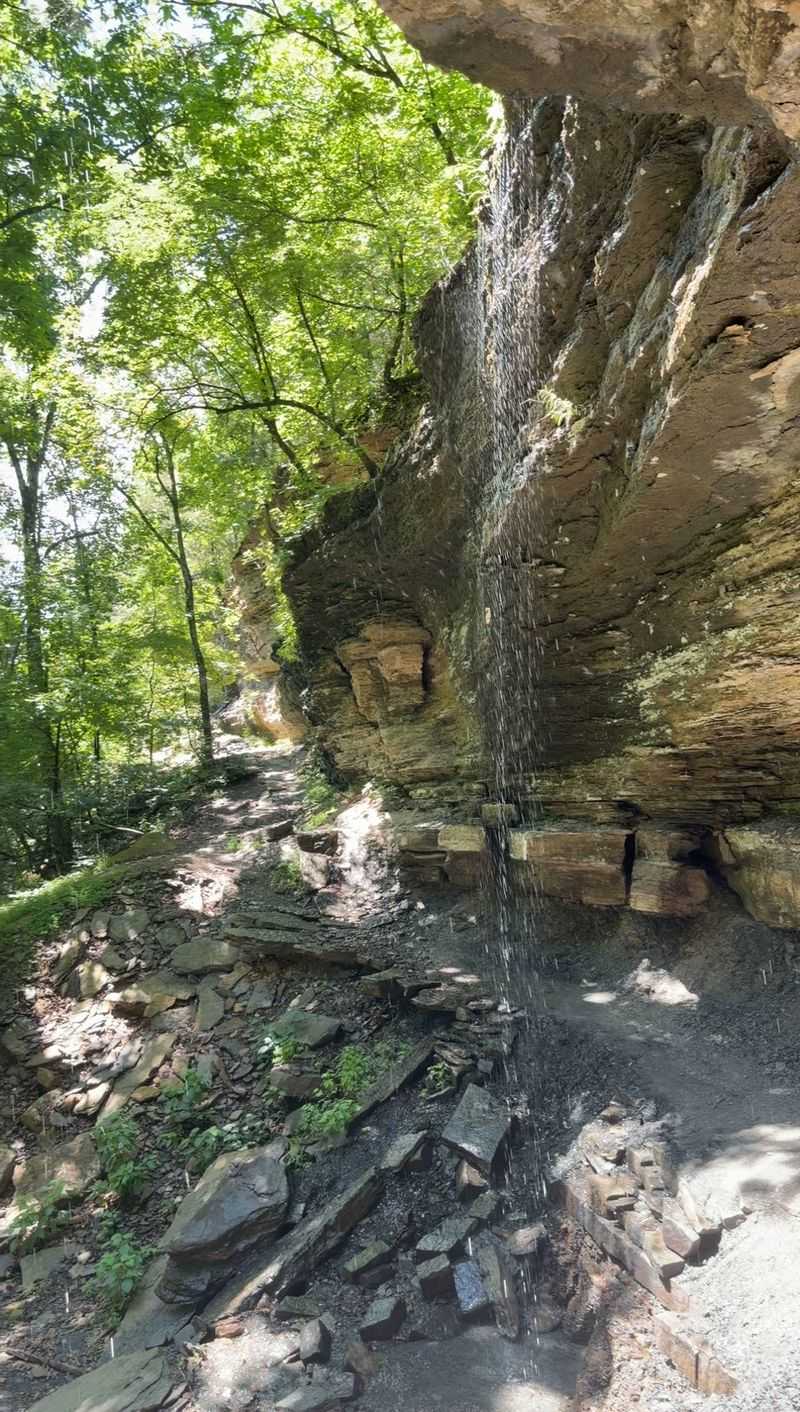
Huge walls of sandstone rise right beside the trail as it winds uphill. Their rough faces show layers of rock stacked up over a very long stretch of time.
Some of the rock hangs out overhead, forming shelters and small caves along the route. Kids tend to spot these little hideouts first and want to peek inside.
On warm days, cool air sometimes drifts out of cracks in the rock. That natural breeze is a surprise treat for anyone who worked up a sweat on the climb.
The bluffs take on warm yellow and tan shades, which help explain the trail’s name. Moss and lichen add patches of green that pop against the stone.
I appreciate how the rocks give the forest a sense of drama. Without them, the hike would be pretty, but these cliffs make it memorable.
Climbing on the formations is not a great idea, since the surfaces can be crumbly or slick. Staying on the marked path keeps both hikers and the rocks in good shape.
Photographers will want extra time here, especially when orange leaves frame the pale stone. The contrast makes even a quick phone snapshot look impressive.
The Trail Opens Onto A Massive Bluff
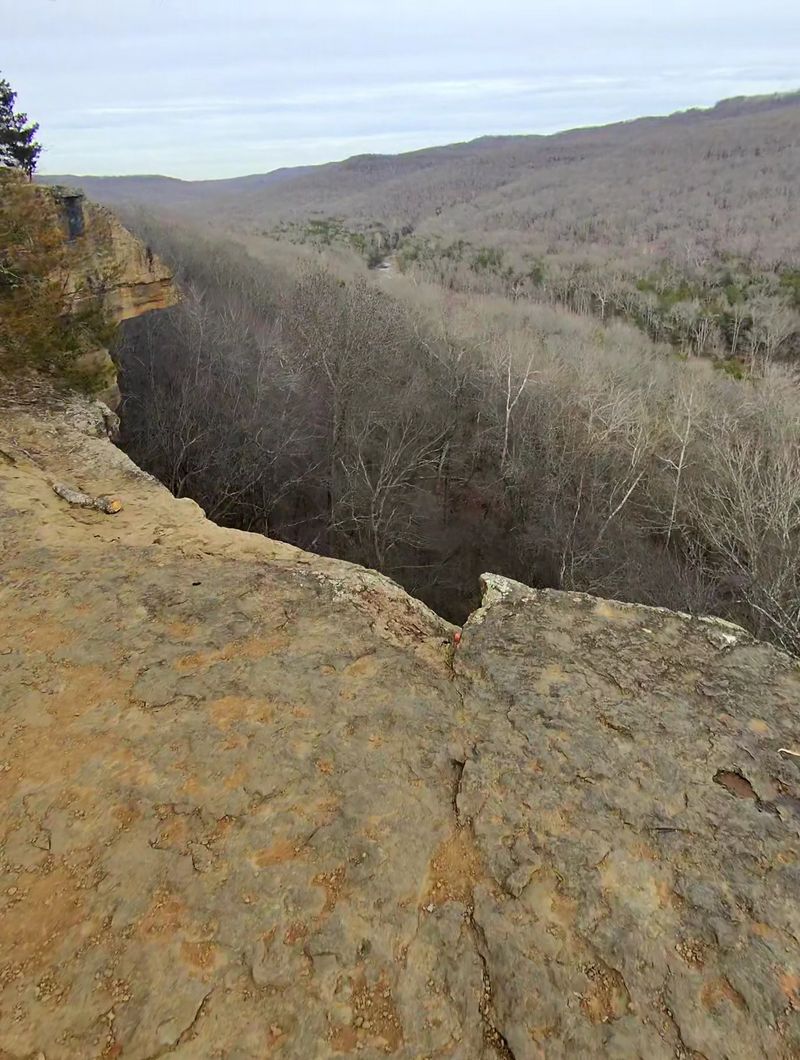
All at once, the trees part and the ground turns into a wide shelf of bare rock. Here sits the Yellow Rock overlook, the star of the whole hike.
The bluff is large enough for groups to spread out and relax. Many people bring a snack or a small picnic and linger longer than they planned.
Safety matters up here, because the overlook has no guardrails. Children and pets should stay close, and everyone should keep a respectful distance from the edge.
I have to admit the lack of railings makes the view feel more wild and open. It also makes common sense the most important item in any backpack.
The rock surface is fairly flat, but it can be slick when wet or covered in leaves. Taking careful steps near the rim is a small price for such a big reward.
Morning hikers can time their visit for softer light, but the trail should not be treated as open around the clock. Current trail information indicates that it closes at dark.
Afternoon brings its own glow as the sun slides lower. Either way, the bluff rarely feels like a bad place to be.
Fall Color Stretches Across The Valley
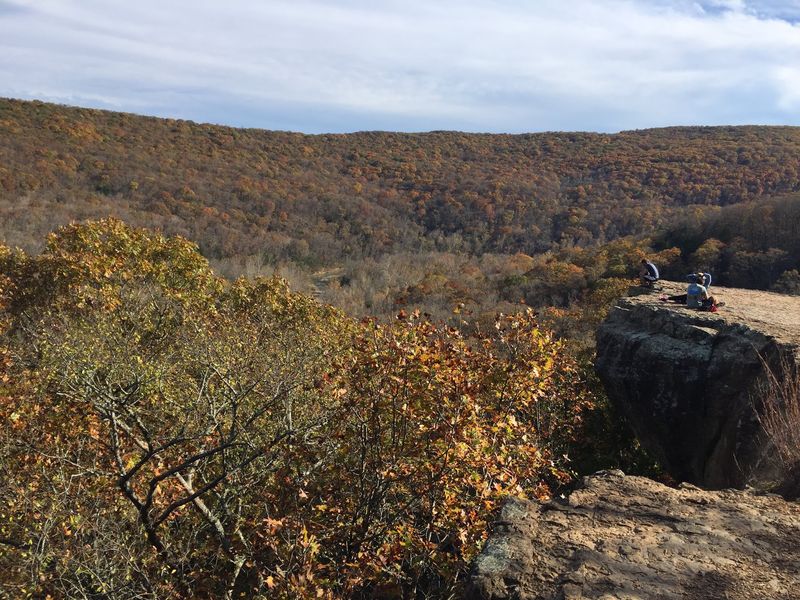
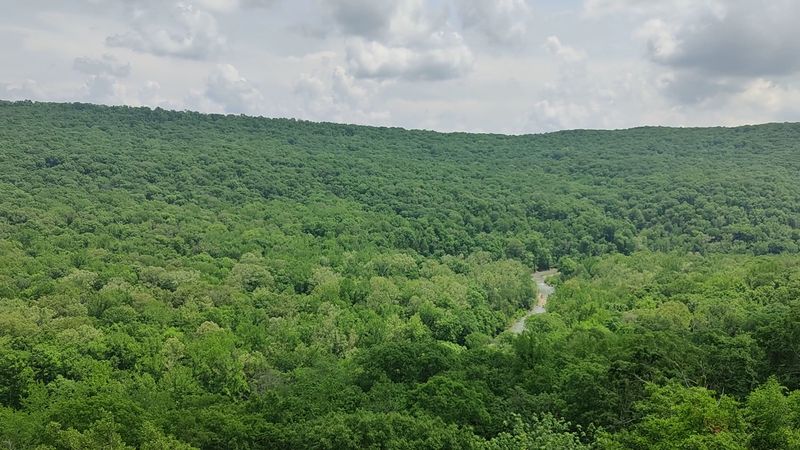
Look out from the bluff in autumn, and the whole valley seems dressed up for a party. Rolling hills stretch toward the horizon, covered in bursts of red and gold.
Far below, Lee Creek winds through the valley floor. The creek helped shape this land, carving its path through the mountains over countless years.
Look closer and new shades keep appearing among the treetops. The colors seem to shift a little every time a cloud drifts overhead.
Even in winter, when the branches go bare, the scenery holds up well. Still, fall is when the valley truly shows off and earns its postcard reputation.
Clear days offer the longest views, so checking the forecast before heading out pays off. Hazy mornings can be pretty too, with mist softening the ridges.
Weekends in October and early November draw big crowds for good reason. Visiting on a weekday can mean more space on the rock and an easier time parking.
Cameras rarely capture the full scale of what the eye can see. Some views simply need to be enjoyed in person.
Wide-angle settings on a phone help squeeze more of the ridges into a single frame. Panorama mode works nicely too, as long as hands stay steady.
A Historic Overlook Waits In The Woods
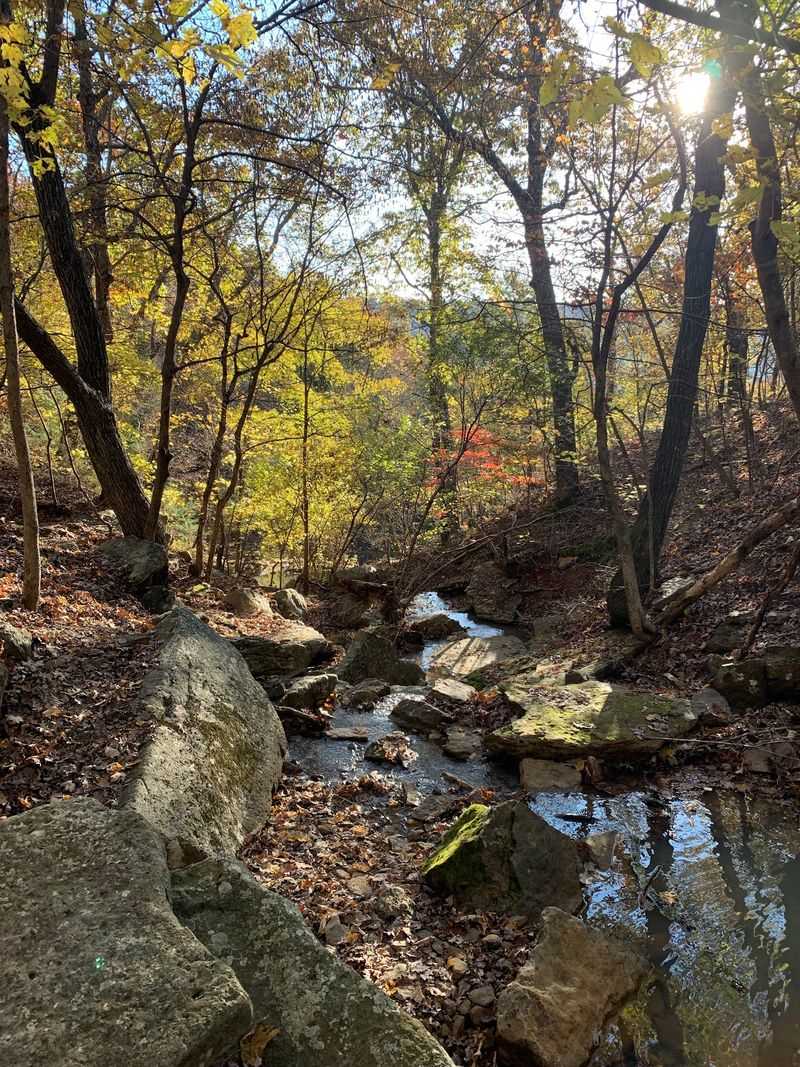
History buffs, rejoice, because the woods hold a second viewpoint with a story behind it. Beyond Yellow Rock, the trail connects to the CCC overlook, built by the Civilian Conservation Corps.
That group of young workers helped build much of Devil’s Den State Park during the 1930s. Their stonework and structures still stand throughout the park today.
The CCC overlook sits farther along, so reaching it adds extra distance to the outing. Hikers who want a longer day can make it part of the plan.
I think it is pretty amazing that work done nearly a century ago still serves hikers now. Those builders clearly knew how to make things last.
The main loop and the path toward the CCC overlook share some ground, so watching the white blazes helps. Checking a park map before starting helps hikers pick the right route.
Some people prefer to stick with the Yellow Rock view and save their energy. Others enjoy collecting both overlooks in one trip, which makes for a fuller workout.
Rangers at the park visitor center can share more about the CCC and its legacy. A little background makes the old stone walls far more interesting to look at.
Picking the right route depends on energy levels and daylight. Autumn afternoons get shorter, so an early start gives more wiggle room.
The Final View Feels Worth Every Step
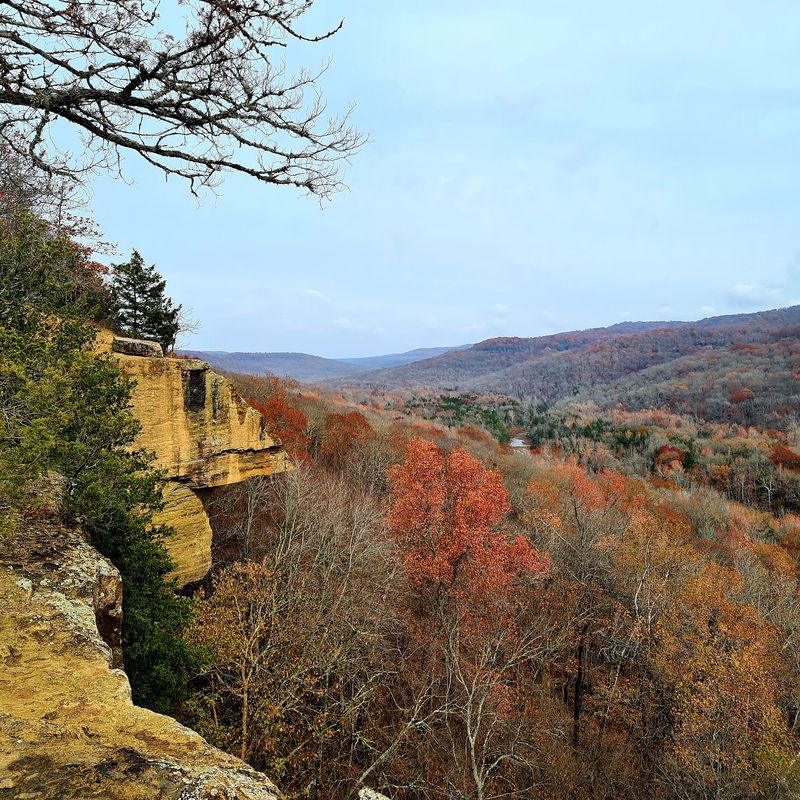
Every step up this trail builds toward a moment that stays with hikers long after they leave. Standing on the bluff and gazing over the valley is that moment.
After the overlook, the loop heads back down through the forest toward the parking area. The descent gives legs a break and offers new angles on the bluffs and trees.
Most hikers finish the loop in about an hour or two, depending on pace and photo stops. That makes it an easy fit for a morning or afternoon trip.
Fayetteville is close enough that many locals return every fall for another look. I can see why a trail this rewarding turns into a yearly tradition.
Snacks and water are smart to pack, since there are no shops along the route. A small trash bag helps keep the forest as clean as it was found.
When the leaves glow and the air turns crisp, few places in Arkansas feel quite this magical. The hike is short, but the memories stretch out much longer.
Autumn in the Ozarks comes and goes quickly each year. Catch it here, and the view will do the rest.