
Look For Migrating Sandhill Cranes This Fall At Goose Lake Prairie State Natural Area In Morris, Illinois
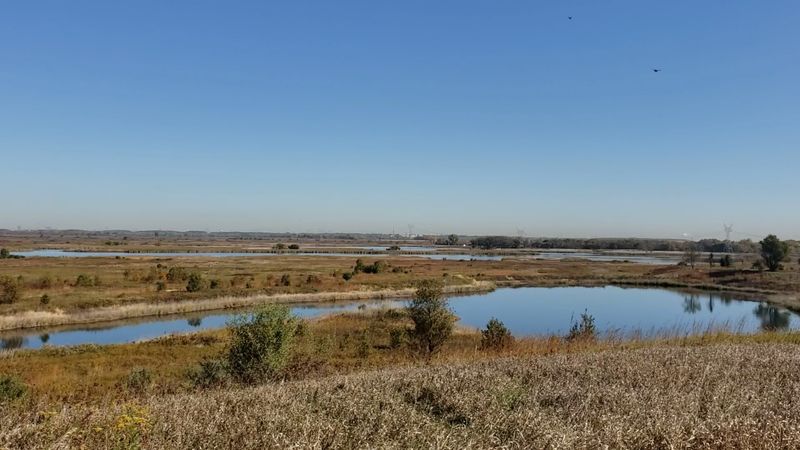
Gurroo-gurroo-gurroo! That rattling call drifting over the grass on a chilly autumn morning belongs to one of the tallest birds you will ever see in Illinois.
Every fall, huge flocks of sandhill cranes stop to rest in our state on their long trip south, and one of the best places to catch them is a wide, free prairie that looks much like Illinois did hundreds of years ago. Grab a jacket, pack a thermos, and bring the kids, because this is a show nature puts on for just a few weeks each year.
A Sea Of Grass In Grundy County
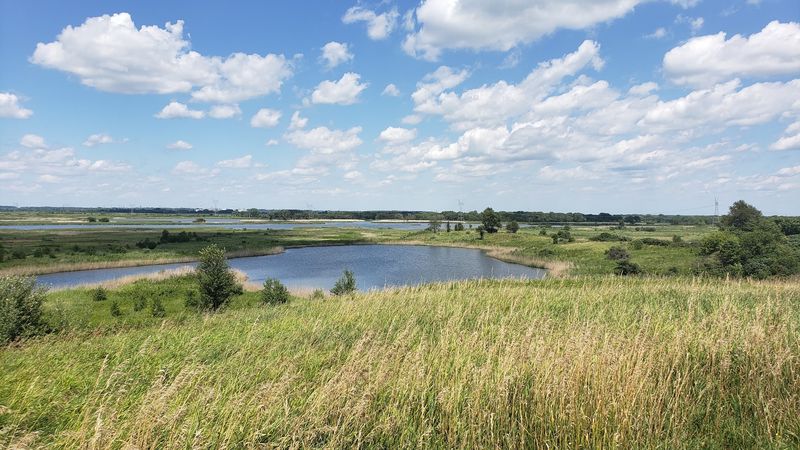
About 50 miles southwest of Chicago, just outside Morris in Grundy County, sits the largest remaining tallgrass prairie in Illinois. Goose Lake Prairie State Natural Area stretches across roughly 2,537 acres, and more than half of that land is protected as an official Illinois Nature Preserve.
You will find it at 5010 N Jugtown Rd, and getting there is refreshingly simple. Easy roads lead right up to the parking area, and once you step onto the trails, the modern world starts to fade surprisingly fast.
The spot feels secluded, even though a good-sized town and a big industrial complex are not far away.
Early settlers once described land like this as a sea of grass with pretty flowers. Standing here, that description suddenly makes perfect sense.
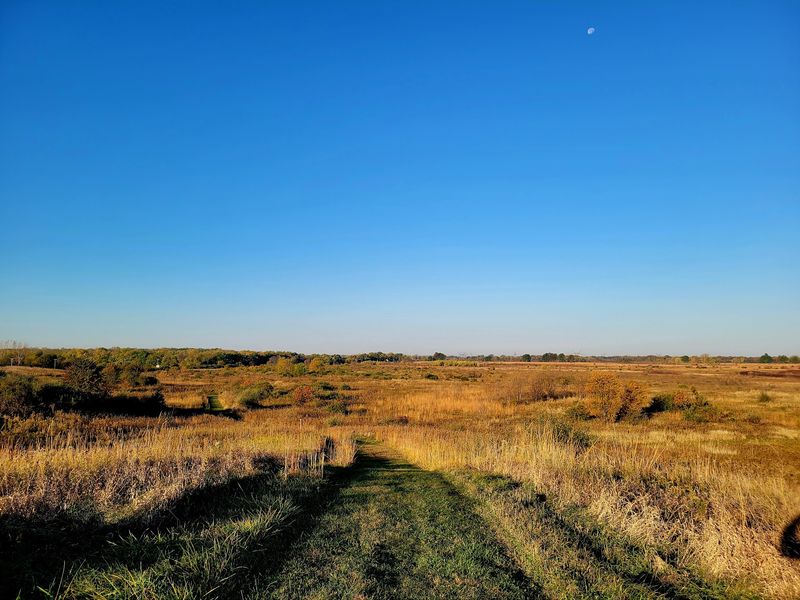
Grasses ripple in every direction, marshes glint between them, and the sky feels enormous.
For families across northern Illinois, that makes this preserve a true close-to-home treasure. It is not flashy, and it does not try to be.
There are no rides or gift shops shouting for attention. Instead, it offers something rarer: open space, fresh air, and a front-row seat to one of the most exciting bird migrations in the Midwest each fall.
Prairie Roots And Pioneer Stories
Long before highways crossed Illinois, prairie like this covered the land as far as anyone could see. Much of the ground at Goose Lake Prairie was once stable wetland, which helps explain why marshes and ponds still dot the landscape today.
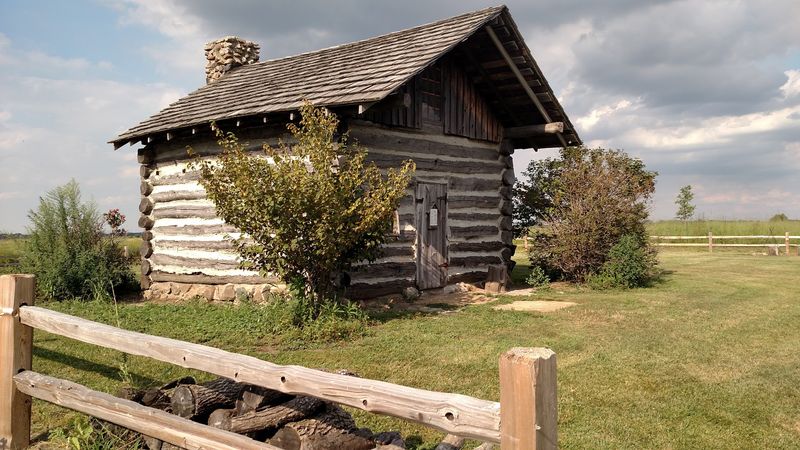
History lovers will want to find the reconstructed Cragg Cabin. It stands as a tribute to the pioneer spirit and gives kids a real sense of how early families lived out on the open grass.
Nearby, weathervanes and a covered wagon make fun, old-fashioned backdrops for family photos.
Walking these paths can feel a bit like stepping through time. Interpretive signs along the way share extra details for curious minds, so every stroll doubles as a quiet history lesson.
Each year, the park also celebrates its past with a cabin festival highlighting pioneer crafts. During Pioneer Days, volunteers have led rides out through the prairie grass while sharing stories about the area, along with other hands-on activities.
Past Cabin Fest visitors have come away calling it a relaxing and educational day.
Grandparents often love this part most. There is something special about showing younger kids that the Illinois they know once looked completely different, and that a small piece of it still survives.
Red Caps, Big Wings, And A Rattling Chorus
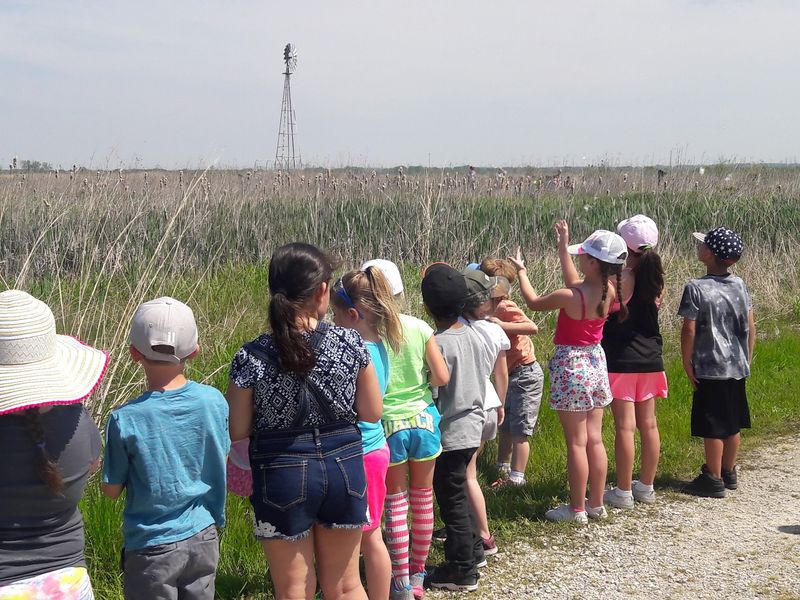
Standing between 3.5 and 4 feet tall, sandhill cranes can look a kid nearly eye to eye. Their wingspans reach 6 to 7 feet, so when a flock lifts off, it is hard not to gasp.
Spotting them is easier than you might think. Adults are mostly gray with long necks and legs, plus a bright, featherless red cap on top of their heads.
Younger cranes wear brown feathers instead, which makes a fun game of spotting parents and youngsters in the same group.
Often you will hear them before you see them. Their loud, rattling gurrooo-gurroo-gurroo call carries a long way, and a big flock can fill the whole sky with sound.
Kids tend to remember that noise for years.
Watch how they travel, too. Cranes usually fly in large groups shaped like a V or a long line.
They ride thermals, which are rising pockets of warm air, and glide without flapping much at all.
Here is a fun fact to share on the drive home: using those thermals, sandhill cranes can cover about 200 miles in a single day. That is like flying from Morris to past Springfield before dinner.
Why The Cranes Choose This Marsh
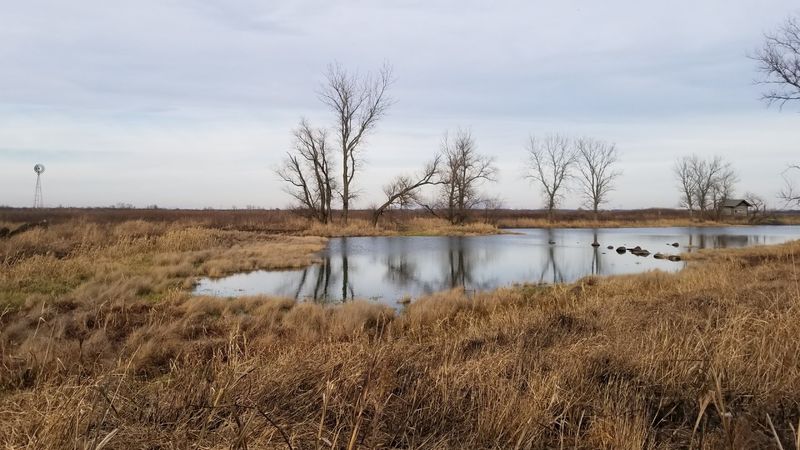
Timing is everything with these travelers. Sandhill cranes pass through Illinois in fall from about mid-September to mid-November, with the biggest numbers usually showing up in November.
In northern Illinois, the migration can stretch into mid-December.
Northern Illinois works as a key staging area, which is a fancy way of saying rest stop. Cranes pause here to drink, feed, and recharge before continuing south.
They look for wetlands and farm fields, and this preserve delivers both nearby.
Goose Lake Prairie offers a rich mix of marshland, ponds, and tallgrass. Those watery pockets, sometimes called prairie potholes, are scattered everywhere, and there are more than most people can count on one walk.
For a hungry, tired crane, that setup is hard to beat.
Other birds love it too. On a single hour-long walk, visitors have counted more than 10 different species, including some handsome herons wading in the shallows.
So even on a day when the cranes are quiet, there is usually plenty to see.
Plan a few visits across the season if you can. Each trip may bring different numbers, different birds, and a slightly different prairie as autumn deepens.
Seven Miles Of Easygoing Trails
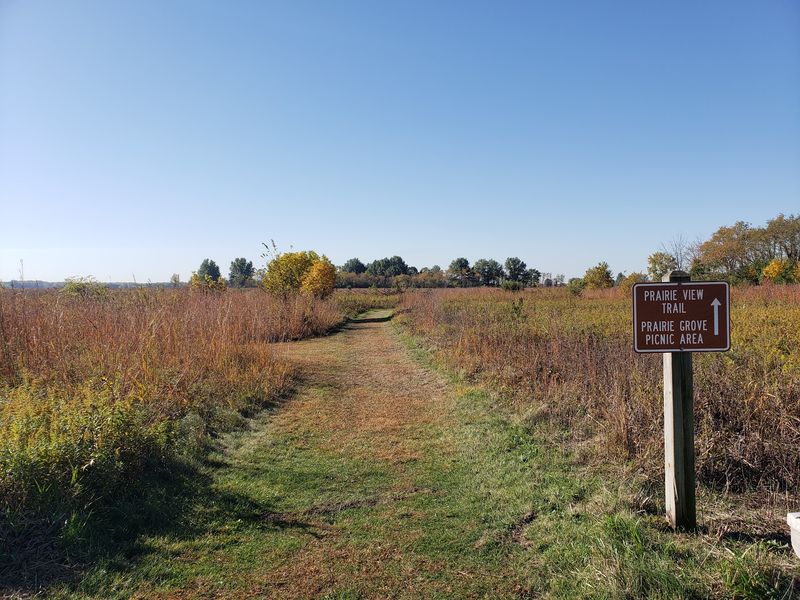
Sunrise and the hour before sunset are the magic windows for crane watching. That is when big flocks leave their roosting marshes for feeding fields, or head back home to settle in for the night.
To be in the right place, use the seven-mile trail network. Most paths are grass and very well kept, with crushed gravel on parts of the Tall Grass Trail.
The walking is steady and pleasant, not too easy and not too hard, which suits most families nicely.
For the best view, take the Prairie View Trail. It leads to the highest point in the area, where the prairie and marsh spread out in a wide panorama.
Observation decks around the park offer more spots to stand, scan, and listen.
A few smart habits make the outing better. Stay on marked trails to protect the habitat, and watch the cranes from a comfortable distance so they stay relaxed.
A pair of binoculars helps a lot.
Wear sturdy shoes and carry water. Sunscreen and bug spray are wise in warmer months, though fall usually brings fewer insects.
A warm layer for those chilly early mornings is a good idea too.
Bronze Grass Taller Than Dad
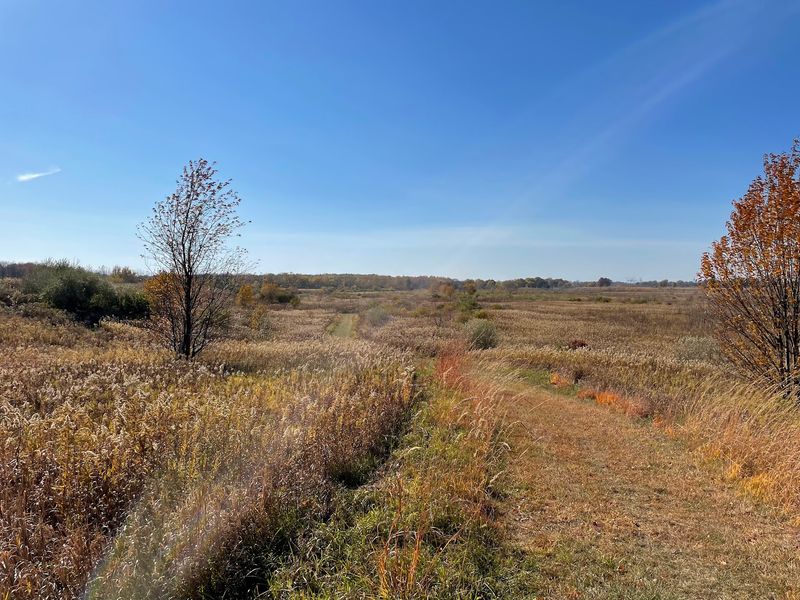
Eight to twelve feet. That is how tall prairie cordgrass can grow here, and it makes even a grown-up feel small.
Switchgrass can reach up to 8 feet, joined by big bluestem and Indian grass swaying all around.
Autumn is when the grasses really show off. Green fades into bronze and gold, and the whole prairie seems to glow in low evening light.
Pair that with cranes gliding overhead, and you have a scene that feels almost too pretty to be real.
Look closer, and the flowers tell their own story. Compass plants, coneflowers, and goldenrod add color, while spring brings shooting stars and violets.
Many folks who visit in fall promise themselves a return trip once everything blooms, camera in hand.
Butterfly fans will want to know about the butterfly sanctuary, too. It is a sweet bonus for kids who love chasing wings of every size.
Many regulars say the air feels unusually fresh out here, and the views are simply wide open. Some people admit that 2,000-plus acres of grass sounds like a lot.
Once you are standing in it, though, the quiet beauty tends to win over even the doubters.
Quiet Mornings For Families And Nature Lovers
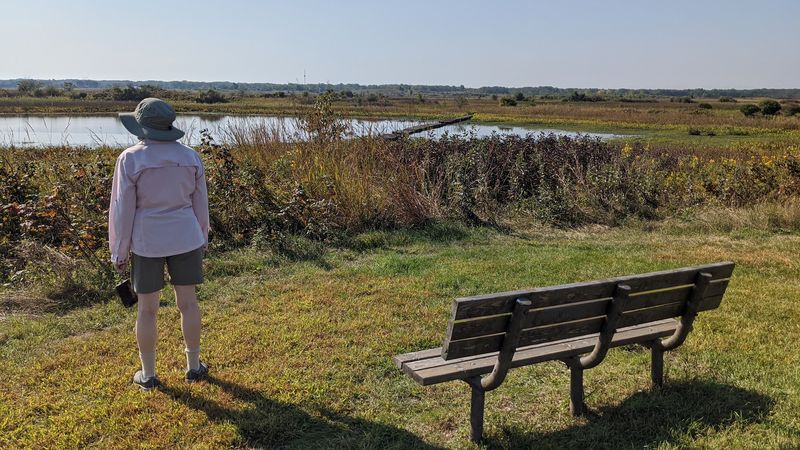
Silence might be the biggest surprise. With plenty of open space, Goose Lake Prairie feels calm and peaceful, the kind of place where you enjoy simply being there for a while.
Families with young kids will appreciate how easy the paths are to follow. Grandparents can stroll at a relaxed pace, and bird lovers can linger as long as they like with binoculars raised.
Photographers get endless sky, gold grass, and those rustic cabin and wagon props.
Picnickers are in luck. The picnic area has lots of shade, and shelters are available, so packing sandwiches and apple slices turns a morning of crane watching into a full, cozy day trip.
Anglers may notice the big lake nearby too. It is a fishing-only lake, and the water can get choppy for smaller boats, so it is not the place for a leisurely cruise.
Mostly, this spot suits anyone who loves slow, simple outings. There are no screens, no lines, and no rush.
Just wind in the grass, birds calling overhead, and time together. For many Illinois families, that kind of unhurried morning is exactly what makes a memory stick.
Free Admission And Final Thoughts
Zero dollars. That is the entrance fee, and parking is free too, which makes this one of the most budget-friendly fall outings in Illinois.
Spend your money on gas, snacks, and maybe hot cocoa for the ride home.
Goose Lake Prairie is open year-round, and winter even brings cross-country skiing. Plan around sunrise or late afternoon in fall for the best shot at cranes.
Restrooms, parking, picnic areas, and interpretive displays are part of the setup.
A heads-up before you go: the visitor center and small museum, once known for helpful staff and nice exhibits, has been closed for a while, according to recent visitors. A portable toilet is available on site, so plan accordingly.
Calling ahead to the park office can help confirm current details.
So, is it worth the drive? For anyone who loves big skies, old Illinois history, and wild birds, the answer leans strongly toward yes.
It is humble, quiet, and a little overlooked, which is exactly its charm.
Bundle up, head toward Morris, and listen for that rattling call. When a flock of cranes sails over the golden prairie, the whole family will know the trip was worth it.