
Most Families Have No Idea This Illinois State Park Hides Canyon Waterfalls Just Past Starved Rock
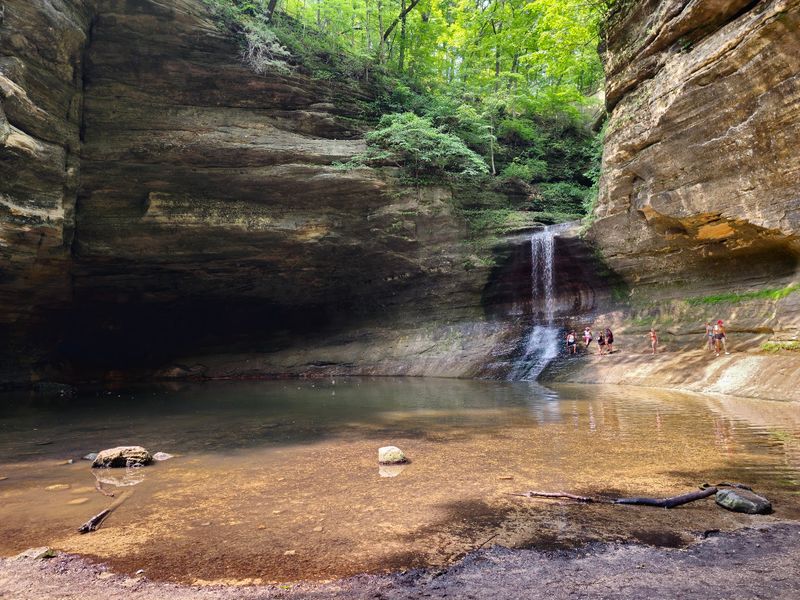
Stepping stones, mossy sandstone walls, and a 45-foot waterfall sound like something from a faraway canyon out West, yet all of it sits in north-central Illinois. Most families drive right past it on their way to a much more famous neighbor.
That means fewer crowds, free admission, and a real adventure that kids can splash through with their own sneakers. Grab some water shoes, because this is one Illinois day trip that turns ordinary weekends into stories.
A Quiet Canyon Park In LaSalle County
Just three or four miles south of Starved Rock State Park, along IL-178 near Oglesby, sits a park that many Illinois families have never heard of. Matthiessen State Park covers roughly 1,938 acres of forest, prairie, springs, and deep sandstone canyons in LaSalle County.
The drive is easy for much of northern Illinois. From Chicago, it takes about an hour and a half to cover the roughly 90 miles southwest, which makes it a manageable day trip without an overnight stay.
While its famous neighbor is known for sweeping river views, Matthiessen trades that big panorama for something more intimate. Narrow gorges, creek crossings, and waterfalls you can stand right beside give the park its personality.
Hikers who know both parks often call Matthiessen the quieter sibling, with far less foot traffic on a typical visit.
Best of all for budget-minded parents, there is no admission fee. You can pack sandwiches, fill up the gas tank, and spend a whole afternoon exploring canyons without opening your wallet at a gate.
For families hunting a low-cost outing that still feels like a genuine adventure, that combination is hard to beat anywhere in the state.
From Private Deer Park To Public Treasure
Long before it carried a state park sign, this land was a private retreat called Deer Park. It belonged to Frederick Matthiessen, an industrialist and philanthropist from nearby LaSalle, who shaped trails and built structures here in the early 1900s.
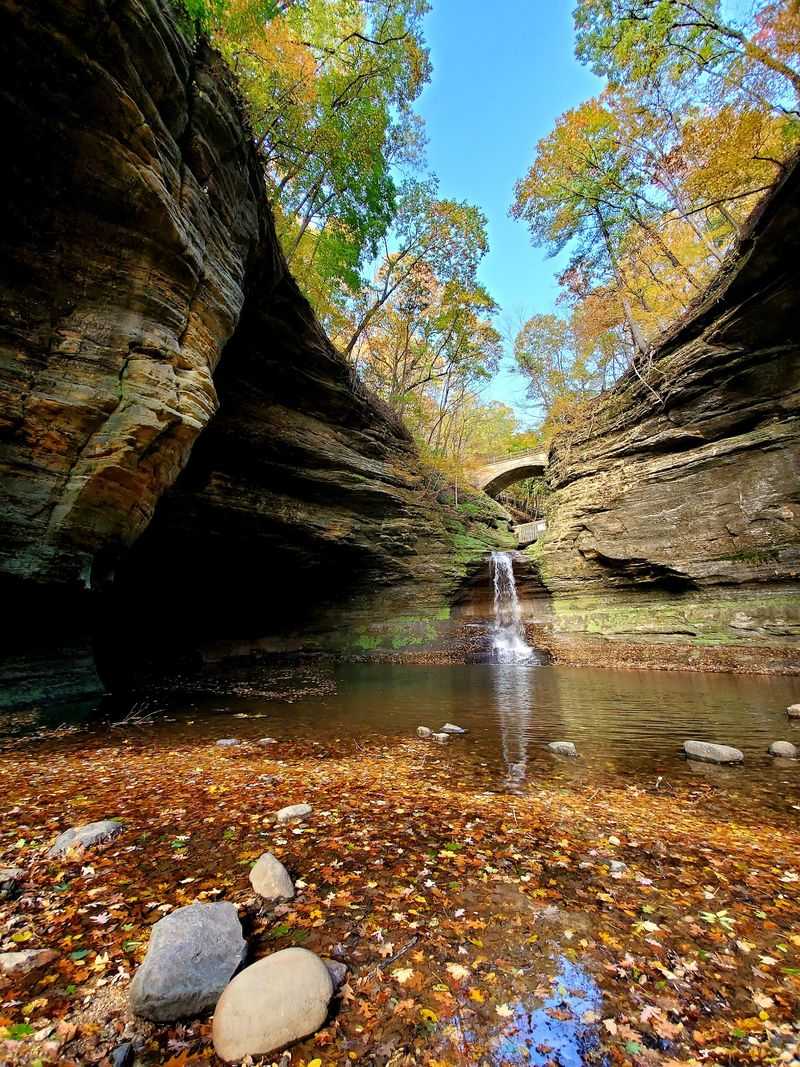
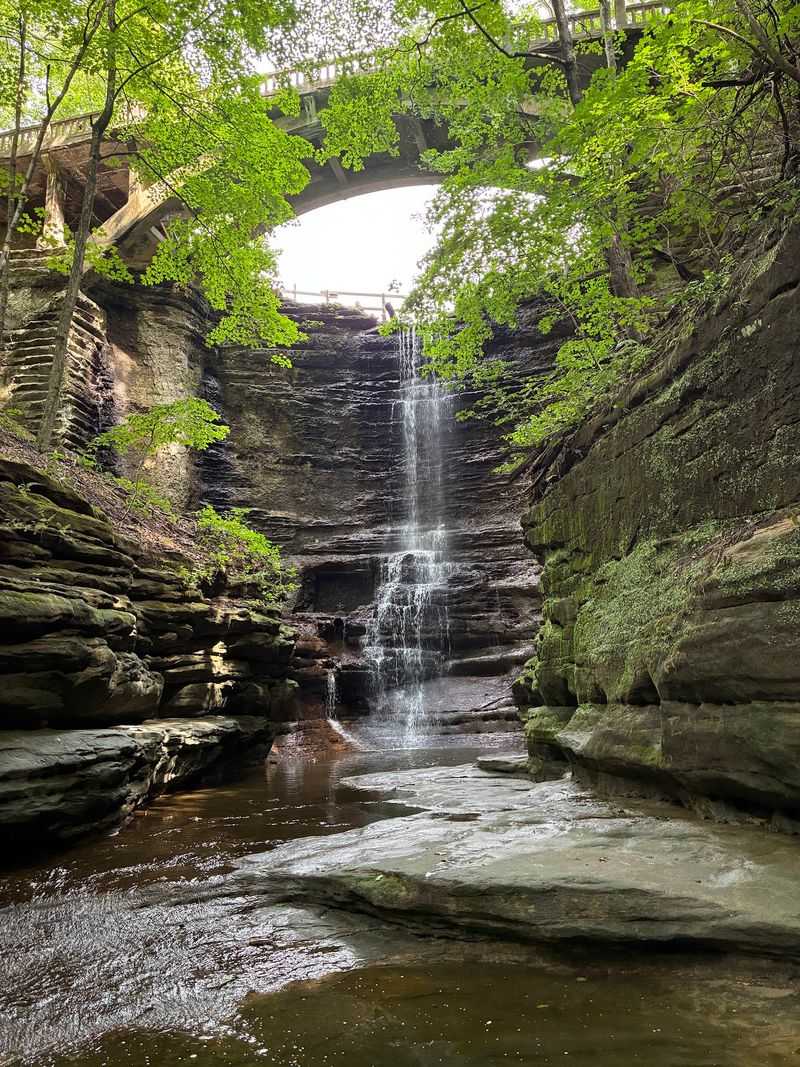
His vision still shows. Walk the Dells and you will cross, and even pass beneath, a graceful arched stone bridge that spans the green canyon.
Many of the staircases are old concrete rather than wood, and they feel remarkably sturdy, as if their builders knew Illinois winters would test them for generations.
In 1943, Matthiessen’s heirs donated the property to the State of Illinois. Since then, the park has grown to its current size, adding prairie and river areas beyond the original estate.
Interpretive signs along the trail tell this story, and they make a nice pause for curious kids catching their breath. Grandparents especially tend to appreciate the old-fashioned craftsmanship tucked into the scenery.
Knowing that one local family once wandered these same paths gives the hike a sense of continuity. It turns a nature walk into a small history lesson, the kind that sticks better than anything read in a textbook.
Cascade Falls And The Lower Dells
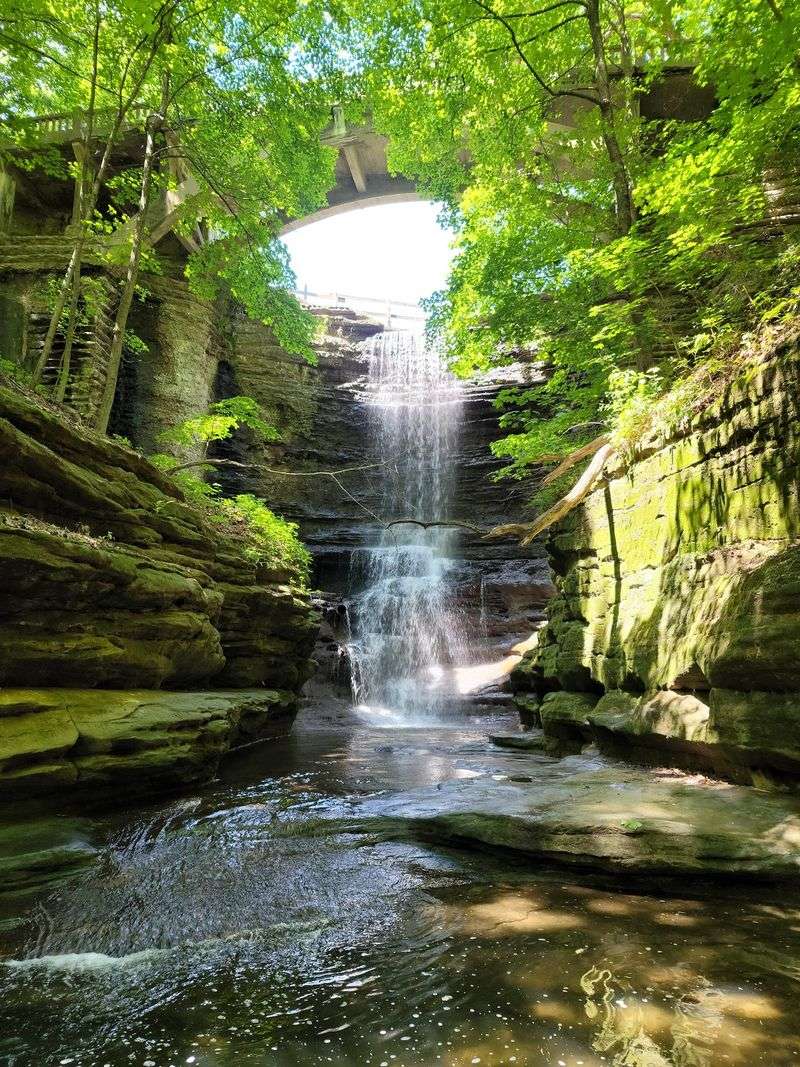
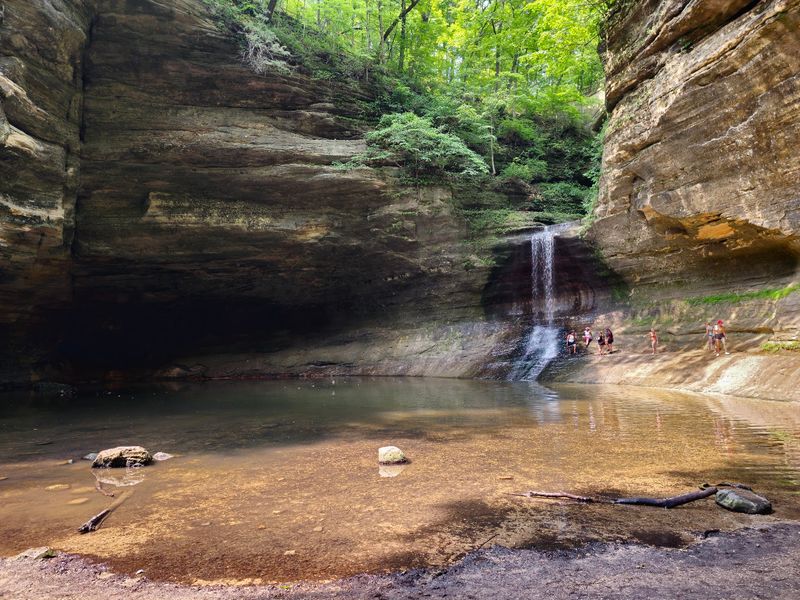
Forty-five feet of falling water is the reward waiting at the heart of the park. Cascade Falls drops from the Upper Dells into the Lower Dells, linking the two halves of the canyon in one dramatic plunge.
Getting there feels like stepping into another region entirely. Towering sandstone walls rise on either side, streaked with mineral colors and draped in ferns and moss.
Hikers often say the Lower Dells resembles a slot canyon out West, which is a fun thing to tell kids from the flatlands.
Near the falls, a few small caves let you peek at the water from different angles. Cliff swallows dart back and forth from nests on the rock walls, adding motion and chatter to the scene.
One of the best parts is the double view. You can stand near the top of the waterfall, then wind down the stairs and look up at it from the canyon floor.
Timing matters here. The falls are strongest during spring snowmelt or a day or two after a good rain, when the flow turns thunderous.
In drier spells it can slow to a trickle, so checking the weather before you leave home pays off.
Stepping Stones, Creek Crossings, And Wet Feet
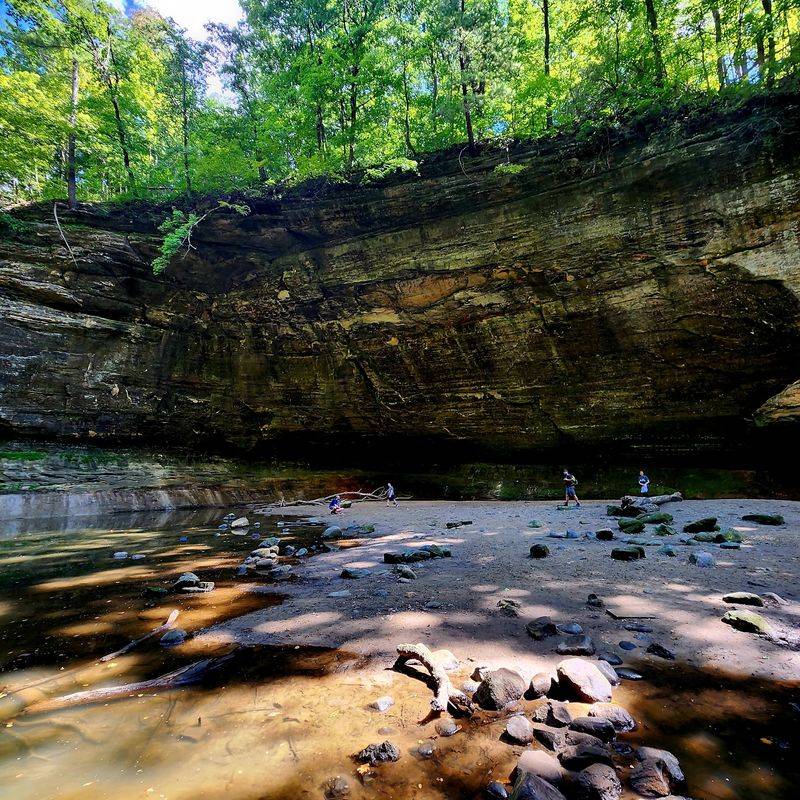
Hopscotch gets an upgrade in the Dells. Round stepping stones are placed across the shallow creek, and hopping from one to the next is part of reaching the best views.
Kids usually treat this as the highlight of the whole trip. Balancing over moving water inside a mossy canyon feels like a real expedition, even though the creek is shallow in most spots.
Dogs on leash often end up wading or paddling right alongside their families.
Here is the honest truth, though: feet will probably get wet. Mud is common, especially after storms, and the rocks can be slippery.
Waterproof boots or water sandals with good grip are the smart choice, and nice sneakers are best left at home.
A spare pair of socks, or even a change of clothes, earns its spot in the car. A hiking pole can help with the more uneven stretches.
One more tip worth sharing with the crew: once you descend into certain parts of the canyon, the only way out may be through the Dells and up another staircase. Planning your route keeps little legs from running out of steam halfway.
Wading for fun is fine, but swimming in the creek or falls is not allowed.
Lake Falls, Giant’s Bathtub, And Strawberry Rock
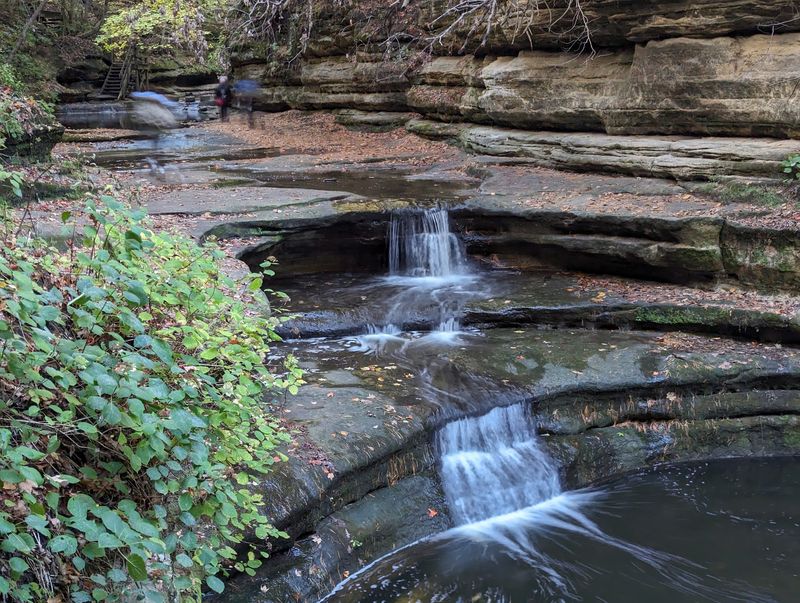
Cascade Falls gets the spotlight, but the park keeps a few more surprises in its pocket. Lake Falls, also called Matthiessen Lake Falls, is fed by Matthiessen Lake, so it keeps flowing almost all year.
That reliability makes it a safe bet when dry weather quiets other waterfalls.
Giant’s Bathtub is another named spot that sparks young imaginations. The name alone tends to get kids racing ahead to see what kind of giant would bathe there.
Then there is Strawberry Rock, a large boulder noticeably redder than everything around it. It is easy to walk right past on the first try, which turns finding it into a mini scavenger hunt.
When you do spot it, the reaction is usually a laugh, because it is both impressive and a little silly.
The Upper Dells trails also wind through forest with high overlooks above the canyon. From up top, you can peer down at waterfalls and creek bends far below.
Mixing high views with low canyon wandering keeps the hike varied, so nobody gets bored. Bringing a simple checklist of these named features can make the day feel like a family quest.
Picnics, A Frontier Fort, And Prairie Blooms
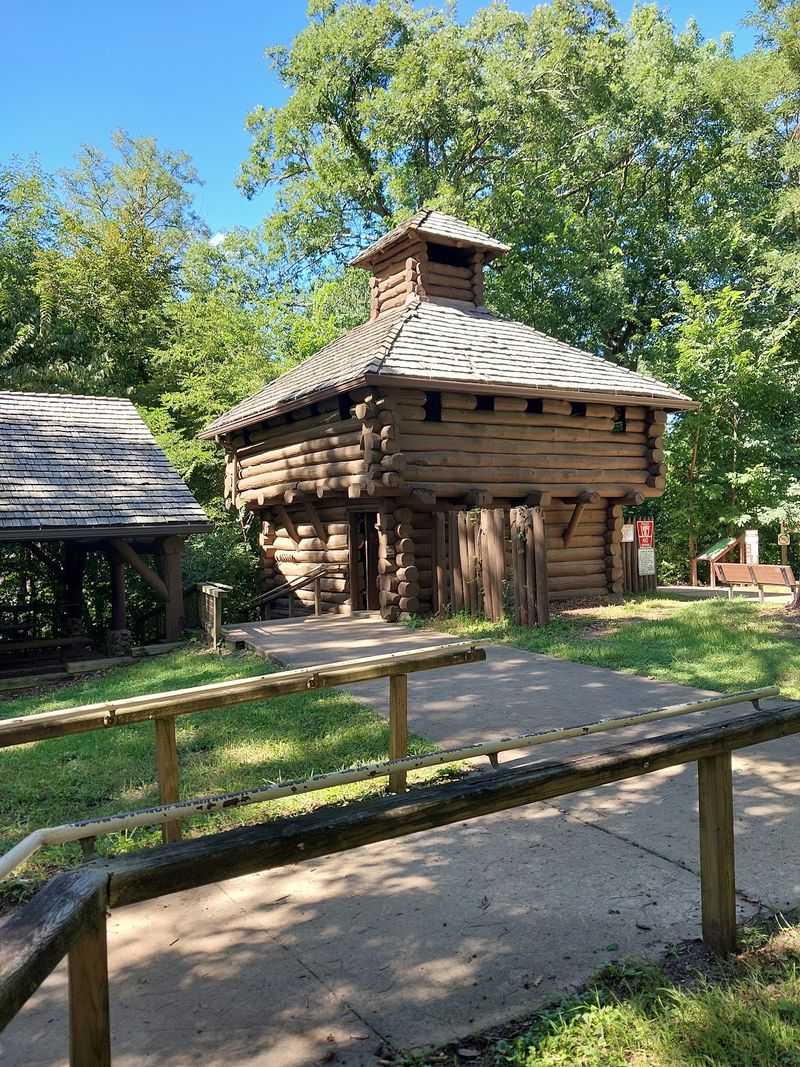
Log cabins and a wooden blockhouse might be the last thing you expect near a waterfall canyon. In the Dells Area, a restored fort echoes French fortifications from the late 1600s and early 1700s, giving kids a frontier-style backdrop for pretend play.
That same area doubles as a ready-made family base. Picnic tables, grills, shelters, restrooms, and playground equipment are all available, so a packed lunch becomes an easy, money-saving meal.
Restrooms have occasionally been out of order, with portable toilets as backup, so tucking tissues in your bag is wise.
Beyond the canyon, the River Area opens into flatter prairie and savanna trails bordering farmland. Late summer can bring sunflower fields, though arriving too early in July may mean you see native wildflowers instead.
Either way, the walk feels peaceful and open.
Wildlife sightings add to the fun. Birds are plentiful, and a harmless snake sunning on the trail is not unusual, so a quick talk with kids about giving animals space helps.
Horseback riding trails, an equestrian campground, nature study, and photography round out the options. In winter, cross-country skiing gives the park a cozy, snowy personality all its own.
Hours, Parking, And Smart Timing
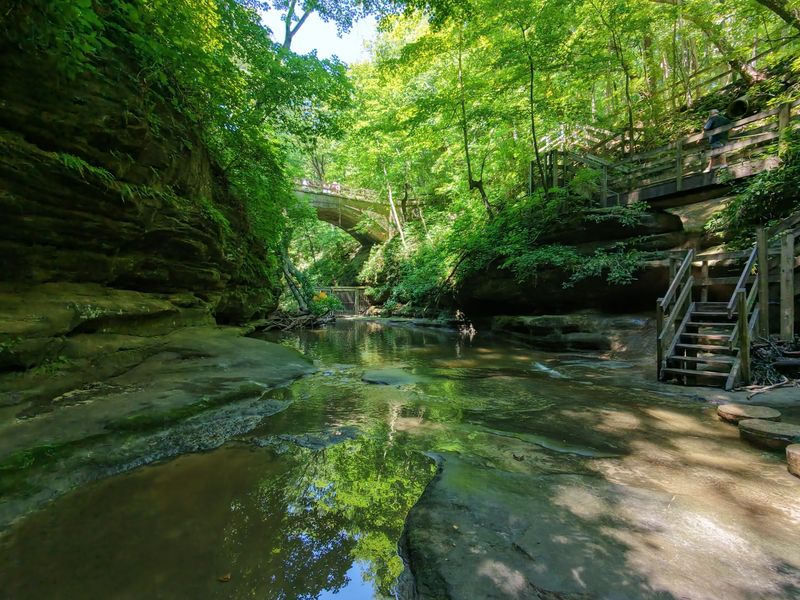
Sunrise to sunset, every day of the year, the gates are open and admission stays free. The park sits at 2500 IL-178 in Oglesby, a short hop from Starved Rock.
Weekends from May through October can get busy. The Dells and Vermilion River areas sometimes reach capacity and close temporarily, often from about 10 a.m. to 3 p.m.
Arriving early, or choosing a weekday, makes a huge difference.
Parking near the main trailhead is limited, though overflow lots sit nearby. On holiday weekends, some groups drop passengers at the front and park in overflow, which can add a moderate hike of a couple miles.
Stairs are everywhere, both wooden and stone, so the Dells are not wheelchair or stroller friendly. Very young toddlers may need carrying, and grandparents with mobility concerns should consider the upper overlooks.
Heavy rain can also close trails or roads, so checking conditions first is smart.
A few rules keep the canyon beautiful. No climbing, rappelling, drones, swimming, plant picking, or hiking after dark, and bikes stay off the Dells trails.
Pets are welcome on leash, just clean up after them. Bring plenty of water and carry out every bit of trash you bring in.
Why Starved Rock’s Neighbor Deserves Its Own Day
Ask folks who have explored both parks, and many will quietly admit they prefer this one. Matthiessen feels wilder, a bit muddier, and more hands-on, with waterfalls packed into a compact valley you could cross in about an hour.
That size works beautifully for families. Kids get canyons, caves, stepping stones, and a 45-foot waterfall without a marathon hike, and parents spend nothing on admission.
Add a picnic lunch and the whole outing can easily come in under the cost of a single movie night.
Every season offers a reason to return. Spring brings roaring falls and wildflowers, summer offers cool shade on the canyon floor, autumn paints the walls in gold, and winter freezes the falls into icy sculptures.
Some hikers suggest visiting Matthiessen before Starved Rock, so its rugged charm can shine without comparison. Others happily pair both in one weekend.
Either way, it is the sort of Illinois gem that earns bragging rights at the next family gathering. Pack the water shoes, bring extra socks, and expect the kids to talk about hopping across that creek for a long time.