
This Giant Catsup Bottle In Illinois Costs Nothing To Visit And Makes Kids’ Jaws Drop
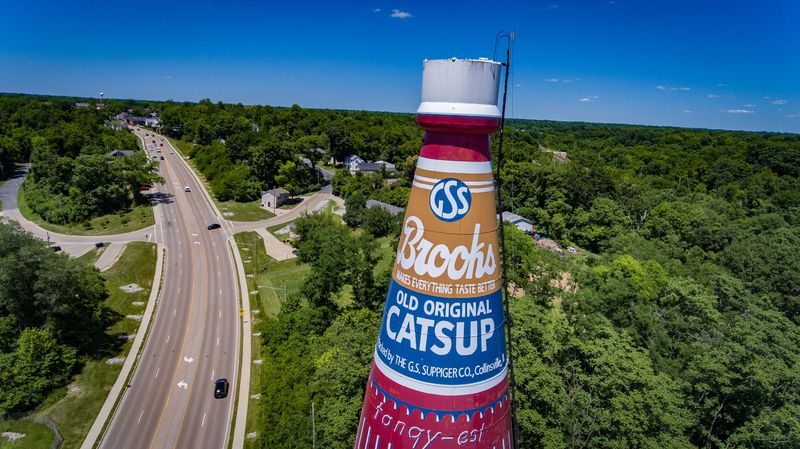
A hundred thousand gallons of water once sat inside a giant pretend condiment bottle in southern Illinois, and nobody thought that was strange. Today it still towers over the road, red label and all, while kids crane their necks and parents grab their phones.
The stop costs nothing, takes about ten minutes, and somehow turns into a story families repeat for years. Here is why this quirky Illinois landmark keeps pulling in road trippers, grandparents, and curious kids.
A Water Tower Dressed As A Condiment
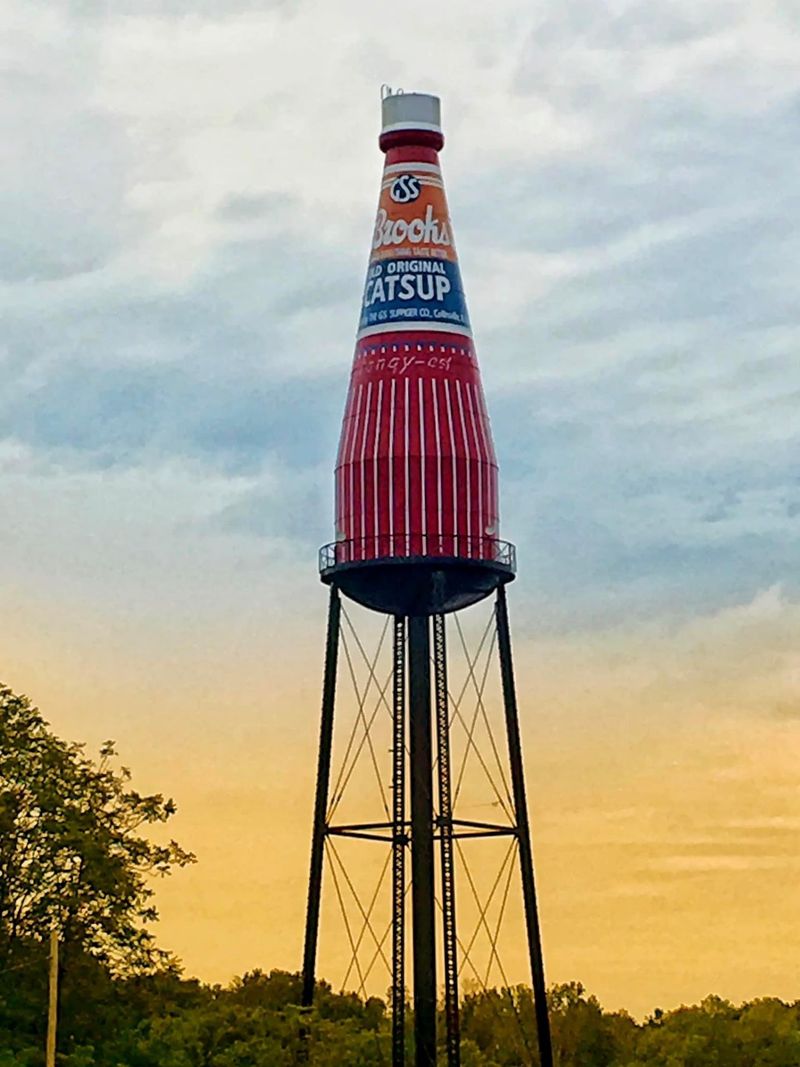
Most water towers blend into the skyline like a giant silver golf ball. Collinsville, Illinois, went another way and built one shaped like a bottle of catsup, and it has been turning heads ever since.
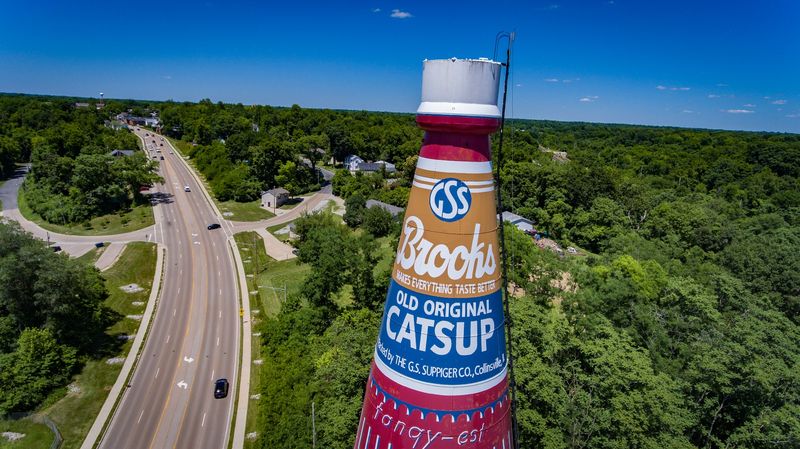
The landmark sits at 800 South Morrison Avenue, right along Illinois Route 159, south of downtown Collinsville in the Metro East region. It stands a full 170 feet tall.
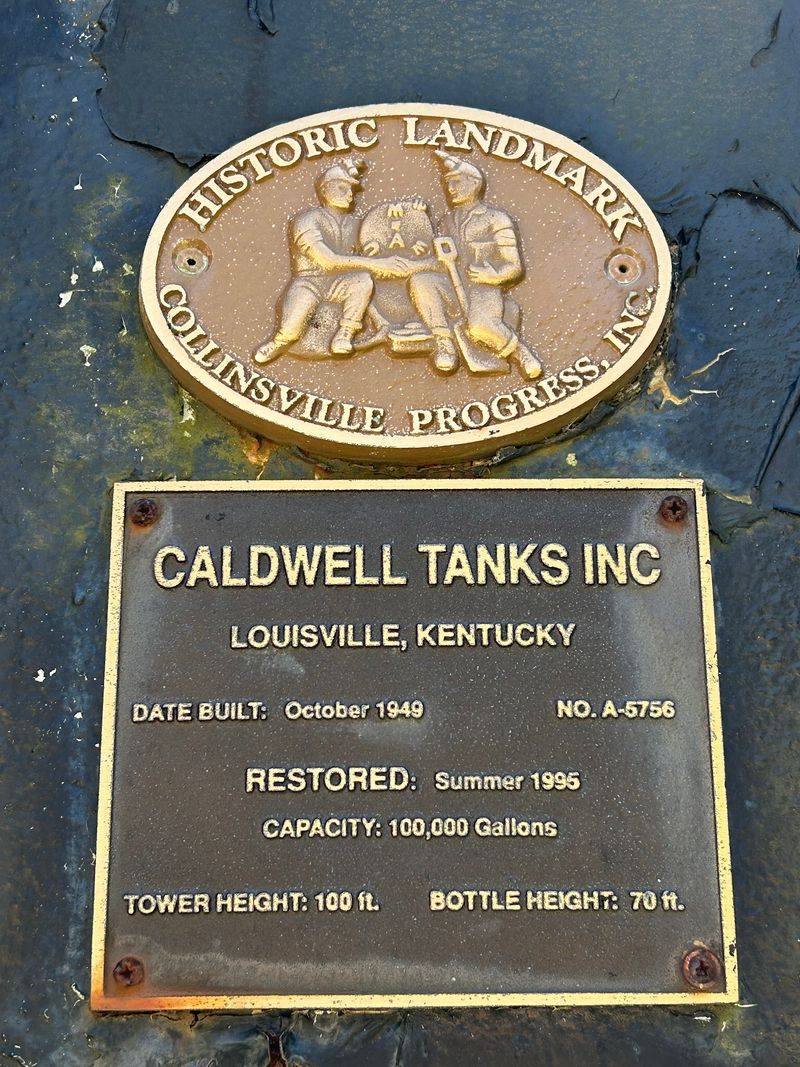
The bottle part alone measures 70 feet, and it rests on a 100-foot steel stand that lifts it high above the street.
Inside, it was built to hold 100,000 gallons of water. That detail tends to make kids giggle, since the obvious question is what would happen if catsup came out of the faucets instead.
Grown-ups usually wonder the same thing, quietly.
The famous Brooks Catsup label wraps around the front, just like the old bottles that once sat on St. Louis area dinner tables. It is a classic example of mid-century novelty architecture, the kind of roadside fun that made family car trips feel like treasure hunts.
For Illinois families, it is also easy to reach. The spot is only minutes east of downtown St. Louis, so it fits neatly into a day of exploring.
The Brooks Catsup Story Behind The Bottle
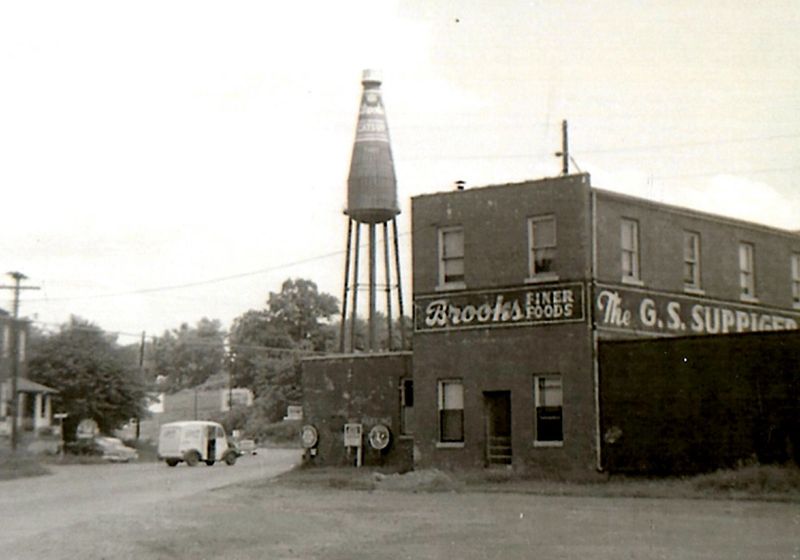
Back in 1949, a company president had a fun idea. Gerhart S.
Suppiger ran the G.S. Suppiger Company, which made Brooks Rich and Tangy Catsup right here in Collinsville.
The plant needed a water tower for daily operations and for its fire sprinkler system. Instead of building a plain tank, Suppiger suggested shaping it like the company’s own catsup bottles.
It was practical and clever, a working tool that doubled as a billboard seen from miles away.
The roots of the business go back even further. The Collinsville Canning and Packing Company started in 1891, and that operation eventually grew into the Brooks brand.
For a long stretch, Brooks Catsup was a hometown superstar, outselling every other tangy catsup in the greater St. Louis area combined.
Catsup was not the only thing coming out of the plant, either. Workers also canned chili beans, spaghetti, hominy, and soups, feeding families across the region.
Knowing this history changes how the bottle looks. It stops being just a silly sight and becomes a reminder of real Illinois jobs, real kitchens, and a small town that once helped stock pantries all over the Midwest.
Kids often find that part surprisingly cool.
How Neighbors Saved A Local Legend
Bake sales saved this bottle. That sounds like a joke, but it is the honest truth.
By the early 1990s, the catsup plant had closed and the tower was falling apart. Paint peeled, rust crept in, and demolition looked likely.
The city decided repairs cost too much to take it over, so the future seemed pretty grim for the old landmark.
Then local residents stepped in. In 1993 they formed the Catsup Bottle Preservation Group and launched a campaign called Paint It.
Volunteers sold t-shirts, held bake sales, and asked for donations from people all across the country who loved quirky roadside treasures.
Over two years, they raised $80,000. In June 1995, the restoration was finished, and the tower was carefully repainted to match its original 1949 look.
Then in 2002, the bottle earned a spot on the National Register of Historic Places, a big honor for a structure that once nearly vanished.
For parents, this chapter makes a great lesson to share during the visit. Ordinary neighbors with cookies, shirts, and determination protected a piece of Illinois history.
Standing under it, you are looking at proof that a community can keep its traditions alive when it really cares.
Photo Ops From Every Angle
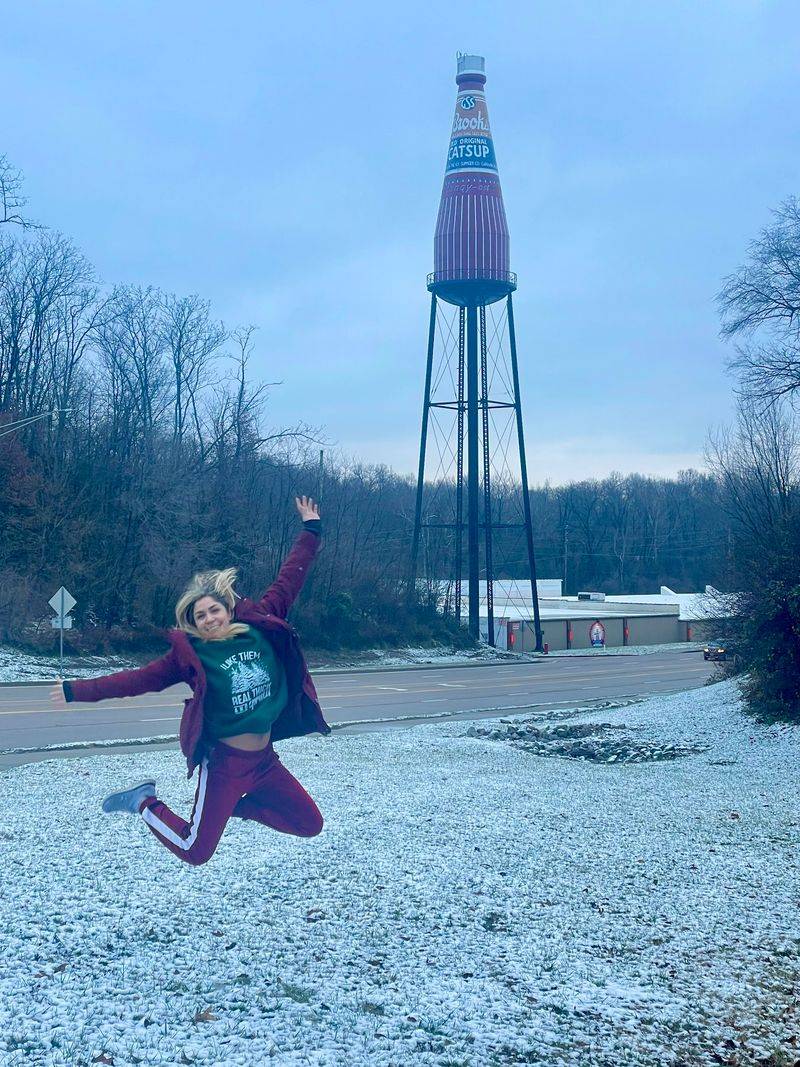
Cameras come out fast here. Within seconds of arriving, nearly everyone is tilting their head back, trying to squeeze 170 feet of catsup into one frame.
The best views often show up while driving toward it. As you come along Route 159 around the bend, the bottle suddenly pops into sight, tall and unmistakable.
Passengers tend to gasp or laugh, and that moment alone makes the trip feel worth it.
Once parked, families like to try silly poses. Kids pretend to hold the bottle in their hands, or lie on the ground for a dramatic low shot.
Grandparents usually prefer the classic group photo with the label clearly showing above everyone’s heads.
Moving around helps a lot. Different spots give different looks, from a straight-on view of the Brooks label to wider shots showing the steel legs and the sky.
A late afternoon visit can bring softer light on the paint.
Some visitors notice the red color looks a bit faded these days, so do not expect fire-engine brightness. Still, the bottle remains well-kept and full of charm.
Those slightly weathered tones honestly add to the vintage feel, making photos look like something pulled from an old family album.
Plaques, Picnic Tables, And Little Surprises At The Base
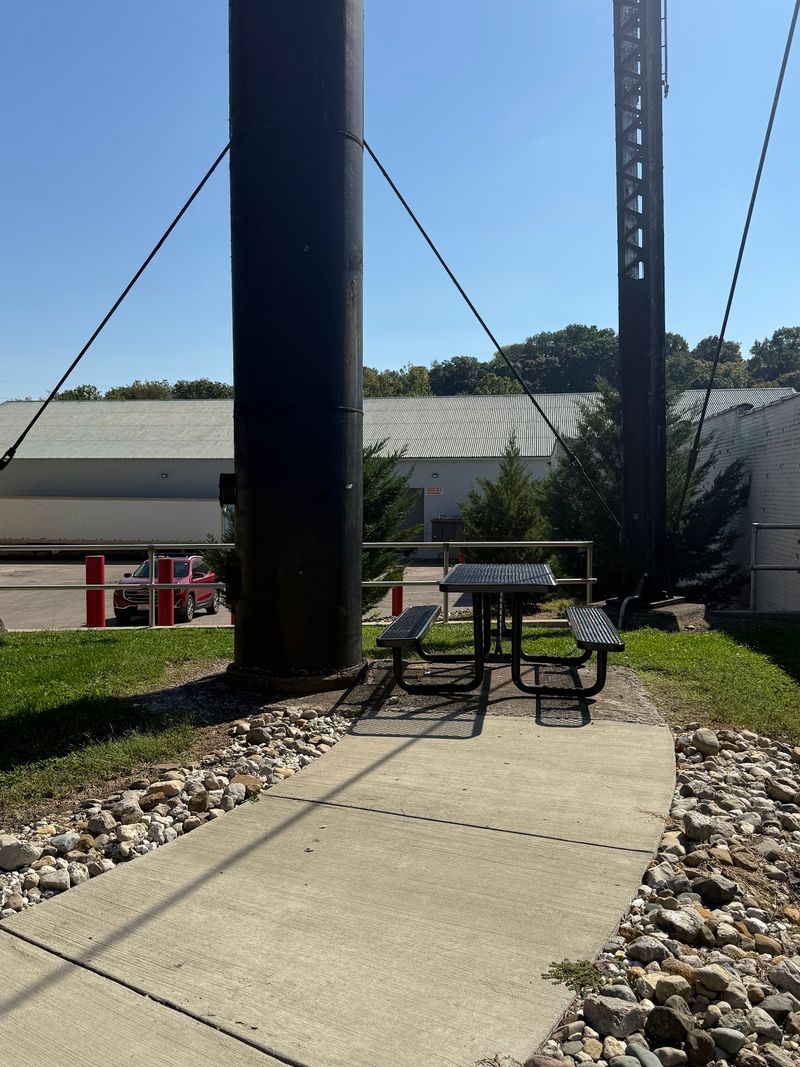
Look down for a minute. While the bottle hogs the attention, the ground beneath it holds a few small treats worth checking out.
A history plaque sits near the base, sharing the basics of how the tower came to be. Reading it together turns a quick photo stop into a mini history lesson, and plenty of travelers say learning the backstory was their favorite part.
It works well for curious kids who ask a hundred questions.
There are picnic tables right underneath, too. That makes it easy to pack sandwiches, chips, and maybe a little squeeze bottle of catsup for a laugh.
A homemade lunch beneath a giant condiment costs almost nothing and feels wonderfully goofy.
Nearby, there is also a sign about the bottle, plus a colorful cake-shaped sculpture that has caught visitors’ eyes over the years. It is the kind of odd extra that makes a roadside stop feel playful.
The business next door sells commercial kitchen equipment and has nothing to do with catsup anymore. Even so, a bit more information about the tower can be found inside its entrance.
It is a gentle reminder that the old factory grounds are still part of a working Illinois town today.
Who Will Love This Quirky Detour
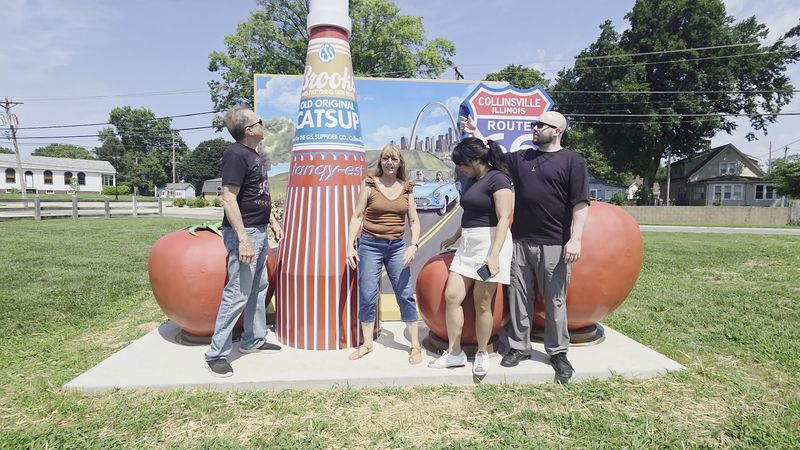
Route 66 fans, listen up. This bottle is a favorite stop for travelers following the Mother Road through Illinois, and it fits right in with that golden age of road trip charm.
Nostalgia lovers get the biggest kick out of it. Grandparents often remember when roadside oddities like this dotted every highway, and sharing that memory with grandkids feels special.
It becomes a bridge between generations, one giant bottle at a time.
Kids enjoy it for simpler reasons. Something that huge and that silly just sticks in young minds.
They will probably bring it up at school, at dinner, and every time someone passes the catsup at a cookout.
That said, expectations matter. Anyone hoping for rides, gift shops, or flashing lights may feel let down, since this is a plain, old-fashioned landmark.
Its appeal comes from being humble and a little kitschy.
Collinsville itself adds to the fun. The town has a friendly small-town feel with plenty of charm and local businesses to explore.
It is also known as the Horseradish Capital of the World, hosting an International Horseradish Festival, plus an annual Catsup Bottle Festival that celebrates this tall red treasure in style.
Parking, Hours, And The Price Of Admission
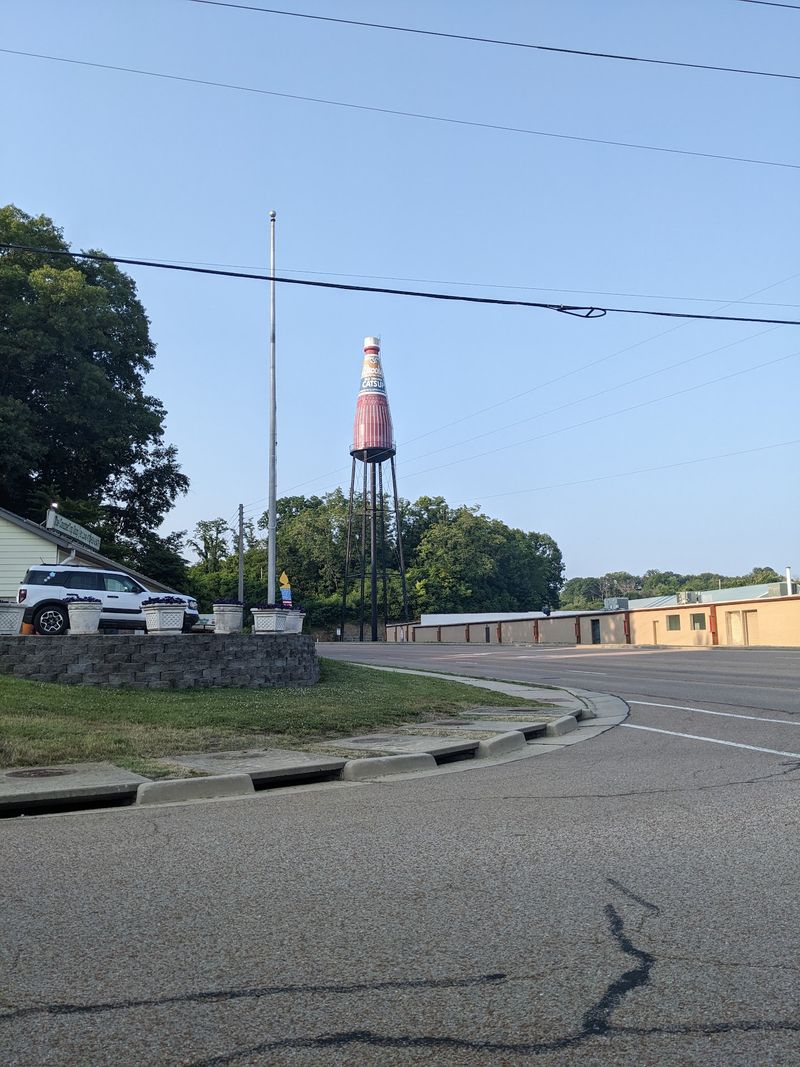
Good news for budget planners: admission is completely free. No tickets, no fees, and no gate, which makes this one of the cheapest family outings in all of Illinois.
The bottle is visible 24 hours a day, every day of the year. Some people even swing by after dark, when it can be seen lit up at night.
Morning, noon, or evening, it is always there waiting.
Parking takes a little planning. There is no official lot just for visitors, and the tower stands at the entrance of an active business.
Many people pull into that lot briefly for photos, while others park on a residential street across the way and walk over carefully.
Plan on spending about five to ten minutes, or longer if you bring a picnic. It is an easy addition to a bigger day trip around the Metro East.
Getting there is simple. Head to 800 South Morrison Avenue on Illinois Route 159, south of downtown Collinsville and just minutes east of St. Louis.
Families coming from Chicagoland or central Illinois often combine it with other nearby sights, turning one quick photo into a full day of affordable exploring close to home.
Worth The Drive For A Ten-Minute Memory
Sometimes the smallest stops leave the biggest smiles. That is really the secret behind this towering Illinois oddball.
It will not fill an entire weekend, and it does not try to. What it offers instead is a free, cheerful pause in the day, a reason to stretch your legs, snap a goofy picture, and tell a story about canned goods, bake sales, and a town that refused to let go of its past.
Families keep coming back because the bottle feels personal. It belongs to Collinsville, but in a way it belongs to every Illinois kid who ever begged to stop at something strange along the road.
Pride in local treasures runs deep here, and this one has earned its fans.
So pack a lunch, grab the camera, and maybe plan around the Catsup Bottle Festival or a sunny spring afternoon. Bring along a grandparent who remembers Brooks Catsup on the table.
Chances are, the kids will still be talking about the giant bottle long after the drive home. For an outing that costs nothing but a little gas, that is a pretty sweet deal, and a memory with plenty of flavor.