
Stained Glass Windows Glow Like Jewels Inside This Century-Old Arizona Cathedral
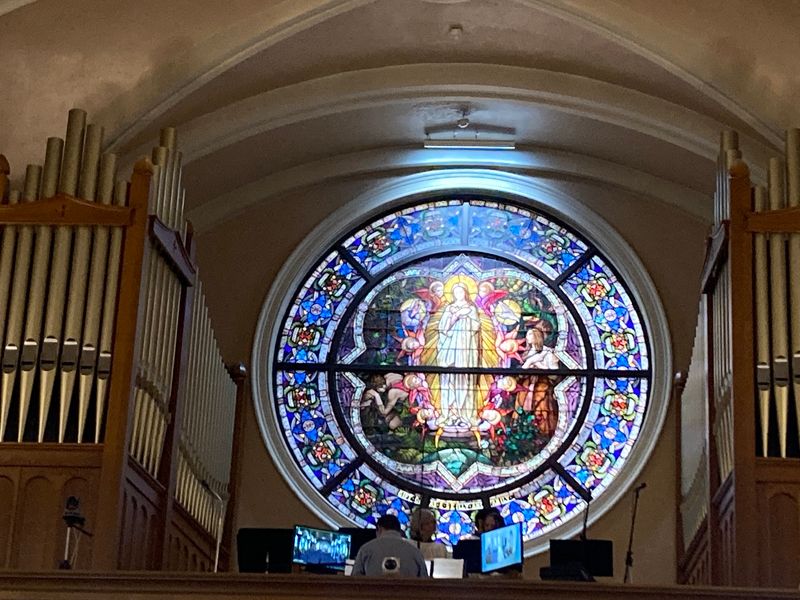
Sunlight in Arizona usually means squinting, sunscreen, and a hunt for shade. Step through one particular set of old wooden doors in the desert, though, and that same harsh light turns into puddles of ruby, sapphire, and gold spilling across the floor.
This church holds the largest collection of stained glass windows in Arizona, and the whole show costs nothing to see. It is the kind of quiet, glowing find that makes a simple day trip feel a little bit magical.
A Downtown Phoenix Landmark With Adobe Warmth
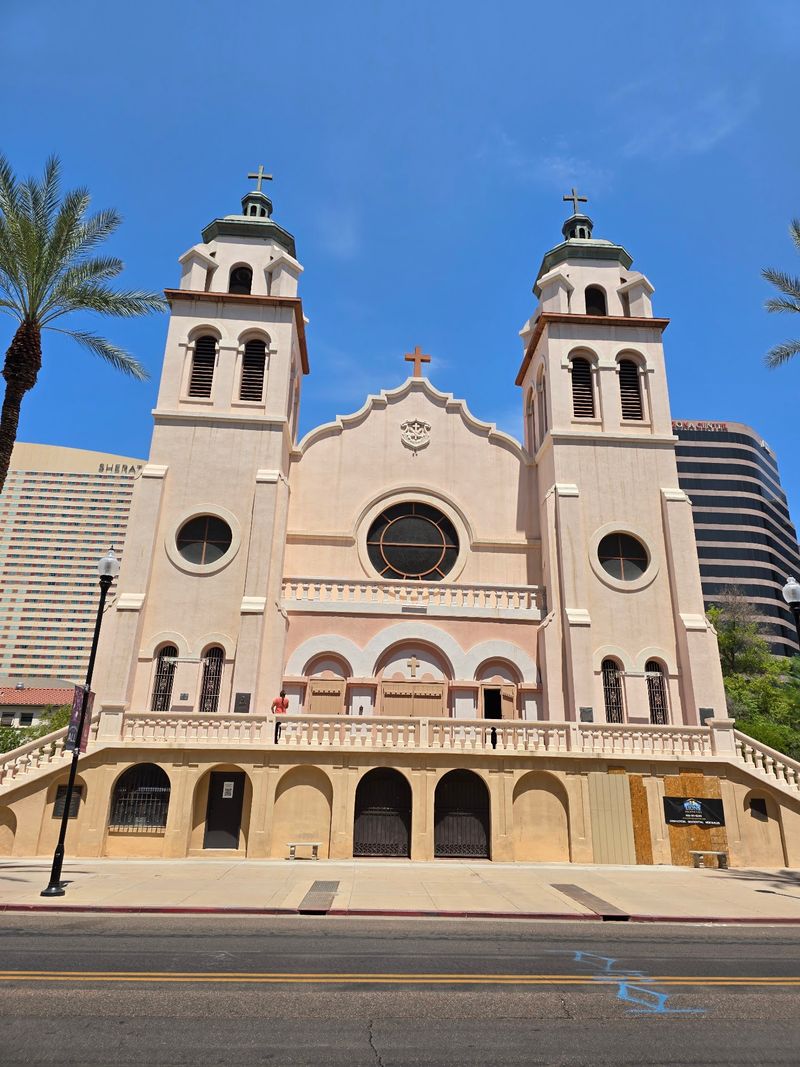
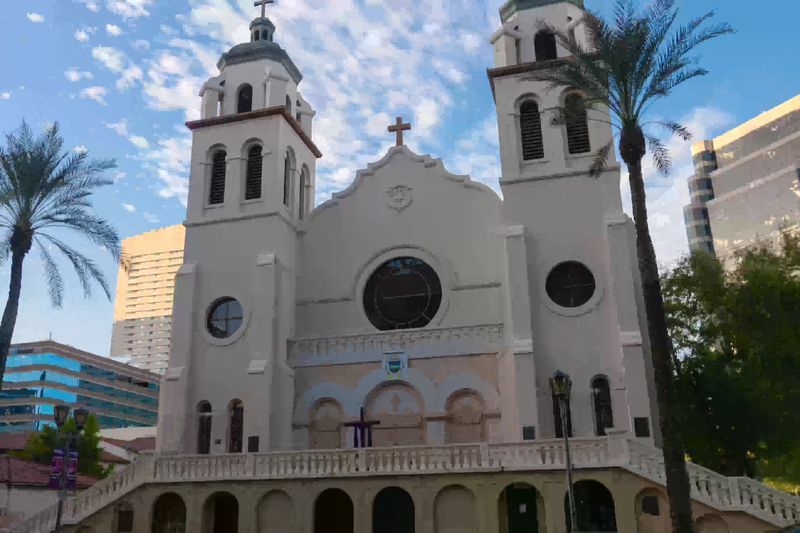
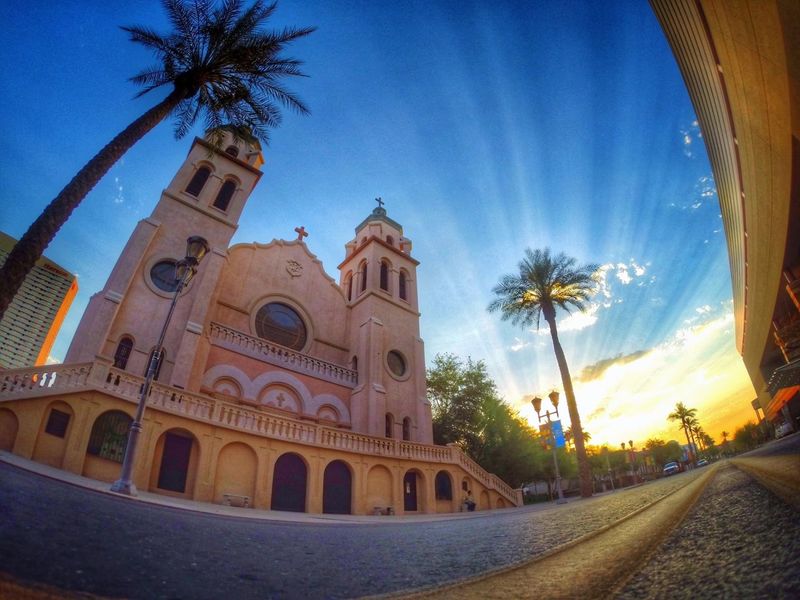
Right at 231 North 3rd Street, surrounded by shiny glass and steel towers, sits a building that looks like it wandered in from another century. St. Mary’s Roman Catholic Basilica is the oldest Catholic parish in Phoenix, and its soft, warm exterior color stands out against the busy city blocks around it.
Officially, the church carries a longer name: the Basilica of the Immaculate Conception of the Blessed Virgin Mary. Most locals simply call it St. Mary’s.
It works as an active parish with daily Mass, sacraments, and a small gift shop, yet it also welcomes curious visitors who just want to look around.
Plenty of people walking by downtown stop to admire it even without going inside. The contrast is part of the charm.
One minute you are passing hotel entrances and bank buildings, and the next you are standing in front of twin towers, arches, and a calm plaza that feels miles away from traffic.
For anyone who loves history, architecture, or simply a peaceful pause, this spot is an easy addition to a Phoenix outing. It sits close to other downtown attractions, so it fits nicely into a walking afternoon.
Best of all, admiring the inside does not require a ticket.
Roots Reaching Back to 1881
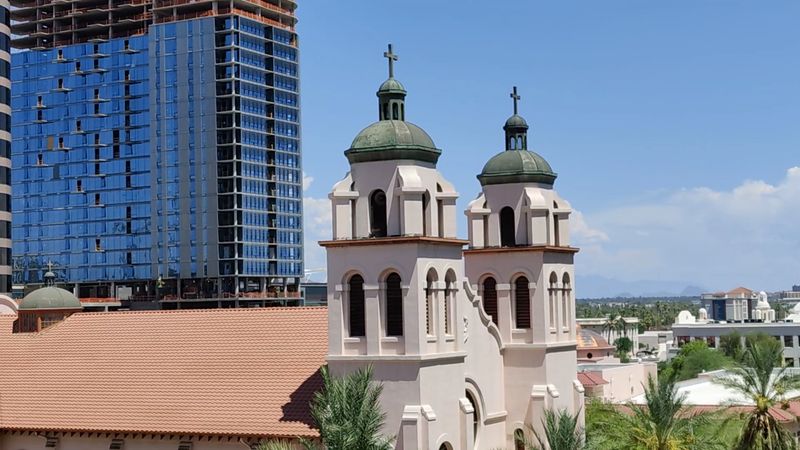
Long before Phoenix had freeways or skyscrapers, a small Catholic community gathered here in 1881. That makes this parish older than Arizona statehood itself, which arrived in 1912.
Back then, the town was dusty, small, and still finding its footing in the Salt River Valley.
Building the current church took patience. Work started in 1902 and stretched all the way to 1914, with the dedication finally happening in 1915.
Twelve years of construction may sound slow, but it reflects how much care went into the project during a time of limited tools and resources.
Here is a fun bit of trivia worth sharing on your next road trip. St. Mary’s was the only Catholic parish in Phoenix until 1924, so for decades nearly every Catholic family in town passed through these doors.
Baptisms, weddings, and holiday services for generations of early Phoenicians happened right here.
Recognition came later in the century. The church joined the National Register of Historic Places in 1978, and in 1993 the people of Phoenix voted it a Point of Pride for the city.
Few buildings downtown can claim that kind of staying power, and walking inside gives a real sense of how deep those roots go.
Mission Revival Outside, Romanesque Grace Within
Architecture fans get two styles for the price of one here, and that price is zero. From the street, the basilica shows off Mission Revival and Spanish Colonial Revival features, with clean curves and that sun-warmed color that suits the desert so well.
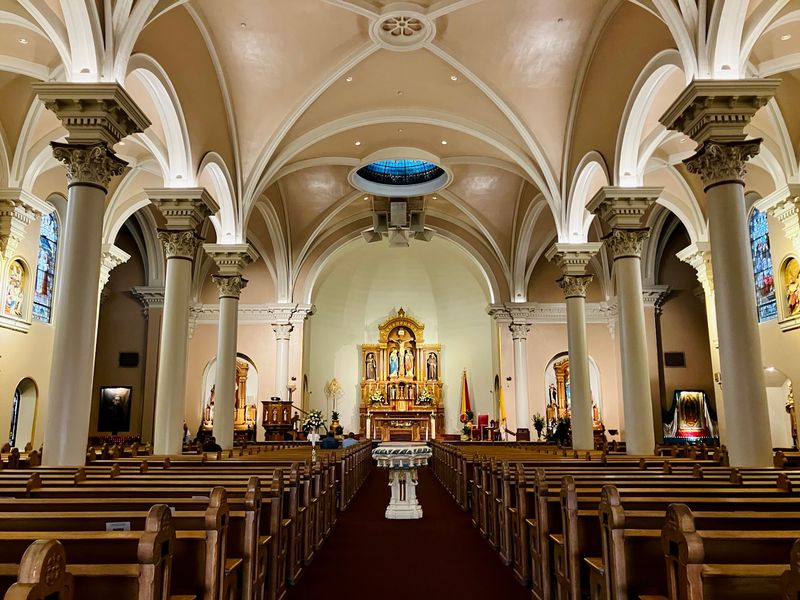
Inside, the mood changes. A Romanesque Revival interior takes over, filled with sturdy columns, tall pillars, rounded arches, and graceful domes.
Your eyes naturally travel upward, following the curves toward the ceiling and the light pouring in from above.
The design did not appear all at once. Franciscan Fathers guided the project, and early sketches actually leaned toward Gothic Revival, the pointy style seen in many European cathedrals.
Later, Franciscan Father Leonard Darscheid added his own touches, shaping the building into the blend visitors see today.
That mix gives St. Mary’s its own personality. It feels rooted in the Southwest yet also connected to older traditions from across the ocean.
Visitors often mention the ornate altar and statues as proof of the dedication of the builders. Take a slow lap around the edges of the nave and notice how the arches frame each window like a picture.
Every angle seems planned to guide attention toward color and light.
Arizona’s Largest Stained Glass Collection
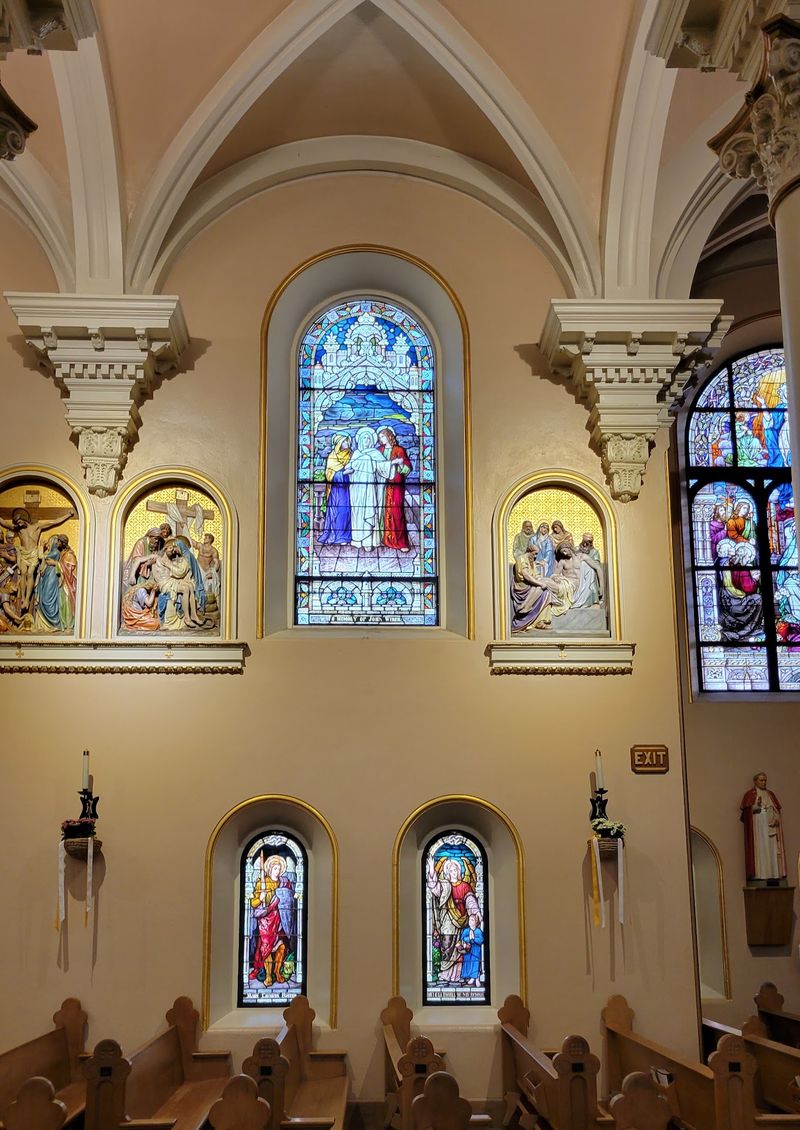
So much stained glass. That reaction comes up again and again from people who step inside, and it makes sense once you see the numbers stacking up.
St. Mary’s holds the largest collection of stained glass windows anywhere in Arizona.
These are not simple colored panes. The windows came from the Emil Frei Art Glass Company of St. Louis and are often called Munich-style.
Each piece was hand-painted, then fired in a kiln several times until the paint fused permanently with the glass. That process explains why the details still look crisp today.
Think about what that means in a Phoenix setting. Summers here regularly push past 110 degrees, yet these windows have held their color for more than 90 years.
That is serious craftsmanship, built to last through decades of blazing afternoons.
Look closely and you will spot painted faces, flowing robes, and tiny patterns that are easy to miss from the pews. Each window feels like a jewel set into the stone walls, catching light and tossing it back in rich shades of crimson, cobalt, emerald, and amber.
Bring patience, because rushing past them means missing the small, delicate brushwork that makes Munich-style glass so special.
Stories Told in Colored Glass
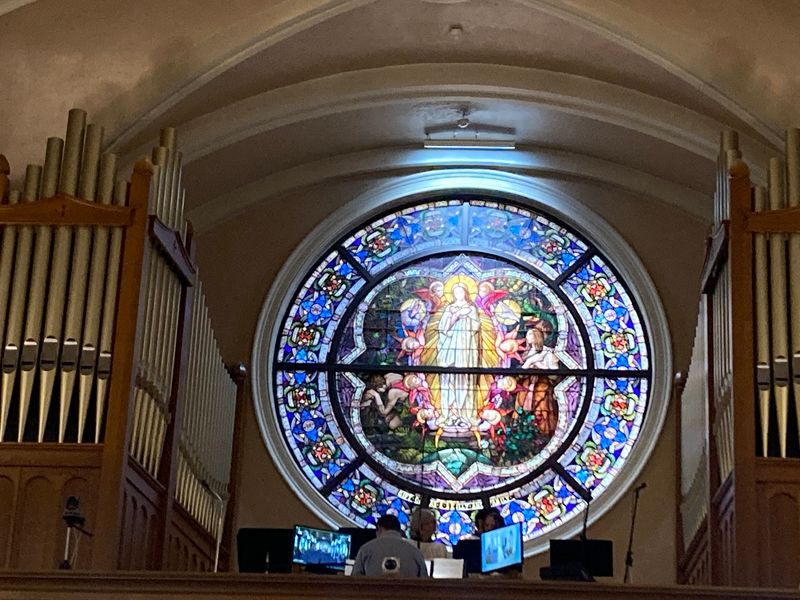
Long ago, many churchgoers could not read, so artists used windows like picture books. St. Mary’s carries on that tradition, and the glass here tells a connected story from top to bottom.
Up high, the large windows show scenes from the life of the Blessed Virgin Mary, which fits perfectly since the church is named in her honor. Following them around the building feels a bit like flipping through chapters, one bright panel at a time.
Lower down, closer to eye level, the windows shift focus. Here you will find popular Franciscan saints along with figures important to the German, Spanish, and Irish communities that once filled the parish.
It is a lovely reminder that early Phoenix was a meeting place for families from many backgrounds.
Kids especially enjoy turning this into a gentle game. Ask them to find a saint in brown robes, a figure holding a book, or a window with the most blue.
Adults may enjoy noticing how the scenes connect to familiar Bible stories. Either way, the windows reward anyone who slows down.
A brochure available inside can help explain who is who, making the visit feel like a self-guided art lesson.
The Dome and Its Lantern of Light
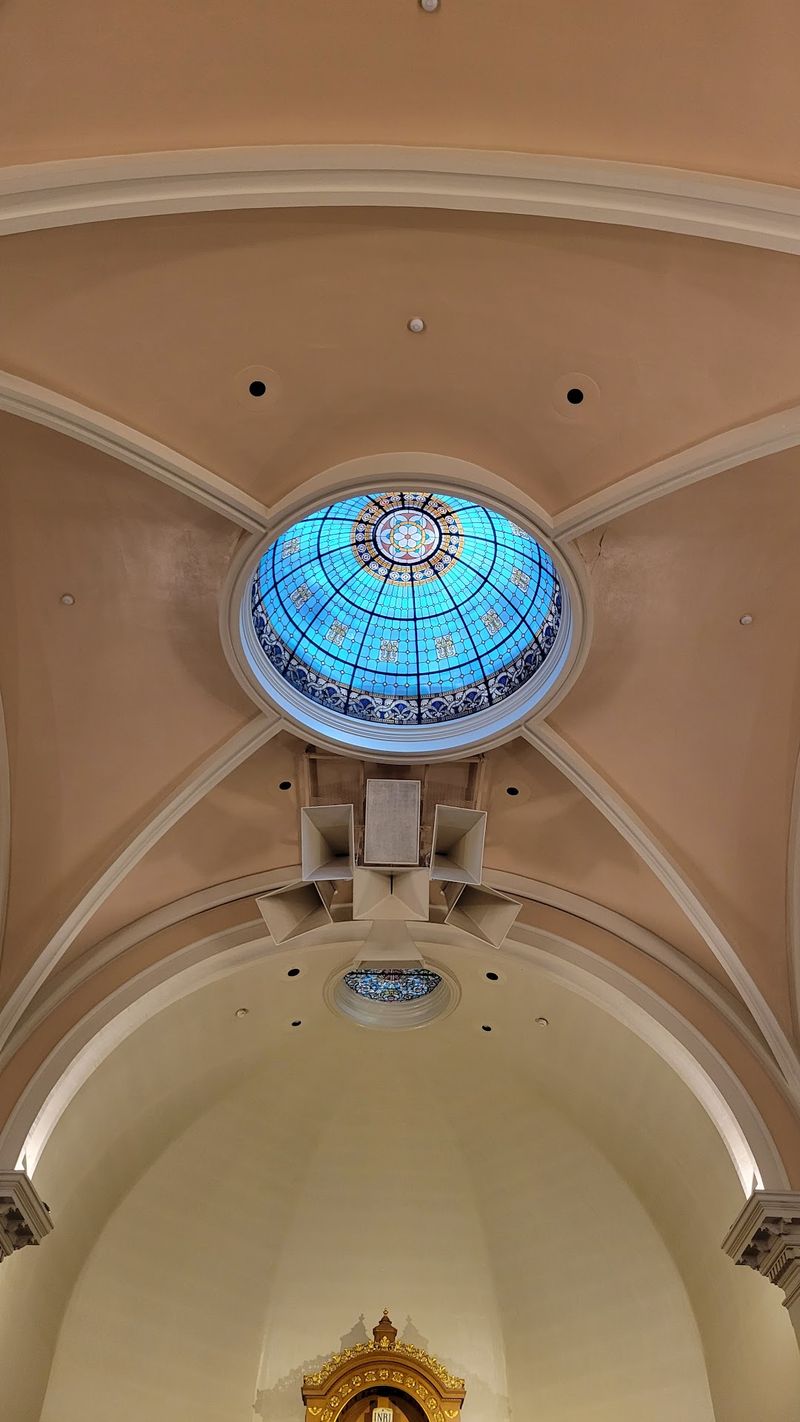
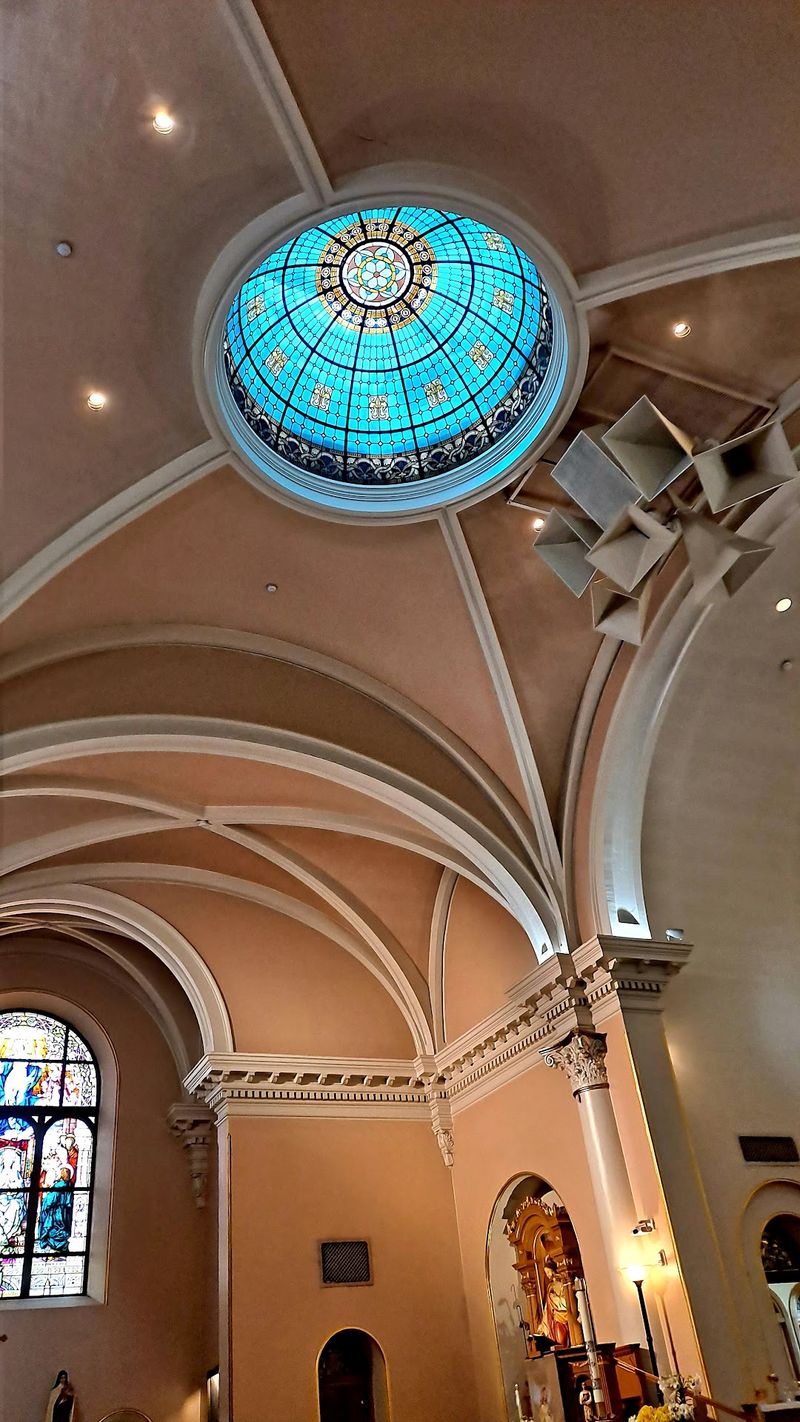
Tilt your head back near the center of the church and you will find one of its best surprises. The main dome rises overhead, and right at the top sits stained glass topped by a lantern feature.
That lantern does something clever. It lets natural sunlight pour straight down, washing the central area and the altar in a spectrum of color.
On bright days, the floor and pews can look painted with soft rainbows that slowly drift as the sun moves.
Timing matters if you want the full effect. The sweet spot tends to be mid-morning, roughly between 10:00 and 11:30 AM on sunny days.
That window often brings the glass to its peak glow, when every color seems to light up from within.
Arizona helps here, since clear skies are more common than not. Even so, a cloudy morning can soften the show, so checking the forecast before driving in from Mesa, Glendale, or farther out may save you a little disappointment.
Grab a seat, stay still for a few minutes, and watch the light shift. It is a quiet, almost glowing experience that feels a lot like stargazing, only indoors and during daylight.
A Papal Visit and Basilica Status
September 14, 1987, was a big day in downtown Phoenix. Pope John Paul II, now known as Pope Saint John Paul II, stopped at St. Mary’s during his visit to the United States.
He knelt in prayer in the center aisle and spoke to the crowd from the balcony.
Two years before that visit, in 1985, the same pope had named the church a Minor Basilica. That title is given to churches with special historical or spiritual importance, and only a limited number carry it.
For a desert city that was once a small farming town, the honor meant a lot.
Visitors can still find a reminder of that historic day. A statue of John Paul II stands in the yard outside, and many people pause there for a photo or a moment of reflection.
It makes a meaningful stop, especially for families who remember the news coverage from back then.
Standing in that same center aisle today gives the visit an extra layer. You are sharing space with one of the most famous moments in local Catholic history, all while surrounded by the glowing windows that have watched over the parish for generations.
Plaza Fountains, Shade Trees, and Bronze Figures
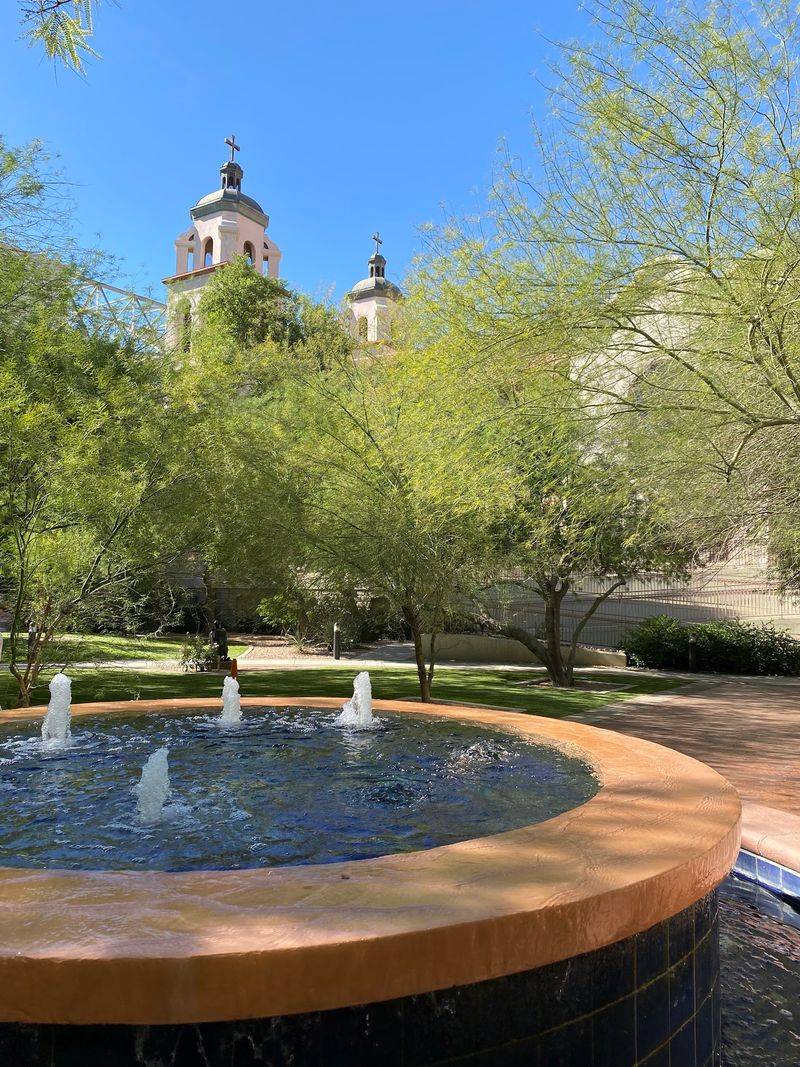
Step back outside and the city noise feels softer than expected. An outdoor plaza sits next to the basilica, offering mature trees, an ornamental fountain, and several bronze statues scattered across the grounds.
Shade is a precious thing in Phoenix, and this little green pocket delivers. Visitors describe the park beside the church as a lovely spot for a short walk, and it often feels calmer than the busy streets just a few steps away.
The fountain adds a gentle splash that makes the space feel cooler.
Among the statues, one stands out for many people. A bronze figure of a beggar sits facing toward the nearby Sheraton and Bank of America buildings.
The placement creates a thoughtful contrast between modern wealth and simple human need, and it often sparks quiet conversation.
Bring a bottle of water and plan for a few relaxed minutes here before or after heading inside. It works nicely as a resting point during a downtown walking day.
A quick note for photographers: church staff may limit photo sessions on the property, so casual snapshots are fine to ask about, but professional shoots should be cleared ahead of time.
Reverent Calm for Every Kind of Visitor
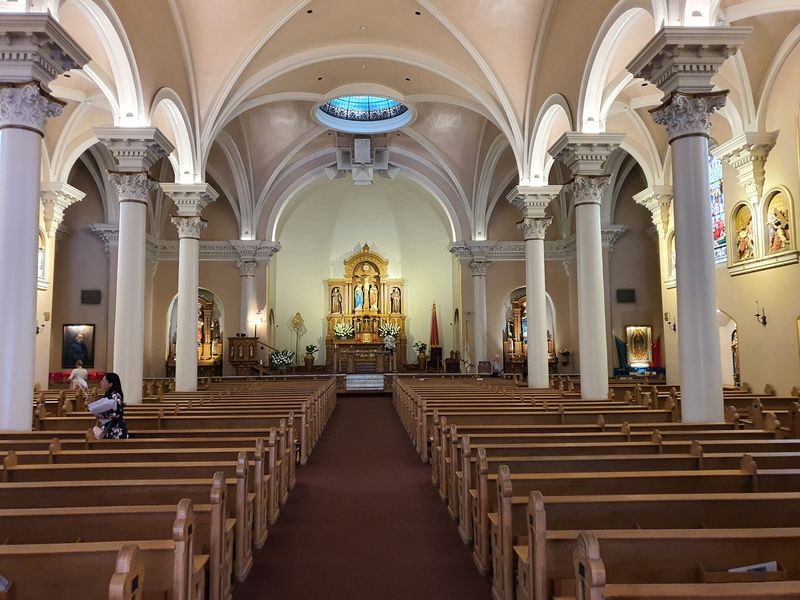
Calm is the word that fits best. People walking in often notice a sense of peace right away, the kind that is hard to find in the middle of a busy downtown.
The interior stays quiet, clean, and very well maintained.
Who will love it? Faithful Catholics looking for daily Mass will feel right at home, since services happen every day.
Visitors often praise the music, from the organist to the choir, and mention a friendly congregation along with an engaged younger pastor. A Spanish Mass is offered once a month too.
History buffs, art lovers, and anyone who enjoys beautiful buildings will also find plenty to admire. Retirees exploring Arizona on a budget may appreciate how a free visit can fill a peaceful morning.
Special celebrations, like a Dia de los Muertos festival, have also drawn crowds.
A few gentle tips help everyone enjoy the space. Keep voices low, and avoid photos during Mass or Adoration, which sometimes begins right after the noon service.
The Angelus at noon is a lovely moment to witness. If confession is part of your plans, lines can run long and time is limited, so arriving early is a smart move.
Hours, Parking, and Planning Your Trip
Good news for budget explorers: wandering the basilica is free. Informational brochures are available for a self-guided tour, which makes it easy to learn as you go without paying for a guide.
Hours tend to follow a simple pattern. Monday through Friday, the doors are generally open from 9 AM to 3 PM.
Saturday runs longer, from 10 AM to 6 PM, while Sunday hours are 8 AM to 1 PM. Schedules can shift around holidays and special services, so double-checking before a long drive may save a wasted trip.
Getting there is straightforward for anyone already downtown. The church sits at 231 North 3rd Street in Phoenix, close to hotels and office buildings.
Parking nearby is limited, though, so coming early really helps, especially on weekends or holiday Masses. Public transit or a short walk from a downtown garage can be easier options.
Weekday noon Mass is popular, and visitors sometimes stumble into it by surprise. If you want to see the stained glass without interrupting worship, aim for the mid-morning window.
Restrooms may not be open to the public, so plan a stop elsewhere before arriving. A small gift shop on site offers keepsakes.
Worth the Drive for a Morning of Glowing Color
Some of the best Arizona outings cost nothing but a little gas and an open morning. St. Mary’s Basilica fits that idea beautifully, pairing more than a century of Phoenix history with windows that glow like scattered gems.
Between the Munich-style glass, the sunlit dome, the papal history, and the shady plaza, there is plenty to fill an hour or two. It works for a solo moment of reflection, a family history lesson, or a relaxed stop during a downtown day trip from Tucson, Prescott, or the East Valley.
Summer visitors will appreciate the indoor setting, since it offers a cool, quiet escape from the heat. During the milder months, the plaza becomes a pleasant place to linger too.
Either season, aiming for a sunny mid-morning gives the windows their best chance to shine.
Respect goes a long way here. It remains an active parish first, so moving quietly and honoring Mass times keeps the experience peaceful for everyone.
Do that, and you may walk out feeling refreshed, a little amazed, and already thinking about who to bring next time. Save this one for your next downtown wander, and tag a friend who loves color and history.