
This Michigan Neighborhood Hides A Homemade Disneyland Built From Salvaged Junk And Pure Obsession
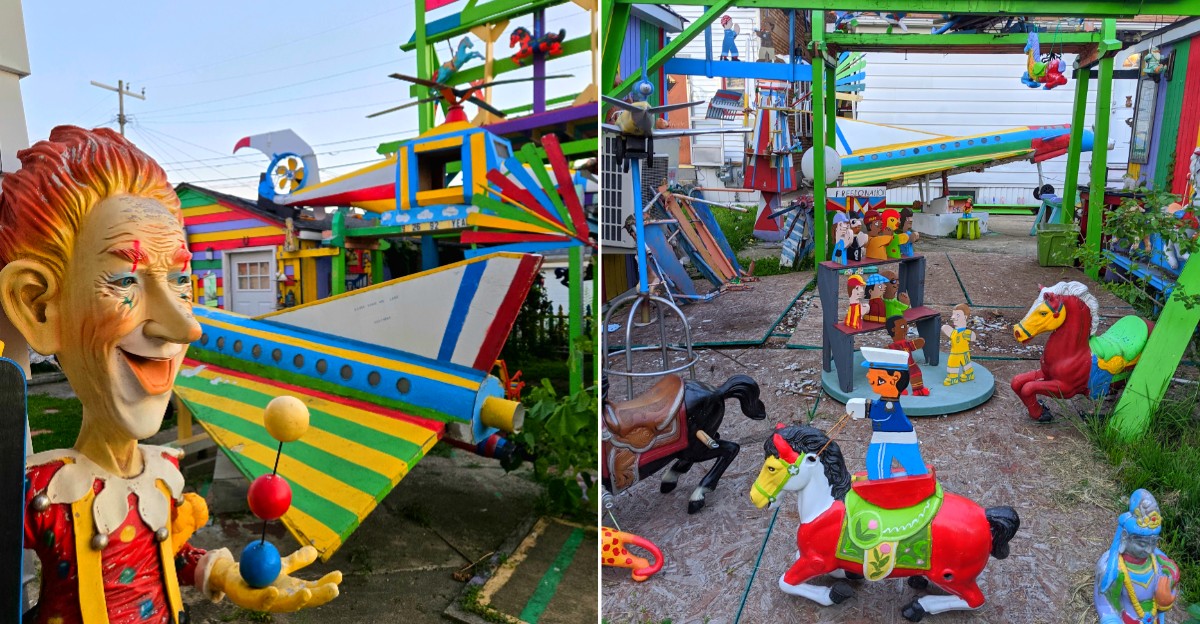
Some backyards have sheds. This one has a handmade wonderland climbing over two garages, packed with painted figures, plastic horses, spinning parts, and salvaged objects that seem to have escaped from a carnival dream.
Created by Ukrainian immigrant Dmytro Szylak after he retired from General Motors, the installation turns discarded materials into something joyful, eccentric, and deeply personal.
In Michigan, this backyard art landmark transforms scrap, memory, and immigrant imagination into one of the state’s most unforgettable roadside curiosities.
What I love most is how much there is to notice once the first burst of color settles down. Tiny figures, improvised structures, and unexpected details reveal themselves slowly, making the whole place feel part sculpture, part autobiography.
Finding the alley is part of the adventure, but remember that homes surround it. Visit respectfully, look closely, and let the strange little world reward your curiosity from every angle you can find.
Retirement Started Something Remarkable
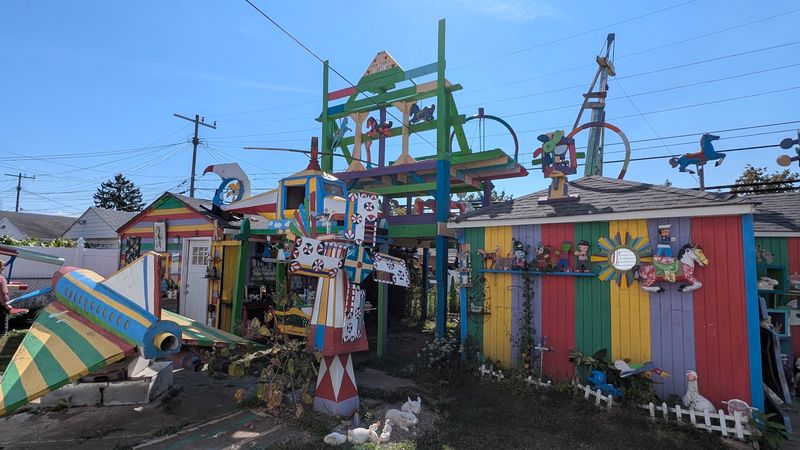
After more than thirty years working for General Motors, Dmytro Szylak found a very different use for his hands. In 1992, he began building the backyard artwork that would become Hamtramck Disneyland.
Szylak had immigrated to the United States in 1949 and settled in Hamtramck during the 1950s. His retirement project kept growing, and he continued shaping it until his death in 2015 at age ninety-two.
Knowing that timeline changes the visit. Instead of treating the display as a quick pile of strange decorations, look for the patience behind it.
Each added figure represents a choice, a task, and time spent making something personal. The scale becomes especially striking when you remember that one person started it.
The Alley Is The Real Front Door
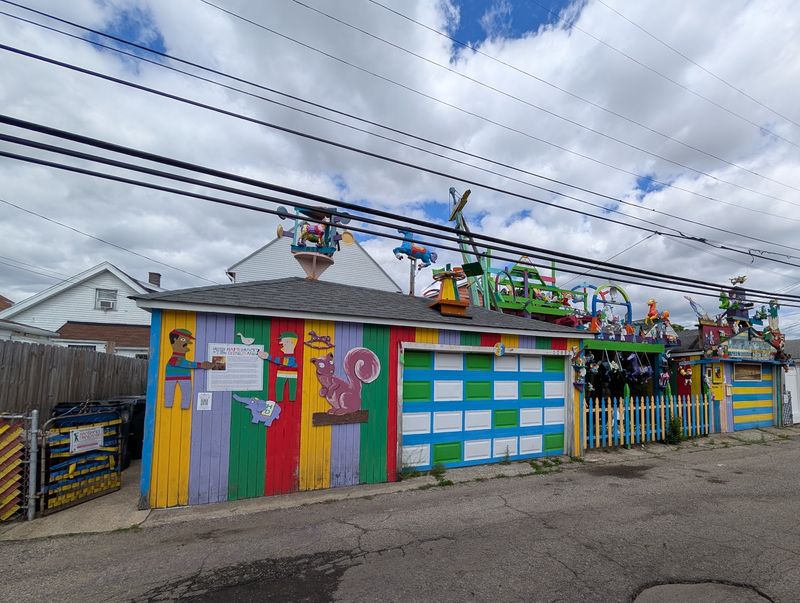
Hamtramck Disneyland sits behind 12087 Klinger Street in Hamtramck, Michigan, in a dense residential neighborhood just off the city’s main commercial streets. Klinger gets you close, but the actual artwork rises above the garages behind the house rather than facing the street.
The last clue is the alley between Klinger and Sobieski. Slip into that narrow back lane and suddenly the handmade towers, spinning pieces, painted figures, and found-object chaos appear above the garages, which is why the alley works much better than standing out front on Klinger.
Park legally on a nearby residential street, then walk into the alley for the view. Stay in the public alley and do not climb the structures or enter the neighboring yards, since the artwork sits on private property even though it is meant to be seen from behind.
Two Garages Hold A Bigger Dream
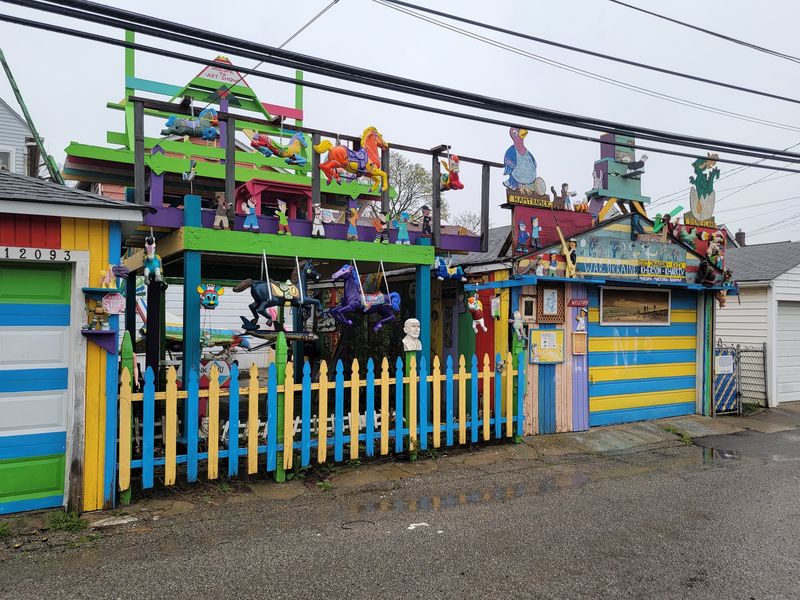
Two garages provide the unlikely base for this towering collection. Above them, painted shapes and found objects create a layered outline that feels much larger than its backyard setting.
Step back within the public viewing area before studying individual details. Seeing the whole arrangement first helps you understand how Szylak turned plain buildings into supports for an outdoor art environment.
Then let your eyes travel upward, following the pieces from roof level toward the highest figures. Avoid climbing, leaning against structures, or reaching into the installation for a better view.
Its homemade construction is part of its appeal, but it also requires care. The garages are more than background scenery; they explain how an ordinary space became extraordinary.
Salvaged Objects Get Another Chance
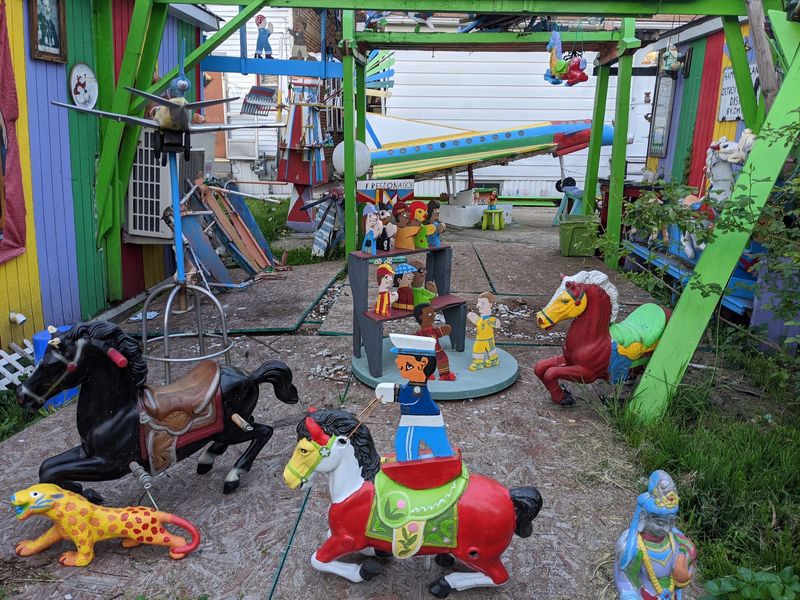
A discarded part can have a surprisingly lively second career here. Fan propellers, tin sheets, plastic horses, and painted wooden cutouts all help build the display’s busy character.
Some pieces were found objects, while others were made by Szylak himself. That mix matters: the installation is not simply a collection of leftovers, but an arrangement shaped by someone with a clear desire to create.
Choose one small section and identify the different materials without touching them. Notice how paint brings unrelated objects into the same visual world.
For children, this makes an easy looking game: find something wooden, something metal, and something once used elsewhere. The lesson is simple enough to carry home: usefulness does not always end.
A Backyard Carnival Without Rides
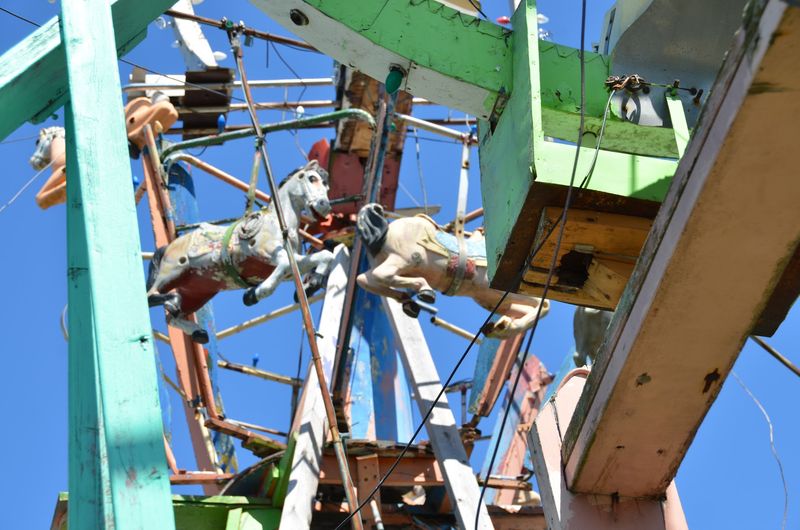
Plastic horses give the display a carnival feeling, but nobody is lining up for a ride. Hamtramck Disneyland is a folk art environment, not a branch of Disney’s parks or a working amusement park.
That distinction helps set expectations before you arrive. The experience comes from looking at handmade arrangements, spotting familiar shapes, and enjoying the strange company they keep above a pair of garages.
Give the horses their own moment instead of scanning past them toward the next object. Their playful forms help explain the nickname and the display’s fairground mood.
Families should tell children beforehand that this is a place to observe artwork. A little preparation prevents disappointment and makes room for a different kind of fun.
Look For Two Homelands
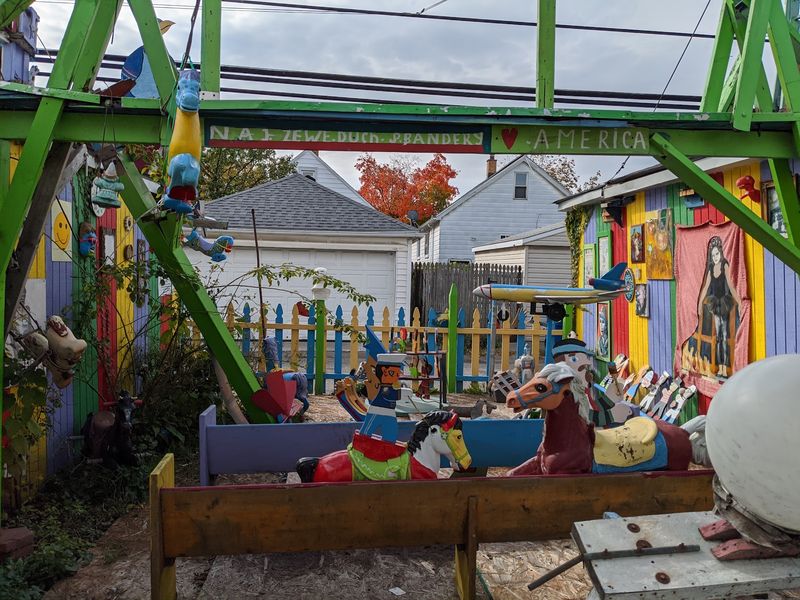
A red heart beside the word America offers a small clue to the larger story. Signs bearing Slava Ukraini, meaning Glory to Ukraine, connect the artwork to Szylak’s Ukrainian roots.
American flags appear within the same crowded world of figures and painted objects. Rather than choosing between identities, the installation gives both room to stand together.
Look for these symbols during your visit, but avoid reducing every color or shape to a single meaning. Personal artwork can hold several feelings at once.
Hamtramck’s history of immigration provides useful context, while the display remains one person’s expression. Those signs turn a playful backyard scene into something more thoughtful: a place where attachment to home can cross an ocean.
Daylight Makes The Details Easier
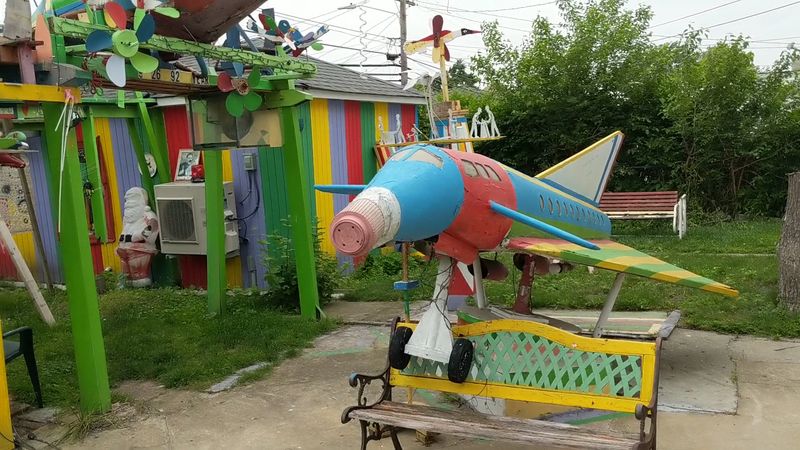
Bright paint is easier to appreciate when you can actually see its edges. A daylight visit helps reveal the figures, materials, and small details that might disappear into shadow later.
The installation includes Christmas lights, and moving parts were part of Szylak’s original creation. However, do not plan around a guaranteed light show or assume every propeller still turns.
Outdoor artwork changes as pieces weather and repairs take place. Check with Hatch Art if lighting or special access is central to your plans.
Otherwise, let daylight do the work and treat any active feature as a bonus. A clear view of the handmade construction offers plenty to enjoy without expecting the backyard to perform on a schedule.
Check Access Before Stepping Inside
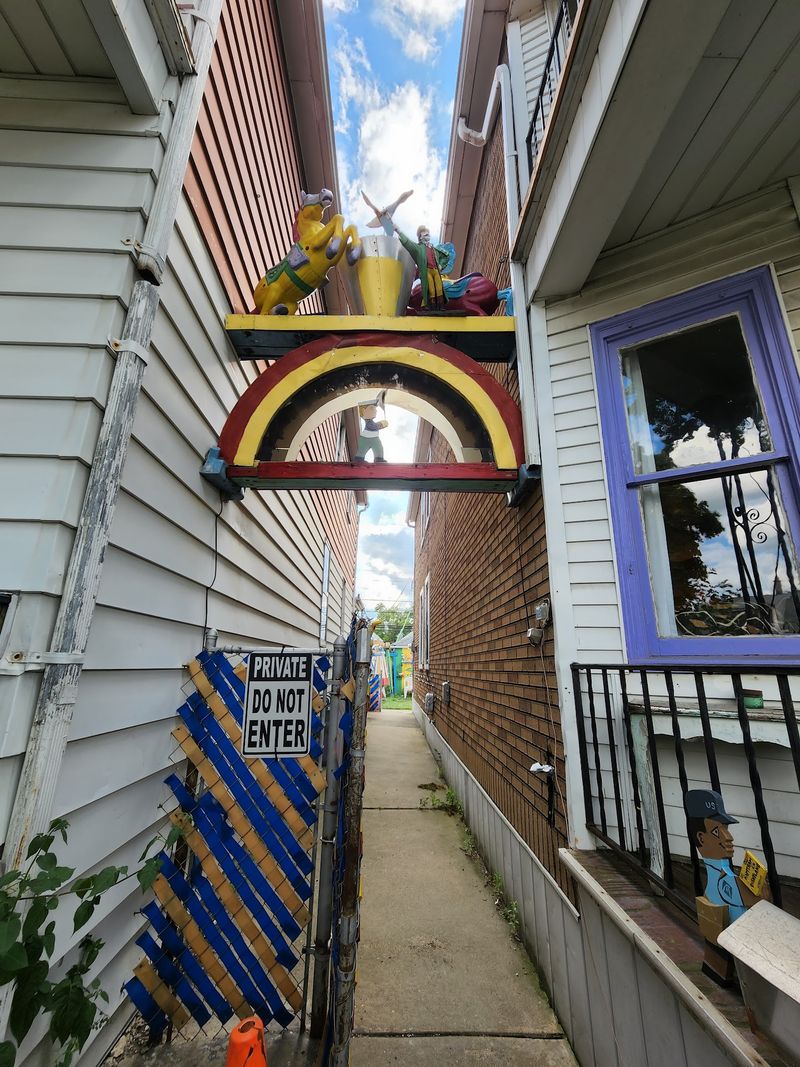
An open alley view is not the same thing as permission to enter a backyard. Before walking through any gate, read current signs and confirm what access is allowed.
Hatch Art, the nonprofit caring for the property, is the best starting point for questions about visits. Its Hamtramck Disneyland webpage can help you check for current information before leaving home.
A map listing that shows around-the-clock hours should not be treated as a promise of staffed tours or unrestricted entry. Viewing from public space and entering the property are different activities.
If no visit has been arranged, enjoy the available view without testing boundaries. Respectful access protects both the artwork and the people who live around it every day.
Photograph The Layers, Not The Neighbors
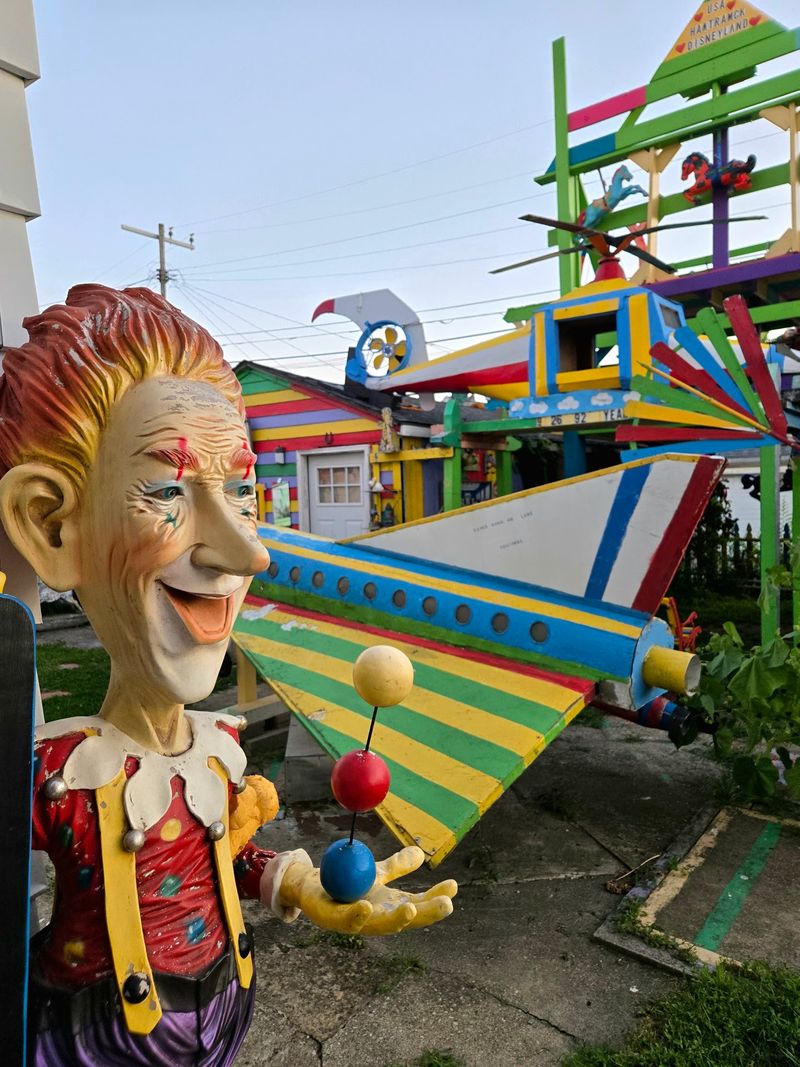
There is enough visual clutter here to keep a camera happily occupied. Start with a wide photograph showing the garages and the artwork above them, then concentrate on smaller groups of objects.
A horse beside a propeller tells a different story than the whole installation. Changing your framing can reveal how closely the pieces are packed without requiring you to move onto private property.
Keep neighboring windows, residents, and private yards out of your main subject. Leave room for anyone using the alley, and skip poses that involve touching or climbing the artwork.
The strongest photographs explain the place rather than interrupt it. A few careful images will capture more character than a rushed burst from every possible angle.
Preservation Is Part Of The Story
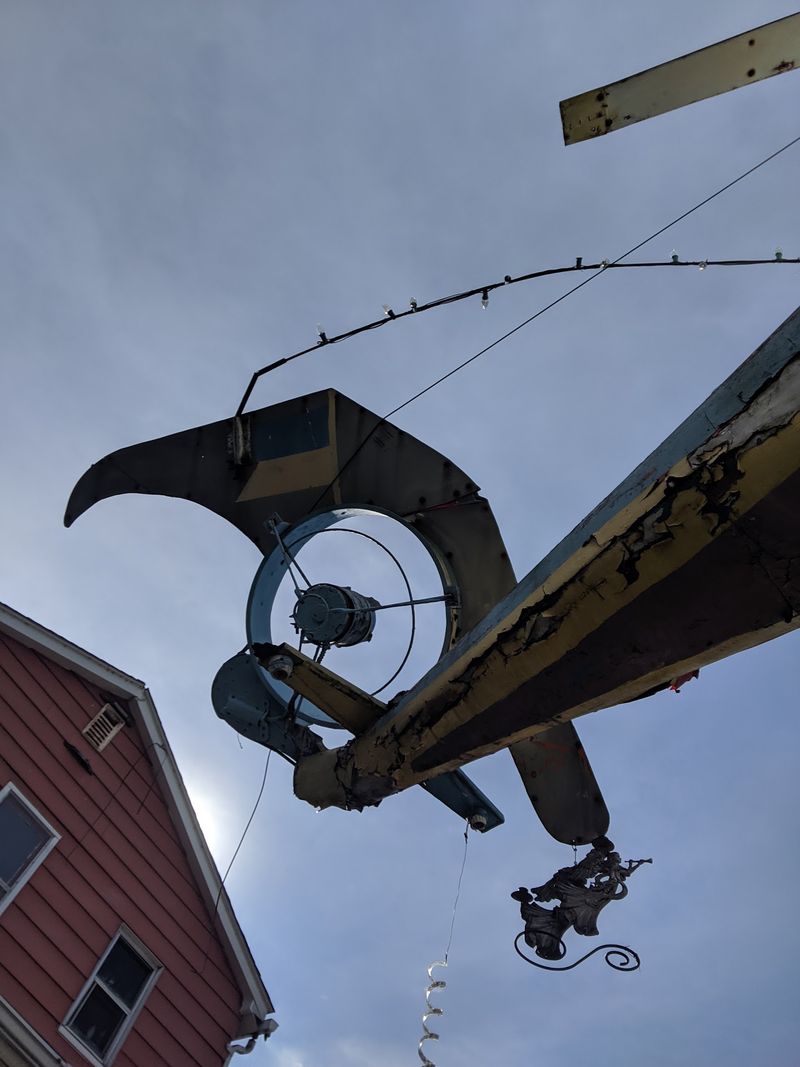
Weather does not make exceptions for beloved backyard art. Wood, metal, paint, and electrical parts all need attention when they remain outdoors through Michigan’s changing seasons.
After Szylak died in 2015, the installation’s future was uncertain. Hatch Art acquired the property in 2016 and raised support for restoration and maintenance.
That history is worth remembering when you notice worn surfaces or sections awaiting work. Preservation means balancing safety, repairs, and respect for the artist’s choices, not making every object look newly purchased.
If you want to help, ask Hatch Art about current donation or volunteer options rather than assuming old appeals remain active. Looking after an unusual landmark is less flashy than building one, but just as necessary.
Leave Room For A Slow Look
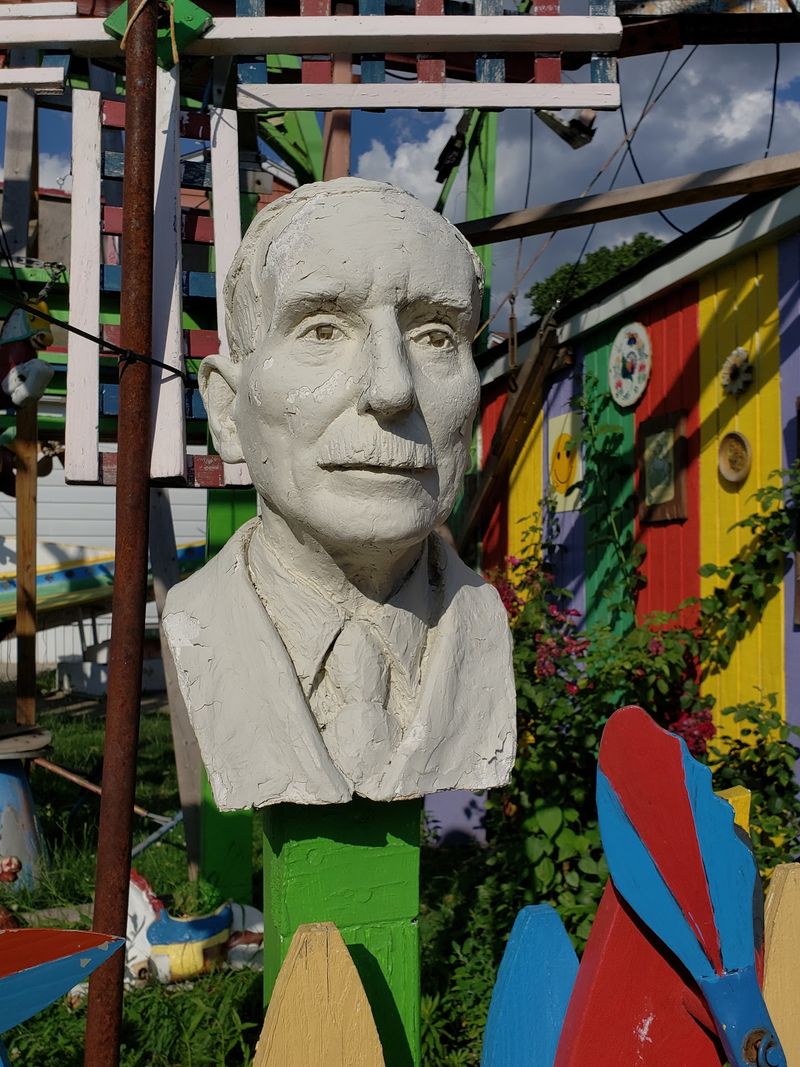
Small places can reward more attention than their size suggests. You do not need a full day here, but leaving a little breathing room makes the visit more satisfying.
First take in the overall shape, then choose a few details to study. Look for a handmade figure, a familiar piece of scrap, and a symbol connected to Szylak’s life.
Before leaving, glance back at the garages and nearby homes. That ordinary setting is what makes the project so striking: a personal hobby grew into a landmark without leaving its backyard.
Keep voices considerate, carry away any litter, and let residents continue their routines. The best souvenir is a sharper eye for what someone can make from overlooked materials.