
This Hidden Lake Michigan Beach Is A Paradise For Sea Glass Hunters
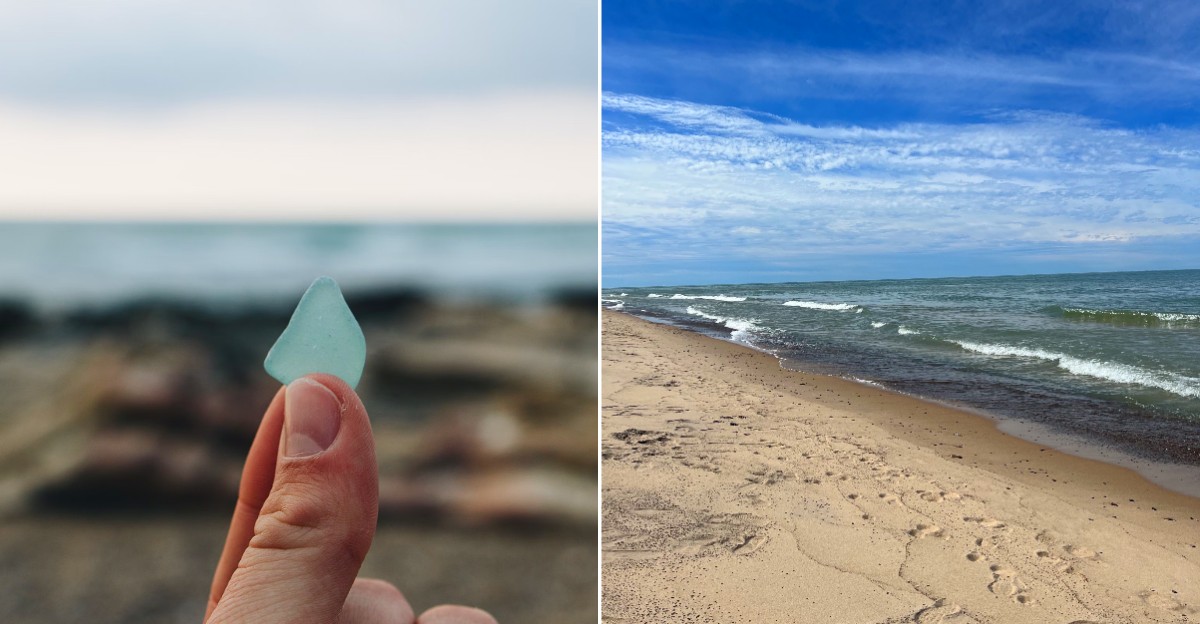
Some beaches hand you the view immediately; this one makes you earn it. A sandy walk through wooded dunes leads toward a mile of Lake Michigan shoreline, where inland lakes, dune scenery, and wave-smoothed stones make the approach feel like part of the outing.
Among those stones, visitors may spot bits of glass softened by years of water and sand, though finding is never guaranteed.
Along Lake Michigan, this quiet Michigan beach rewards patient walkers with dune views, shoreline solitude, and the possibility of discovering naturally tumbled beach glass.
What I like most is the slower pace. You are not racing from the parking lot to the water, and that extra effort filters out some of the beach rush.
Wear sturdy shoes, scan the shoreline, and keep expectations realistic. The best find may be a piece of glass, but it might be the calm stretch of coast everyone else overlooked.
Sort Out Parking Before The Hunt
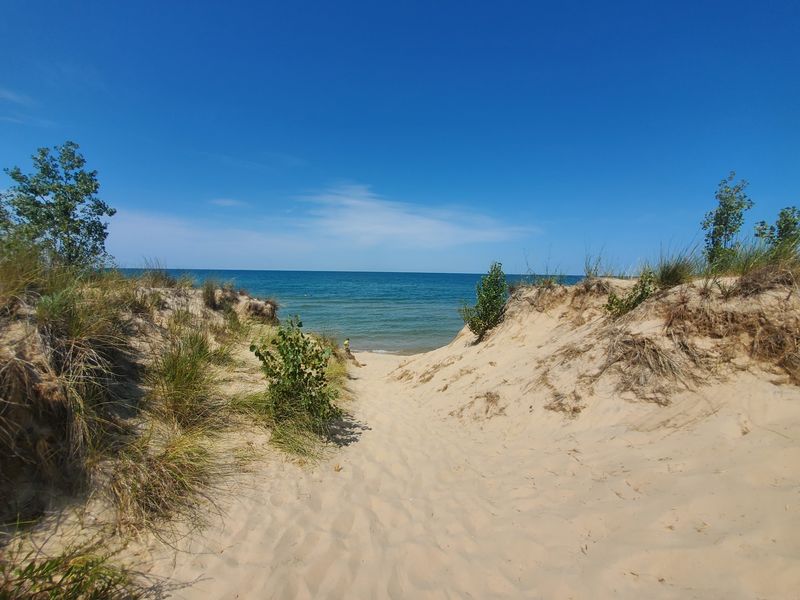
A promising glass hunt can stall before the first dune if parking details get overlooked. Grand Mere requires a Michigan Recreation Passport for vehicle entry, with options and prices that depend on residency and purchase method.
Check the Michigan Department of Natural Resources website before leaving home. Confirm current fees, park hours, and any notices instead of relying on an old social media post.
Use 7337 Thornton Dr, Stevensville, MI 49127 when planning your arrival, then follow official signs for parking and trails. Download a map while you have a reliable connection.
Knowing where your car sits makes the return trip much easier when several sandy paths begin looking alike after a long afternoon.
The Parking Lot Is Only The Beginning
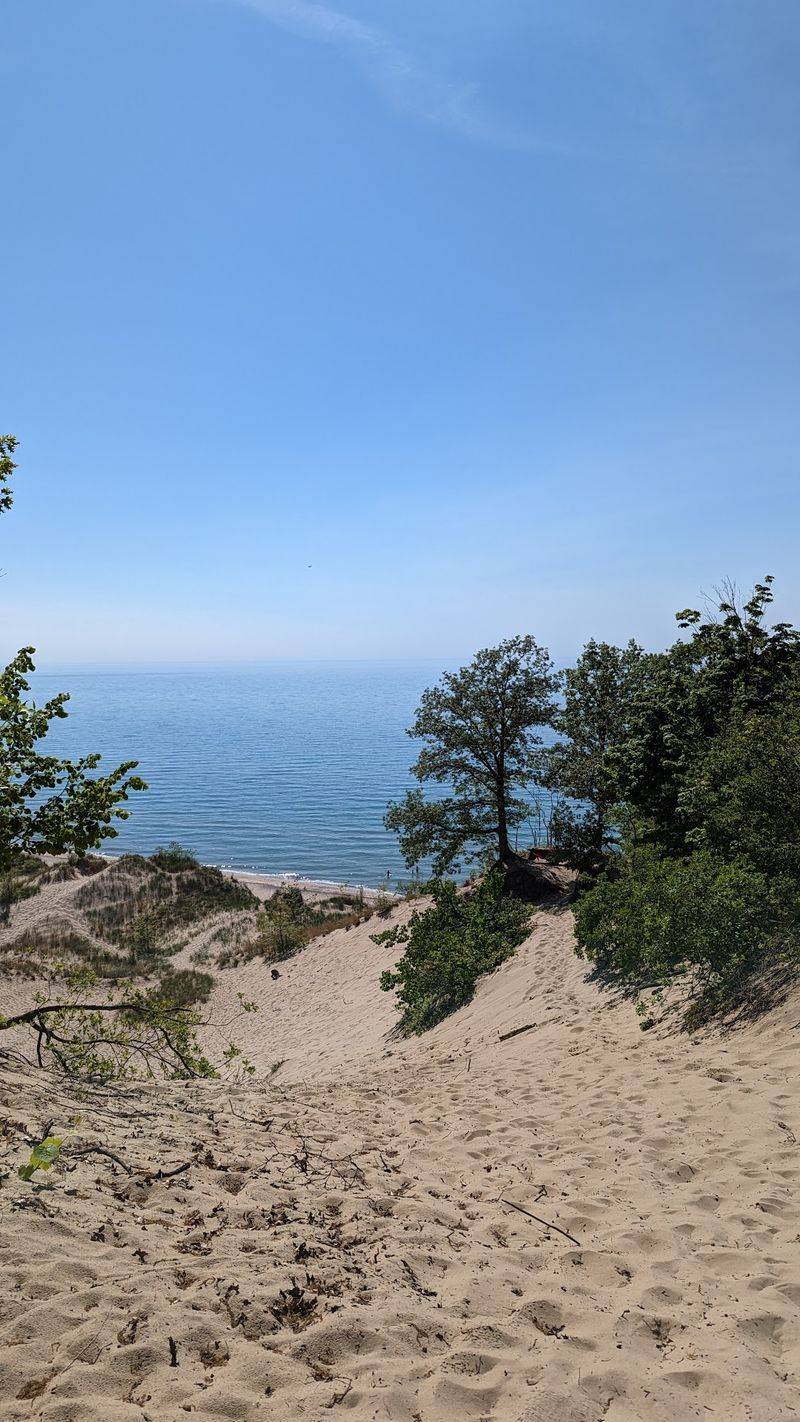
Grand Mere State Park sits near Stevensville, Michigan, with Thornton Road providing the practical final approach to the main visitor area. Once you leave the busier roads behind, the park feels more like a quiet dune preserve than a conventional beach stop.
The useful clue is the main parking area just off Thornton Road. From there, the road portion of the trip is over, because Lake Michigan is hidden behind the dunes rather than visible from the car.
Park in the main lot near the pavilion, then continue on foot along one of the park trails toward the shoreline. The beach is reached only after hiking through the dune landscape, so plan on walking the final stretch instead of expecting a drive-up lakefront.
Spring And Fall Change The Search
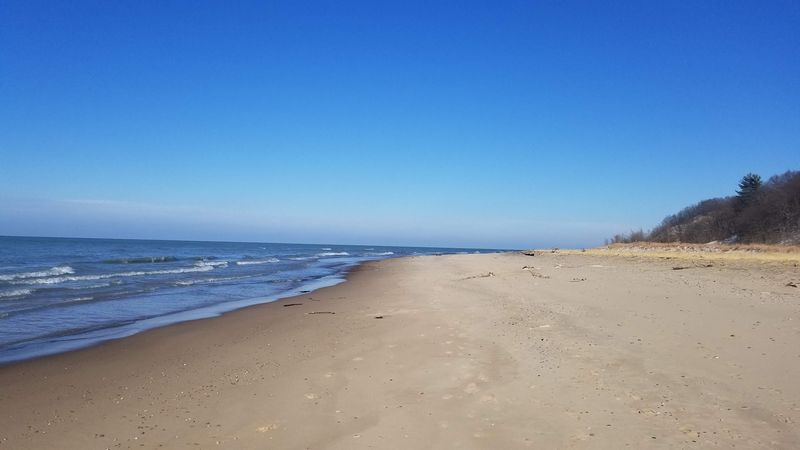
Yesterday’s bare sand may hold a fresh patch of pebbles after the lake rearranges things. Waves move shoreline material, which means a familiar stretch can offer a different search on another visit.
Spring and fall are worth considering because seasonal weather can expose or shift stones and glass. Still, no month guarantees a find, and changing water levels may leave less beach available for walking.
Plan around safe conditions rather than dramatic weather. Wait until storms have passed, check the forecast, and avoid wave washed areas during rough water.
Cooler visits also call for layers and a windproof jacket. A comfortable hunter notices more than someone busy wishing they had packed warmer clothes.
Let The Light Do Some Work
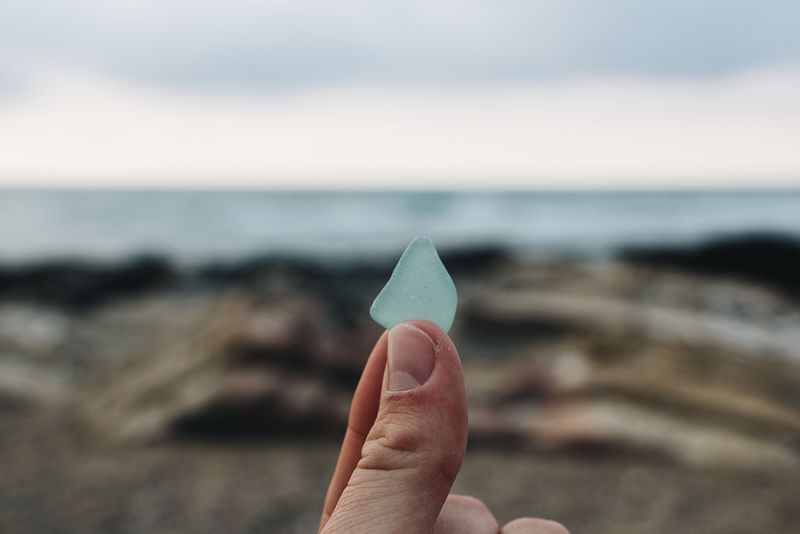
A small green fragment can disappear against wet stones until sunlight catches its edge. Low angled light sometimes makes glass easier to spot, especially when you change your viewing position instead of staring straight down.
Try a morning visit or a later afternoon search, staying within current park hours. Walk a short stretch in both directions, since glare and shadows can change what you see.
Sunglasses help with bright reflections, but take occasional breaks from scanning. Look up at the water and check your surroundings before crouching near the shore.
Evening light is lovely, yet the dunes still stand between you and the car. Leave enough daylight for an unhurried walk back.
Pebble Patches Deserve A Second Look
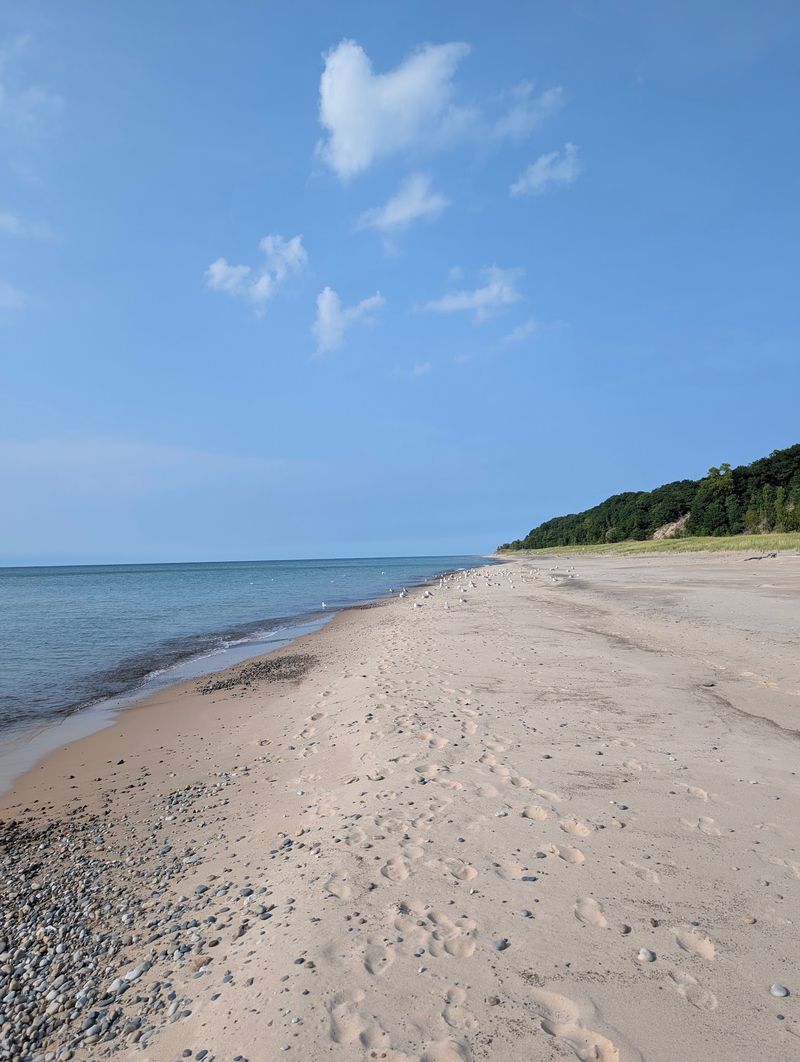
Perfectly smooth sand looks inviting, but the untidy stone patches deserve your attention. Beach glass can settle among pebbles where waves gather materials of similar size, making these bands useful places to begin looking.
Move slowly along their edges, scanning a small area before taking another step. Crouching can reveal shapes that blend into the beach from standing height.
Search the surface without digging into dunes, pulling plants, or disturbing wildlife. If one patch offers nothing, continue along the accessible shore rather than treating it like a puzzle you must solve.
The lake does not distribute finds evenly. Patient looking helps, but an empty stretch is simply part of the outing, not a failure.
Freshwater Glass Has Its Own Story

Despite the familiar name sea glass, Grand Mere’s finds come from a freshwater lake. Beach glass is the more precise term here, describing broken glass that water, sand, and repeated movement have worn over time.
Look for softened edges and a weathered surface rather than assuming every shiny fragment is an old treasure. Clear, brown, and green are common beach glass colors, while unusual shades attract extra attention.
Color alone cannot prove age or identify an original object. Freshly broken pieces can remain dangerously sharp, so avoid handling unknown fragments with bare fingers.
Never add glass to the lake to make future finds. What begins as litter stays a hazard long before it becomes smooth.
Pack For Dunes Rather Than A Boardwalk
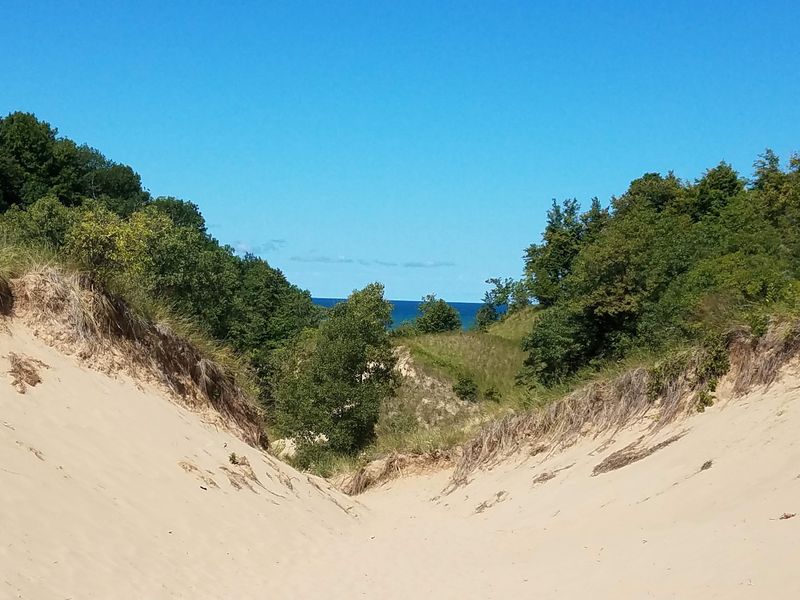
Loose sand has a talent for making a heavy bag feel heavier. A small backpack is more useful here than an oversized beach tote, especially when you need both hands free on the dune climb.
Bring water, a snack, sunscreen, a hat, and insect repellent for wooded sections. Keep your phone protected from sand, and save the trail map before setting out.
Vault toilets and picnic areas provide basic support, but the beach remains undeveloped. Handle bathroom needs before beginning the walk, and carry out everything you bring in.
Shoes matter even on warm days because exposed sand can become hot. Save barefoot wandering for conditions that are comfortable and safe for your feet.
Rough Water Is Not A Shortcut
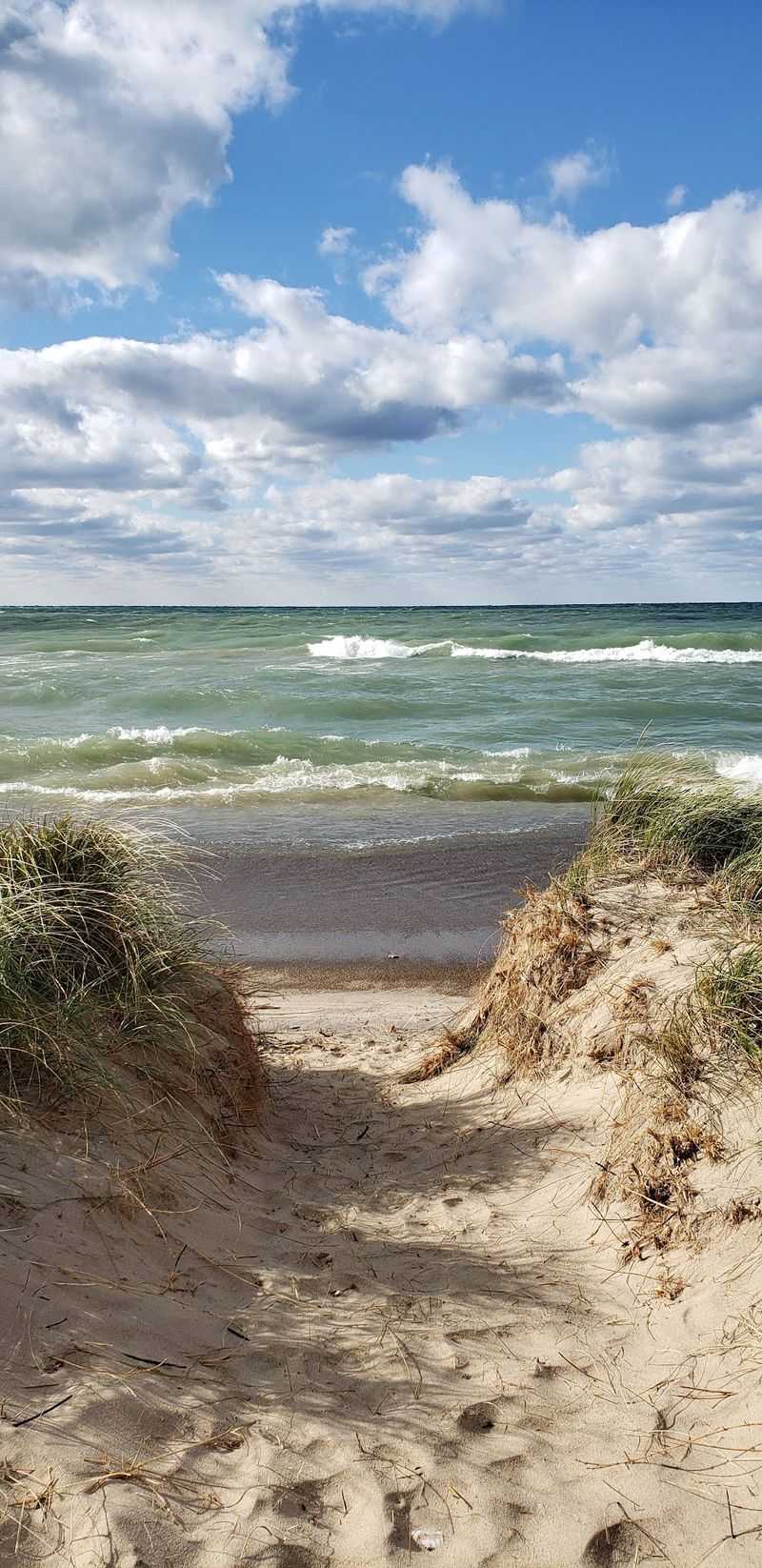
The next bright speck is never worth chasing into breaking waves. Lake Michigan can produce dangerous currents and powerful surf, even when the shoreline looks manageable from a distance.
Keep your search on safely accessible ground and pay attention to weather changes. Do not turn your back on active waves while studying stones near the water.
If water covers your route or presses against a steep bank, turn around rather than trying to squeeze through. Avoid unstable dune edges and eroded slopes as well.
The safest plan may be a woodland walk instead of a beach hunt that day. Grand Mere offers plenty to notice without asking the lake to cooperate with your schedule.
Three Inland Lakes Broaden The Visit
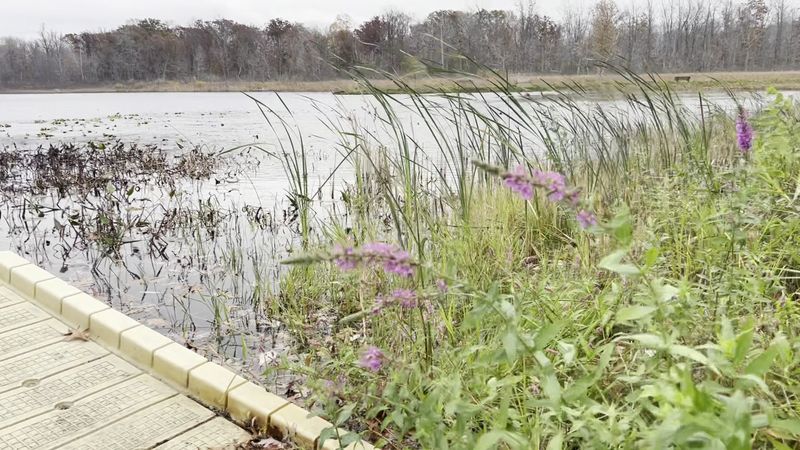
Not every discovery here fits in a pocket. North, Middle, and South Lakes sit behind the dunes, adding a quieter chapter to a visit focused on the open Lake Michigan shoreline.
These inland lakes illustrate aquatic succession, the gradual change from open water toward wetland and eventually woodland. Their setting helps explain why Grand Mere matters beyond its beach.
Spend a little time near South Lake on the nature trail, watching for birds without leaving the path. Binoculars offer a welcome break from staring at pebbles.
Keep voices low and give wildlife space, especially around wetland edges. Even a day without glass can feel full when the route includes both inland water and dunes.
A Quiet Shore Still Needs Care
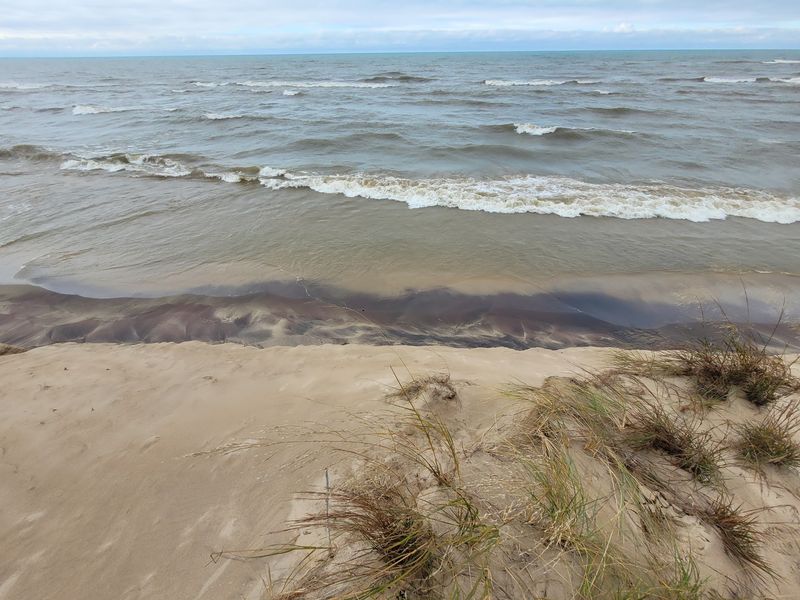
Finding something does not automatically mean it belongs in your bag. Before collecting beach glass, check current park rules with the Michigan Department of Natural Resources or park staff, including any limits or protected areas.
Photography is a useful fallback when permission is unclear. A close picture records the color, shape, and setting without removing anything from the shore.
Leave plants, wildlife, and historic objects undisturbed, and never scrape through dune vegetation to improve your search. Bring a small bag for your own litter, and handle sharp debris only with suitable protection.
Keeping the beach clean matters more than building a collection. The goal is a shoreline that remains welcoming after your footprints have faded.
Make Room For An Empty Pocket
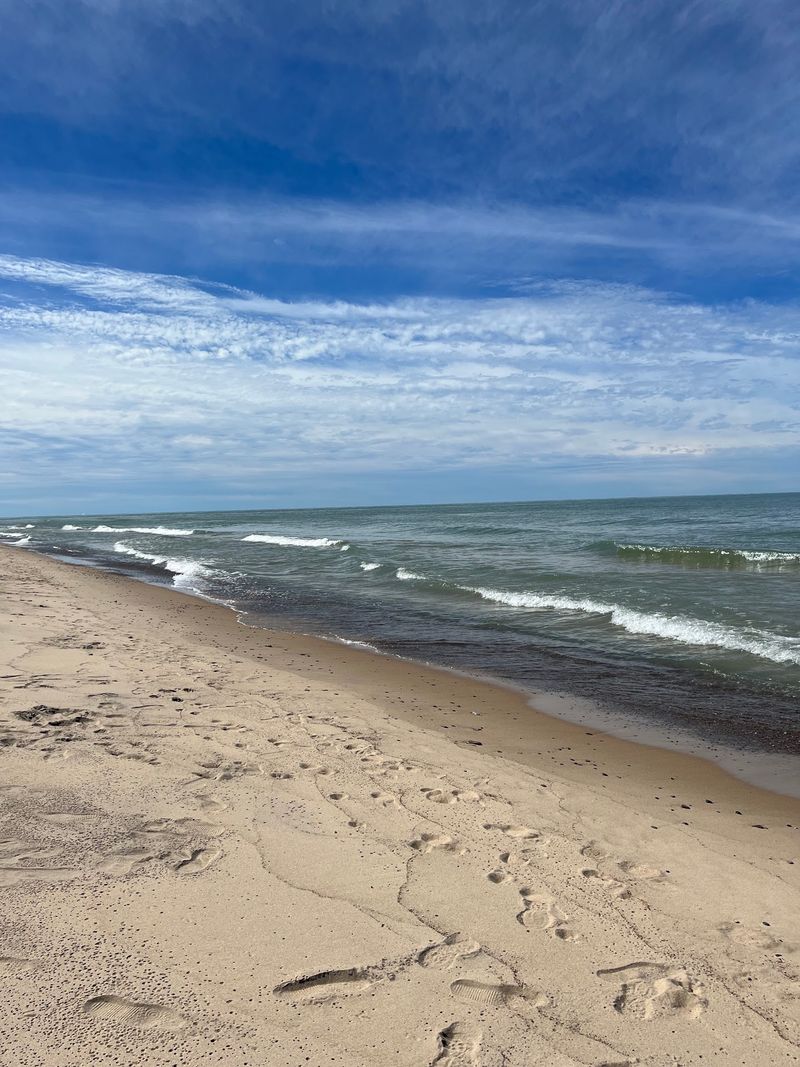
Some visits end with nothing more than sand in your shoes. That is not a disappointing result at a park where the walk, the water, and the changing shoreline are much of the attraction. Even without finding a single piece of sea glass, the sound of waves rolling onto the beach and the sight of dunes rising beyond the water make the journey worthwhile.
Give yourself a loose search window, then stop scanning long enough to enjoy the wider view. Roughly a mile of Lake Michigan shoreline offers room for observation, though usable beach width changes with conditions. Look carefully along the waterline, where small stones and shells gather naturally, but remember that patience matters more than covering every inch of sand.
If you bring a dog, follow the park’s leash rule of six feet or less and carry water for both of you. Choose a pace everyone can manage. A thoughtful visit leaves energy for the climb back and a reason to return, whether glass appears or not.