
Seventeen Hundred Rooms Of Ancient Stonework Wait At These 11 Arizona Ruins Worth The Drive
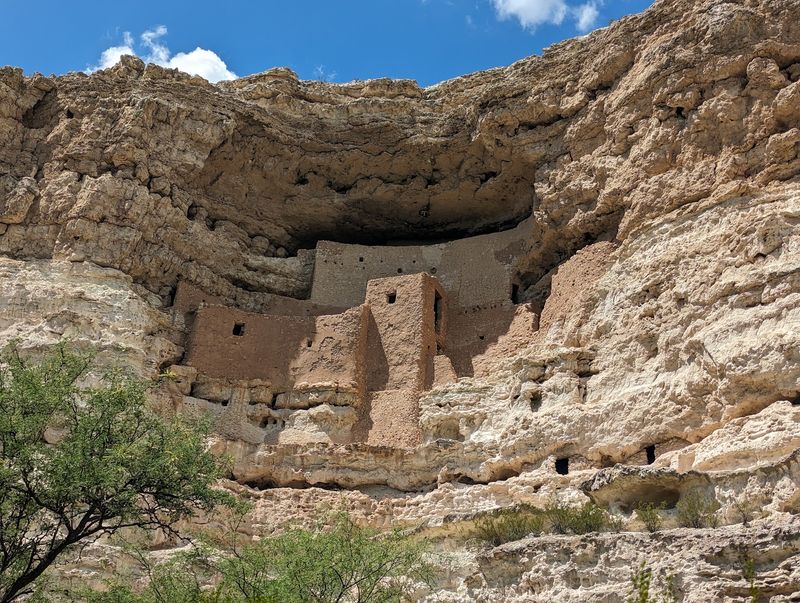
Ninety feet up a limestone cliff, people built a five-story home more than 800 years ago. No cranes.
No power tools. Just stone, mud, timber, and a lot of nerve.
That cliff house is only one stop on this list. Across Arizona, ancient builders stacked rooms on hilltops, tucked villages under canyon ledges, and raised whole pueblos beside lava fields and painted badlands.
Some sites hold a handful of rooms. Others once held hundreds.
I love that you can still walk right up to many of these walls. You can see the handprints of time in the masonry, the doorways shaped for smaller bodies, and the views those families woke up to each morning.
Add up the rooms at these 11 spots and you get a staggering number. So which ancient neighborhood are you visiting first?
1. Tuzigoot National Monument
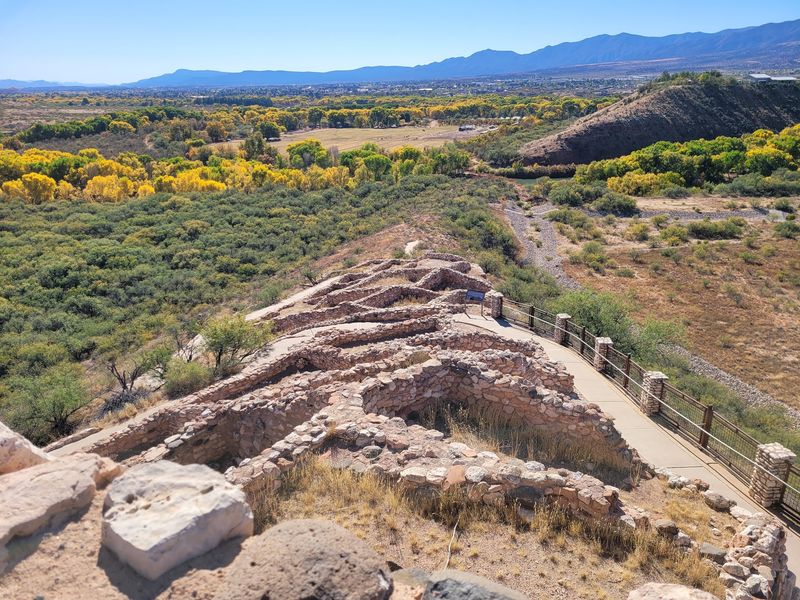
Talk about a room with a view. The ancient Sinagua builders here picked a ridgetop, then kept stacking stone until they had a village crowning the hill.
Tuzigoot sits above the Verde Valley near Clarkdale. From the top of the pueblo, you get a sweeping 360-degree look at the valley below.
A short paved trail loops up through the ruins, so the climb stays friendly. Informative signs along the way explain how the rooms fit together and how people lived on this hill.
Fair warning for purists: parts of the walls were reconstructed. Even so, the layout helps you picture the full village much better than scattered rubble ever could.
Don’t skip the visitor center. Its museum displays artifacts from the Sinagua people, and it adds real context before or after your walk.
Picnic tables and restrooms make it an easy stop for families. Leashed dogs are welcome too, which is handy on a Verde Valley road trip.
The monument opens daily from 9 AM to 4:45 PM. Weekends draw the biggest crowds, so a weekday morning may give you the hilltop with more breathing room.
Address: 25 Tuzigoot Rd, Clarkdale, AZ 86324
2. Montezuma Castle National Monument
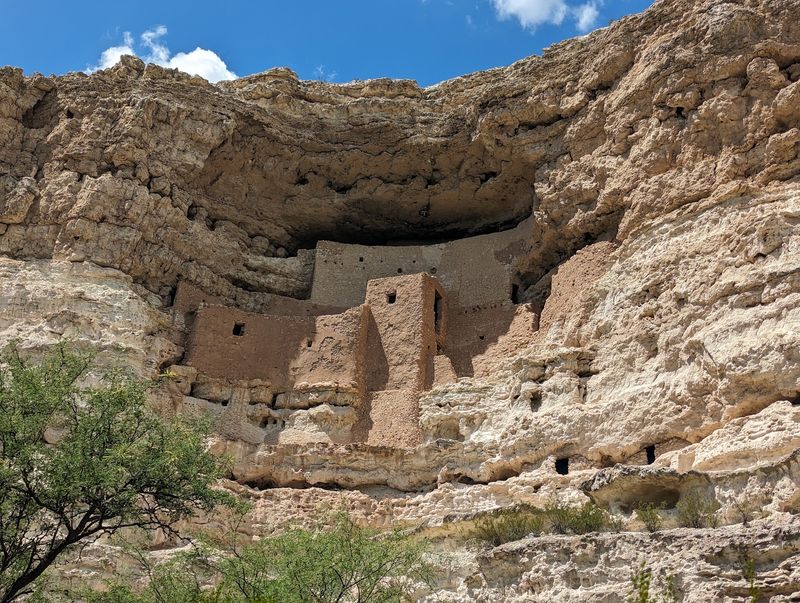
Montezuma never lived here, and it was never a castle. Early settlers got both parts of the name wrong, but the building itself is jaw-dropping.
Sinagua people built this five-story cliff dwelling in the 12th century. It sits high in a limestone cliff overlooking Beaver Creek near Camp Verde.
You view it from a level path at the base of the cliff. Visitors can’t climb up, which helps explain why it stays one of the best-preserved cliff dwellings in the Southwest.
Interactive exhibits let you press buttons and learn how the rooms were used. It’s a smart setup for curious kids who want to know where people slept and stored food.
Keep an eye on the plants along the trail. Many species here had medicinal uses, and signs help connect them to daily life long ago.
The drive in from Prescott brings big scenery, so the trip feels like part of the reward. Picnic tables and restrooms make lingering easy.
Hours run daily from 9 AM to 4:45 PM. Bring your camera, because that pale cliff makes a stunning backdrop.
Address: Montezuma Castle Rd, Camp Verde, AZ
3. Wupatki National Monument
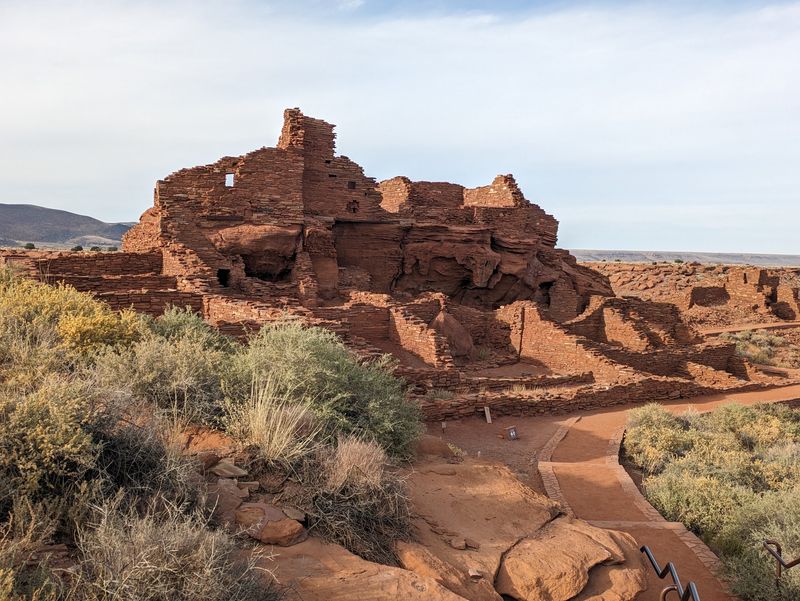
Five pueblos, one scenic road, and a hole in the ground that breathes. Wupatki packs a lot of surprises into a quiet corner north of Flagstaff.
Self-guided trails lead to ruins of five prehistoric pueblos. The red sandstone walls rise right out of the landscape, almost like the rock grew them.
The headliner is Wupatki Pueblo, the largest ruin in the monument. Easy walks take you past its rooms and toward a natural blowhole that pushes or pulls air depending on conditions.
Getting there is half the fun. A well-maintained loop road connects this area with nearby Sunset Crater Volcano National Monument, so you can pair cinder cones with ancient villages.
The views stretch across open grassland to painted hills and distant peaks. On a clear day, it feels like you can see half of northern Arizona.
Picnic tables and restrooms help you plan a full outing. Kids tend to handle these short trails well.
Midweek afternoons can run busier, while early mornings stay calmer. Pack water, because shade is scarce out here.
Address: Wupatki National Monument, off US-89, north of Flagstaff, AZ
4. Walnut Canyon National Monument
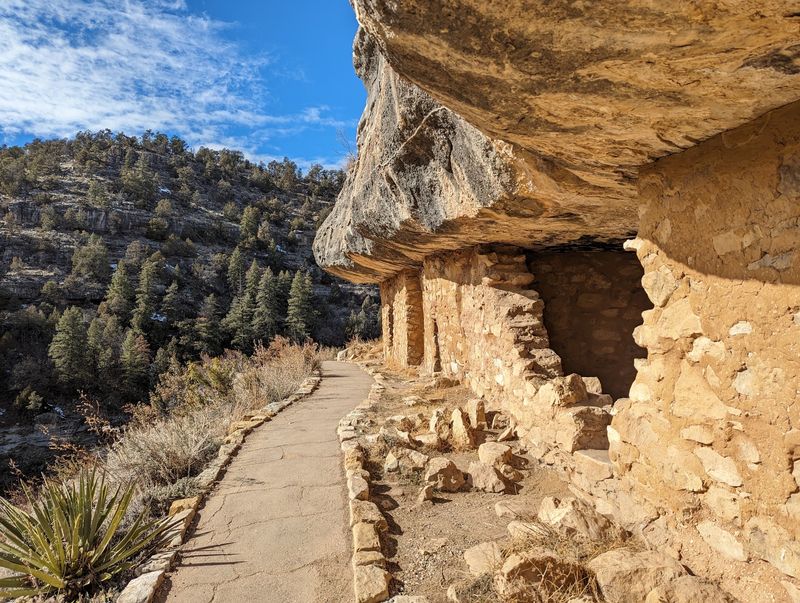
Stairs, ledges, and a curving canyon full of stone rooms make this one feel like an ancient apartment building with a balcony walk.
Walnut Canyon sits just outside Flagstaff. Sinagua families built cliff dwellings into the limestone alcoves that wrap around its bends.
The Island Trail is the star. It drops down a set of stairs and loops past dwellings close enough to peek through the doorways.
Plan for the climb back up, since those stairs feel longer on the return. Take it slow and enjoy the pine-dotted canyon walls along the way.
Prefer something gentler? The Rim Trail offers easier walking with overlooks of the canyon and its dwellings.
The scenery shifts with the seasons, and snow can turn the canyon into a postcard. Trail conditions change in winter weather, so check before you go.
Hours run daily from 9 AM to 5 PM. Picnic tables and restrooms are on site, and leashed dogs can join you.
Address: Walnut Canyon National Monument, Walnut Canyon Rd, Flagstaff, AZ
5. Tonto National Monument
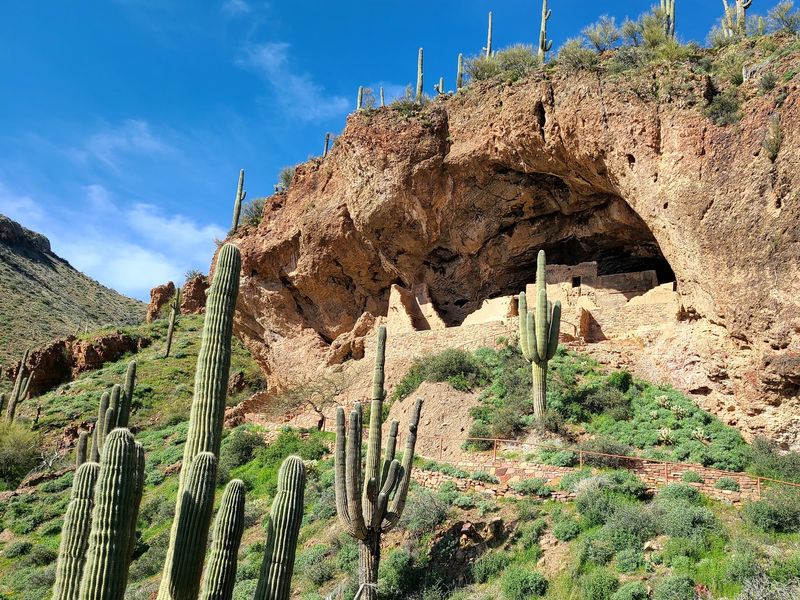
Saguaros below, a cave home above, and a lake shimmering in the distance. That’s quite a view for a neighborhood built roughly 700 years ago.
The Salado people lived in these cliff dwellings between about 1250 and 1450. Two main sites survive: the Lower Cliff Dwelling and the Upper Cliff Dwelling.
A paved trail climbs to the lower dwelling. It’s steep in spots, but the reward is a close look at stone walls tucked under a natural rock overhang.
The upper site is bigger and more remote. Access comes through ranger-guided tours offered seasonally, so check ahead if it’s on your list.
Back at the visitor center, a museum shows Salado artifacts and a film sets the scene. Birds and cactus along the trail add plenty to look at.
It’s an easy reach from the Phoenix area, which makes it a great cooler-month day trip. Summer heat here is serious business.
Hours run daily from 8 AM to 3 PM. Arrive early, since that last trail entry comes sooner than you might expect.
Address: 26260 AZ-188, Roosevelt, AZ 85545
6. Besh-Ba-Gowah Museum
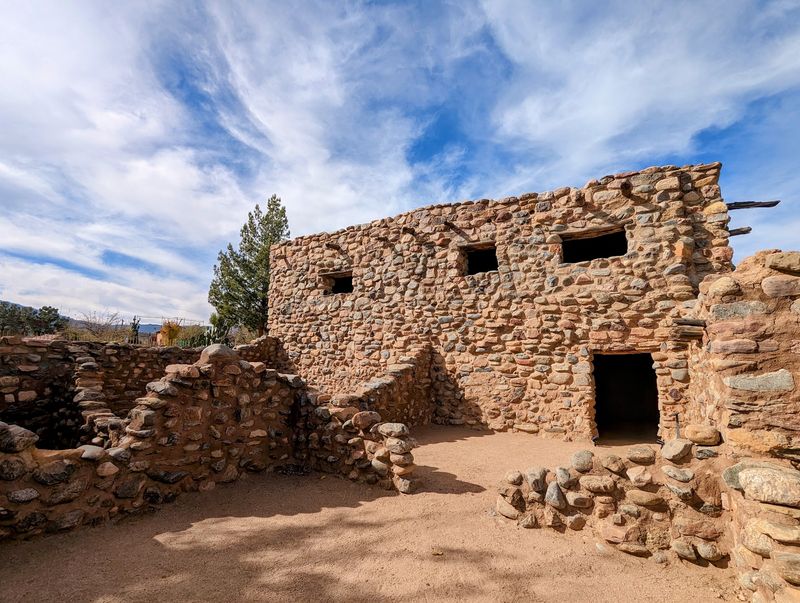
Ladders, rooftops, and doorways you can actually walk through. Besh-Ba-Gowah lets you explore a Salado village instead of just admiring it from a rope line.
Owned by the City of Globe, this archaeological park preserves a stone pueblo with around 200 rooms. Sections have been reconstructed so you can see how the spaces worked.
The museum is a strong part of the visit. Artifact collections and a short film explain the culture that lived here.
Knowledgeable staff help fill in the blanks. Archaeologists have learned plenty, but some questions about the site still remain open.
Outside, a garden and park surround the ruins. The grounds make a pleasant spot to slow down between exhibits.
A gift shop rounds things out, though there’s no restaurant on site. Globe has plenty of local spots nearby for lunch.
Hours run daily from 9 AM to 4:30 PM. Saturday afternoons get busiest, and Tuesday mornings tend to stay quiet.
Address: 1324 S Jesse Hayes Rd, Globe, AZ 85501
7. Homolovi State Park
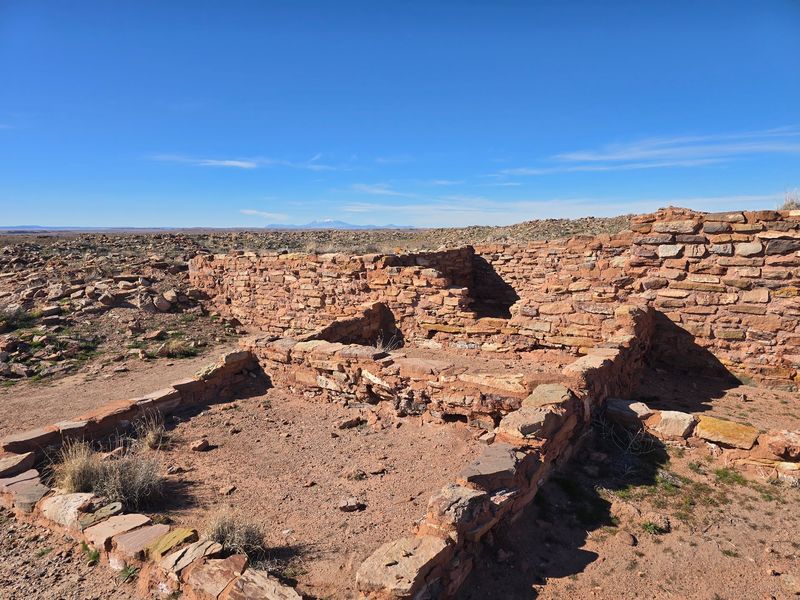
Yes, that Winslow. Just outside the famous corner town, a state park protects ancestral Hopi villages that predate Route 66 by centuries.
Homolovi spreads across open desert on former Hopi lands. Easy, well-laid-out trails lead to ruins of old pueblos and to petroglyph sites.
Look down as you walk. Pottery sherds dot the ground at Homolovi I and Homolovi II, and they’re meant to stay exactly where you find them.
Hopi people still consider this a sacred ancestral place. That connection makes the visit feel more meaningful than a typical history stop.
A museum in the visitor center adds background, and petroglyph tours are offered. Trails welcome leashed dogs, which is a nice bonus.
Want to stretch the trip? The campground has large sites, a bathhouse, and wide desert views, plus grills and picnic tables for day users.
Hours run daily from 8 AM to 5 PM. It’s an easy add-on for any northern Arizona drive along I-40.
Address: AZ-87, Winslow, AZ 86047
8. Navajo National Monument
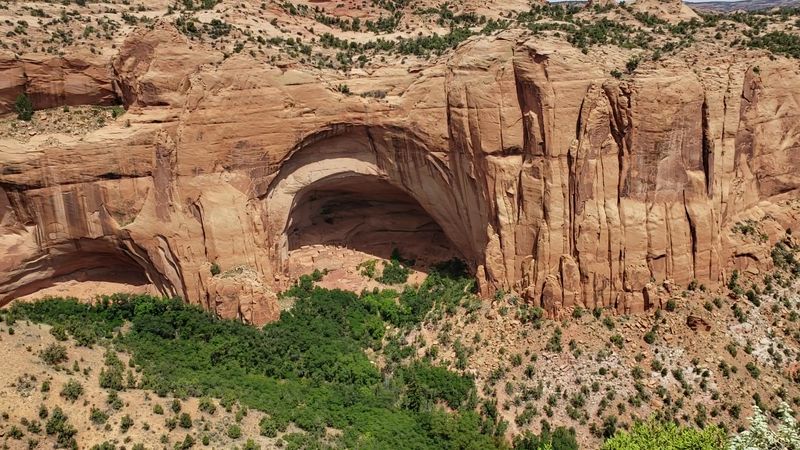
Picture-perfect doesn’t quite cover a village tucked inside a sandstone alcove so huge it dwarfs the homes beneath it. Betatakin is that kind of sight.
Navajo National Monument protects Ancestral Puebloan cliff villages, including Betatakin and Keet Seel. Both are remarkably well preserved stone-and-mortar complexes.
You can view Betatakin from an easy overlook trail near the visitor center. Ranger-led hikes to the dwellings themselves run seasonally, so plan ahead.
Keet Seel is the bigger adventure. Reaching it means a long backcountry trek with a permit, which keeps it wonderfully remote.
Entry is free, and the visitor center includes a gift shop. The monument also shares Navajo perspectives on the land and its history.
Campgrounds sit near the trails, surrounded by high country scenery. It’s far from the usual tourist circuit, and that’s a big part of the appeal.
Hours can shift with the seasons, so check before heading out. The drive north is long, but the payoff is huge.
Address: AZ-564, Shonto, AZ 86054
9. Canyon de Chelly National Monument
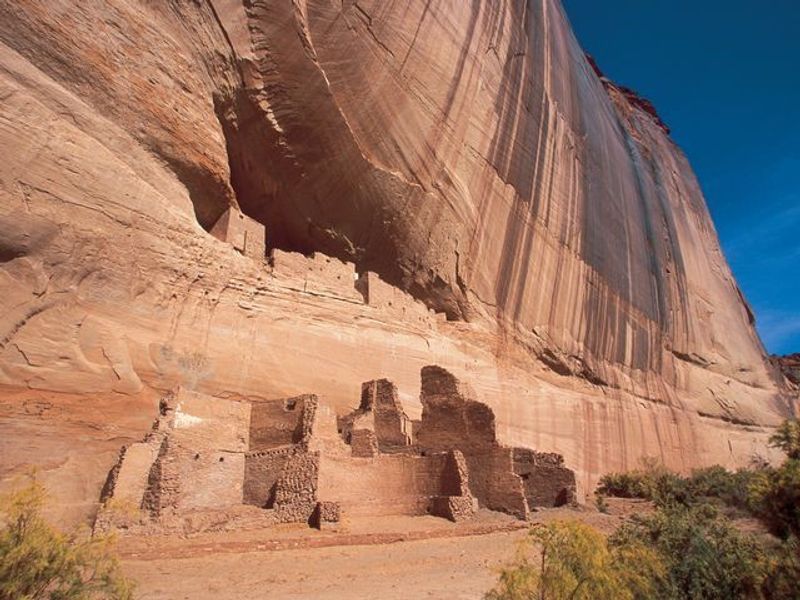
Sheer red walls, a towering sandstone spire, and stone houses wedged into ledges far above the canyon floor. Canyon de Chelly delivers drama from the very first overlook.
The monument sits on the Navajo Nation near Chinle. Navajo families still live and farm within the canyon, which makes it a living landscape.
Scenic rim drives lead to overlooks of ruins and the famous Spider Rock spire. You can soak in a lot without ever leaving your car.
The White House Trail is the one route hikers can take into the canyon without a guide. It ends near the White House Ruin, named for its pale plastered walls.
For deeper exploring, book a tour with an authorized Navajo guide. You’ll see petroglyphs and ruins you’d otherwise miss, with stories to match.
Restrooms and picnic spots are available, and leashed dogs can join you at overlooks. Lodging sits nearby in Chinle.
Give yourself a full day here. Morning light on those canyon walls is worth setting an alarm for.
Address: Canyon de Chelly National Monument, Chinle, AZ 86503
10. Puerco Pueblo
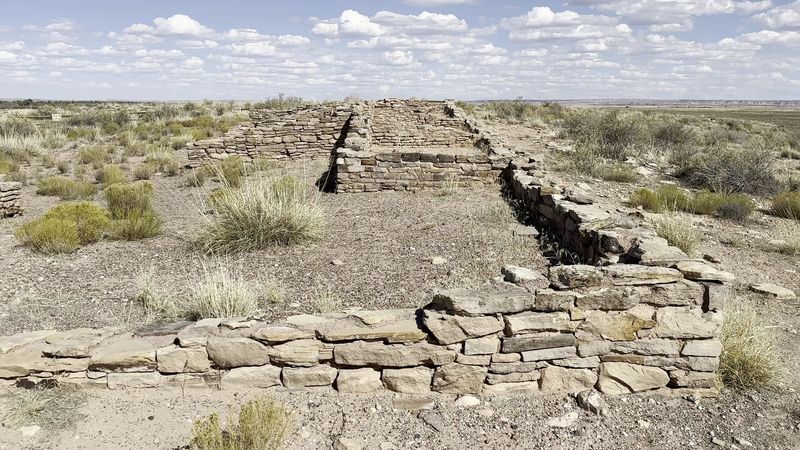
Most folks come to Petrified Forest for the stone logs. Then they stumble onto an ancient village with rock art practically on its doorstep.
Puerco Pueblo once held more than 100 rooms built around a central plaza. You can still trace the room outlines and spot a kiva in the layout.
A short, mostly level paved loop makes it one of the more accessible ruins in this list. It’s an easy stretch of the legs during a park drive.
The petroglyphs steal the show. Carved figures and symbols cover nearby boulders, and some may have helped track the seasons.
Views from the pueblo sweep across the Puerco River valley. It’s easy to see why people chose this spot for a home.
The site sits along the main park road in eastern Arizona. Pair it with Newspaper Rock and the painted badlands for a fuller day.
Hours run daily from 8 AM to 5 PM. Park entrance fees apply, so budget for that before you arrive.
Address: Petrified Forest National Park, AZ 86028
11. Kinishba Ruins
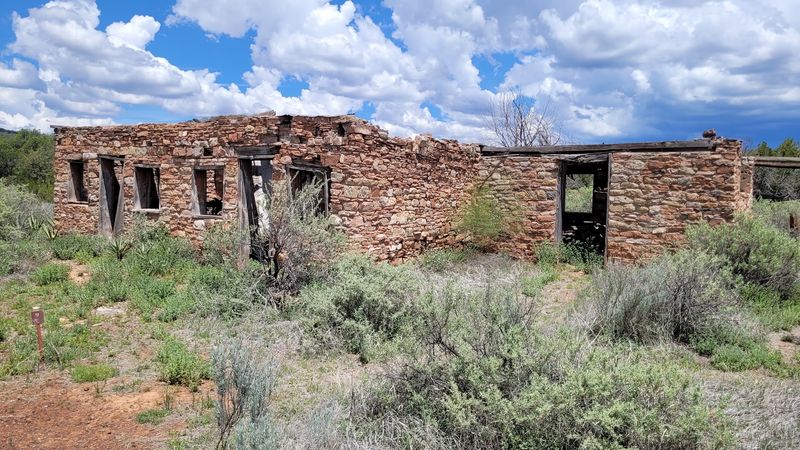
Saving one of the quietest stops for last feels right. Kinishba rewards road trippers willing to wander into the White Mountains.
The ruins sit on White Mountain Apache tribal land near Whiteriver. Kinishba is a National Historic Landmark, recognized for its large ancestral pueblo.
The village once held hundreds of rooms. Walkable trails let you explore the stone masonry and the layout of the old community.
Parts of the site were excavated and partly rebuilt in the 1930s. Time has softened those walls again, so expect weathered ruins rather than polished displays.
That rawness is part of the charm. You get the setting mostly to yourself, framed by grassland and pine-covered hills.
Respect matters here, since you’re a guest on tribal land. Stay on trails and leave pottery and stones where they lie.
Checking local conditions before you go is smart in this remote area. Combine it with a scenic White Mountains drive, and Arizona hands you one more ancient surprise.
Address: Reservation, Whiteriver, AZ 85941