
Follow an Old Railroad Grade to a Washington Ghost Town Where a Giant Turntable Still Spins
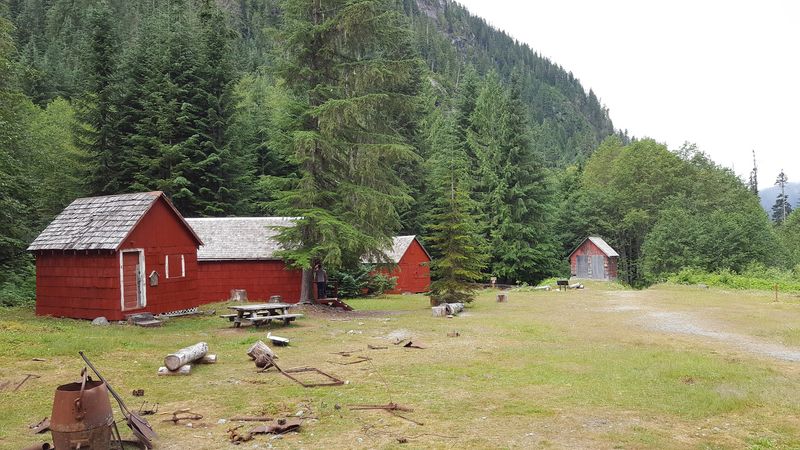
A giant old railroad turntable still sits deep in the Cascade woods. Hikers say it still turns with very little effort.
That alone made me want to lace up my boots.
The path to it follows an old railroad grade beside a river. There is one river crossing, and kids can scoot across on a big log.
Along the way, signs share stories of the gold miners who once lived here.
I like how this Washington outing mixes easy miles with real history. The trail is mostly flat and about four miles each way.
Families, bikers, and campers all make the trip.
The best part waits at the end. A quiet mining town stands among the trees, with relics tucked along little side paths.
How often does a simple day hike end in the past?
A Mining Town Waiting At The End Of A Forest Trail
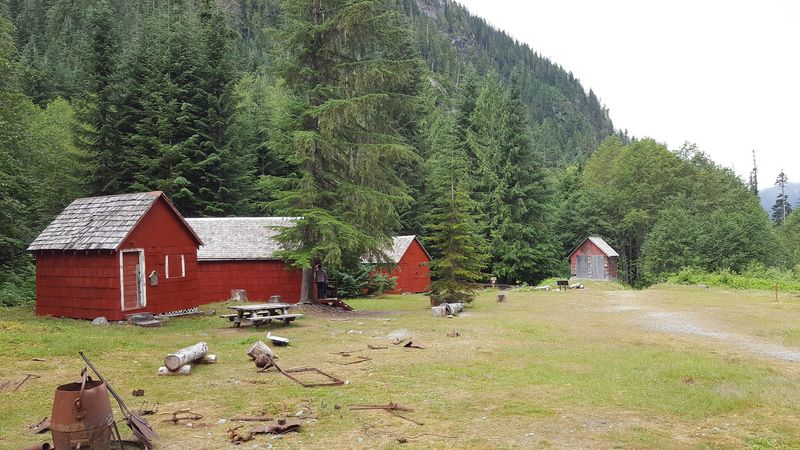
Gold fever once reached deep into the North Cascades, and Monte Cristo is what it left behind. Today this historical landmark sits at the end of Monte Cristo Trail in Washington, reachable only on foot or by bike.
You won’t drive up to a gift shop or a parking lot by the buildings. The trip starts off the Mountain Loop Highway and heads back into the woods for roughly four to five miles.
That effort is part of the charm. By the time you reach town, you’ve followed the same river valley that early miners and rail crews once used.
Monte Cristo isn’t a spooky movie set or a rebuilt theme park. It’s a real former mining town with real remnants, scattered among trees and mountain scenery.
Some old structures still stand, while others are long gone. Markers and historical plaques fill in the gaps so you can picture the busy place it once was.
The site carries a strong reputation among hikers in Washington, with a 4.7-star average on Google. For a trail that ends in a ghost town, that’s a pretty lively score.
Not bad for a place nobody technically lives in anymore.
Your Boots Will Follow An Old Railroad Grade
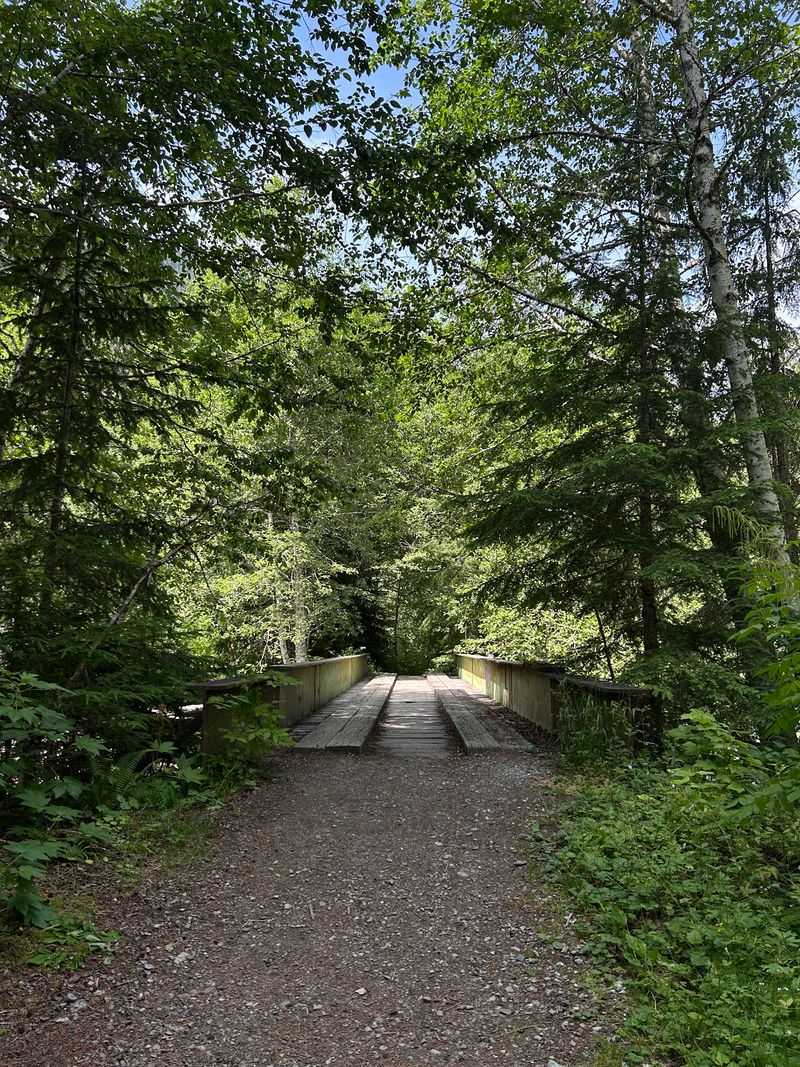
Trains once rolled along much of the route you’ll walk. After the river crossing, a major part of the trail follows a former railroad grade toward town.
That history explains why the path feels so friendly. Railroads hate steep hills, so the grade stays mostly level with just a few minor climbs.
Distances vary depending on who’s counting. Many hikers call it about four miles each way, while others log closer to five, especially with side trips around town.
Plan on roughly eight to ten miles round trip. Wandering the town site can easily add extra steps, and you’ll probably want to explore.
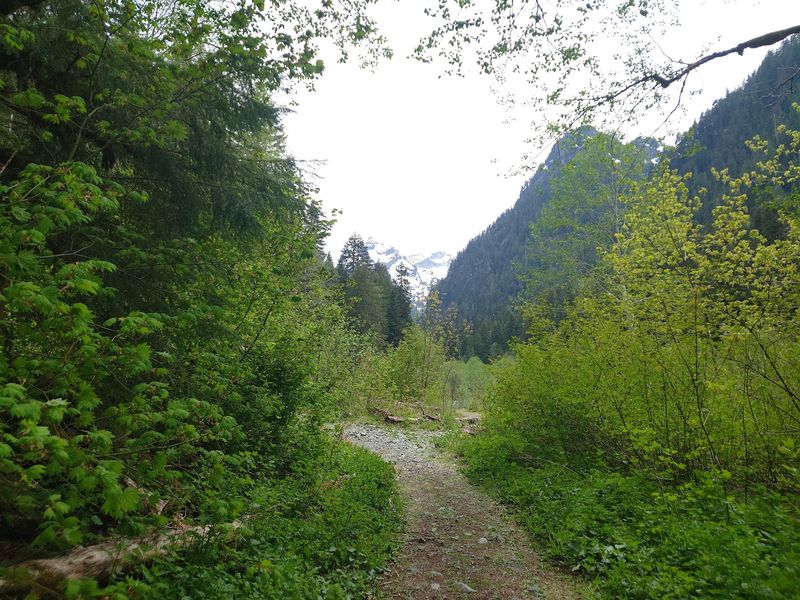
Stretches run along a gravel road, and the river keeps you company for long portions. Hikers mention quiet, mostly smooth footing with great mileage and little elevation gain.
Bikes show up here too, since the wide grade suits two wheels. Riding in can make a long day feel shorter.
Still, it isn’t perfectly polished. Some sections are washed out or rutted, and one bridge is gone.
Orange ribbons help mark the correct path where the trail goes missing.
Crossing The River Is Half The Fun
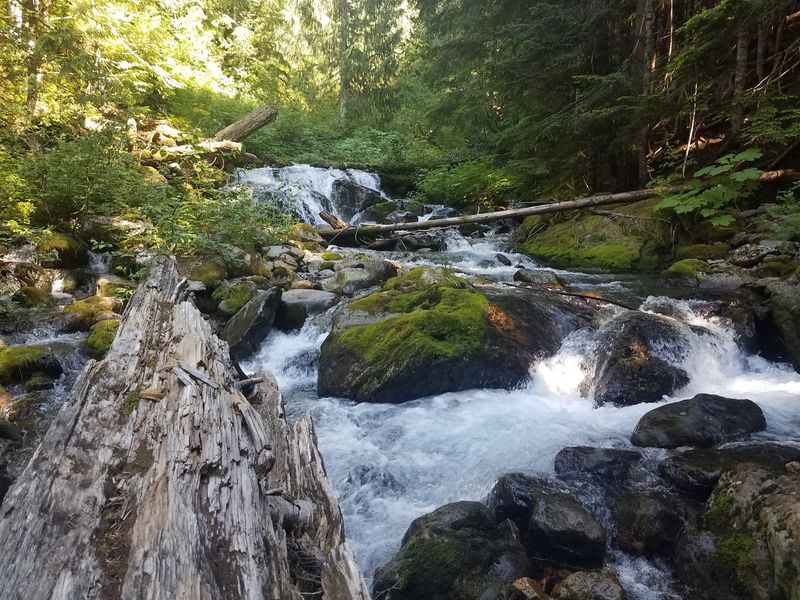
Kids tend to remember one moment more than any other: the giant log. Where an old bridge washed out, a huge cedar log now helps hikers get across the river.
There’s also the option to hop rocks or other logs and stay dry. With good balance, it feels like a small adventure instead of a hassle.
Timing matters, though. When water flow runs high, the crossing could be difficult, so check conditions before committing.
Near the riverbed, the route gets a little tangled. Many little trails weave around each other, and it’s easy to pick the wrong one.
That’s why a downloaded offline map is smart. Cell service doesn’t exist out here, so your phone can’t rescue you mid-hike.
Finding the correct trailhead can also be confusing at first. Reading a few recent trip reports before leaving home may save you a frustrating detour.
Expect some mud and possibly wet feet too. Sturdy shoes and a spare pair of socks in the car could make the drive home much happier.
Consider it the price of admission to a gold rush town.
That Giant Turntable Still Spins
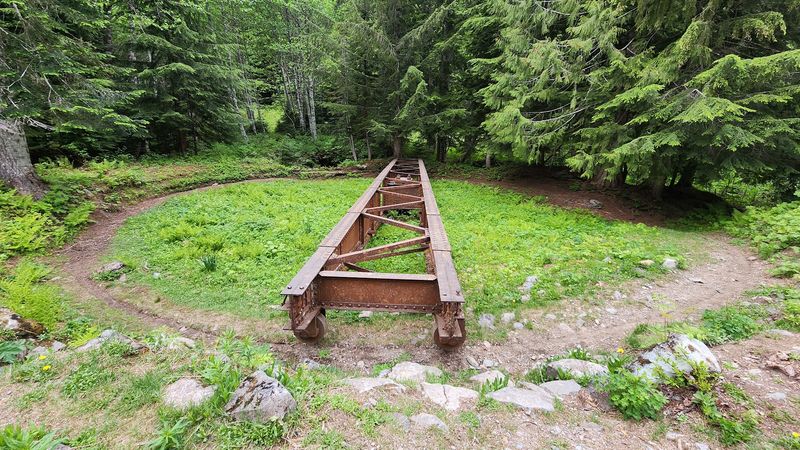
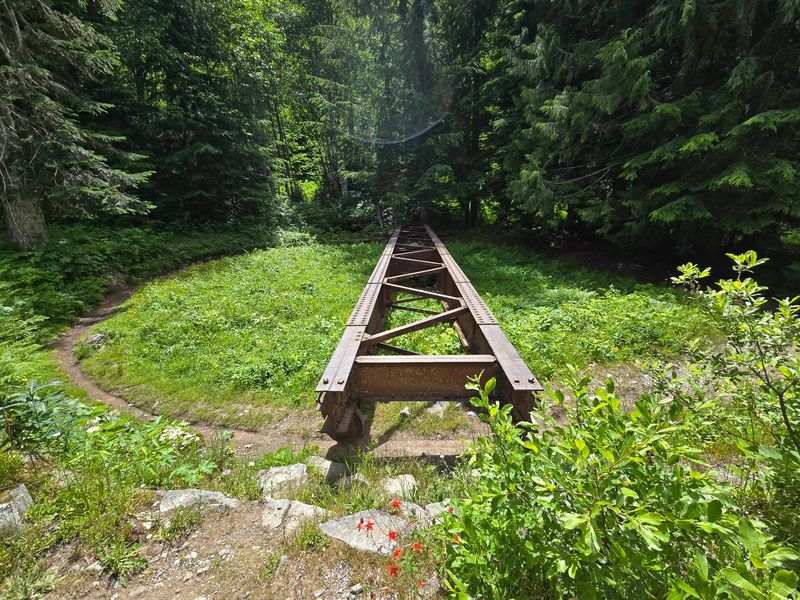
Few relics invite you to give them a push. The huge railroad turntable at Monte Cristo is one that hikers report still turns with surprisingly little effort.
Turntables let crews rotate engines so trains could head back down the line. Seeing one survive in the forest makes the town’s railroad past feel real.
It’s easily one of the most talked-about features at the site. Campers even use it as a landmark when describing where they stayed.
Around it, other pieces of history wait. Some buildings remain standing, and rusted remnants hint at the hard work miners once did.
Many of the oldest structures are long gone. That leaves plenty of open ground for imagination, with markers showing where things used to be.
Little side paths branch out across the site. Each one may lead to another relic, so the exploring part rewards curious feet.
Is it spooky? Not really, though some hikers do find the abandoned feel a bit eerie in a fun way.
Mostly it’s fascinating to stand where the first workers lived and wonder how they managed winter.
Signs That Turn A Walk Into A History Lesson
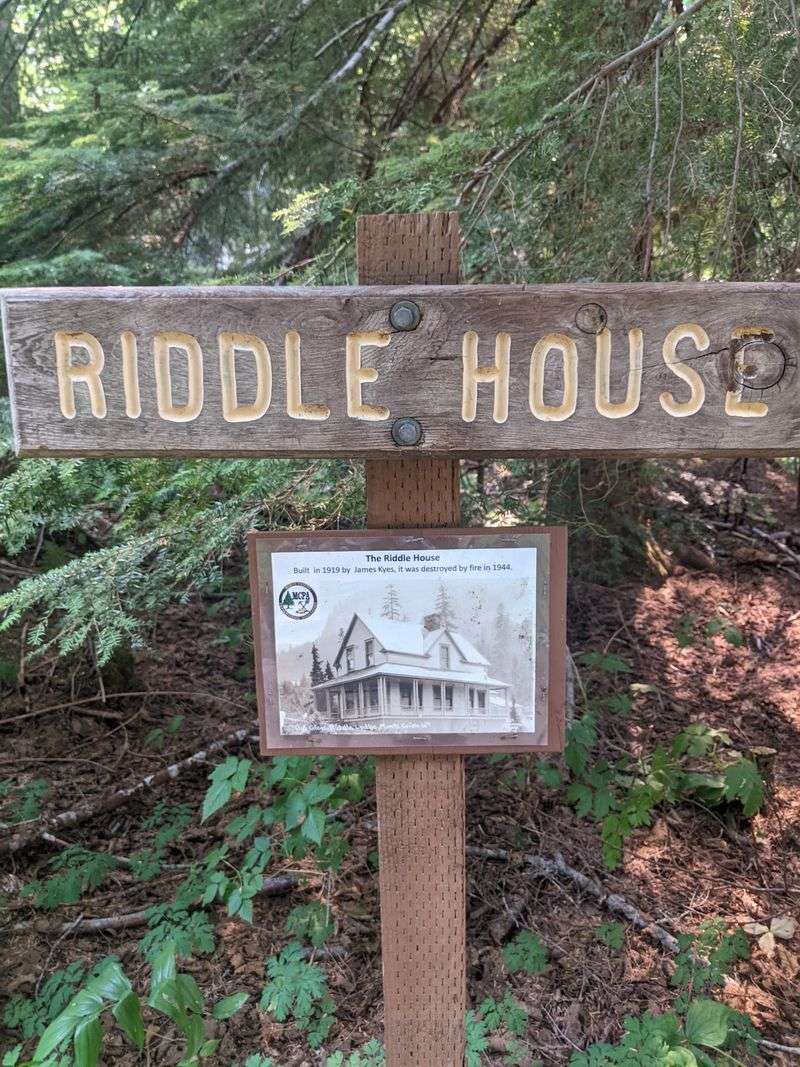
Credit goes to a dedicated preservation society. Hikers regularly praise how well the group cares for what remains of the town.
Interpretive signs and historical plaques appear throughout the area. Many include old photos and story points, which helps you match empty clearings to vanished buildings.
Landmarks with information also dot the trail on the way in. Reading them makes the miles go by faster, especially for curious kids.
I believe that’s what keeps Monte Cristo from feeling like just a pile of ruins. The signs turn scattered relics into a story with characters and stakes.
You can stand beside a plaque, look at a historic photo, and then look up at the same mountain backdrop. That moment of comparison is pretty hard to beat.
Washington has plenty of pretty hikes. Far fewer pair forest scenery with this kind of hands-on gold mining history.
Bring a little patience for reading. Rushing through means missing details that give the whole place its meaning, and the plaques reward slow wandering.
Stay The Night Under Cascade Stars
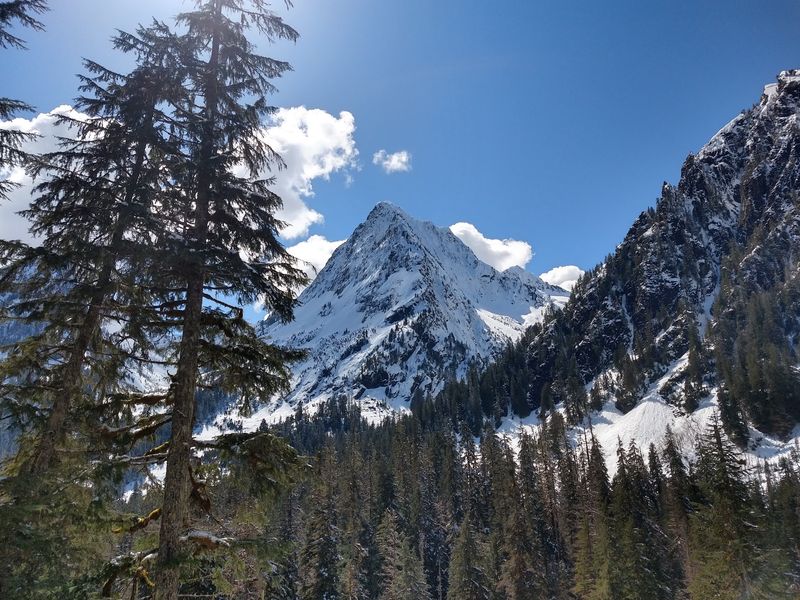
Turning around at noon feels almost rude after hiking this far. Happily, Monte Cristo offers a designated campground plus dispersed camping areas nearby.
Plenty of trees make it friendly for hammock setups. Groups have even used the area for multi-day trips, which says a lot about its space.
Facilities stay simple. Expect a box toilet, sometimes reached by a short scramble up a dirt hill, and a pump for water.
Camping also opens up bigger adventures. Silver Lake, Twin Lakes, and Glacier Basin are reachable from the townsite.
Those side trips aren’t casual strolls. The Twin Lakes trip with a Silver Lake stop runs about 18 miles round trip with roughly 3,000 feet of gain.
That makes an overnight sound much smarter than a single exhausting day. Starting from town lets you tackle the climb with fresher legs.
Pack in everything you need and pack it all back out. With no services nearby, good planning is the difference between cozy and chilly.
What To Know Before You Drive Out
Parking passes come first. Hikers mention needing one, and a pay-by-the-day option has been available at the trailhead.
Fees can change, so double-check current pass rules before your trip. Showing up unprepared is an easy way to start the day stressed.
The trailhead sits off the Mountain Loop Highway in Washington. Your destination is listed simply as Monte Cristo Trail, Washington, United States.
No set hours apply since it’s an outdoor site. Daylight and weather will shape your schedule more than any clock.
Give yourself plenty of time. One family spent six to seven hours total, and they weren’t hurrying.
Pack water, snacks, and good shoes. A paper map or downloaded offline map is essential because there’s no cell service.
Crowds tend to be light, based on several hikers’ accounts. Even in December, someone reported seeing only one other hiker.
Winter visits bring their own challenges, so watch conditions closely. Summer and fall offer friendlier footing and color-changing scenery along the river.
Worth Every Muddy Step For Curious Explorers
Some outings are pretty, and some are interesting. Monte Cristo manages both, which explains why so many hikers call it a must for Washingtonians.
Families will appreciate the gentle grade and the big-log crossing. Kids get mud, history, and a turntable they can actually see in action.
Bikers can roll much of the route. Campers get a home base for alpine lakes, and history fans get plaques around every corner.
It isn’t perfect, and that’s part of the fun. Washouts, a missing bridge, and a confusing start keep the trip feeling like a real expedition.
Costs stay low too. Beyond gas, a parking pass, and snacks, the gold rush experience asks mostly for your time and legs.
I can’t imagine a better way to spend a free Saturday off the Mountain Loop Highway. You leave with tired feet, muddy shoes, and a new respect for those early miners.
Just don’t expect to strike gold yourself. The real treasure here is the walk, the story, and that wonderfully stubborn turntable.