
Most Arizona Visitors Make One Big Mistake At This Ancient Site And Miss The Best Part
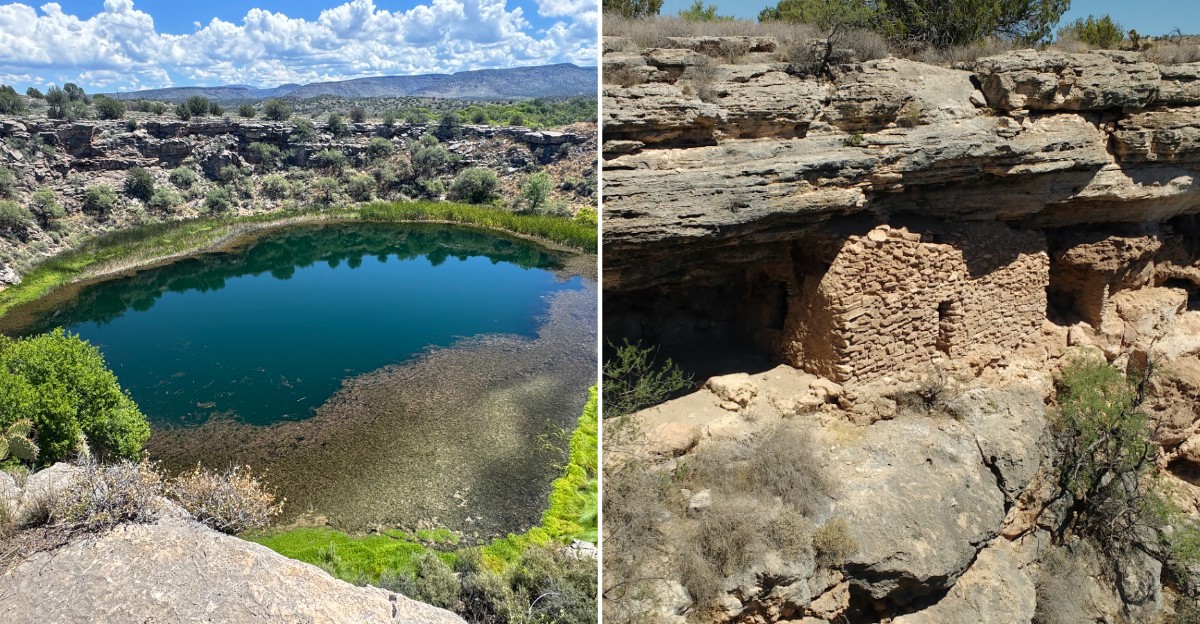
Roughly a million gallons of water flow into one round desert pool every single day, and it never seems to run dry. That is the kind of fact that makes me stop scrolling.
The water is loaded with carbon dioxide and arsenic, so no fish live there. Yet a handful of tiny creatures found nowhere else on Earth call it home.
Ancient cliff rooms sit right in the walls above the water, like apartments with a lake view.
This spot sits in central Arizona, an easy hop from some of the state’s busiest scenic drives. Most people walk up, peek over the rim, snap a photo, and leave.
I can’t imagine stopping there, because the most peaceful part waits below.
So what are all those rim-only visitors missing? Quite a lot, and the best part costs nothing.
A Desert Sinkhole That Refuses To Go Dry
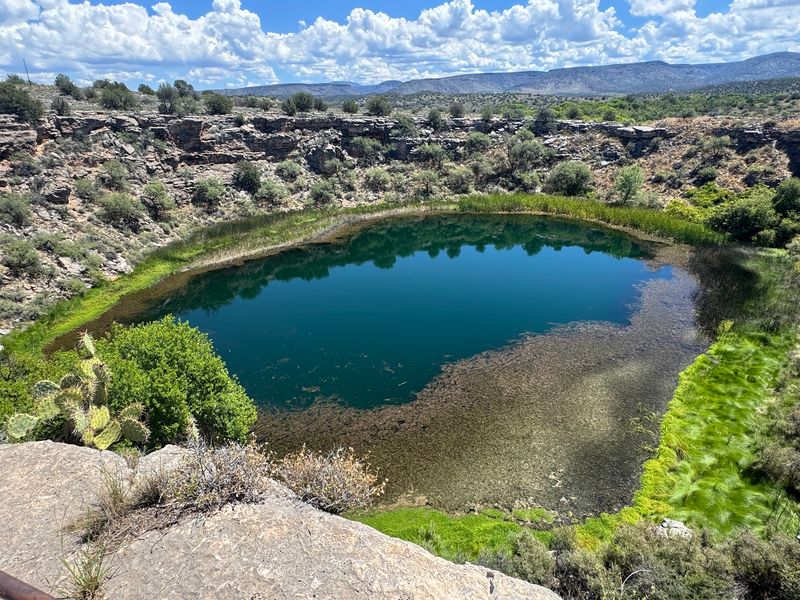
Montezuma Well is not a well at all, and nobody dug it. It’s a natural limestone sinkhole that formed when an underground cave collapsed and filled with spring water.
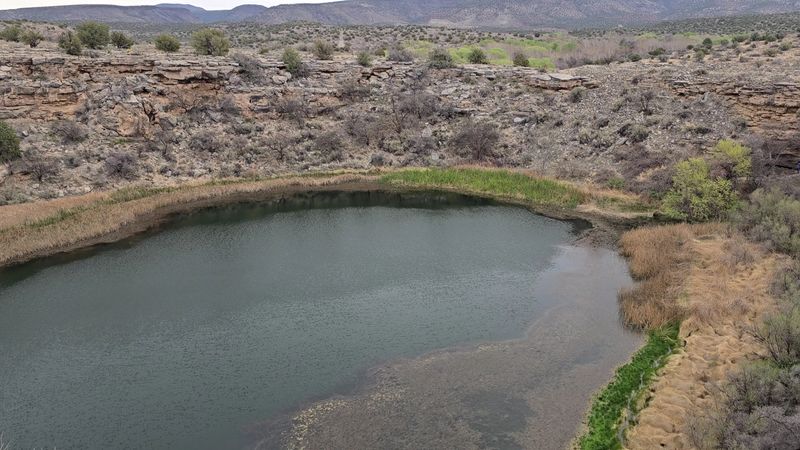
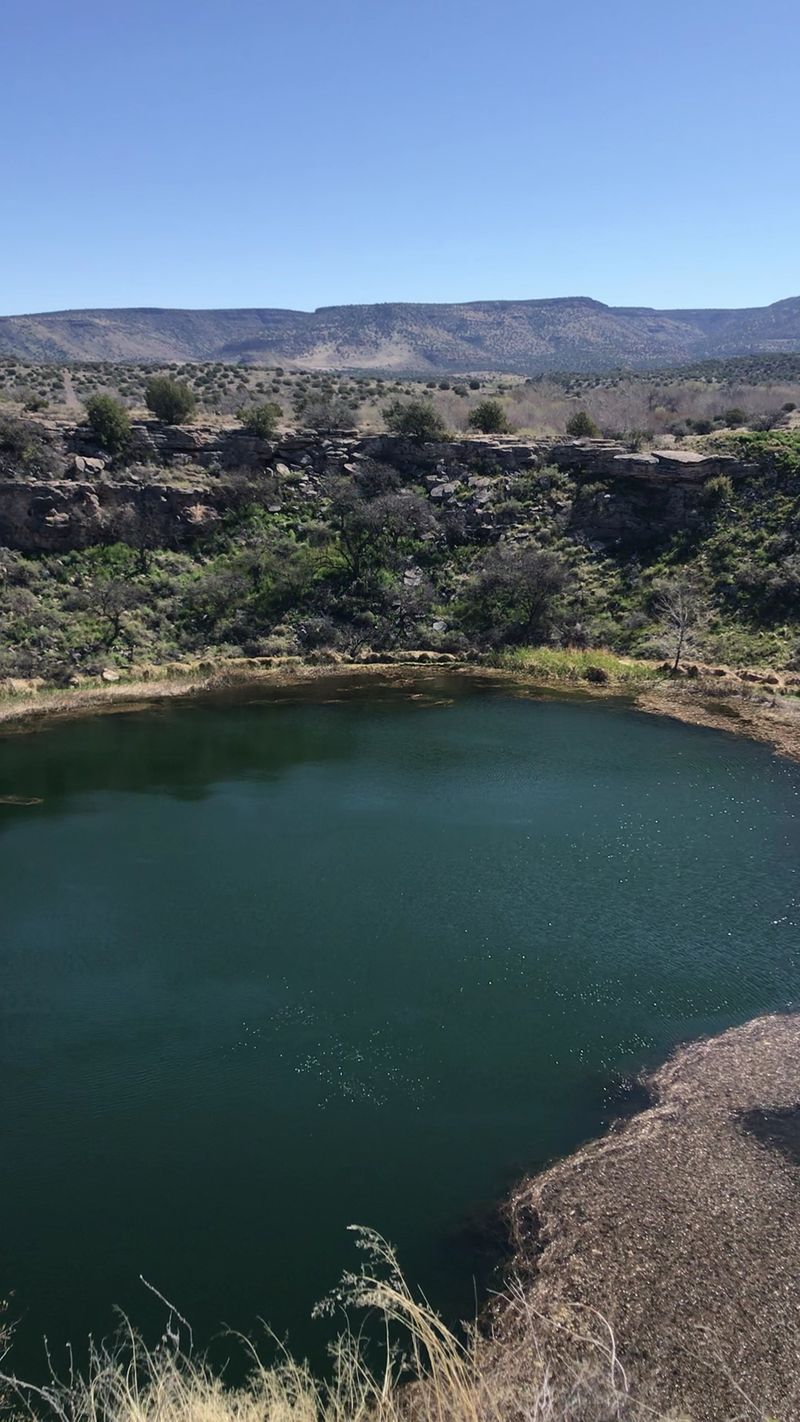
The result is a nearly round pool holding about 15 million gallons of water. Around it stretches dry Verde Valley country, which makes all that blue-green water look almost unreal.
The site sits in central Arizona, just a few miles from Montezuma Castle. It’s managed as part of the national monument, so the Well shares a family name with its more famous neighbor.
Here’s the catch that sets up this whole story. Most visitors walk the short path to the rim, take in the view, and head straight back to the car.
That rim view is gorgeous, no argument there. Still, it’s only half of the experience, and arguably not the better half.
The trail continues down toward the water’s outlet and a quiet creekside spot. That lower stretch holds ancient canals, shade, and a calm that the busy overlook can’t match.
Think of the rim as the movie trailer. The full feature starts once you take the stairs down.
The Name Mix-Up Early Settlers Never Fixed
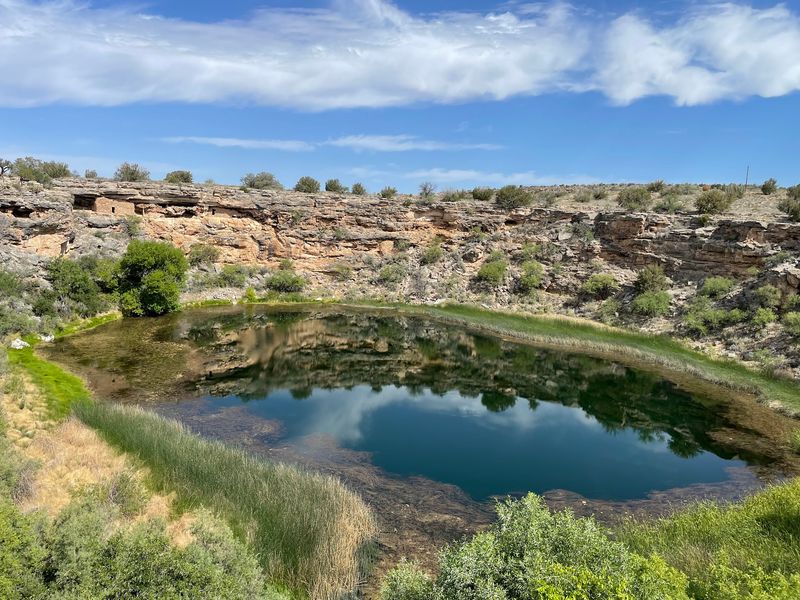
Emperor Montezuma never set foot here. Early settlers attached his name to the Well, the nearby Castle, and even a town, and the label simply stuck.
The real builders were the Sinagua people. They lived and farmed around this spring roughly between 1100 and 1400 A.D., long before Montezuma II was born in the 1400s.
So the name is a bit like calling your grandma’s house a palace. Charming, sure, but not exactly accurate.
What matters more is who still holds this place close. The Well is considered sacred by Indigenous tribes, including the Hopi and Yavapai.
That connection shapes how the site feels today. The loop is quiet, and the signs encourage respect rather than rushing.
Plaques along the trail explain the geology, the people, and the plants they relied on. You’ll leave knowing far more than when you parked, even on a short visit.
I like that the history here isn’t hidden behind glass. It’s carved into rock walls, dug into the ground, and still flowing in the water.
Once you understand the name mix-up, the whole site starts to make more sense. The water came first, and the people followed it.
Water With A Strange Personality
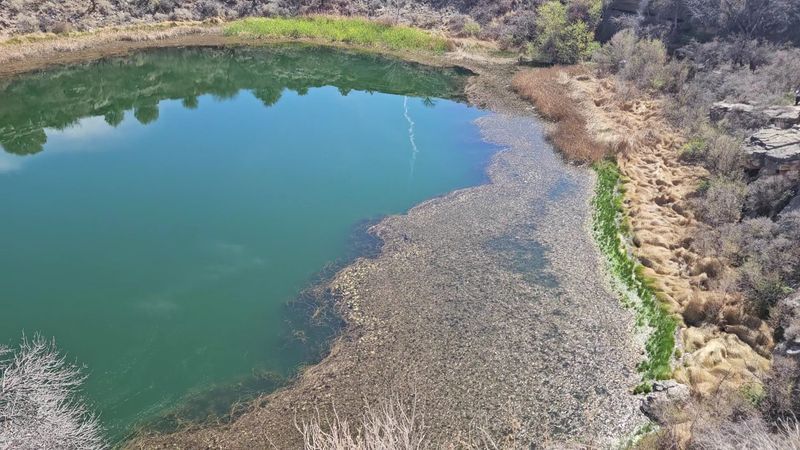
About a million gallons a day pour into the Well from deep underground. That supply has been running for hundreds of years, steady as a heartbeat.
Now for the twist. The water carries high levels of carbon dioxide and arsenic, which means fish can’t survive in it.
Instead, the pool supports five rare species found nowhere else on the planet. Leeches are part of the crowd too, and there are thousands of them.
So, no, this is not a swimming hole. Swimming isn’t part of the plan, and honestly, the leeches make that decision easy.
The fun is in learning how such an odd little world works. Rangers can explain how the Well formed and which animals live in the area.
Kids especially tend to love the gross-but-cool factor. A pond full of leeches and unique critters beats a regular lake for storytelling any day.
Arizona has plenty of pretty water spots. Few of them come with a science lesson this weird and this memorable.
Stand at the edge and watch the surface for a minute. It looks calm, but a whole private ecosystem is busy right under it.
Cliff Rooms Built Right Into The Walls
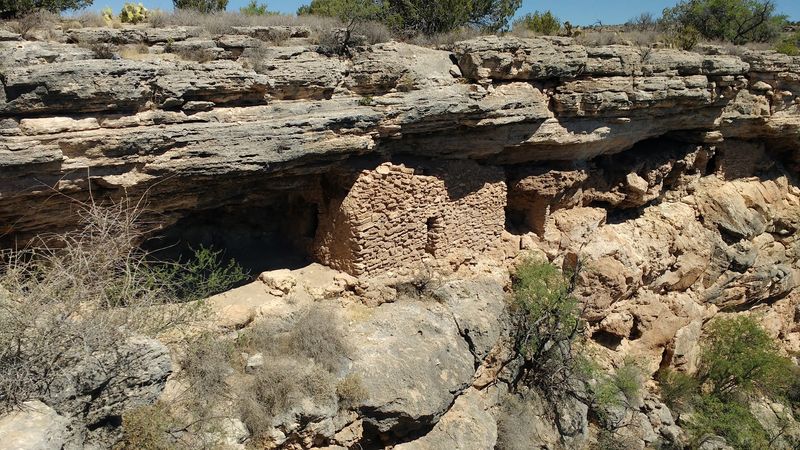
Look closely at the sinkhole walls and you’ll spot small stone rooms. The Sinagua built these cliff dwellings directly into the rock above the water.
Some structures date to around 1050 A.D. Caves and the remains of a 14th-century pueblo add even more to explore along the loop.
Talk about a lakefront property. These families had a constant water source in a dry land, and they built right beside it.
Following the trail down into the bowl brings you closer to one of the dwellings. From there, the scale of daily life here feels much more real.
It’s hard not to wonder how they carried supplies up and down these walls. No elevators, no handrails, and definitely no delivery trucks.
Some caves even hold markings from long ago. When a ranger is available, guided trips down to see them may be possible.
Access can change, though. Parts of the lower trail sometimes close to protect the bats that use the area.
Even with a closure, the views of the dwellings from the trail are impressive. Bring binoculars if you have them, because the details reward a closer look.
The Stairs Most People Never Take
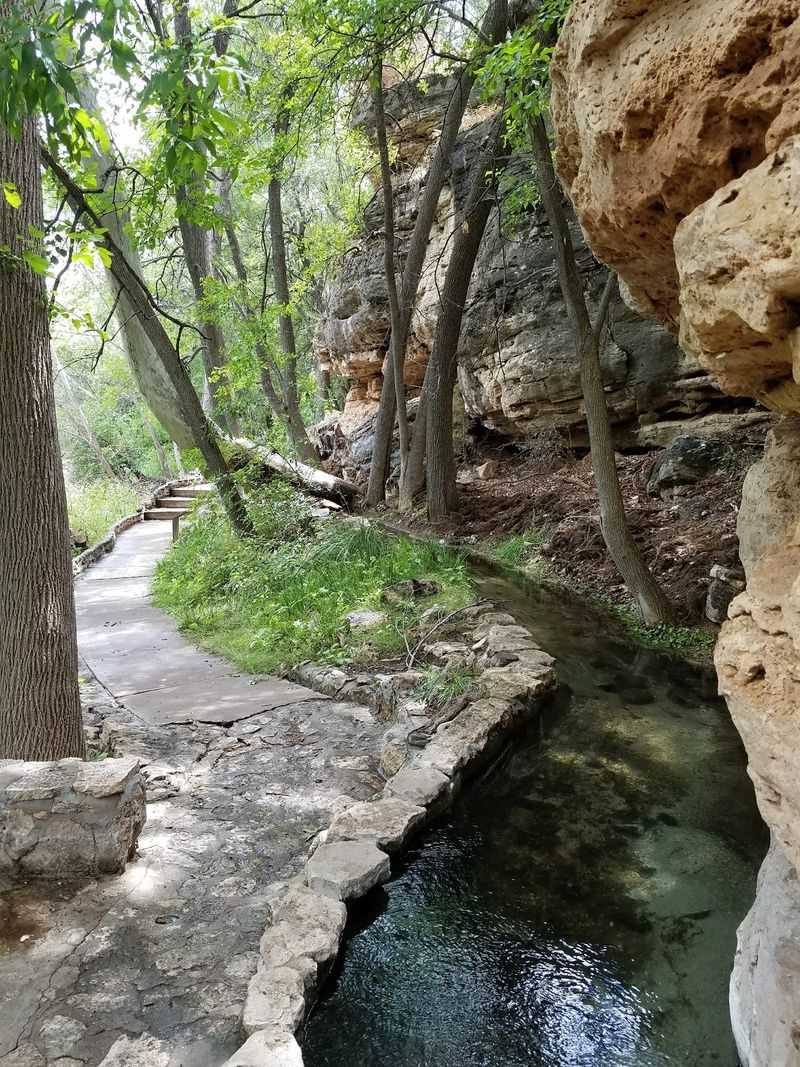
Here’s the big mistake in one sentence. Visitors stop at the overlook and skip the steps leading down toward the outlet and creek.
That second set of stairs is the doorway to the best part. It drops you into a shady, peaceful area that feels completely different from the sunny rim.
Fair warning about the climb. The steps are steep, and there are no handrails, so take your time.
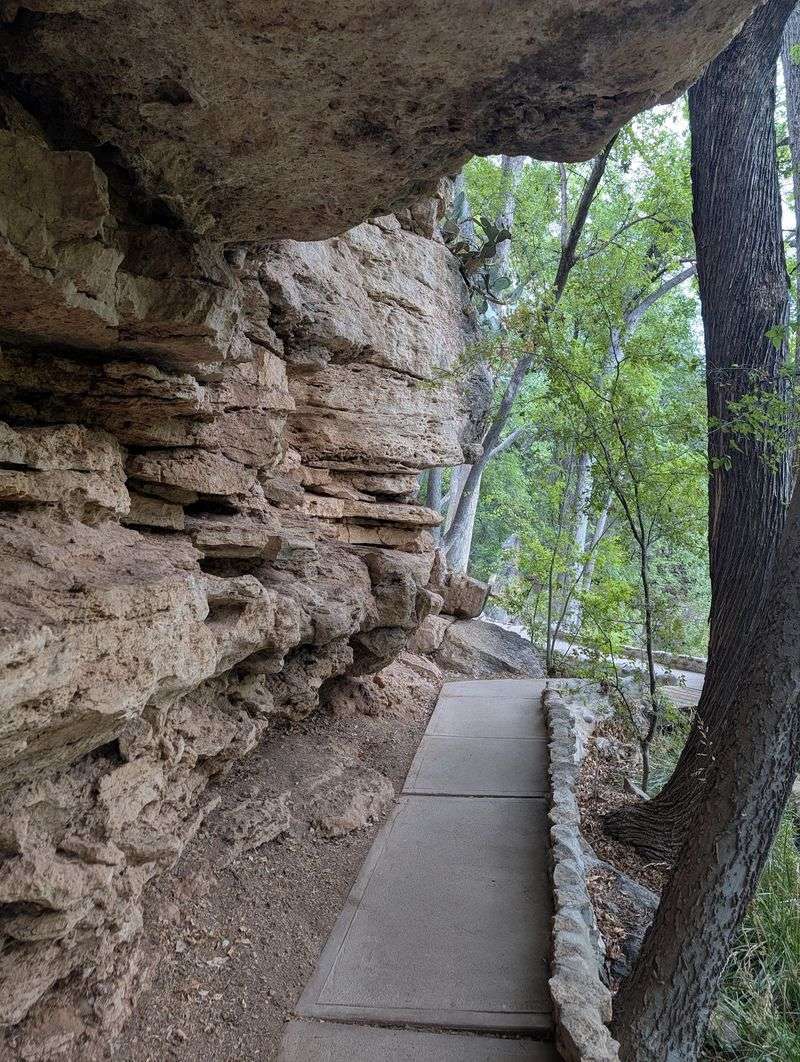
The path down is wide and rocky in spots. Sturdy shoes make a big difference, and slow and steady works just fine.
At the bottom, the Well’s water slips out through the rock and flows away. This outlet supported the ancient irrigation systems that made farming possible here.
Nearby, the creek gives you a spot to simply sit and breathe. Trees, moving water, and quiet make it feel like a tiny oasis.
Sections of the creek path occasionally close past the stairs. Even then, the walk down is worth it for the change in scenery alone.
Skipping this part is like leaving a concert before the encore. The rim gets the photos, but the bottom gets the feeling.
Canals Carved More Than 1,000 Years Ago
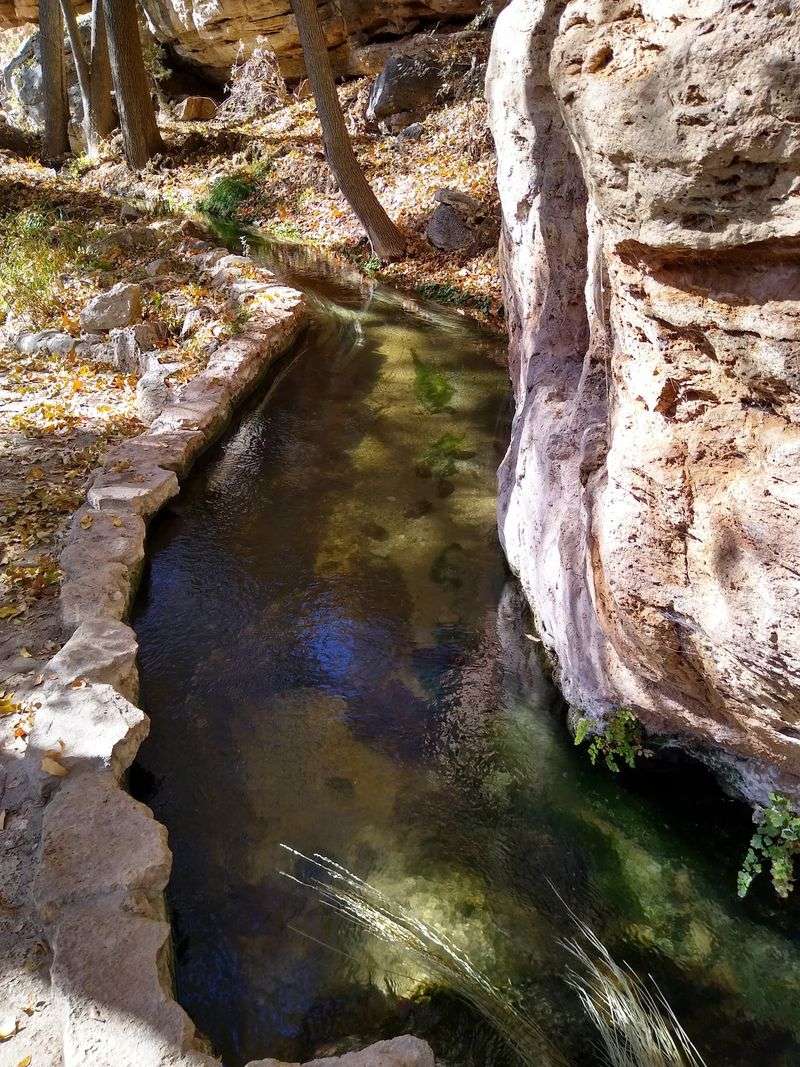
Long before sprinklers, the Sinagua engineered their own water system. They carved irrigation canals to carry the Well’s flow to their crops more than 1,000 years ago.
Remnants of that system still sit along the lower trail. You can see sections of the old channel near the creek.
It’s a little mind-bending. People in the Verde Valley were managing water with skill while much of the world had no idea this place existed.
An old aqueduct-style stretch near the water is worth hunting for. Many folks walk right past it without realizing what it is.
Signs help connect the dots between the spring, the canals, and the fields. Suddenly the whole valley feels like an ancient farm map.
This is why the lower trail matters so much. From the rim, the Well looks like a pretty pond.
Down here, you see it as a lifeline. The water fed families, crops, and an entire way of living.
History buffs will want to linger. Everyone else will still get a kick out of standing beside a canal older than most castles in Europe.
Little Surprises Along The Loop
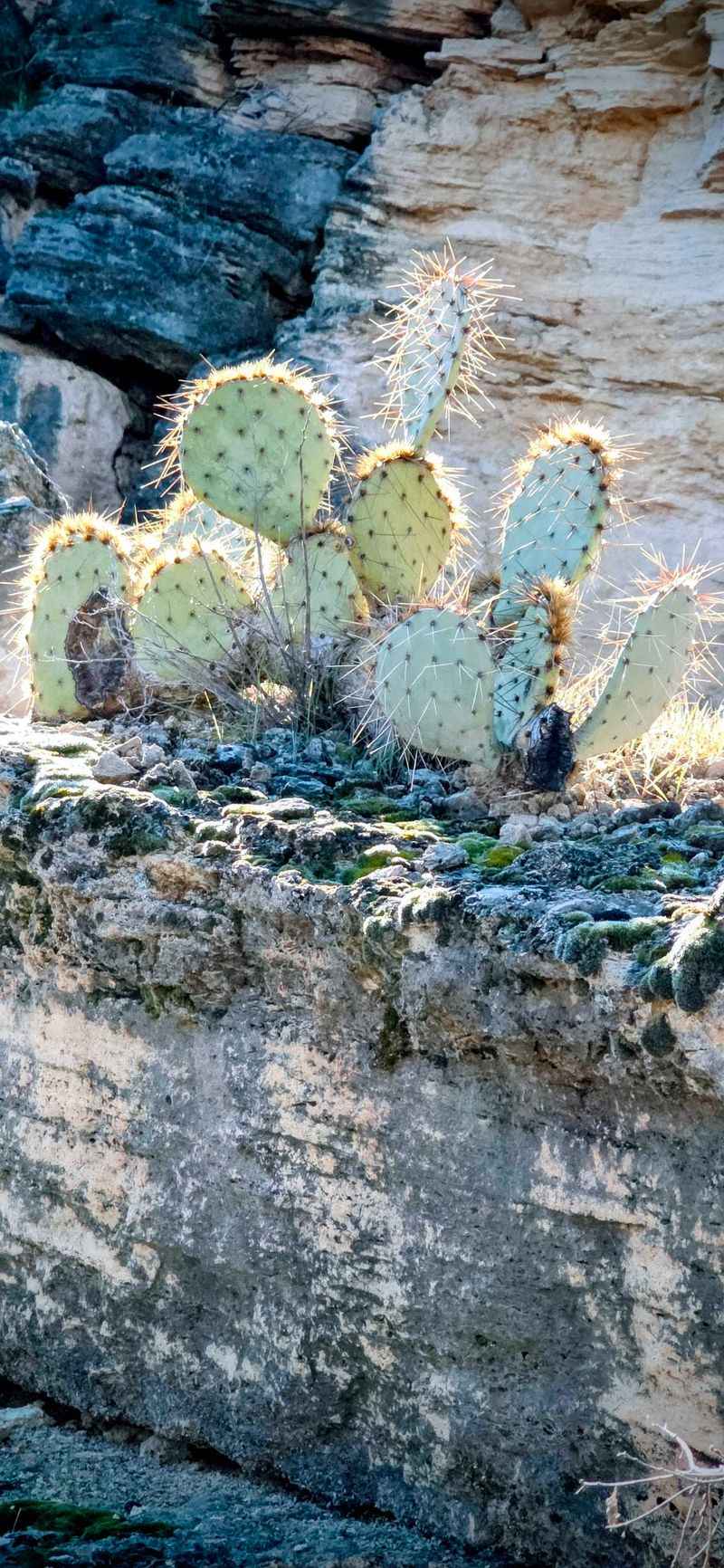
Plant labels line the path like a botany class you actually enjoy. Many signs point out plants that were important to the people who lived here.
That turns an easy walk into a scavenger hunt. You’ll start noticing which shrubs were food, tools, or medicine.
Then there’s the wildlife. Coatimundis sometimes wander through, and spotting a group of them is pure entertainment.
Rangers can share more about the animals that live around the Well. Their knowledge adds a lot to a short stroll.
History shows up in unexpected ways too. Some old “I was here” graffiti on the site dates back almost 200 years.
Apparently, leaving your name on things is not a modern habit. These days, of course, the best souvenir is a photo.
On the drive out, an excavated pit house makes a smart final stop. It’s another window into how early residents built their homes.
All of this fits into a visit of about an hour. Not bad for a site that asks for so little time and gives back so much.
Junior Rangers, Leashed Pups, And Easygoing Pace
Kids can earn a Junior Ranger badge here. Some get a certificate on the way out by sharing one fact they learned about the Well.
That little challenge works wonders. Suddenly young visitors are reading every sign and asking about leeches.
Dogs are welcome too, as long as they stay on a leash. The trail is well marked and simple to follow.
Summer heat changes the dog plan, though. The path is mostly cement and rock, and it can get very hot for paws.
The upper loop is about one-third of a mile and mostly paved. It’s a manageable walk for many ages, with a few benches along the way.
Accessibility is limited, so plan accordingly. The site isn’t wheelchair or stroller accessible because of hills and steep steps.
Shade is scarce on the short hike. Water and a hat are must-haves, especially during warmer months.
Monsoon season can bring heat, humidity, and quick weather changes. Keeping an eye on the sky is a smart Arizona habit anywhere, and especially here.
Free Admission And Easy Logistics
Good news for your wallet. Visiting Montezuma Well is free, with no permit needed.
That makes it one of the best-value stops in the Verde Valley. Free ancient history and a magical spring is a pretty hard combo to beat.
Bathrooms are on site, which every road-tripper appreciates. Parking is available near the trailhead, so getting started is simple.
The Google listing places the site at Arizona 86335, in the Rimrock area. Signs from the highway help guide the final stretch.
Directions can feel tricky depending on where you’re coming from. A map app or trail app may help you stay on track.
Because hours and trail access can shift, check with the national monument before heading out. Closures sometimes happen to protect wildlife like bats.
Plan on less than an hour to see the main highlights. Linger longer if you want quiet time by the creek.
Bring water, sun protection, and solid shoes. With those basics covered, the rest of the visit pretty much takes care of itself.
An Easy Add-On To A Sedona Or Castle Day
Sedona day-trippers, take note. Montezuma Well sits about 20 minutes away, making it a simple bonus stop.
It’s also just up the road from Montezuma Castle. Pairing the two gives you a fuller picture of Sinagua life in one outing.
The Castle tends to grab the spotlight. The Well often feels quieter and less crowded, which suits anyone craving calm.
Getting here is convenient from the main highway between Phoenix and Flagstaff. That makes it a natural break on a northern Arizona road trip.
Stretch your legs, learn something new, and get back on the road refreshed. Few rest stops come with cliff dwellings.
Cooler months are especially pleasant for exploring. Spring and fall bring comfortable temps for the stairs and the creek walk.
Summer visits work best early in the day. The open trail heats up fast once the sun climbs.
Whatever the season, give yourself enough time for the lower trail. Rushing through defeats the whole point of coming.
Go Down, Slow Down, And Let It Sink In
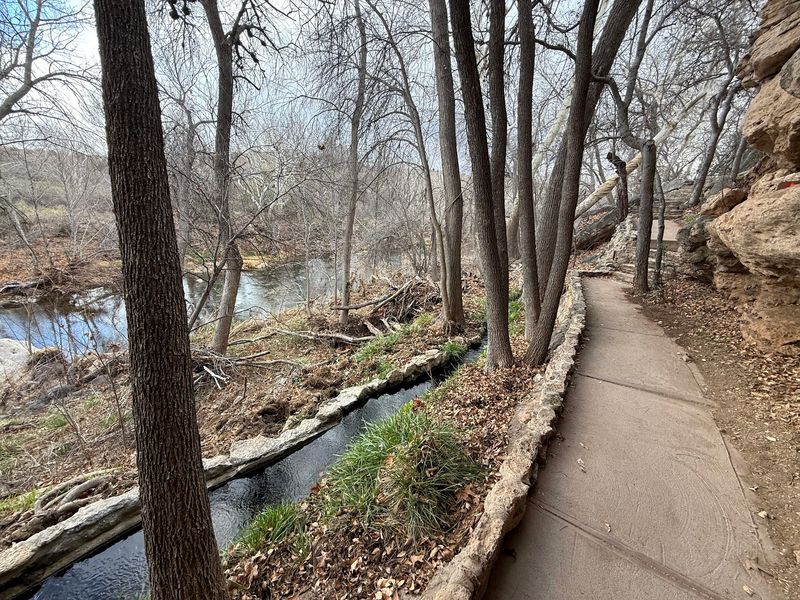
The rim view will win your camera roll. The lower trail is what you’ll actually remember.
Montezuma Well rewards anyone who takes a few extra steps. Down by the outlet, the canals and creek tell the story the overlook only hints at.
I believe that’s what makes this place special. It’s small, free, and quietly packed with geology, culture, and wonder.
A sacred spring, ancient homes, and water that never quits. That’s a lot of magic for a stop under an hour.
So plan your next Arizona drive with a little wiggle room. Walk the loop, read the signs, and wave at a coatimundi if one shows up.
Then take the stairs. Carefully, of course, since there are no handrails.
Sit by the creek for a few minutes and let the place settle over you. The people who farmed here centuries ago knew this water mattered.
Standing beside it, you’ll understand why. And you’ll never be one of those rim-only visitors again.
Tag the friend who always rushes through stops. They need this lesson more than anyone.