
At Arizona’s Pioneer Living History Museum, Families Walk Through 30 Original Old West Buildings
A log cabin built in 1878 near Prescott now sits in a desert village, and it was once the childhood home of Arizona’s first U.S. Senator.
That cabin didn’t stay put. It got moved, plank by plank, to keep history from being bulldozed.
It has plenty of company out there. More than 30 historic buildings share 90 acres, including a bakery from 1881 and a cabin with rifle ports in its walls.
Some are originals, and others are careful rebuilds.
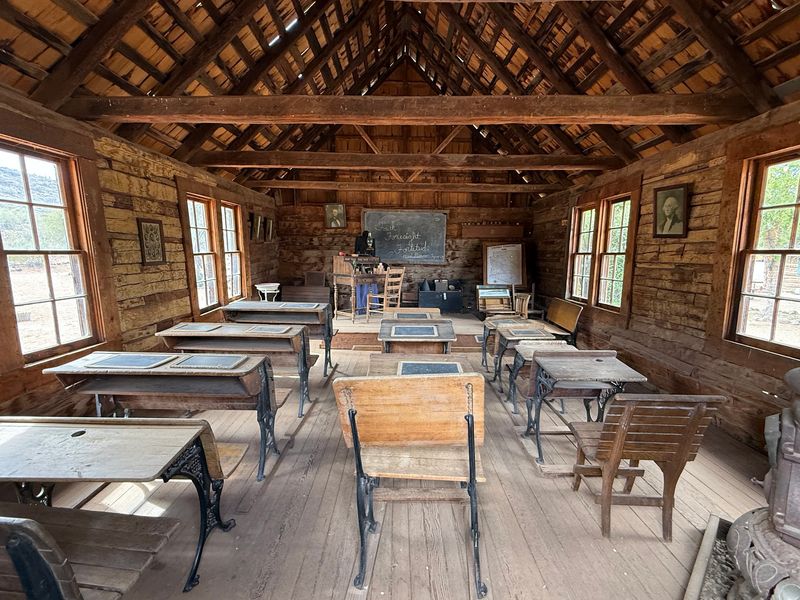
I like how the whole place feels like Arizona’s territorial days got saved in a scrapbook you can walk through. Kids peek into an old schoolhouse while parents read the stories posted outside each door.
So how does an entire Old West town end up just off the interstate? The answer takes a little wandering to discover.
An Old West Town Sitting Right Off I-17
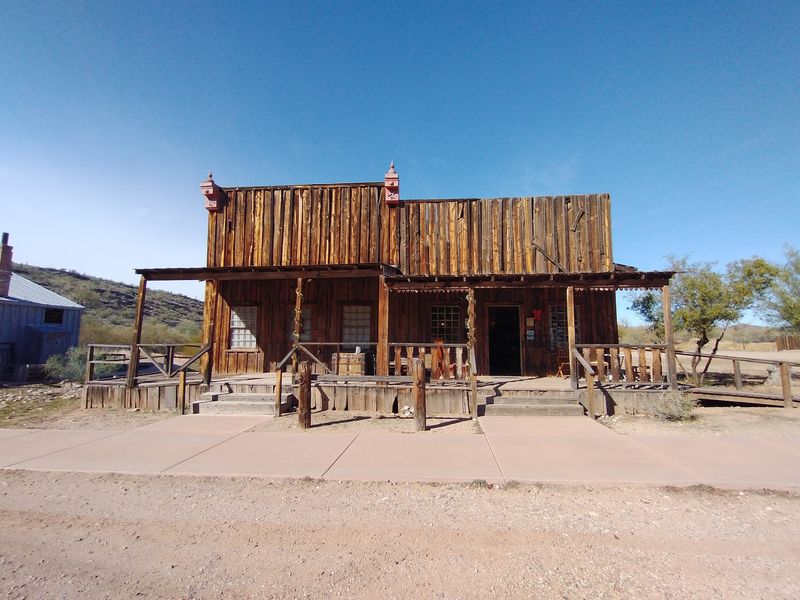
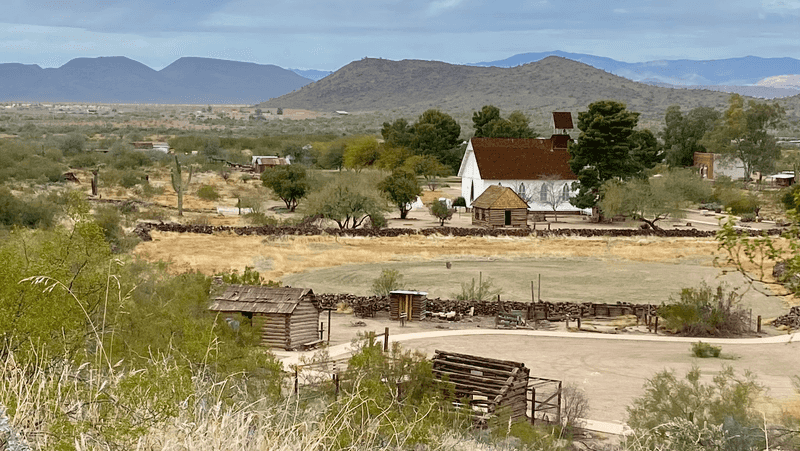
North Phoenix has a secret that isn’t very secret once you spot the wooden storefronts. Pioneer Living History Museum sits just off Interstate 17 near Anthem, a quick drive from the city’s busier corners.
It’s a sprawling 90-acre open-air museum dedicated to Arizona’s territorial past. The buildings mostly represent the years from 1863 to 1912, right up until statehood.
Some people also call it Pioneer Arizona or Pioneer Arizona Living History Museum. Whatever name you use, the idea stays the same.
You walk from building to building and peek into another century.
The heart of it all is Pioneer Village. More than 30 historic structures line its paths, from homes and shops to a church and a bank.
A few of those buildings are originals that got relocated from around the state. Others are careful reconstructions based on real Arizona businesses and landmarks.
That mix makes the village feel like a stitched-together Arizona town. A cabin from up near Prescott can sit a short stroll from a church modeled after one in Globe.
Nobody back then could’ve visited them all in one morning. You can, and with comfortable shoes, it’s an easy stroll through time.
How a Group of History Lovers Rescued Arizona’s Past
Bulldozers were winning in the 1950s. Old Arizona buildings from roughly 1870 to 1910 kept disappearing as new construction spread.
So in 1956, a group of history enthusiasts formed the Pioneer Arizona Foundation, Inc. Their goal was simple and a little bold: save the buildings before they vanished.
The founders included some famous names. Former Governor Paul Fannin and Senator Barry Goldwater were part of the effort.
The foundation bought 90 acres of land in north Phoenix. That land became the new home for structures rescued from across Arizona.
After years of planning and moving, the museum officially opened on February 15, 1969. Think about how much work it takes to relocate a whole log cabin.
Now multiply that across a village.
The story almost had a sad twist decades later. The museum faced possible closure when its land was headed toward auction.
In 2010, the city of Phoenix stepped in. The city purchased the land and installed a water line, helping the museum stay open.
That’s a pretty great comeback for a group of old buildings. They got saved once in the 1950s, then saved again more than fifty years later.
Arizona clearly wasn’t ready to let them go.
A Senator’s Boyhood Cabin and Its Neighbors
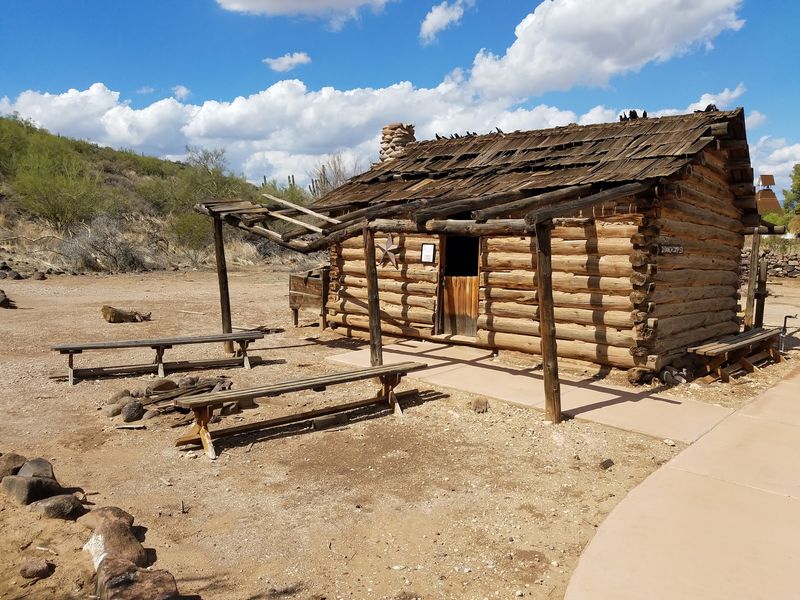
Henry Fountain Ashurst grew up in a log cabin, and you can stand right outside it. He later became Arizona’s first U.S.
Senator, which is quite a leap from those rough-hewn walls.
The Ashurst Cabin is an original structure built in 1878 near Prescott. It made the long move south to the museum grounds, logs and all.
Not far away, the Flying V Cabin tells a much tenser story. It was the home of John Tewksbury, who was caught up in the Pleasant Valley conflict of territorial Arizona.
Look closely and you’ll spot rifle ports built into the cabin. Those small openings say a lot about how uneasy frontier life could get.
Both cabins show how differently Arizona families lived in the 1800s. One shaped a future senator’s childhood.
The other was built with protection in mind.
Standing between them is a quick history lesson without a single textbook. You can read the sign, peek through the open door, and fill in the rest with your imagination.
It’s a good stop for curious kids, too. A cabin with holes for rifles tends to spark plenty of questions on the walk to the next building.
Victorian Style Meets the Desert at the Sears House
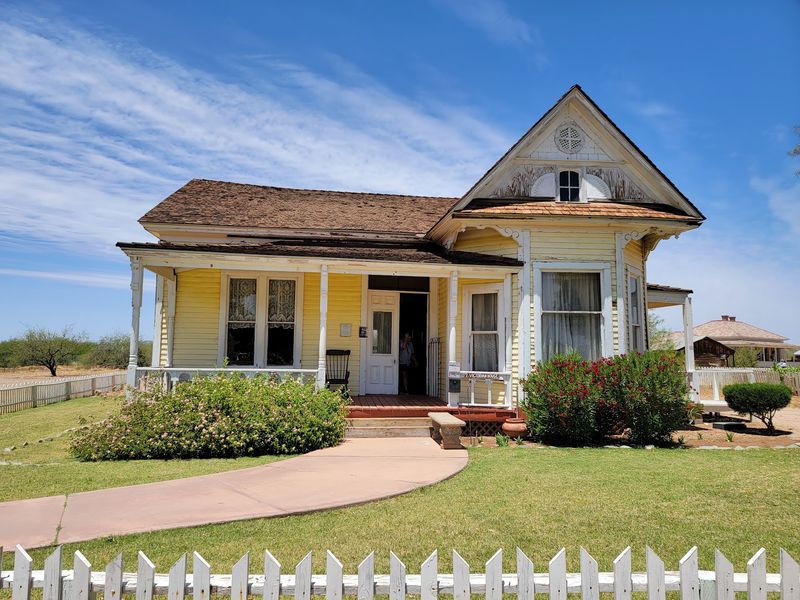
Lace-curtain living in the desert sounds unlikely. Yet the Sears House proves territorial Arizona had a fancy side.
This original Victorian-style homestead dates to the early 1890s. Among all the rugged cabins and workshops, it looks almost dressed up for company.
The contrast is half the fun. Just a short walk separates a log cabin with rifle ports from a home built with Victorian flair.
Arizona in the 1890s was changing fast. Railroads brought new goods and new styles, and some families wanted homes that matched what they saw back East.
At Pioneer Living History Museum, many buildings let you look inside through an open doorway. Interiors are filled with items from their era, while barriers keep the rooms protected.
That setup means you won’t be flopping onto the parlor furniture. You will get a close look at how a well-off frontier household arranged its space.
Photographers tend to love this corner of the village. The house gives a different mood than the dusty workshops and plain cabins nearby.
Pair it with a stop at the schoolhouse or the teacherage, and you start to see the full range of frontier life. Not everyone in the Old West lived like a cowboy.
Blacksmiths, Bakers, and the Shops That Built a Town
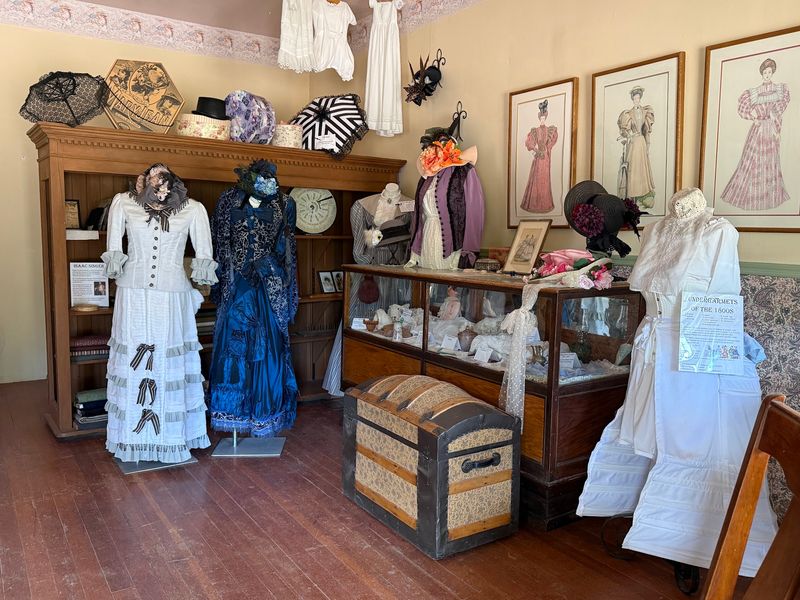
Every frontier town needed someone who could fix a wagon wheel. The Blacksmith Shop here is modeled after Middleton and Pascoe’s shop in Globe, Arizona.
Nearby, the Carpenter Shop takes inspiration from an 1880 shop in Prescott. A Dress Shop rounds out the reconstructed businesses.
Then there’s the Phoenix Bakery, an original building dating back to 1881. That’s older than Arizona statehood by more than three decades.
Picture bread coming out of an oven while Phoenix was still a dusty young town. Okay, no picturing allowed, so just know the walls really did stand back then.
These shops show the practical side of pioneer life. Food, clothing, tools, and furniture all came from skilled hands working in spaces like these.
Kids often get a kick out of the blacksmith area. Anvils and old tools have a way of making the past feel loud and real.
The village also includes a bank and a bandstand. Add those to the shops, and you can almost map out how a territorial Arizona main street worked.
It’s a little like a board game of frontier economics. Stop at the baker, visit the bank, then see who made your wagon roll.
A Church, a Schoolhouse, and One Very Strict Sheriff
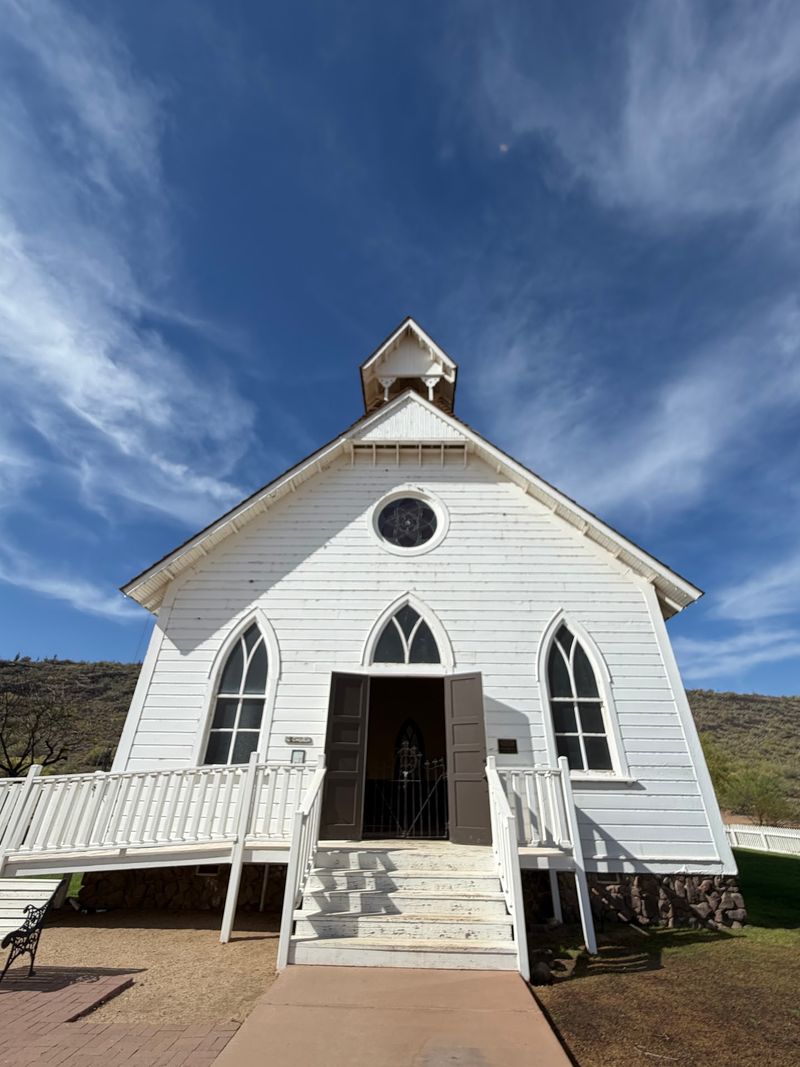
Sunday mornings, school lessons, and the occasional jail stay all have a building here. Community life gets its own corner of the village.
The Community Church is a reconstruction of St. Paul’s Methodist Episcopal Church. The original was built in Globe, Arizona, in 1880.
Weddings happen on the grounds, too. The museum works as an event venue, and the church setting adds charm to a special day.
Across the way, the schoolhouse gives kids a glimpse of frontier classrooms. A teacherage stands nearby, where a teacher would have lived.
Imagine your teacher living right next door to school. Homework excuses probably didn’t go very far back then.
The Sheriff’s Office brings a playful twist. It features jail cells with displays of prisoners inside, which tends to grab attention fast.
Families can snap a photo near the cells and talk about how frontier law worked. It’s history with a bit of humor built in.
Together, these buildings show what held a pioneer town together. Faith, learning, and order all mattered as much as tools and bread.
You’ll find each stop has its own sign with background. Reading them as you go turns a casual stroll into a surprisingly rich lesson.
The Telephone Museum Steals More Than a Few Hearts
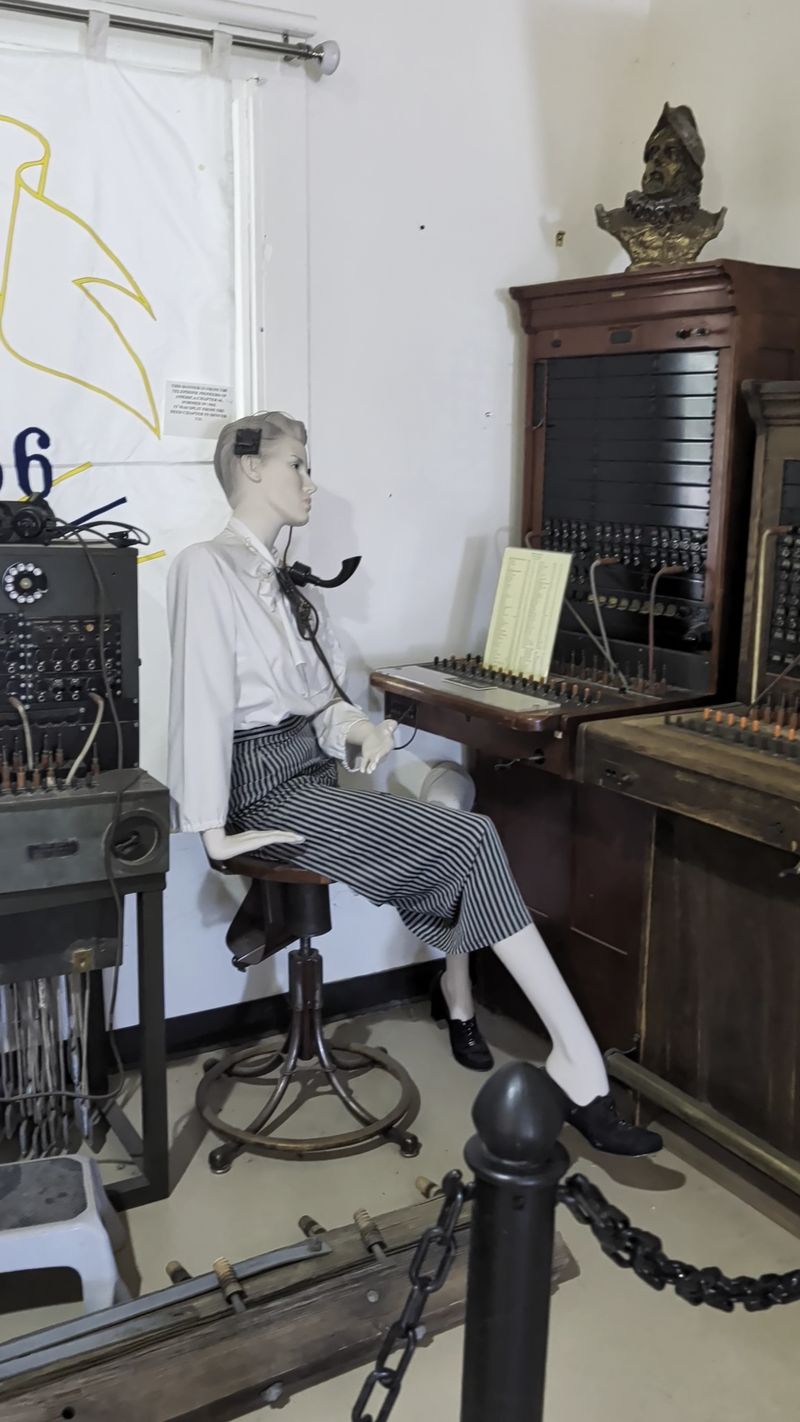
Rotary dials and switchboards might not sound very Wild West. Still, the Telephone History Museum is one of the most talked-about spots on the property.
Best of all, admission to Pioneer Living History Museum includes it. No extra ticket needed for this trip down memory lane.
The collection covers a wide range of telephones, along with switchboards from the past. Older visitors may spot a phone just like the one hanging in Grandma’s kitchen.
Younger visitors get a different reaction. Some have never seen a phone with a cord, let alone a giant switchboard with plugs.
That generational mix makes it a fun stop for families. Grandparents can explain how party lines worked while kids wonder how anyone survived without texting.
It also connects nicely to the territorial theme. Communication changed everything for remote places like early Arizona.
Telegraph and telephone lines helped scattered towns stay in touch. A message that once took days could suddenly travel in moments.
Plan a little extra time here. It’s easy to linger over the old models and spot the ones you remember.
Just don’t be surprised if someone in your group starts pretending to place a call.
Gold Panning, Gunfights, and Seasonal Surprises
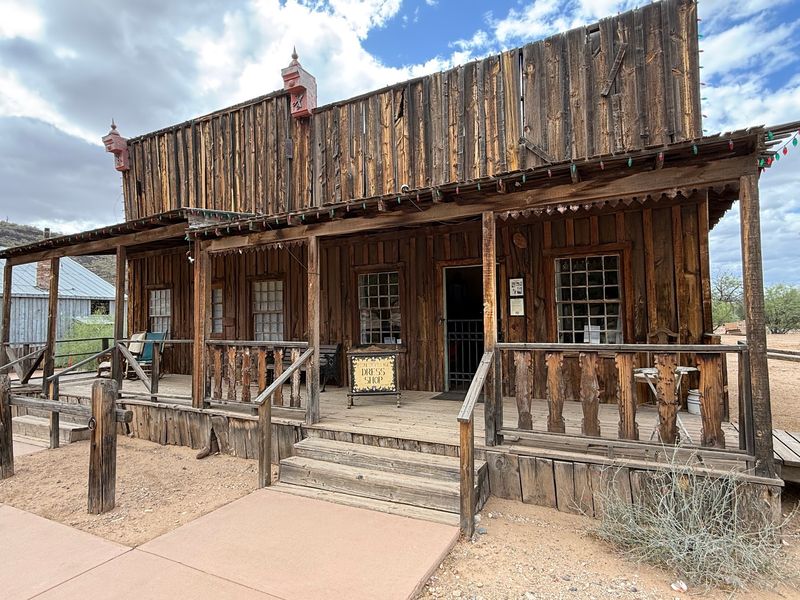
Gold fever never fully left Arizona. The museum has set up gold panning, giving kids a hands-on taste of the prospector life.
Hay mazes have also popped up for extra fun. Those little additions help turn a history walk into a real adventure.
Themed events show up on the calendar, too. A Gunslingers Fastdraw Competition has been held here, bringing serious Old West energy.
Western shows and reenactments are part of the museum’s story as well. Some programs have included rope, whip, and gun safety demonstrations aimed at kids.
Seasonally, costumed volunteers may be around the village. When they are, the buildings feel a lot more lived in.
Events and volunteer schedules can change, though. It’s smart to check ahead if you’re hoping for a show or demonstration on your visit.
Holidays can bring special happenings, too. The museum usually closes on major holidays unless an event is scheduled.
Fall tends to be a lively stretch with festivals and field trips. Cooler weather makes it a natural fit for outdoor fun.
Even on quieter days, the buildings carry the show. Events just add a little extra sparkle, or maybe a little extra dust.
Easy Wandering for Strollers, Grandparents, and Little Explorers
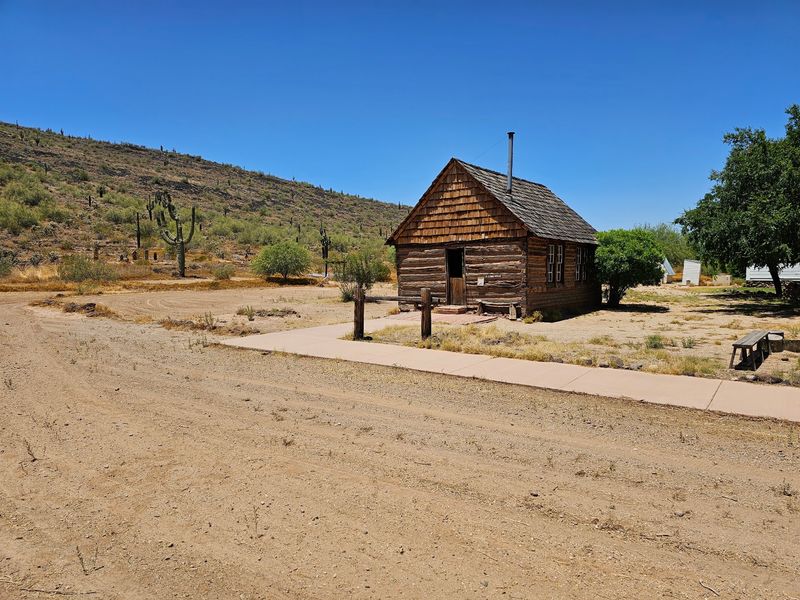
Strollers welcome, which is not always true of Old West towns. Paved pathways and wide sidewalks run through the village.
Ramps lead into buildings, making the grounds friendlier for different mobility needs. That’s a thoughtful touch for a place full of 1800s architecture.
The self-guided format lets everyone set their own pace. Toddlers can linger at the jail while older kids race ahead to the blacksmith.
Picnic tables are on site, so a packed lunch can be part of the plan. It’s an easy way to keep a day trip budget-friendly.
Pets may be welcome, too, which is good news for dog lovers. Confirm the current rules before bringing your four-legged sidekick.
The vibe is relaxed and unhurried. Quiet mornings make it easy to read every sign and peek into every doorway.
Families with history buffs of all ages fit right in. School groups, grandparents, and curious kids all find something to explore.
Photographers and people who love dressing in Western wear will enjoy it as well. The setting practically begs for a frontier-themed photo.
Shade can be limited out on the paths, so pack hats and sunscreen. Arizona sun doesn’t care that you’re busy learning.
Know the Hours Before You Saddle Up
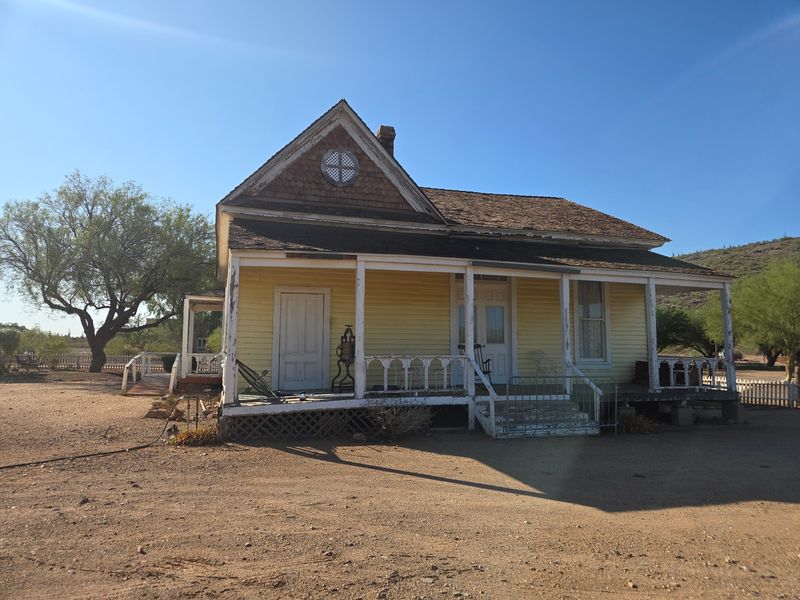
Summer mornings are short here, so timing matters. From June 1 to October 1, Pioneer Living History Museum opens Wednesday through Sunday, 7 to 11 a.m.
From October 2 to May 31, hours stretch to 9 a.m. to 4 p.m., Wednesday through Sunday. The museum closes Mondays, Tuesdays, and major holidays.
You’ll find it at 3901 W. Pioneer Road, Phoenix, AZ 85086.
It sits in northern Phoenix off I-17 near Anthem.
Parking is available on site, and the lot is roomy. That makes arriving with a full family car pretty painless.
Your first stop is the Village Gift Shop, also called The Mercantile. It serves as the gateway to the museum.
Grab a map there before heading out. The Mercantile also carries snacks, cold sodas, Western memorabilia, homemade items, candles, and soaps.
Admission comes with a modest entry fee, and it includes the Telephone History Museum. Prices can change, so check before you go.
Bring water bottles and sun protection. Much of the walking happens outside, and Arizona heat arrives early in warmer months.
Plan on about an hour or two for a relaxed visit. Events or chatty volunteers may stretch that happily.
A Frontier Morning Worth Putting on the Calendar
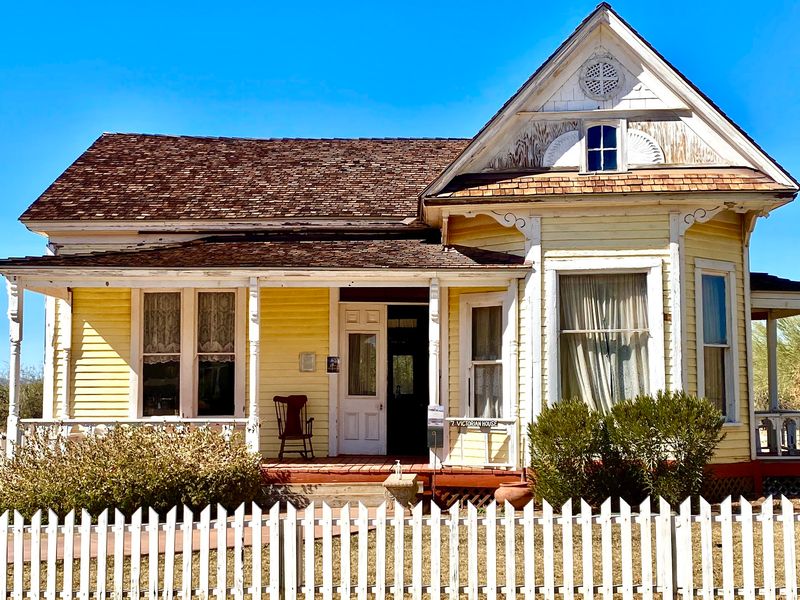
Few places let you visit a senator’s boyhood cabin and an 1881 bakery before lunch. That alone earns this museum a spot on any Arizona family’s list.
Pioneer Living History Museum isn’t flashy, and that’s part of the charm. It’s a quiet, affordable outing built around real stories and real buildings.
The history behind it adds weight to every step. People fought to save these structures in the 1950s, and Phoenix stepped up again in 2010.
Kids get gold panning, a jail full of pretend prisoners, and a phone museum that might blow their minds. Adults get a gentle reminder of how Arizona came to be.
Cooler months make the visit especially pleasant. Summer works, too, if you’re an early bird willing to beat the heat.
Pack a lunch, grab a map at The Mercantile, and wander without a schedule. The buildings will do most of the storytelling.
Arizona has bigger attractions and louder ones. Few offer this much territorial history so close to Phoenix.
So round up the family, the grandparents, or that friend who loves old things. A morning in the 1800s might turn out to be the best part of your week.