
Climbing Monks Mound In Collinsville Puts Families On Top Of Illinois’ Ancient City
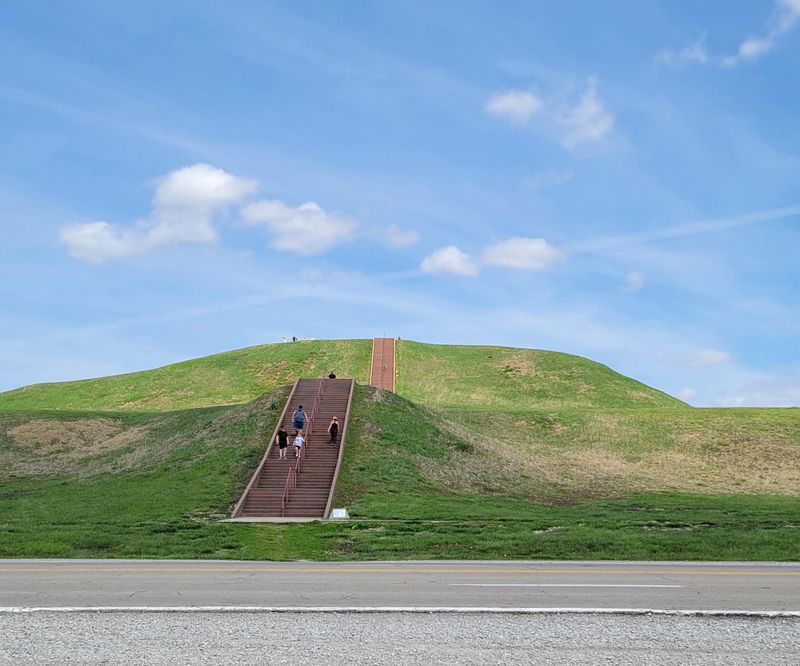
About 100 feet of packed earth, piled up one basket at a time, is waiting for your family just across the river from the St. Louis skyline in Illinois. Long before anyone drew a map of this state, thousands of people lived, traded, and celebrated right here in a city bigger than medieval London.
Today kids can climb the steps to the top of its largest mound and look out over the whole place for free. It might be the cheapest history lesson in Illinois, and easily one of the most memorable.
An Ancient City In Southern Illinois
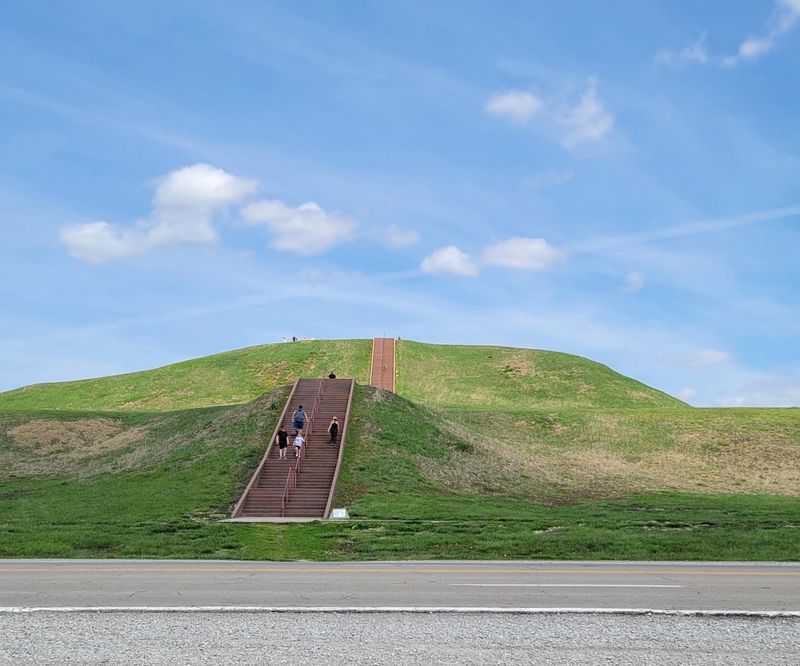
Just a short drive east of downtown St. Louis, at 30 Ramey Street in Collinsville, sits one of the most remarkable places in all of North America. Cahokia Mounds is the site of a 13th-century Native American urban center, and it holds the remains of homes, monuments, and dozens of earthen mounds.
Big claim? The numbers back it up.
Cahokia was the largest pre-Columbian settlement north of Mexico, and its population once rivaled cities across the ocean. That global importance earned it a spot as a UNESCO World Heritage Site and a U.S.
National Historic Landmark.
Plenty of Illinois families drive past the exit for years without stopping. Some folks who live barely an hour and a half away admit they waited decades before finally visiting, then wondered why they ever put it off.
What makes the site so special for a day trip is how easy it is to enjoy. You can walk the grounds, read the signs, climb the big mound, and soak in a story that belongs to world history, not just Illinois history.
Bring the kids, and they get to stand on something built by hand centuries before their great-great-grandparents were born.
The Mississippian People And Their Grand Plaza
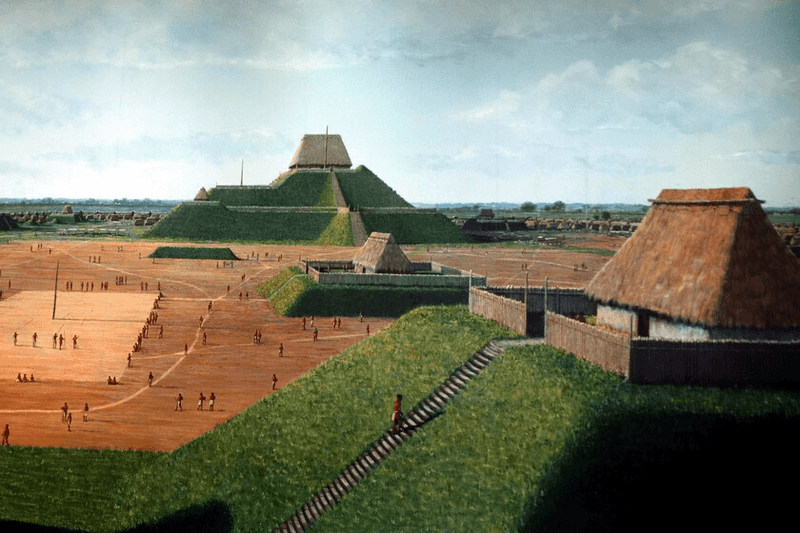
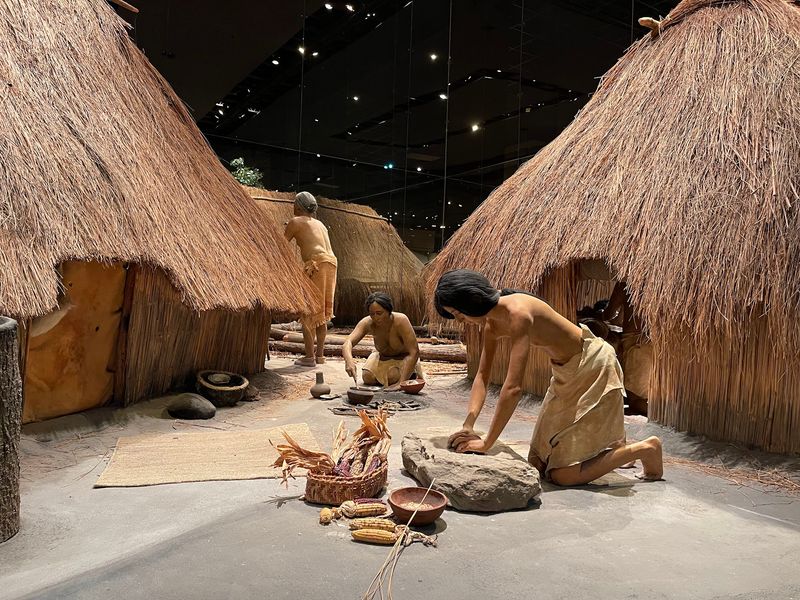
Markets, festivals, and big ceremonies once filled the open ground below Monks Mound. Archaeologists call it the Grand Plaza, a rectangular public space roughly 1,600 feet long where thousands of Mississippian people gathered.
Picturing it takes a little imagination, since today the plaza is a calm stretch of grass. Still, the informational signs scattered around the grounds do a wonderful job of filling in the scene.
They explain how the city was laid out, how the stockade fence once circled the central area, and why certain mounds were built where they stand.
Many visitors find it helps to learn a bit before arriving. Listening to a podcast about Cahokia on the drive down can turn the whole outing into a living storybook for older kids.
Here is a fun fact to share in the car. Monks Mound was the tallest human-made structure in this region for centuries, holding that title well into the modern era.
People built it entirely by hand, carrying soil in baskets.
That sense of scale tends to stick with families long after the visit. Standing where an entire community once thrived feels quietly powerful, and many people describe it as a deeply moving experience.
Roughly 150 Steps To The Top Of Monks Mound
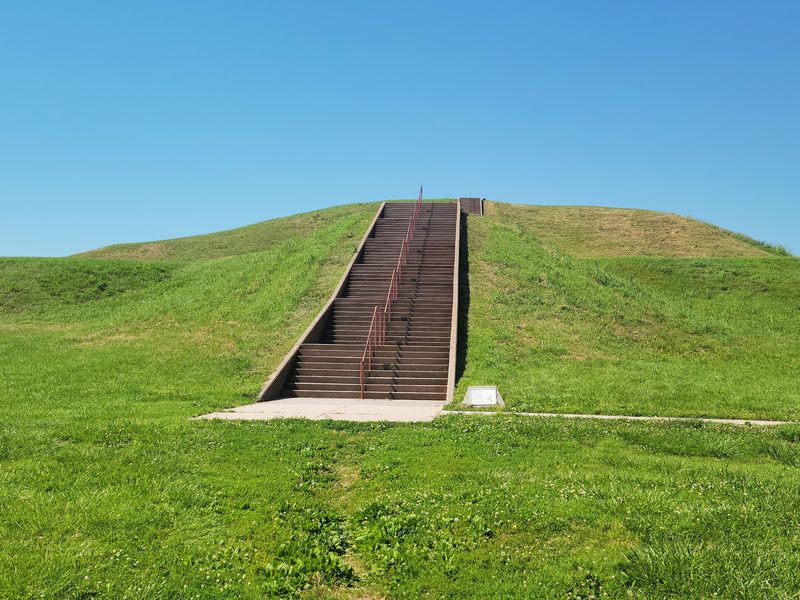
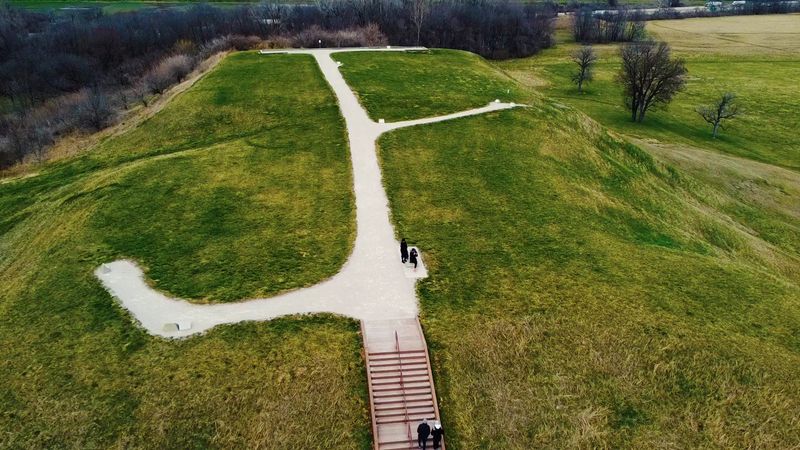
Calves, get ready. Reaching the summit of Monks Mound means climbing a staircase of roughly 154 to 156 steps, and the concrete path follows close to where ancient wooden stairs once stood.
The mound rises about 100 feet, and its base spreads across around 14 acres. That footprint is comparable to the Great Pyramid of Giza, which makes Monks Mound the largest prehistoric earthen construction in the Western Hemisphere.
Don’t let those numbers scare anyone off, though. The climb is steady rather than brutal, and a handrail runs alongside the stairs.
Benches along the way give little legs, and grown-up ones too, a chance to rest.
A moderate level of fitness makes the trip more comfortable. You’ll spot people of all ages heading up, from young kids to grandparents, and some locals even use the stairs for regular exercise.
One rule worth repeating to energetic children: no rolling down the hillside. The slopes are steep, the mound is sacred, and it remains an active archaeological site.
Most visitors are respectful about staying on the path, which helps keep this treasure in great shape for the next generation of Illinois climbers.
Gateway Arch Views From The Summit
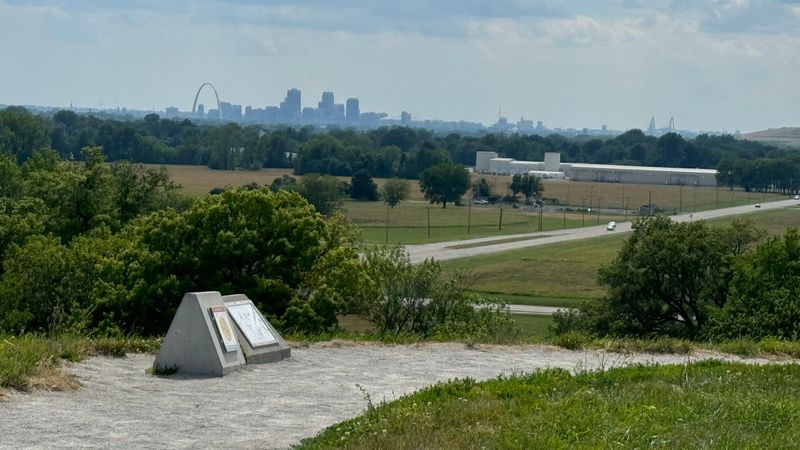
Turn west at the top, squint a little, and there it is. The Gateway Arch and the St. Louis skyline shimmer on the horizon, creating one of the strangest and most wonderful views in the whole metro area.
Ancient city in the foreground, modern landmark in the distance. That contrast is what makes the summit so memorable, and it gives kids an instant sense of just how long ago Cahokia flourished.
Look the other way and the scenery shifts to rolling grass, scattered smaller mounds, and wide-open Illinois prairie. From up here, you can finally see how the city was arranged, something that is hard to grasp from ground level.
Clear days offer the best payoff, so check the forecast before you go. Wind can whip across the flat top, and more than one hat has flown away during a photo, so a chin strap is a smart move.
Families often linger longer than planned at the summit. Snapping pictures, pointing out the arch, and catching their breath turns into a relaxed little break.
It’s the kind of moment children remember and parents end up sharing with everyone back home.
Woodhenge, Trails, And The Interpretive Center
Sun-watching was serious science at Cahokia. The reconstructed Woodhenge, a circle of timber posts, lines up with the sun’s movements and shows how much the Mississippian people understood about astronomy.
Getting to the posts means crossing tall, flat prairie grass, so strollers and wheelchairs may struggle there. The signs near Woodhenge, however, are easy to reach.
Beyond that, more than 10 miles of trails wind through the property, including the Nature/Culture Trail and the Prairie State Nature Walk. They lead you close to smaller mounds and offer plenty of quiet space.
Wildlife feels right at home too, and herons and deer sometimes wander into view.
The Interpretive Center adds depth for curious minds, with knowledgeable staff, artifacts, clean restrooms, and a small gift shop. It has been under renovation, and currently the lobby, gift shop, site model, and a canoe exhibit are open.
Checking its status before you leave home avoids disappointment.
Tech-loving kids will enjoy the Cahokia AR Tour app, which costs around five dollars and recreates Monks Mound and the Grand Plaza on your phone. Charge your device first, because it’s genuinely fun to watch the ancient city appear around you.
A Peaceful Outing For Curious Families
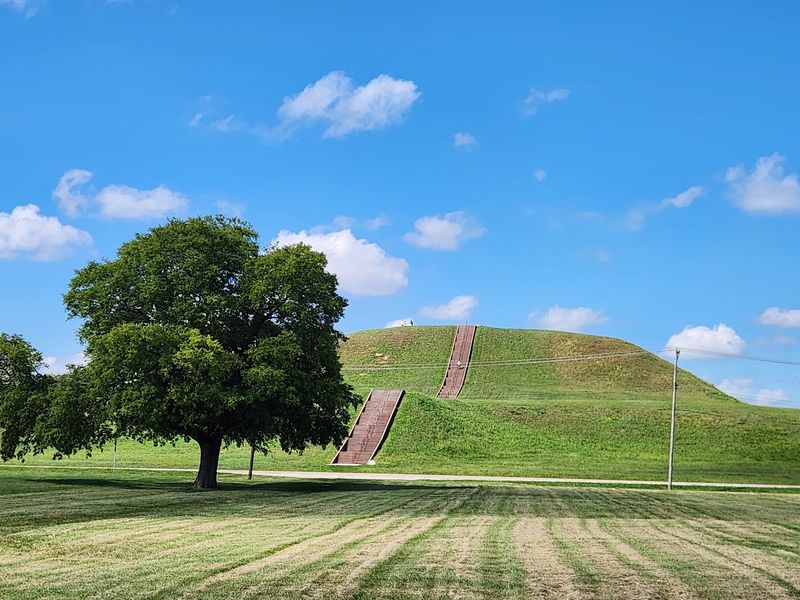
Quiet surprises a lot of first-timers. Even on weekends, the grounds rarely feel crowded, and there’s enough open land that finding your own peaceful corner is easy.
That calm makes the site a natural fit for many kinds of visitors. Homeschool families, grandparents with grandkids, history buffs, and anyone craving fresh air will feel welcome.
Teens who roll their eyes at museums often perk up at the AR app and the climb.
Packing lunch is a great idea. Picnic areas make it simple to turn a quick stop into a full afternoon, and eating beside mounds built centuries ago adds a special touch to an ordinary sandwich.
The atmosphere leans gentle and reflective. Well-kept paths, friendly staff, and clear signage help everyone feel comfortable exploring at their own pace.
Many guests describe the whole visit as serene and enriching rather than rushed.
Timing depends on your crew. A focused loop around Monks Mound takes about an hour, while seeing several sites can stretch to two hours or more.
Families who love walking can easily fill a day. Either way, kids leave with a story they can brag about at school.
Hours, Costs, And Practical Planning Tips
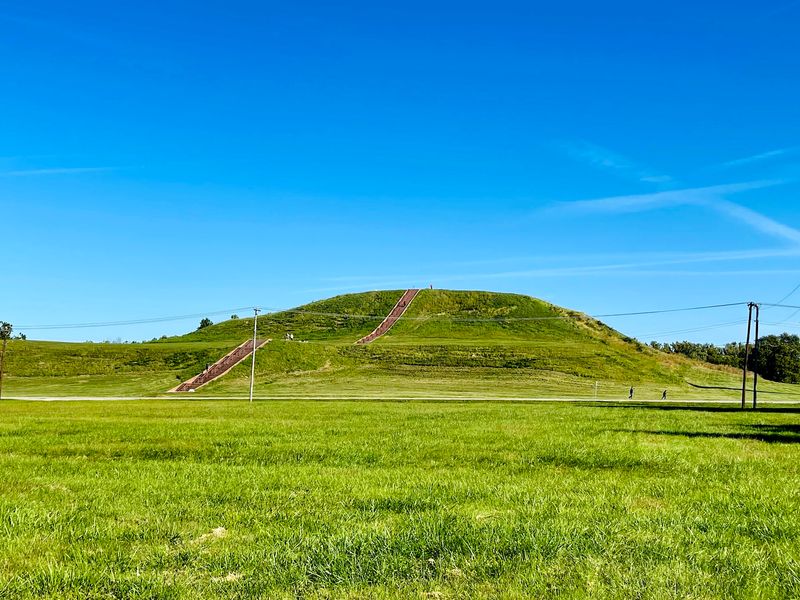
Good news for the family budget: exploring the grounds is free. A suggested family donation of $15 helps maintain the site, and parking costs nothing, with lots on both sides of the road.
The Interpretive Center keeps hours from 9 a.m. to 3 p.m., Wednesday through Sunday, and closes Mondays and Tuesdays. Plan around that window if seeing the exhibits matters to you.
Late arrivals can still park across the street and climb Monks Mound after the building closes.
Restrooms and a water fountain sit near the Monks Mound parking lot, which is handy before or after the climb. Brochures and maps are often available near the main lot as well.
Shade is scarce, so sunscreen and hats are essential in summer. Spring and fall bring cooler temperatures that make the steps more pleasant, though early April days can still turn chilly and breezy.
For accessibility, the parking area signs and the walkway to Monks Mound work for wheelchairs. The climb itself is best for active visitors, so anyone skipping the stairs can still enjoy the trails and signage below.
Archaeologist-led tours have been offered at times, so ask staff about current options.
Why This Illinois Treasure Earns A Spot On Your Calendar
Few outings deliver so much for so little. A free walk, a donation of your choosing, and roughly 150 steps reward your family with world-class history and a view that reaches all the way to the Gateway Arch.
Plenty of visitors leave saying the place deserves far more fame than it gets. Many Americans have never heard of Cahokia, which gives Illinois families some well-earned bragging rights.
You have a UNESCO World Heritage Site practically in your backyard.
Not everything is flashy here, and that’s part of the charm. There are no rides or loud attractions, just grass, sky, signs, and a sense that something enormous once happened on this ground.
The simplicity leaves space for kids to wonder and ask questions.
Our honest take? Plan a visit when the Interpretive Center is open for the fullest experience, but don’t wait forever if your schedule says otherwise.
The mound, trails, and views alone are worth the drive.
Pack a picnic, charge the phones, grab hats, and point the car toward Collinsville. Years from now, your children may still remember the day they stood on top of an ancient city.