
Did You Know Oregon Has A Nearly Forgotten Pioneer Town Hidden In The Mountains?
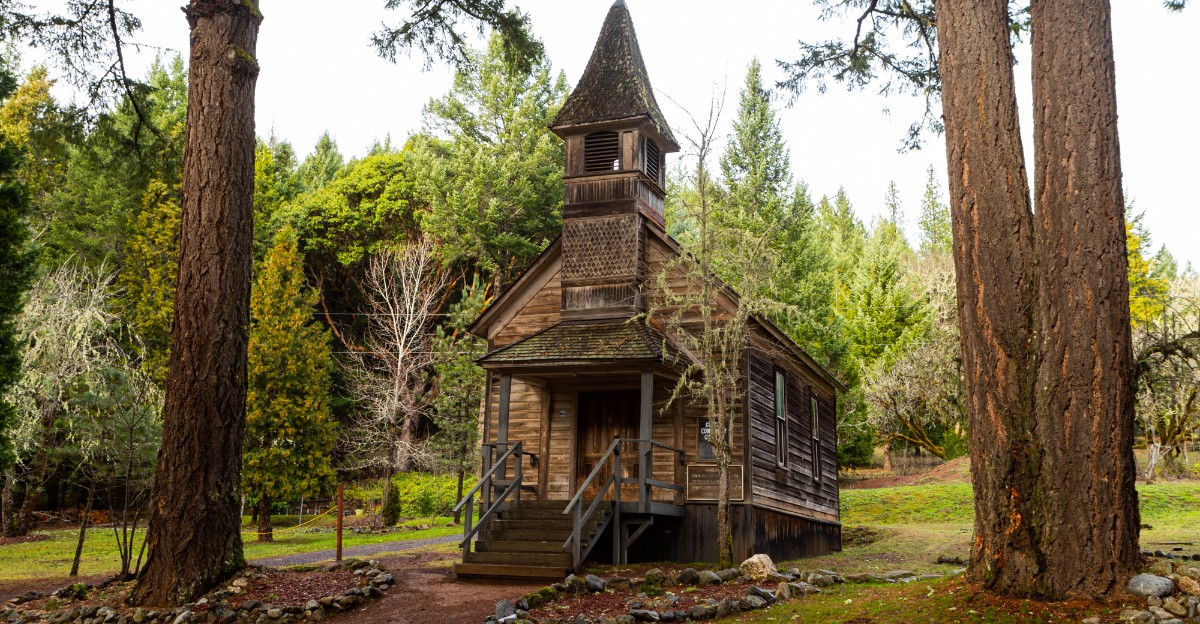
A gold rush town with two churches and none of the usual Wild West chaos? That’s not quite the frontier story you’d expect.
The family behind this tiny Oregon settlement put faith at the center of town life, even as miners chased their fortunes nearby. I can’t help wondering how many gold seekers arrived expecting a rowdy mining camp and found something closer to Sunday school.
Hollywood eventually found its way here, too. Honestly, I’d love to know how many visitors mistake movie props for the real thing.
Today, the creek still winds past the old buildings, the church door remains open, and admission is free. For a town that once chased gold, it ended up preserving something far less predictable.
A little piece of the West that refused to follow the script.
The Gold Rush Town That Said No Thanks To Saloons
Most mining towns ran on gold dust and rowdy nights. Golden State Heritage Site tells a very different story, and it’s a sweet one.
Gold seekers first showed up along Coyote Creek in the 1850s. By around 1890, that scrappy camp had grown into a real town called Golden.
At its peak, roughly 100 to 150 people lived here.
The Ruble family sat at the center of it all. They put faith and family first, so no saloons opened in town while they were around.
Picture a Western town where the swinging doors lead to a hymnbook instead of a poker table.
That choice makes Golden stand out from the usual boomtown legends. Instead of bar fights, the town built its life around church, school, and home.
Honestly, it sounds a little like the Little House on the Prairie version of a gold rush.
Today, Oregon State Parks manages the town as a State Heritage Site. It earned that title in 2011, and the whole district sits on the National Register of Historic Places.
Not bad for a place most road-trippers zoom right past.
Knowing this backstory makes every creaky board feel more personal. You’re walking through a town with a conscience.
You Can Walk Right Into The Little Church With The Open Door
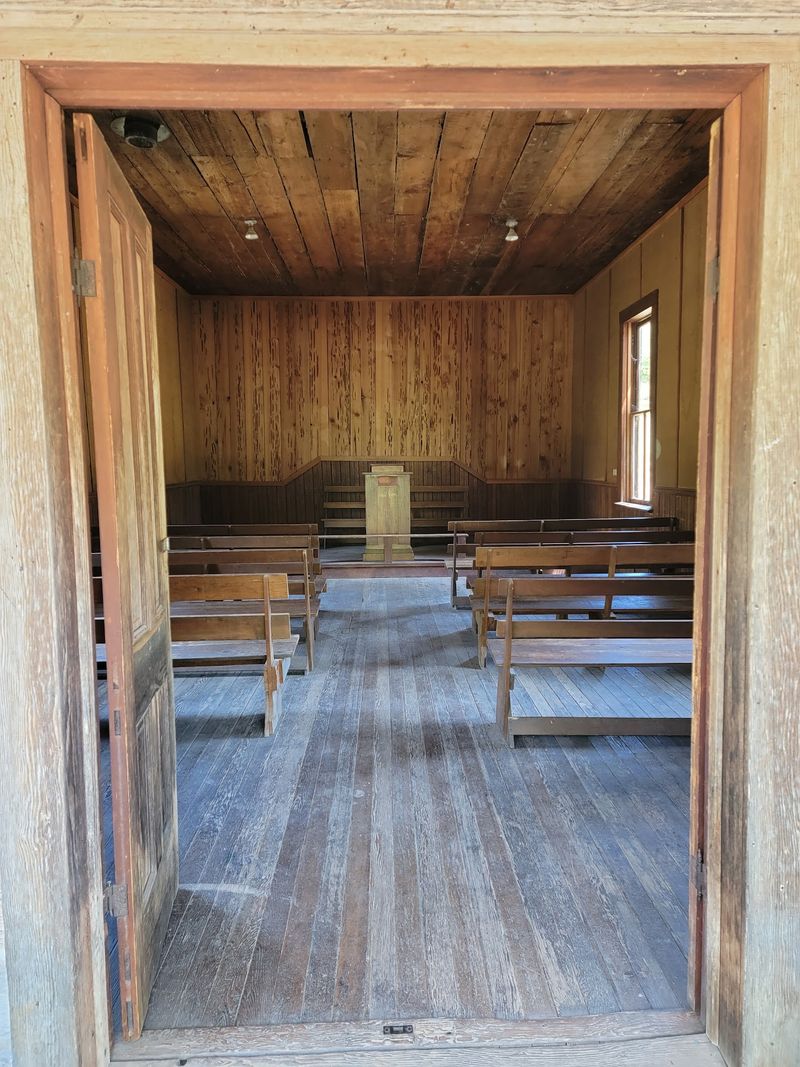
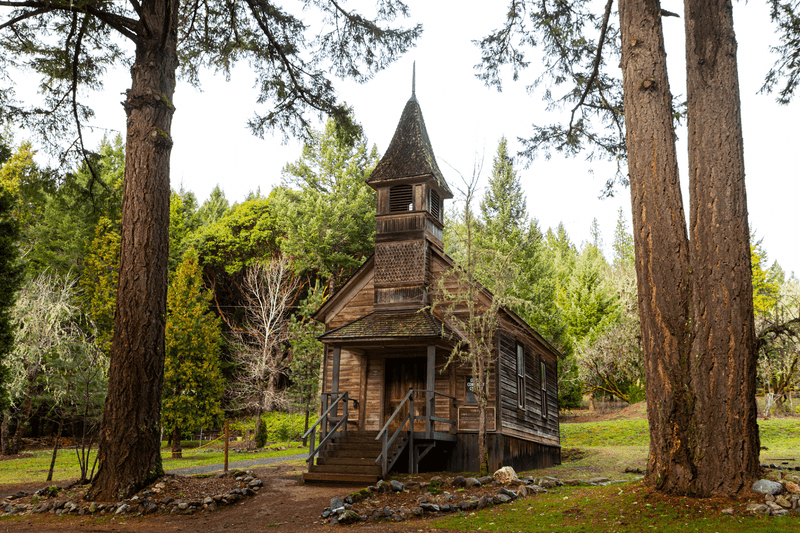
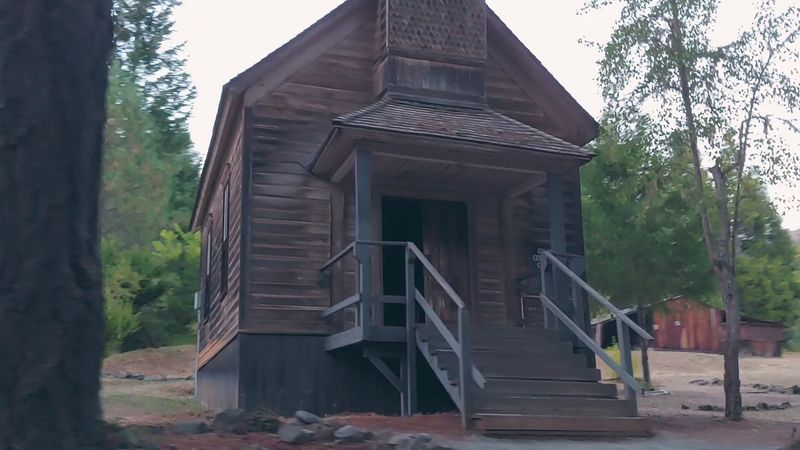
Here’s a rare treat for history fans. The door of Golden Community Church stays open, so you can step inside instead of pressing your nose to glass.
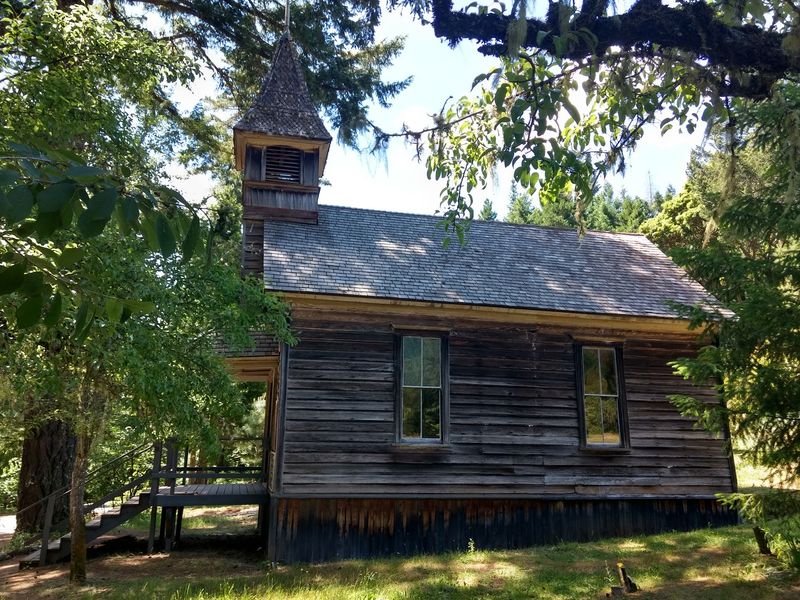
The original church went up in the 1890s. It was rebuilt in the 1950s, which helped keep this landmark standing for new generations.
That makes it a building with two chapters in one.
For a town without saloons, the church was the true gathering spot. Golden even had two churches at one point, which says a lot about local priorities.
Sundays here were clearly the main event.
Step through the doorway and take a quiet moment. The simple design reminds you how much these families cared about faith and community.
No stained-glass fireworks needed.
Photographers, take note. The church is one of the most recognizable buildings at Golden State Heritage Site, so it makes a great centerpiece for your shots.
Try framing it with the surrounding trees for a classic Old West look.
Be respectful while you explore. This place has survived well over a century, and it deserves gentle footsteps.
Treat it like you’d treat your grandma’s favorite living room.
Peek Into The Old General Store And The Ruble Family Home
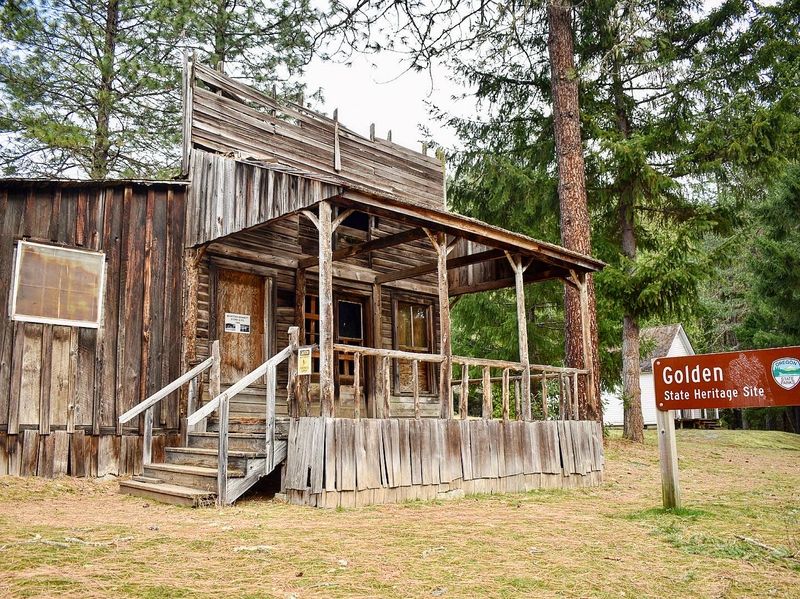
Groceries in 1904 didn’t come with self-checkout. The general store at Golden opened that year, and it still stands as one of the town’s original buildings.
Back then, a store like this was the beating heart of daily life. Miners and families relied on it for basic supplies.
It was basically the town’s Target, minus the parking lot snacks.
Nearby sits the Ruble family’s house, built in 1892. The Rubles shaped Golden’s whole personality, so their home carries extra meaning.
Their values are the reason this town feels so different from other mining camps.
A shed rounds out the original lineup. Historians think it may have served as a granary for storing grain.
Together with the church, these make up the four original structures still visible today.
Each building tells a small piece of a bigger story. One handled business, one sheltered a family, and one held supplies.
Put them together, and you can almost trace an ordinary day in Golden.
Take your time walking between them. Notice the old wood, the rooflines, and how close everything sits.
A whole town’s routine once fit inside this little circle.
School Was In Session Down The Road Long Before The Town Grew Up
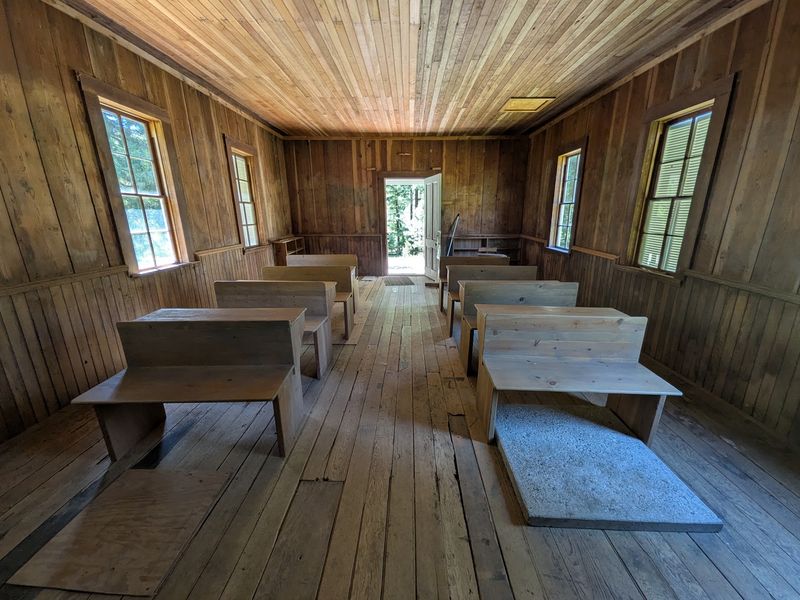
Kids in Golden didn’t get a snow day just because they lived in a mining camp. Golden’s historic schoolhouse was completed in 1897 and returned to the townsite in 2013 after spending decades elsewhere.
That timeline is pretty impressive. Families were planning for their children’s futures while the gold rush was still bubbling along.
Education clearly mattered here as much as panning did.
Today, a schoolhouse is part of the experience at Golden State Heritage Site. It adds a sweet, homey layer to a place often linked with rough-and-tumble mining.
Every pioneer town needed its spelling champs.
If you’re bringing kids, this is your secret weapon. Ask them how they’d feel about a one-room classroom with every grade together.
Watch their faces when they realize there was no Wi-Fi.
Teachers and homeschool families can turn this stop into a real lesson. Talk about how children helped their families and still found time to learn.
It’s history they can actually stand inside of.
The schoolhouse also shows how Golden worked as a full community. Church, store, home, and school all had a place.
That balance is what made this town so unusual.
That Spooky Cemetery Is Actually A Hollywood Prop
Plot twist time. The little cemetery at Golden looks like a solemn pioneer burial ground, but it was created in 1972 as a stage prop.
It was made for an episode of Gunsmoke. No actual Golden residents rest there, so you can relax a little while you look around.
Consider it the most convincing set piece in southern Oregon.
The cemetery has since appeared as a backdrop in other Western productions. Apparently, once you build a great prop, Hollywood keeps calling.
It’s had quite the acting career.
Classic TV fans will get a real kick out of this. Pull up an old Western episode before your trip, then compare the scenery.
It’s like a scavenger hunt with cowboy hats.
This quirky detail adds fun to an already rich history. Golden State Heritage Site is both a real pioneer town and a former movie star.
Few ghost towns can say that.
Coyote Creek Still Winds Past The Spot Where It All Began
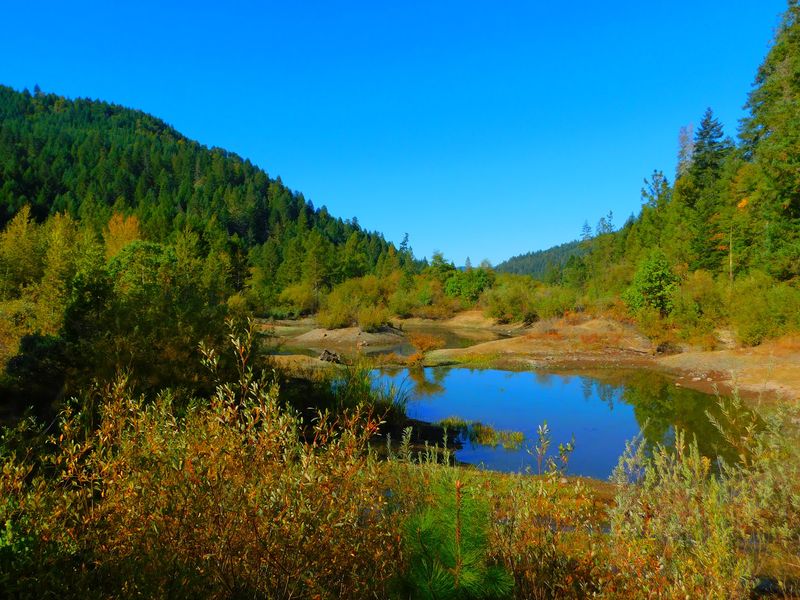
Every gold story needs a starting point. For Golden, that starting point is Coyote Creek, which still winds right past the old town.
Gold seekers arrived along this creek in the 1850s. They worked its waters hoping for a lucky strike.
Mining activity even continued into the mid-20th century.
That long history left its mark on the land. In the 1990s, local residents formed the Golden Coyote Wetlands to help protect the town and its neighboring creek.
It’s a great example of neighbors stepping up for their own backyard.
The creek gives the site a peaceful, natural setting. Instead of a busy downtown, you get trees, water, and open space.
It’s the kind of view that makes you slow down without trying.
Walk toward the water and think about those early miners. They probably spent long, cold days hunched over pans and sluices.
Your biggest challenge is finding the best angle for a photo.
Wear sturdy shoes if you plan to wander. Stay alert for poison oak too, since this is wild country.
A little caution keeps your Oregon adventure itchy-free.
Mail Call Lasted Just A Couple Of Decades
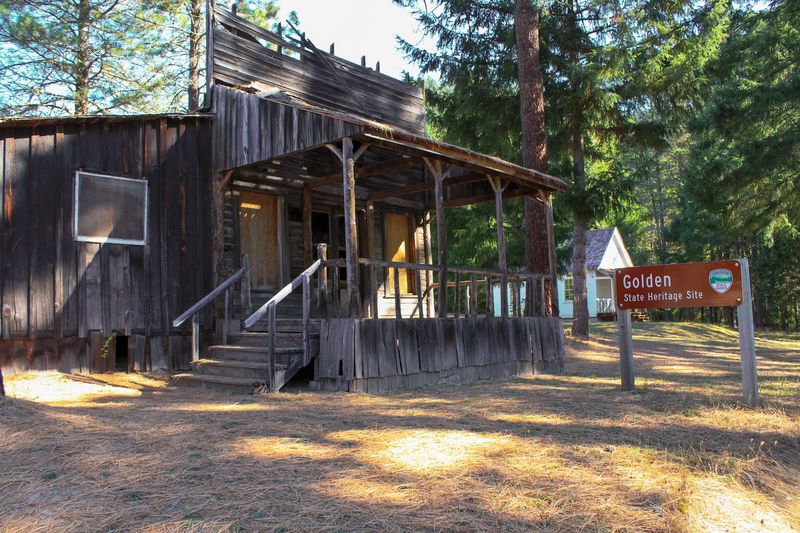
Letters once carried news, love notes, and gold rush gossip into Golden. The town’s post office opened in 1896, giving residents an official link to the outside world.
That was a big deal for a small mountain town. A post office meant Golden counted as a real place on the map.
Families could finally hear from relatives without waiting on a passing traveler.
Sadly, the good times didn’t stamp on forever. The post office closed in 1920.
That closure marked a major step in the town’s slow decline.
As the local economy faded, people moved on to new opportunities. Mining hung around for a while, but the town gradually emptied out.
Bit by bit, Golden became the quiet ghost town you can visit today.
I find this part of the story strangely moving. Towns don’t usually vanish overnight.
They fade one closed door at a time.
Keep this timeline in mind as you explore Golden State Heritage Site. The buildings you see stood through the boom, the busy years, and the long goodbye.
They’re survivors, and they’ve earned a little admiration.
Getting There Is Easier Than Panning For Gold
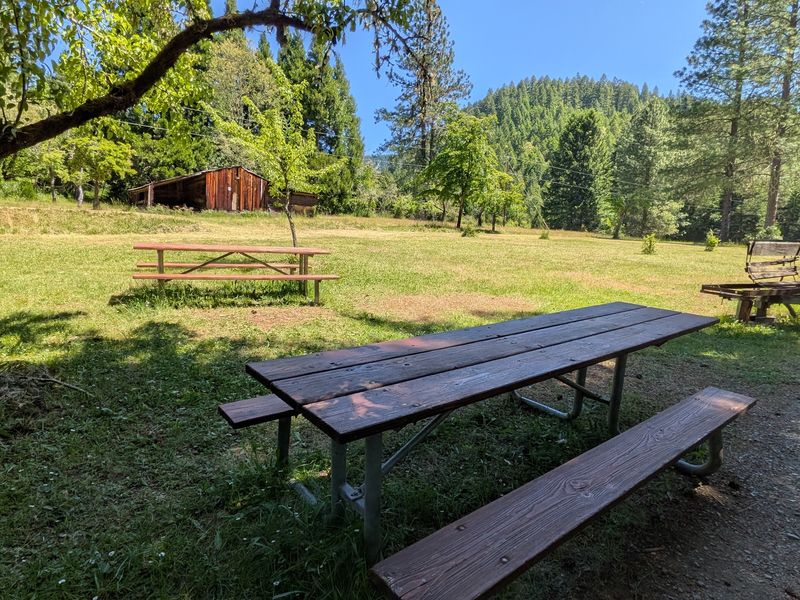
Good news for road-trippers. You won’t need a mule, a map from 1890, or a lucky horseshoe to reach this place.
Golden State Heritage Site sits at 3482 Coyote Creek Rd., Wolf Creek, Oregon. It’s in Josephine County, just a few minutes east of Interstate 5.
That makes it an easy detour on a north-south drive.
The little community of Wolf Creek sits nearby. It’s the closest spot for supplies, so plan any snack or fuel stops there.
The site itself is pretty bare-bones.
And yes, admission is free. The site is open every day of the year.
Your wallet can stay comfortably in your pocket.
Keep your expectations simple when it comes to services. There’s no gift shop, ticket booth, or tour guide waiting at the entrance.
It’s just you, the buildings, and plenty of fresh mountain air.
Pack water, snacks, and anything you’ll need for a relaxed visit. Bring a bag for your trash too, so the site stays clean.
Leave the place as lovely as you found it.
A Few Smart Moves Make Your Visit Even Better
Slow travelers win big here. Golden rewards people who take time to read, look closely, and soak in the setting.
Start by planning your pace. The town is small, so a short stop works fine.
History buffs, though, can easily linger much longer.
Read every sign you can find. Golden’s story is full of surprises, from the saloon-free streets to the Hollywood prop cemetery.
The details make the buildings come alive.
Leash up your pup if you bring one along. Treat the old structures gently and stick to respectful exploring.
These buildings are fragile, and Oregon State Parks works to protect them.
Pair your visit with a bigger day in southern Oregon. The nearby Wolf Creek area makes a handy base for exploring.
You can easily fold Golden into a longer road trip.
Most of all, come curious. Golden State Heritage Site isn’t flashy, and that’s part of its charm.
It’s a peaceful, real slice of pioneer life sitting quietly in the mountains.
So next time you’re cruising I-5, take that exit. A friendly little ghost town is waiting, and it still leaves the church door open.