
Don’t Just Stop At The Visitor Center, Because This Arizona Cliff Dwelling Lets You Walk Right Into Its Rooms
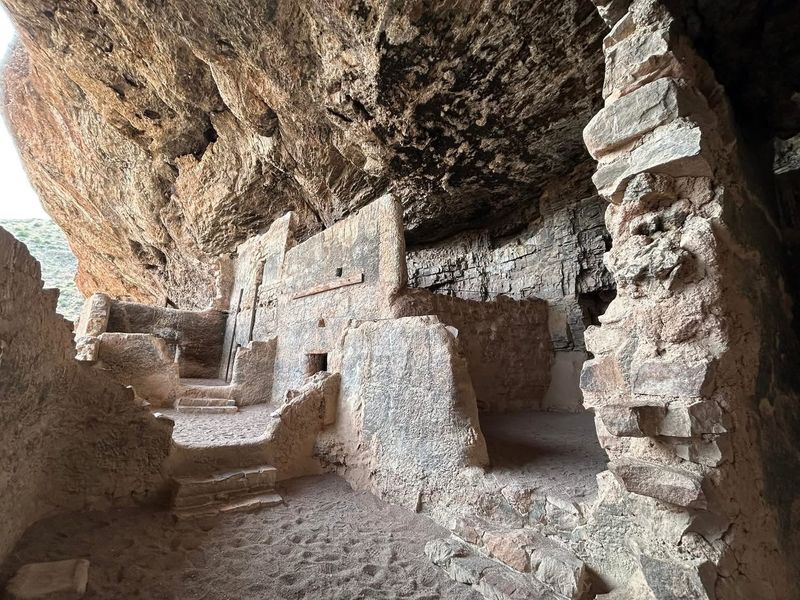
A centuries-old cliff home sits inside a natural cave in Arizona, and you’re allowed to step right into its rooms. That alone should stop you mid-scroll.
The walk up is only half a mile. It’s paved the whole way, though it climbs about 350 feet and will happily remind your calves they exist.
Saguaros line the path like tall, patient ushers. Behind you, a big blue lake spreads across the desert basin, looking better with every step uphill.
I can’t imagine driving all that way and stopping at the museum alone. Yet that’s the mistake that tempts people, often because of one sneaky rule about start times.
The good news is that it’s easy to dodge once you know about it. So what does it take to do this right, and why is that steep little climb so worth it?
A Desert Monument Where The Cave Steals The Show
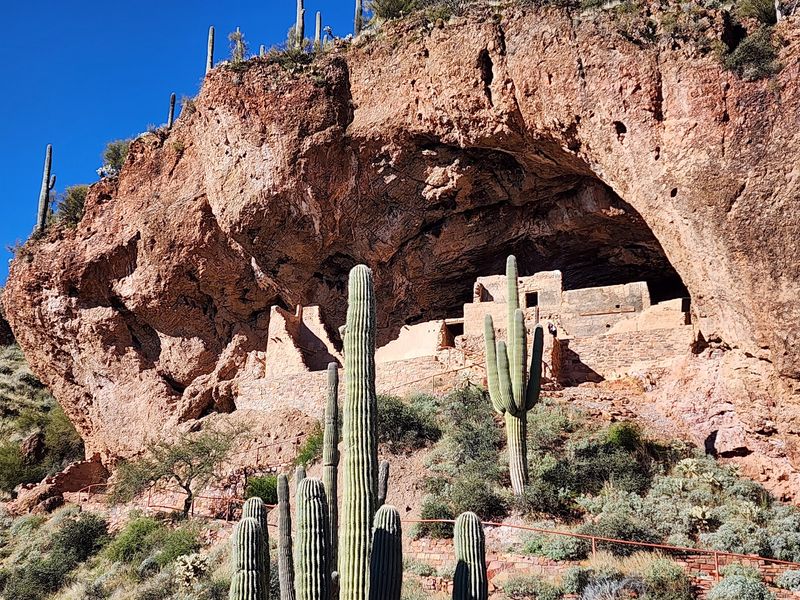
Some national park sites ask you to admire history from a railing. Tonto National Monument, in the Tonto Basin of Gila County, invites you to climb up and stand inside it.
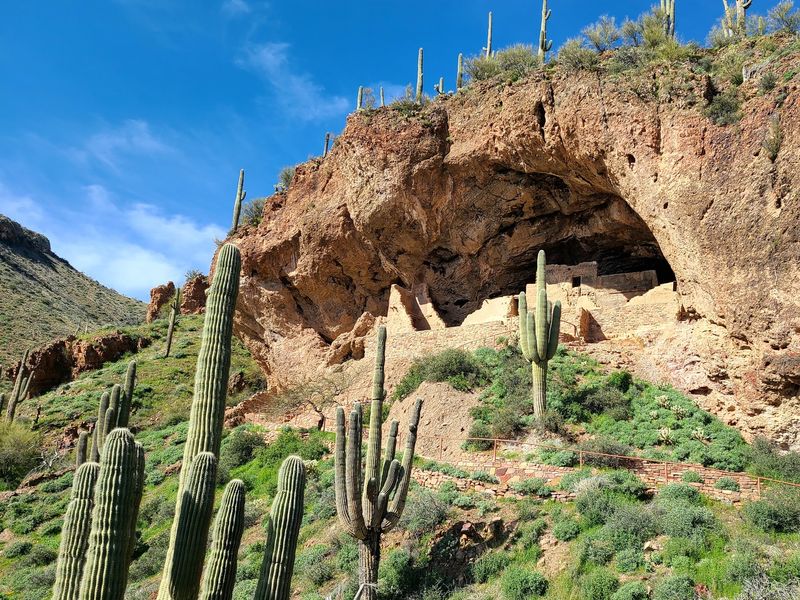
The monument protects cliff dwellings built by the Salado people between roughly 1250 and 1450 CE. Two main dwellings sit in shallow caves high above the desert floor, watching over the basin like old sentries.
Globe is the nearest city, and Phoenix is a couple of hours to the west. That puts this Arizona treasure squarely in day-trip territory for much of the state.
The star for most people is the Lower Cliff Dwelling. You reach it on a short, paved trail that starts right behind the Visitor Center, so there’s no long trek to the trailhead.
The Upper Cliff Dwelling is bigger, but it’s only open through guided tours during cooler months. That makes the lower trail the everyday way to experience the site up close.
Skip it, and you’ve basically seen the lobby of a remarkable building. Hike it, and you get the whole story in one memorable hour, plus a view that keeps getting better as you climb toward the cave.
Farmers, Potters, And Weavers Who Made The Basin Home
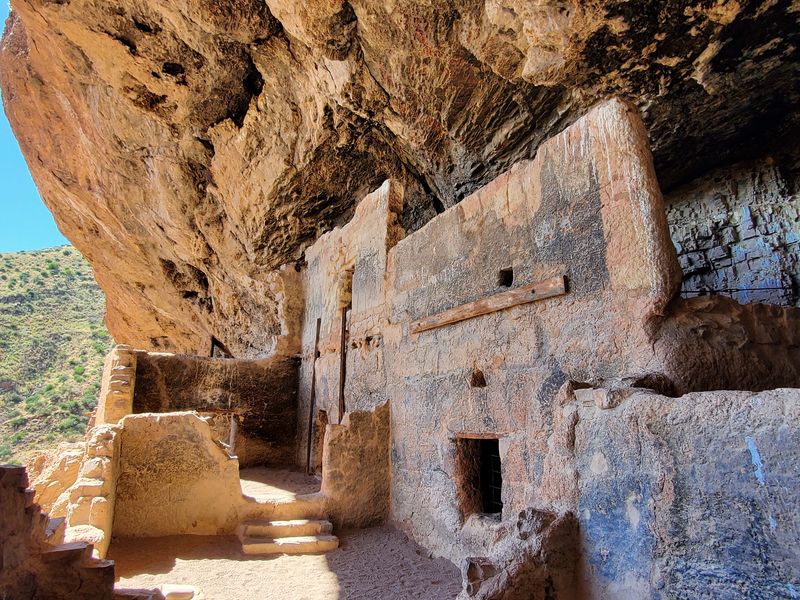
Long before anyone thought about weekend road trips, the Salado people turned this desert basin into a working home. They farmed the land and used irrigation systems to bring water to their crops.
The Salt River ran through the valley and gave them a dependable water source. Today that same river forms Theodore Roosevelt Lake, the shimmering view you’ll spot from the trail.
Farming wasn’t their only skill. They also hunted local wildlife and gathered desert plants to round out their meals.
Their craftsmanship is what really turns heads. The Salado are known for Salado Polychrome pottery, a distinctive style, and for intricately woven textiles.
Here’s the part that keeps historians curious. Sometime between 1400 and 1450 CE, the Salado left the Tonto Basin, and the exact reasons remain a mystery.
Knowing this backstory changes the hike completely. The climb stops being a workout with a nice view and becomes a walk toward someone’s actual front door.
You’ll be following a path toward rooms where families cooked, worked, and lived for generations. Few trails in Arizona can make that kind of personal connection feel so immediate.
A President Who Saw These Rooms Were Worth Saving
President Theodore Roosevelt established Tonto National Monument in 1907. His goal was simple and smart, which was to protect these ruins.
That early date matters more than it might seem. Protection came early in the history of the national monument idea, which helps explain why so much original structure still stands today.
Roosevelt’s name pops up all over this corner of Arizona. The nearby lake and dam both carry it, which makes the area feel like one big, connected story.
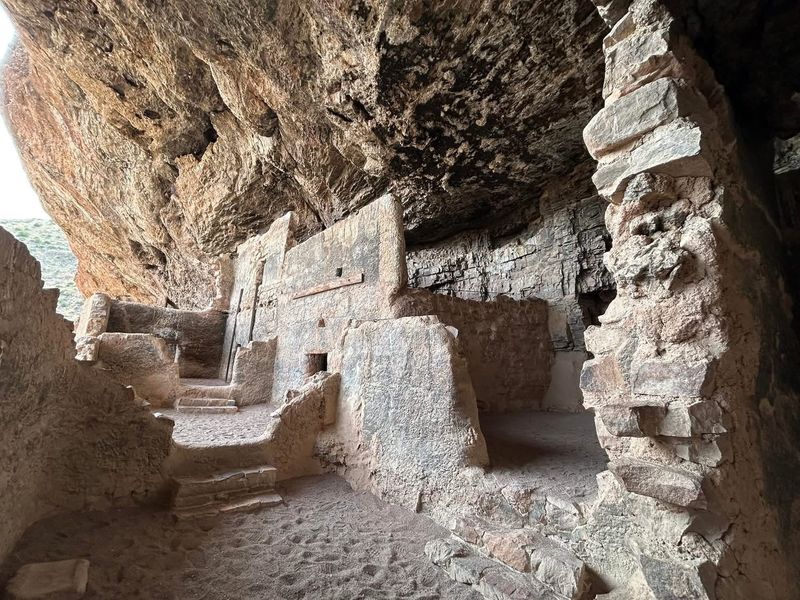
The Lower Cliff Dwelling held sixteen ground-floor rooms. Three of those rooms had a second story, and a twelve-room annex sat right next door.
For a structure tucked into rock this long, that’s an impressive amount of craftsmanship to still see. The walls give you a real sense of how people organized space inside the cave.
I like how the scale feels personal rather than overwhelming. It’s small enough to take in completely, yet detailed enough to keep you studying corners and doorways.
So when you stand in that alcove, you’re seeing something deliberately preserved for over a century. That’s a pretty good reason to make the climb.
Half A Mile Of Pavement That Works Like A Stair Climber
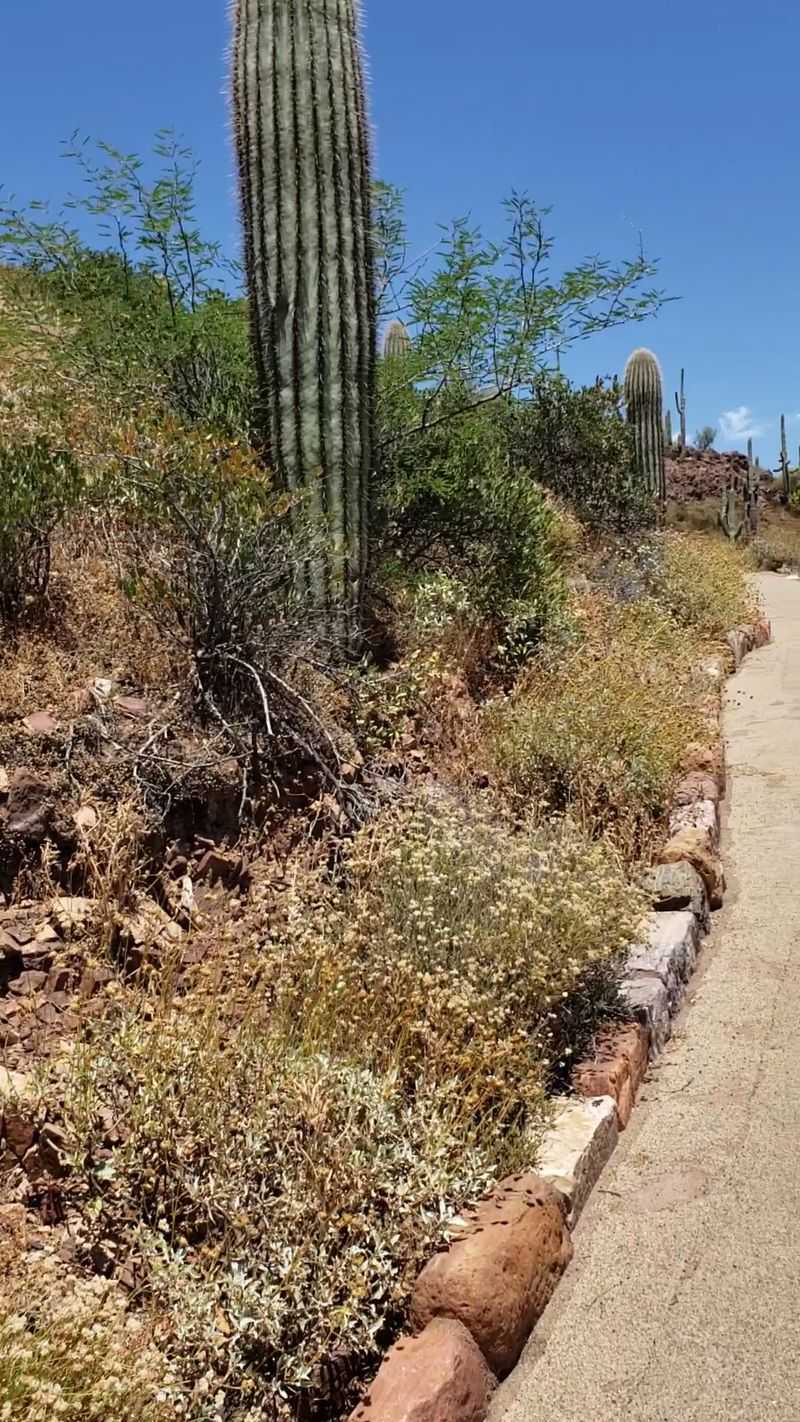
On paper, the numbers look almost too easy. The Lower Cliff Dwelling trail is just one mile round trip, with a half-mile walk up to the ruins.
Then you notice the elevation gain of about 350 feet. That’s the kind of detail that turns a casual stroll into a genuine leg day.
The good news is that the path is paved from bottom to top. No scrambling over loose rocks or guessing where the trail went.
Benches and resting spots appear along the way, which feels like a thoughtful gift on a steep grade. Use them freely, because the views make every pause feel intentional anyway.
Plan on about an hour for the full round trip. That includes time to catch your breath and wander through the dwelling at the top.
There’s very little shade, so a hat and plenty of water are your best friends. The park itself reminds hikers to bring water, and Arizona sunshine backs that advice up.
The trail is steep and isn’t considered accessible for people with mobility limitations. For anyone else in reasonable shape, it’s a short, satisfying climb with a huge payoff waiting at the end.
Saguaros On One Side, A Glittering Lake On The Other
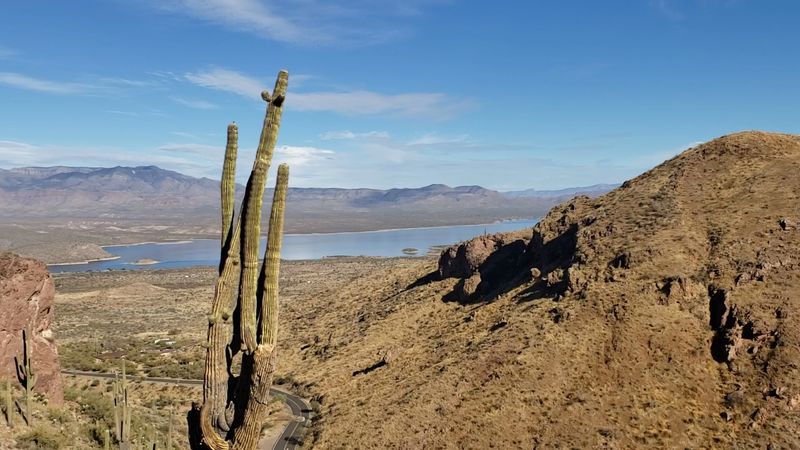
Honestly, the scenery could carry this trail without any ruins at all. The hike climbs through the Upper Sonoran Desert, and the plant life puts on a full show.
Tall saguaros stand guard along the slopes. Look closer and you’ll find yucca, sotol, cholla, and stout barrel cactus filling in the gaps.
The wider monument also hosts prickly pear, hedgehog cactus, agave, ocotillo, palo verde, and mesquite. It’s like a living field guide to Arizona desert plants, minus the homework.
Spring can add wildflowers to the mix, which makes a cooler-month visit even more tempting. Bring a camera with a fully charged battery, because you’ll stop more than you planned.
Then there’s the water. Theodore Roosevelt Lake stretches out below, a striking splash of blue against the rugged desert hills.
Wildlife lives here too, including mule deer, javelina, coyotes, and over 100 bird species. Rattlesnakes and Gila monsters call this place home as well, so staying on the trail is a smart move and a park requirement.
Somewhere around the halfway point, the climb stops feeling like effort. It starts feeling like the best seat in the basin.
Yes, You Really Get To Step Inside
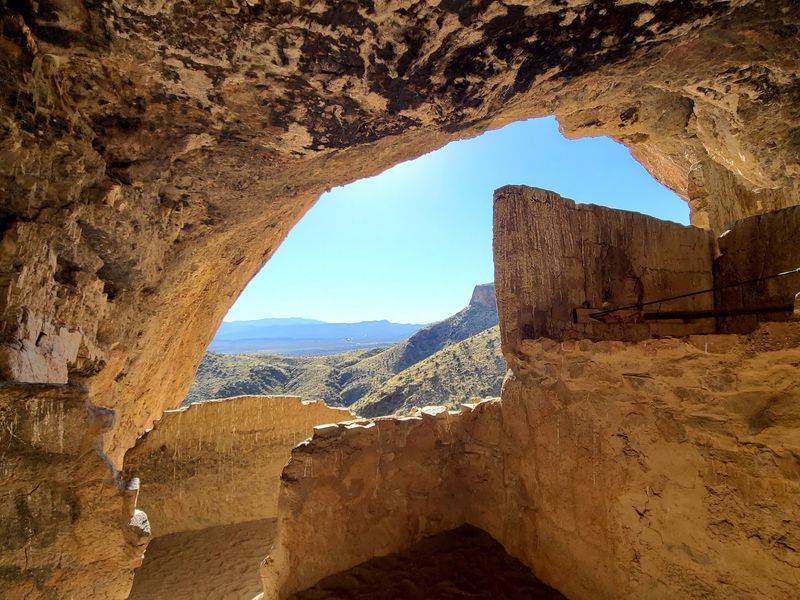
Many cliff dwellings across the Southwest are admired from a distance. At Tonto National Monument, the Lower Cliff Dwelling lets you walk right into the ancient structure.
That rare access is the whole reason skipping this trail stings. You trade a distant photo for standing inside rooms built centuries ago.
Numbered stakes line the trail and continue inside the ruins. Each one points out a detail about the Salado people or the surrounding environment.
Think of them as a self-guided tour that never rushes you. You can linger at one number for five minutes and breeze past another.
A ranger or volunteer is often stationed at the dwelling to answer questions. Having someone there to explain what you’re looking at can turn a cool site into a memorable one.
From inside the cave, the view swings back toward the basin and lake. It’s easy to picture how this spot worked as a home with a commanding outlook.
Pets can join you on the trail, but they can’t enter the dwelling itself. Plan accordingly if a four-legged hiking buddy is coming along, so everyone gets to enjoy the trip.
The Trail Has A Curfew, And It Sneaks Up On People
Plenty of folks show up with hours of daylight left and still miss the dwelling. The reason is a start-time rule that’s easy to overlook.
From May 4 through October 3, hikers must begin the Lower Cliff Dwelling trail before noon. That rule helps keep people off a steep, shadeless slope during the hottest part of an Arizona summer day.
From October 4 through May 3, the cutoff moves later. During those months, you need to start the hike before 3 PM.
Notice the trail closes to new hikers well before the rest of the park winds down. Arriving after lunch in summer could mean seeing the museum and nothing more.
The trail may also close temporarily for extreme heat, lightning, flooding, or significant bee activity. Mother Nature gets a vote here, and she doesn’t send reminders.
Holiday schedules shift too. On Christmas Eve and New Year’s Eve, the trail closes at noon and the park closes early.
The easy fix is arriving early, especially in warmer months. A morning start can give you cooler air, softer light, and zero worry about watching the clock on the way up.
Visitor Center Exhibits That Set The Scene
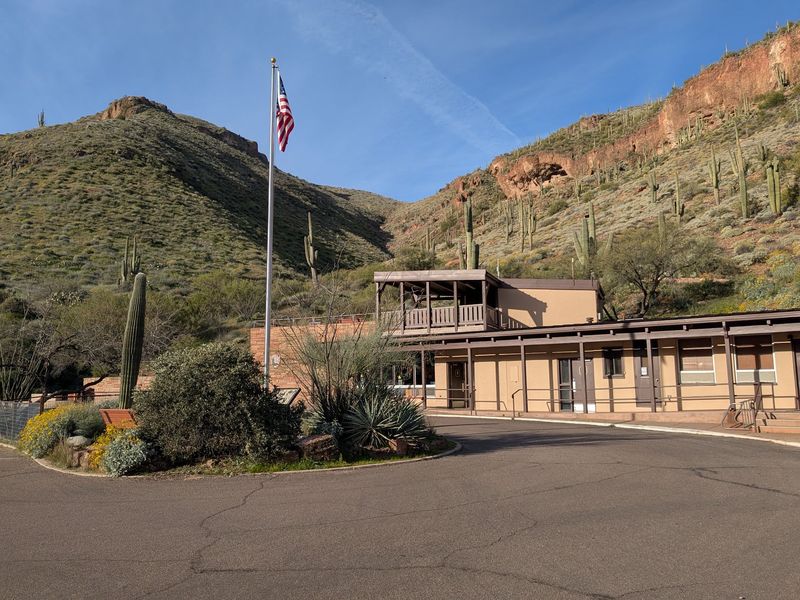
Before you lace up, the Visitor Center deserves a few minutes. It offers a solid introduction to the Salado people and how they lived.
Inside, you’ll find displays of artifacts alongside replicas of pottery and textiles. Seeing those pieces first makes the rooms on the hill feel far more alive.
An 18-minute park film is also available. Watching it before the climb gives you context, so the numbered stakes on the trail click into place faster.
The Visitor Center and museum are open year-round. Restrooms and water fountains are here too, which makes it the perfect spot to fill bottles before heading uphill.
A gift shop sells souvenirs, and it shares space with the area where you pay entry. It’s a handy one-stop setup when you’re eager to get moving.
The trail actually begins at this building, with a short set of stairs leading out the back. So the museum isn’t a detour, it’s the doorway to the hike.
Treat it as the opening chapter rather than the whole book. The best part of the story is still waiting about a half mile uphill.
The Upper Dwelling Is A Bonus Round, Not A Backup Plan
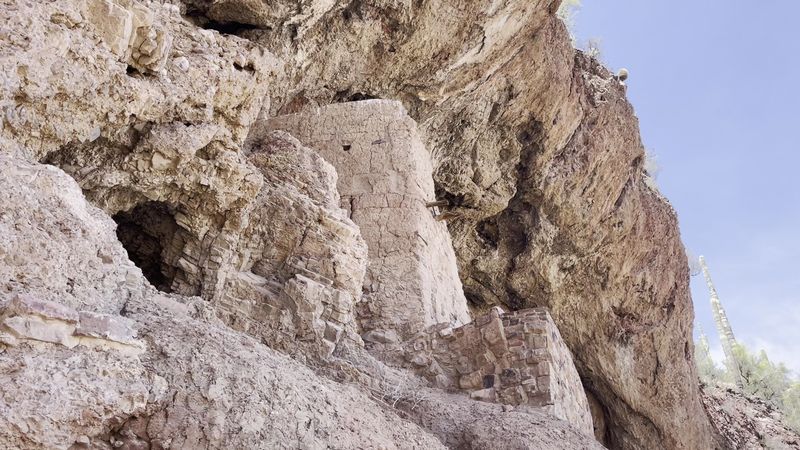
Got more stamina and a flexible calendar? The Upper Cliff Dwelling is the monument’s larger, more demanding sibling.
This dwelling holds thirty-two ground-floor rooms, with eight of them rising to a second story. It’s a much bigger structure than the lower site.
Access works differently, though. You can only visit on a ranger-guided tour, and reservations are required in advance.
Tours typically run from November through April on Saturdays and Sundays. Spots are limited, so planning ahead pays off.
The hike is three miles round trip and usually takes three to four hours. It climbs about 600 feet, with switchbacks and 60 steps along the way.
That’s a lot of commitment for a single visit. Many trips simply don’t line up with those weekend winter dates.
Which brings us right back to the lower trail. It’s available daily, takes about an hour, and still lets you step inside a real cliff dwelling.
If the upper tour fits your plans, wonderful. Just don’t let a missed reservation convince you to skip the lower climb, because it delivers plenty on its own.
Fees, Hours, And Finding Your Way To Roosevelt
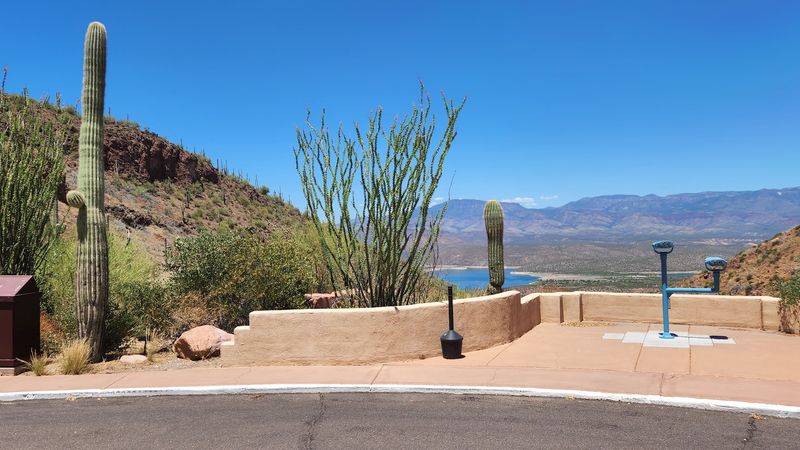
Getting here is part of the fun. You’ll find Tonto National Monument at 26260 N AZ Hwy 188, Roosevelt, AZ 85545, along a scenic stretch of Arizona highway.
The monument sits a couple of hours east of Phoenix, with Globe as the nearest city. Watch for lake views as you drive, because the road itself has plenty of eye candy.
Some travelers consider parts of the Apache Trail, Highway 88, which includes unpaved sections. Check road conditions first and choose a vehicle that suits rougher routes.
Entrance carries a modest per-person fee, and kids under 16 get in free. All federal passes are accepted, including the Annual, Senior, and Access passes.
The park is generally open daily starting at 8 AM. Closing times can vary, so confirm current hours with the park before you head out.
The monument closes on Thanksgiving, Christmas Day, and New Year’s Day. Christmas Eve and New Year’s Eve bring early closures, too.
Pack water, sun protection, and sturdy shoes. Arriving early can help you beat the heat and the trail cutoff, leaving time to relax rather than rush.
Why This Short Climb Belongs On Your Arizona List
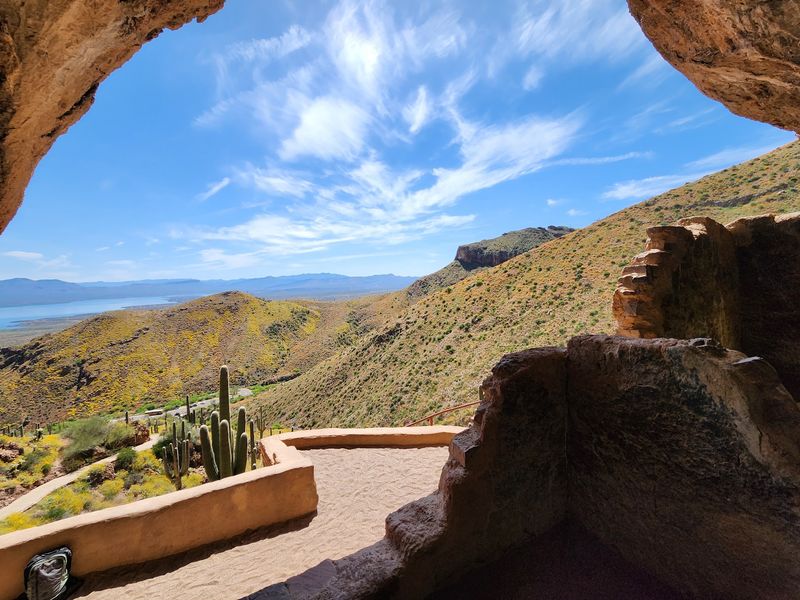
One mile. One hour.
One cave full of centuries-old rooms you can actually walk through.
That’s the math behind the Lower Ruin Trail, and it adds up beautifully. Few spots in Arizona pack this much history and scenery into such a manageable outing.
Families with kids who can handle a steep walk will find plenty to explore. History fans get a hands-on look at Salado life, while photographers get saguaros and lake views on repeat.
I believe the trail works best as the heart of a bigger day. Roosevelt Dam and the Tonto National Forest Visitor Center are nearby, and Roosevelt Lake offers boating and water sports.
History lovers can keep the theme going at Besh-Ba-Gowah Archaeological Park or the Bullion Plaza Museum. Farther afield, Tonto Natural Bridge State Park and the Rim Country Museum make tempting add-ons.
Still, everything circles back to that climb behind the Visitor Center. Seeing the museum without the dwelling is like reading a book’s back cover and calling it finished.
So go early, bring water, and take the stairs out the back. Tonto National Monument saves its best moment for the people willing to walk uphill.