
These 10 Michigan Trails Add Wildlife Watching To An Autumn Hike
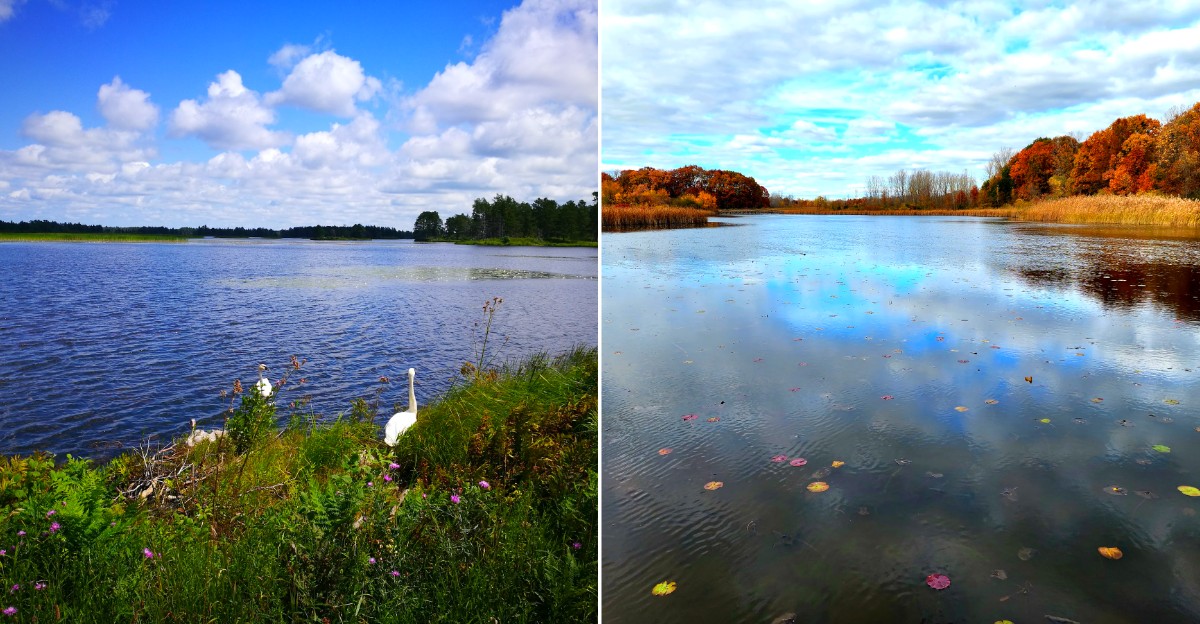
Bull elk bugle across meadows in northern Michigan each September and early October. Yes, elk. In the Lower Peninsula, not on some Rocky Mountain postcard.
That surprised me more than it should have. Then I learned one Upper Peninsula river runs the color of root beer, thanks to tannins from nearby swamps. Another spot near Detroit is a marsh that an airport built on purpose.
Autumn stacks the deck for anyone who likes to look around while walking. Migrating birds pass through some refuges by the hundreds of thousands. Leaves drop, branches open up, and deer suddenly seem less invisible. Cool air keeps you moving, too.
Fall wildlife hikes in Michigan offer opportunities to spot elk, migrating birds, and other animals along trails that wind through forests, marshes, and open meadows.
So why just hike when you could hike and play wildlife detective at the same time? I love that idea, and the trails below make it easy. Binoculars suddenly feel like the most important thing in your backpack.
10. Tahquamenon Falls State Park
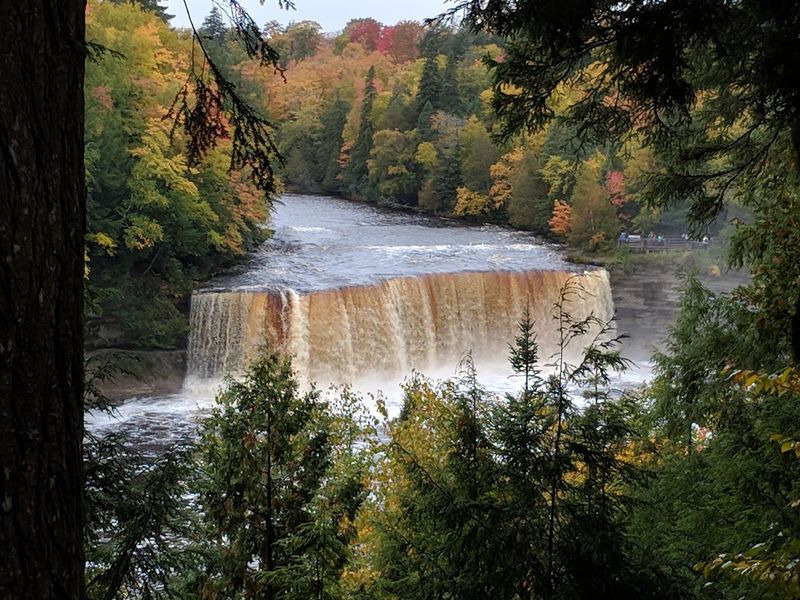
Plenty of rivers look like water, but this one looks like iced tea on a mission. The amber color comes from tannins that leach out of the surrounding swamps.
The park covers nearly 50,000 acres and stretches more than 13 miles across the Upper Peninsula. That’s a lot of room for animals to roam, and plenty of room for you to look for them.
The Upper Falls is the headliner, spanning more than 200 feet wide. It ranks among the largest waterfalls east of the Mississippi River.
Your best wildlife bet comes from the trails. The park has more than 35 miles of them, including 16 miles of the North Country Trail between the Upper and Lower Falls.
Dense forest lines that route, and the list of possible neighbors is impressive. Moose, black bears, foxes, otters, and eagles live in these woods.
Fall brings bonus guests. The park sits along a migration corridor, and more than 300 bird species have been documented passing through in spring and fall.
That makes a pair of binoculars just as useful as hiking boots here. Scan the treetops near the river, then check the shallows for a sleek otter on patrol.
Moving quietly helps on the longer stretch between the falls. Dawn and dusk usually bring more animal activity, so plan around those hours.
The park stays open year-round, so you don’t need to rush before a closing date. Still, autumn color paired with that root beer river is hard to top.
Address: 41382 W. M-123, Paradise, MI 49768
9. Seney National Wildlife Refuge
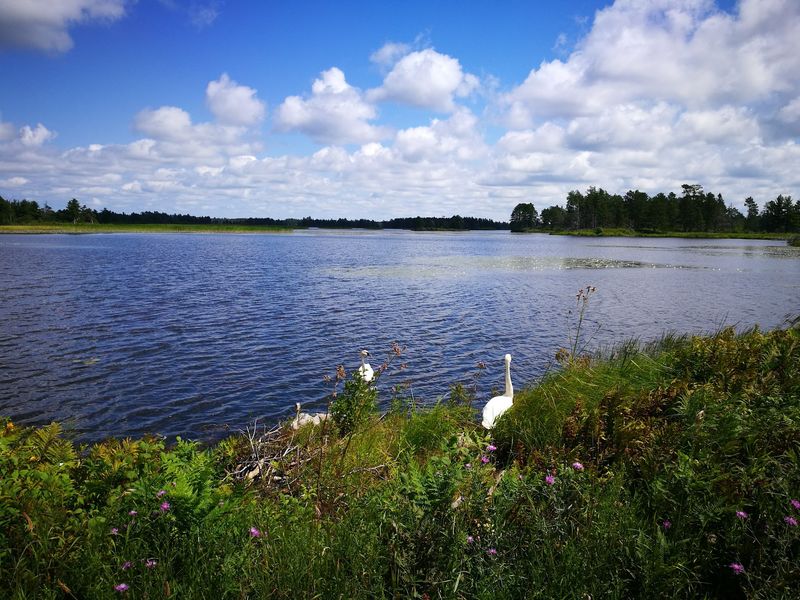
Few birds make an entrance like a trumpeter swan, with bright white feathers and a serious wingspan. At this refuge, the swan population stands as a notable conservation success story.
Seney was established in 1935 and spans nearly 96,000 acres. Marsh, swamp, bog, grassland, and forest fit inside its borders.
The refuge exists mainly to protect migratory birds and other wildlife. That mission shows up in the bird list, which includes common loons, sandhill cranes, bald eagles, and red-winged blackbirds.
Mammals keep things interesting on the ground. You could spot white-tailed deer, black bears, moose, river otters, beaver, fox, muskrat, or mink.
Timing matters in autumn, so mark your calendar. The Visitor Center and Marshland Wildlife Drive close for the season by October 15.
Good news, though, because the hiking trails stay open year-round from daylight to dusk. That means late fall still works for anyone willing to walk.
The Manistique River Run Trail and Goose Pen Bend Trail are two options to explore. Both put you right into the kind of habitat this Upper Peninsula refuge protects.
Look low as well as high. Snapping turtles, painted turtles, and frogs live here too, and they’re easy to miss if your eyes stay glued to the sky.
A slow pace pays off in a place this big. Stop often, listen for wingbeats, and give the marsh a few quiet minutes to show you what’s hiding.
Address: 1986 River Road, Germfask, MI 49836
8. Shiawassee National Wildlife Refuge
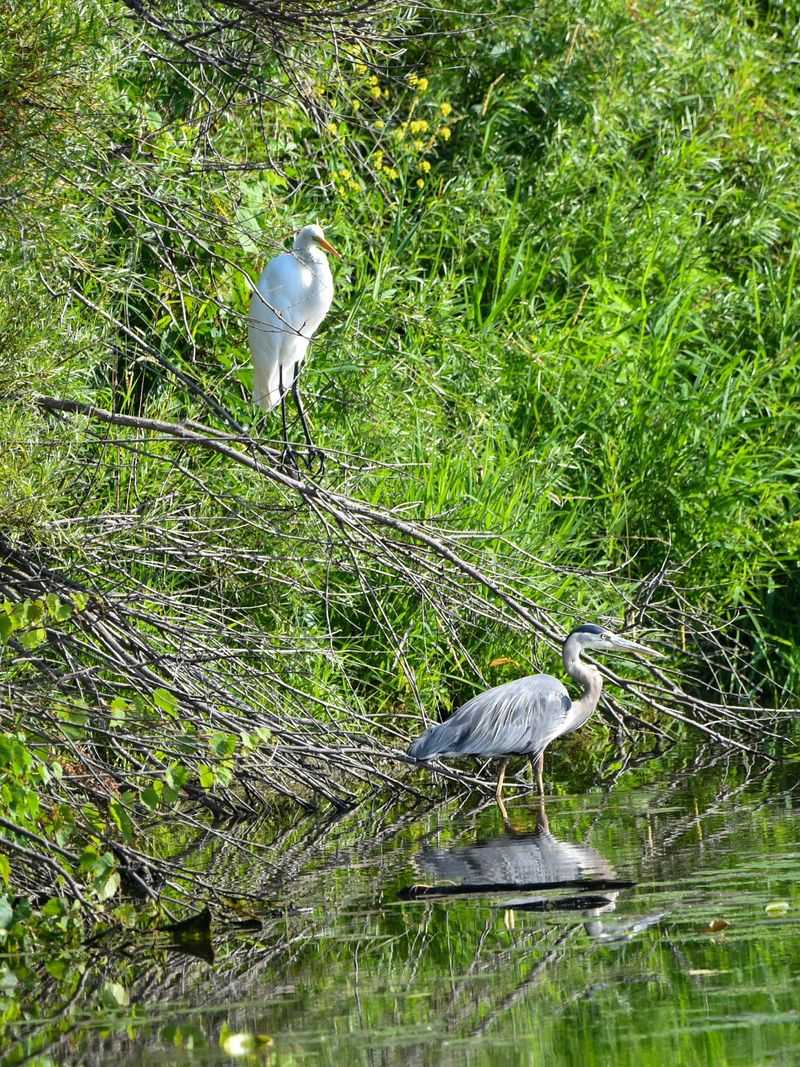
Known as the Shiawassee Flats, this refuge turns into a feathered rush hour each fall. Hundreds of thousands of birds from nearly 300 species pass through during spring and autumn migration.
Canada geese and other waterfowl gather in big numbers once the weather cools. The refuge is even designated a United States Important Bird Area because of its global importance to migrating waterfowl.
More than 9,400 acres give those birds room to land. Bottomland hardwood forest, marshes, pools, grasslands, and croplands make up the mix.
The refuge was established in 1953 as an inviolate sanctuary for migratory birds. In plain English, it was set aside as a safe stop for travelers with wings.
Year-round residents deserve attention too. Bald eagles, sandhill cranes, herons, egrets, foxes, coyotes, and white-tailed deer live here.
Hikers get more than 12 miles of public trails, generally open from sunrise to sunset. The 7-mile wildlife drive closes by September 30, so autumn visits are a boots-on-the-ground affair.
Deer hunt days can close some areas, so check the schedule before you go. The Green Point Trails and Germania Trails sit in no-hunting zones and stay open year-round.
Observation towers and platforms add a fun boost. Spotting scopes there can bring bald eagles and deer into close view without bothering them.
Bring a snack and some patience for this Michigan classic near Saginaw. Geese tend to announce themselves loudly, so you’ll probably hear the show before you see it.
Address: 6975 Mower Road, Saginaw, MI 48601
7. Maybury State Park
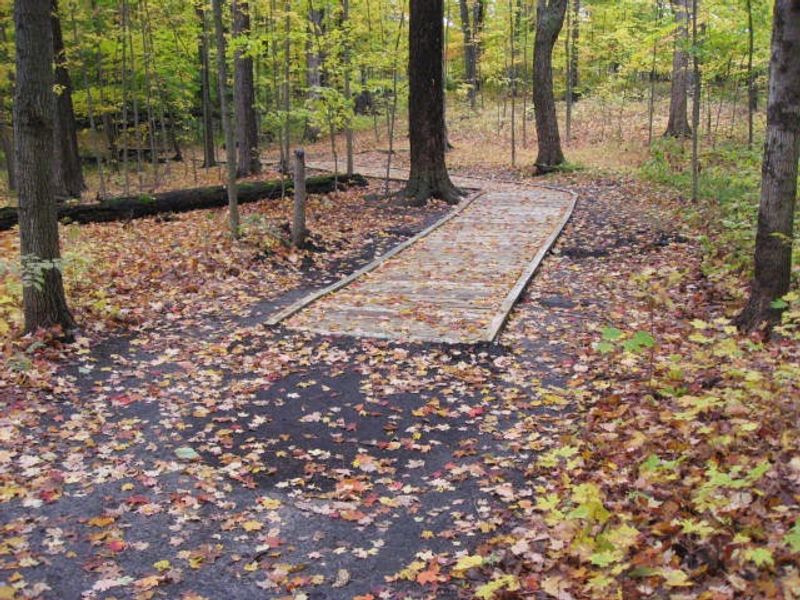
About 25 miles northwest of downtown Detroit, the city noise fades and the meadows take over. Maybury State Park offers roughly 1,000 acres of rolling hills, open fields, and winding trails.
The state acquired the land in 1971. Today the park stays open year-round, from 8 a.m. to 10 p.m. daily.
Late fall is a showoff season here. Trees turn red, orange, and yellow, and the meadows frame the color like a giant picture window.
Deer are the stars of the wildlife show. They often move through the open landscape, which makes them easier to spot than in thick forest.
Birds fill in the supporting cast. Keep an ear tuned for rustling and chatter along the edges where meadow meets trees.
The trails are popular with both hikers and horseback riders. Give horses plenty of space, and you’ll keep the peace on the path.
Mountain bikers should know one thing before packing up. The mountain bike trail is being renovated through fall 2026, though other trails remain open.
For walkers, that detail barely matters. You still get crunchy leaves, crisp air, and a real chance to watch deer step quietly across a field.
Maybury works well for a short outing when the Upper Peninsula feels too far. It brings a slice of the Michigan outdoors close to suburban neighborhoods.
Try a late afternoon walk when the light turns golden. Then stand still near a meadow edge and see who wanders out to join you.
Address: 49601 Eight Mile Road, Northville, MI 48167
6. Crosswinds Marsh Wetland Interpretive Preserve
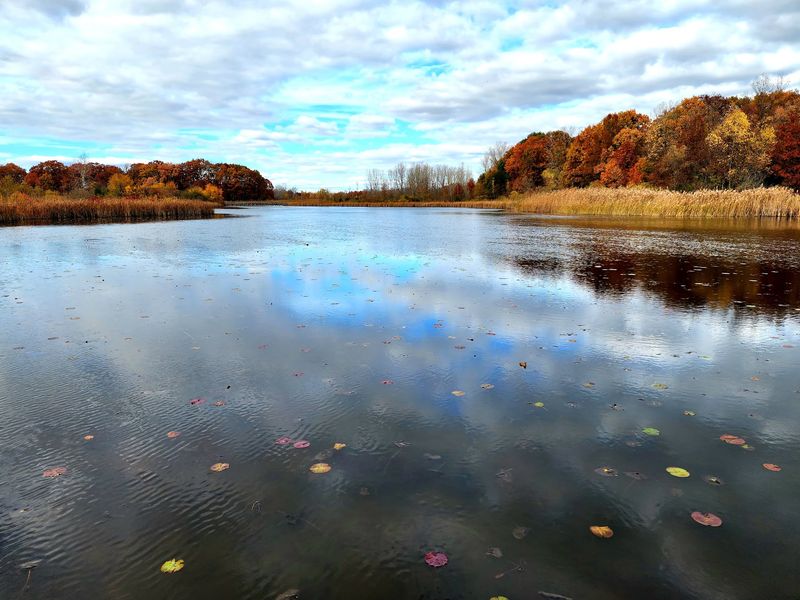
An airport building a marsh sounds like a plot twist, but it really happened. Detroit Metropolitan Airport constructed Crosswinds Marsh in 1997 to make up for wetlands affected by airport expansion.
The result is a 1,050-acre wetland preserve. It’s open every day of the year from dawn to dusk.
Habitat variety is the secret here. Open marsh, wet meadows, forested wetlands, and upland forest share the space.
Nine miles of hiking trails and boardwalks wind through it. Those boardwalks let you get close to wet areas without soaking your sneakers.
Bird lovers, this one’s for you. More than 200 species visit, including herons, sandhill cranes, swans, geese, bald eagles, and osprey.
Around 30 kinds of mammals live here too. Beaver are among them, so watch for chewed stumps and lodges near the water.
Reptiles, amphibians, and insects round out the crowd. Spotting a turtle on a log would make a fun bonus on a mild autumn afternoon.
Fall is a smart time to visit because migrating birds pass through Michigan wetlands. Slow down on the boardwalks and scan the open water for swans and geese.
The history makes this place fun to share with friends. A wetland built on purpose now hosts eagles, osprey, and beaver like it was always there.
Pack binoculars and a light jacket, since marsh breezes can feel chilly in fall. A camera with a zoom lens helps too, because herons rarely pose up close.
Address: 27600 Haggerty Road, New Boston, MI 48164
5. Pictured Rocks National Lakeshore
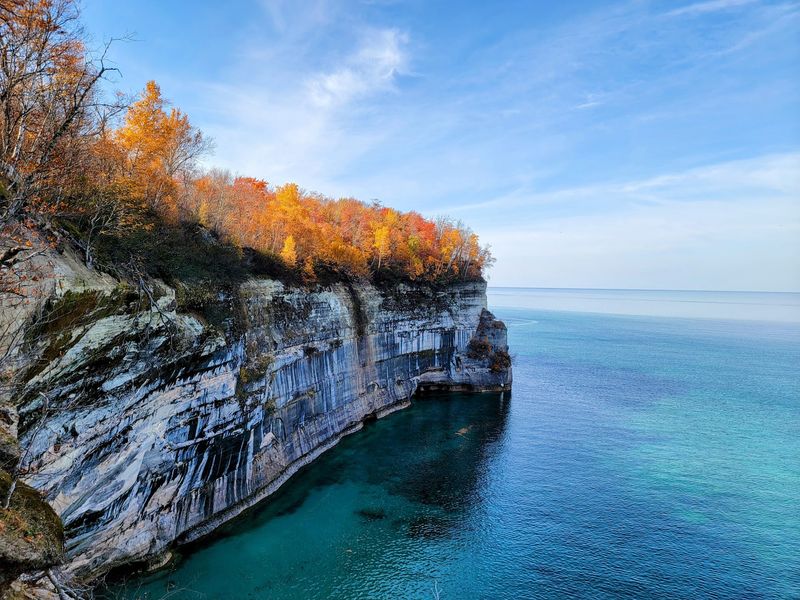
Cliffs streaked with mineral stains look like someone spilled paint along Lake Superior and nobody cleaned it up. Pictured Rocks holds the title of the nation’s first National Lakeshore.
The park stays open year-round for hiking. Its landscape mixes wetlands, sand dunes, rocky shores, and northern forest, which means plenty of habitats to explore.
Wildlife matches that variety. White-tailed deer, black bears, gray wolves, and the occasional moose live here.
Look up for raptors and songbirds. Bald eagles, osprey, hawks, and falcons share the sky with migratory and nesting songbirds.
Fall colors usually peak by mid-October. That timing turns the forest into a frame for the deep blue lake.
The Chapel Loop is a popular pick. It offers views of Lake Superior, Chapel Falls, Chapel Rock, and Grand Portal Point in one outing.
That’s a lot of scenery packed into a single hike, so pace yourself. Pausing at the overlooks gives you time to watch for eagles riding the breeze above the water.
Don’t skip Miners Castle, one of the park’s famous landmarks. Erosion shaped the rock formation over time, and it shows what patient water can do.
Wolves and bears tend to avoid people, so a sighting is a lucky bonus, not a promise. Keep your distance if you do see one, and enjoy the moment from afar.
Few Michigan trails mix cliffs, waterfalls, and wildlife this smoothly. Bring layers, because Lake Superior weather likes to change its mind.
Address: N8391 Sand Point Road, Munising, MI 49862
4. Seven Lakes State Park
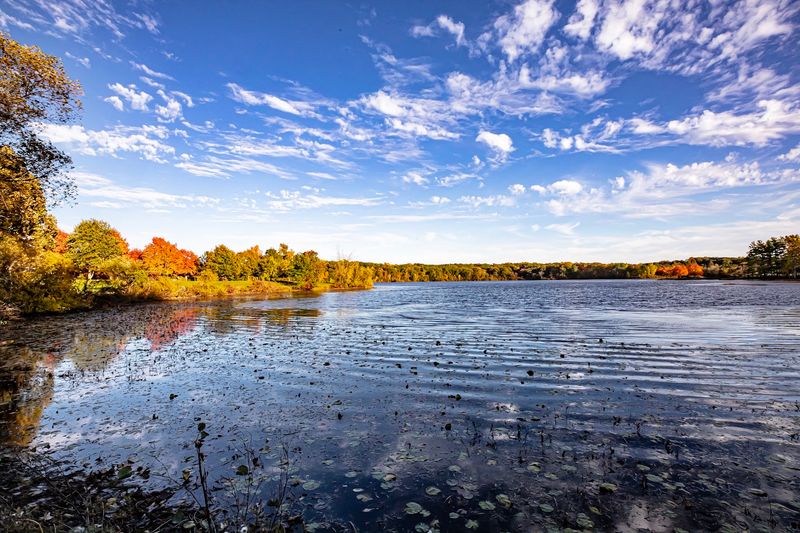
Seven small lakes walked into a dam, and one big lake walked out. That’s the short version of how Seven Lakes State Park got its name.
The state acquired the land in 1969. A dam then joined seven smaller lakes, historically known as DeCoup Lake, into one larger body of water.
Today the park holds about 230 acres of water with several miles of shoreline. Former farmland, rolling hills, and forests surround it.
That mix of open land and woods is great news for wildlife watchers. Wildlife viewing is listed as one of the park’s main activities.
A scenic loop trail circles several of the lakes. Wooded sections alternate with shoreline views, so you get both forest and water in one walk.
Paths are well marked, and the terrain stays fairly gentle. That makes this a solid choice for younger hikers or anyone easing into trail life.
Autumn is a popular time to visit. Colorful leaves and cooler temperatures make the miles pass quickly.
Shorelines tend to draw animals, so slow down where trail meets water. Scan the edges for birds and keep an eye on the tree line for movement.
The park stays open year-round, which gives you flexibility with fall weather. If one weekend rains, another can still deliver crunchy leaves.
Holly is an easy drive from much of southeast Michigan. That makes this park a handy pick when you want a nature fix without a long road trip.
Address: 14390 Fish Lake Road, Holly, MI 48442
3. Pigeon River Country State Forest
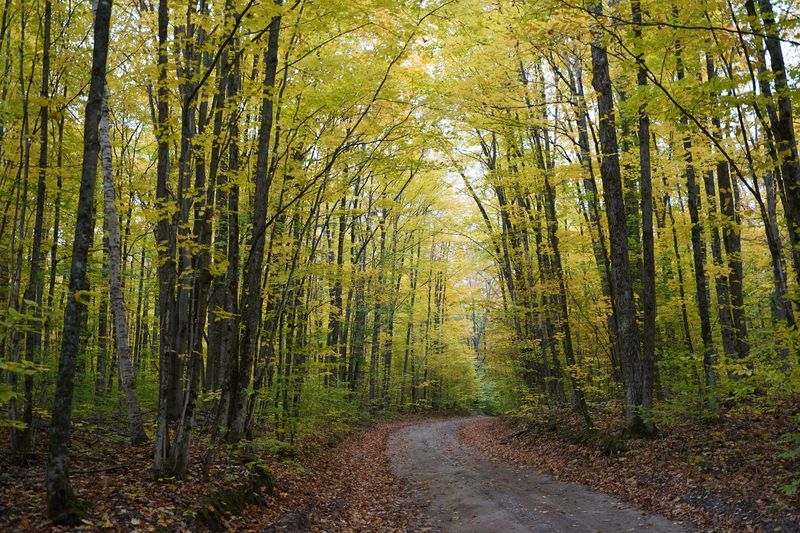
Hearing a bull elk bugle might be the best alarm clock in the state. In Pigeon River Country State Forest, that wild call echoes through meadows during the fall mating season.
People call this place The Big Wild, and the nickname fits. It covers more than 114,000 acres of state land in the north-central Lower Peninsula.
The forest is best known for its elk herd. It’s Michigan’s largest free-roaming herd east of the Mississippi.
Timing is the trick. September and early October bring the mating season, when bulls bugle loudly and gather in forest openings.
Dawn and dusk are the hours to aim for. Plan to arrive early or stay late, and bring a thermos of something hot.
Some meadows are managed with plantings to attract elk. Rye, clover, alfalfa, and buckwheat help turn those openings into elk buffets.
Winding trails and grassy meadows give hikers plenty of ground to cover. Move slowly near openings so you don’t send a herd running.
Give the animals lots of room, especially during mating season. A big bull with antlers is not a creature to crowd for a selfie.
The Pigeon River Country Discovery Center sits within the forest. It offers educational workshops and exhibits on the area’s history and wildlife.
Stopping there first can help you understand what you’re hearing out in the woods. The forest stays open year-round, but autumn is when it sings loudest.
Address: 9966 Twin Lakes Road, Vanderbilt, MI 49795
2. P.J. Hoffmaster State Park
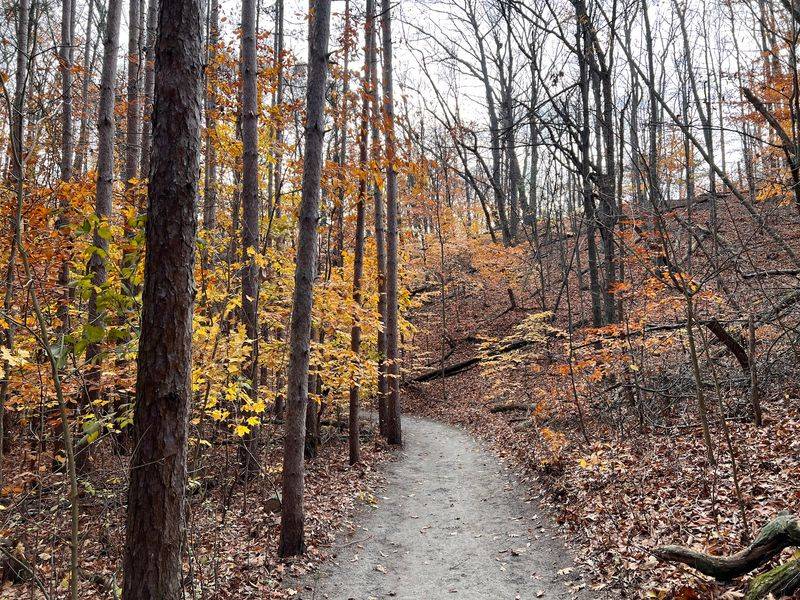
Sand dunes and fall color sound like they belong in two different vacations. At P.J. Hoffmaster State Park, they show up on the same hike.
The park includes more than three miles of Lake Michigan shoreline. Towering dunes and 10 miles of scenic trails fill in the rest.
Wildlife watching is one of the activities the park offers. Wooded trails and open beach create different spots to look for creatures big and small.
The Homestead Trail is a fall favorite. This 2-mile loop climbs moderately steep ground on its way to Lake Michigan.
In autumn, the trees along the route turn color and make the climb feel worth it. Take breathers on the steep parts and use them to scan the woods.
Next, head for the Dune Climb Stairway. It leads to an observation deck with panoramic views of the dunes and Lake Michigan.
Those stairs will test your legs, no doubt about it. The view from the top gives you a bird’s-eye look at the landscape, so watch for real birds overhead too.
The Gillette Visitor Center rounds out the trip nicely. Its exhibits and educational programs focus on the sand dunes.
Learning how dunes work makes the hike more interesting. Suddenly, those hills of sand look like a living system instead of a giant sandbox.
The park stays open year-round, so a late fall visit is possible. Pack layers, because lakeshore wind can feel much cooler than inland air.
Address: 6585 Lake Harbor Road, Norton Shores, MI 49441
1. Ludington State Park
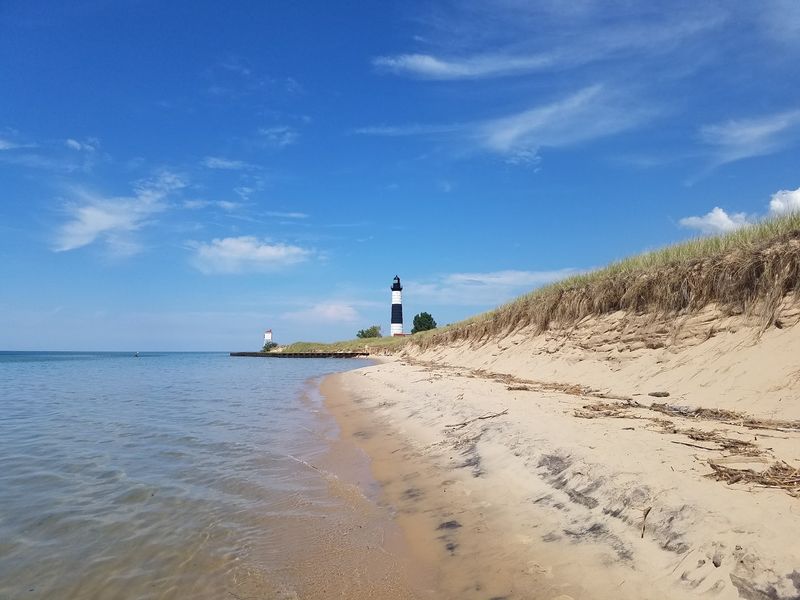
Two lakes, one park, and a lighthouse at the end of the path. Ludington State Park sits between Hamlin Lake and Lake Michigan, with miles of shoreline on both.
The park opened in 1936 and covers about 5,300 acres. Sand dunes, ponds, marshlands, and forests share the space.
That mix makes birding a natural fit here. Ponds and marshes tend to attract different birds than forest does, so switching habitats keeps things fresh.
Fall is a recommended time for the Lighthouse Trail. Beautiful foliage and fewer crowds make the walk extra pleasant.
The trail runs about 3 miles to Big Sable Point Lighthouse. Along the way, foliage and dune grass glow with autumn color.
Budget extra time so you can stop and look around. A slower walk gives you more chances to notice birds along the dunes and water.
With two big lakes nearby, the views keep changing as you go. One minute you see dune grass, and the next you see open water stretching far away.
The lighthouse makes a great turnaround point and photo stop. Its tower against the lake is a classic Michigan scene.
The park stays open year-round. Quieter fall days mean more peace for you and fewer disturbances for wildlife.
Consider bringing a field guide or bird app. Naming what you see turns a pretty walk into a fun game, and the drive home might feel too short.
Address: 8800 West M-116, Ludington, MI 49431