
For About $5 A Carload, Families Picnic Beside Waterfalls At Arizona’s Fossil Creek
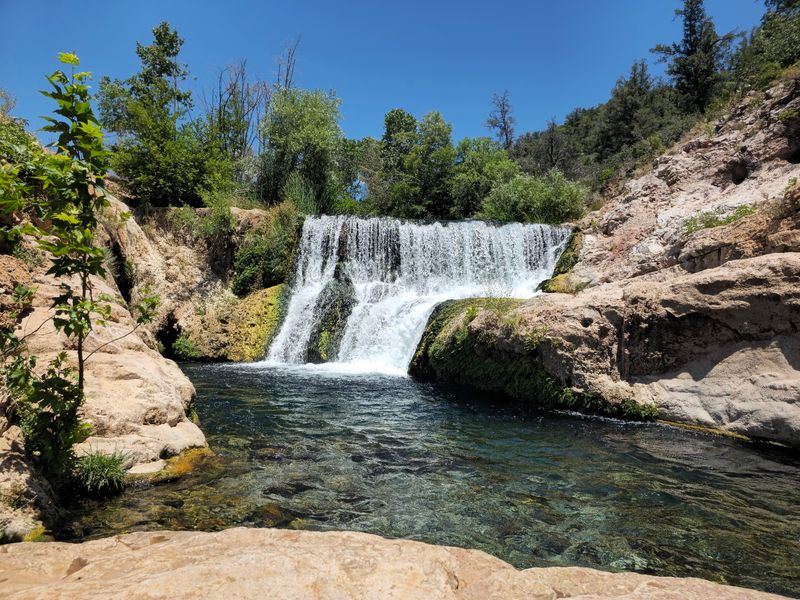
Springs here pour about 20,000 gallons of water every minute, and that water stays near 70 degrees all year. In the middle of Arizona.
Yes, really.
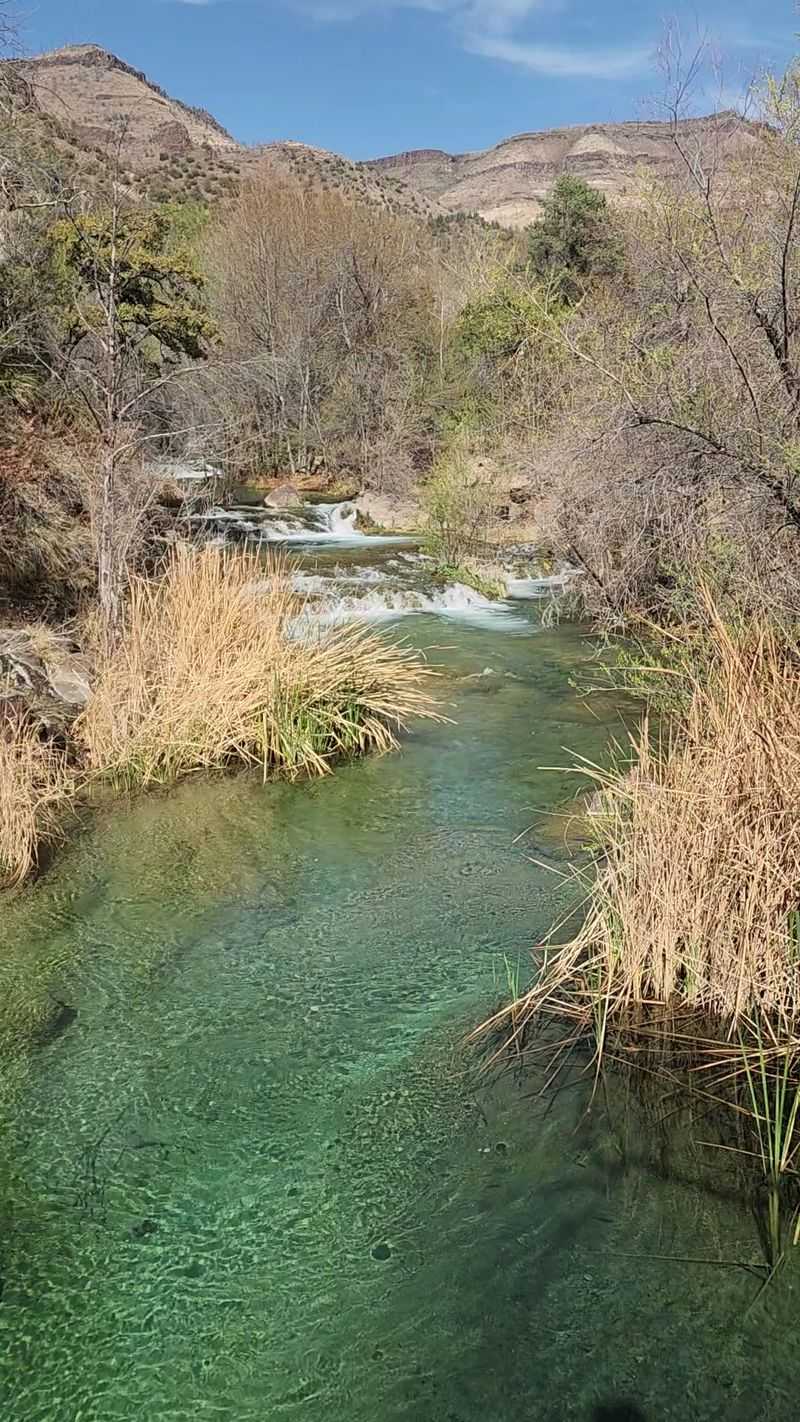
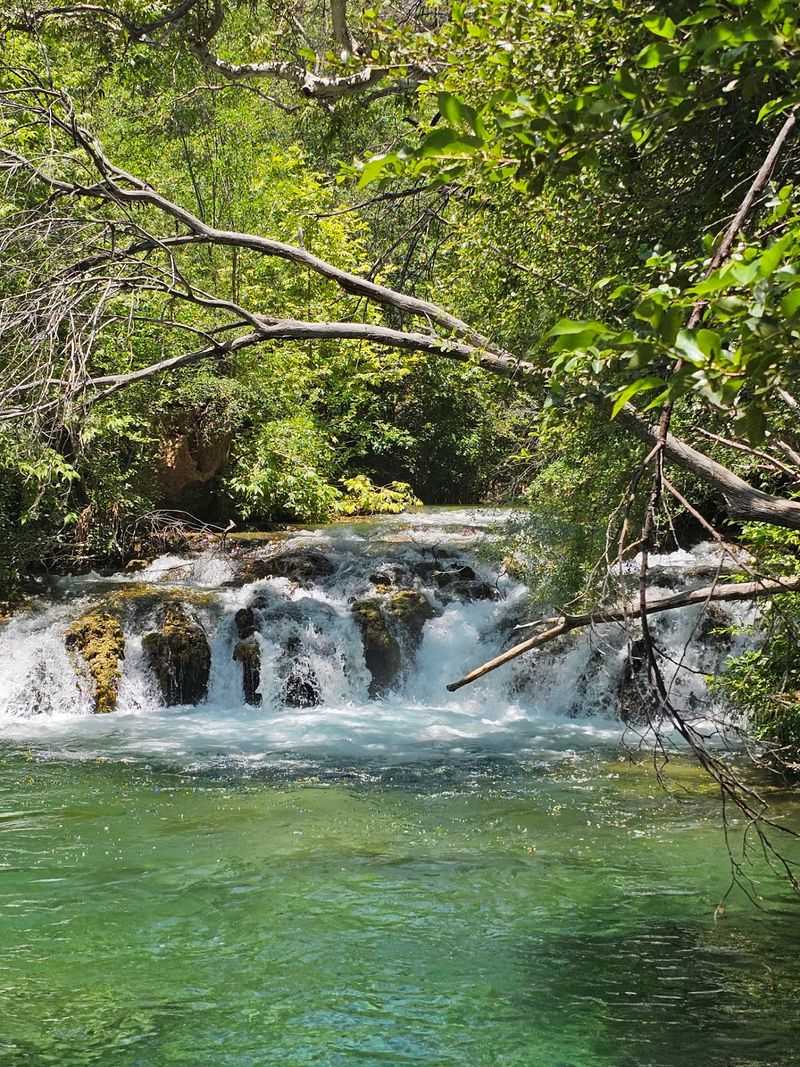
The minerals in that water turn the creek a wild shade of blue-green. They also coat leaves and branches in stone, like nature making its own fossils.
I like how cheap the whole adventure is. One small parking permit covers the entire car, so a family can spend a full day swimming and picnicking without spending much at all.
The catch is a long, bumpy dirt road that tests every set of shocks.
I believe the reward is worth every rattle. Waterfalls, swimming holes, and butterflies are waiting at the bottom.
So how does a place this lush end up hiding in the desert?
A Turquoise River Running Through Central Arizona
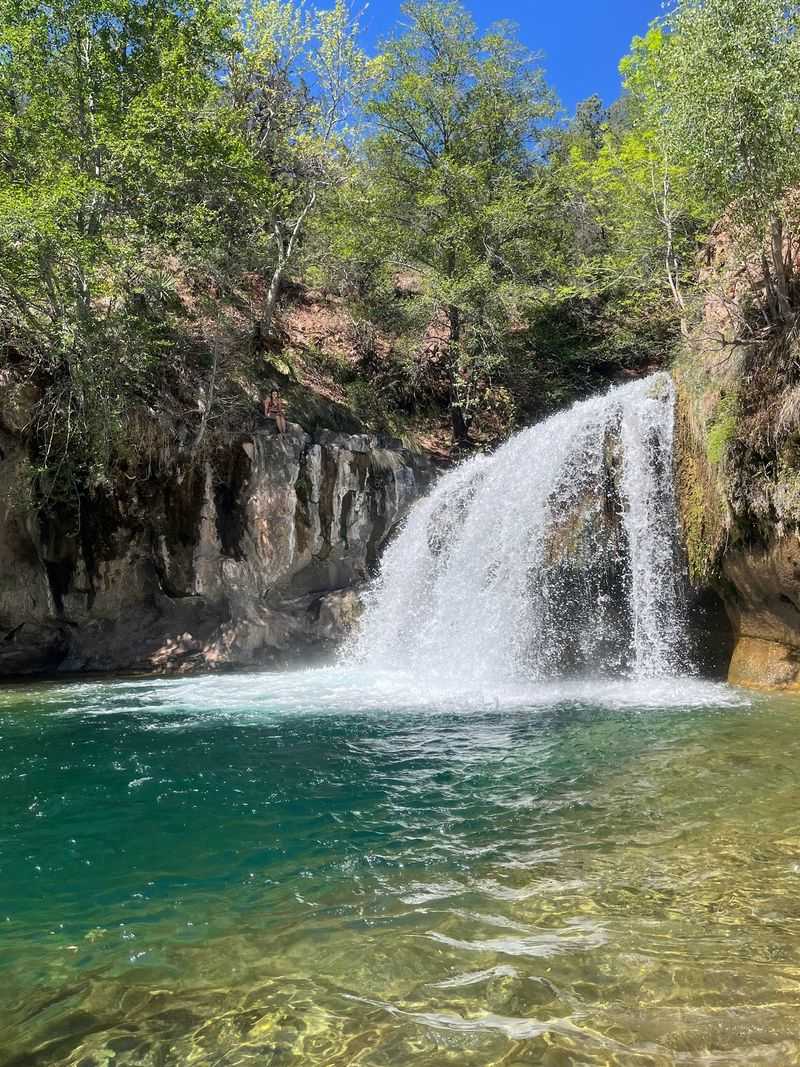
Blue water in the desert sounds like a mirage. Fossil Creek Wild and Scenic River proves otherwise, flowing through a canyon in central Arizona below the Mogollon Rim.
It holds a rare title too. Fossil Creek is one of only two Wild and Scenic Rivers in the entire state.
Springs feed the creek at a steady rate of roughly 20,000 gallons per minute. That flow keeps the water near 70 degrees no matter the season.
The result feels almost unfair to the rest of Arizona. While nearby slopes bake in shades of brown and rust, this canyon stays green and busy with life.
The creek runs about 17 miles from its springs to the Verde River. Along the way, it creates waterfalls, deep pools, and quiet swimming holes.
Families come for the simple pleasures. They swim, hike a short trail, and spread out lunch beside the falling water.
Getting in costs very little. A parking permit covers one vehicle for the day, not each person, so a whole carload shares the price.
That kind of value is getting hard to find. Add the scenery, and it starts to feel like a bargain dreamed up by someone very generous.
Stone Leaves And The Story Behind The Name
Fossils that form in real time? That’s basically what happens here.
The water carries heavy loads of calcium carbonate from the springs.
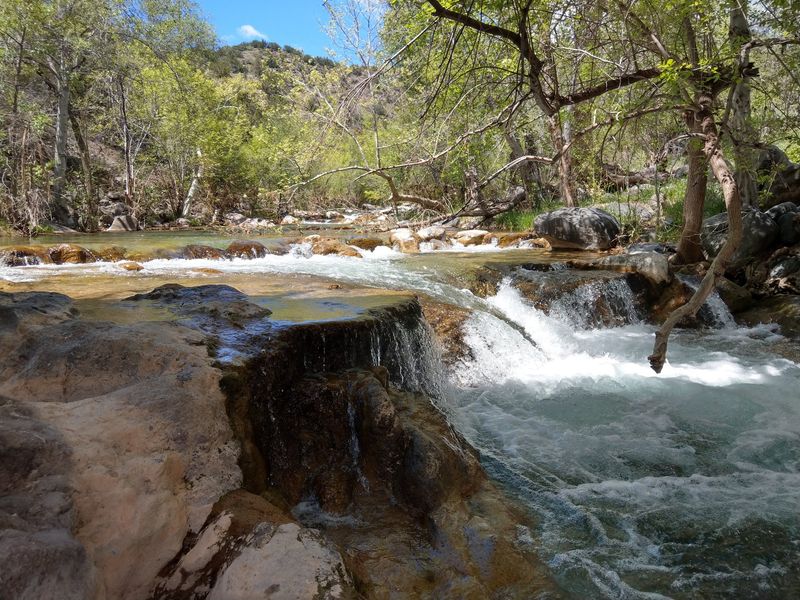
Over time, those minerals settle out as a type of limestone called travertine. It coats leaves, twigs, and rocks in a hard shell.
Those crusted objects look like ancient fossils. Early observers noticed, and the creek earned its memorable name.
Travertine does more than decorate. It builds natural dams across the creek, which back up water into pools.
Those pools give Fossil Creek its stair-step look. Water spills from one basin to the next, creating small falls and calm swimming spots.
The same minerals explain the color. Dissolved calcium carbonate helps give the water its striking aquamarine glow.
So every photo you see of this place owes something to chemistry. Not exactly the lesson you expected on a picnic, right?
Kids might enjoy spotting the coated branches along the edges. Just look and leave them in place, since the formations are part of what makes the creek special.
It feels a bit like a living museum. Except here, the exhibits keep growing and you’re allowed to swim beside them.
Nearly A Century Without Its Full Flow
For almost 100 years, this creek barely got to be itself. From 1909 until 2005, much of its flow was diverted to power a hydroelectric project.
Long stretches of streambed went dry. The ecosystem that had thrived here changed dramatically.
Then, in 2005, the project was decommissioned. Full flows returned to Fossil Creek, and the canyon began to recover.
The effort ranks among the largest river restorations in the Southwest. Crews removed invasive fish and brought back native species.
Those natives include spikedace and loach minnow, both endangered. Seeing them return was a big win for Arizona conservation.
Today the creek supports river otters, beavers, many birds, and lush plant life. Butterflies flutter along the trail too, adding color to the shade.
Knowing this backstory changes how the place feels. Those clear pools aren’t just pretty, they’re a comeback story.
Some longtime Arizonans remember simply driving up whenever they wanted. Today’s permit system exists partly to protect what that recovery achieved.
It’s a fair trade. The creek got its water back, and visitors got a healthier, wilder place to enjoy for generations to come.
The Waterfall Everyone Hikes To See
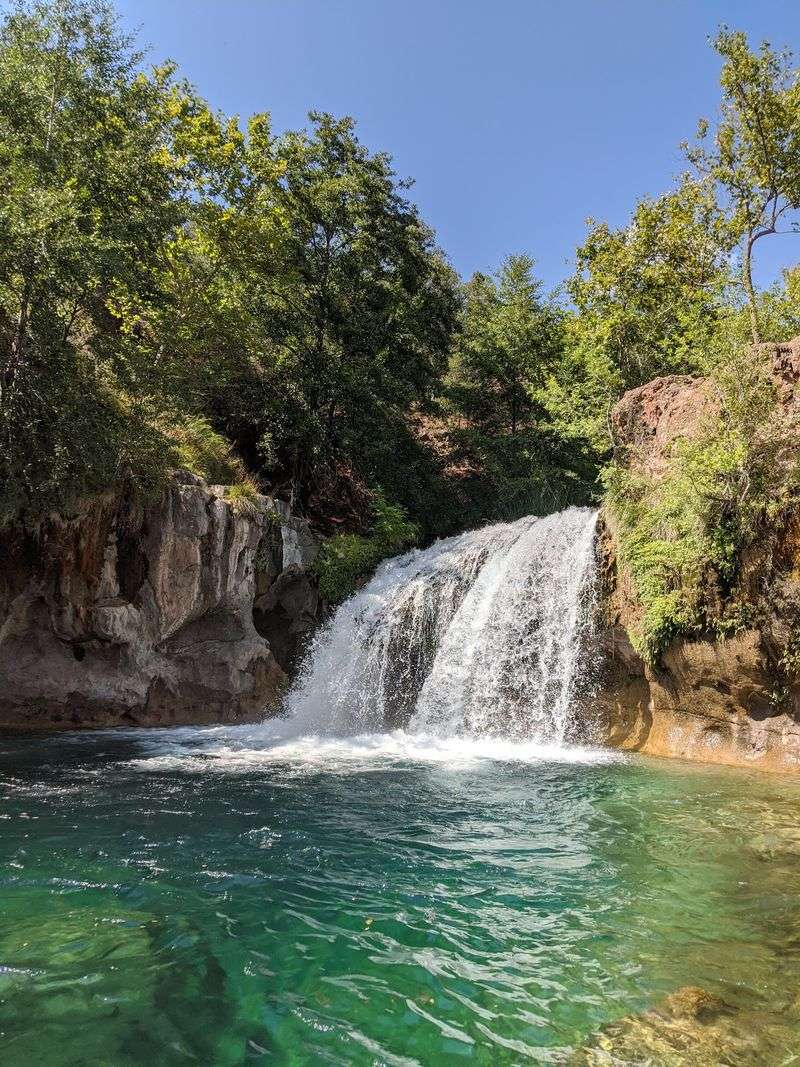
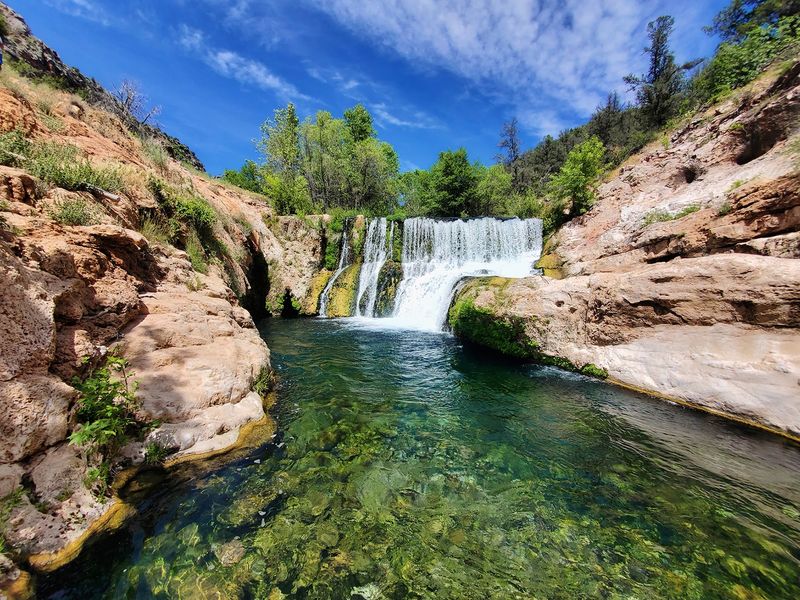
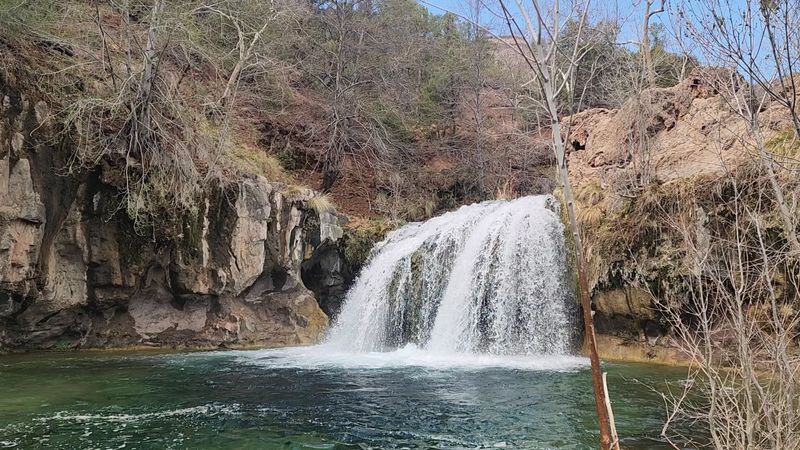
Here’s the headliner. The Fossil Creek Waterfall pours over travertine ledges into a deep, clear pool the color of a gemstone.
Reaching it takes a hike on the Dixon Lewis Trail. The trip is about 2 miles round trip from its parking area.
Once there, the water invites you right in. It feels brisk, especially after a warm walk, which is exactly the point on a hot Arizona day.
A small nook sits behind the falling water. Swimmers who head under the falls can find a spot to sit back there.
The pool can get busy, especially later in the day. Arriving early often means a calmer scene and better picnic real estate.
Cliff jumping happens here, but the Forest Service warns that jumping and swimming near the falls have caused serious injuries. Watching from the shore is the smarter move for families.
Plenty of beauty waits away from the drop-off anyway. The view alone makes a fine backdrop for sandwiches.
Bring a camera and some patience. That blue water looks almost edited in person, and every angle seems to find a new shade of green.
Quieter Swimming Holes Worth Stopping For
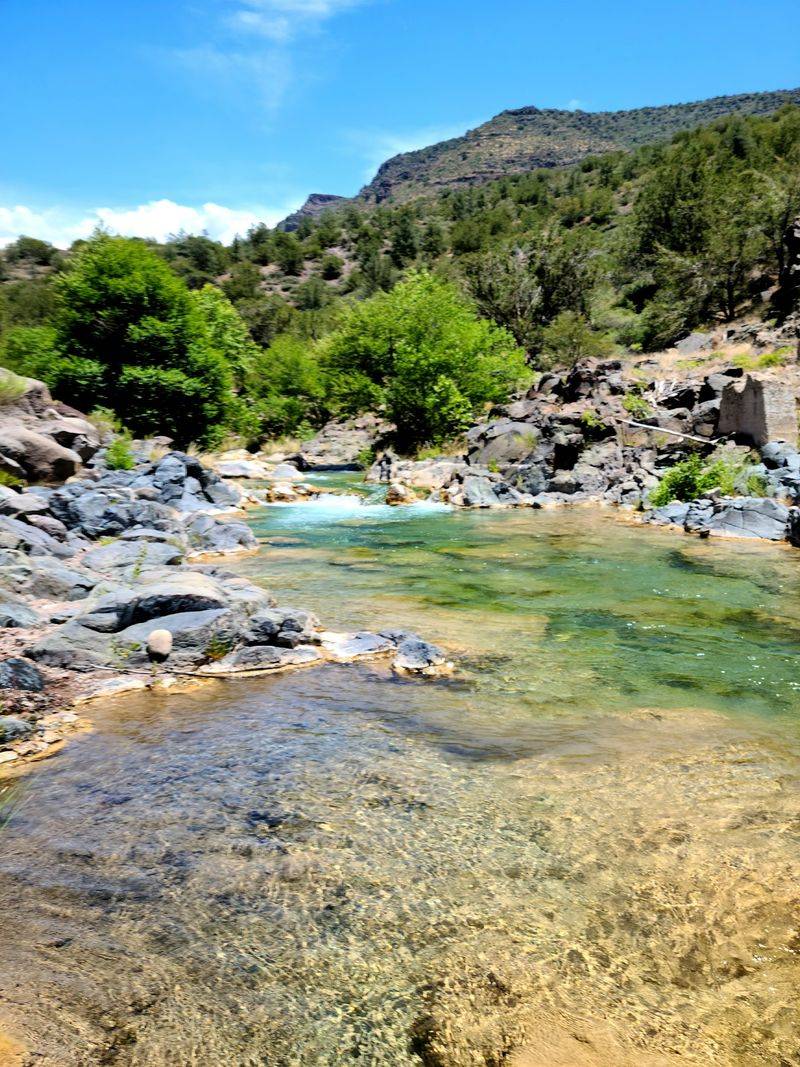
Skipping straight to the waterfall might be a mistake. The pools along the way can be every bit as lovely and often a lot calmer.
Each bend of the creek seems to offer another clear basin. Some spots even feature rope swings tied to nearby trees.
These smaller holes suit families nicely. Little ones can wade in shallow edges while grown-ups float in deeper water.
The Mazatzal swimming area is another option along the creek. It has its own parking lot, so you can reserve it directly.
Spots like this can feel wonderfully peaceful. On some days, a group might have a stretch nearly to itself for hours.
The water stays cold, so expect a gasp on the first plunge. After that, it feels like the best air conditioning Arizona never installed.
Choosing a quieter pool also spreads people out. That helps the creek and makes your afternoon more relaxing.
Pack water shoes for slick rocks. Travertine can be slippery, and a little grip goes a long way when you’re carrying a cooler and a curious kid.
Trails For Easy Strollers And Serious Hikers
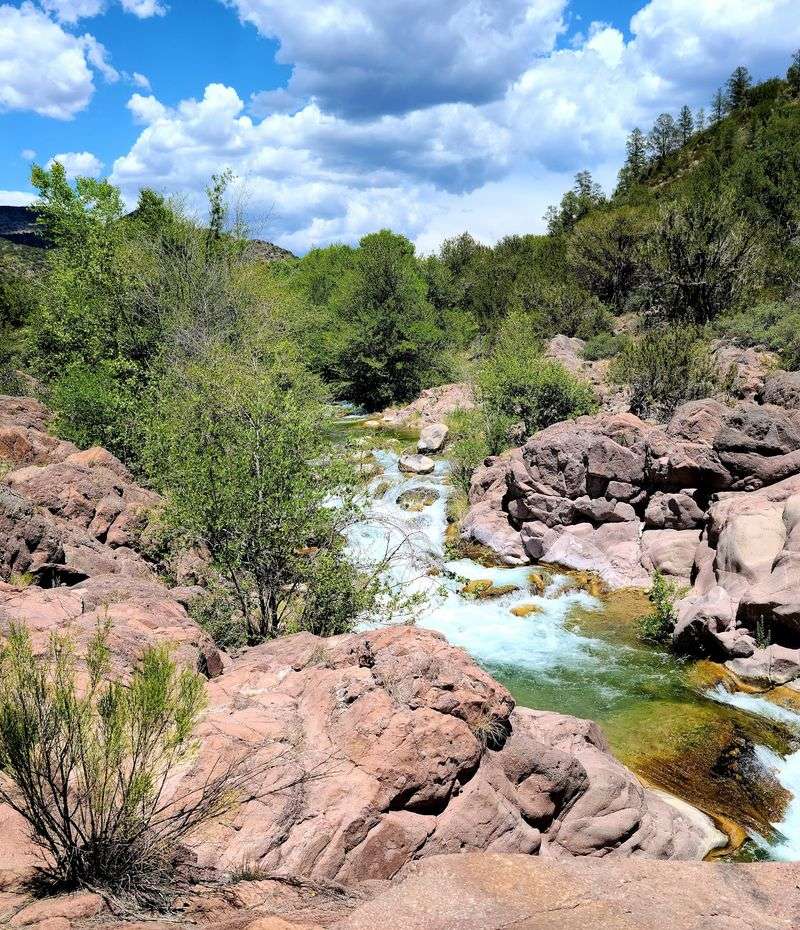
Two very different hikes lead to this water. One works for most families, while the other demands real stamina.
The Dixon Lewis Trail, once called the Waterfall Trail, is the easy pick. It runs fairly flat along the creek, about a mile each way.
Hikers of many ages manage it comfortably. Expect roughly 30 minutes in each direction at a relaxed pace.
Shade is limited, though. Sunscreen, hats, and plenty of water make the walk far more pleasant.
Keep an eye out for lizards sunning on rocks. Snakes may hide in the brush too, so stay on the path.
The Bob Bear Trail is another story entirely. It starts near Strawberry and covers about 8 miles round trip.
That route drops around 1,500 feet into the canyon toward Fossil Springs. The climb out is steep, hot, and exposed.
Only experienced, well-prepared hikers should try it. Bring a gallon of water and snacks, and save energy for the uphill return.
Either way, the trails stay clean and well kept. Pick the one that matches your crew, and you’ll still end up at gorgeous water.
Spreading A Blanket Beside The Falls
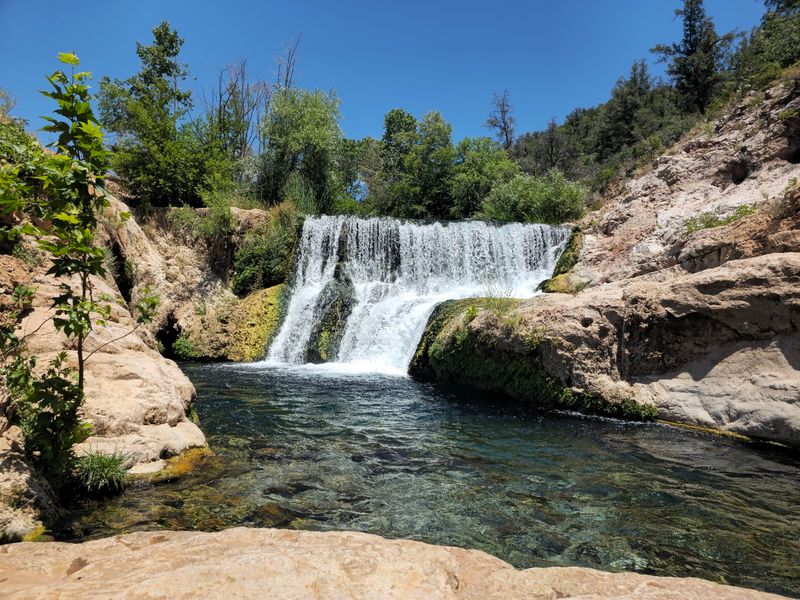
Lunch tastes better with a waterfall soundtrack. That’s the whole appeal of a picnic at Fossil Creek.
Some areas have picnic tables, but many families just claim a spot along the bank. A blanket near the main falls makes a fine dining room.
Food choice matters out here. Sandwiches, fresh fruit, and sturdy snacks hold up better in the heat than delicate dishes.
A cooler packed with ice is a smart move. It keeps drinks cold and helps everyone recover after a swim.
Glass containers aren’t allowed, so pack everything in plastic or reusable containers. Broken glass and bare feet don’t mix.
There’s no trash service, either. Whatever you bring, including wrappers and food scraps, rides home with you.
That rule keeps the creek looking spotless. It also means less packaging makes for an easier cleanup.
Dogs can join the fun too. Just keep them under control and pack extra water for them.
Honestly, it’s tough to beat this setup. Cheap entry, homemade food, and a blue pool for dessert make a pretty great family afternoon.
That Famous Bumpy Road In
Hold onto your snacks. The drive to Fossil Creek is part adventure and part paint mixer.
Most visitors use Forest Road 708, which branches off State Route 260 near Camp Verde. Expect about 14 to 16 miles of unpaved, winding road.
It’s dusty, rocky, and full of washboard bumps. Even driving slowly, everything in the car gets a good shake.
High-clearance vehicles handle it best. Plenty of regular cars make the trip, but slow and steady is the rule.
Plan on at least an hour from the highway. The route also features tight, blind curves on a two-way road.
So drive courteously and stay on your side. Someone may be coming around the bend at any moment.
Don’t trust GPS alone in this remote area. Digital maps can send drivers the wrong way.
The Strawberry approach only reaches the Bob Bear Trailhead. It won’t get you to the waterfall parking lots by car.
Watch the descent into the canyon as you go. Bumps and all, the scenery helps the miles pass a little faster.
Permits That Cover The Whole Carload
A single permit gets your whole vehicle in. That’s the secret behind the family-friendly price tag.
From April 1 through October 1, a day-use permit is required. It works as a parking pass for a specific lot.
Reservations go through Recreation.gov only. Part of the permits release a month ahead, and the rest open two days before.
Close lots go fast. Lots 1 and 2 sit nearest the trail, so booking right when permits open gives you the best shot.
Farther lots mean longer walks with almost no shade. That’s worth weighing when traveling with small kids.
Print your permit and place it on the dashboard. Rangers check it on arrival, and showing up without one means turning around.
That would be a painful hour back over the bumps. Nobody wants to repeat that drive for nothing.
From October 2 through March 31, no permit is needed. Access becomes first come, first served.
The off-season can feel blissfully quiet. Road conditions can be less predictable then, so check before heading out.
What To Pack For A Rustic Day
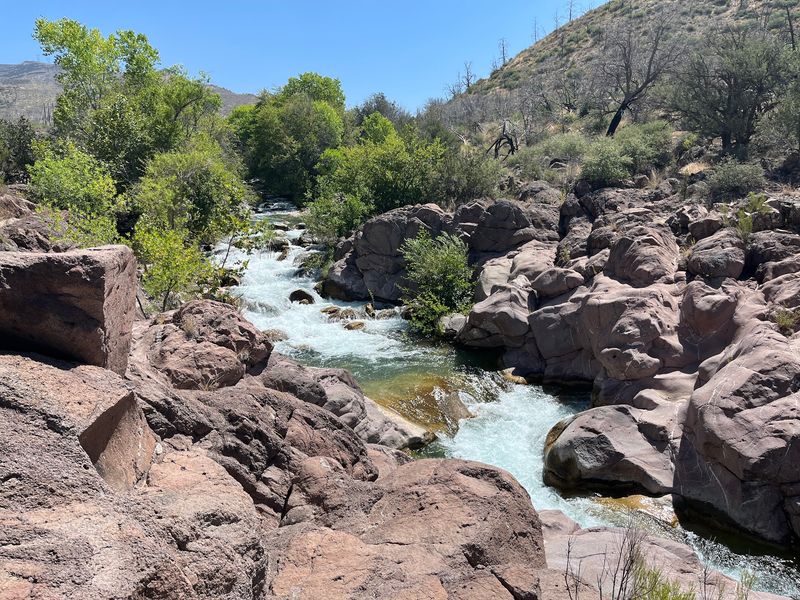
Think campground basics, not resort comforts. Fossil Creek offers very few developed amenities, so preparation matters.
There’s no drinking water available on site. The Forest Service recommends at least one gallon per person.
Sunscreen is a must too. Much of the trail has little shade, and the Arizona sun doesn’t take breaks.
Vault toilets sit at most parking lots. Farther along the trails, you won’t find facilities.
Cell service is nearly nonexistent in the canyon. Download maps ahead and tell someone your plans.
A few extra items help a lot. Water shoes, towels, hats, and a trash bag make the day smoother.
Rangers sometimes alert visitors to bear activity. Keep food secured and stay aware of your surroundings.
Camping and campfires aren’t allowed in the permit area during permit season. This is strictly a daytime outing in those months.
The vehicle gate closes at 3 p.m. during permit season, so time your arrival well. An early start gives you more hours by the water and cooler temperatures for the hike.
Seasons, Crowds, And Monsoon Smarts
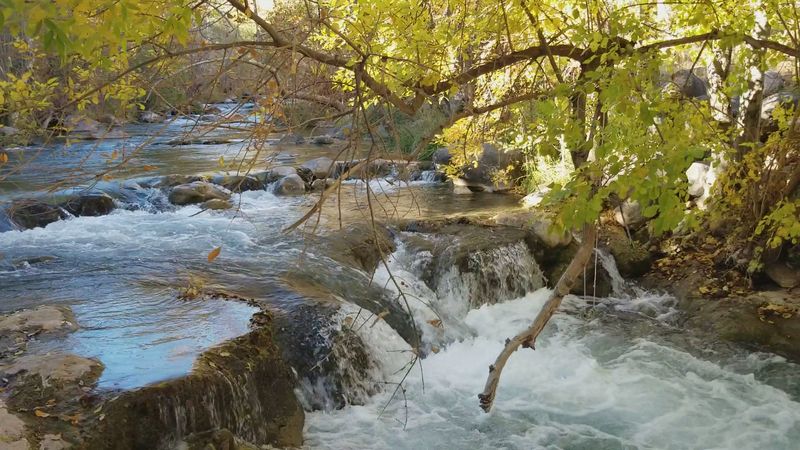
Summer is prime swimming time. Cold, clear water feels heavenly when the rest of Arizona is sizzling.
That popularity brings company. Weekends and midday hours can get crowded, especially around the main falls.
Arriving early helps. With good timing, you might enjoy the falls with far fewer people around.
Spring visits can be lovely too. By April, permits are required again, though the water may still feel chilly.
Winter offers a completely different mood. With no permit needed, the creek can feel calm and nearly empty.
A February walk here makes sense for hikers. The colors stay vivid even when swimming sounds too cold.
Monsoon season deserves respect. Flash floods can happen in canyons, so check the forecast before you go.
If storms threaten, wait for another day. The creek will still be gorgeous next weekend.
Matching your trip to your goals makes a difference. Swimmers want summer mornings, while peace seekers may love cooler months.
Either way, the 70-degree springs keep flowing. That steady water is what makes every season worth a look.
Why This Bumpy Drive Pays Off
Few day trips deliver this much for so little. Fossil Creek pairs waterfalls, swimming, and hiking with a permit that covers the whole car.
Yes, the road rattles your teeth. And yes, scoring a close parking lot takes some planning.
But the payoff is hard to argue with. Blue-green water, stone-coated branches, and butterflies make the desert feel far away.
Families get an easy trail and plenty of picnic spots. Adventurous hikers get a tougher route with big rewards.
The comeback story adds meaning too. This creek spent nearly a century without its full flow, and now it thrives again.
Visiting responsibly keeps it that way. Pack out trash, skip the glass, and stay on marked paths.
Bring more water than seems necessary. A cooler, sunscreen, and patience round out the list.
For Arizona families watching their budgets, this outing feels like a gift. It’s affordable, memorable, and genuinely refreshing.
So book that permit early and gas up the car. The bumps fade fast once your toes hit that cool, clear water in Fossil Creek Wild and Scenic River.