
This Colorado Fossil Site Lets Visitors Discover Ancient Treasures Millions Of Years Old
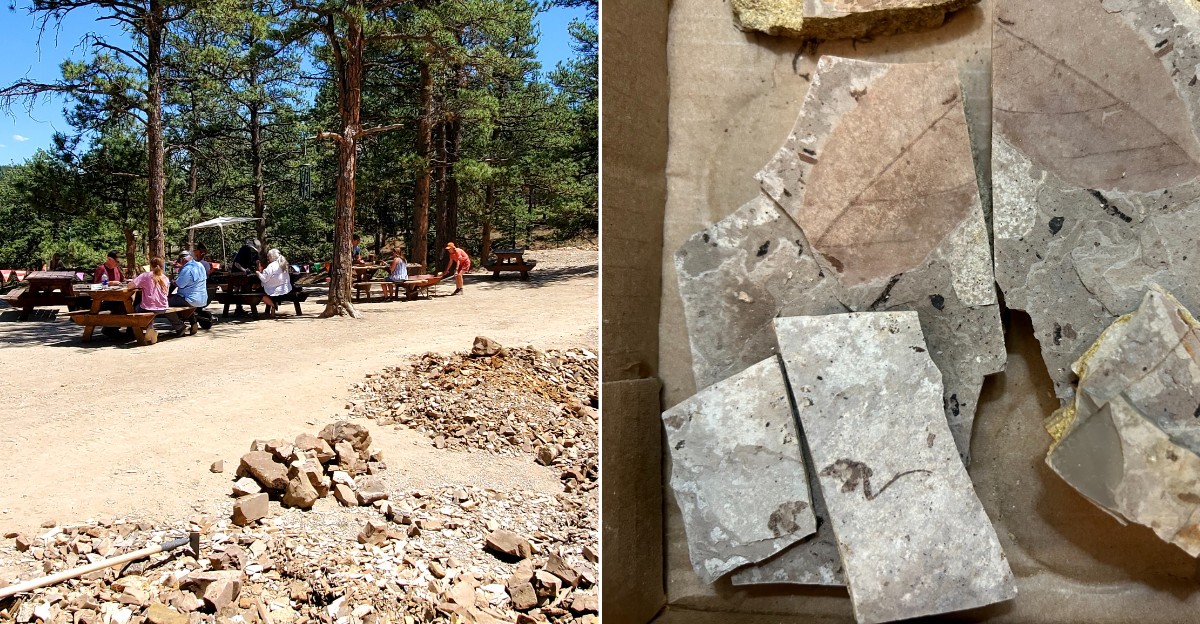
Somewhere in the Colorado mountains, you can split a slab of shale and keep the 34-million-year-old leaf hiding inside. No glass case, no velvet rope, just you and a rock that has waited a very, very long time.
Those layers formed when volcanic ash drifted into an ancient lake ringed by giant redwoods. That ash trapped insects, seeds, and leaves in such fine detail that tiny wing veins still show up today.
I like how the whole thing works like a treasure hunt with a science lesson baked right in. Kids get messy, grown-ups get competitive, and fossils turn up so often that nobody walks away empty-handed.
I honestly can’t imagine a cooler souvenir than an insect that buzzed around long before mammoths ever showed up. So what’s waiting inside your first slab?
You Get To Be The Paleontologist And Keep Every Find
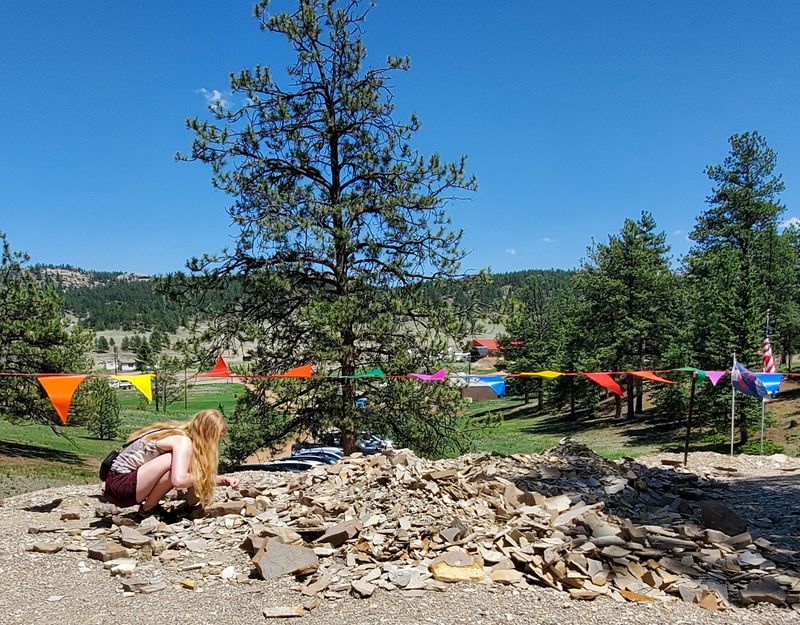
Most museums ask you to keep your hands to yourself. Florissant Fossil Quarry flips that rule completely and hands you the rock instead.
This family-run, private site sits on part of the famous Florissant Formation in the Colorado high country. Visitors split layers of shale by hand and search for fossils from the late Eocene Epoch.
The best part is simple and a little wild. Visitors can keep most fossils they uncover, but specimens of scientific significance are retained at the quarry for scientific study.
That changes the whole mood of the day. You aren’t just admiring someone else’s discovery behind glass, you’re making your own.
The shale here is rich enough that fossils show up again and again. Some finds are small and subtle, so a sharp eye pays off quickly.
Patience matters more than muscle in this game. Gentle splitting reveals more than force, and slow hands often get the prettiest specimens.
Think of it as a lottery ticket made of stone. Every slab holds a fresh chance, and that suspense keeps people reaching for just one more rock.
A Volcano And A Lake Built This Time Capsule
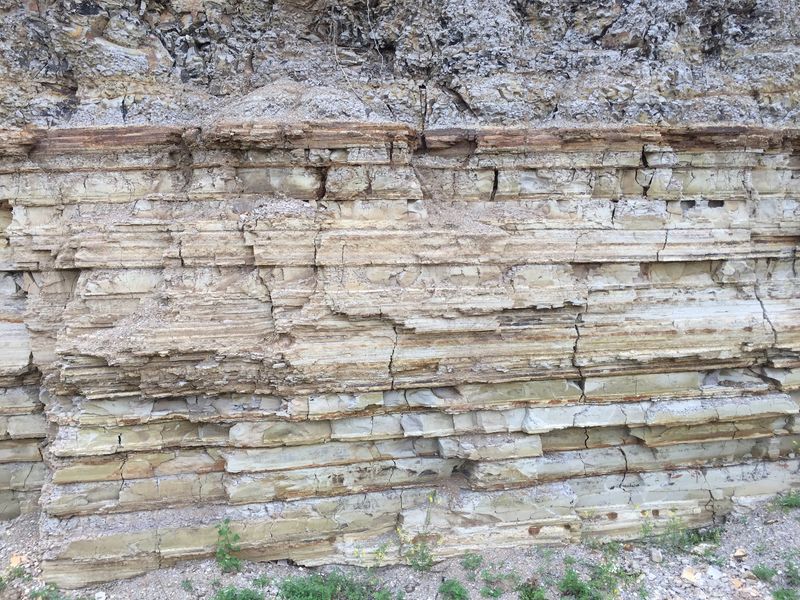
About 34 million years ago, this patch of Colorado looked nothing like the pine-covered hills you see today. A lake stretched across the valley, and towering redwoods grew along its edges.
Nearby volcanoes kept things lively. They erupted now and then, showering the area with fine ash and mud.
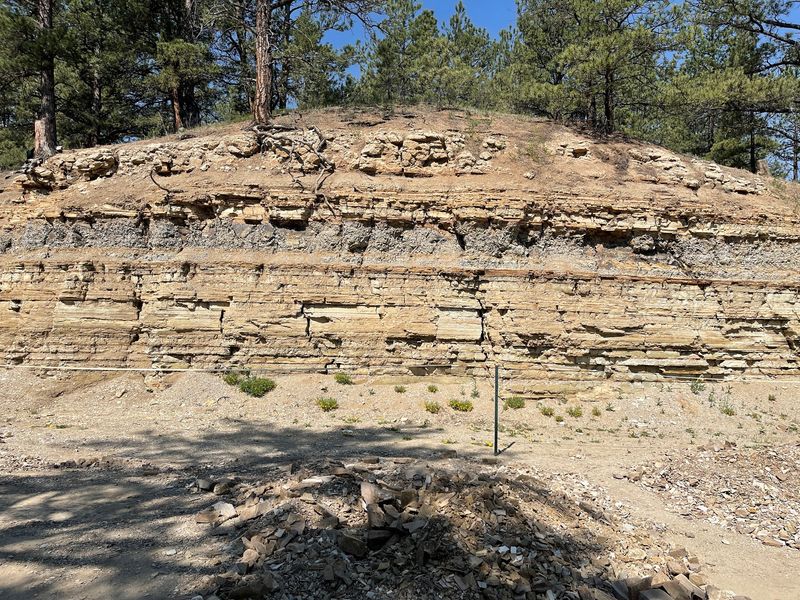
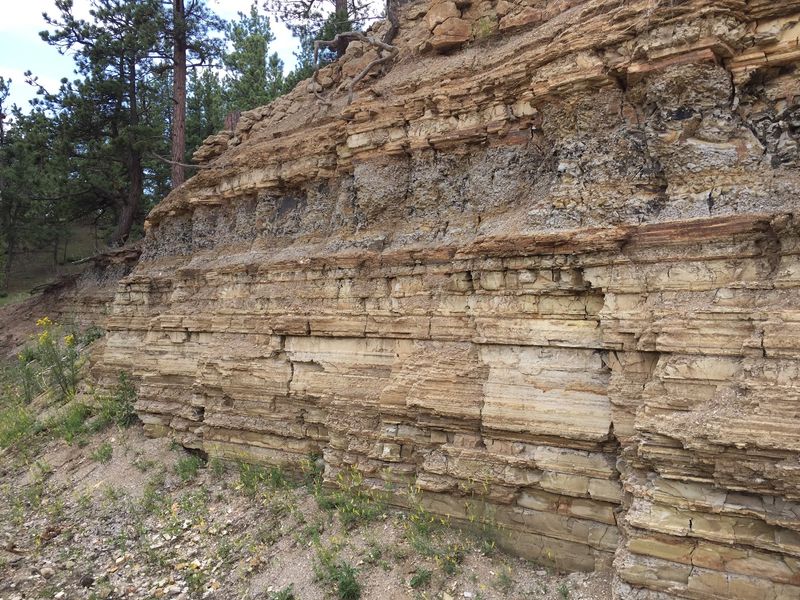
That ash drifted down and settled on the lake bottom in thin layers. Leaves, seeds, and insects got trapped between those layers and pressed into stone over time.
Scientists call the result the Florissant Formation. It ranks among the most diverse fossil deposits in the world, especially for insects and plants.
Florissant Fossil Quarry sits right on part of that old lakebed. So when you pry apart a slab, you’re opening a page from a very old diary.
The fine ash is the secret ingredient. Because it was so powdery, it captured delicate details that coarser rock would have smudged away.
Knowing that backstory makes each split feel bigger. You’re not just cracking rocks, you’re reading the leftovers of a whole ecosystem frozen in place.
Leaves, Seeds, And Bugs Are The Usual Suspects
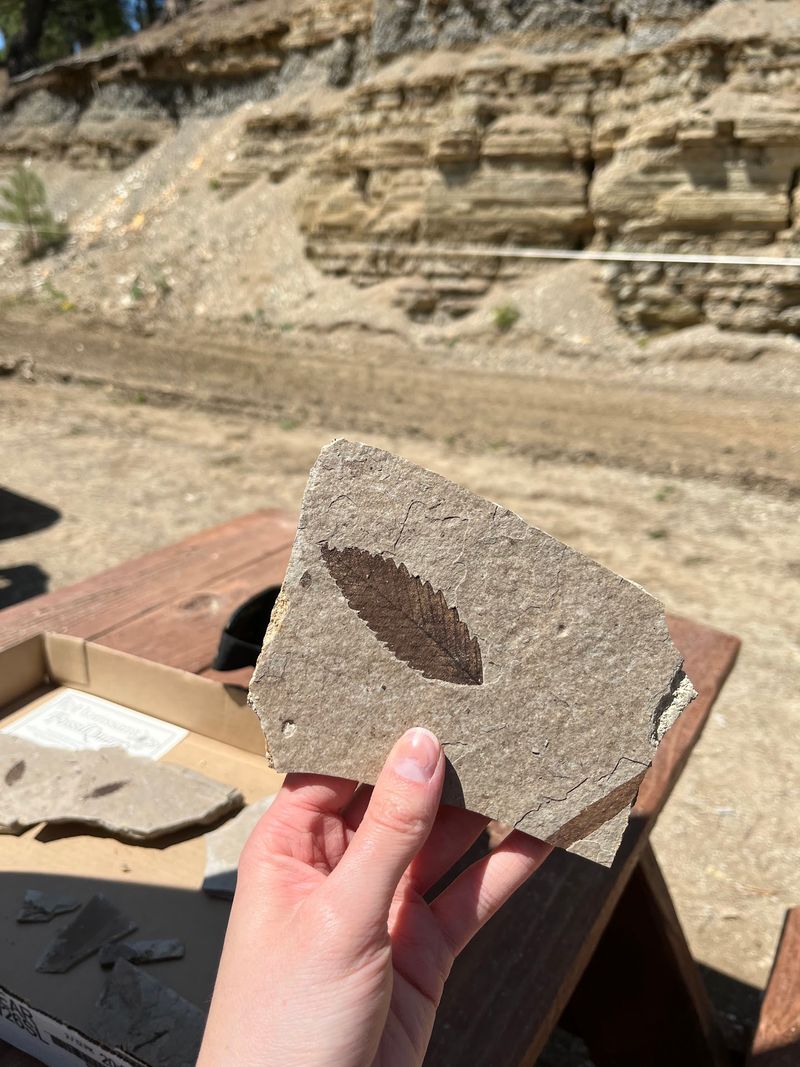
Fossilized leaves are the bread and butter here. Many come from plants that thrived around that ancient lake, and some still show crisp vein patterns.
Seeds turn up often too. They’re small, so keep looking closely before tossing any piece aside.
Insects are where things get exciting. The Florissant area is famous for them, and even delicate wings can survive in the fine shale.
Every so often, someone uncovers something rarer. Fish and even feathers have appeared in these layers, though they’re the jackpot rather than the norm.
A fun twist comes with many finds. When a slab splits cleanly, you may get both halves of the same fossil, a raised side and its matching imprint.
Some fossils show up as partial pieces instead of perfect specimens. That’s normal, and a single wing or leaf tip still counts as a 34-million-year-old treasure.
A magnifying glass reveals details your eyes might skip. Tiny bugs love to hide in plain sight, so scan every surface before calling it done.
No Experience Needed, Because The Staff Shows You How
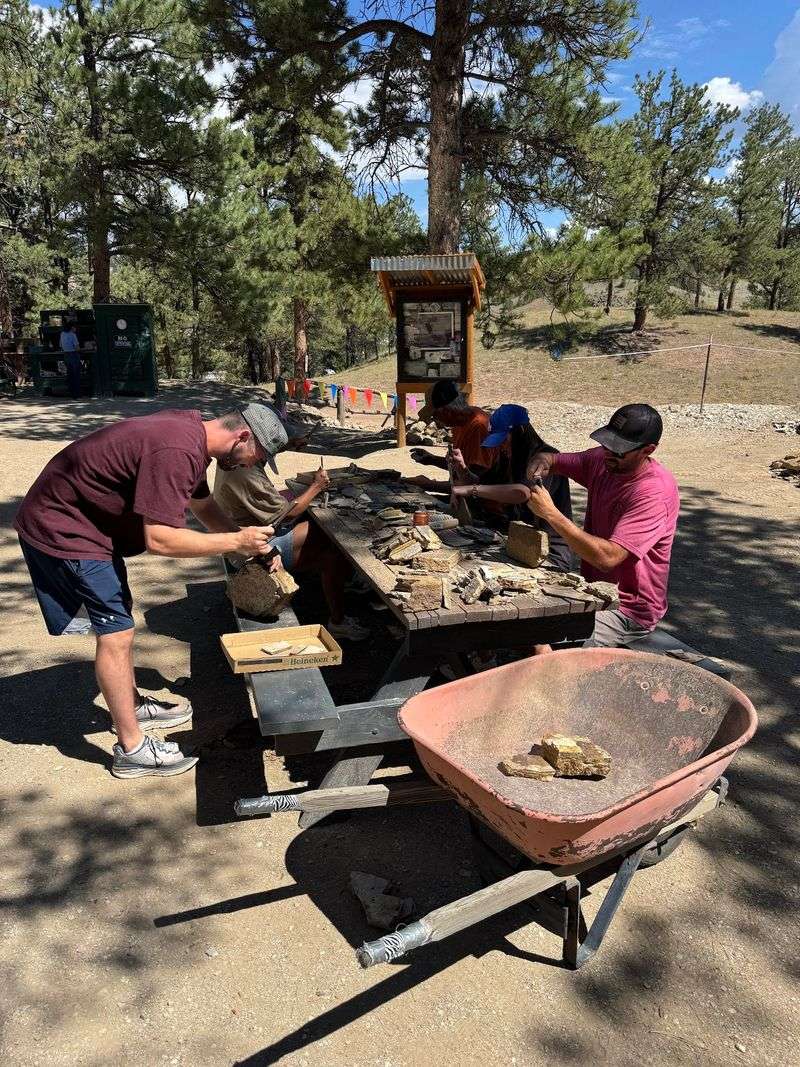
Never held a chisel in your life? Good news, because nobody expects you to show up as a trained scientist.
Staff at Florissant Fossil Quarry give each visitor personal instruction before the hunt begins. You’ll learn which rocks look promising and how to separate the layers without wrecking them.
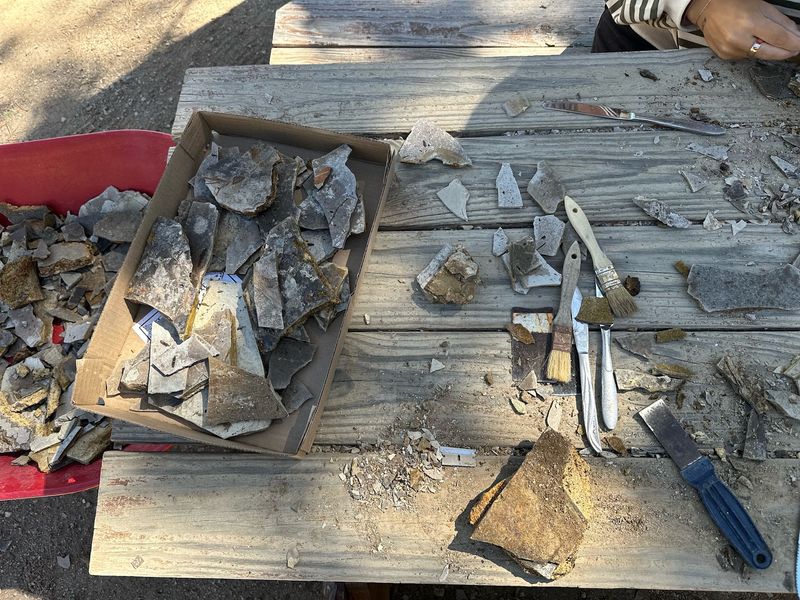
Tools come with the visit. The quarry provides tools for gently splitting shale, along with magnifying glasses and brushes for examining and cleaning finds.
Eye protection is also available for anyone who wants it. It’s a smart pick, especially for younger diggers who get enthusiastic fast.
The technique relies on finesse instead of brute force. You slide the tool along a natural seam and coax the layers apart, almost like opening a stubborn book.
Staff can also help identify what you uncover. That turns a mystery smudge into a named seed or insect, which feels pretty great.
Listen closely during the demo, since it really pays off. Picking the right shale makes a huge difference in how much you find by the end.
Decades Of Family Passion Shape This Quarry
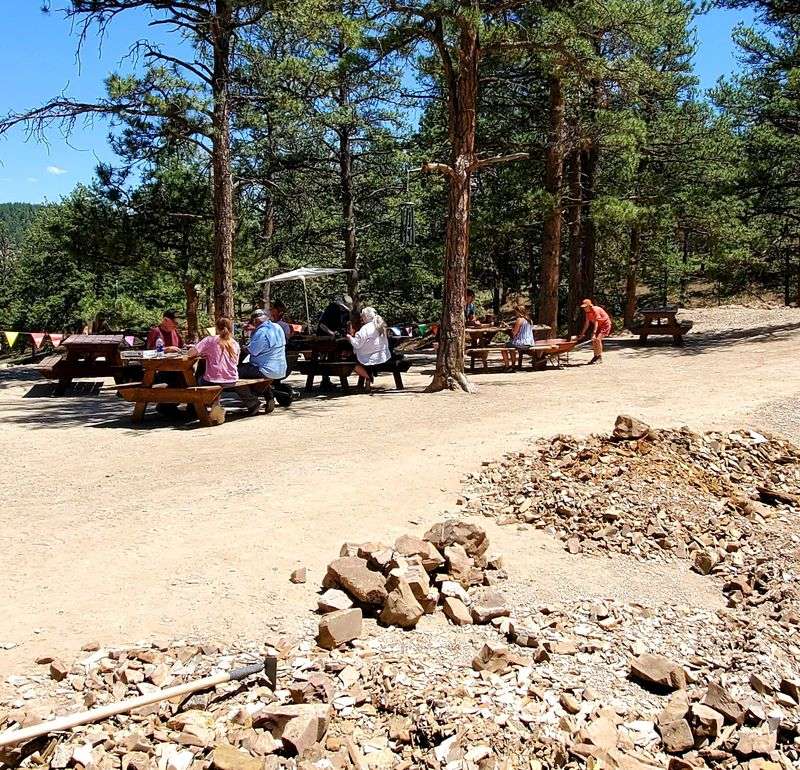
Long before fossil hunting trended online, one family was already inviting the public to dig. The Clare family has operated this private quarry since the 1970s.
Their idea was refreshingly direct. Let regular people experience the thrill of being a real paleontologist for an afternoon.
That mission has paid off for science too. In 1997, Nancy Clare Anderson uncovered a fossil that turned out to be a new species of shorebird.
Not bad for a family business in the mountains. It proves this ground still holds surprises that even experts haven’t seen.
The quarry keeps a homegrown feel. It’s a family property, not a polished theme park, so respecting the rules and the land matters.
That small scale is part of the charm. You’re stepping onto ground that one family has cared for and shared across generations.
I believe that history adds weight to every slab you split. Somebody’s love for digging made this possible, and you get to carry that tradition forward, one rock at a time.
Plan Ahead, Because 2026 Is A Rest Year
Timing is everything with this adventure. Florissant Fossil Quarry is closed for the 2026 season and plans to reopen in spring 2027.
During a regular season, the main stretch runs from Memorial Day weekend through Labor Day. Typical hours are 10 a.m. to 5 p.m., Monday through Saturday.
Outside the regular season, the quarry may accommodate group visits by appointment, but it is currently closed to the general public for the remainder of 2026. Hours can also shift with the weather, which makes sense for an outdoor dig in the mountains.
Calling or emailing before you drive is the smartest move. Mountain plans change, and a quick check saves a long, disappointing ride.
You’ll find the quarry at 18117 Teller County Road 1, Florissant, CO 80816. It’s a scenic spot in Teller County, west of Colorado Springs.
Free parking is available on site, so arriving is easy. Just leave a little buffer in your schedule, since mountain roads reward an unhurried pace.
Put it on the 2027 calendar now. Future you will be glad you planned ahead instead of guessing.
Bring Cash, Layers, And A Little Patience
Cash is king here, with no exceptions. Admission is charged per collector per hour, and the quarry doesn’t take cards.
Little ones get a sweet deal. Kids under five dig for free, which makes the visit friendlier for young families.
Reservations aren’t needed for individuals, families, or groups under ten. Groups of ten or more should call ahead to make arrangements.
Dress for mountain weather, since the experience happens outdoors. Layers, sunscreen, and a good hat make the hours far more comfortable.
Sturdy walking or hiking shoes are a wise choice too. You’ll be moving around rock piles, and flip-flops won’t do you any favors.
Snacks and drinks are welcome to keep energy up. Fossil hunting is sneaky work, and hunger shows up faster than you’d expect.
One more tip costs nothing at all. The quarry provides a box and wrapping materials to protect your finds, since thin shale can crack on the ride home.
Missed The Season? Take The Hunt Home
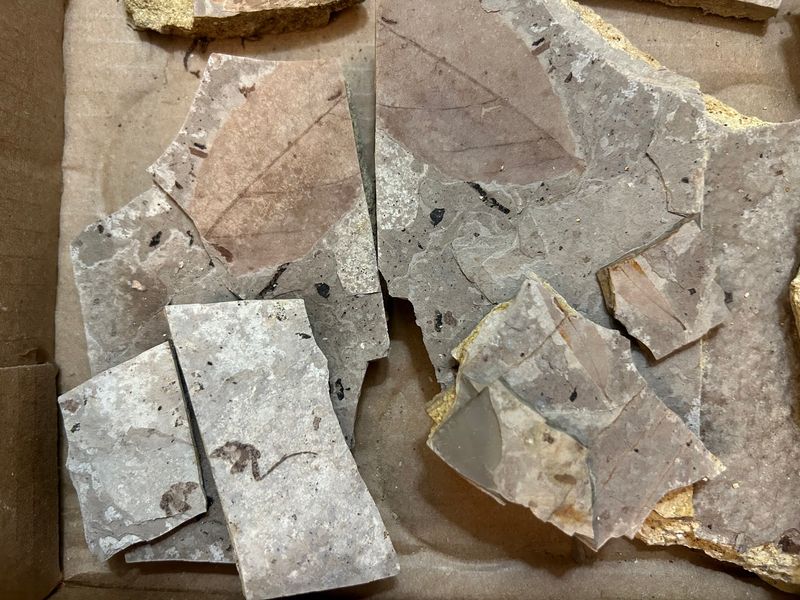
Kitchen tables make surprisingly good dig sites. Florissant Fossil Quarry sells Eocene Experience Complete Fossil Kits and Adventure Bags for at-home hunting.
These kits include tools, instructions, and real fossil-rich shale. You split the rock yourself, just like you would on site.
That makes them handy during a closed season like 2026. They also work as gifts for the curious kid, or grown-up, in your life.
Schools and events get an even bigger option. The quarry runs a Fossil Mobile, a customized school bus turned into a self-contained fossil lab.
Picture a classroom on wheels, minus the boring parts. It brings hands-on discovery straight to communities that can’t make the trip.
I like how this keeps the mission rolling beyond the mountains. The fun of finding ancient life doesn’t have to wait for summer.
Keep a few newspapers handy before you start splitting indoors. Shale flakes travel farther than you’d guess, and the vacuum will thank you later.
Pair It With Giant Petrified Stumps Just Up The Road
About a mile north sits a perfect warm-up act. Florissant Fossil Beds National Monument, run by the National Park Service, protects the same ancient landscape.
Its petrified redwood stumps are jaw-dropping. Some measure up to 14 feet wide, which makes you feel very small very quickly.
The monument also holds extensive insect and plant fossil collections. Collecting isn’t allowed there, so it’s strictly a look-but-don’t-pocket visit.
That contrast makes the pairing so satisfying. You learn the story at the monument, then head south to Florissant Fossil Quarry and dig up your own chapter.
The visitor center offers exhibits and a short film about the area’s geology. Hiking trails lead past those enormous stumps for a close look.
Starting there gives you a better eye for what you’re seeing later. Suddenly that tiny imprint in your slab connects to a whole Colorado forest.
Together, the two stops fill a full day of prehistoric fun. Not bad for one small mountain valley packed with 34 million years of stories.