
This Ohio Museum Glows With An Entire Indoor Street Of Vintage Neon Signs
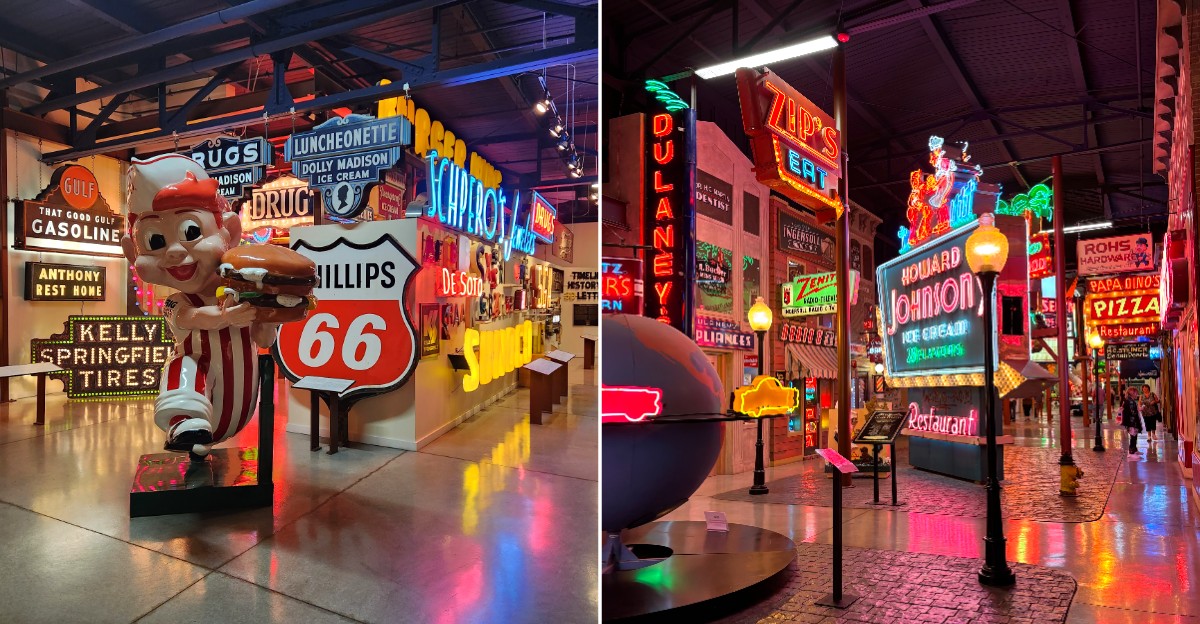
An entire Main Street glows indoors here, complete with life-size storefronts and buzzing vintage signs. It sits inside an old factory that once built machines and later made dresses.
The collection holds more than 800 signs and over 4,000 objects in total. Some date back to the late 1800s, long before anyone flipped a light switch.
Others blink, flash, and spin like it’s still the 1950s.
I like how this Ohio spot treats signs as real art. These are the same glowing letters that once told travelers where to eat, sleep, and fill up the tank.
I believe most of us walk past signs every day without a second thought.
So what happens when hundreds of them light up under one roof? I can’t imagine leaving without a phone full of glowing photos.
An Indoor Main Street Glows Brighter Than Any Downtown
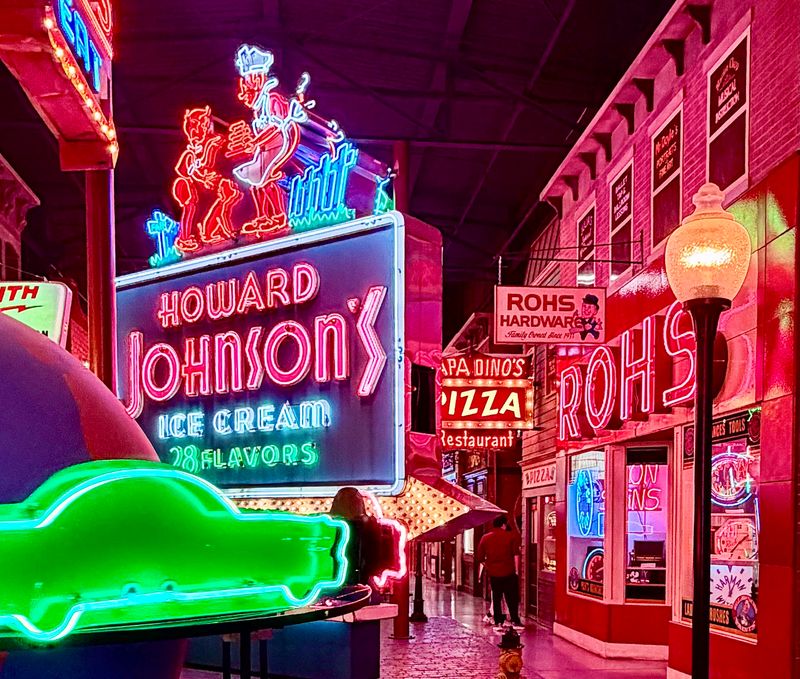
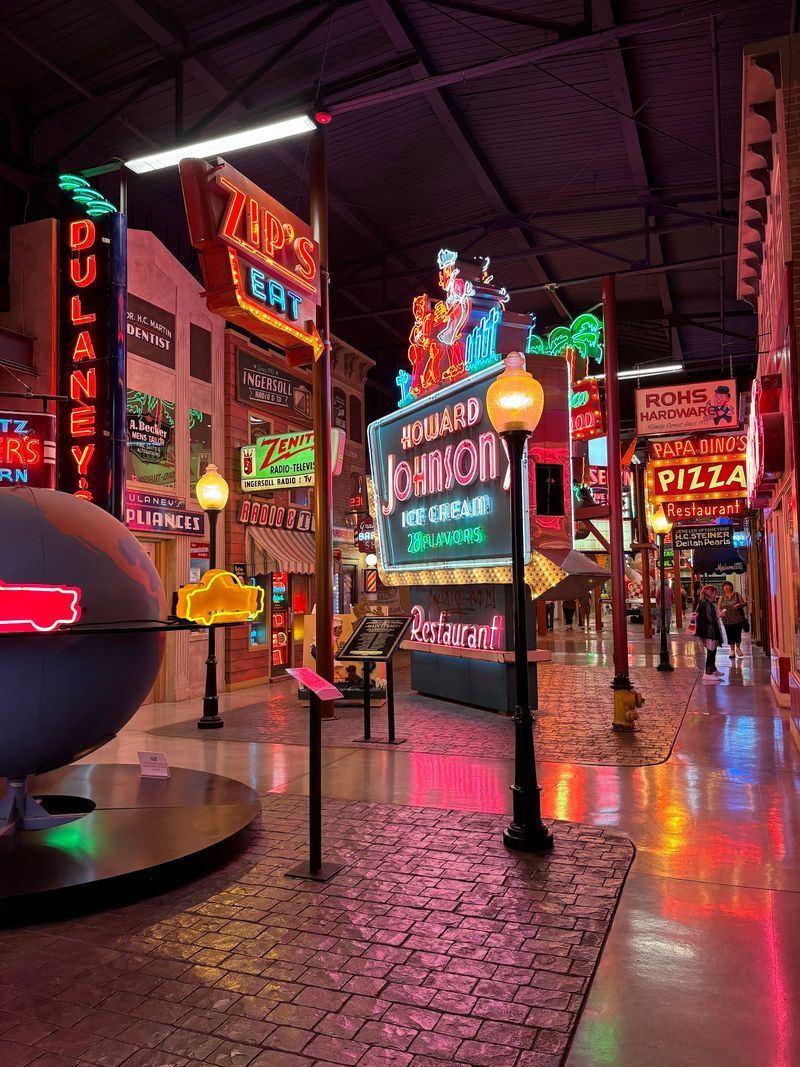
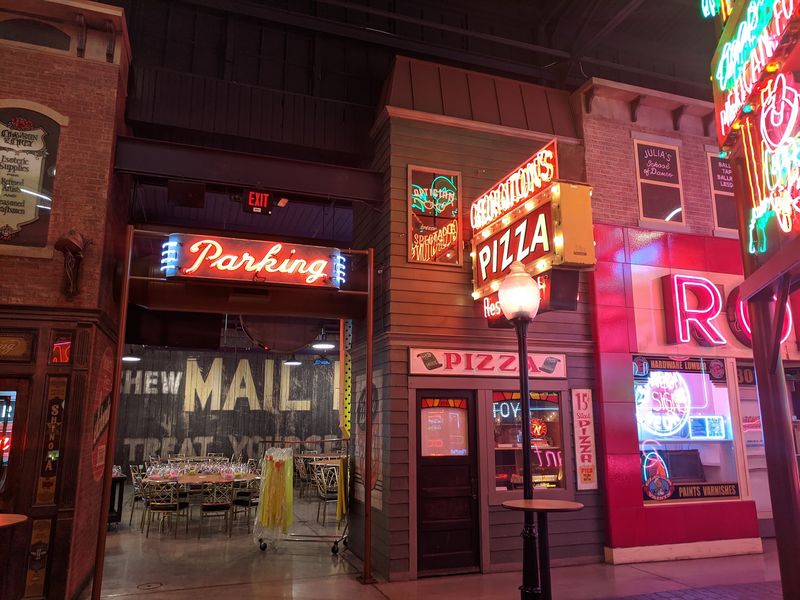
Storefronts, shop windows, and glowing signs line a full street inside the American Sign Museum. The exhibit is called Signs on Main Street, and it recreates a nostalgic small-town strip.
Each life-size storefront acts as a backdrop for period signs and related artifacts. That setup matters, because signs make more sense when you see them where they belonged.
A neon sign on a plain wall looks pretty. A neon sign hanging over a shop window suddenly tells a story about the town around it.
The street feels like a stage set built for wandering. You can stroll from one window to the next and spot how businesses once grabbed attention.
Bring your camera, because this is the photo star of the whole museum. The colors pop against the darker surroundings, and every angle offers a new glowing backdrop.
Take your time here instead of rushing toward the next gallery. Look up, look down, and check the small details tucked into each shop display.
Kids usually treat the street like a giant treasure hunt. Adults get a quick trip back to the days when downtown signs were bold, bright, and proud.
Honestly, it’s hard to pick a favorite storefront. That’s a good problem.
Over A Century Of Signs Packed Into One Glowing Timeline
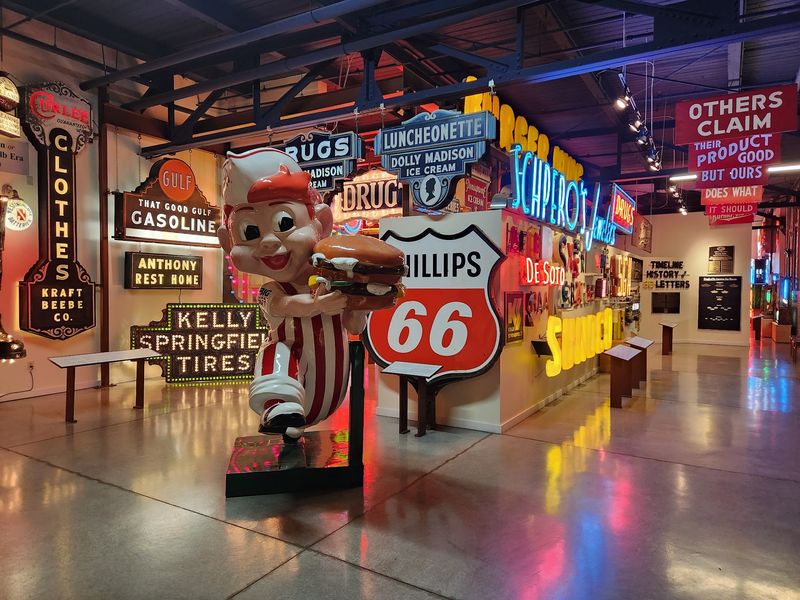
Gold leaf came first. Long before electricity, sign makers worked with wood, metal, and shiny gilded letters to catch your eye.
The collection spans over 100 years of American history, from the late 1800s into the 1970s. Walking through it feels like flipping through a giant picture book of how shops talked to customers.
Next comes the light bulb era. Early electric signs used rows of bulbs to spell out names, which must have looked like magic back then.
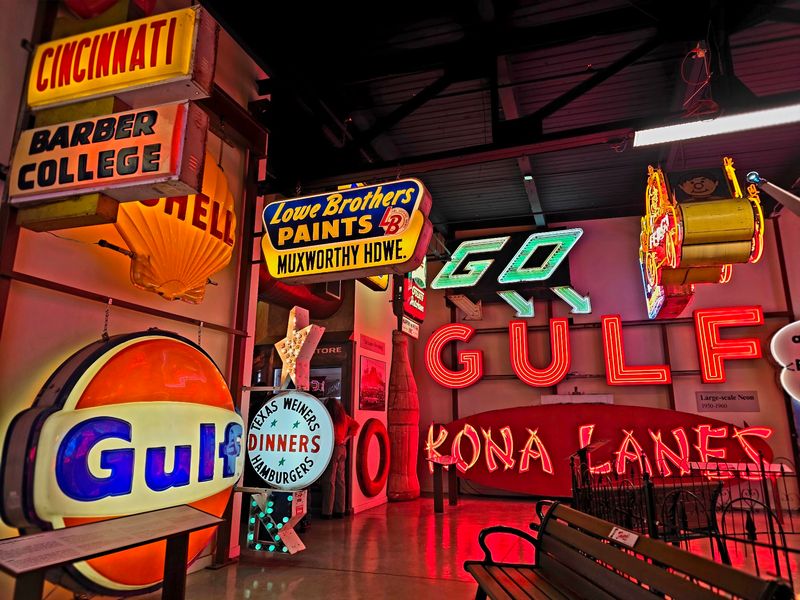
Then neon shows up and steals the spotlight. The museum covers neon’s big years, from the late 1920s to the late 1940s.
After that, plastic signs take over in the 1950s and beyond. They may sound less exciting, but they shaped the roadside look many of us still recognize.
One exhibit tracks three-dimensional letters from 1900 to 1970. Another focuses on porcelain enamel, a tough, glossy finish that helped signs survive the weather.
The neat part is seeing how each new tool changed the style. Sign makers were basically inventors with paintbrushes.
By the end, you’ll never see a gas station sign the same way again. That’s sort of the point.
Real Neon Gets Bent By Hand Right In Front Of You
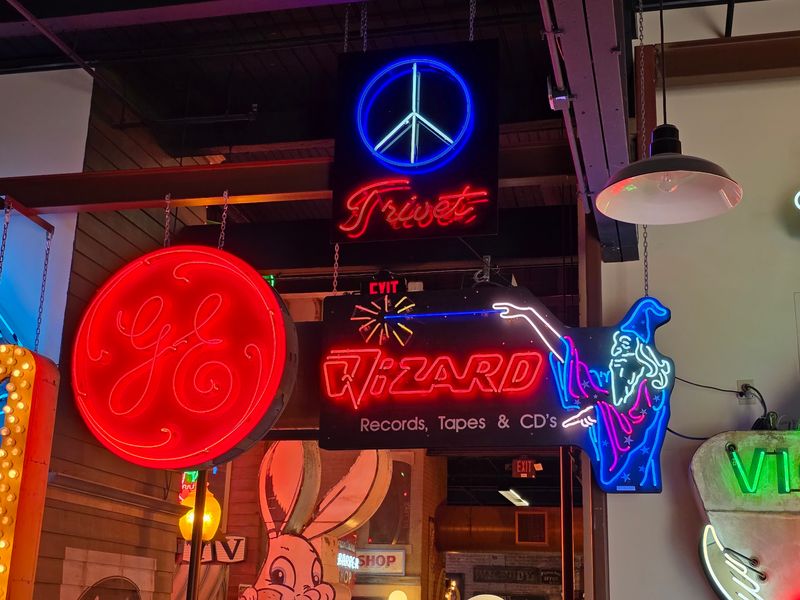
Fire, glass, and steady hands make the magic happen at Neonworks of Cincinnati. This full-time working neon studio lives right inside the museum.
Skilled craftspeople create and repair neon signs here. So the glowing pieces around you aren’t just old relics, they’re part of a living craft.
Saturdays are the day to plan around. Public neon demonstrations run at 11 a.m. and 1 p.m., and each lasts about 45 minutes.
During the demo, you get a close look at how neon tubes are bent into shape. It’s a mix of science lesson and art class, with a little bit of suspense.
Bending glass over a flame sounds tricky because it is. Watching someone do it smoothly makes you appreciate every glowing OPEN sign in town.
Arrive a few minutes early if you want a good view. Saturday is also a busy day for tours, so planning helps.
The studio also keeps business hours Tuesday through Friday. That’s when the real sign work happens behind the scenes.
Once you see the process, those curvy letters suddenly look a lot more impressive. Your kitchen’s light switch will feel pretty boring afterward.
A Former Factory Gives These Giant Signs Room To Shine
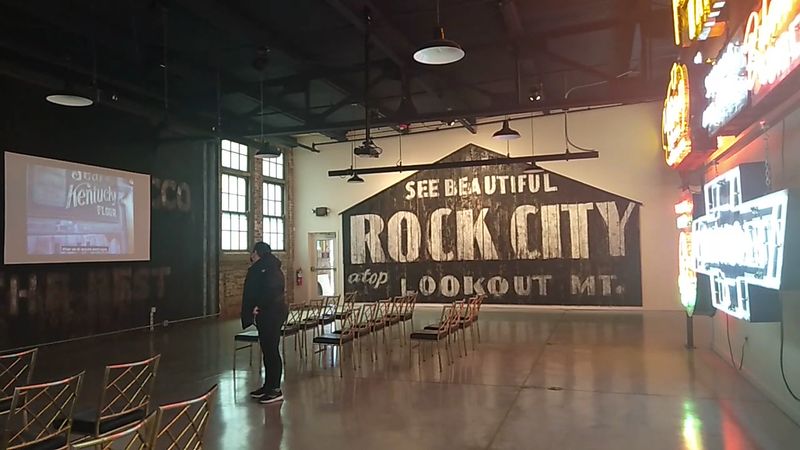
Big signs need big spaces, and this building delivers. The museum sits on a 42,000-square-foot property in Cincinnati’s Camp Washington neighborhood.
The site has quite a past. It once housed the Osterlein Machine Company and later Fashion Frocks, Inc., a dress company.
Today the building is listed on the National Register of Historic Places. That’s a fun twist, since a historic building now protects historic signs.
The museum moved here in June 2012 from its first home in Essex Studios. The bigger space finally allowed much larger signs to come inside.
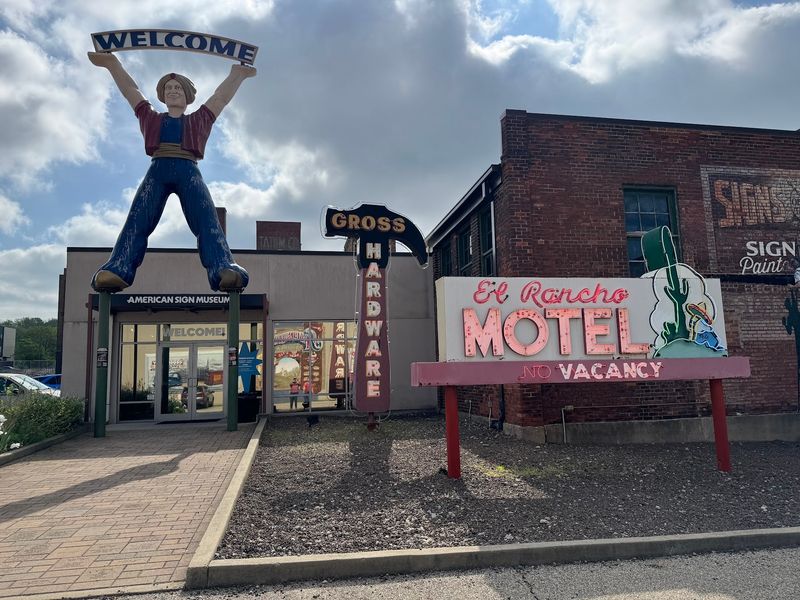
You’ll find it at 1330 Monmouth Ave, Cincinnati, OH 45225. A free parking lot sits on site, and free street parking is available along Monmouth Avenue.
The whole museum is on one floor, which makes exploring easy. Chairs are placed throughout, so you can rest your feet between galleries.
Two wheelchairs are available on a first-come, first-served basis. Certified service animals are welcome, and Braille book tours are also offered.
It’s comforting when a museum this fun also makes room for everyone. Old factory, new purpose, plenty of glow.
One Magazine Editor Turned A Big Idea Into A Glowing Reality
Tod Swormstedt knew signs better than most people ever will. He was a fourth-generation editor of Signs of the Times, a major trade magazine for the sign industry.
In 1999, he started shaping the idea for a museum. It took a few years of work before the doors finally opened.
The American Sign Museum first welcomed the public in 2005. Back then it lived at Essex Studios, before outgrowing that space.
Think about that path for a second. A love for lettering and lights grew into the largest and most diverse public sign museum in the United States.
The collection goes beyond signs too. You’ll spot blueprints, books, catalogs, and tools tied to how signs were designed and built.
About 1,500 photographs and 175 artworks round out the archive. There are also around 300 tools and pieces of equipment.
Those smaller items tell the human side of the story. Every glowing word started with someone sketching, measuring, and cutting.
It’s a good reminder that passion projects can grow surprisingly bright. Few hobbies end with a whole street of neon in Ohio.
Grab A Guide Or Wander With Your Phone As Narrator
Weekends bring free-flowing stories with a live guide. Public tours run Saturdays and Sundays at noon and 2 p.m.
Each guided tour lasts about 45 minutes and is led by a museum staff member. No reservations are needed, so you can simply show up at the right time.
Not a group-tour person? No problem at all.
An online audio tour works through a QR code on your phone. It comes in several languages, including English, Spanish, Arabic, Nepali, German, French, and Chinese.
Printed highlight guides are also available. Those help if you’d rather read than listen, or if your phone battery is feeling dramatic.
Going self-guided lets you linger at the signs you love most. You can skip ahead, circle back, and snap photos without holding anyone up.
Groups of 10 or more paid visitors can book private visits. Those can happen during regular hours or after the museum closes.
A smart move is combining both styles. Catch a guided tour first, then wander back to your favorites with the audio tour.
Either way, the signs do plenty of talking on their own.
The 2024 Expansion Added A Theater And Fresh Gallery Space
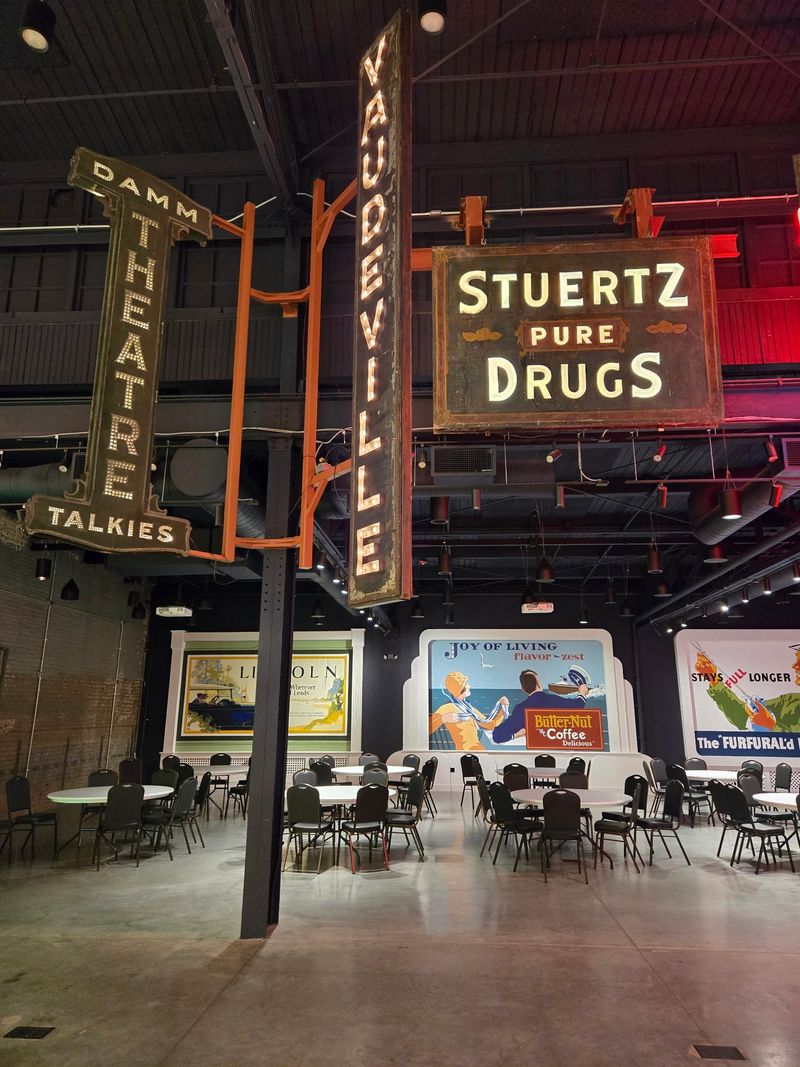
Nearly 20,000 extra square feet arrived in July 2024. For a museum full of oversized signs, that’s like getting a brand-new wing of the house.
The expansion added a new theater. It’s a handy spot to learn about the museum and how neon signs are developed and repaired.
A dedicated classroom space came along too. That gives the museum more room for its workshops, lectures, and hands-on activities for kids.
There’s also an additional gallery for temporary exhibits. That means repeat visits can bring something new to look at.
The extra gallery also works for larger events. More space simply means more ways to enjoy the collection.
Starting in the theater can be a smart first stop. A little background makes the signs in the galleries feel even more meaningful.
Families with curious kids should keep an eye on educational programs. Sign-making workshops turn looking into doing, which is always a win.
Museums sometimes feel frozen in time. This one keeps growing while still celebrating the past, and that balance makes it feel lively every season.
Say I Do Under A Ceiling Full Of Neon
Few party venues come with built-in lighting this good. The American Sign Museum can be rented for weddings, parties, and meetings.
Picture-perfect backdrops are everywhere, and nobody has to hang a single string light. The signs handle the mood all by themselves.
The museum doesn’t run a cafe. Instead, outside catering is used for events hosted on site.
That setup gives hosts flexibility with menus. It also keeps the focus on the glowing star of the show, the collection.
Food and drinks aren’t allowed in the regular exhibit areas during normal visits. So plan to eat before or after if you’re coming for the day.
Corporate teams might enjoy a meeting that ends with a stroll down Main Street. It sure beats staring at a whiteboard under flickering office lights.
Birthday parties get a fun, colorful twist here too. Guests leave with photos that look nothing like the usual party pictures.
Booking ahead is wise for any private event. Spaces like this tend to catch attention fast, much like the signs once did on busy streets across Ohio.
Time Your Trip Right And Take A Little Glow Home
Mondays and Tuesdays are off-limits, so mark your calendar. The museum opens Wednesday through Sunday from 10 a.m. to 4 p.m.
Holiday closures include Easter, Independence Day, Thanksgiving, Christmas Eve, Christmas, and New Year’s Day. On New Year’s Eve, doors close early at 3 p.m.
Saturday is the jackpot day. You can catch a neon demonstration and a guided tour in one visit.
Sunday works well too, with guided tours at noon and 2 p.m. Weekdays offer a calmer pace for slow wandering and self-guided exploring.
Before you leave, swing by the small gift area in the lobby. It carries sign-related souvenirs that make fun keepsakes.
Members get a 10 percent discount in the shop. If you live nearby, a membership could pay off with repeat trips.
Ohio has plenty of museums, but few glow like this one. It’s history you can actually see light up.
So charge your phone and plan around Saturday if you can. Then let a whole street of neon do what signs always did best, which is pulling you right inside.