
This Easy Maine Nature Trail Leads Through Pine Forests To Beautiful Salt Marsh Views
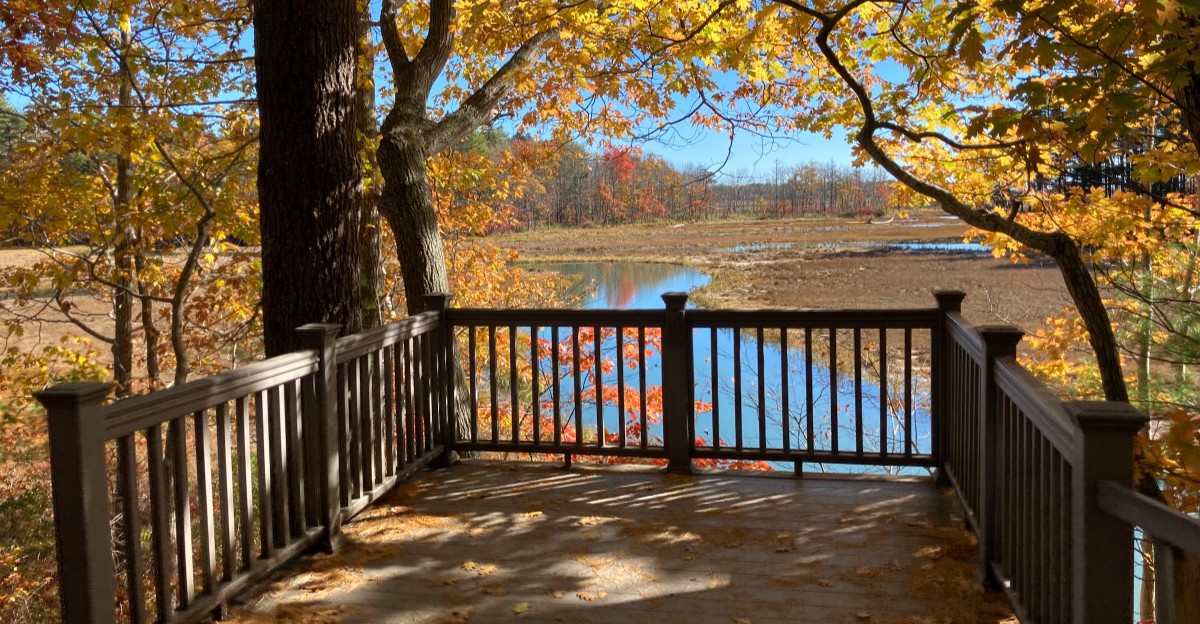
A one-mile loop on the Maine coast is named for the woman who wrote Silent Spring. That alone made me curious.
Then I learned volunteers and youth conservation crews built the trail back in 1988.
The path is flat, wide, and smooth enough for wheelchairs and strollers. It winds through pine woods, then opens onto huge tidal salt marshes. On clear days, the Gulf of Maine shows up in the distance like a bonus prize.
I like how this walk asks almost nothing of your legs. Eleven numbered stops explain marsh grasses, wildlife, and the writer who inspired it all.
Benches wait at some of them, which feels very thoughtful. I believe the best trails make you slow down without trying. This one seems built for exactly that. So which bird will you spot first?
A Famous Writer’s Name Rides Along On Every Step
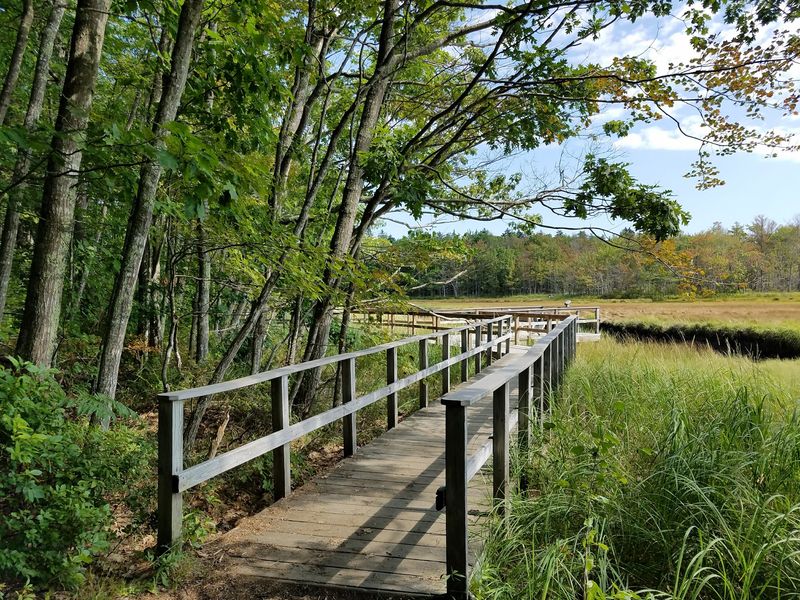
Few trails come with a name this meaningful. Rachel Carson National Wildlife Refuge honors the marine biologist whose book Silent Spring helped launch the modern environmental movement.
Carson spent much of her life along the Maine coast. So naming a coastal refuge after her feels like returning a favor.
The refuge started out in 1966 under a plainer label, Coastal Maine National Wildlife Refuge. On June 27, 1970, it received the name it carries today.
Its main job is protecting salt marshes and estuaries. Those wet, grassy spaces give migratory birds and waterfowl a safe place to rest and feed.
The headquarters sits in Wells, Maine, and that’s where the Carson Trail begins. It’s the refuge’s star walk for good reason.
You don’t need to be a science fan to enjoy it. Still, knowing the story adds weight to the quiet scenery.
The free trail guide even includes a short history of Carson herself. Reading it between stops turns an easy stroll into a tiny lesson.
Honestly, it’s hard to picture a better tribute. Her words protected nature, and now nature returns the gesture with a beautiful path.
One Mile, Zero Drama, And Plenty Of Scenery
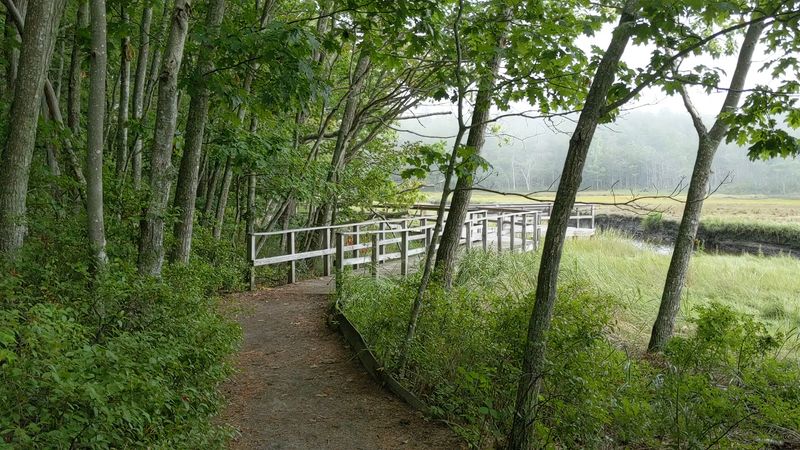
Steep climbs and rocky scrambles are nowhere on this menu. The Carson Trail is a one-mile loop with almost no elevation gain.
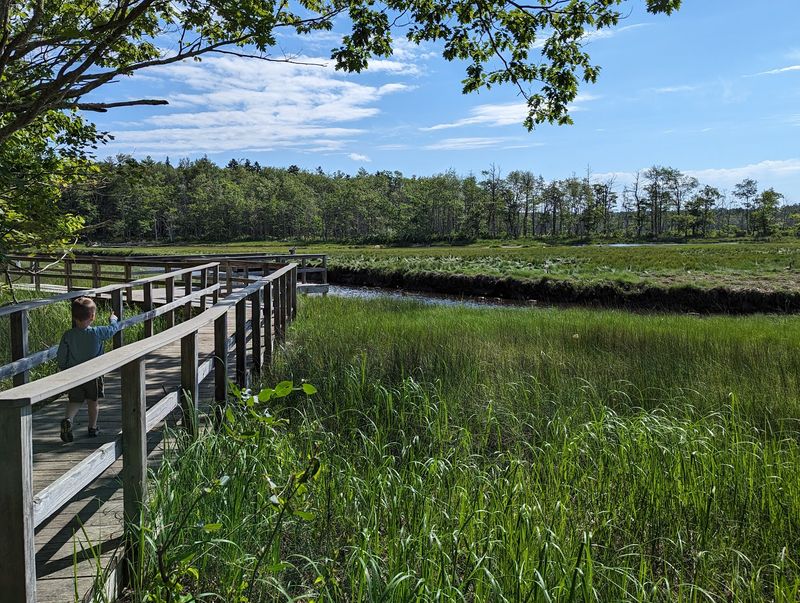
Its surface mixes gravel, packed dirt, and boardwalk. The path is wide enough for two people to walk side by side and chat.
That makes it a smart pick for many kinds of walkers. Grandparents, toddlers, and anyone nursing a sore knee can all handle it.
The loop shape helps too. You won’t need to backtrack or worry about choosing the wrong fork.
Plan for roughly an hour if you like to pause and look around. Speedy walkers will finish sooner, though rushing kind of misses the point.
Comfortable sneakers work fine here. Fancy hiking boots can stay home in the closet.
Winter brings a different story, since snow and ice can coat the path. Traction cleats are a wise idea during the colder months.
Rain can also leave a few soft, muddy spots. Dry days make the smoothest outing, especially with wheels involved.
Easy rarely looks this pretty. You get big coastal views without paying for them in sweat.
The Pine Woods Set The Mood Before The Marsh Shows Off
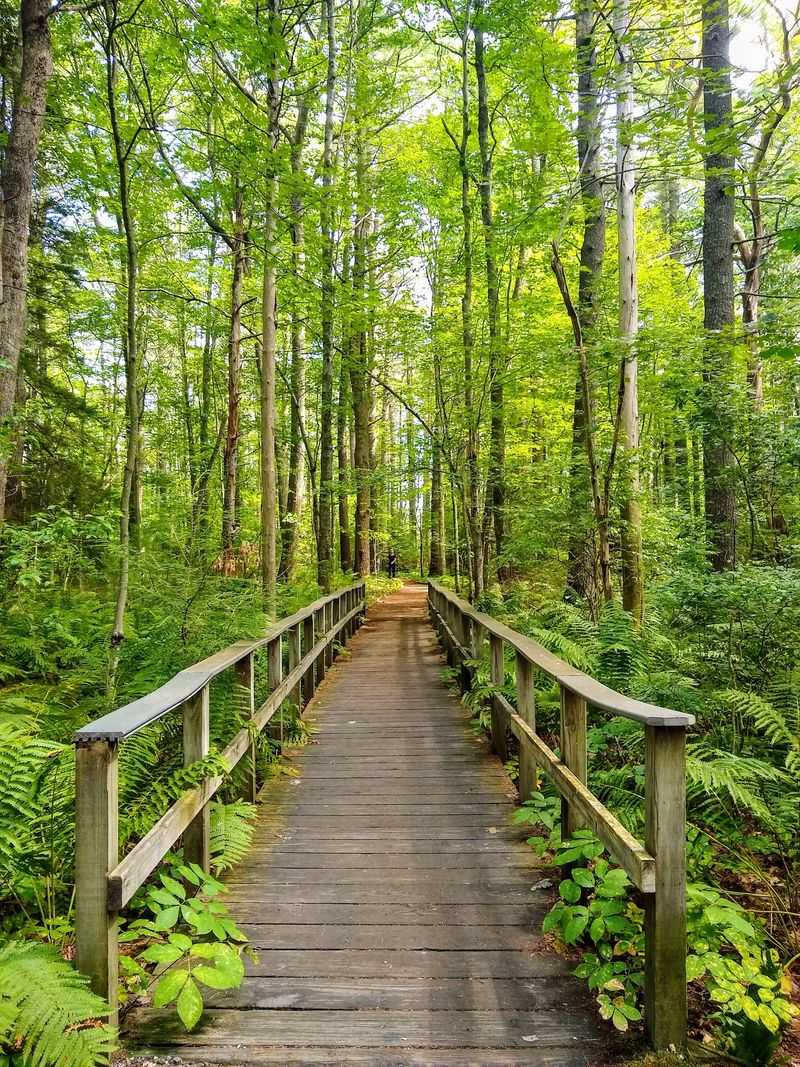
Tall pines greet you first, and they make a calm opening act. Much of the trail stays shaded, which feels great on warm summer afternoons.
The forest isn’t only pine, though. The loop also passes through upland hardwoods and shrubby, scrubby areas.
Each habitat supports different plants and animals. That variety is part of why the refuge works so well for wildlife.
One interpretive stop explains something called the critical edge. It’s the zone where forest meets marsh, and many creatures love living right there.
Think of it like a busy border town. Animals can hide in the trees, then step out to feed in the open.
Keep your eyes on the ground and the branches. Chipmunks often scurry around, putting on their own little show.
A friendly warning belongs here too. Poison ivy grows along many coastal Maine trails, so stay on the path.
Learning what those three shiny leaves look like takes about a minute. Your skin will thank you for that minute later.
The woods make the marsh views feel even bigger when they finally appear. Good pacing, nature.
Wide-Open Marsh Views Steal The Show
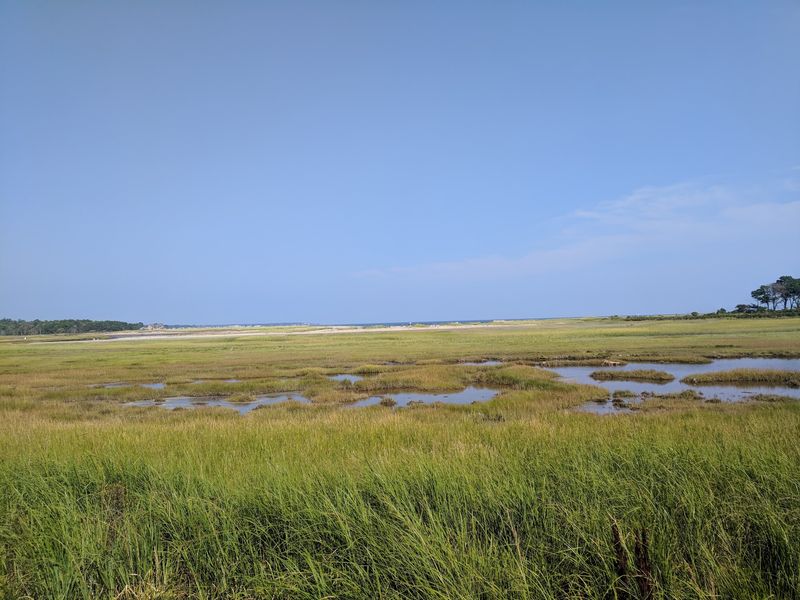
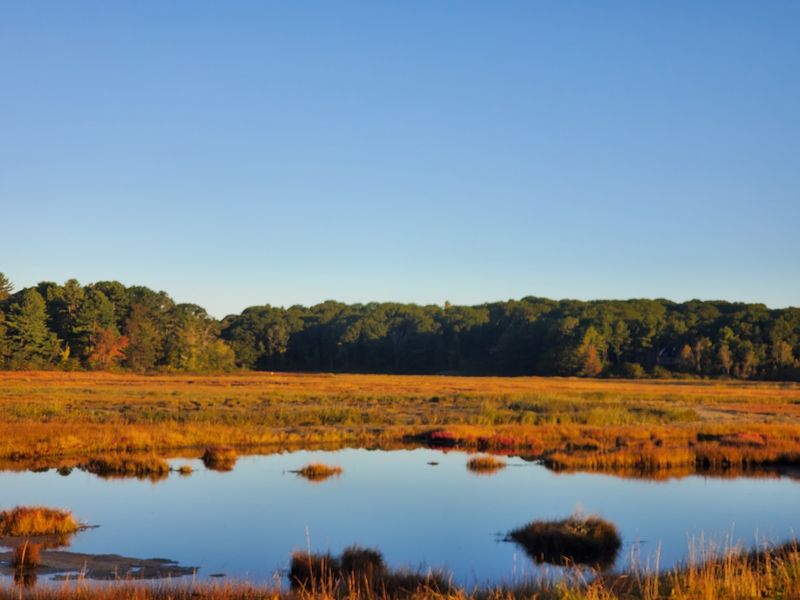
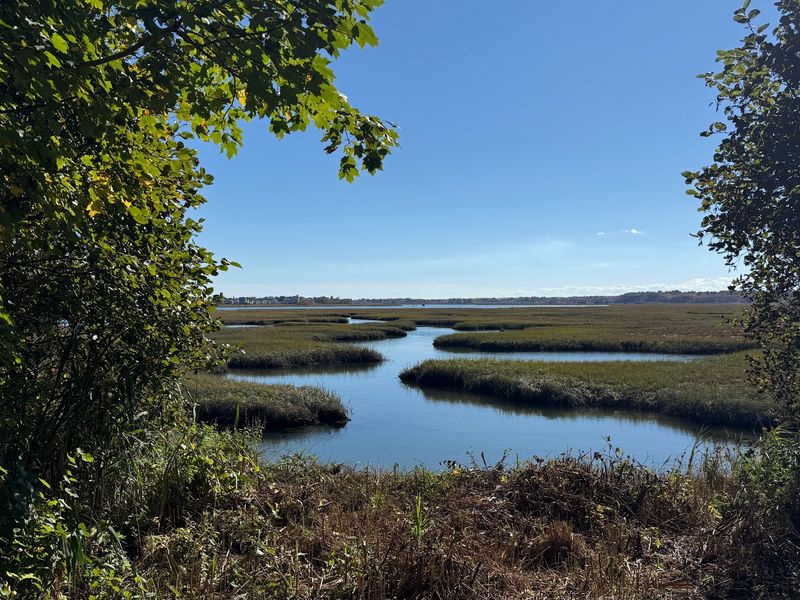
Then the trees part, and suddenly the world gets wide. Huge tidal salt marshes stretch out in shades of green and gold.
You’ll see salt marsh pools and pannes from several spots. Pannes are shallow dips in the marsh that hold water after high tides.
The trail also follows the Merriland River. Later, you can view where it meets Branch Brook to form the Little River.
Watching two waterways join is oddly satisfying. It’s like seeing a family reunion, only wetter.
On clear days, the Gulf of Maine peeks through in the distance. It’s far away, but spotting the ocean still feels like a win.
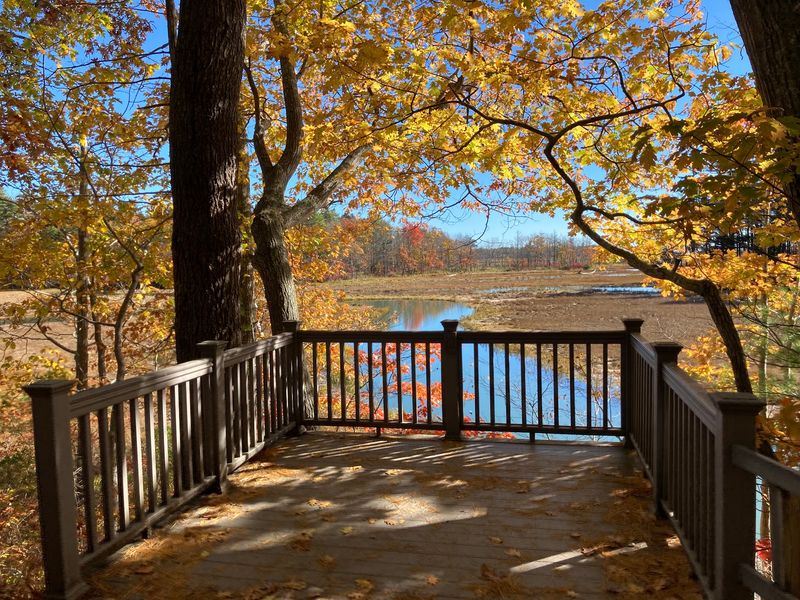
Viewing platforms and benches make it easy to linger. The back half of the loop has an especially good spot for sitting a while.
The marsh changes with the tides and seasons. Fall colors make it glow, while summer turns everything bright and lush.
Bring a camera or just your eyes. Either way, these views tend to stay with you after you leave Maine.
This is the payoff the trail promises, and it delivers.
Pack Binoculars, Because The Birds Are Busy
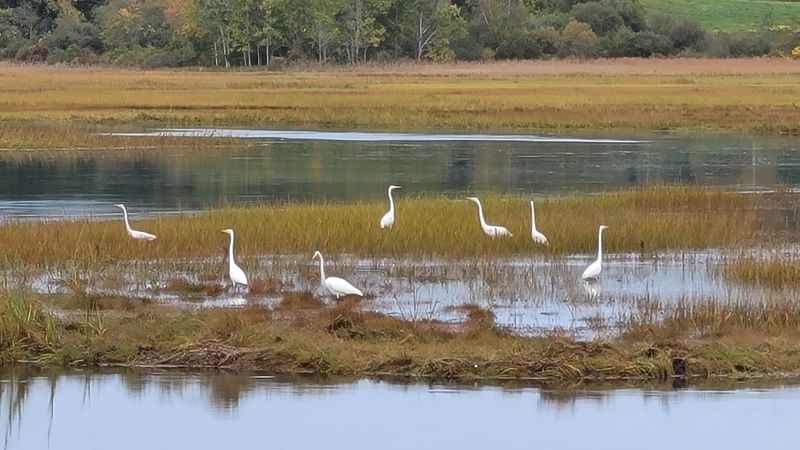
Migratory birds treat this refuge like a major rest stop on their long trips. That’s exactly why the land was protected in the first place.
Herons often wade through the shallow water. Saltmarsh Sparrows and various waterfowl also use these wetlands.
Piping Plovers count among the species connected to the refuge. These small shorebirds need careful protection along the coast.
Birds aren’t the only residents. Deer, wild turkeys, foxes, and snipe can live here too.
One special local is the New England cottontail rabbit. It’s a native bunny that needs shrubby habitat to thrive.
Timing makes a big difference. Early mornings and later afternoons usually offer better wildlife watching.
Move slowly and talk softly for your best chances. Animals spook easily, especially when a group comes stomping around the bend.
A small pair of binoculars is worth tossing in your bag. Even a phone camera with zoom can help.
Bird lovers could spend hours on that one mile. Casual walkers might simply enjoy a surprise wing flash over the grass.
Either way, the marsh rarely feels empty.
Eleven Stops Turn A Stroll Into A Story
Grab the free trail guide at the kiosk before you start. It pairs with 11 interpretive stops spread along the loop.
Each stop explains a feature you’re looking at. Topics include marsh grasses, the critical edge, and Rachel Carson’s life.
Kids can treat the numbers like a scavenger hunt. Finding stop seven before your sibling counts as a major victory.
Adults will likely learn plenty too. Most folks can’t tell one marsh grass from another, and that’s fine.
Benches sit at some of the stops. They’re perfect for resting, reading, or just watching the marsh breathe.
You can also skip the guide entirely. Some walkers prefer to wander and soak in nature without reading.
There’s no wrong way to do it. The trail works as a classroom or a quiet escape.
The loop was built in 1988 with help from volunteers and conservation crews. The Maine Conservation Corps and Youth Conservation Corps both pitched in.
That teamwork shows in the thoughtful design. Every stop feels placed with care rather than randomly scattered.
Wheels, Paws, And Little Feet All Get A Turn
Accessibility here isn’t an afterthought. The Carson Trail is universally accessible, welcoming wheelchairs and strollers.
It ranks among the more accessible nature walks on the Maine coast. That’s a big deal in a state famous for rocky, rooty paths.
Families with babies can roll right along. Older walkers get coastal scenery without wrestling steep hills.
Dogs get an invite too, as long as they stay leashed. In fact, the Carson Trail is the only spot in the refuge where pets are allowed.
That rule protects nesting birds and other wildlife. A curious pup chasing a heron would not end well for anyone’s peace.
Bring bags to clean up after your furry friend. Good habits keep the trail pleasant for everyone.
Muddy patches can pop up after heavy rain. Wheelchair users may find dry weather makes for the smoothest ride.
Little hikers will love the boardwalk sections. Wooden planks just feel more exciting when you’re four years old.
It’s rare to find a trail where nearly everyone can come along. Here, the whole crew fits.
Timing Your Visit Saves You From Parking Lot Circling
The parking lot is small, and summer weekends can fill it fast. Arriving early helps you skip the frustrating loop around for a space.
You’ll find the refuge headquarters at 321 Port Road, Wells, ME 04090. The trailhead starts right there.
Visitor areas, including the trail, open year-round. Hours run from a half hour before sunrise until a half hour after sunset.
That means sunrise walkers get a real treat. Golden light over the marsh is worth setting an alarm for.
Trail maps and signs help you get oriented. Honestly, getting lost on this loop would take real talent.
Each season brings its own flavor. Fall color is lovely, while winter visits call for warm layers and grippy shoes.
Plan around the crowds, and the experience gets even calmer. Early birds catch the birds, plus the good parking.
More Adventures Wait Beyond The Loop
Finished the trail and still itching for more? The refuge offers several other ways to enjoy the outdoors.
Paddlers can launch non-motorized canoes and kayaks at three designated boating locations. Gliding through marsh waters gives you a totally different view.
Fishing is allowed too, with the proper permits. You’ll need to follow Maine state rules as well.
Hunting happens in certain areas during set seasons. Permits are required, and species include deer, turkey, and geese.
Ranger-led programs pop up as well. They’re a great way to learn from people who know these marshes best.
Birding stretches far beyond the Carson Trail. The refuge protects coastal land across many miles of southern Maine.
Check program schedules ahead of time. Offerings can change with the seasons.
Still, the Carson Trail remains the easiest starting point. It’s the friendly front porch to a much bigger home.
Rachel Carson National Wildlife Refuge rewards curious visitors who come back again and again. One loop might be just the beginning of a long friendship with this marsh.
Not bad for an easy mile.