
People Once Lined Up To Fill Jugs At This Florida Artesian Well
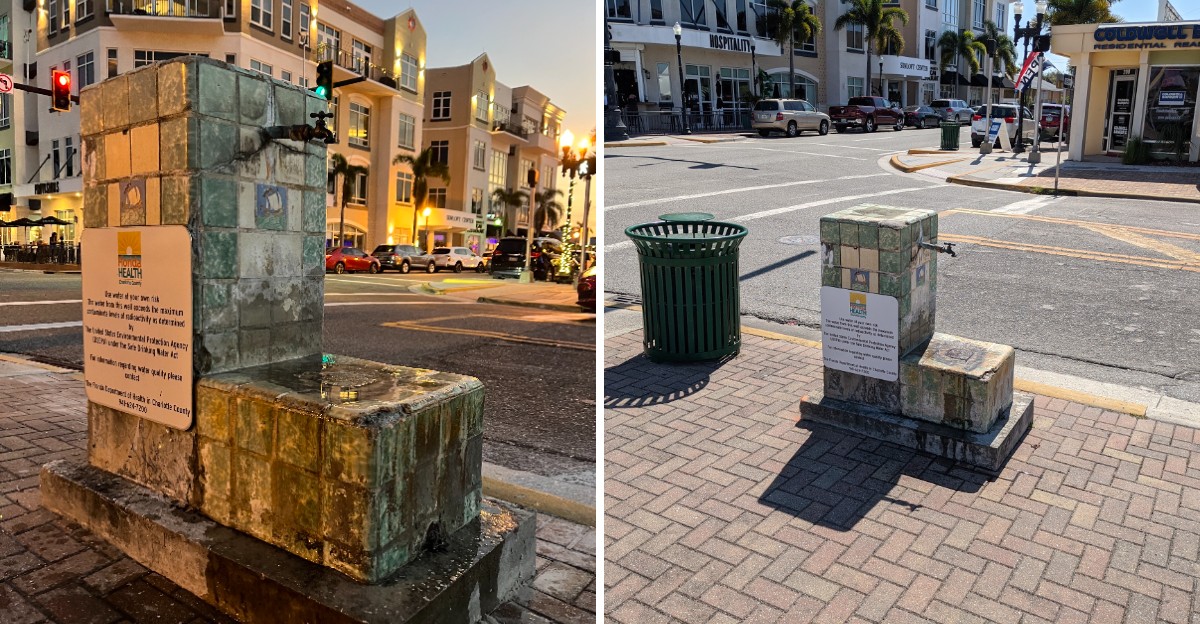
At Punta Gorda’s Fountain of Youth in Florida, an old spigot pours out water that smells like rotten eggs. A posted health notice warns that the water exceeds the federal limit for radioactivity.
Decades ago, people lined up with empty jugs to fill. At the height of the fountain’s popularity, the handle got so much use that it had to be replaced every six months.
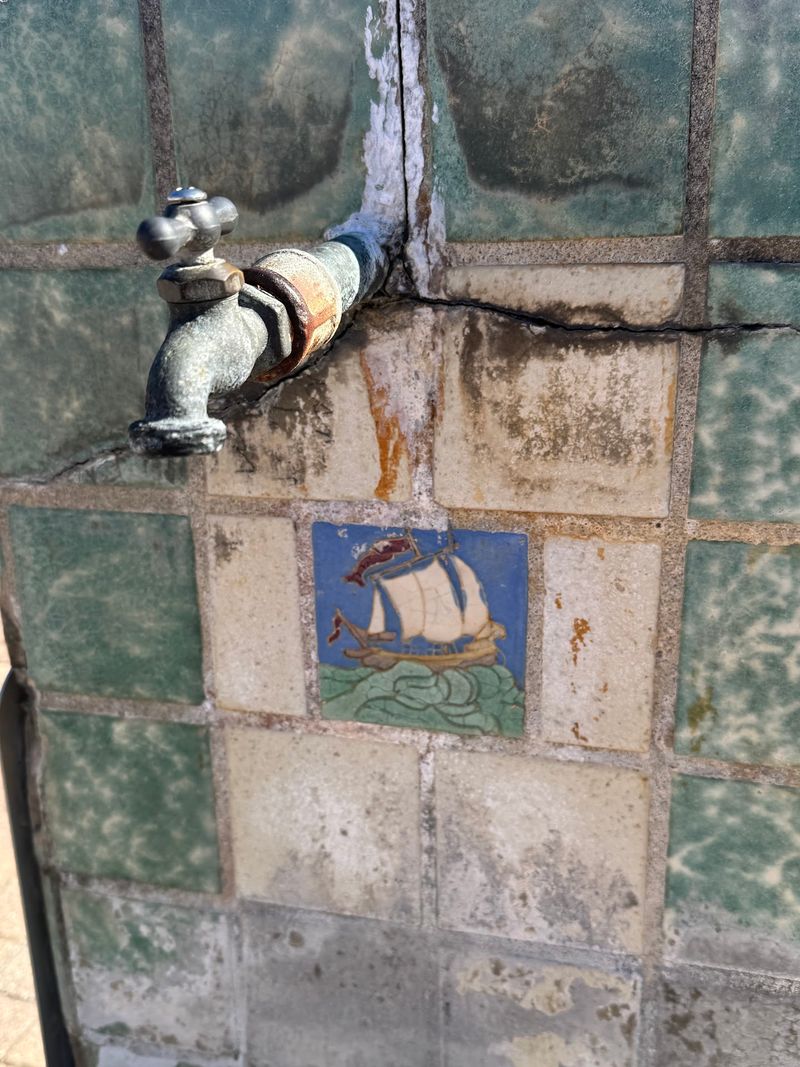
I love that a whole community once chipped in to build a tiled monument around water this stinky. I can’t imagine many places treating a sulfur well like a local celebrity, complete with Spanish ship artwork.
The tiled fountain tells a story that starts with a neighborhood ritual and takes an unexpected turn when the water gets tested. The old spigot and the warning sign still sit side by side on a downtown corner.
The Handle Wore Out Every Six Months, And That Tells You Everything
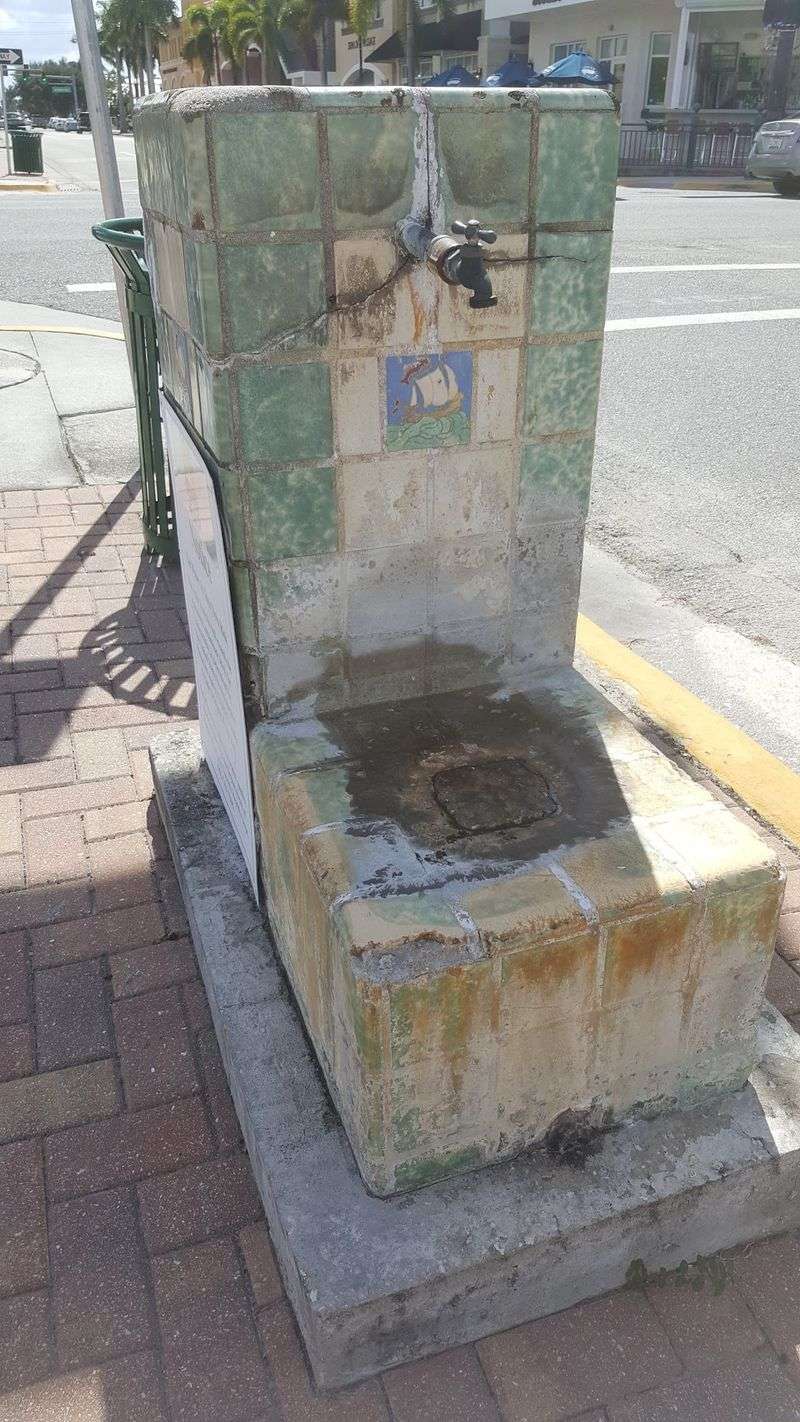
Few water fountains can brag about breaking their own hardware from sheer popularity. Punta Gorda’s Fountain of Youth pulled it off in the mid-20th century.
Back then, people lined up at the spigot with jugs, bottles, and big hopes. They believed the artesian water had special powers that could keep them feeling young.
The demand got so intense that the handle often needed replacing about every six months. That’s a lot of twisting for one little spigot on a street corner.
Think about that for a second. No ads, no gift shop, and no ticket booth, just a steady crowd of folks hauling water home by the gallon.
Punta Gorda residents were telling stories about a fountain that could make people feel young again as early as 1894. By the time the fountain hit its peak, it was part routine, part ritual, and part neighborhood tradition.
The jug lines eventually faded, but the habit never fully disappeared. Some people still travel for hours to collect water here, which says a lot about how deep this loyalty runs.
So the fountain earned its fame the honest way. It simply kept flowing, and people kept showing up with empty containers.
Your Nose Will Know You’ve Arrived Before Your Eyes Do
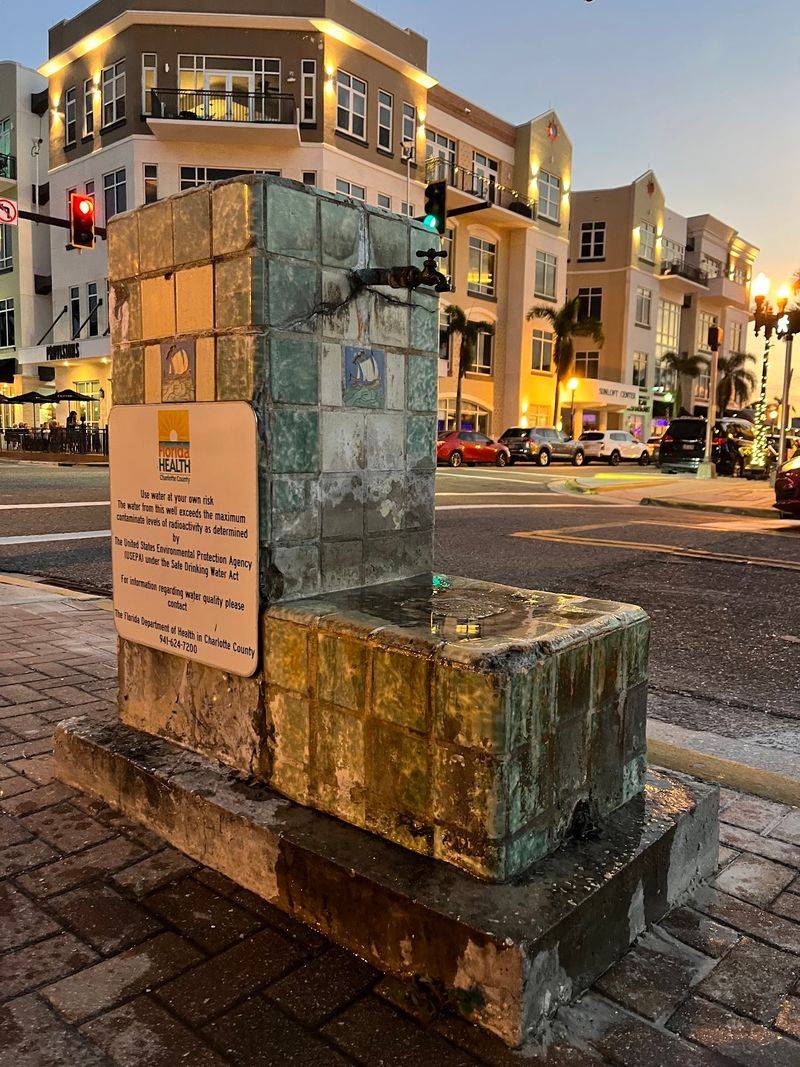
Rotten eggs. That’s the comparison almost everyone reaches for when describing this water’s smell.
The scent comes from sulfur, and it’s strong enough to make first-timers take a step back. Turn the spigot, and the aroma arrives right on cue.
Plenty of Florida wells carry a sulfur smell, but this one has turned it into a calling card. The odor is practically part of the fountain’s personality at this point.
Here’s a fun way to look at it. If the water smelled like roses, it probably wouldn’t feel nearly as legendary.
The funky smell adds to the old belief that “medicine” water should be a little unpleasant. Strong flavor once meant strong benefits, at least in the minds of the faithful.
Should you plan to visit with kids, give them a heads-up first. Their reactions can be priceless, and a quick warning keeps the surprise fun instead of shocking.
Bring your camera for that moment when someone gets their first whiff. It’s easily one of the most memorable parts of stopping by this quirky corner in Florida.
Yes, The Water Is Radioactive, So Let’s Talk Numbers
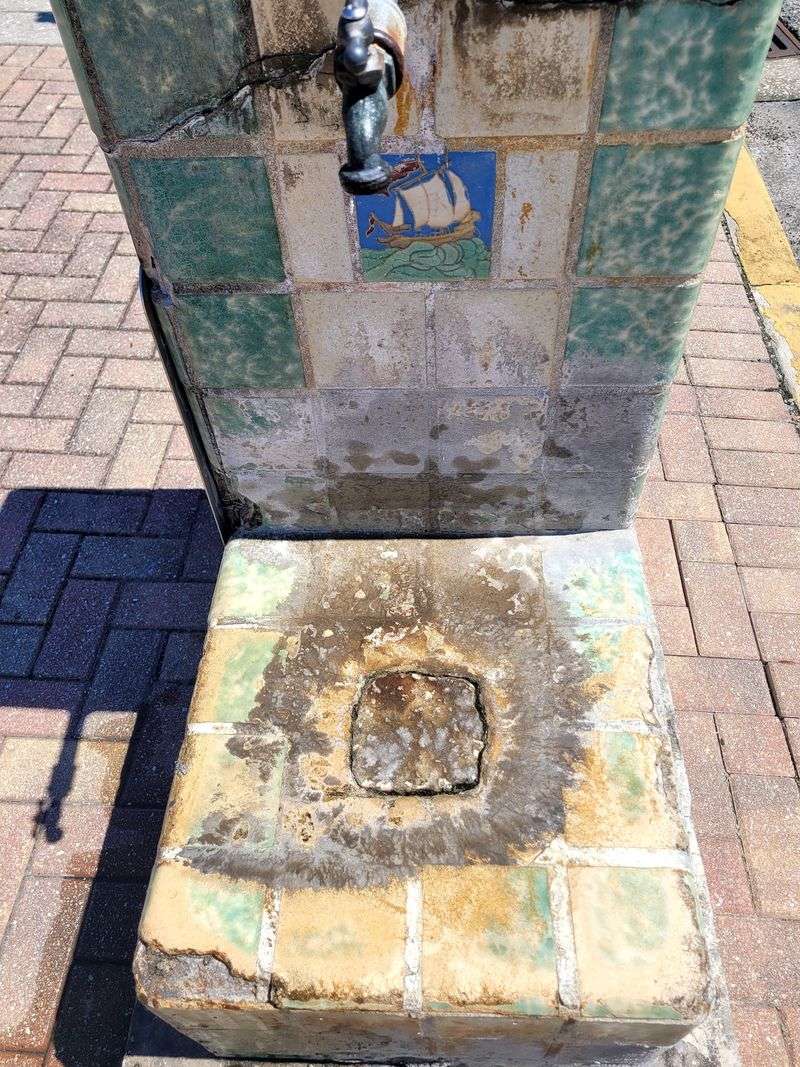
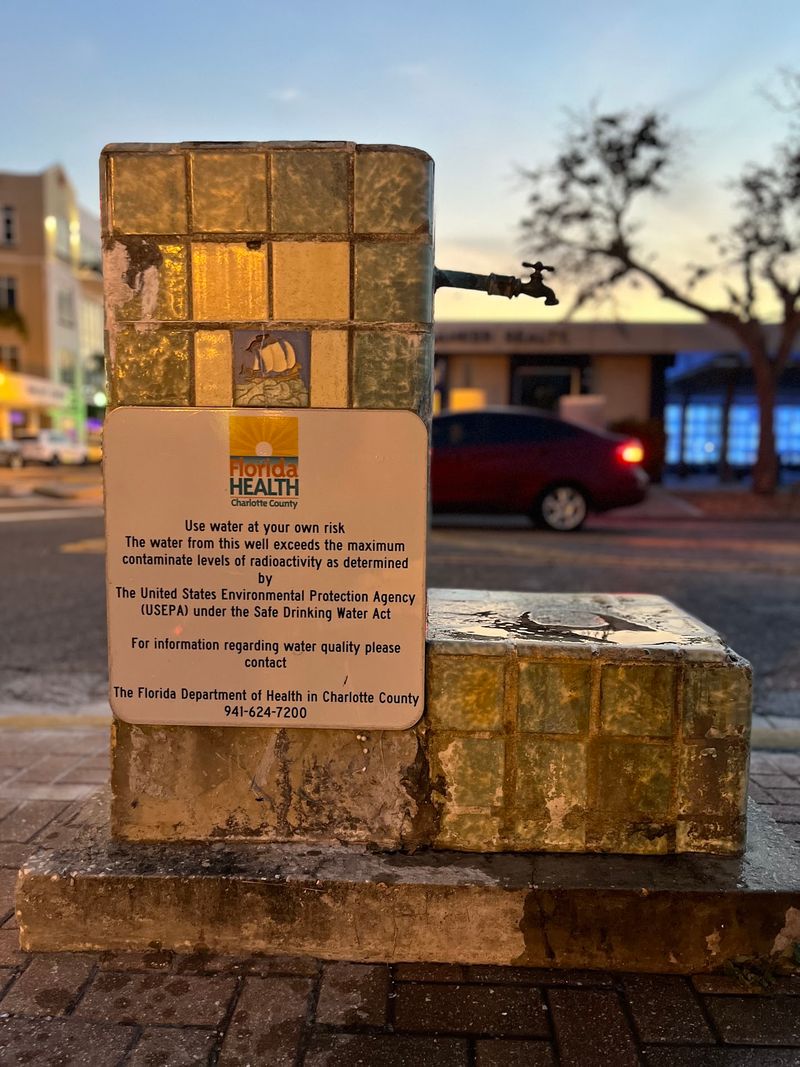
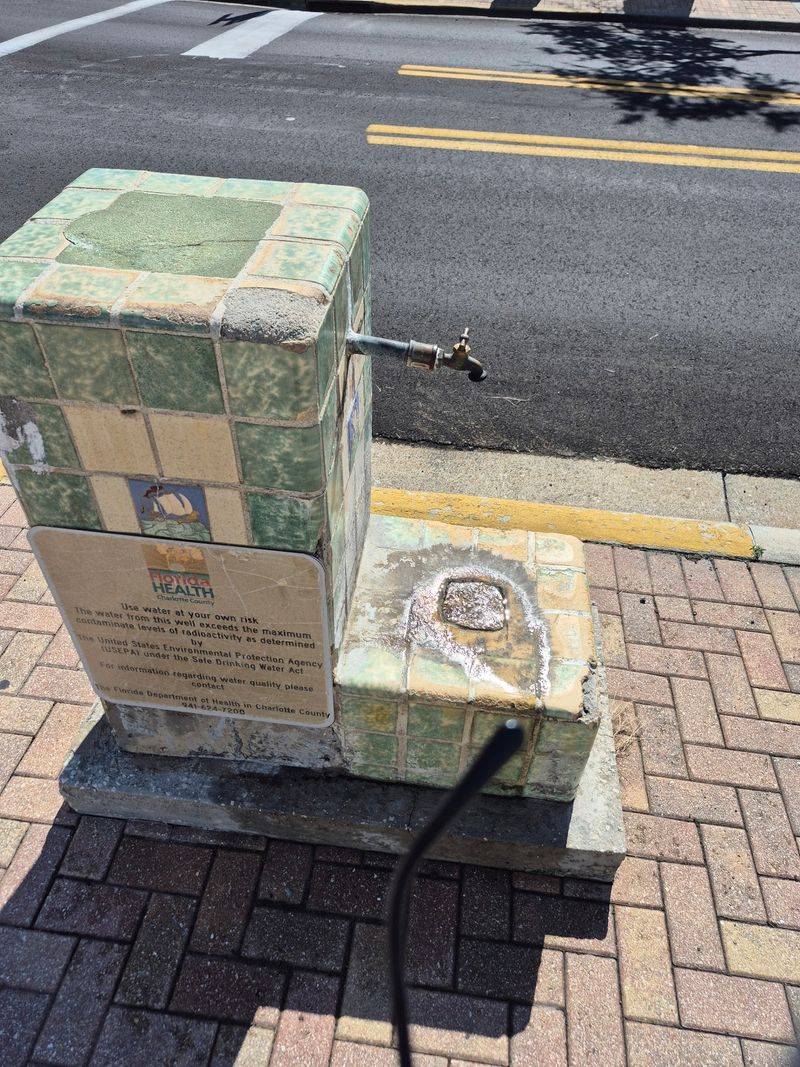
A small sign from the Florida Department of Health sits right by the fountain. It warns that the water exceeds federal limits for radioactivity under the Safe Drinking Water Act.
A 1983 test measured 9.2 picocuries per liter (pCi/L) of radium-226 in the fountain water. The EPA’s drinking-water limit is 5 pCi/L for radium-226 and radium-228 combined.
U.S. Geological Survey researcher Zoltan Szabo estimated a roughly 1-in-20,000 chance of developing cancer in a hypothetical scenario involving a liter of water a day for 70 years.
The estimate did not establish that the fountain water is safe to drink.
Hidden In The Glass Is A Mineral Your Bathtub Already Loves
Radium grabs the headlines, but it isn’t the only thing in this water. The well also carries high levels of magnesium.
Magnesium is a mineral linked to heart health and healthy blood pressure. Your body uses it for all sorts of everyday jobs.
There’s also magnesium sulfate in the mix. You probably know it better as Epsom salt, the stuff people toss into warm baths after a long week.
Epsom salt is often associated with easing stress and soreness. That connection may help explain why so many people felt better believing in this fountain.
It’s a funny twist when you stop and think about it. The same water that earned a warning sign also contains minerals people actually seek out on purpose.
That mix of good and questionable keeps the conversation lively. Fans point to the minerals, while cautious folks point to the posted notice.
Either way, the chemistry makes this more than a stinky spigot. It’s a little science lesson flowing out of a tiled box in Florida, free for anyone curious enough to learn.
A 1926 Tile Job That Still Turns Heads On The Corner
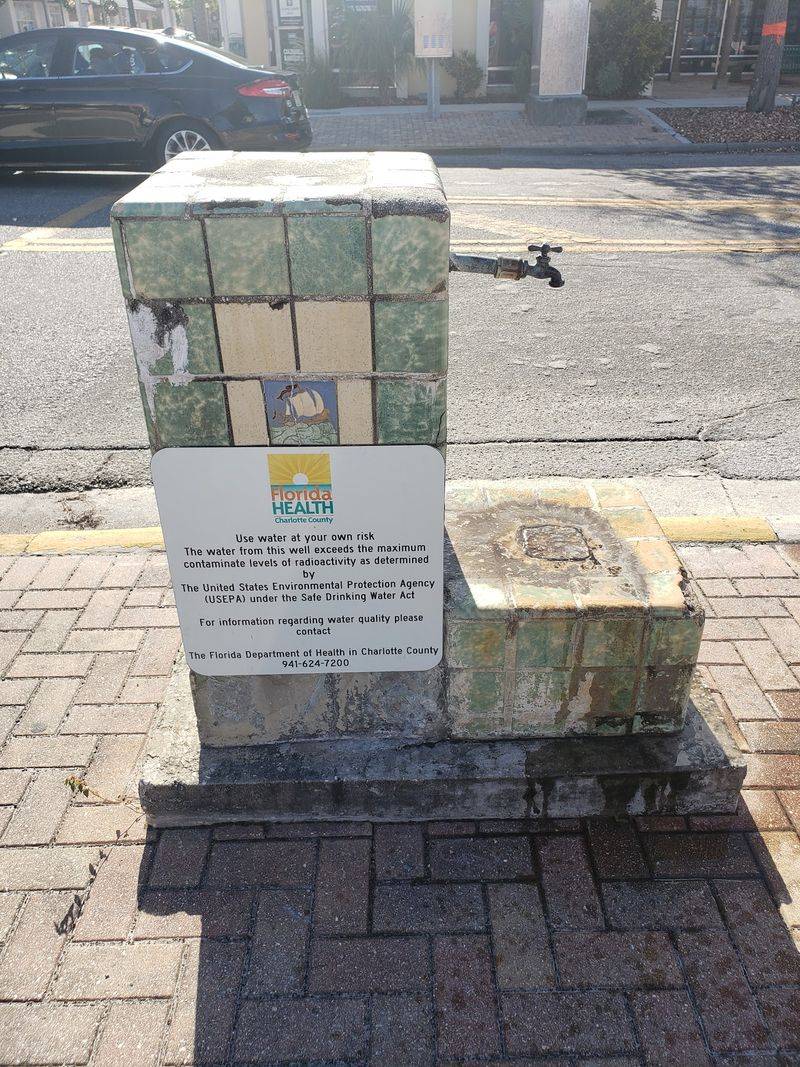
Green tile and Spanish galleons make an unusual combo for a water source. In 1926, the community decided that’s exactly what this well deserved.
Punta Gorda residents funded the structure themselves. That detail says a lot about how much the water meant to the town nearly a century ago.
The fountain is a simple tiled rectangle with a working spigot. Nothing fancy, yet it has a charm that modern drinking fountains rarely manage.
Look closely at the decoration. Images of Spanish ships from the era of Ponce de León add a storybook touch to an otherwise plain block.
Those ships tie the well to the famous Fountain of Youth legend. It’s a clever bit of hometown branding that still works today.
Photographers, take note of this one. The green tile pops against the street, making it an easy and fun snapshot for social media.
I appreciate that nobody tore it down for something sleeker. Keeping the 1926 structure means every visitor sees the same quirky design that greeted jug carriers decades ago.
How Ponce de León Became Part Of The Fountain’s Story
According to legend, Juan Ponce de León searched for the Fountain of Youth. Historians have found no evidence in records from his lifetime that he went looking for it.
The Spanish explorer’s legend has floated around Florida for centuries. Lots of spots across the state have happily claimed a piece of it.
Punta Gorda’s Fountain of Youth leans into the tale with its ship artwork. The name itself practically winks at the old story.
To be clear, there’s no historical or archaeological evidence that Ponce de León ever visited this well. The connection is pure legend and local fun.
Does that ruin the magic? Not really, because the story was never about proof in the first place.
Legends give ordinary places a little extra sparkle. At this downtown fountain, the Spanish ships painted on the tiles keep the legend visible.
So go ahead and enjoy the myth without taking it too seriously. Knowing the real history just makes you the smartest person standing at the spigot.
Officials Tried To Shut It Off, And The Town Said No Thanks
The federal radium standard was issued under the Safe Drinking Water Act of 1974. Testing in 1983 found elevated radium levels in the fountain water.
After the Clean Water Act of 1972, closer checks revealed those elevated radium levels.
Public interest began to cool once the results came out. The long jug lines of earlier decades slowly thinned.
Officials then talked about closing the well for good. Another idea involved rerouting the fountain to city water instead.
That’s when the community spoke up loudly. Strong public opposition kept the original artesian flow open and accessible.
You have to admire that kind of devotion. Plenty of towns would have quietly capped a well like this and moved on.
Instead, residents treated the fountain like a piece of family history. They chose a warning sign and personal choice over losing a landmark completely.
That decision is why you can still turn the spigot today. Every drop that splashes out is a small reminder that people here care fiercely about their traditions, even the smelly ones.
Easy To Miss, Open Around The Clock, And Right Downtown
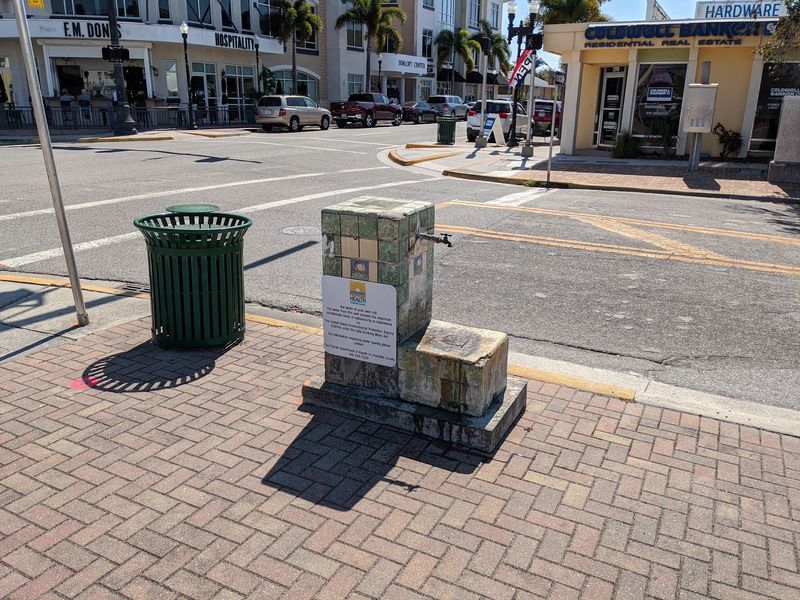
Blink while driving, and you might cruise right past it. The fountain is small, low, and blends into the street scene surprisingly well.
You’ll find Punta Gorda’s Fountain of Youth at the corner of West Marion Avenue and Taylor Street, Punta Gorda, FL 33950. It sits in the city’s historic downtown area.
The spot is listed as open 24 hours. There’s no gate to unlock and no schedule to plan around.
That makes it a perfect quick stop on any downtown stroll. You can swing by in the morning or catch it on an evening walk.
Traffic moves along the nearby streets, so stay aware when crossing. A little caution goes a long way at any busy corner.
The fountain is also close to shops, the Harborwalk, and Fishermen’s Village. It pairs nicely with a relaxed afternoon exploring this part of Southwest Florida.
I like how casually it sits there, almost modest about its fame. A landmark this quirky doesn’t need a big sign to earn a detour.
Stop For The Tiled Ships And The Story Behind Them.
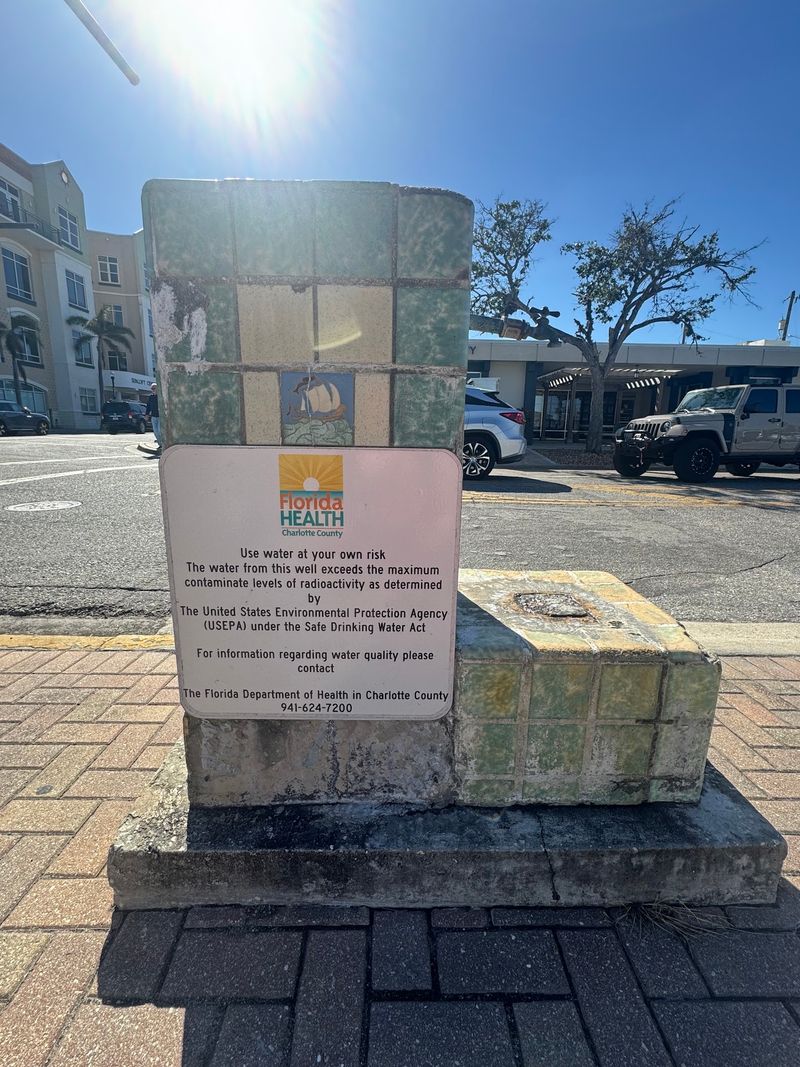
Take a moment to read the posted health notice and skip drinking the water. The fountain’s green tiles and Spanish ship artwork offer plenty to look at while you’re there.
Start by reading the health sign posted beside the fountain. Knowing the facts helps you make a choice you feel good about.
Curious about the flavor but not ready to drink? Simply turning the handle and catching a whiff delivers plenty of entertainment.
A small empty bottle can be handy if you want to examine the water up close. Just remember the posted warning before treating it as drinking water.
Bring a phone or camera for the tiled ships and green walls. The fountain makes a cheerful backdrop for a family photo or a silly “younger already” pose.
Visiting with friends? Make a game of guessing how strong the smell will be before anyone turns the spigot.
The little tiled fountain still gives visitors a glimpse of the story Punta Gorda residents were telling in the 1890s.. Few roadside stops in Florida offer this much history, chemistry, and giggling in one tiny tiled box.