
Free Admission And Real Dinosaur Tracks Make This Northern Arizona Stop A Family Favorite
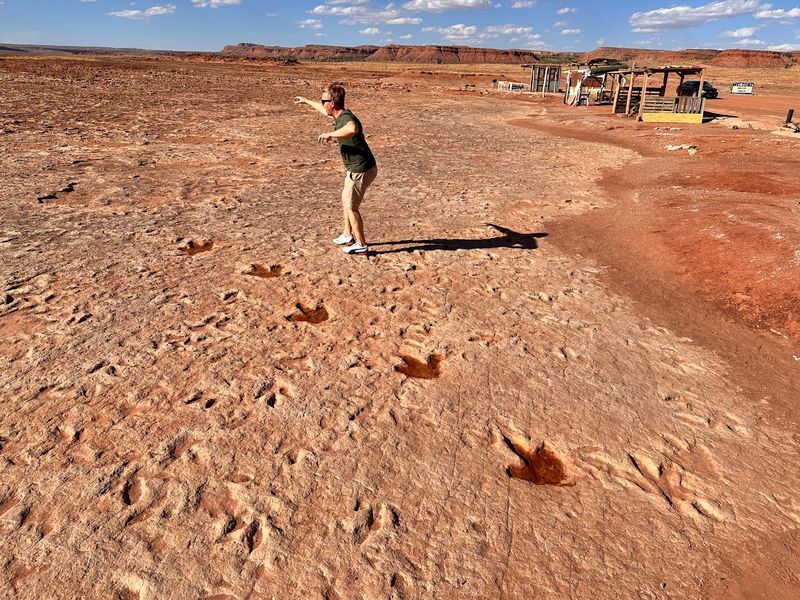
A splash of water on bare rock can suddenly reveal a three-toed footprint left by a dinosaur. That trick happens on a dusty patch of northern Arizona, right beside a highway.
The prints are real, not plaster copies behind glass. Scientists date them to the Early Jurassic, roughly 200 million years ago.
Back then, this dry ground was soft and muddy, the kind of place a hungry predator might cross.
You can walk right among them. Local Navajo guides often meet cars, point out tracks, and share stories about the land their families know well.
There’s no ticket booth and no entry fee.
I love how little effort this takes for such a huge payoff. A short stop on a road trip turns into a real walk with dinosaurs.
So how close can you get?
Real Dinosaur Footprints Waiting Just Off Highway 160
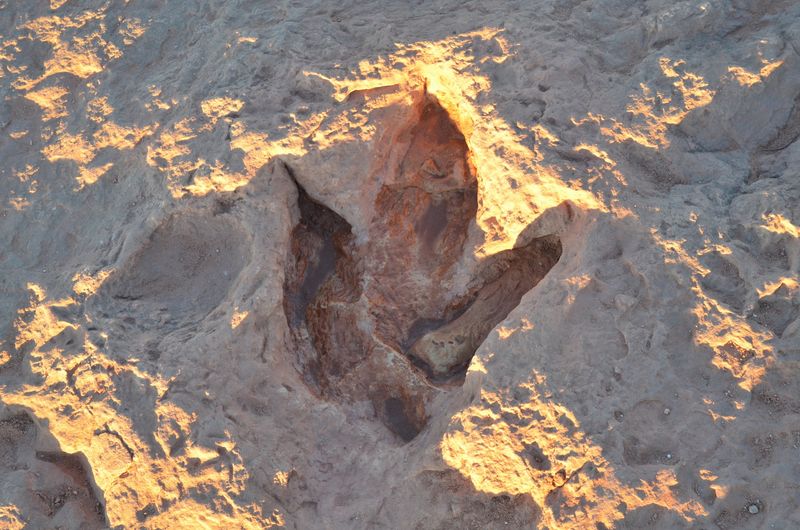
Most roadside stops offer a restroom and a snack. The Navajo Moenave Dinosaur Tracks offer something much older, sitting near Tuba City in northern Arizona.
The site sits on open land within the Navajo Nation. It lies about five miles west of Tuba City, on the north side of Highway 160.
Hand-painted signs point drivers toward a short dirt road. That road ends at a small parking area, and the tracks begin almost immediately.
Seriously, you barely need to stretch your legs. Many prints sit only a few steps from where you park the car.
The setting looks plain at first, like an ordinary rocky field. Then someone points out a footprint, and the whole place changes.
Paleontologists from Northern Arizona University have confirmed that these tracks are authentic. They are trace fossils, meaning they record an animal’s movement rather than its body.
That detail matters more than it sounds. Every print captures a single moment when a living creature stepped into mud.
Bones show what an animal looked like. Footprints show where it actually went, which feels a little more personal.
So before you even start walking, the deal is clear. Real tracks, open land, and an easy pull-off make this an easy yes for curious families.
A Muddy Jurassic World Hiding Under Today’s Desert
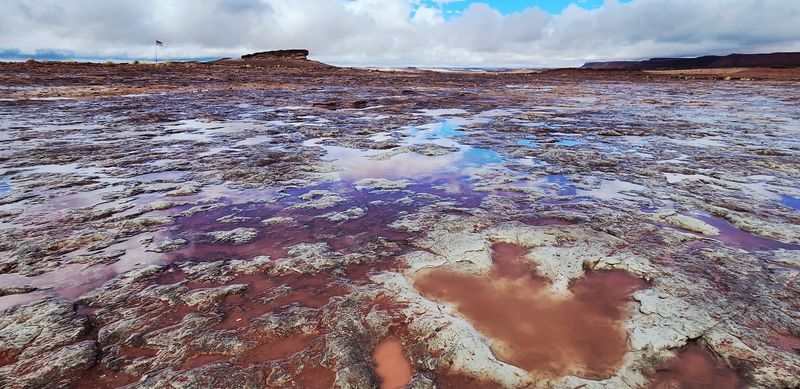
Around 200 million years ago, this desert was soggy. The ground was a marshy riverbed, full of mud perfect for capturing footprints.
Dinosaurs crossed that soft surface and pressed their feet deep. Over time, the mud hardened, layers buried it, and the prints turned to stone.
Erosion later peeled those layers back. Now the tracks sit exposed again, open to the sky in northern Arizona.
The site takes its name from the Moenave rock formation. That stone dates to the Early Jurassic period, when dinosaurs were just starting to rule.
Look around and the landscape feels stark and sweeping. Hamblin Ridge rises nearby, adding shape to the wide desert view.
It’s hard to picture swampy water here today. The ground is dry, pale, and mostly bare of shade.
Yet that contrast is the best part of the story. You stand in a place that completely changed its personality over millions of years.
Kids especially tend to get this idea fast. A desert that used to be a mud pit?
That’s the kind of fact that sticks in a young brain.
Geology rarely feels this hands-on. Here, the whole lesson sits right under your sneakers.
Three-Toed Tracks From Some Famous Predators
Dilophosaurus, the crested predator made famous by movies, left its mark here. Its prints sit among many other three-toed tracks across the rock.
Scientists group footprints by shape, so you’ll hear names like Eubrontes and Grallator. Those labels describe track types rather than exact species.
Eubrontes prints are the big ones. Some come close to covering an adult foot, which makes for a fun comparison photo.
Grallator prints are smaller and daintier. Smaller tracks, sometimes called baby dino tracks, often get pointed out on tours.
Coelophysis kayentakatae also appears in the mix. It was a lean, quick meat-eater from the same ancient era.
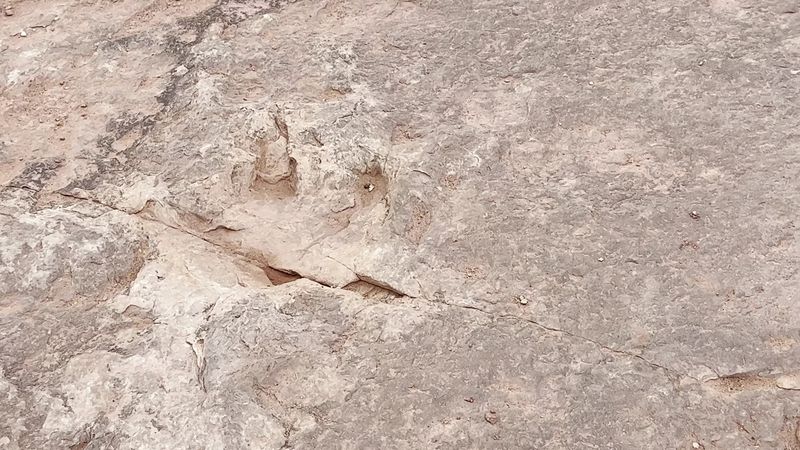
A few prints even show distinct claw marks. Those details make the tracks feel startlingly fresh, as if the animal left minutes ago.
One fair warning keeps expectations realistic. Telling exact species from a footprint alone is genuinely tricky, even for experts.
So enjoy the names, but hold them loosely. The real thrill is the shape, the size, and the clear stride across the stone.
Honestly, few backyards anywhere can claim a Dilophosaurus walked through. This one can, and it’s sitting right here in the open.
The Water Trick That Makes Footprints Pop
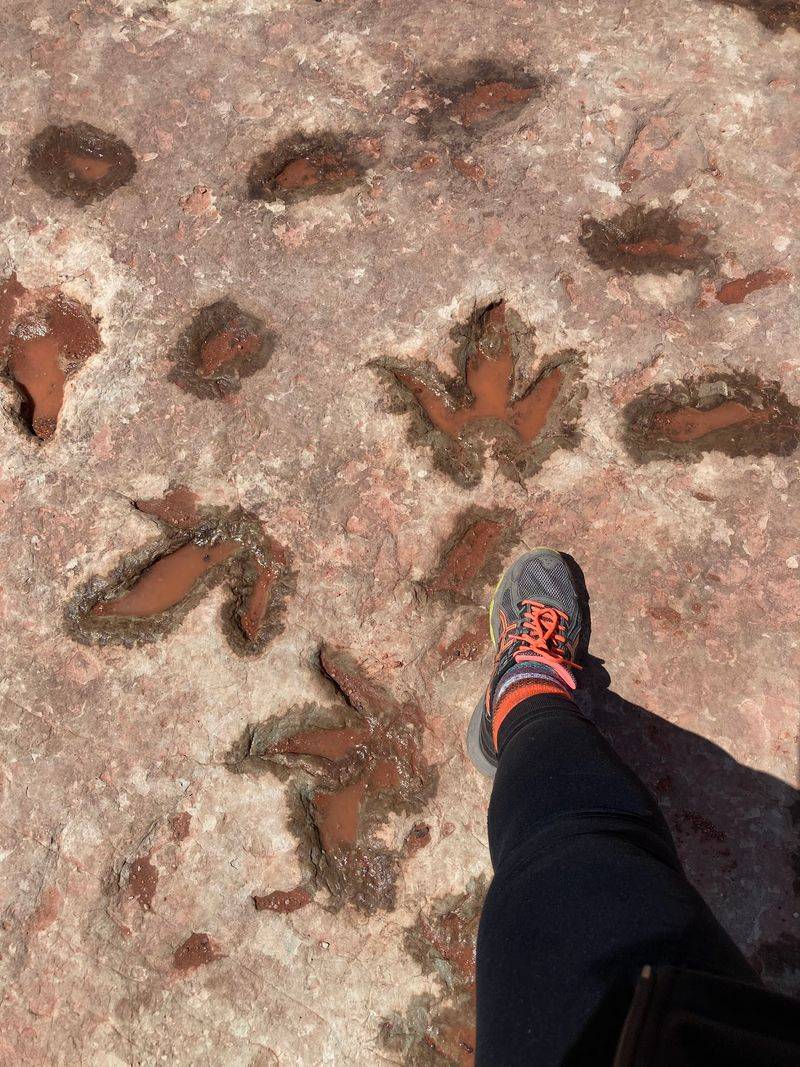
Dry rock hides secrets well. Some prints blend so smoothly into the stone that you could walk right past them.
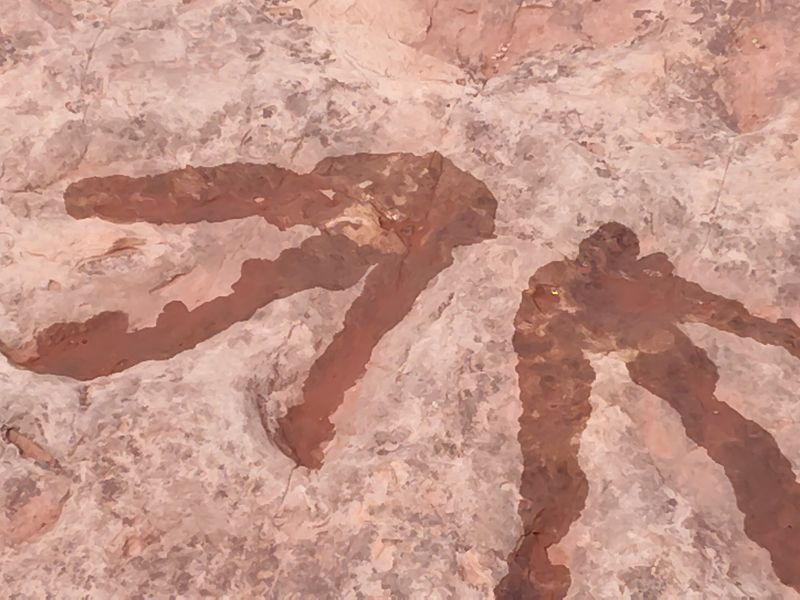
That’s where a simple bottle of water comes in. Guides often pour a little onto a track, and the outline suddenly darkens and sharpens.
It feels like a magic trick, though it’s really just good contrast. Wet edges stand out against the drier rock around them.
Rain can do the same job naturally. After a shower, puddles may fill the prints and make them easier to spot.
One memorable trackway shows an animal that seems to slip. A skid mark leads into a deep claw print, followed by a long running stride.
Spots like that are easy to miss alone. A guide usually knows exactly where they are and how to show them off.
Bringing your own water helps either way. You’ll need it for drinking, and a splash can help with photos too.
Just treat the tracks gently while you enjoy them. They’ve lasted 200 million years, and they deserve a few million more.
Good luck keeping kids from asking for one more splash. It’s that satisfying.
Navajo Guides Who Know Every Print By Heart
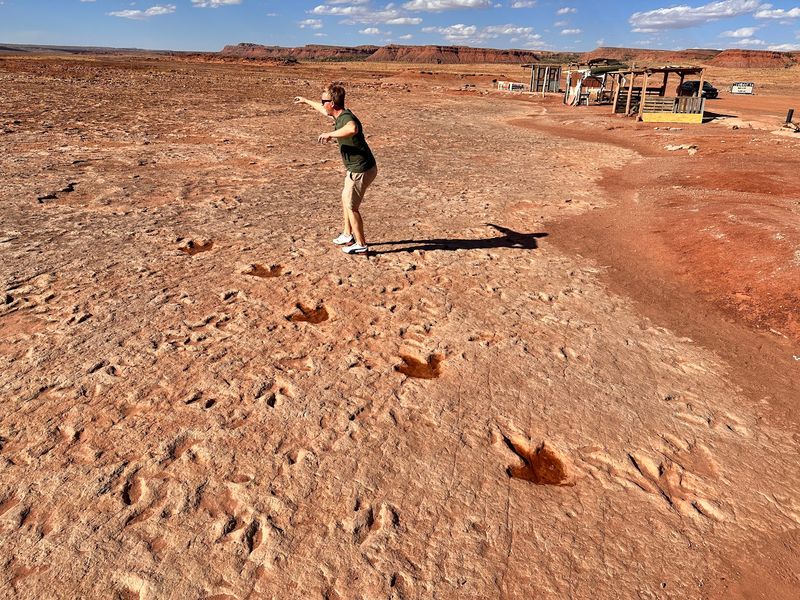
Local Navajo families live on and care for this land. Many have grown up around these tracks and know the area extremely well.
Guides often greet visitors soon after they park. They offer personal walks that point out tracks, fossils, and stories about the surrounding area.
Tours tend to be short and relaxed. Many last somewhere around 10 to 30 minutes, then families can wander on their own.
Here’s the friendly part. A tour is optional, and you can explore by yourself if you prefer.
Tips are customary for guides who share their time and knowledge. Cash works well, and some guides also accept mobile payments.
The setup is informal rather than polished. There’s no ticket window, and it’s not a commercial attraction with signs at every turn.
That casual feel can confuse first-timers a little. Knowing the tip-based arrangement ahead of time makes everything smoother.
Online offers selling tickets don’t match how the site works. No ticket is needed to enter, so skip anything claiming otherwise.
A guide adds context you simply can’t get from a sign. Hearing about the land from the people who call it home makes the stop richer.
Fossil Surprises Beyond the Footprints
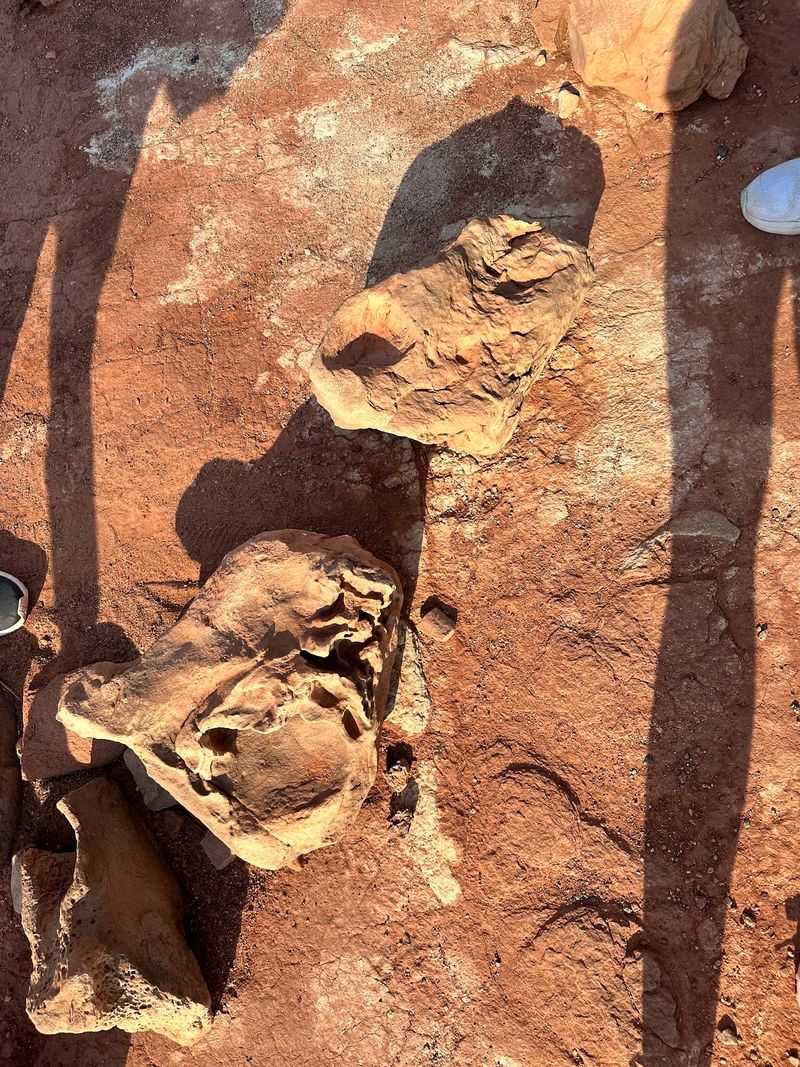
Footprints are the headliner, but they aren’t the only act. Guides frequently point out other fossils scattered across the ground.
Items often shown include petrified bone fragments and rounded objects described as dinosaur eggs. Coprolite, better known as fossilized dino poop, also makes appearances.
Yes, poop. Expect the kids to bring that one up at dinner for weeks.
Fossil casts sometimes join the show as well. These help visitors understand what the animals left behind beyond their footsteps.
Keep a curious but thoughtful mindset here. Not every rock is easy to identify, and some pieces invite healthy questions.
That’s part of the fun, actually. After a few minutes, your eyes start scanning the ground for shapes and textures.
The site covers a lot of territory too. Main tracks sit right near the start, but fossils and interesting features spread much farther.
Families with serious dinosaur fans could easily linger. A quick stop might stretch longer once someone spots something odd.
Remember that this is Navajo land. Look, learn, and photograph, but leave the fossils right where they belong for the next family.
Handmade Jewelry Stands Worth a Slow Browse
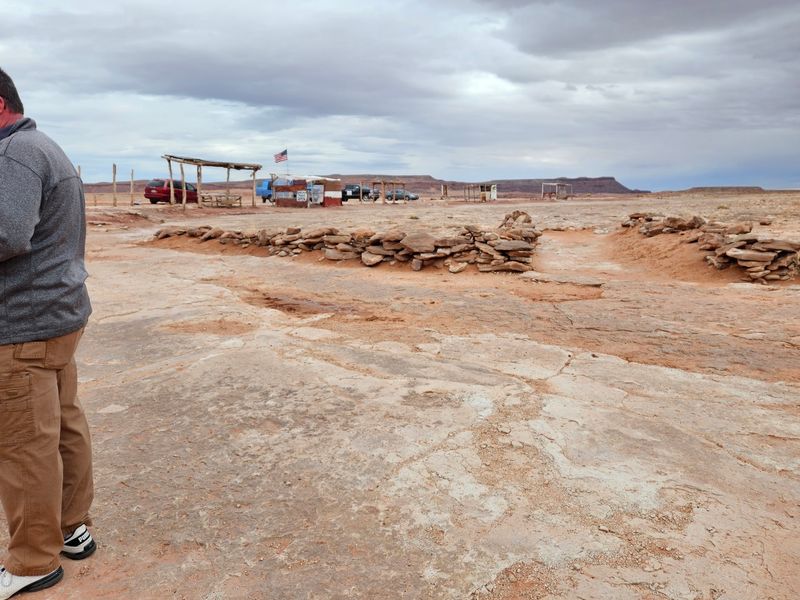
Turquoise glints from folding tables near the parking area. Local Navajo artists set up stands selling handmade jewelry and crafts.
Pieces often feature stones like turquoise, opal, hematite, and jasper. Necklaces, bracelets, and even small items like bookmarks show up on display.
Buying straight from the maker feels great. Your money goes directly to the person who created the piece.
Many guides also sell their own work. Browsing pairs naturally with a tour, though there’s no pressure to purchase.
Shopping here doubles as a thank-you. Since entry is free, a souvenir is a kind way to support the people sharing this land.
Bringing cash is smart for the stands and for tips. Some sellers may accept mobile payments, but cash is the safest bet.
A small piece of jewelry also makes a lovely trip keepsake. Every time you wear it, you’ll remember standing among dinosaur tracks.
Kids can join in too with a budget of their own. Picking a bookmark or charm turns the stop into a memory they chose.
Honestly, it beats a plastic dinosaur from a gas station. And it carries real culture from northern Arizona.
An Easy Stroll Made for Little Legs and Grandparents
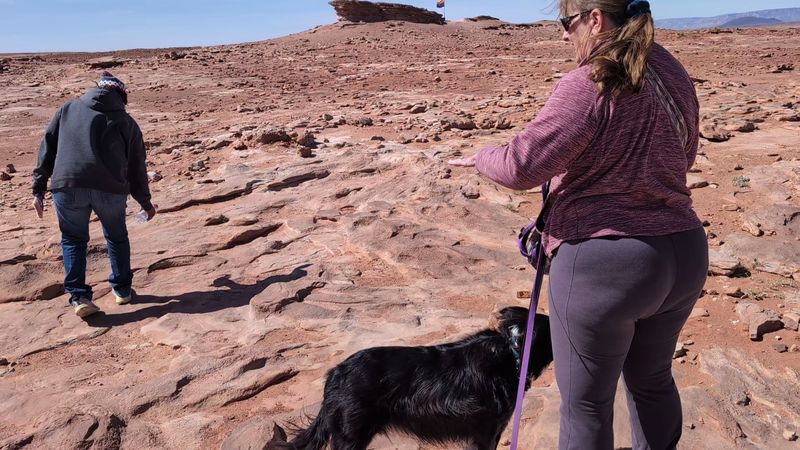
Nobody needs hiking boots for this adventure. The ground near the parking area is mostly flat, and the main tracks are close by.
That makes the Navajo Moenave Dinosaur Tracks a great fit for mixed-age groups. Toddlers, teens, and grandparents can all enjoy it together.
Most families see the highlights in about 15 to 30 minutes. That fits neatly into a long drive without wrecking the schedule.
Leashed dogs are welcome, so the family pup can stretch out too. Just watch paws on hot rock during warm days.
Shade is the one thing missing. Bare desert surrounds the tracks, so hats and sunscreen matter all year.
Water is essential as well. Pack plenty, especially for small kids who may not notice they’re thirsty.
Sturdy closed-toe shoes help on uneven stone. The rock surface can be bumpy even where the walk feels easy.
Restrooms and other facilities aren’t part of the setup. Plan stops in Tuba City or elsewhere along the route.
For a minimal-effort outing, the payoff is huge. Little explorers get to stand where dinosaurs walked, and nobody has to hike for an hour.
Timing Your Stop for Cooler Air and Golden Light
Open 24 hours, every day of the week. Formally, there’s no closing time at the Navajo Moenave Dinosaur Tracks.
Guides aren’t guaranteed every hour, though. Visitors arriving on quiet weekday afternoons sometimes find nobody around to show them the tracks.
Weekends and daytime hours may offer better odds of meeting a guide. Even without one, marked paths can help you find prints on your own.
Weather matters a lot in this corner of Arizona. Summer heat can be intense, with no shade anywhere on the rock.
October through April usually feels far more comfortable. Spring and fall bring milder temperatures for wandering the trackway.
Winter mornings can turn cold, so pack layers. A warm jacket keeps early explorers happy while they search for prints.
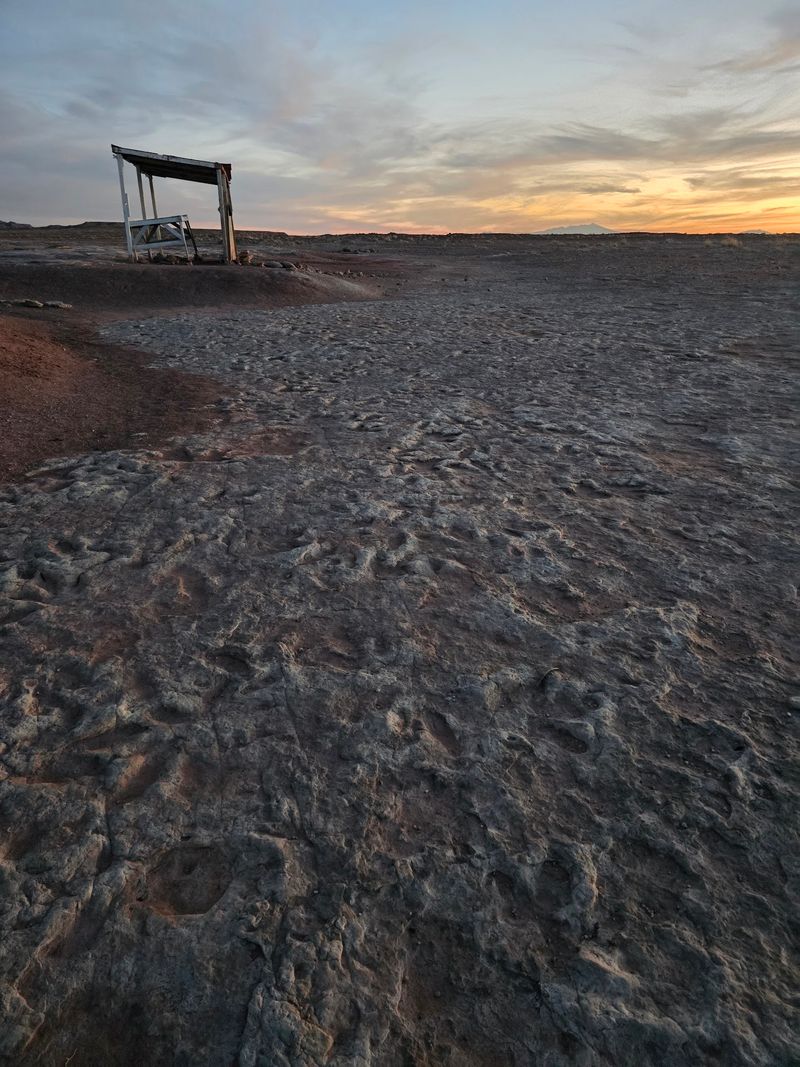
Early mornings and late afternoons bring softer light. Low sun creates shadows that can help track edges stand out in photos.
Sunset here can be beautiful too. Golden light washes over the desert and ridge, making a lovely end to a travel day.
Just don’t wait until full dark. Tracks are much easier to spot while there’s still daylight on the stone.
Why This Free Stop Belongs on Your Next Road Trip
Location seals the deal. The site, listed at US-160, Tuba City, AZ 86045, sits along popular routes through northern Arizona.
Travelers heading between Flagstaff and Page pass nearby. It also works as a side trip on the way to or from the Grand Canyon.
That convenience is hard to beat. You can see real dinosaur tracks without planning an entire day around them.
The value is pretty remarkable as well. Admission is free, with tips and jewelry purchases supporting the local families who share it.
Plenty of attractions charge a lot for less wonder. Here, the only real costs are a little time and a thoughtful tip.
I believe the human connection makes it special. Learning from Navajo guides adds warmth that a museum label can’t quite match.
The informal setup isn’t fancy, and that’s fine. Its simplicity keeps attention on the tracks, the land, and the stories.
Families with dinosaur-loving kids should pencil this in. Curious adults will likely enjoy it just as much.
Bring water, cash, and a sense of wonder. Then let a 200-million-year-old footprint steal the spotlight on your road trip.