
Most Illinois Families Don’t Know Garfield Park Conservatory Stays Warm, Green And Free All Winter
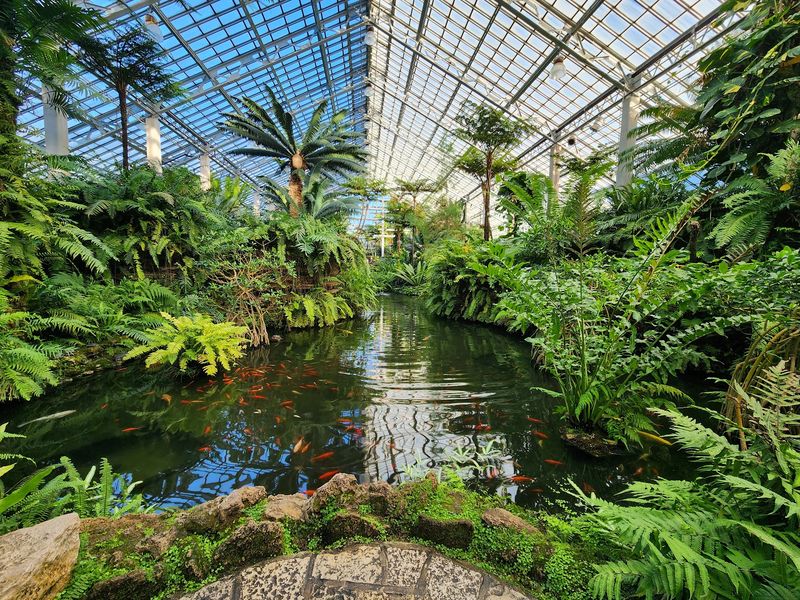
A 65-foot glass ceiling in Illinois keeps palm trees happy while snow piles up outside. Yes, palms.
More than 70 of them grow in one enormous room on the West Side of the state’s biggest city.
The building opened in 1908, and its outline was shaped to echo a humble Midwestern haystack. Inside, the designer built whole landscapes under glass, including a fern-filled lagoon meant to recall how the area looked in prehistoric times.
I love that families can trade puffy coats for T-shirt weather without booking a flight. Even better, admission costs nothing for city residents, and other Illinois visitors pay only a modest fee.
Free parking sits right outside too.
A Tropical Escape Sitting In Plain Sight On Chicago’s West Side
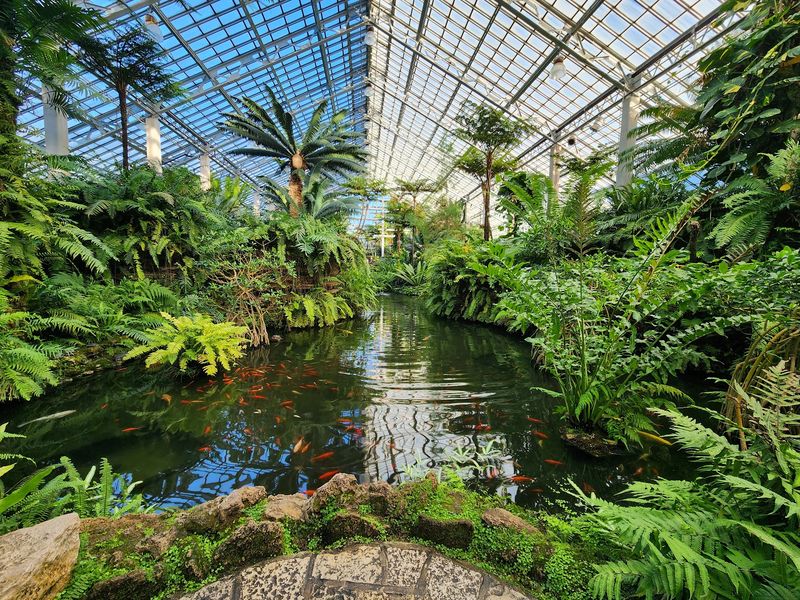
Snow boots and palm trees rarely share a zip code, yet they do here. Garfield Park Conservatory sits inside Garfield Park on the West Side of Chicago, Illinois, and it quietly rewrites winter for anyone who comes through the doors.
The scale is the first surprise. It ranks among the largest conservatories in the United States, with roughly 2 acres of gardens under glass.
Outside, another 10 to 12 acres of gardens spread across the grounds for warmer months. The surrounding park covers 184 acres, with a fishing lagoon, athletic fields, and tennis courts close by.
Each indoor room works like its own little world, with a separate climate and personality. One feels like a jungle, another like a desert, and another like a swamp from long, long ago.
That variety is the whole point. Plants from around the world fill the rooms, and placards help curious readers figure out what they’re admiring.
Volunteers can also answer plant questions, which home gardeners will appreciate. For a family cooped up since Thanksgiving, this place feels like opening a window in January, only much, much warmer.
The Haystack Design That Changed How Gardens Grow Indoors
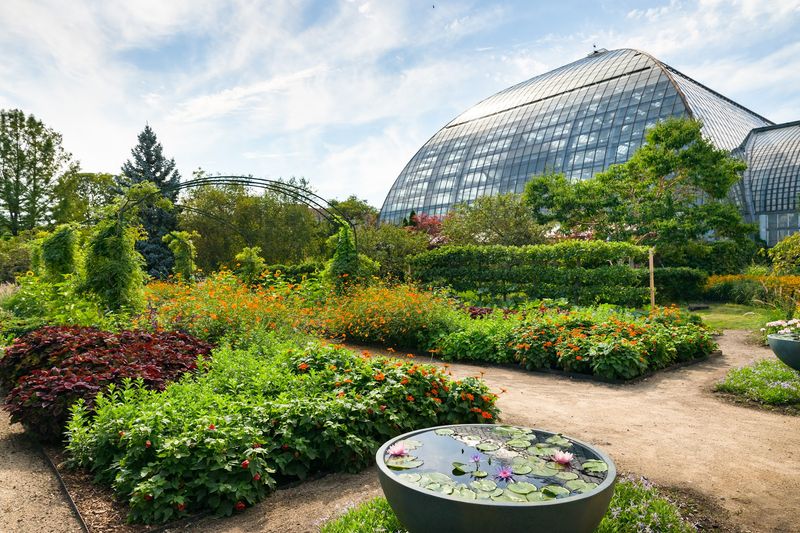
Most greenhouses from the early 1900s looked like fancy glass boxes stuffed with potted plants. Jens Jensen had a bolder idea, and Chicago still benefits from it.
Construction ran from 1906 to 1907, and the conservatory was established in 1908. Jensen, a famed landscape architect, teamed up with Prairie School architects Schmidt, Garden and Martin and the New York firm Hitchings and Company.
Jensen wanted naturalistic landscapes under glass, not rows of specimens on benches. People now call the result landscape art under glass, and it was considered revolutionary when it opened.
The outside shape carries a sweet Midwestern wink. Its form was designed to echo a simple haystack, a nod to the farm fields of Illinois.
History hasn’t always been gentle. A 2011 hailstorm smashed glass in the showrooms and production houses, but the building has since been restored.
The conservatory and its park are listed on the National Register of Historic Places. A nonprofit, the Garfield Park Conservatory Alliance, supports education, community relations, and visitor services, which helps keep this century-old treasure feeling fresh instead of dusty.
Seventy Palms And A Ceiling That Keeps Going Up
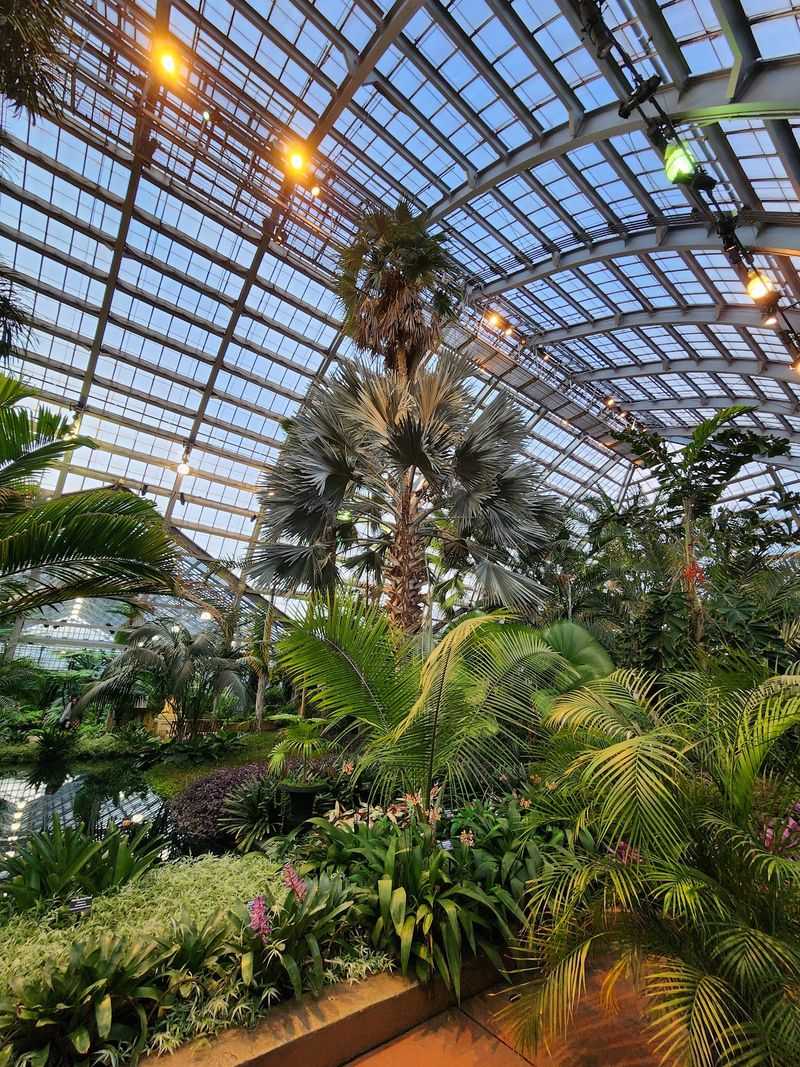
Neck stretches are recommended before entering the Palm House. The ceiling soars 65 feet overhead, and the palms seem determined to reach it.
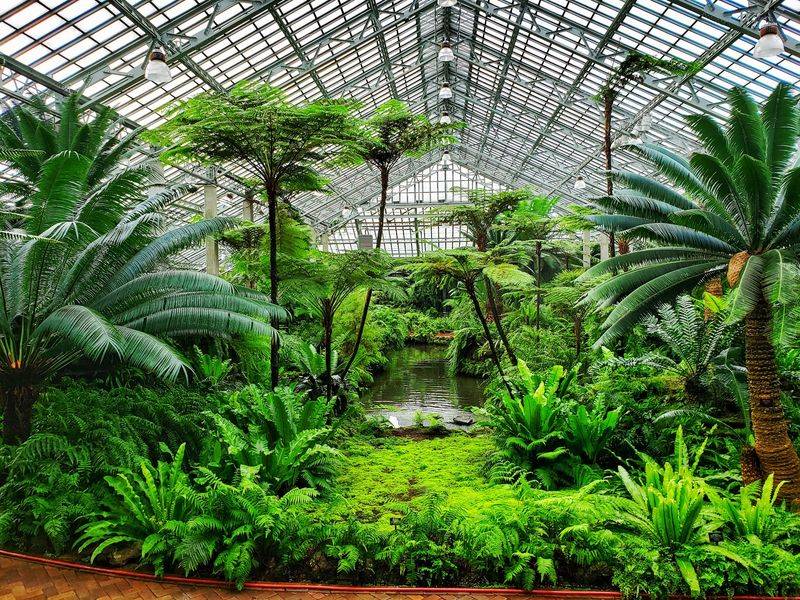
It’s the largest room in the building, designed as an idealized tropical landscape. More than 70 palms grow here, joined by plants from other warm habitats around the world.
Winter visitors tend to feel the change right away. Heavy jackets come off fast in the warm, moist air, and plant-purified breathing feels like a small luxury in January.
Kids usually react to the size before anything else. Trees this tall indoors seem almost impossible, and that sense of wonder is a big part of the fun.
Adults get something too. The room offers a calm, unhurried stroll, and the peaceful mood is one of the qualities this conservatory is best known for.
Bring a light layer underneath your coat and plan to carry the coat itself. The greenhouse is humid by nature, so a water bottle is a smart idea.
Once the cold is shaken off, the palms make a wonderful first impression for the rest of the visit.
Prehistoric Chicago Lives On In The Fern Room
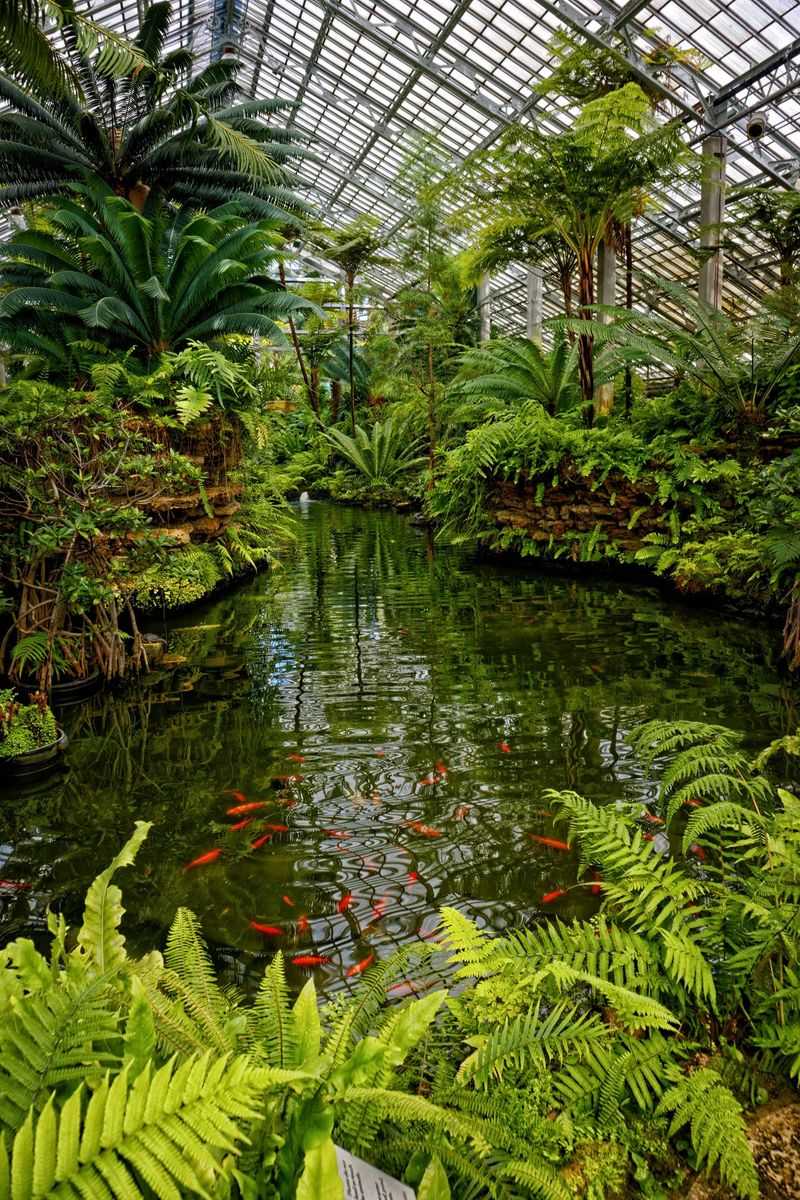
Long before skyscrapers, the Chicago area was a swampy, fern-covered place. The Fern Room recreates that ancient scene with lush ferns, rocky outcroppings, and a still indoor lagoon.
Ancient cycads and fern allies grow here alongside the ferns themselves. Some of these plant groups trace back to the age of dinosaurs, which makes a great talking point for young explorers.
Jensen considered the room’s prairie waterfall one of his greatest achievements. Water spills over stone in a way that feels natural, not staged, and it’s easy to linger.
Koi and turtles are among the most talked-about residents of the conservatory. Spotting one gives kids a mini scavenger hunt without anyone needing to plan it.
The room has also featured a playful seek-and-find activity, with little figures and scenes placed among the ferns. It turns a quiet garden into a family game.
One practical note matters for some families. The Fern Room is not wheelchair accessible, even though the rest of the building has ramps at the main entrance.
Planning around that ahead of time keeps the day smooth for everyone in the group.
Cactus Rooms, Glass Lily Pads And A Lesson In Sugar
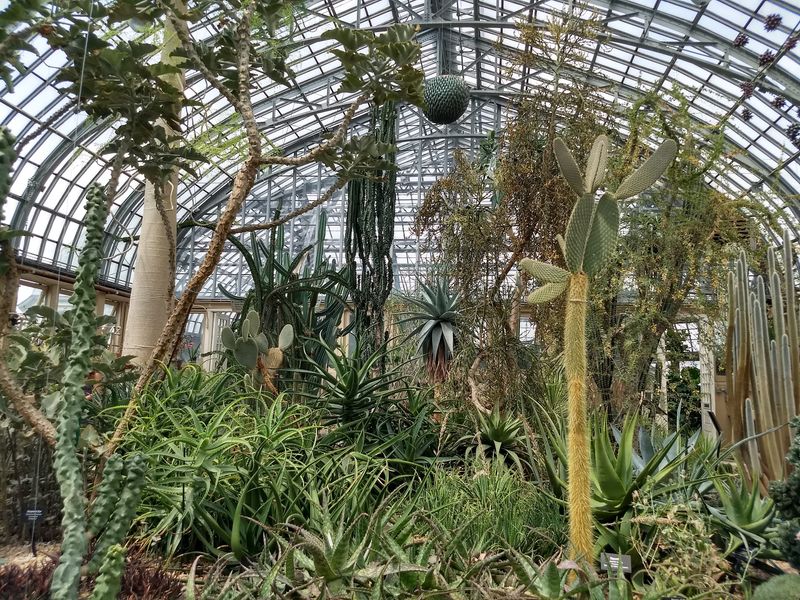
Deserts and jungles sit just a few steps apart here. That quick switch is one of the most fun parts of a visit.
The Desert House holds one of the region’s most varied collections of cacti and succulents. Spiky, round, tall, and squat, the plants make the room a favorite for many visitors.
Plants from Madagascar stand out too, with shapes that look straight out of a storybook. Reading the placards pays off in this room.
Next comes the Aroid House, converted from the original conifer house in 1923. Its tropical aroids feel jungle-like, but the real eye-catcher floats on the water.
Sixteen yellow glass lily pads by artist Dale Chihuly brighten the pond. They look playful and elegant at the same time, a rare combination for one piece of art.
Curious kids should not skip Sugar from the Sun. The room explains photosynthesis through four themed environments: water, air, sunlight, and sugar.
Fruit trees grow here as well, so science class suddenly comes with a little greenery and a lot more charm than a textbook.
Slides, Spiral Ramps And Weekend Science For Little Explorers
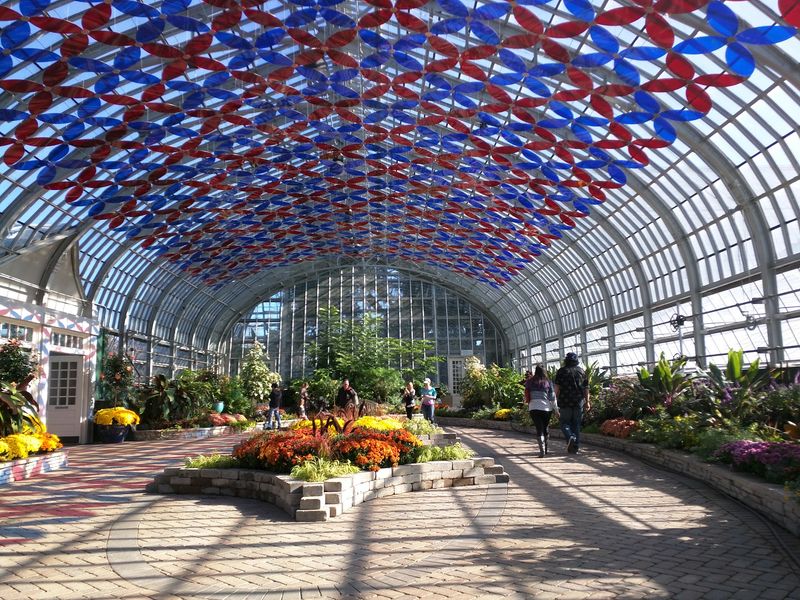
Parents, take note: there’s a slide inside a greenhouse. The Elizabeth Morse Genius Children’s Garden blends play, science, and imagination in a 6,000-square-foot space.
Kids find climbing objects, a slide, and plenty of plant-themed exploration. The garden welcomes young visitors in every season, so a January afternoon works just as well as May.
Accessibility got real thought here. A wheelchair-accessible spiral ramp and a sensory-friendly area help more children join in.
This garden needs its own 30-minute reservation in addition to general entry. Booking both together saves disappointment at the door.
Free family programs add even more value. Budding Botanists runs Saturdays and Sundays from 11 a.m. to 3 p.m., with Nature Educators leading activities for kids of all ages.
Little ones aged 0 to 3 have Morning Glories on Friday mornings, focused on sensory play and motor skills. Art After Dark fills Wednesday evenings from 4 to 7 p.m. for ages 4 and up.
Baby changing stations sit in the restrooms near the main entrance, a small detail tired parents will absolutely love.
Poinsettias And Fir Trees Steal The Holiday Spotlight
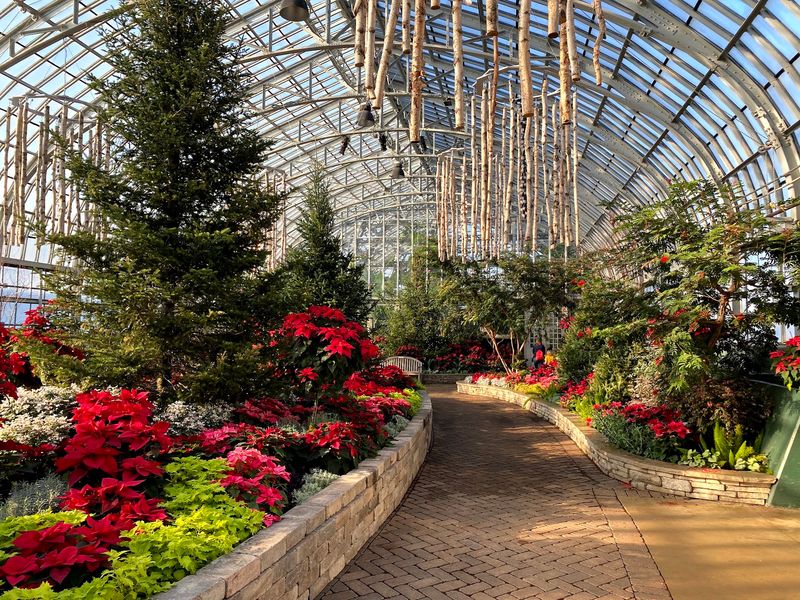
Holiday traditions don’t always need tinsel and a crowded mall. At Garfield Park Conservatory, the season arrives in red petals and the scent of fresh evergreens.
The annual Winter Flower Show fills the Show House from late November into early January. The 2026 to 2027 show is set for November 25, 2026, through January 3, 2027.
Last year’s theme, Merry and Bright, featured cheerful poinsettias, silver foliage, and freshly cut Fraser fir trees. The result feels cozy and festive without being loud.
The Show House itself has a story worth sharing. Its original 1908 layout, with a large central ellipse for displays, was restored after the 2011 hailstorm.
A spring show follows later in the year, giving families a reason to come back once the snow melts. Seasonal shows require reservations, so planning ahead matters most during the holidays.
For grandparents looking to start a new tradition, this one is hard to beat. Warm air, bright blooms, and a historic glass house make a lovely backdrop for family photos that don’t involve shivering in the front yard.
Free Parking, A Train Stop And Hours Worth Knowing
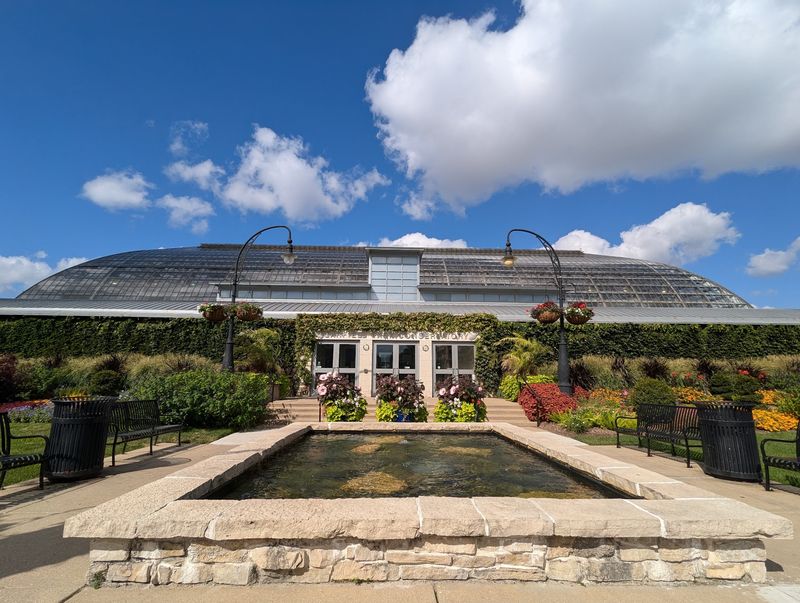
Getting here is refreshingly easy. The conservatory sits at 300 N Central Park Ave, Chicago, IL 60624, near the corner of Central Park Avenue and Lake Street.
Free parking is available in the visitor lot just south of the entrance. Prefer the train?
The CTA Green Line stops at Conservatory-Central Park Drive, a short walk away.
Hours run Wednesday from 10 a.m. to 8 p.m. and Thursday through Sunday from 10 a.m. to 5 p.m. The building is closed Mondays and Tuesdays.
Timed entry is in place, and advance reservations are strongly recommended. Walk-ins are welcome when there’s room, but nobody wants to drive from Peoria and wait.
Chicago residents get in free with proof of residency, like a state ID. Visitors from elsewhere in Illinois pay a modest admission, with reduced rates for seniors, kids, and students, while veterans and active-duty military enter free.
Weekend afternoons can get busy, so mornings tend to feel calmer. Remember there’s no air conditioning in this greenhouse, which is a gift in winter.
Restrooms and drinking fountains sit near the main entrance for easy breaks.
Why This Glass House Deserves A Spot On Your Winter Calendar
Illinois winters are long, gray, and expensive to escape. That’s exactly why this century-old greenhouse feels like such a happy find.
Few places offer this much for so little. Chicago families walk in free, and other Illinois visitors pay less than many movie tickets cost.
The building itself is a treasure, shaped by Jens Jensen’s vision and protected on the National Register. Every room carries a different mood, from towering palms to prehistoric ferns.
Kids get slides, turtles, koi, and weekend activities. Adults get warm air, quiet corners, and a break from shoveling.
Most visits take an hour or two, which makes the trip easy to pair with lunch or errands. Families with energetic little ones can stretch it longer in the children’s garden.
Garfield Park Conservatory may not be the flashiest attraction in Illinois, and that’s part of its charm. It’s a humble, beloved place that has been greeting families since 1908.
On the next frosty Saturday, skip the couch and trade the snow for palm fronds. Your kids may still bring it up years from now.