
This Arizona Peace Park Lets You Spin Prayer Wheels Under Red Rock Cliffs For Free
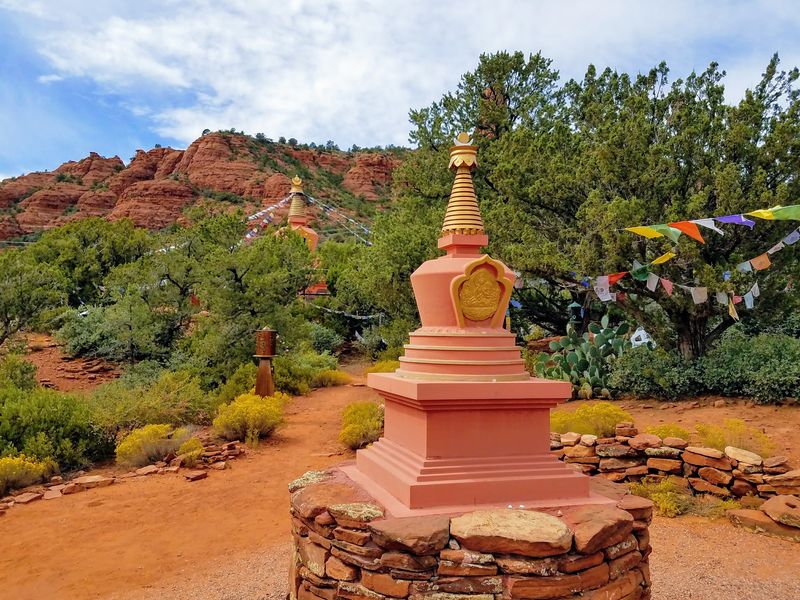
Fourteen acres of prayer flags, spinning prayer wheels, and red rock views, and nobody asks you for a ticket. Admission is free.
A donation box waits, but nobody pushes.
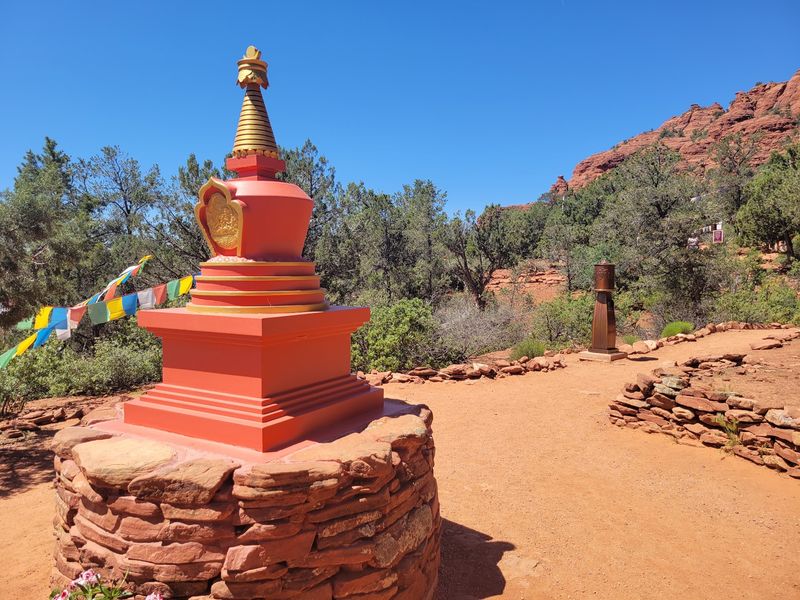
The grounds stay open from dawn until dusk. A Tibetan Buddhist stupa rises against the cliffs.
A Native American medicine wheel sits nearby, and wild Gambel’s quail scurry between bird feeders along the paths.
I like how the whole place asks so little of you. Walk slowly, keep your voice down, and maybe circle the stupa clockwise a few times.
That’s about it. It feels wonderfully unusual for one of the busiest corners of Arizona.
I can’t imagine a cheaper way to hit pause in red rock country. So what happens when you trade a crowded overlook for a quiet trail lined with fluttering flags?
Fourteen Quiet Acres Wait At The Foot Of A Mountain
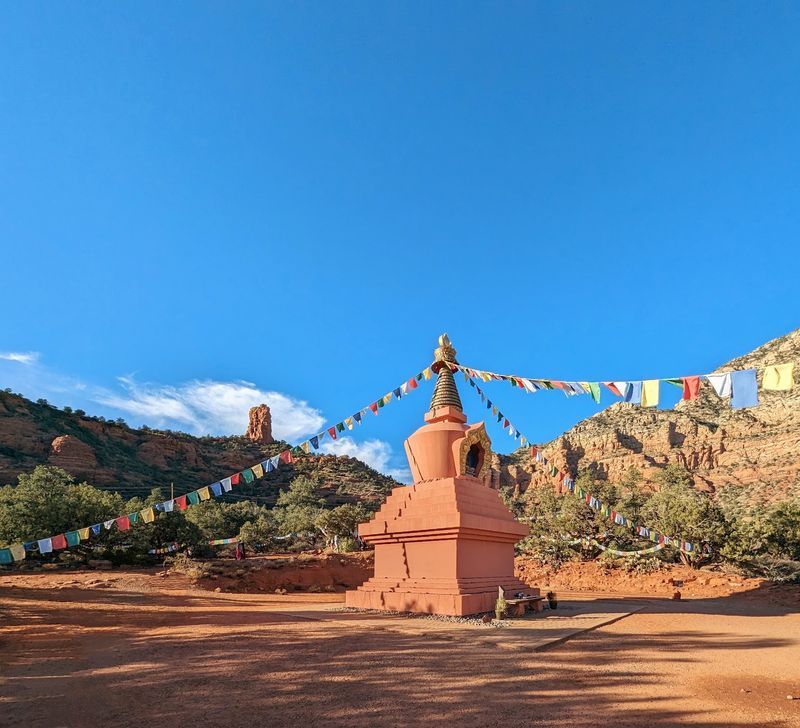
Red rock country is famous for big views and bigger crowds. Amitabha Stupa and Peace Park offers the views without much of the noise.
The park spreads across 14 serene acres at the base of a mountain on the western side of Sedona. Its description calls it a storied spiritual oasis, and that label fits surprisingly well.
Paths wind uphill through juniper and red soil toward the main stupa. Along the way, prayer flags flutter, wind chimes ring, and small benches invite you to sit for a spell.
Nothing here feels rushed or staged. You won’t find a snack stand, a ticket booth, or a loudspeaker announcing the next tour.
Instead, Amitabha Stupa and Peace Park leans fully into stillness. People come to meditate, pray, read, watch birds, or simply breathe a little slower than usual.
That makes it a refreshing counterpoint to the jeep tours and packed trailheads elsewhere in town. It’s one of those Arizona spots that rewards a slower pace.
Think of it as a free reset button with a gorgeous backdrop. You show up, you wander, and the cliffs do most of the talking.
Sacred Ground With More Than One Story
Long before the prayer flags arrived, this land already carried meaning. The park is described as a place deemed holy by native people, which gives every step extra weight.
Today, the grounds have roots in Tibetan Buddhism of the Vajrayana tradition. Even so, the welcome reaches far beyond one faith.
People of every background are invited to walk the paths. The focus rests on peace, goodwill, prayer, meditation, and some honest introspection.
That blend shows up across the landscape. A Buddhist stupa and a Native American medicine wheel share the same hillside without any sense of competition.
Small signs along the way explain the history and meaning of what you’re seeing. Reading them turns a pretty walk into a more meaningful one.
I believe that mix is the real heart of the place. It feels less like a museum and more like a shared front porch for anyone seeking calm.
You don’t need to know a single chant or ritual to belong here. Curiosity and quiet respect are plenty.
Honestly, that open spirit is what makes it so easy to recommend. Few places in Arizona manage to feel this welcoming to absolutely everyone.
A Short Uphill Stroll Gets You There
Good news for anyone allergic to grueling hikes. The main stupa sits roughly a five-minute walk from the parking area, about 0.3 miles round trip.
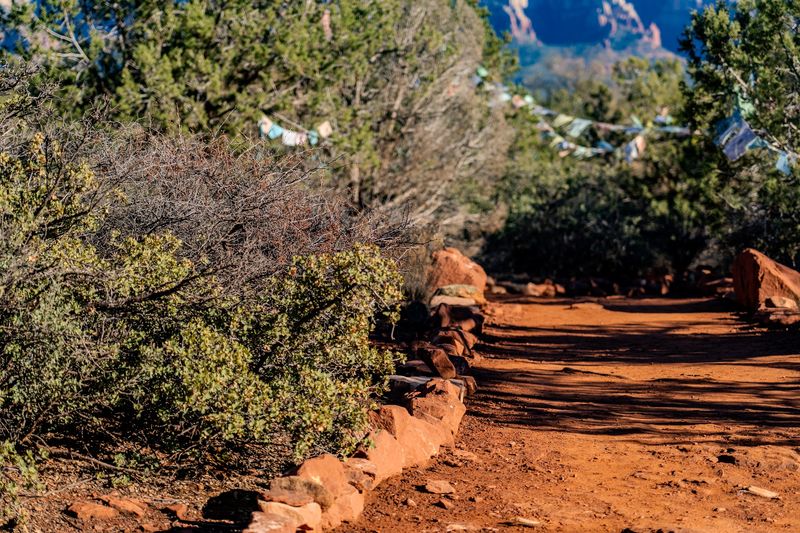
The route follows a short dirt trail that climbs gently up the slope. It’s easy enough for most visitors, though it does involve some real walking.
Some sections turn rocky and uneven. Shoes with grippy rubber soles will keep you from skidding on loose stones.
Side paths branch off in several directions, so your total steps can add up fast. Plenty of people wander far beyond the main loop once they start exploring.
Water is a smart companion, especially during warmer months. Sedona sun feels friendly right up until it doesn’t.
The climb also works as a natural transition. By the time you reach the top, the parking lot chatter has faded behind you.
That brief effort pays off quickly. Within minutes, you trade cars and gravel for flags, chimes, and wide-open red rock scenery.
Take it slow and look around as you go. Half the charm lives along the trail itself, not only at the destination.
Circle The Great Stupa Clockwise And Set An Intention
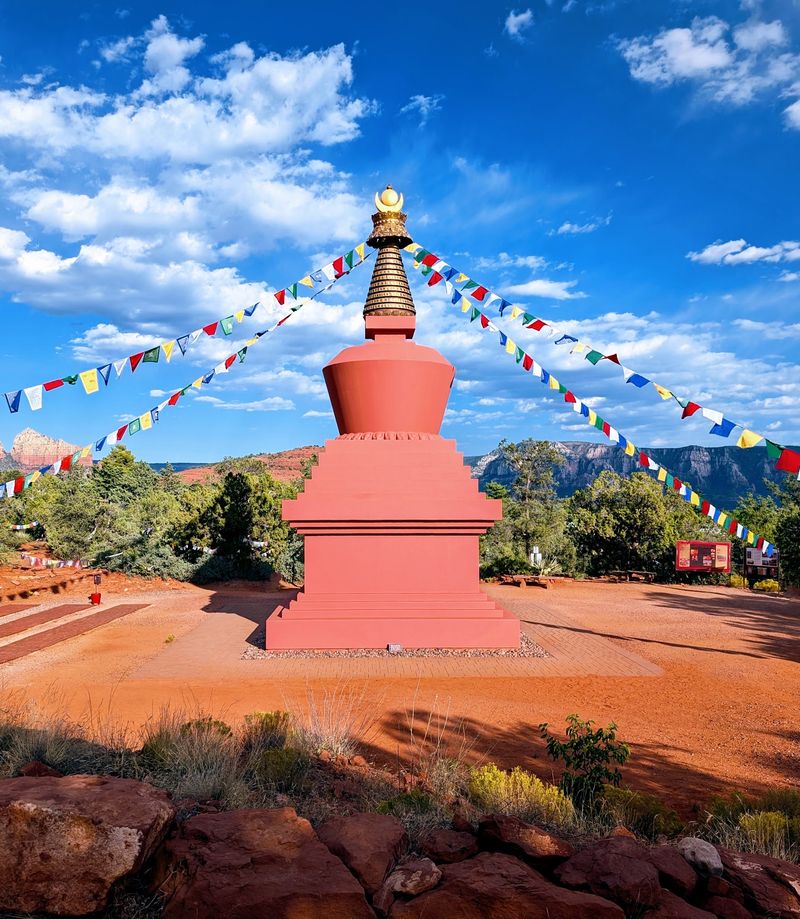
Clockwise is the only direction that matters here. Visitors traditionally walk around the stupa that way while silently holding good intentions.
Many people circle three times before stepping aside. It’s a simple practice, yet it changes how you experience the structure.
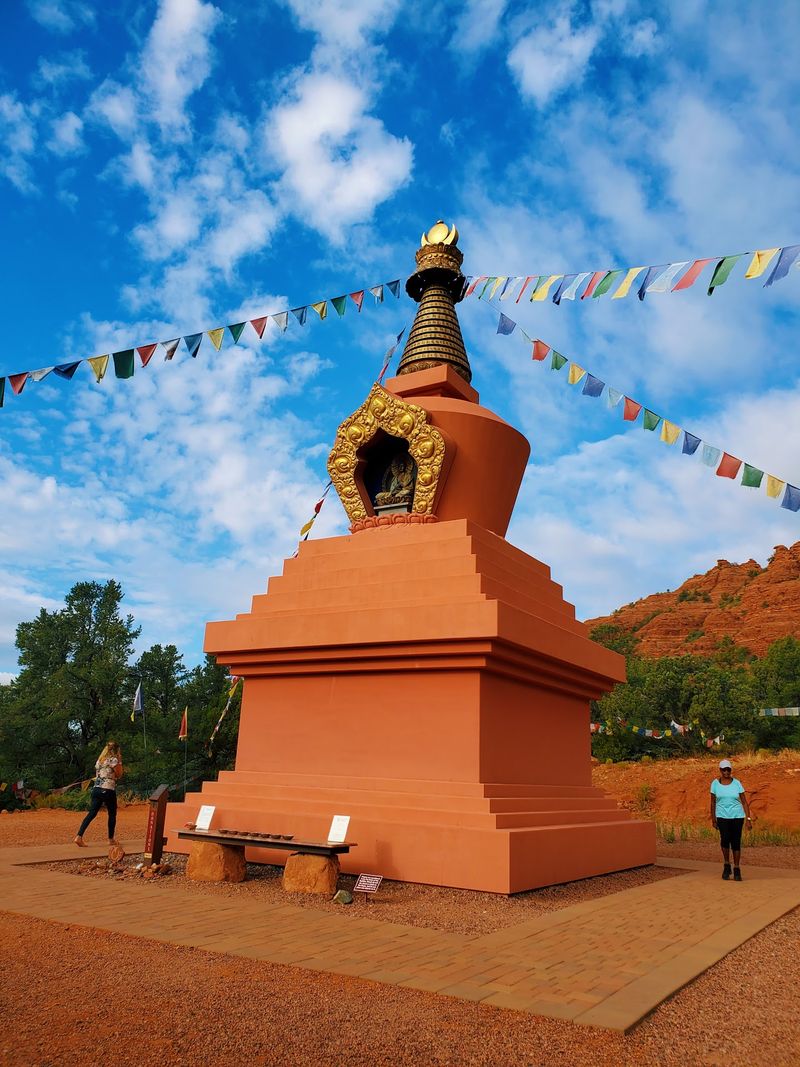
The stupa is the star of Amitabha Stupa and Peace Park. Its pale form stands out sharply against the deep red cliffs behind it.
A stupa is a Buddhist monument meant for prayer and meditation. Walking around one is considered a quiet act of devotion and goodwill.
You don’t need to follow any belief system to join in. Plenty of visitors simply walk slowly and let their minds settle.
Notes and intentions left by others add a moving touch to the experience. Reading them creates a feeling of collective hope that’s hard to describe.
The pace stays gentle and respectful. People pause, pray, or sit nearby in silence while others keep circling.
Go early if you want this moment mostly to yourself. Morning hours tend to feel especially calm, with soft light hitting the stupa and the rocks beyond.
Tara Has Her Own Stupa On The Hill Too
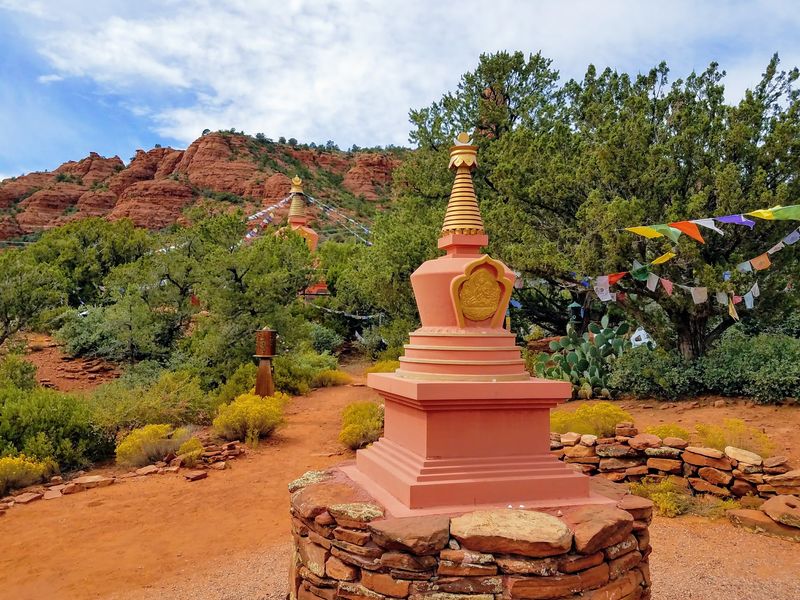
One stupa would be impressive enough. The park actually features a second one, dedicated to Tara.
Tara is a beloved figure in Tibetan Buddhism, often associated with compassion. Her stupa offers a softer counterpart to the main Amitabha Stupa.
Some describe the pair as a balance of divine masculine and divine feminine energy. Either way, visiting both makes the walk feel complete.
The same clockwise circling tradition applies here. A few slow laps with a kind intention fit right in.
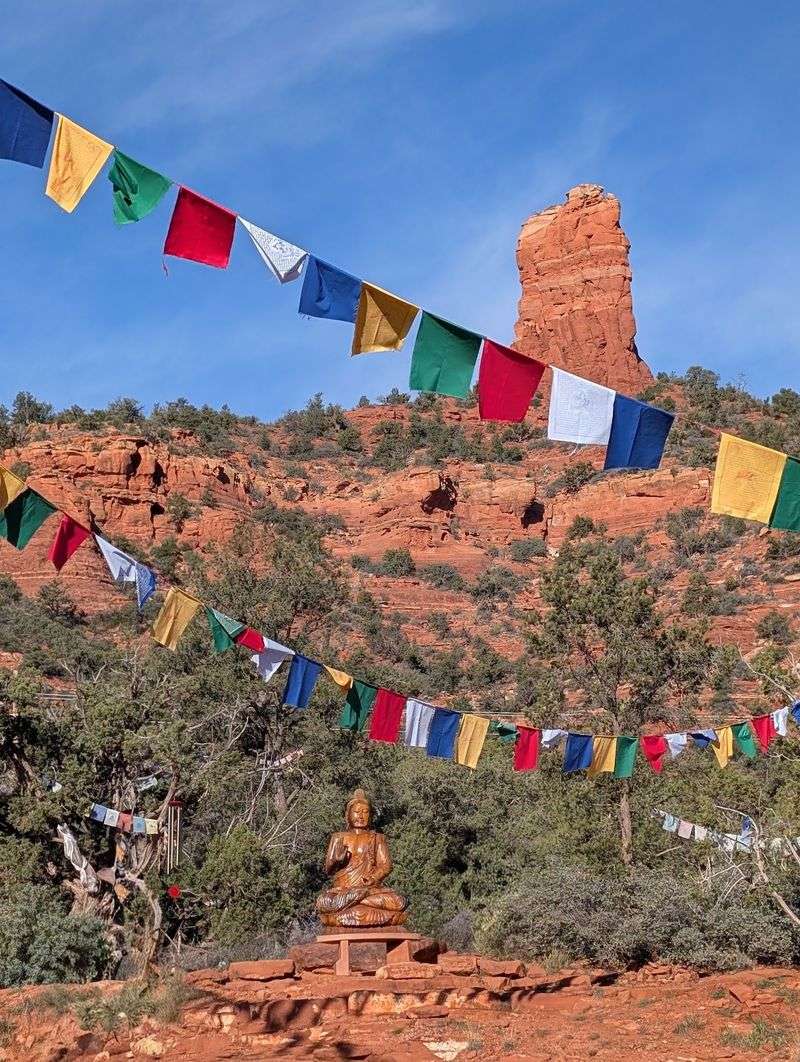
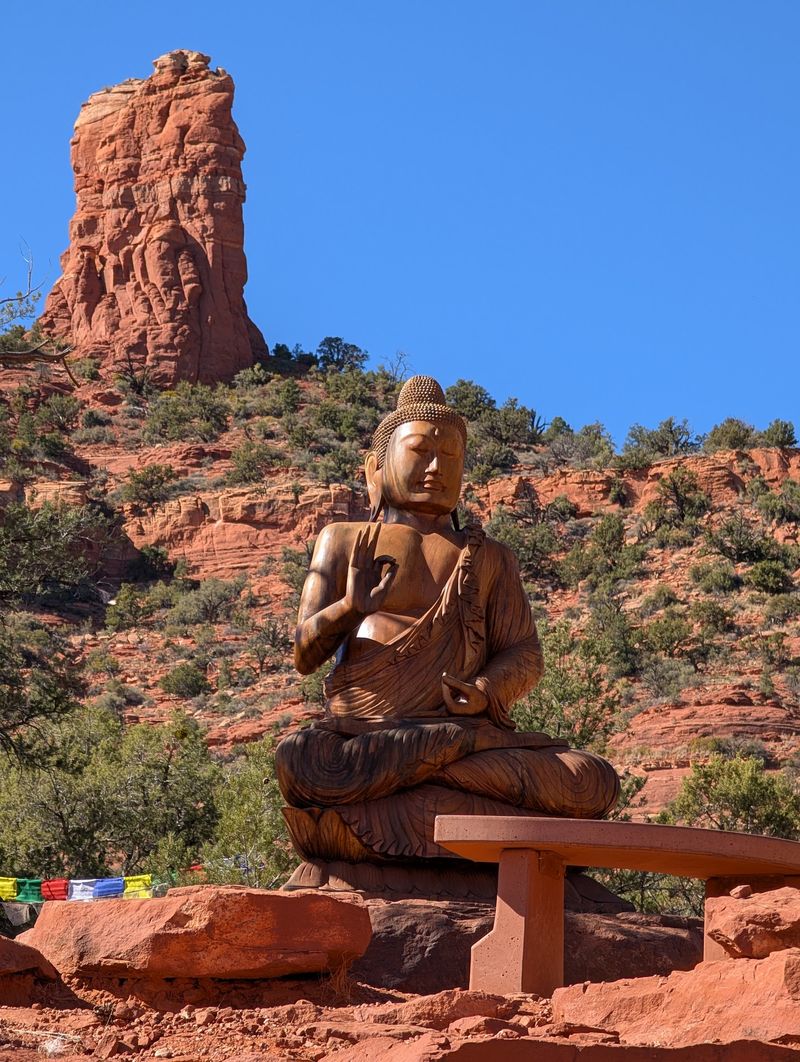
A Buddha statue also graces the grounds. It’s a natural place to stop, reflect, and take in the surroundings.
Each feature sits along its own winding path. That spacing helps the park feel roomy, even when more people show up.
Moving between them becomes its own small pilgrimage. You climb, pause, circle, and move on with no schedule pushing you forward.
Don’t rush this part of the visit. The quieter corners around the Tara Stupa often feel like the most peaceful spots on the property.
Bring patience and a little curiosity. You’ll likely leave noticing details you missed on the way in.
Flags, Chimes, And A Breeze That Does The Talking
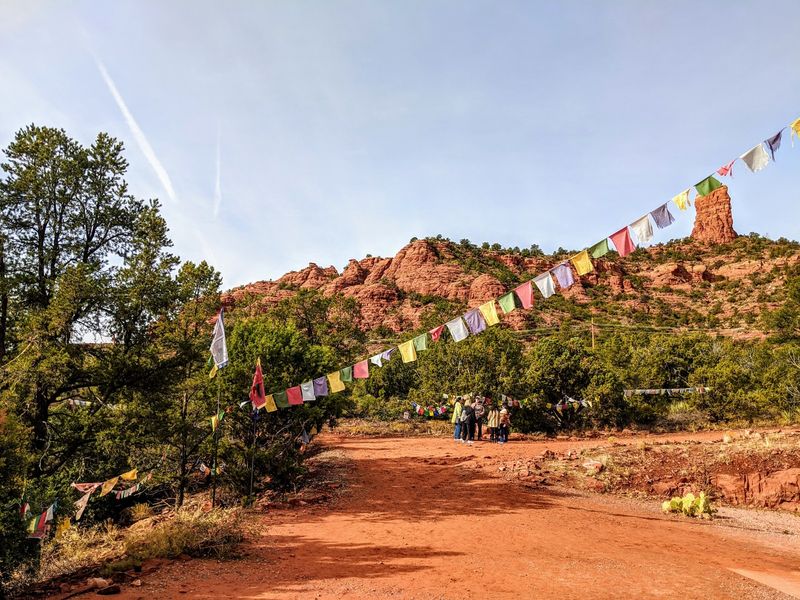
Listen closely and the wind becomes part of the soundtrack. Wind chimes ring softly across the grounds whenever a breeze rolls through.
Prayer flags line many of the paths in bright bands of color. They ripple overhead and add instant cheer to the red earth below.
In Tibetan tradition, prayer flags carry blessings on the wind. The idea is that kindness spreads outward every time they flutter.
Walking a flag-lined path feels almost like moving through a slow parade. Nothing loud happens, yet everything seems to move.
Birdsong often joins the chimes. Silent walking is encouraged, partly so you can actually hear all of it.
That quiet is what makes the details pop. You notice the creak of branches, the snap of fabric, and maybe your own footsteps.
Photographers will love the color against the cliffs. Just keep the camera moments brief and respectful of anyone meditating nearby.
It’s a small feature with a big effect. By the time you reach the top, the flags have already done half the work of calming you down.
Give The Prayer Wheels A Gentle Spin
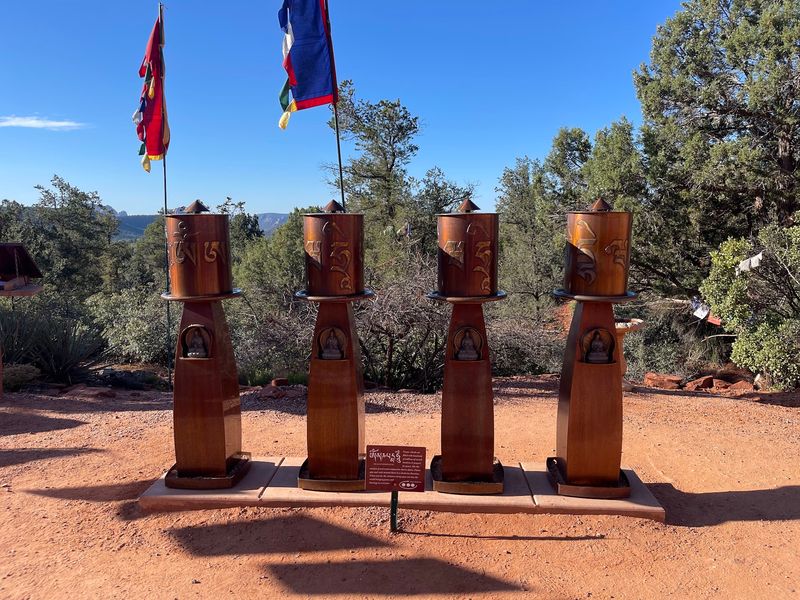
Few things feel as satisfying as a slow, deliberate spin. The prayer wheels at the park invite exactly that.
These cylinders are a Tibetan Buddhist tradition. Turning one is considered a way of sending prayers and good wishes into the world.
Visitors of all faiths are welcome to give them a turn. You simply walk up, place a hand on the wheel, and spin it clockwise.
Kids and grown-ups alike tend to find the motion soothing. It’s hands-on spirituality without any pressure or performance.
The wheels pair naturally with a walk around the stupa. Many visitors combine both into one unhurried ritual.
There’s no right speed or perfect technique. Calm intention matters far more than form.
I like how the wheels make reflection feel tangible. Sometimes it’s easier to settle your thoughts when your hands have something to do.
Take a moment afterward to sit and look around. The red cliffs, fluttering flags, and quiet hum of the grounds make a pretty fine reward.
Just remember to share. Others may be waiting for their turn at the same wheel.
The Medicine Wheel Brings Another Tradition Into The Circle
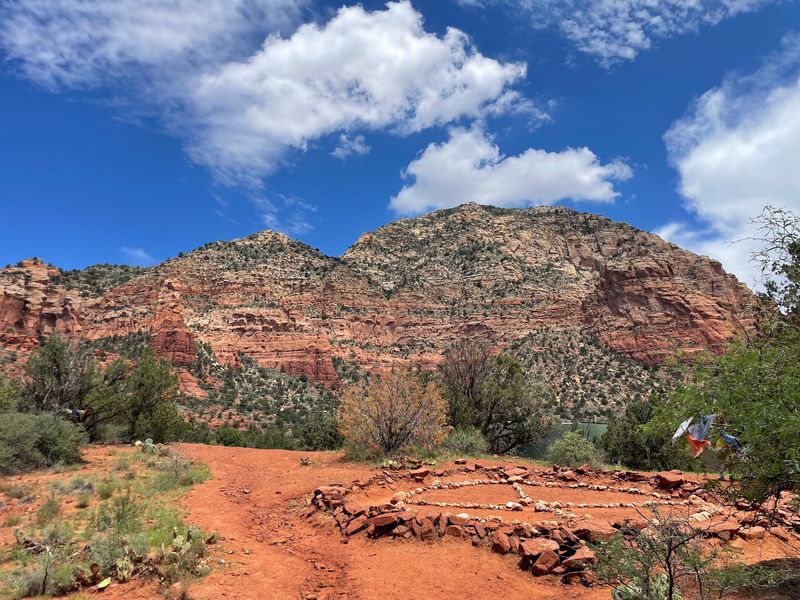
Stones arranged in a careful circle mark one of the most talked-about features in the park. The Native American medicine wheel draws plenty of quiet attention.
It sits on the same hillside as the Buddhist stupas. Seeing both traditions side by side is part of what makes this Arizona spot feel so unusual.
Many visitors walk around the medicine wheel the same way they circle the stupa. Slow, clockwise loops with good intentions are common.
Some people choose several rounds as a personal ritual. There’s no official count you must hit, so let respect guide you.
The circle connects nicely with the land’s history. The park is described as ground long deemed holy by native people.
Please treat the stones with care. Leave them exactly where they are, and keep the area free of trash.
It’s a lovely place to pause between the stupas. The open setting gives you room to breathe and look out over the scenery.
Spend a few minutes here before heading back up the trail. It adds depth to the visit and rounds out the story of the land.
Pocket Treasures Find A Home On The Offering Altar
Flowers, crystals, coins, and tiny keepsakes pile up in unexpected harmony. The park includes multiple spots where visitors leave offerings.
One small altar collects almost anything people feel moved to share. There’s no list of approved items, just good intentions.
Many visitors arrive without knowing the altar exists. Then they start digging through pockets for something meaningful.
A smooth stone, a special coin, or a single flower all fit right in. The value lies in the gesture, not the price tag.
Planning ahead is a sweet move if you like the idea. Tuck a small token in your bag before you leave home.
Keep offerings natural and modest when possible. Large or messy items clash with the park’s Leave No Trace spirit.
Looking over what others have left is moving in its own way. Each object hints at a story you’ll never fully know.
It’s a quiet reminder that you’re part of a much bigger circle. Strangers from everywhere have stood in this same spot hoping for peace.
Pretty wonderful for something that costs nothing at all.
Quail, Feeders, And The Occasional Javelina Cameo
Gambel’s quail have clearly figured out where the snacks are. Seed feeders around the grounds attract a lively crowd of birds.
Bird watching ranks among the park’s surprising perks. Even mid-afternoon, a couple of feeders can stay busy with feathered visitors.
Birders appreciate the easy access and steady activity. You don’t need a long hike or special blind to spot plenty of wings.
Birdsong also greets you almost the moment you step onto the trail. It sets a cheerful tone before you even reach the stupa.
Bigger wildlife sometimes strolls through too. Javelinas have been known to wander past in the morning.
Give any animal plenty of space. Watching quietly from a distance keeps both you and the critters comfortable.
Binoculars make a great addition to your bag. So does a little patience, since the best sightings rarely follow a schedule.
Nature lovers might end up spending more time by the feeders than by the monuments. Honestly, nobody here will judge you for that.
It’s another way the park slows you down. Once you start watching quail, your phone suddenly seems far less interesting.
Benches, Side Trails, And Red Rocks In Every Direction
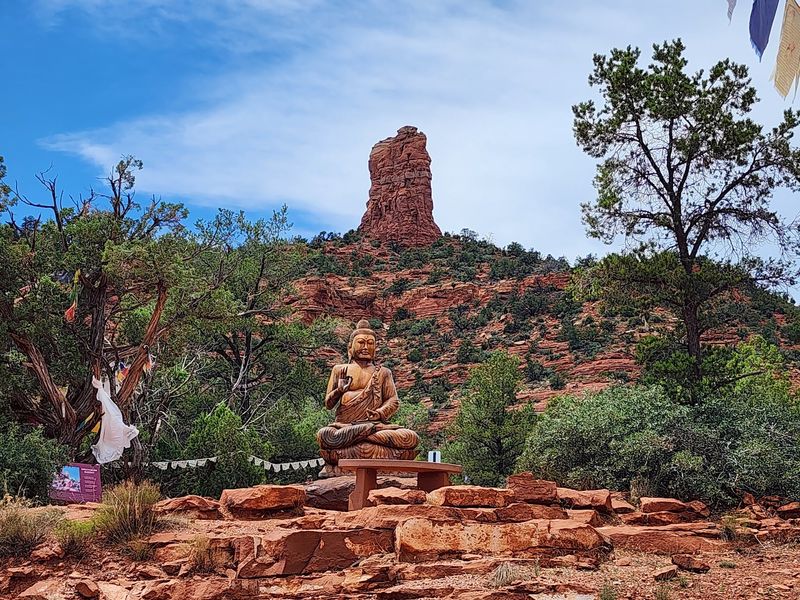
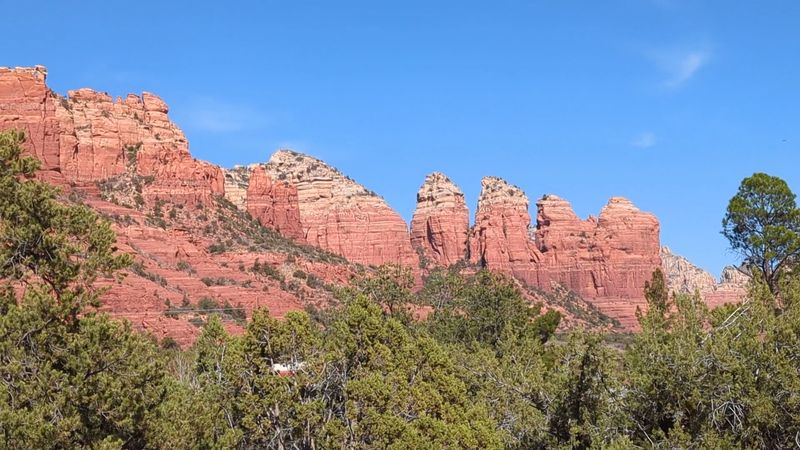
Turn around at almost any point and the scenery steals the show. Red rock cliffs rise behind the park, framing nearly every view.
Benches and chairs are scattered along the paths. They make perfect perches for meditation, reading, or simple people-free staring.
Bringing a book and a warm drink is a lovely plan. Few reading spots in Arizona come with a backdrop this dramatic.
Many different paths loop and branch across the property. Even on busier days, you can usually find a quieter corner.
The park also connects toward trails near Thunder Mountain. Hikers can stretch the outing well beyond the stupas if they like.
Watch your footing, since some trails turn rocky in places. Comfortable shoes make wandering far more enjoyable.
Lucky visitors sometimes catch special moments here, like a rainbow over the canyon or a rising moon. Late-day light on the cliffs is worth waiting for.
Grounding is the word that fits best. Between the soil, the stone, and the open sky, this hillside makes it easy to feel present.
Just leave the benches as tidy as you found them.
Free Entry, Easy Parking, And A Few Good Manners
Your wallet gets the day off. Admission to Amitabha Stupa and Peace Park is free, though voluntary donations help maintain the grounds.
The park sits at 2650 Pueblo Dr, Sedona, AZ 86336. Grounds stay open from dawn until dusk.
Parking is free and generally plentiful, on a dirt lot. Buses and vehicles longer than 20 feet aren’t permitted, so plan accordingly with big RVs.
Portable toilets are available on site. Bring water, since amenities are kept simple.
Arriving early pays off if you want true quiet. Morning visits often feel calm, with only a handful of people around.
Etiquette matters here more than at a typical park. Keep voices low and respect anyone meditating or praying.
Following Leave No Trace principles is expected. Pack out everything you bring, and leave the grounds as peaceful as you found them.
Smoking and loud parking-lot gatherings clash badly with the setting. Save the noise for somewhere else in town.
A little courtesy keeps this Arizona treasure welcoming for everyone. It’s a small price for a free experience this special.
Worth A Slow Morning Of Your Sedona Trip
Some outings deliver adrenaline. Amitabha Stupa and Peace Park delivers exhale, which might be the rarer gift.
Everything here favors slowing down. You circle a stupa, spin a prayer wheel, watch quail, and maybe sit until the cliffs change color.
The price is exactly zero, aside from any donation you choose. That alone makes it a standout for budget-minded travelers and Arizona day-trippers.
It isn’t really a sightseeing stop in the usual sense. Treat it more like a pause, and it gives back far more.
Spiritual seekers will feel right at home. So will birders, readers, hikers, and anyone craving a quiet hour away from busy trailheads.
Families can enjoy it too, as long as everyone keeps voices soft. The short trail and spinning wheels tend to win over younger visitors.
I believe the best plan is no plan at all. Arrive early, wander without a goal, and let the hillside set the pace.
Then leave a little lighter than you arrived. For a free stop in red rock country, that’s a pretty remarkable trade.