
In This Free Illinois Cave, You Actually Wade Through Underground Water To A Waterfall
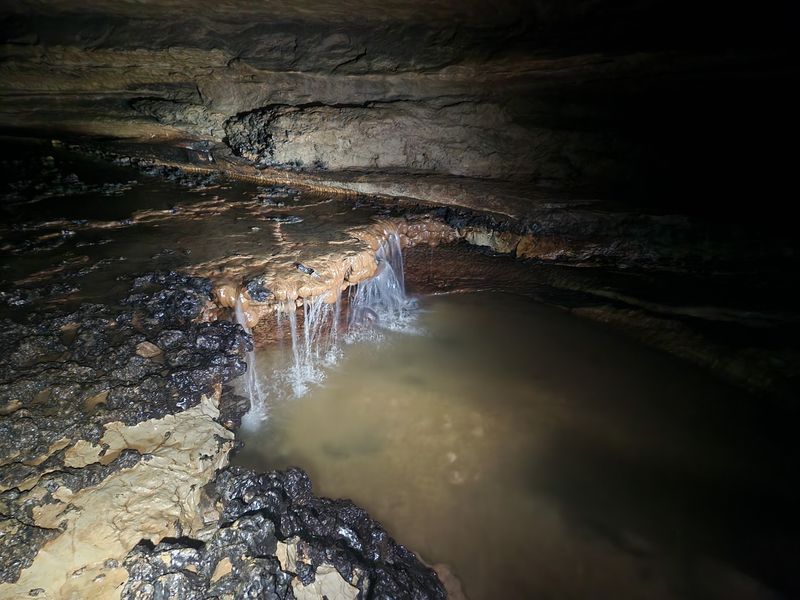
Admission is free, but the cave asks for something else: three light sources per person, a helmet, and a willingness to get soaked. The only light down there is the light you carry in.
An underground stream runs through the passages, and you walk right in it. Push far enough, and the stream leads you to a waterfall deep inside the earth.
I love that this sits in southern Illinois, a short drive from many family weekends. No paved walkways, no tour guide, no gift shop.
Just your crew, your flashlights, and miles of wet limestone.
I can’t imagine a better story for kids to bring back to school on Monday. Bring dry clothes.
Bring a sense of humor. You’ll need both before the day is over.
A Wild Cave Waiting Under Monroe County Farmland
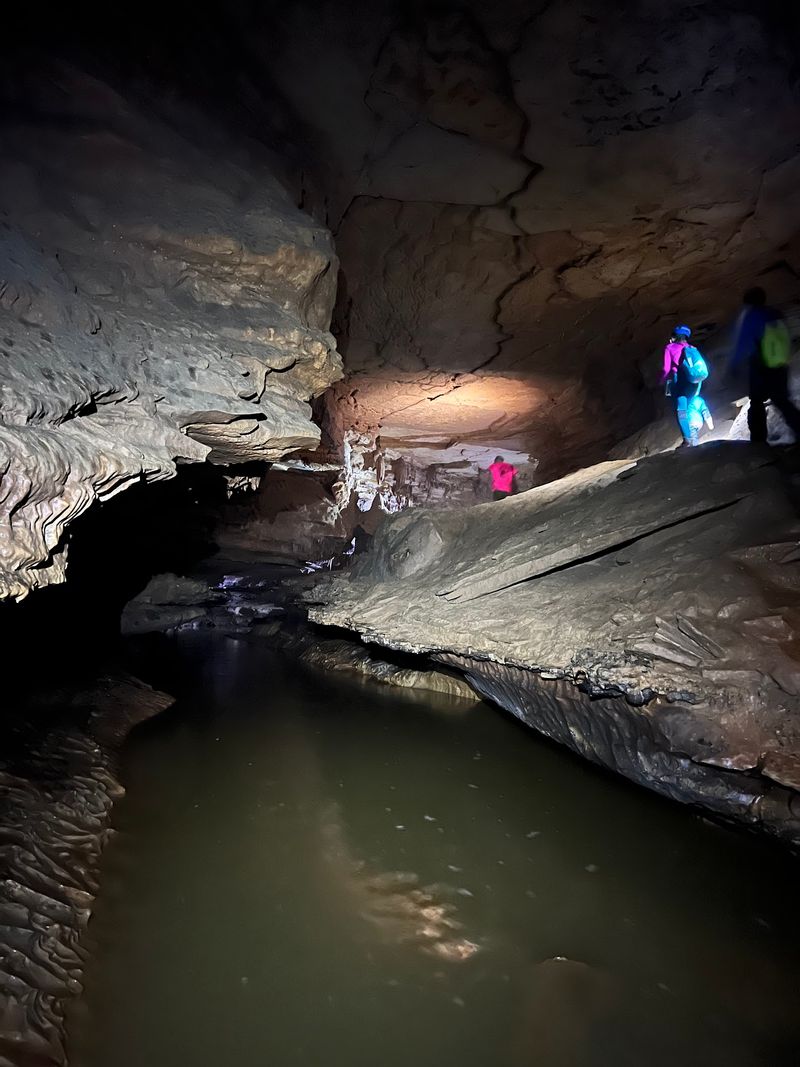
Most show caves come with railings, colored lights, and a guide reading from a script. Illinois Caverns State Natural Area skips all of that and hands you the keys.
Run by the Illinois Department of Natural Resources, it sits in Monroe County, roughly 35 miles south of St. Louis. The cave is self-guided, which makes it rare in the Midwest.
You check in, sign the paperwork, and head underground with your own group.
The numbers are impressive. More than six miles of passages have been mapped, making it the second-largest cave system in Illinois.
That’s a lot of darkness to explore on a free day trip.
The temperature stays around 58 degrees all year. On a sticky July afternoon, that alone sounds like a gift.
Moving through water and mud tends to keep explorers plenty warm anyway.
What really sets it apart is how raw it feels. There are no electric lights inside and no paved trails.
The cave is basically the same rugged space that early explorers saw generations ago. For families who like real adventure without a big ticket price, it’s a refreshing change of pace.
The Stream That Turns Your Hike Into A Wade
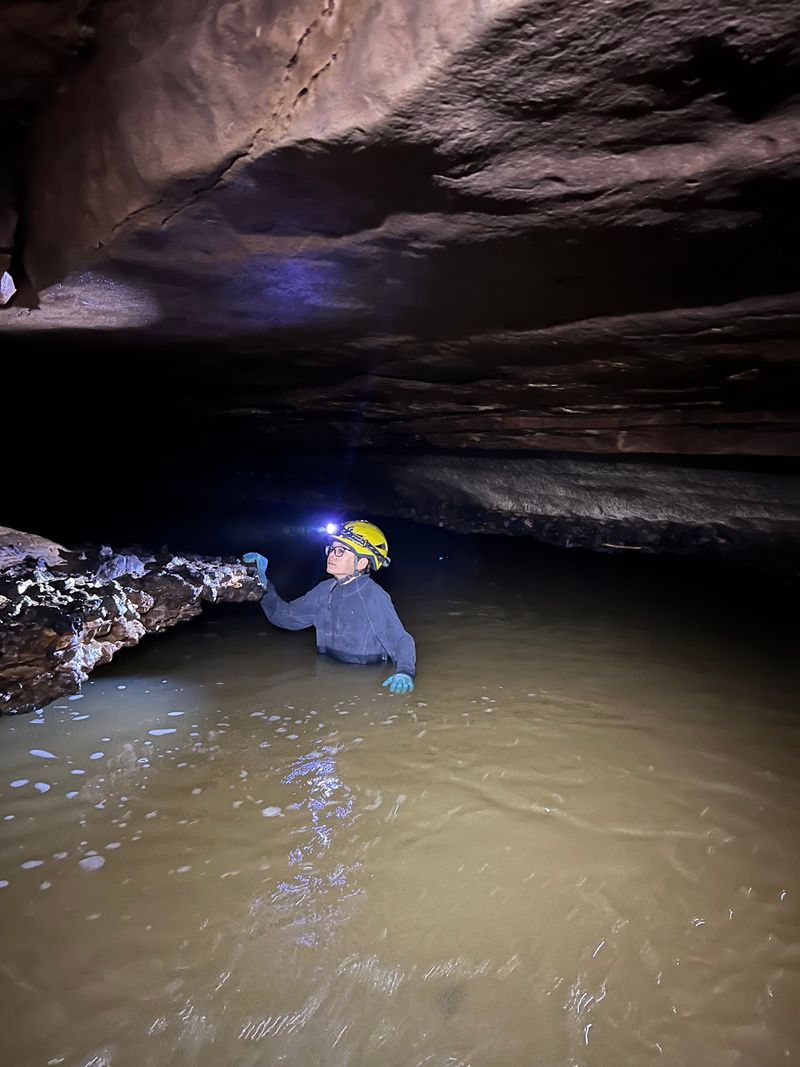
Your feet will get wet. That’s not a warning, it’s practically the whole point.
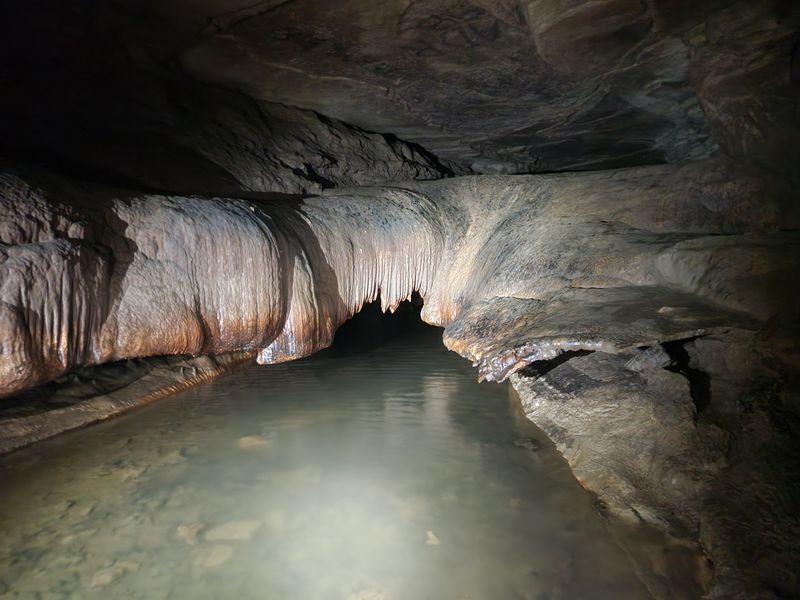
An active stream flows through the main passage at Illinois Caverns, and for much of the trip you follow it. Water levels shift with rainfall and with the route you choose.
Some stretches stay around your ankles, while others creep well higher.
Anyone heading all the way to the waterfall should expect knee-high water. Climbing near the falls can bring it up to mid-thigh.
That’s why waterproof boots, waders, or neoprene socks are popular picks for this cave.
The stream also works as a handy guide. Mostly, you follow the water, with side rooms branching off for curious explorers.
Many first-timers come away feeling it’s hard to get truly lost, though good sense still matters.
There’s something fun about watching kids realize the creek is the trail. Splashing isn’t just allowed here, it’s required.
The water is chilly, so plan on a few gasps on that first step in.
One firm rule applies, though. Never drink the cave water, and keep open cuts out of it.
It can carry high levels of coliform bacteria.
Your Big Reward Is A Waterfall In Total Darkness
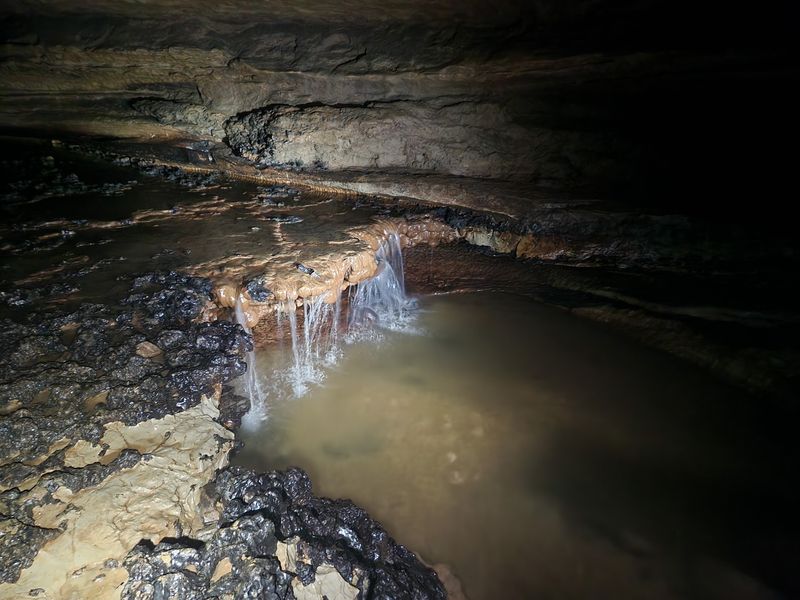
Somewhere past the cold splashing and slippery rocks, you start to hear it. Rushing water, echoing off stone, where no sunlight has ever reached.
The cave holds multiple cascades, and the big prize is a true underground waterfall. Reaching it takes effort and planning.
Groups often travel about a mile and a half in, then turn around for the trip back.
That kind of outing can easily fill around five hours with exploring included. Start early, because the cave has a firm exit time in the afternoon.
Nobody wants to rush past a waterfall they worked hard to find.
Seeing it by headlamp is part of the magic. Your beam catches the falling water in small pieces, so the scene reveals itself slowly.
Every group gets its own private light show.
Some explorers even climb up near the falls, which brings deeper water. It’s a moment that feels earned in a way a lit-up tourist cave never quite matches.
I believe that payoff is exactly why people come back year after year.
Bring a waterproof camera if you have one. You’ll want proof for the doubters back home.
Stalactites, Soda Straws, And Stone That’s Still Growing
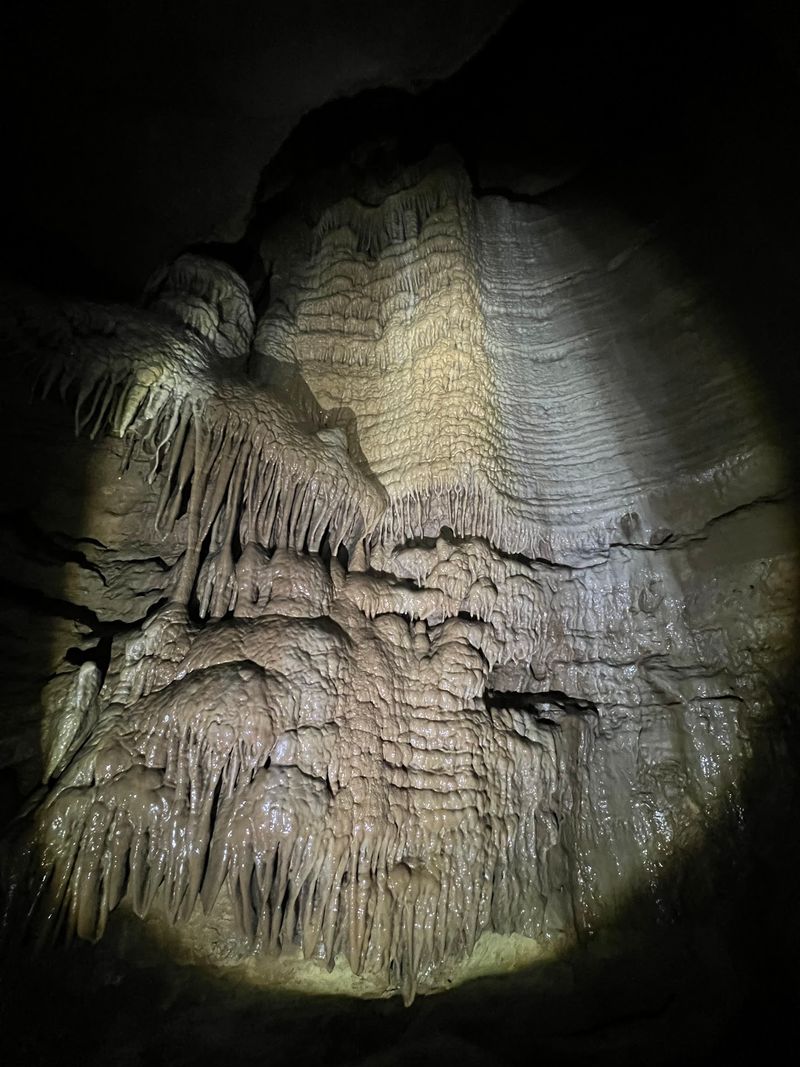
Look up, and the ceiling starts dripping with art. Stalactites hang overhead while stalagmites rise from the floor below.
Illinois Caverns is packed with formations for a cave of its kind. You’ll spot flowstone, thin hollow soda straws, and rimstone dams holding tiny pools.
Many are still growing, drop by mineral-rich drop.
That slow growth is a good reason to keep hands to yourself. Oils from skin can harm delicate features.
Teaching kids to admire without touching makes the trip a mini science lesson.
The cave itself formed as groundwater slowly dissolved Mississippian limestone and dolomite. The area around it shows classic karst features, with sinkholes and underground drainage.
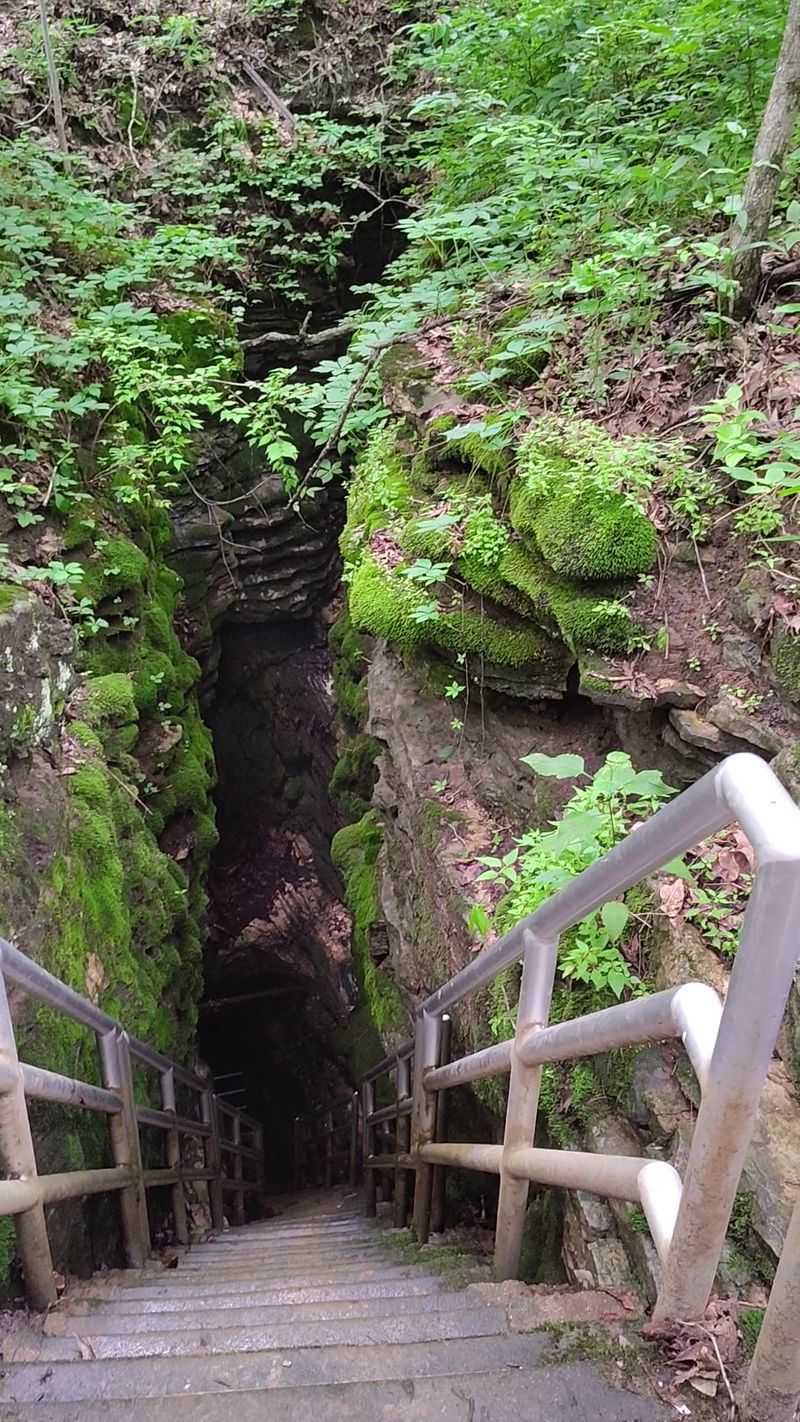
In fact, you enter the cave by heading down into a sinkhole.
It’s geology you can feel under your boots. The same stream you wade through helped carve these halls over a very long time.
Pretty humbling for a Saturday outing.
Flashlights turn the formations into a treasure hunt. Every sweep of light reveals another shape.
Kids who groan at museum exhibits might suddenly have a lot of questions.
Tiny Neighbors Found In Very Few Places On Earth
The most famous resident here is smaller than your fingernail. Meet the Illinois cave amphipod, a tiny shrimp-like creature that’s federally endangered.
It lives in very few places, and Illinois Caverns is one of them. That makes every visit a trip into a protected home.
Staying on the route and leaving no trace really matters here.
Other locals share the darkness too. Salamanders, frogs, crickets, and bats all use the cave.
Two bat species have been recorded in this underground habitat.
Bats played a big role in the cave’s recent story. The site closed from 2010 until June 2021 as a precaution against white-nose syndrome, a disease harmful to bats.
Research later showed human visits did not drive its spread, and the gates reopened.
Spotting a salamander by headlamp is a thrill for kids. Point your beam gently and give critters space.
Shining lights right at resting bats is never a friendly move.
It’s a good reminder that caves aren’t empty holes in the ground. They’re busy neighborhoods, just quieter and darker than ours.
Treat them like you’re a guest in someone’s house.
The Old Burksville Cave And Its Showbiz Past
Long before it was a state natural area, this cave tried to become a tourist attraction. It was called Burksville Cave, and promoters even billed it as the Mammoth Cave of Illinois.
Its first recorded commercial operation dates to 1901. It’s the only cave in Illinois that was ever run commercially.
During the 1904 St. Louis World’s Fair, it drew sightseers hoping for underground marvels.
Those business efforts eventually fizzled out. Because of that, the cave stayed mostly unimproved, without the walkways and lighting found elsewhere.
In a funny twist, that failure is exactly what makes it special today.
The State of Illinois bought the property in 1985. Since then, it has been protected for nature and for people willing to explore it the old-fashioned way.
Grandparents who knew it as Burksville Cave can still recognize the place.
That sense of continuity is rare. Many families now return yearly, trying to push a little farther each time.
It’s the kind of tradition that gets passed down along with the muddy boots.
History here isn’t on plaques. It’s in the darkness, the stream, and the stubborn, untamed character of the cave itself.
Helmets, Headlamps, And A Backup For Your Backup
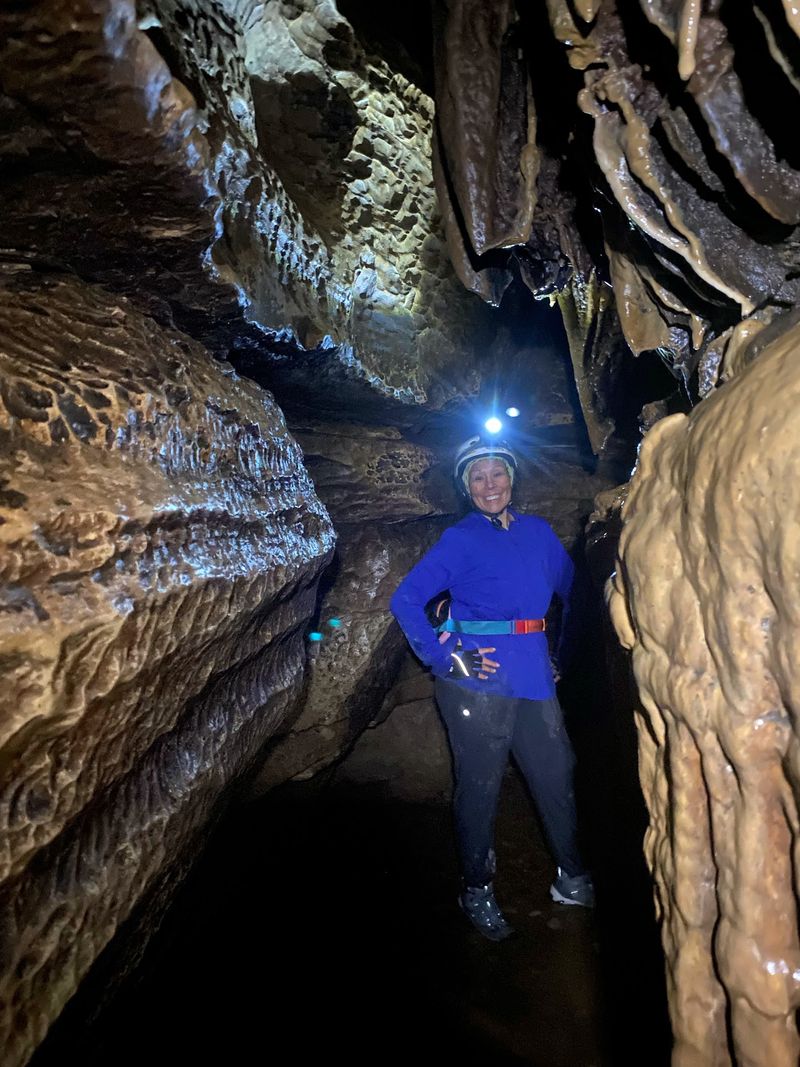
Three lights per person might sound dramatic. Then you remember there’s not a single bulb in the cave.
Every explorer needs at least three reliable battery-powered light sources, plus spare batteries. Cell phones don’t count as a serious option.
A headlamp and two flashlights make a smart starting kit.
Head protection is required too. A hard hat or bike helmet works, and helmets have been available to borrow at check-in.
Still, bringing your own is a safe bet.
Footwear matters more than most people expect. Sturdy boots with good traction beat tennis shoes on wet, slick rock.
Long pants and long sleeves help with scrapes and keep you warmer.
Some seasoned cavers even wear wetsuits for long trips. Neoprene socks are a popular middle ground for regular families.
Your toes will thank you after an hour in the stream.
Pack drinking water and snacks, since the cave water is off-limits. Most important of all, bring a full change of clothes and dry shoes.
A changing building with separate men’s and women’s areas sits on site, along with a portable restroom. Your car seats will appreciate it.
Bring Three Friends Or Stay Above Ground
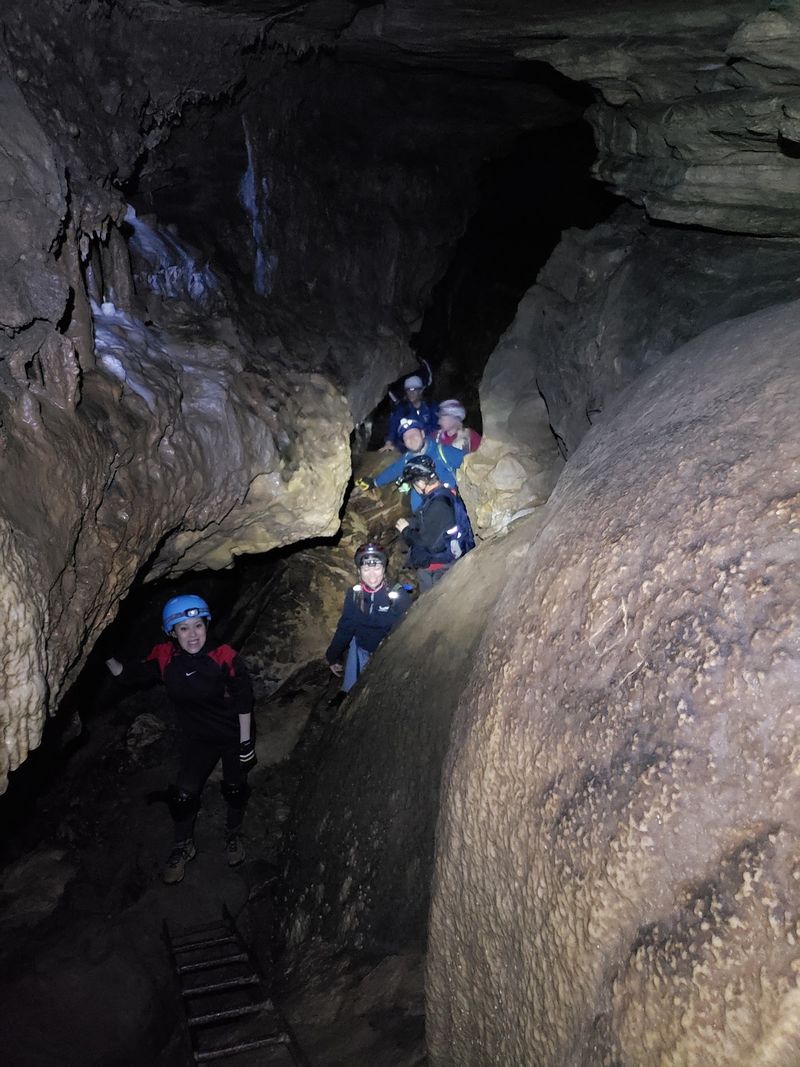
Counting heads before you leave home is not optional. Groups must have at least four people to enter the cave.
That rule catches some families by surprise, and it’s a tough reason to drive home disappointed. Grab a neighbor, a cousin, or the friend who always says yes to adventure.
Groups of 25 or more need to preregister with a permit application ahead of time.
Everyone signs a waiver and gets a permit at the site office. Staff members often walk groups through the rules before the descent.
That friendly briefing helps first-timers feel ready.
The trip is best for school-aged kids and up. Expect climbing, slick mud, and deep darkness.
It’s moderately challenging and not a fit for anyone with mobility concerns.
The stairs into the sinkhole are steep, so take them slowly. Once inside, the pace is yours to set.
Short trips work fine for younger crews, while older kids may beg to reach the falls.
Think of it as a team sport. Someone carries snacks, someone counts flashlights, and everyone keeps an eye on each other.
Free Entry, Firm Hours, And A Muddy Happy Ending
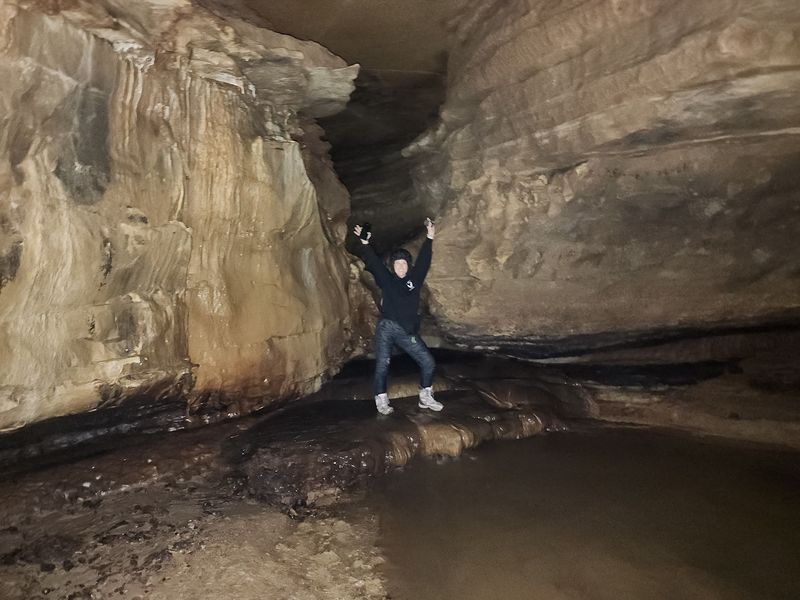
Here’s the best part for budget-minded families. Exploring Illinois Caverns costs nothing at all.
You’ll find it at 4369 G Road, Waterloo, IL 62298, in the rolling countryside of Monroe County. The site opens Thursday through Sunday, from 9 a.m. to 4 p.m.
It’s closed Monday through Wednesday.
The cave season runs from April through October. No one may enter the cave after 3 p.m., so plan your arrival with that in mind.
Longer trips toward the waterfall deserve a morning start.
Heavy rain can raise water to unsafe levels. When that happens, the cave may close unexpectedly.
Checking the Illinois Department of Natural Resources page before driving out saves heartache.
So is it worth it? For families craving a real, unpolished adventure in Illinois, I’d say absolutely.
It’s dark, wet, muddy, and wonderfully old-fashioned.
Nobody leaves clean, and that’s half the charm. You’ll trade spotless sneakers for a story your kids will tell for years.
And all it costs is a tank of gas, some batteries, and a really good towel.