
These 7 Michigan Shipwreck Stories Reveal The Danger Of November Storms
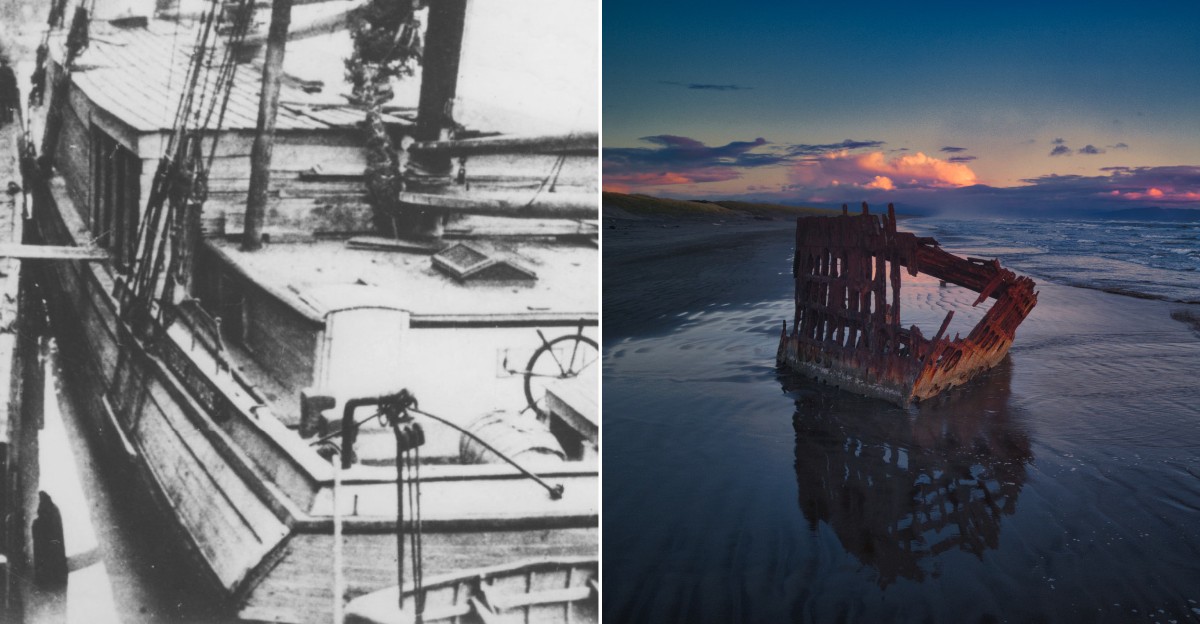
A ship once sailed into a November gale loaded with thousands of Christmas trees, and it never reached port. For years afterward, fishermen reportedly pulled tree branches up in their nets.
That story stuck with me. The Great Lakes save some of their worst behavior for late autumn, when cold air rushes over still-warm water and whips up monster waves. Sailors even have a name for it: the Gales of November.
Michigan sits right in the middle of that action, touching four of the five Great Lakes. Some of the biggest freighters ever built went down in these storms, including one that vanished without sending a single distress call.
The stories behind Michigan’s November shipwrecks reveal just how dangerous the Great Lakes can become when autumn storms roll in.
It’s unsettling how fast a calm day could turn into a fight for survival. And the wrecks left behind raise a question worth exploring: what makes November so fearsome out on the water?
SS Edmund Fitzgerald
A song made her famous, but the real story is even more haunting. Gordon Lightfoot’s 1976 hit kept the Edmund Fitzgerald alive in memory for generations.
When she launched in 1958, the Fitz was the largest ship on the Great Lakes. She stretched 729 feet, longer than two football fields placed end to end.
On November 10, 1975, she was hauling about 26,000 tons of taconite pellets across Lake Superior. A brutal storm was building, and gale warnings were already out.
Another freighter, the Arthur M. Anderson, followed behind and kept in radio contact. In one of the last messages, Captain Ernest McSorley said, “We are holding our own.”
Not long after, the Fitzgerald disappeared from radar about 17 miles from Whitefish Point. No distress call ever came, and all 29 crew members were lost.
So what went wrong? Experts still debate it, with theories ranging from hull damage to giant waves swamping the deck.
Her loss changed the rules, too. The Coast Guard later pushed for changes like required survival suits and better positioning equipment on lake freighters.
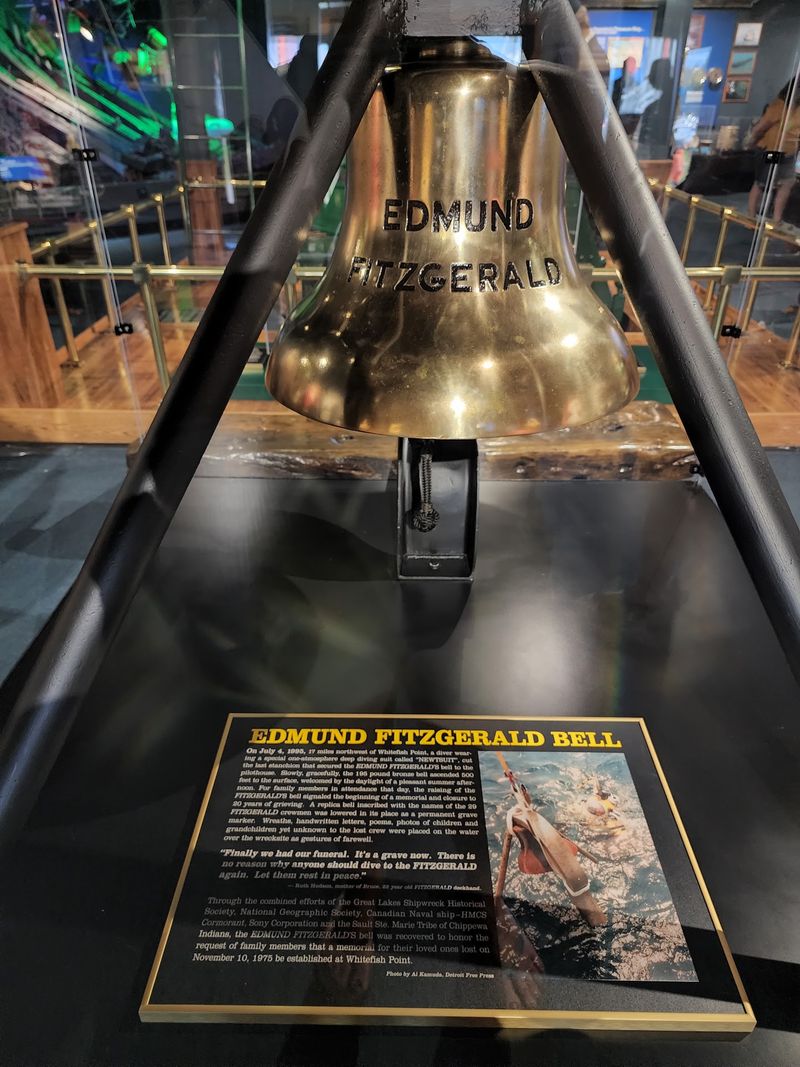
In 1995, divers recovered the ship’s bell and brought it to shore. A replica bell engraved with the crew’s names now rests on the wreck in its place.
You can see the original bell at the Great Lakes Shipwreck Museum in Michigan’s Upper Peninsula. Standing near the lonely point she was steering toward makes the story feel very close.
Address: 18335 N Whitefish Point Rd, Paradise, MI 49768
SS Carl D. Bradley
One small town felt this storm more than anywhere else. When the SS Carl D. Bradley went down, 23 of the men aboard called Rogers City home.
The Bradley was a 639-foot limestone carrier built in 1927. She was heading home empty across northern Lake Michigan on November 18, 1958.
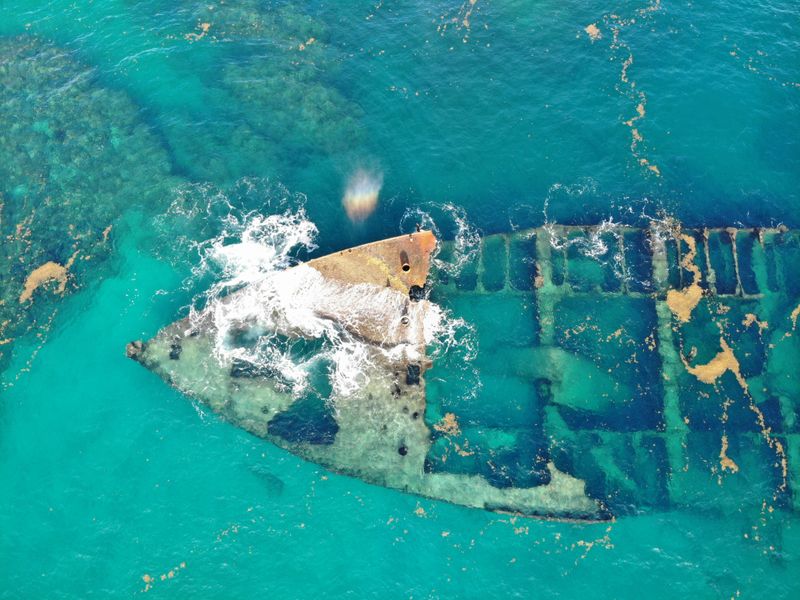
Winds roared past 60 miles per hour, and waves climbed to around 20 feet. Then, with little warning, the long hull cracked and split in two.
The whole ordeal unfolded fast, not far from Gull Island. Of the 35 men aboard, only two survived.
Elmer Fleming and Frank Mays clung to a small raft through the freezing night. Waves flipped them over again and again, but they kept climbing back on.
The Coast Guard cutter Sundew finally spotted them the next morning. That’s hours of cold, soaking misery before rescue arrived.
Rogers City was a tight-knit limestone town, and this storm struck right before the holidays. Many families faced Christmas that year with empty chairs at the table.
Here’s a lesson worth remembering about these lakes. A ship riding high and empty can be just as vulnerable as one loaded to the brim.
The story still matters along Michigan’s Lake Huron shore. A maritime museum in town helps keep the memory of these sailors and their ships alive.
Address: 367 N Third St, Rogers City, MI 49779
SS Daniel J. Morrell
Thirty-eight hours on a raft in freezing November weather sounds impossible. Dennis Hale lived through exactly that, and he was the only one from his ship who did.
The Daniel J. Morrell was a 603-foot freighter built back in 1906. On November 29, 1966, she was crossing Lake Huron off Michigan’s Thumb when a vicious storm hit.
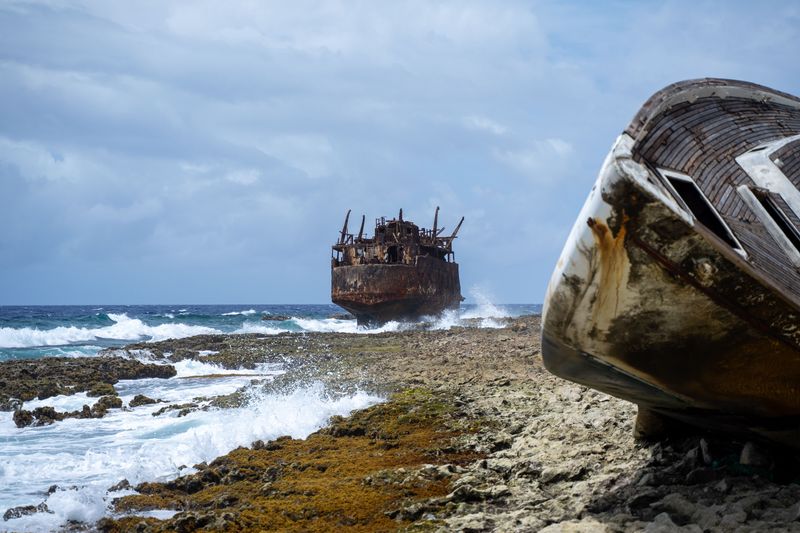
Around two in the morning, the aging hull began to break apart. Crew members scrambled for the deck in whatever clothes they had on.
Hale, a 26-year-old watchman, reached a raft wearing little more than shorts, a peacoat, and a life jacket. Three shipmates joined him, but they didn’t make it through the long, icy hours.
Here’s a jaw-dropping detail. The stern, with its engine still running, kept pushing forward after the split and ended up miles from the bow.
Worse yet, nobody realized the Morrell was missing right away. No distress call went out, so rescuers didn’t start searching until the next day.
A helicopter crew finally spotted Hale’s raft near the shore. Of the 29 men aboard, he was the lone survivor.
Hale later shared his story in talks and a book for years. His account gave the world a rare, firsthand look at what a November gale can do.
The Harbor Beach area sits close to where the ship went down. A local museum there shares the town’s history along this rugged stretch of shoreline.
Address: 865 N Huron Ave, Harbor Beach, MI 48441
Rouse Simmons
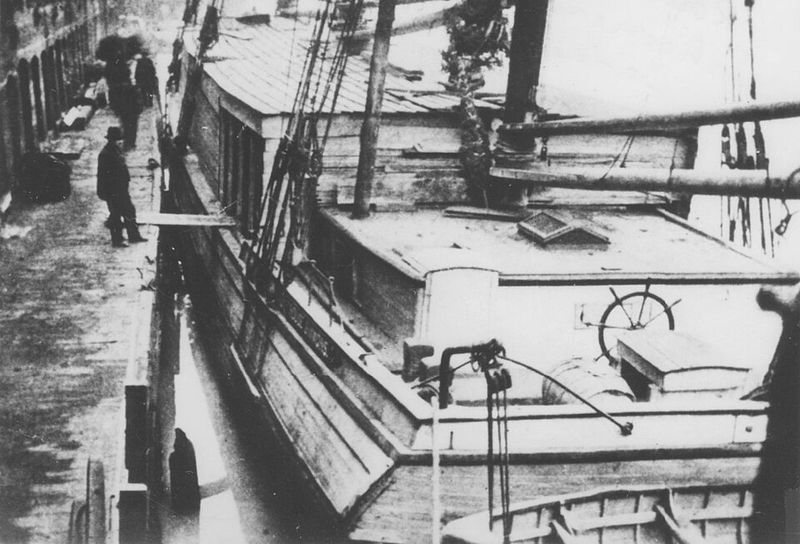
Chicago families used to buy their Christmas trees straight off a boat. Captain Herman Schuenemann sold them from the deck of his schooner, and folks nicknamed him Captain Santa.
His ship, the Rouse Simmons, was an old three-masted schooner built in 1868. In November 1912, crews loaded her with thousands of evergreens cut in Michigan’s Upper Peninsula.
The trees came aboard near Thompson, Michigan, close to Manistique. From there, the schooner headed south toward Chicago and the holiday rush.
Lake Michigan had other plans. A powerful gale slammed the overloaded ship, and witnesses near Kewaunee, Wisconsin, reportedly saw her flying distress flags.
Then she simply vanished. Roughly 16 people were aboard, and none were ever found.
The story didn’t stop there, though. Schuenemann’s wife and daughters kept selling Christmas trees in Chicago for years afterward.
For decades, nobody knew where the ship rested. In 1971, diver Kent Bellrichard came across the wreck off Two Rivers, Wisconsin, with tree trunks still in her hold.
The tradition lives on in a sweet way. The Coast Guard cutter Mackinaw now carries trees to Chicago each year in honor of the Christmas Tree Ship.
Want to feel close to this tale? A historic fishing village museum in Two Rivers sits near the waters where the schooner went down.
Address: 2102 Jackson St, Two Rivers, WI 54241
SS Anna C. Minch
November 11, 1940, started out mild enough to fool plenty of people. By evening, the Armistice Day Storm had turned Lake Michigan into a frozen nightmare.
Temperatures plunged fast, and winds howled across the water. Snow piled up so heavily that sailors could barely see past their own bows.
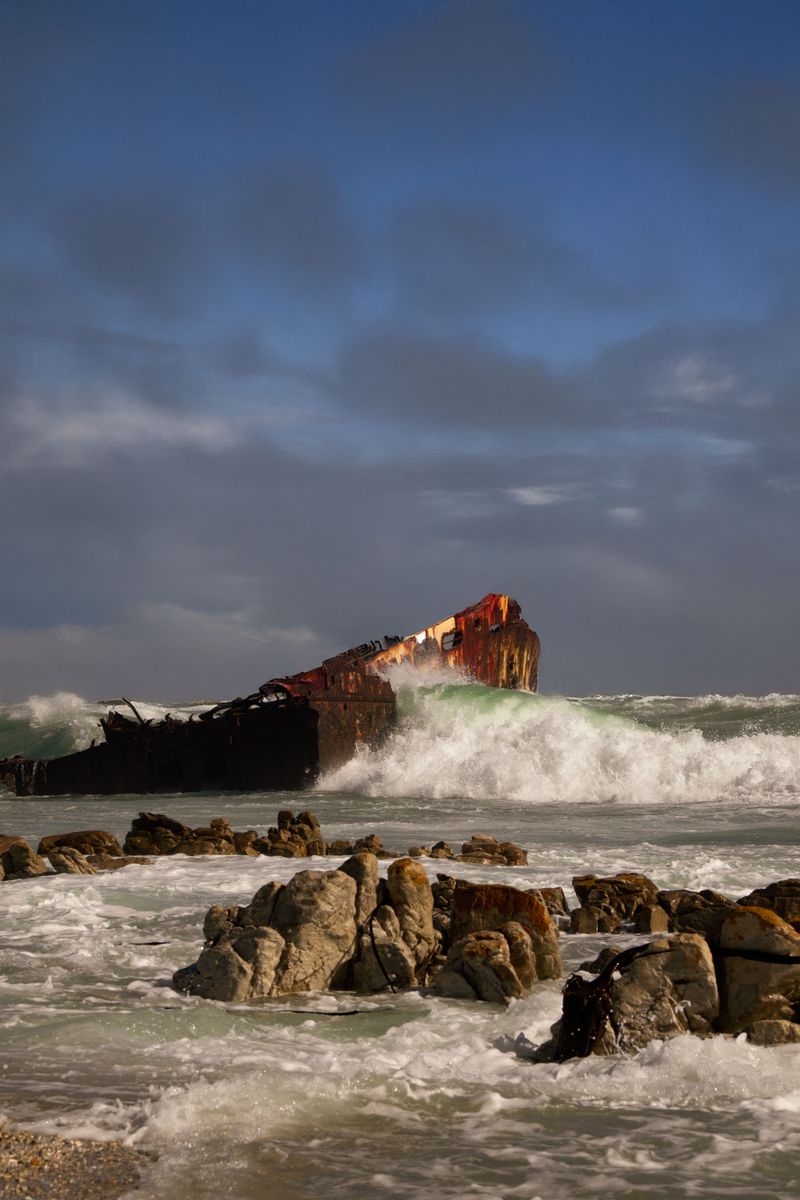
Caught in the middle was the Anna C. Minch, a 380-foot Canadian freighter. She was fighting her way along the shore near Pentwater when the storm overpowered her.
No one on land saw her go down. All 24 crew members were lost, and the ship broke apart in surprisingly shallow water south of town.
That detail surprises a lot of people. Being close to shore didn’t mean being safe, especially when waves were pounding a ship to pieces.
Over on the beaches, bodies of sailors and wreckage washed up in the days that followed. Michigan towns along the coast spent weeks dealing with the heartbreak.
Why was this storm so brutal? A sharp clash between warm autumn air and an arctic blast created a monster that moved incredibly fast.
Today, the Minch is a known wreck site for divers off Pentwater. Her remains offer a quiet reminder of how quickly a pleasant morning can change.
To learn more about shipping on this stretch of coast, head north to Ludington. The maritime museum there sits in the town’s historic Coast Guard station.
Address: 217 S Lakeshore Dr, Ludington, MI 49431
SS William B. Davock
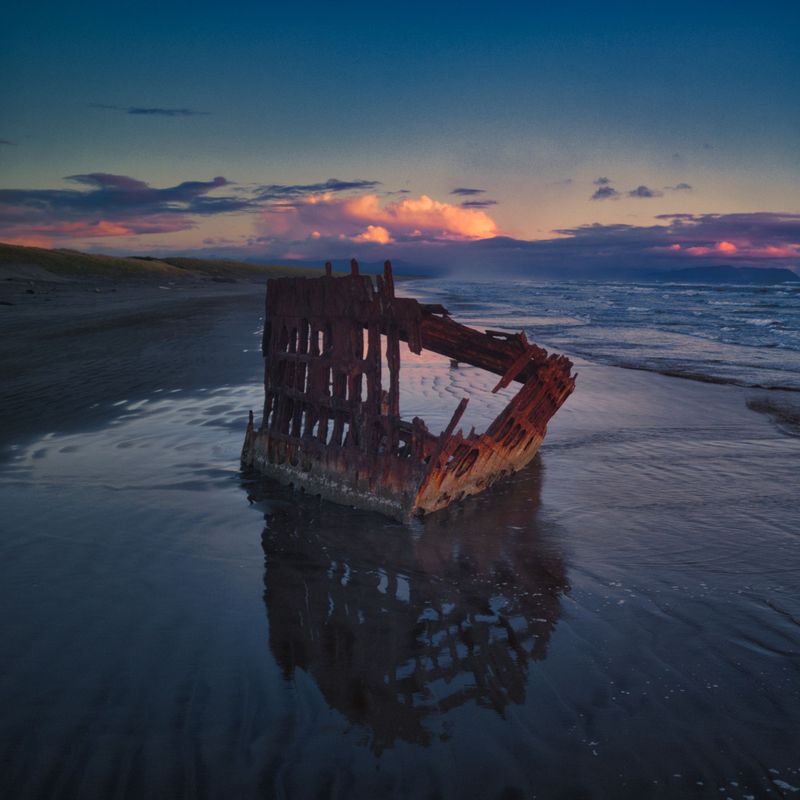
Two big freighters went down within sight of each other’s final resting places. The William B. Davock was the larger partner in this sad pair from the Armistice Day Storm.
She was a 420-foot steel steamer hauling coal on Lake Michigan. Like the Minch, she found herself off Pentwater as the 1940 blizzard reached full strength.
Winds reportedly reached around 75 miles per hour. Waves towered close to 20 feet, battering anything unlucky enough to be out there.
The Davock never made it through the night. Her full crew of 33 was lost, with no survivors left to explain what happened.
For more than three decades, her location stayed a mystery. Divers finally found the wreck in 1972, resting in about 200 feet of water.
Not every ship in that storm had such a sad ending, thankfully. Nearby, the freighter Novadoc ran aground, and brave Pentwater fishermen rescued most of her crew in a small tug.
That rescue still stands out as one of the bright spots of the disaster. Ordinary locals risked everything in giant waves to bring 17 sailors home.
So what’s the takeaway for you? Lake Michigan storms can build in hours, so checking marine forecasts before heading out matters even today.
South of Pentwater, a historic lighthouse museum shares stories of life along this coast. It’s a fitting spot to look out over the same restless water.
Address: 6199 Murray Rd, Whitehall, MI 49461
SS Henry B. Smith
Some sailors called the Great Storm of 1913 the White Hurricane. Over four days, it sank or wrecked a long list of ships across the Great Lakes.
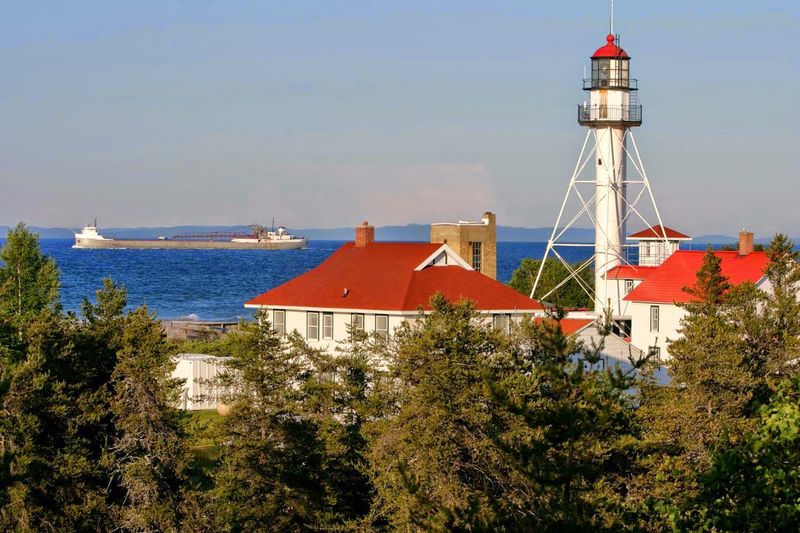
One of them was the Henry B. Smith, a steel freighter loaded with iron ore. On November 9, 1913, she steamed out of Marquette, Michigan, and into Lake Superior.
The weather had calmed for a moment, which may have seemed like an opening. It didn’t last, and the storm roared back with a vengeance.
Captain James Owen and his crew of 25 were never seen again. Bits of wreckage washed ashore, but the ship herself stayed hidden.
For nearly a century, people wondered exactly where she went down. Then, in 2013, a team of shipwreck hunters finally found her about 30 miles north of Marquette.
The timing gave folks chills. Her discovery came almost exactly 100 years after she left port.
The wreck sits deep in the cold water, more than 500 feet down. That chilly depth helped keep the old freighter in remarkably good shape.
Lake Superior’s cold temperatures act like a giant time capsule. It’s one reason so many old shipwrecks there still look so intact.
If you visit Marquette, the maritime museum sits right near the harbor she sailed from. It’s a great place to finish your journey through these November storm stories, preferably on a calm day.
Address: 300 N Lakeshore Blvd, Marquette, MI 49855